
On this page
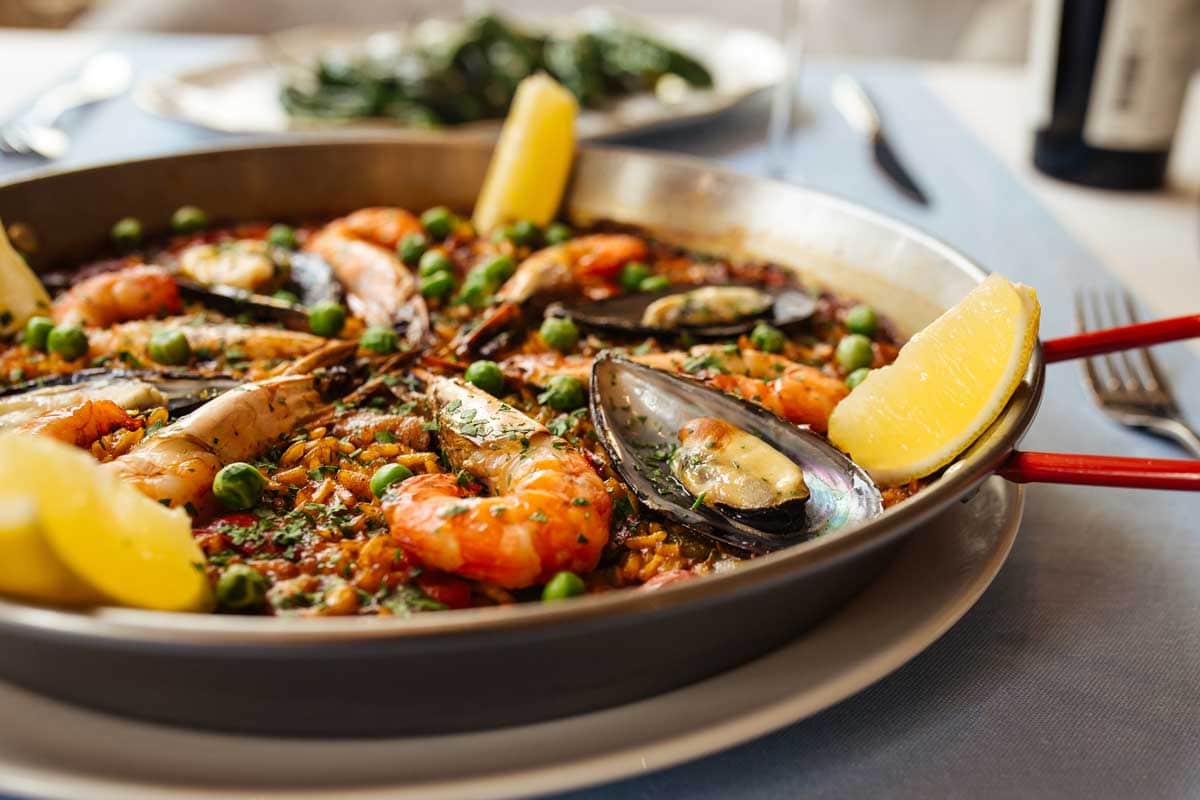
Yes, you can make paella without saffron, and it can still taste like the real thing. For the golden color, stir 1/4 teaspoon of turmeric and 1 1/2 teaspoons of sweet pimentón into the sofrito for every 4 servings. For the flavor, lean on what actually carries a paella: good stock, a slow tomato sofrito, bomba rice and a crisp layer of socarrat on the bottom of the pan. Plenty of home cooks in Spain skip saffron too.
Paella Without Saffron at a Glance
AmigoFoods may earn a commission from qualifying Amazon purchases made through links on this page, at no extra cost to you.
Can You Make Paella Without Saffron?
You can, and you would be in good company. Saffron is the textbook paella spice, but it is also one of the most expensive foods in the world by weight, and for generations many Spanish families could not afford it for an everyday Sunday rice.
What they reached for instead was colorante alimentario: a cheap yellow food coloring sold in little packets next to the saffron in every Spanish supermarket. It became popular during the lean postwar years and never went away. Even in Valencia, where paella was born, plenty of home cooks still use it, and some professional rice cooks mix a little colorante with a little saffron.
So a paella without saffron is not a fake paella. It is a different trade-off: you keep the color, you lose a quiet floral note, and everything else that makes paella great stays exactly where it was.
What Saffron Actually Does in Paella
Saffron is the dried stigma of the Crocus sativus flower, three red threads per flower, picked by hand. It does three jobs in a paella, and that is why no single substitute replaces it.
- Color. Its pigment, crocin, dissolves in the stock and dyes every grain a clear golden yellow. This is the job substitutes do best.
- Aroma. Safranal gives saffron its honeyed, hay-like smell. Nothing else in the spice rack has it.
- Flavor. A faint, pleasant bitterness that keeps a rich paella from tasting flat. In a paella with good stock and sofrito it is subtle, which is the real reason skipping it works.

For the full story of the spice, from the fields of La Mancha to why it costs what it does, see our guide to Spanish saffron.
The 7 Best Saffron Substitutes for Paella
Amounts below are for a 4-serving paella made with 1 1/2 cups of rice. The bar shows how close each one gets to saffron’s color. None of them copies saffron’s flavor, so each card says what it tastes like instead.
1. Turmeric
Turmeric is the substitute most people already own, and for color it is the closest pantry match. Its pigment, curcumin, is fat-soluble, so stir it into the hot oil of the sofrito for a few seconds instead of dropping it into the stock; the color spreads more evenly that way.
The catch is flavor. A pinch disappears behind the stock and tomato; a heavy spoonful makes the rice taste earthy and faintly medicinal. Keep it to 1/4 teaspoon for 1 1/2 cups of rice.
2. Sweet pimentón (Spanish paprika)
Pimentón is already in most paella recipes, so using a little more of it is the least disruptive swap you can make. It adds sweetness and a warm red-orange tint, but on its own it will not make rice yellow. Use dulce (sweet) rather than picante, and go easy on smoked pimentón, which can take over.

Burnt pimentón turns bitter in seconds, so add it to the pan with the heat lowered and follow it right away with the tomato. Our guide to pimentón explains the three types, and Pimentón de la Vera dulce is the one to buy for paella.
3. Annatto (achiote)
Annatto seeds are the Latin American answer to saffron’s color. Across the Caribbean and Central America they are fried in oil to make achiote oil (onoto in Venezuela), which gives arroz con pollo and yellow rice their sunset color. In a paella, 1/2 teaspoon of ground annatto or a tablespoon of achiote oil in place of some of the olive oil turns the rice a deep orange-gold.

Its flavor is mild and slightly peppery, which sits well with chicken and shrimp. Use a light hand: too much tints the rice red rather than gold.
4. Safflower (azafrán mexicano)
Safflower petals look like a coarser, more orange version of saffron threads, which is exactly why they are sold as “Mexican saffron,” azafrán or azafrancillo, and sometimes passed off as the real thing to tourists. They give a gentle golden-orange color and almost no flavor.
Steep 1 teaspoon of safflower threads in 1/4 cup of the hot stock for 10 minutes, then add the liquid, petals and all, when you pour in the stock. If a jar of “saffron” costs a few dollars, check the label: it is almost certainly safflower.
5. Spanish food coloring (colorante alimentario)
This is the substitute Spaniards actually use. Brands like Carmencita sell it as a fine yellow powder, mostly cornflour and salt with a synthetic yellow (tartrazine, E-102). It adds color only, no flavor, and it gives the brightest, most saffron-like yellow of anything on this list.
Dissolve about 1/2 teaspoon (or the amount on the packet for 4 servings) in the hot stock. If you avoid artificial colors, turmeric or annatto do a similar job naturally. Carmencita colorante is the classic brand.
6. Sazón con azafrán
Here is a substitute many Latin kitchens already have in the cupboard. Goya’s Sazón con azafrán sounds like saffron, but read the label: the “azafrán” is Mexican saffron, meaning safflower, together with annatto, turmeric and food coloring, plus salt, MSG, garlic and cumin. One packet colors and seasons a 4-serving paella.

It is a good shortcut, especially for a chicken-heavy paella, but it is salty and the cumin pushes the flavor toward Caribbean yellow rice. Use low-sodium stock and taste before adding any extra salt. Curious how it differs from the other blends? See adobo vs. sazón.
7. Calendula (marigold petals)
Dried calendula petals were once called “poor man’s saffron” in Europe. Steep 1 tablespoon in hot stock as you would safflower. The color is a soft yellow and the flavor faintly grassy, so it works best paired with a pinch of turmeric to deepen the gold. Buy culinary calendula, not garden flowers that may have been sprayed.
Saffron Substitutes for Paella Compared
| Substitute | Per 4 servings | Color | Taste | Best for |
|---|---|---|---|---|
| Turmeric | 1/4 tsp | Bright yellow | Earthy, bitter if overused | Any paella, paired with pimentón |
| Sweet pimentón | 1 1/2 tsp | Amber-orange | Sweet, lightly smoky | Chicken and mixed paellas |
| Annatto | 1/2 tsp | Orange-gold | Mild, peppery | Chicken, pork, Latin-style rice |
| Safflower | 1 tsp, steeped | Golden-orange | Almost none | When you want color only |
| Colorante | About 1/2 tsp | Saffron yellow | None | The classic Spanish home paella |
| Sazón con azafrán | 1 packet | Yellow-orange | Garlic, cumin, salty | Quick weeknight paella |
| Calendula | 1 tbsp, steeped | Soft yellow | Grassy, faint | Natural color, with turmeric |
The Best Combination: Pimentón Plus a Pinch of Turmeric
No single spice does saffron’s job, but two together get remarkably close. Turmeric brings the yellow, pimentón turns it from flat mustard into a warm golden amber and adds the sweet, toasty flavor a paella should have. It is the blend used in the recipe below.
- 1 1/2 teaspoons sweet pimentón
- 1/4 teaspoon ground turmeric
- Optional: 1/4 teaspoon smoked pimentón, for a deeper, wood-fired note
Stir it into the sofrito over medium heat for 15 to 20 seconds, then add the grated tomato right away. Double it for a 6- to 8-serving pan.
Saffron Substitutes to Skip in Paella
- Curry powder. It is yellow because of turmeric, but the cumin, coriander and fenugreek make the rice taste like a curry.
- Cardamom. Often listed as a saffron substitute, but it adds no color and a perfume that has nothing to do with paella.
- Cheap “saffron” with no origin. If the price looks too good, it is safflower, dyed corn silk or worse. Buy real saffron from a named origin, or buy a substitute and call it one.
- Lots of smoked pimentón. A pinch is lovely. A tablespoon makes the whole pan taste of smoke.
Where Paella’s Flavor Really Comes From
If you are worried that skipping saffron will make your paella bland, put the effort here instead. These four things matter far more than a pinch of threads.
The stock
Paella rice soaks up three times its volume in liquid, so the rice can only taste as good as the stock. Use homemade or a good low-sodium chicken stock, keep it hot, and season it until it tastes a little too salty on its own. The rice will absorb that salt.
The sofrito
Cook the onion, pepper and garlic until soft, then cook the grated tomato down until it darkens and turns jammy. Rushing this step is the most common reason a homemade paella tastes flat.
The rice
Short-grain Spanish rice such as bomba absorbs a lot of stock without turning mushy. Calrose or another medium-grain rice is the best easy-to-find alternative; skip long-grain and do not stir. Our guide to the best rice for paella compares them all.
The socarrat
The thin layer of caramelized, crackly rice on the bottom of the pan is the part Spaniards fight over. It only forms in a wide, thin pan with no stirring, which is why a proper paella pan helps. If you are not sure how your finished rice should look, see whether paella should be wet or dry.
How to Make Paella Without Saffron, Step by Step
This is a chicken and shrimp paella, the kind Spanish cooks call paella mixta, colored with the pimentón and turmeric blend above. Exact amounts are in the recipe card.
1. Get everything ready first
Heat the stock and keep it at a bare simmer. Grate the tomato on the large holes of a box grater and throw away the skin. Cut the chicken thighs into 1 1/2-inch pieces and season them with salt.
2. Sear the shrimp, then brown the chicken
Heat the olive oil in the paella pan over medium-high heat. Sear the shrimp for about a minute per side, just until pink, and lift them out; they finish on top of the rice later. Brown the chicken in the same oil for 8 to 10 minutes. Real browning here is flavor you will taste in every bite.
3. Build the sofrito and bloom the color
Push the chicken to the edge. Soften the onion and red pepper in the middle of the pan, add the garlic for a minute, then lower the heat and stir in the pimentón and turmeric for 15 to 20 seconds. Add the tomato immediately and cook until jammy, 5 to 6 minutes.
4. Add the stock and season it
Pour in the hot stock and bring it to a boil. Taste it now and adjust the salt, because once the rice is in you cannot season it evenly.
5. Add the rice and stop stirring
Scatter the rice evenly across the pan and give it one stir to spread it out. That is the last time you stir. A paella is not a risotto; stirring releases starch and kills the socarrat.

6. Cook hard, then gently
Boil hard for 8 minutes, then turn the heat to medium-low for another 8 to 10. If your burner is smaller than the pan, rotate the pan every few minutes so the edges cook too. Scatter the peas over the top at about 10 minutes, and press the shrimp (and mussels, if using) into the rice for the last 5.
7. Make the socarrat and rest
When the stock is absorbed, turn the heat up for 1 to 2 minutes until you hear a faint crackle and smell toasting rice. Take it off the heat before it smells burnt, cover it loosely with foil or a towel and let it rest 5 minutes. Serve straight from the pan with lemon wedges.
Variations on Paella Without Saffron
- Seafood paella without saffron. Swap the chicken for squid rings and use fish or shellfish stock. Pimentón and turmeric work just as well; see our full seafood paella for the method.
- Chicken paella without saffron. Leave out the shrimp and add a handful of green beans with the pepper. Annatto is especially good here.
- Vegetable paella without saffron. Use vegetable stock, artichoke hearts, green beans, peppers and chickpeas, and do not skip the socarrat.
- Latin-style paella. Use a packet of sazón con azafrán, a spoonful of Puerto Rican sofrito in the base and serve it with tostones. It drifts toward arroz con pollo, and that is fine.
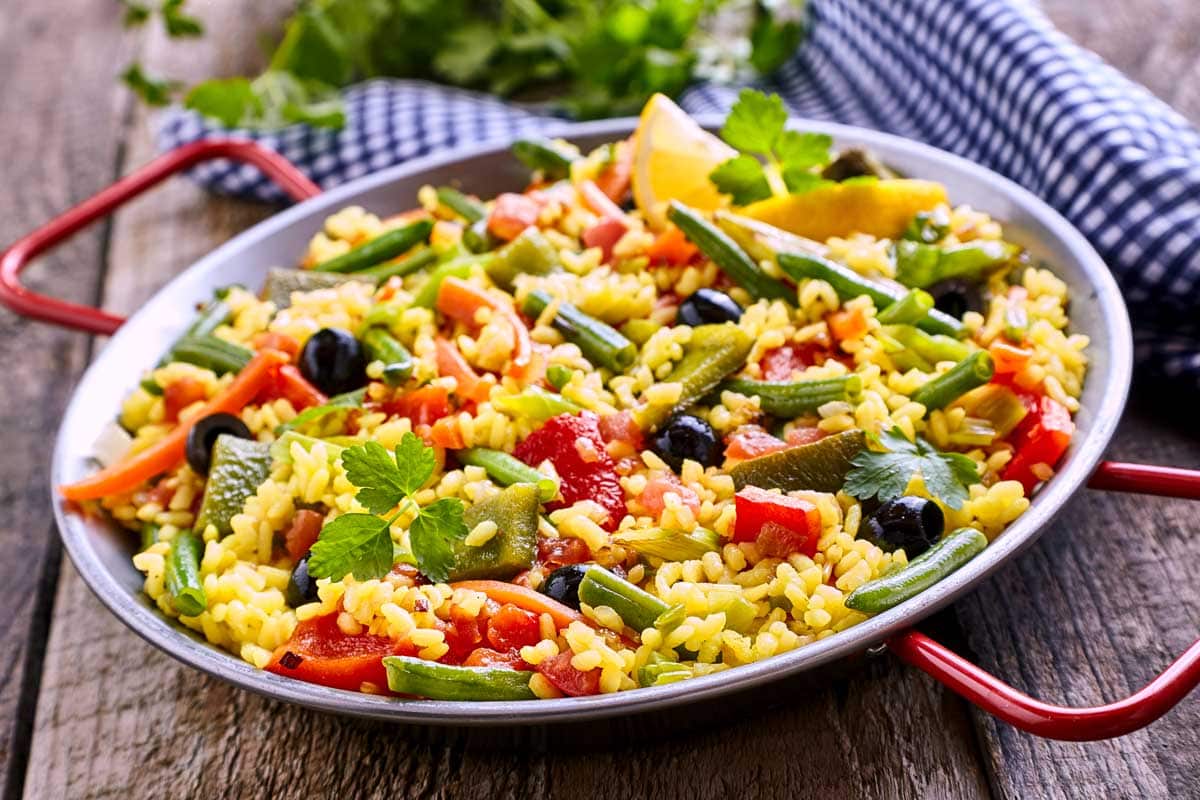
If you want the classic version with rabbit, chicken, flat green beans and garrofó beans, our Paella Valenciana is the one to make, and the history of paella explains how one Valencian rice dish became so many.
Is Saffron Worth Buying for Paella?
If you make paella a few times a year, it is worth trying at least once, and it costs less per pan than people think. Saffron is expensive per gram because it takes roughly 150 hand-picked flowers to make a single gram, but a 4-serving paella needs only about 0.2 grams. That is a few dollars a pan.
To use it, crumble the threads into a few tablespoons of hot stock and let them steep for 10 to 15 minutes before adding them to the pan. Buy whole threads, not powder, from a named origin such as Spanish La Mancha saffron.
There is also a middle road. Spanish paella seasoning packets such as Carmencita Paellero contain a little real saffron along with garlic, pimentón and curcumin, at a fraction of the cost of buying threads. One envelope seasons a 4-serving pan.
Paella Without Saffron FAQ
Is saffron necessary in paella?
No. It adds color and a subtle floral aroma, but a paella’s flavor comes mostly from the stock, sofrito and socarrat. Many cooks in Spain use yellow food coloring instead.
What can I use instead of saffron in paella?
The best option is 1/4 teaspoon of turmeric with 1 1/2 teaspoons of sweet pimentón for 4 servings. Annatto, safflower, Spanish colorante, sazón con azafrán and calendula also work.
How much turmeric replaces saffron in paella?
About 1/4 teaspoon of ground turmeric for 1 1/2 cups of rice. More than that and the rice starts to taste earthy and bitter.
Can I use paprika instead of saffron?
Yes, but on its own it makes the rice amber-orange rather than yellow. Pair sweet pimentón with a pinch of turmeric for a saffron-like gold.
Does Sazón Goya con azafrán have real saffron?
No. Its “azafrán” is Mexican saffron, which is safflower. The color comes from safflower, annatto, turmeric and food coloring.
What gives paella its yellow color?
Traditionally saffron. In many Spanish homes it is colorante alimentario, a yellow food coloring, and in others turmeric or a paella seasoning mix.
Can I use regular rice for paella without saffron?
Medium-grain rice such as Calrose works well with a little less stock. Long-grain rice does not absorb enough liquid and turns out dry and separate.
Why is my paella mushy?
Usually too much stock for the rice, the wrong rice, or stirring after the rice went in. Measure the stock, use bomba or medium-grain rice, and stir only once.
More from Spain’s rice kitchen: fideuà, the noodle paella; gambas al ajillo to start; a pitcher of sangria on the table; and our tour of the essential Spanish ingredients.
Paella Without Saffron Recipe
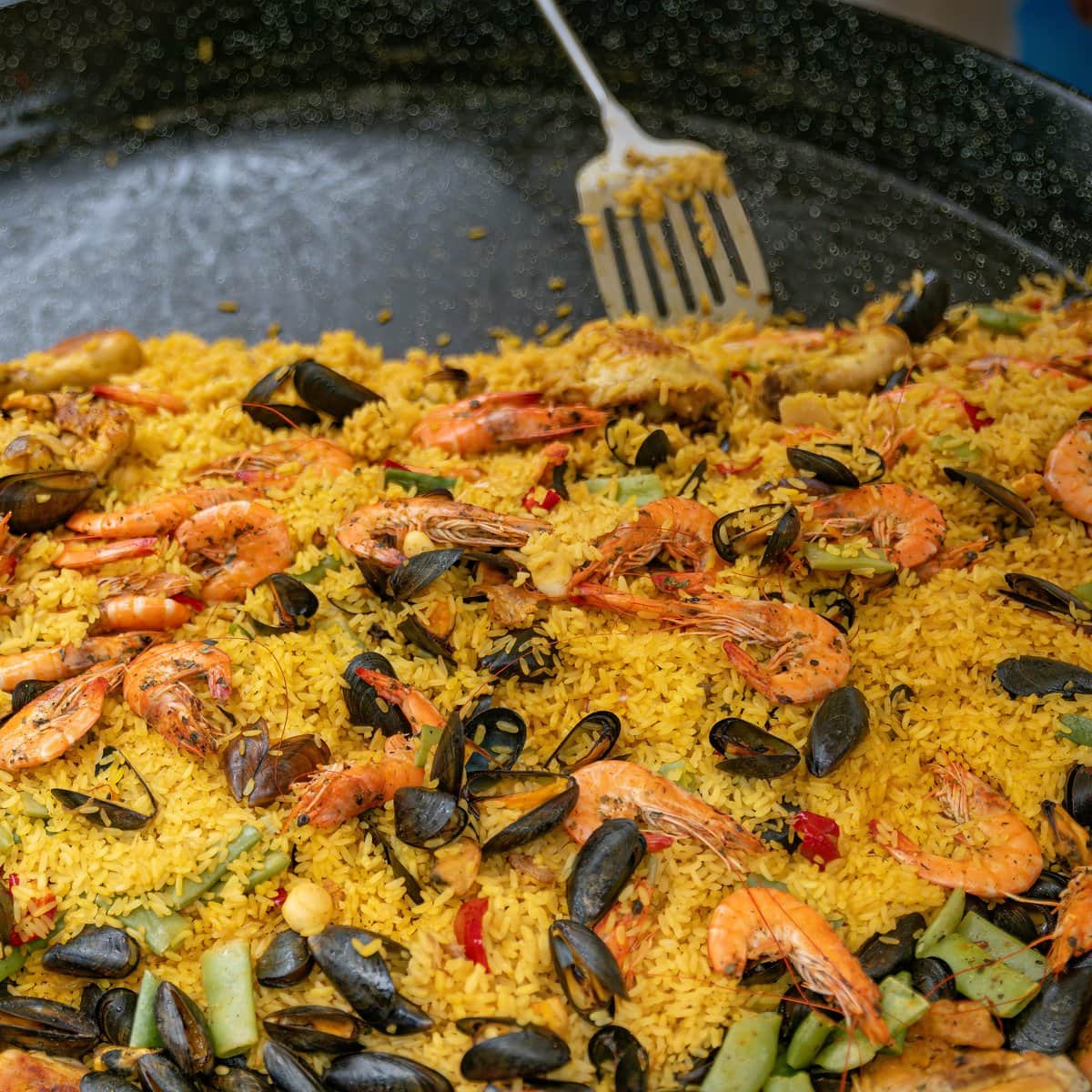
Paella Without Saffron (Chicken and Shrimp Paella)
A chicken and shrimp paella that gets its golden color from sweet pimentón and a pinch of turmeric instead of saffron, and its flavor from a slow tomato sofrito, good stock and a crisp socarrat. Bomba rice, one pan, about an hour.
Ingredients
- 4 1/2 cups (1.1 liters) chicken stock, homemade or low-sodium
- 1 large ripe tomato (about 8 oz / 225 g)
- 1 lb (450 g) boneless, skinless chicken thighs, cut into 1 1/2-inch pieces
- 1 1/2 teaspoons kosher salt, divided, plus more to taste
- 1/4 cup (60 ml) extra-virgin olive oil
- 12 large shrimp (about 1/2 lb / 225 g), shell-on or peeled and deveined
- 1 small yellow onion, finely chopped
- 1 red bell pepper, cut into thin strips
- 4 garlic cloves, finely chopped
- 1 1/2 teaspoons sweet pimentón (Spanish paprika)
- 1/4 teaspoon ground turmeric
- 1 1/2 cups (300 g) bomba rice
- 1/2 cup (70 g) frozen peas
- 12 mussels, scrubbed (optional)
- 2 tablespoons chopped flat-leaf parsley
- 1 lemon, cut into wedges
Instructions
- Heat the stock in a saucepan and keep it at a bare simmer. Grate the tomato on the large holes of a box grater, discarding the skin. Season the chicken with 1 teaspoon salt.
- Heat the olive oil in a 15-inch paella pan over medium-high heat. Sear the shrimp for about 1 minute per side, just until pink, then lift them onto a plate. They finish cooking on the rice later.
- Add the chicken to the same oil and brown it well on all sides, 8 to 10 minutes. Push it to the edge of the pan.
- Add the onion and red pepper strips to the center and cook until soft, about 5 minutes. Add the garlic and cook 1 minute.
- Lower the heat to medium. Sprinkle in the pimentón and turmeric and stir for 15 to 20 seconds, no longer, so the pimentón does not scorch. Immediately add the grated tomato and cook, stirring, until it darkens and turns jammy, 5 to 6 minutes.
- Pour in the hot stock and bring it to a boil. Taste it: it should be slightly saltier than you would want a soup. Adjust with salt now, because you cannot season the rice evenly later.
- Scatter the rice evenly across the pan and stir once to spread it out. From this point on, do not stir again.
- Boil hard for 8 minutes, then lower the heat to medium-low and simmer until the rice has absorbed almost all the stock, 8 to 10 minutes more. Rotate the pan if your burner is smaller than the pan. Scatter the peas over the top at the 10-minute mark, and press the shrimp (and mussels, if using) into the rice for the last 5 minutes.
- For the socarrat, raise the heat to medium-high for 1 to 2 minutes, until you hear the rice crackle and smell it toasting. Stop before it smells burnt.
- Take the pan off the heat, cover it loosely with foil or a clean kitchen towel and rest 5 minutes. Scatter with parsley and serve from the pan with lemon wedges.
Notes
Rice: Bomba absorbs about 3 times its volume in liquid. With Calrose or another medium-grain rice, use about 3 1/4 cups stock and expect it to cook a few minutes faster. Avoid long-grain rice.
Other saffron substitutes: instead of the pimentón and turmeric, use 1 packet of Sazón con azafrán (and cut the salt), 1/2 teaspoon ground annatto, 1 teaspoon safflower threads steeped in some of the hot stock, or Spanish yellow colorante following the package (about 1/2 teaspoon for 4 servings).
No paella pan: make a half batch in a 12-inch stainless or carbon-steel skillet. Nonstick will not form a socarrat.
More Spanish Foods
See all →
Jorge Garcia is the founder of AmigoFoods, where he has spent over 20 years helping readers discover authentic Latin American and Spanish cuisine. Raised in a Cuban-American household, Jorge learned to cook at the hands of his mother and grandmother, carrying forward generations of family recipes. That heritage, backed by his family’s four-generation history in the Latin food industry, inspired him to launch AmigoFoods in 2003. With more than 1,000 published articles on recipes, ingredients, and food culture, Jorge’s mission is simple: make authentic Latin cooking approachable for home cooks everywhere while honoring the traditions behind every dish.