

Fideuà (fee-deh-WAH), also spelled fideua, is a Spanish seafood dish of short, thin noodles cooked like a paella: toasted in olive oil, simmered in saffron fish stock with prawns, squid and monkfish until the pan is dry, then served with garlicky allioli. It comes from Gandia on the Valencian coast and takes under an hour at home.
Fideuà at a Glance
AmigoFoods may earn a commission from qualifying Amazon purchases made through links on this page.
What is fideuà?

Fideuà is a noodle dish from the Valencia region of Spain, cooked and served in the same wide, shallow pan used for paella. Instead of rice, it uses fideos: short wheat noodles about an inch long. The noodles are toasted in the oil left from searing the seafood, then they drink up a concentrated fish stock until the pan is nearly dry.
The name is Valencian. It comes from fideuada, roughly “a big batch of noodles,” and the word for the noodles themselves traces back through Andalusian Arabic. You will see it spelled fideuà (Valencian and Catalan), fideuá (Spanish) and plain fideua in English.
The classic version is a fideuà de marisco, made only with fish and shellfish. It is less heavy than it looks: there is no cream or cheese, just olive oil, a short sofrito of garlic, tomato and pimentón, and a stock that does the real work.
Fideuà vs. paella
Fideuà is often called “paella with noodles,” and the method really is close to a seafood paella. The differences are in the starch, the timing and the finish.
| Fideuà | Paella | |
|---|---|---|
| Starch | Short wheat noodles (fideos) | Short-grain rice such as bomba or senia |
| Protein | Seafood: prawns, squid or cuttlefish, monkfish | Chicken, rabbit and beans in paella valenciana; seafood in seafood paella |
| Cooking time in the stock | About 8 to 12 minutes | About 18 to 20 minutes |
| The prized finish | Noodle tips that curl up and crisp in a hot oven | Socarrat, the toasted crust on the bottom of the pan |
| Served with | Allioli, almost always | Lemon wedges; allioli is optional |
| Home ground | Gandia and the Valencian coast | The rice fields around Valencia’s Albufera lagoon |
Both dishes share the same golden rule: once the liquid goes in, you stop stirring. If you have cooked one, you can cook the other. For the rice side of the family, see our history of paella and our guide to whether paella should be wet or dry.
Where fideuà comes from
Gandia, a fishing port south of Valencia, claims fideuà as its own. The story told there is that in the early twentieth century, a cook on a Gandia fishing boat was tired of the captain eating more than his share of the crew’s arròs a banda, a rice dish cooked in fish stock. So one day he swapped the rice for noodles, hoping the captain would like it less. Everyone liked it more.
Another version says the rice simply ran out on board and the cook broke up pasta to use instead. Neither story can be proved, and other towns have their own claims. What is certain is that Gandia’s restaurants made the dish famous, and the town has held an international fideuà cooking competition every year since the mid-1970s.
From Gandia, fideuà spread along the whole Mediterranean coast of Spain, from Catalonia down to Murcia. Today you will find it on the menu of almost every rice restaurant in Valencia and Barcelona.
Which noodles to use
The noodle matters more than anything else in this dish. Spanish fideos are sold by number, from very fine to thick, and the bags labeled for fideuà are already cut to about an inch long.
In the US, look for bags of Spanish fideuà noodles online or in Spanish and Latin markets. Avoid thick spaghetti broken into pieces: it stays chewy in the middle long after the stock is gone.
Ingredients for fideuà

- Fideos: 100 grams (about 3½ oz) per person is the Valencian rule. See the noodle guide above.
- Fish stock: the soul of the dish. A homemade fumet is best, but a good store-bought seafood paella broth works, especially if you simmer the prawn shells in it for 10 minutes.
- Saffron: a generous pinch of threads, crumbled into the hot stock. Read more about saffron and how to buy Spanish saffron threads. No saffron? Our guide to cooking paella without saffron covers the substitutes.
- Prawns: large, shell-on prawns or shrimp. The shells and heads add flavor to the pan, and they look the part.
- Squid or cuttlefish: cut into rings or bite-size pieces. Cuttlefish is what Valencian cooks use.
- Monkfish: the firm white fish of choice in Gandia. Cod, halibut or any firm white fish will do.
- Tomato and garlic: for a quick sofrito. Grate a ripe tomato on a box grater and discard the skin.
- Sweet pimentón: a teaspoon of La Chinata sweet smoked paprika or any pimentón de la Vera.
- Olive oil: use a Spanish extra virgin, such as Casalbert Spanish extra virgin olive oil. You need a good ⅓ cup; the noodles toast in it.
For the rest of the Spanish pantry behind dishes like this one, see our guide to essential Spanish ingredients.
How to make fideuà
Here is the method in plain steps. Exact amounts and times are in the recipe card below.
1. Heat the stock with the saffron
Bring the stock to a gentle simmer, crumble in the saffron and keep it hot on a back burner. Cold stock stops the cooking and makes the noodles gummy.
2. Sear the prawns and set them aside
Heat the olive oil in the paella pan over medium-high heat. Sear the prawns for about a minute per side, just until they turn pink, then lift them out. They go back on top at the end.
3. Brown the squid and fish
Add the squid to the same oil and cook until the edges turn golden, 2 to 3 minutes. Add the monkfish for another minute or two, then push everything to the edge of the pan.
4. Make a quick sofrito
Add the garlic to the center of the pan for 30 seconds, then the grated tomato. Cook, stirring, for 4 to 5 minutes until the tomato is thick and darker and the oil starts to separate. Stir in the pimentón for just 15 seconds; it burns quickly.
5. Toast the noodles
Add the fideos and stir for 2 to 3 minutes so every noodle is coated in oil and sofrito and turns a shade darker. This is the step that makes fideuà taste nutty and keeps the noodles from going soft.

6. Add the stock and stop stirring
Pour in the hot stock, add the salt and spread the noodles into an even layer. Taste the liquid: it should be slightly saltier than you would like a soup to be. Boil hard for 3 minutes, then lower the heat and simmer without stirring until the stock is absorbed, 6 to 8 minutes for nº 2 noodles or 9 to 11 for nº 4. Nestle the prawns back on top for the last 3 minutes.
7. Finish in the oven
When the pan is dry and you hear a light crackle, slide it into a 425°F (220°C) oven or under the broiler for 3 to 5 minutes. The tips of the noodles curl up and turn crisp, which is how fideuà is served in Gandia. Rest the pan for 3 minutes before serving.
How to serve fideuà
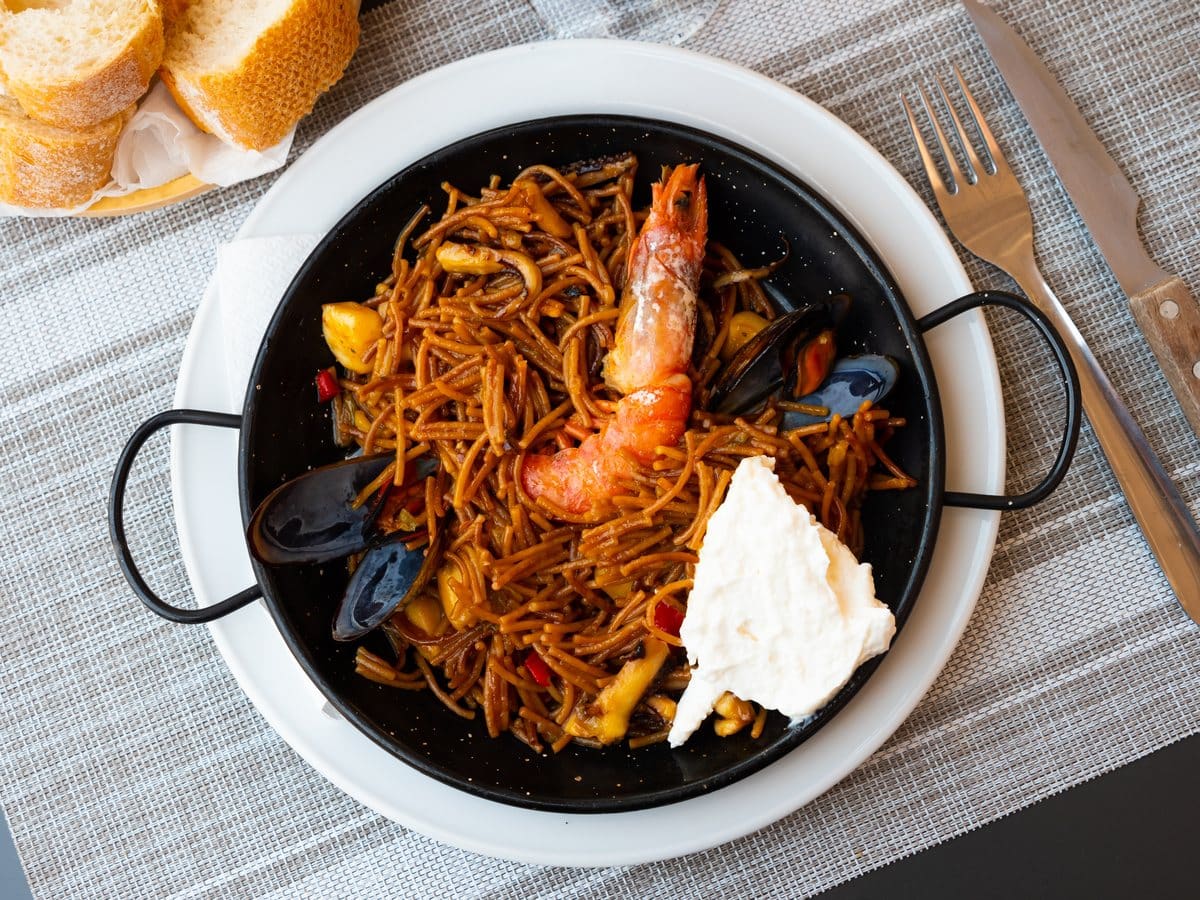
Bring the pan straight to the table with lemon wedges and a bowl of allioli. In Valencia, allioli is not optional with fideuà: each person stirs a spoonful into their portion so it melts into the hot noodles. Traditional allioli is just garlic, salt and olive oil pounded into an emulsion; the quick version in the recipe card uses mayonnaise and fresh garlic.
Start the meal with a few tapas such as gambas al ajillo, pan con tomate or patatas bravas, and finish with crema catalana. To drink, a crisp Spanish white or a glass of cava is the classic match; for a party, a jug of agua de Valencia keeps it local.
Fideuà variations
- Fideuà negra: black fideuà, colored and flavored with squid ink stirred into the stock. Usually made with squid or cuttlefish only, and always served with allioli.
- Fideuà de marisco: the shellfish-heavy version, with mussels, clams or langoustines added in the last few minutes.
- Rossejat de fideus: the Catalan cousin. The noodles are fried in oil until deep golden before a small amount of fish stock goes in, so the result is drier and crunchier.
- Fideuà de carne or de verduras: modern versions with pork ribs, chicken or vegetables, cooked in meat or vegetable stock. Good food, but not a fideuà in Gandia.

Tips for the best fideuà
- Use the right pan size. A 15- to 16-inch pan keeps the noodles in a thin layer so they cook evenly. Our paella pan buyer’s guide covers the options; the Garcima 15-inch carbon steel pan is the classic choice.
- Keep the stock hot. Hot stock keeps the boil going from the second it hits the pan.
- Season the stock, not the noodles. Once the noodles have soaked it up, you cannot fix bland fideuà.
- Do not stir after the stock goes in. Stirring releases starch and turns fideuà into a sticky pasta dish.
- Have extra hot stock ready. Thicker noodles or a wide burner may need up to a cup more. Add it a splash at a time around the edges.
- Do not overcook the seafood. Searing the prawns first and returning them at the end keeps them juicy.
Storing and reheating
Fideuà is at its best within minutes of leaving the oven, while the noodles are crisp on top and tender underneath. Leftovers keep in an airtight container in the fridge for up to 2 days. Reheat in a skillet with a splash of stock over medium heat, covered for the first few minutes, then uncovered to crisp the bottom. Do not freeze it: the noodles turn mushy when thawed.
Fideuà FAQ
Is fideuà Valencian or Catalan?
Fideuà comes from Gandia, in the Valencia region. It is now just as common in Catalonia, which is why many English recipes call it “Catalan fideuà.” The Catalan dish with a similar idea is rossejat de fideus.
How do you pronounce fideuà?
Say it fee-deh-WAH, with the stress on the last syllable. The accent in fideuà marks that stress.
What is the difference between fideuà and paella?
Fideuà uses short wheat noodles instead of rice, is almost always made with seafood, cooks faster, and is served with allioli. The pan, the stock and the no-stirring rule are the same.
Can I make fideuà with spaghetti?
Yes, if it is thin. Angel hair, vermicelli or thin spaghetti broken into 1-inch pieces all work. Regular spaghetti stays chewy in the center and is a last resort.
Can I make fideuà without a paella pan?
Yes. Use the widest oven-safe skillet you have. A 12-inch skillet fits half the recipe, which serves 2.
Is fideuà gluten-free?
No. Fideos are wheat noodles. For a gluten-free version, make a seafood paella with rice instead.
Fideuà Recipe
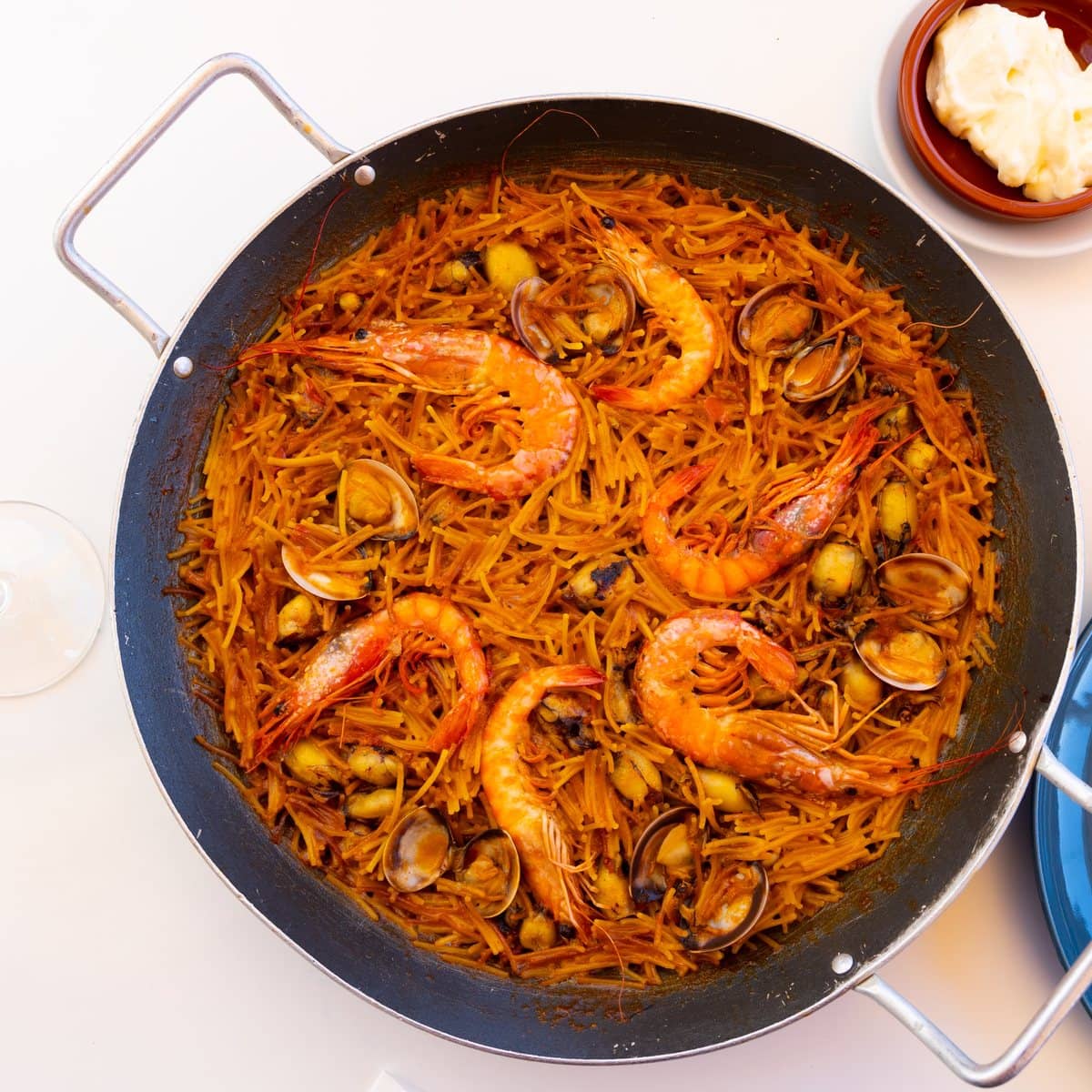
Fideuà (Spanish Seafood Noodle Paella)
Fideuà is Valencia's seafood noodle paella: short Spanish noodles toasted in olive oil, cooked in saffron fish stock with prawns, squid and monkfish, then crisped in the oven and served with allioli.
Ingredients
For the fideuà
- 14 oz (400 g) Spanish fideos for fideuà (nº 2 or nº 4), or angel hair pasta broken into 1-inch pieces
- 5 1/2 cups (1.3 L) fish or seafood stock, divided
- 1 generous pinch saffron threads (about 20 threads)
- 1/3 cup (80 ml) Spanish extra virgin olive oil
- 12 large shell-on prawns or shrimp (about 1 lb / 450 g)
- 8 oz (225 g) squid or cuttlefish, cleaned and cut into rings or 1-inch pieces
- 8 oz (225 g) monkfish or other firm white fish, cut into 1-inch cubes
- 4 garlic cloves, finely chopped
- 1 large ripe tomato, grated, skin discarded (about 1/2 cup), or 1/2 cup canned crushed tomatoes
- 1 teaspoon sweet smoked pimentón (pimentón de la Vera dulce)
- 1 teaspoon kosher salt, plus more to taste
Quick allioli
- 1/2 cup (120 g) mayonnaise
- 2 garlic cloves, finely grated
- 1 teaspoon lemon juice
- 1 pinch salt
To serve
- Lemon wedges
- Chopped parsley (optional)
Instructions
- Heat the stock. Bring the stock to a gentle simmer in a saucepan, crumble in the saffron and keep it hot over low heat.
- Sear the prawns. Heat the olive oil in a 15- to 16-inch paella pan over medium-high heat. Sear the prawns about 1 minute per side, just until pink, then transfer to a plate.
- Brown the squid and fish. Add the squid to the pan and cook until the edges turn golden, 2 to 3 minutes. Add the monkfish and cook 1 to 2 minutes more, then push everything to the edges of the pan.
- Make the sofrito. Add the garlic to the center of the pan and cook 30 seconds. Add the grated tomato and cook, stirring, 4 to 5 minutes, until thick, darker and the oil starts to separate. Stir in the pimentón for 15 seconds.
- Toast the noodles. Add the fideos and stir for 2 to 3 minutes, until coated in oil and sofrito and a shade darker.
- Add the stock. Pour in 4 1/2 cups of the hot stock, add the salt and spread the noodles into an even layer. Taste the liquid and add more salt if needed; it should taste slightly salty.
- Simmer without stirring. Boil hard for 3 minutes, then reduce to medium-low and cook without stirring until the stock is absorbed, 6 to 8 minutes for nº 2 noodles or 9 to 11 minutes for nº 4. If the noodles are still firm when the pan is dry, add the reserved hot stock a splash at a time around the edges. Arrange the prawns on top for the last 3 minutes.
- Crisp the top. Heat the oven to 425°F (220°C) while the noodles simmer. When the pan is dry and crackling, transfer it to the oven (or under the broiler) for 3 to 5 minutes, until the noodle tips curl up and crisp. No oven-safe pan: raise the heat for 1 to 2 minutes to toast the bottom instead.
- Make the allioli. Stir together the mayonnaise, grated garlic, lemon juice and salt.
- Rest and serve. Let the fideuà rest 3 minutes off the heat. Serve from the pan with lemon wedges and the allioli.
Notes
- Noodles: Spanish fideos for fideuà come in nº 2 (thinner, faster) and nº 4 (thicker, often hollow). Angel hair or thin vermicelli broken into 1-inch pieces is the best substitute; start checking it after 8 minutes.
- Stock: for more flavor, simmer the prawn heads and shells in store-bought stock for 10 minutes and strain before adding the saffron.
- Pan size: a 12-inch oven-safe skillet holds half the recipe (serves 2).
- Leftovers: refrigerate up to 2 days and reheat in a skillet with a splash of stock. Do not freeze.
More Spanish seafood dishes
- Seafood paella: fideuà’s rice twin.
- Paella valenciana: the original, with chicken, rabbit and beans.
- Pulpo a la gallega: Galician octopus with paprika and olive oil.
- Spanish seafood tapas: small plates for before the pan comes out.
- Spanish seafood dishes: our full roundup.
Looking for more? Browse our Spanish main dishes or the full guide to delicious Spanish foods.
More Spanish Foods
See all →
Jorge Garcia is the founder of AmigoFoods, where he has spent over 20 years helping readers discover authentic Latin American and Spanish cuisine. Raised in a Cuban-American household, Jorge learned to cook at the hands of his mother and grandmother, carrying forward generations of family recipes. That heritage, backed by his family’s four-generation history in the Latin food industry, inspired him to launch AmigoFoods in 2003. With more than 1,000 published articles on recipes, ingredients, and food culture, Jorge’s mission is simple: make authentic Latin cooking approachable for home cooks everywhere while honoring the traditions behind every dish.