

Pisco sour is safe for most healthy adults, but it is never completely risk-free. The classic Peruvian recipe shakes a raw egg white into the drink, and raw eggs can carry Salmonella. The odds are small, and you can bring the egg risk down to zero with an egg-free foamer like aquafaba.
Below are the real numbers, who should skip raw egg altogether, what the pisco and lime actually do to bacteria, and an egg-free pisco sour recipe you can make in five minutes. Want the classic version with fresh egg white? Our pisco sour recipe has it.
The short answer
Skip raw egg if you are 65 or older or have a weakened immune system. If you are pregnant, skip the drink entirely, because of the alcohol.
Egg-Free Pisco Sour at a Glance
Is Pisco Sour Safe to Drink?
Yes, for most people, most of the time. A pisco sour contains one raw egg white, so the real question is whether a raw egg white is safe. U.S. food-safety agencies advise against eating raw or undercooked eggs because of Salmonella, and that advice covers cocktails too.
The honest framing: a pisco sour made with a fresh, refrigerated, uncracked egg carries a low but real risk. Pasteurized eggs or an egg-free foamer take the egg risk away without changing the drink much.
In Peru, where the pisco sour is the national cocktail and has its own national day on the first Saturday of February, bartenders crack a fresh egg white into nearly every one. That is part of the drink’s identity. It is not a reason to skip basic egg handling.
The Real Salmonella Odds in a Pisco Sour
The most-cited U.S. estimate, from USDA risk-assessment research, is that about 1 in 20,000 eggs is contaminated inside the shell with Salmonella Enteritidis. Even a contaminated egg that stays cold may hold too few bacteria to make a healthy adult sick.
Two details work in a pisco sour’s favor:
- It uses only the white. Egg white is alkaline and full of antimicrobial proteins such as lysozyme and ovotransferrin, so contamination inside an egg is more often found near the yolk.
- The shell is the bigger hazard. Bacteria from the hen’s surroundings can sit on the outside of the shell, and careless cracking carries them into the white. That part is in your hands.
Here is what 1 in 20,000 means in practice. These are the odds of meeting a contaminated egg, not of getting sick, which is lower still.
| If you make… | Odds of a contaminated egg |
|---|---|
| 1 pisco sour | About 1 in 20,000 |
| A pitcher-night round of 12 | About 1 in 1,700 |
| 1 pisco sour every week for a year | About 1 in 385 |
| Any number made with aquafaba or a foamer | No egg risk |
When Salmonella does strike, the CDC lists diarrhea, fever and stomach cramps, usually starting 6 hours to 6 days after exposure and lasting 4 to 7 days. Across all foods it causes about 1.35 million infections, 26,500 hospitalizations and 420 deaths a year in the United States.
Why Is There Raw Egg in a Pisco Sour?
Egg white does three jobs. Shaken hard, its proteins unfold and trap air, building the thick white cap. It rounds off the sharp lime so the drink tastes silky instead of tart. And it gives the bitters somewhere to sit, which is where the three brown dots on top come from.

The drink took shape in Lima in the early 20th century at Morris’ Bar, run by the American Victor Morris, and the egg white and bitters became standard in the version credited to his bartender Mario Bruiget. Read the full story in our history of the pisco sour.
Does the Alcohol or Lime Juice Kill Salmonella?
Partly, and slowly. Peruvian pisco is bottled at 38 to 48% alcohol, but once it is shaken with lime, syrup, egg white and melting ice, a pisco sour lands around 18%. For comparison, the CDC recommends hand sanitizers with at least 60% alcohol. The drink does not sterilize anything on contact.
The best evidence comes from food scientists at the Federal University of Rio Grande do Sul in Brazil, who made Peruvian pisco sours with deliberately contaminated eggs. At 18% alcohol and a pH of 3.0, the Salmonella count fell by at least 99.99% after 6 minutes, and their model predicted the whole population would be gone at about 9 minutes. Alcohol and acid together worked faster than either one alone.

The catch: almost nobody waits 9 minutes. By then the foam has slumped and the drink has warmed. The same researchers concluded that a pisco sour’s safety still depends on the quality of the eggs that go into it.
Who Should Skip a Raw-Egg Pisco Sour
Most healthy adults who get Salmonella recover on their own. These groups face a higher chance of serious illness and should use pasteurized eggs or an egg-free foamer, or skip the drink.
This is general food-safety information, not medical advice. If you have a health condition, ask your doctor.
How to Make a Raw-Egg Pisco Sour Safer at Home
If you want the classic drink with a real egg white, these steps cut the risk as far as it can go.
- Use pasteurized eggs when you can. Pasteurized in-shell eggs are gently heat-treated to kill Salmonella without cooking them, and the FDA recommends them for any recipe served raw. Give the dry shake an extra 10 seconds.
- Buy them cold and keep them cold. Choose eggs from a refrigerated case and store them at 40°F (4°C) or below, in the carton, on a shelf rather than in the door.
- Check every shell. Skip any egg that is cracked, dirty or leaking.
- Use fresh eggs. Use them well before the date on the carton.
- Crack into a separate cup. Crack on a flat surface into a small cup, not straight into the shaker. One bad egg never reaches the drink, and stray shell is easy to fish out.
- Do not separate shell to shell. Passing the yolk between shell halves drags the outside of the shell through the white. Use an egg separator or a clean spoon.
- Wash up. Wash your hands and anything that touched the shells.
- Serve right away. Do not let egg-white drinks sit at room temperature, and do not separate a batch of whites to keep for later.

Egg White Substitutes for Pisco Sour, Compared
Every option below goes into the shaker in place of the egg white and uses the same two-shake method. Pasteurized egg products keep the classic flavor; aquafaba and commercial foamers drop the egg altogether.
| Option | Per drink | Egg risk | Vegan | Foam and taste |
|---|---|---|---|---|
| Fresh egg white | 1 large white (about 1 oz / 30 ml) | Low | No | The benchmark: dense, silky, long-lasting |
| Pasteurized in-shell egg | 1 large white | Near zero | No | Very close to fresh; shake a little longer |
| Pasteurized carton whites | 1 oz (30 ml) | Near zero | No | Foams, but often looser; good for big batches |
| Egg white powder | 2 tsp powder + 2 Tbsp water | Near zero | No | Close to fresh once fully dissolved; shelf-stable |
| Aquafaba | 1 oz (30 ml) | None | Yes | Thick foam, faint savory note, fades a bit sooner |
| Commercial foamer | A few dashes or drops | None | Usually | Lighter, airier foam with no egg smell |
| No foamer | None | None | Yes | Thin froth, sharper and more tart |
As an Amazon Associate, AmigoFoods earns from qualifying purchases.
Pasteurized egg whites and egg white powder
If you love the classic taste, this is the easy fix. Carton whites are pasteurized, so pour about 1 ounce per drink and add 10 to 15 seconds to the dry shake, since many brands foam a little looser than fresh. Egg white powder keeps in the pantry for months: whisk 2 teaspoons into 2 tablespoons of water and let it sit a few minutes until no clumps remain.
Aquafaba
Aquafaba is the liquid in a can of chickpeas, and it whips up much like egg white. It is the go-to for vegan and egg-allergy pisco sours. Use about 1 ounce per drink and shake it longer than you would egg. Pick a can with little or no added salt, such as Goya Low Sodium Chickpeas, so the drink does not taste briny, and save the chickpeas for a salad or stew.
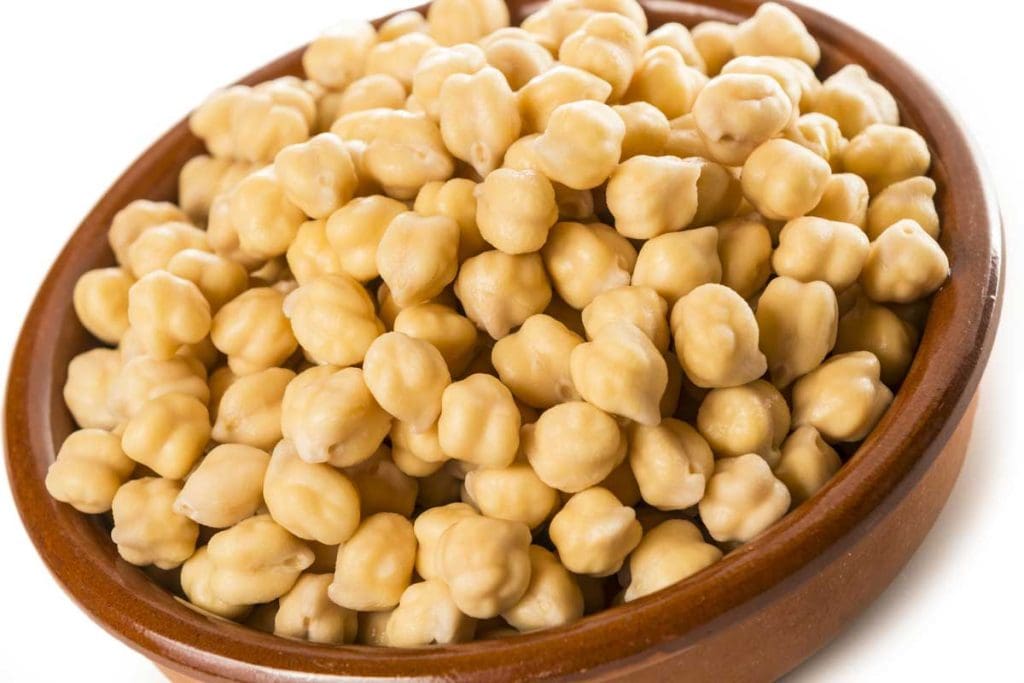
If your aquafaba seems thin and watery, simmer it until it reduces by about a third, then cool it completely before shaking.
Commercial cocktail foamers
Bars that do not want to stock eggs reach for foaming agents such as Fee Brothers Fee Foam or Ms. Better’s Bitters Miraculous Foamer. A few dashes or drops do the job, so one bottle lasts a long time. Follow the dose on the label. The foam is lighter than egg, and it never develops that eggy smell.
Leave it out
You can skip the foamer and shake pisco, lime and syrup hard with ice. You get a thin froth instead of a cap, and the drink tastes sharper, so you may want a touch more syrup. In Peru you can ask for a pisco sour sin clara, without egg white.
How to Make a Pisco Sour Without Egg
This is the classic Peruvian build with aquafaba in place of the egg white. Measurements match our classic pisco sour, so you can switch between the two.
- Chill the glass. Put a coupe or rocks glass in the freezer while you measure.
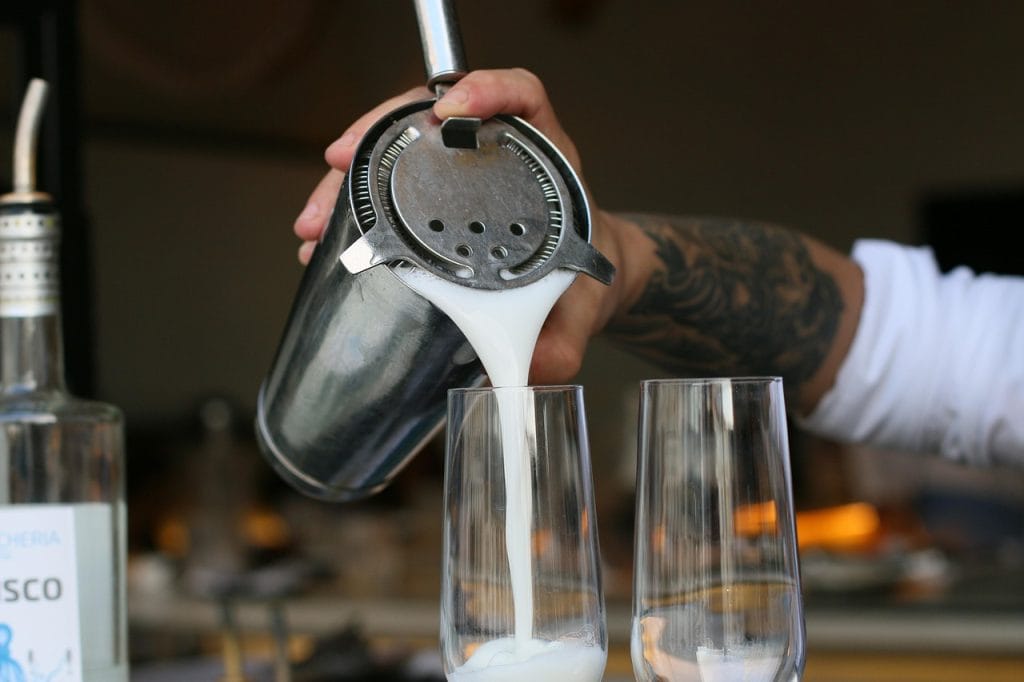
- Dry shake for 30 seconds. Shake the pisco, lime juice, simple syrup and aquafaba with no ice. This is where the foam is built.
- Shake again with ice. Fill the shaker halfway with ice and shake about 15 seconds, until the tin is frosty.
- Strain and finish. Strain through a fine-mesh strainer, wait 30 seconds for the cap to rise, then add 3 drops of bitters.

Pisco Sour Without Egg (Aquafaba Pisco Sour)
An egg-free pisco sour that keeps the thick white foam. Aquafaba from a can of chickpeas replaces the raw egg white, so there is no egg-borne salmonella risk and the drink is egg-free.
Ingredients
- 2 fl oz (60 ml) Peruvian pisco, such as Quebranta or acholado
- 1 fl oz (30 ml) freshly squeezed lime juice
- 3/4 fl oz (22 ml) simple syrup (1:1 sugar to water)
- 1 fl oz (30 ml) aquafaba (liquid from a can of low-sodium chickpeas)
- Ice cubes, enough to fill the shaker halfway
- 3 drops Angostura or Amargo Chuncho bitters, to finish
Instructions
- Chill a coupe or rocks glass in the freezer while you measure.
- Add the pisco, lime juice, simple syrup and aquafaba to a cocktail shaker with no ice. Seal and shake hard for 30 seconds. This dry shake builds the foam, and aquafaba needs a little longer than egg white.
- Add ice to fill the shaker halfway, seal again and shake for 15 seconds, until the tin is frosty.
- Strain into the chilled glass through a fine-mesh strainer. Let it stand for 30 seconds so the foam can rise into a white cap.
- Place 3 drops of bitters on the foam and drag a toothpick through them if you like. Serve right away.
Notes
Aquafaba: use the liquid from a can of unsalted or low-sodium chickpeas so the drink does not taste salty. Keep leftover aquafaba covered in the fridge for up to 3 days, or freeze it in an ice cube tray.
Same method, other foamers: 1 large pasteurized egg white, 2 teaspoons egg white powder whisked into 2 tablespoons water, or 2 to 3 dashes of a commercial cocktail foamer all work in place of the aquafaba.
Vegan check: aquafaba makes the foam egg-free, but confirm your bitters with the producer if you need the drink fully vegan.
Ordering a Pisco Sour at a Bar
You have less control at a bar, but a couple of questions go a long way.
- Ask what they use. Fresh egg, pasteurized egg or a foamer? In the U.S., the FDA Food Code calls for a consumer advisory on menus that serve raw or undercooked animal foods, so the menu itself may tell you.
- Watch for batched whites. Some bars separate whites ahead and keep them in a squeeze bottle. That is fine when it is kept cold and made that day, but one bad egg in a batch reaches every drink poured from it.
- Busy egg-white bars are a good sign. A bar that features sours goes through eggs fast, so they are fresher.
- In Peru, just ask. Fresh egg white is standard. If you are in a higher-risk group, order it sin clara.
Why Pisco Sours Can Smell Like Egg
As an egg-white drink warms, the foam starts to give off a faint sulfur smell, which some drinkers compare to wet dog. The drops of bitters on top help mask it. Drink a pisco sour within about 10 minutes of shaking it, and twist a strip of lime peel over the glass if you like more aroma. Aquafaba and commercial foamers do not have this problem.
Pisco Sour Safety FAQ
Can you get salmonella from a pisco sour?
Yes, but it is unlikely. The risk comes from the raw egg white, and only about 1 in 20,000 U.S. eggs is estimated to carry Salmonella inside. Pasteurized eggs or aquafaba remove that risk.
Is it safe to drink a pisco sour while pregnant?
No. The alcohol is the bigger concern: the CDC says no amount of alcohol is known to be safe during pregnancy. A non-alcoholic Peruvian drink such as chicha morada is a better choice.
Does the alcohol in pisco kill salmonella?
Not quickly. A finished pisco sour is about 18% alcohol. Lab work on pisco sours found alcohol and lime together needed roughly 6 to 9 minutes to wipe out Salmonella, which is longer than most people take to drink one.
Are egg whites in cocktails safe?
For most healthy adults the risk is low, and the same rules apply to any egg-white sour, from a whiskey sour to a Clover Club. Use fresh, refrigerated, uncracked eggs, or pasteurized whites, and drink it right away.
Is a pisco sour vegan?
Not the classic one, which uses egg white. Make it with aquafaba or a vegan foamer and check that your bitters are vegan.
Can I make pisco sours ahead for a party?
Mix the pisco, lime juice and simple syrup up to a few hours ahead and keep the batch in the fridge. Add the egg white or aquafaba and shake each drink to order, since the foam only lasts a few minutes.
Is a Chilean pisco sour safer?
Only if it is made without egg. Chilean-style pisco sours are often shaken without egg white, which removes the egg risk. When egg white is used, the risk is the same as in the Peruvian version.
More Peruvian Drinks to Try
Ready to shake one? Start with our classic pisco sour recipe, then learn what goes into the bottle in our guide to pisco, Peru’s grape brandy.
Prefer a drink with no egg at all? The chilcano is Peru’s other pisco classic, built with ginger ale and lime. For more ideas, browse our top 10 pisco cocktails, what they drink in Peru, all of our Peruvian drink recipes and our guide to Latin American and Spanish cocktails.
Stocking a Peruvian pantry? Browse our Peruvian ingredients list on Amazon.
More Peruvian Foods
See all →
Jorge Garcia is the founder of AmigoFoods, where he has spent over 20 years helping readers discover authentic Latin American and Spanish cuisine. Raised in a Cuban-American household, Jorge learned to cook at the hands of his mother and grandmother, carrying forward generations of family recipes. That heritage, backed by his family’s four-generation history in the Latin food industry, inspired him to launch AmigoFoods in 2003. With more than 1,000 published articles on recipes, ingredients, and food culture, Jorge’s mission is simple: make authentic Latin cooking approachable for home cooks everywhere while honoring the traditions behind every dish.