

Mazamorra Paisa is a Colombian corn dish associated with Antioquia, served with its cooking liquid, panela and optional milk. Slow simmering softens the corn into a mild, comforting dessert or accompaniment.
Mazamorra Paisa at a Glance
What Is Mazamorra Paisa? (Traditional Colombian Corn Dessert Explained)
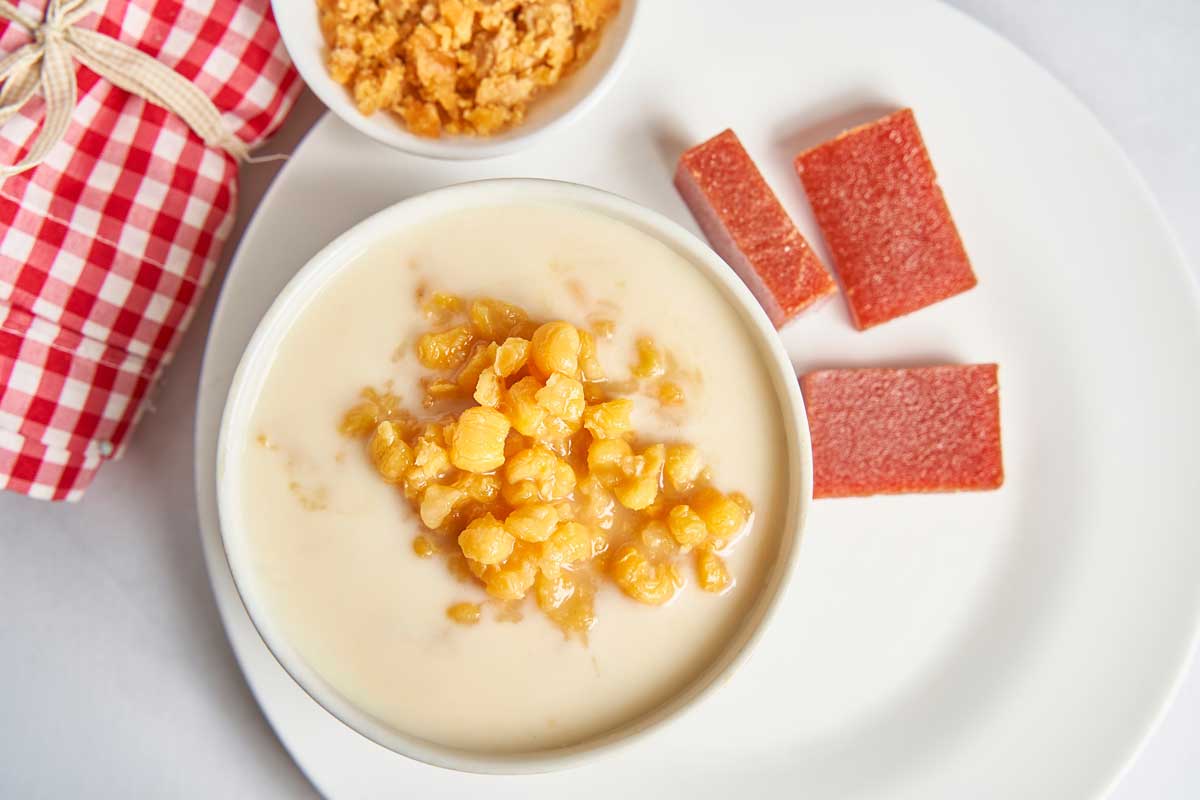
Mazamorra Paisa is a traditional Colombian corn dessert made from slow-cooked dried white corn kernels, typically served with panela syrup or milk.
Originating in the Antioquia region, it’s one of the most iconic dishes of Paisa cuisine.
Unlike creamy puddings made from ground corn, Mazamorra Paisa features whole, tender kernels simmered until soft but still slightly chewy.
The flavor is naturally mild — subtly sweet, earthy, and comforting.
Here’s what defines this traditional Colombian dish:
- Made with dried white corn (maíz blanco)
- Slow-cooked until the kernels fully bloom and soften
- Served with grated or melted panela (unrefined cane sugar)
- Sometimes paired with milk or condensed milk
- Naturally gluten-free
- Traditionally enjoyed after savory meals like Bandeja Paisa Simple.
Rustic. Deeply rooted in Colombian tradition.
Mazamorra Paisa is most commonly known by that exact name, especially in Colombia’s Antioquia region.
However, it can go by a few alternative names depending on the context:
Other Names You Might Hear
- Mazamorra Antioqueña – Highlights its origin in the Antioquia region.
- Mazamorra de Maíz Peto – Refers specifically to the hominy-style white corn (maíz peto) used to make it.
- Simply Mazamorra – In Colombia, this usually implies the Paisa-style version unless specified otherwise.
Important Note
Outside of Colombia, the word mazamorra can mean very different dishes.For example:
- In Peru, mazamorra morada is a purple corn pudding.
- In other Latin American countries, mazamorra may refer to a thick porridge or dessert made with different grains.
So while Mazamorra Paisa doesn’t have a drastically different official name, it’s sometimes labeled more specifically based on its region or corn type.
Mazamorra Paisa isn’t just dessert — it’s a symbol of Antioquian hospitality and Colombia’s long agricultural heritage built around corn.
Mazamorra has relatives across Latin America. In Brazil, the same idea becomes canjica, white corn simmered in milk with condensed milk, cinnamon and coconut.
Authentic Ingredients for Traditional Mazamorra Paisa
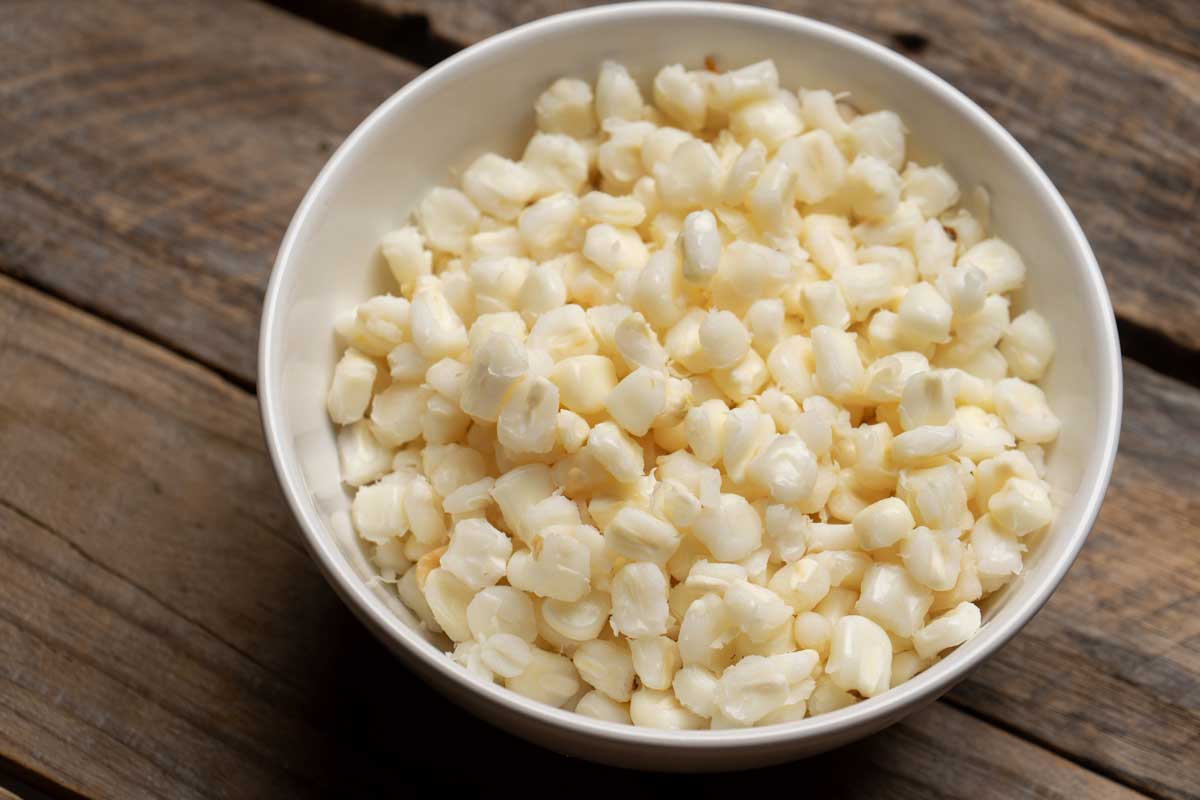
Traditional Mazamorra Paisa is beautifully simple — just a handful of humble ingredients that allow the natural flavor of corn to shine.
The authenticity lies in quality and technique, not complexity.
Here’s what you need for the real, classic version:
- Dried peeled white corn (maíz peto): The heart of the dish. Dried peeled kernels are soaked and slow-cooked until tender but still slightly chewy. Hominy-style corn works best.
- Water: Used for soaking and simmering the corn for several hours until it “opens” and softens.
- Panela (unrefined cane sugar): Traditionally grated or melted into syrup and poured over the corn. It adds deep caramel notes and mild molasses flavor.
- Milk (optional but common): Many Colombians serve Mazamorra Paisa with a splash of whole milk for added creaminess.
- Condensed milk (modern variation): Not traditional, but sometimes added for extra sweetness in contemporary versions.
That’s it. No spices. No thickeners. No heavy cream.

Authentic Mazamorra Paisa is all about patience — letting the corn slowly soften while preserving its natural texture and flavor.
The simplicity is exactly what makes it timeless.
Step-by-Step: How to Make Mazamorra Paisa at Home
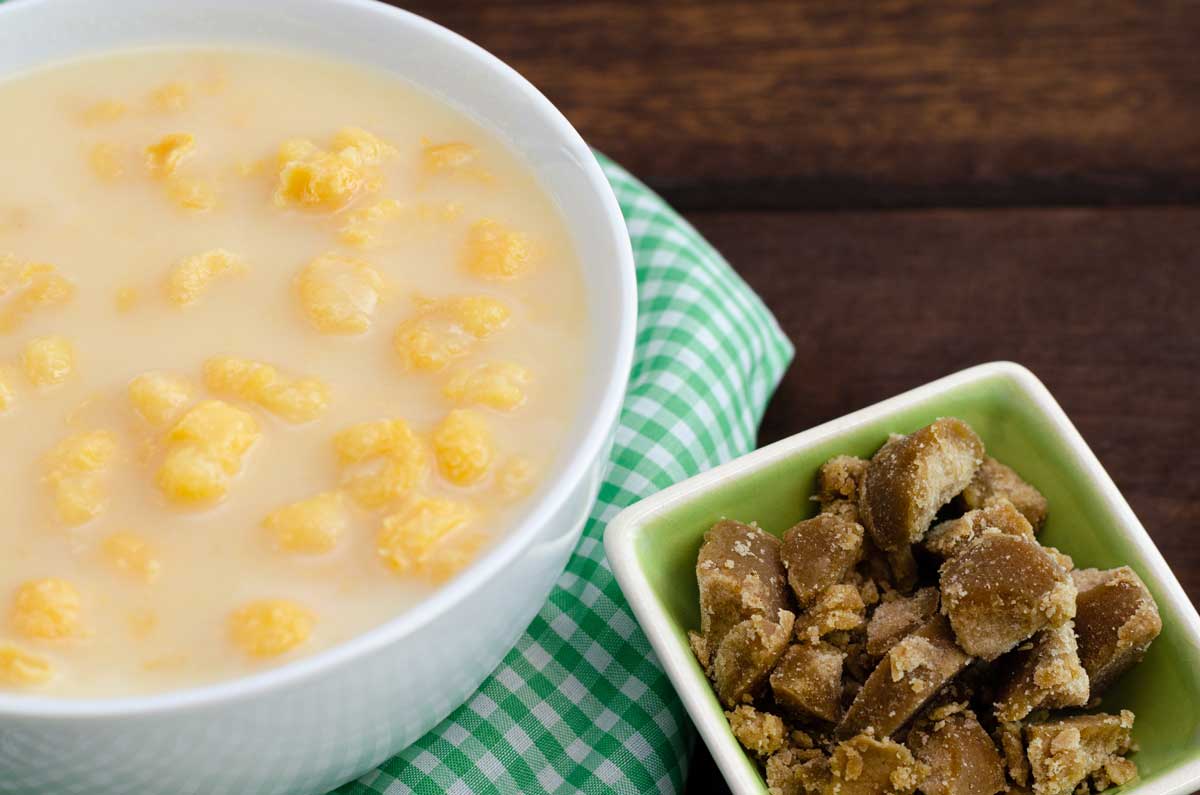
Ingredients
- 2 cups dried peeled white corn for mazamorra (maíz peto), or dried hominy
- Water, for soaking and cooking, plus more as needed
- 1 cup grated panela, or to taste
- 2–3 tablespoons water, for the panela syrup
- 1–2 cups whole milk, optional, for serving
- Sweetened condensed milk, optional, for serving
Method
- Rinse the dried corn and cover generously with water in a large bowl. Soak for 8–12 hours, preferably in the refrigerator.
- Drain and rinse. Put the corn in a large pot and add fresh water to cover by 2–3 inches. Bring to a boil, then reduce to a gentle simmer. Cook for about 2–3 hours, stirring occasionally and adding hot water as needed to keep the corn covered. Older or larger kernels may take longer.
- Check several kernels: they should be soft throughout with no hard center, while retaining some texture. Keep enough cooking liquid to spoon into the serving bowls.
- Near the end of cooking, heat the grated panela with 2–3 tablespoons water in a small saucepan, stirring until dissolved. Add a little more water if needed to make a pourable syrup, or serve panela grated on the side.
- Divide the cooked corn and some cooking liquid among 6 bowls. Add panela syrup to taste and optional milk just before serving. Serve warm, or refrigerate promptly and serve chilled.
Plan about 13 hours 10 minutes using a 10-hour soak, 10 minutes preparation and 3 hours stovetop cooking. The actual soak can be 8–12 hours and cooking about 2–3 hours or longer, depending on the corn.
For a shortcut, use about 4 cups drained canned hominy, skip soaking and simmer in fresh water for about 20 minutes before serving. This has a softer texture than dried corn. Pressure-cooker timing varies; follow the cooker and corn-package directions and allow for pressure build-up and release.
Cool cooked corn in shallow containers and refrigerate within 2 hours for up to 4 days. Keep panela syrup and milk separate until serving. The plain cooked corn can be frozen for up to 2 months, though its texture may soften. Reheat with a splash of water until thoroughly hot.
The Origins and History of Colombian Mazamorra
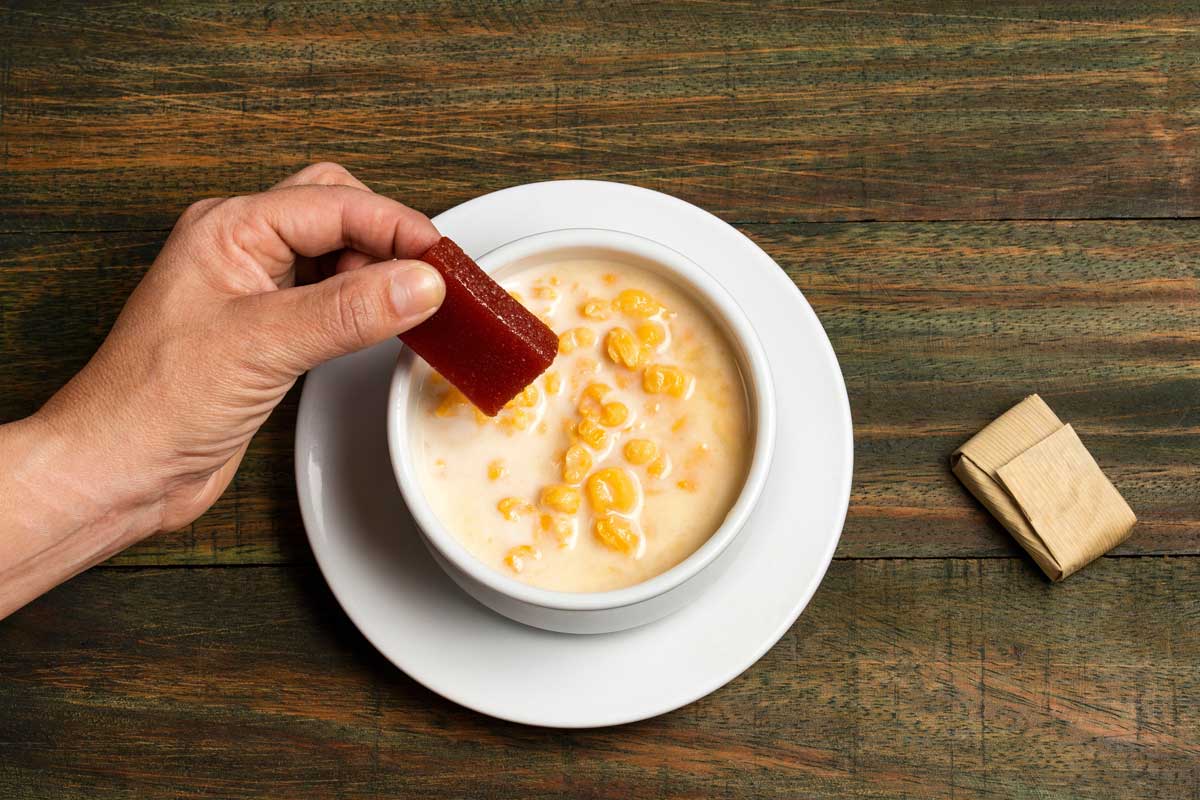
Mazamorra Paisa has deep roots in Colombia’s Indigenous history, where corn was a sacred and essential staple.
Early versions were simple boiled corn preparations long before sugar was introduced.
With Spanish colonization came sugarcane and panela, which transformed basic cooked corn into a lightly sweet dessert.
Over time, it became especially popular in the Antioquia (Paisa) region, where it was affordable, filling, and easy to prepare.
Today, Mazamorra Paisa remains a symbol of rural tradition, hospitality, and Colombia’s enduring connection to corn-based cuisine.
When Is Mazamorra Paisa Served?
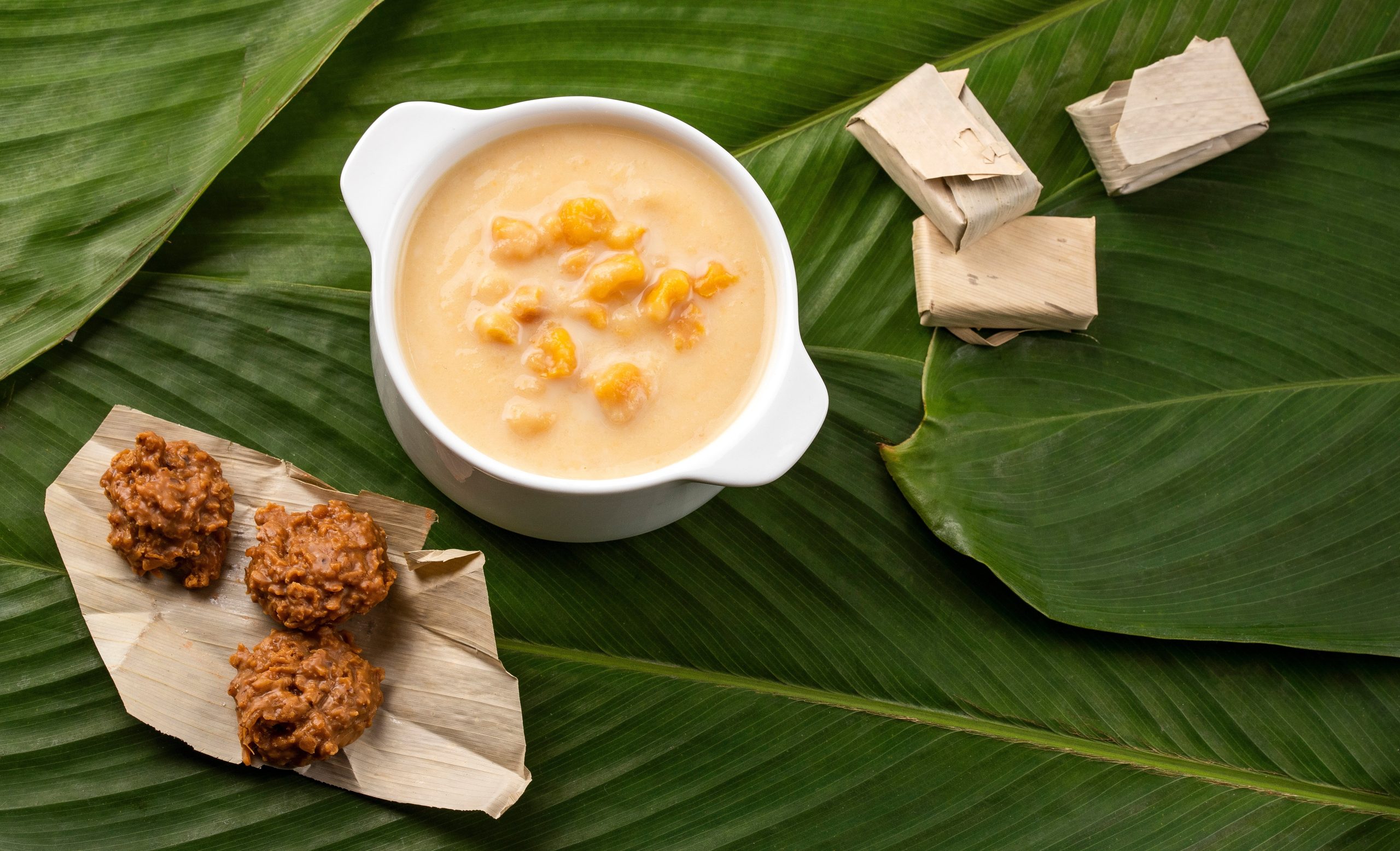
In Colombia — especially in the Paisa region — Mazamorra Paisa isn’t reserved for special occasions.
It’s an everyday tradition. A ritual. A comforting finish to a hearty meal.
🍽️ After a Traditional Meal
- Commonly served as dessert after lunch
- Often follows heavy dishes like bandeja paisa
- Light sweetness balances savory, protein-rich meals
🏡 In Family Homes
- A staple in rural Antioquian households
- Prepared in large batches for the entire family
- Passed down through generations as a signature recipe
🛍️ Street Vendors & Small Towns
- Sold in plazas and neighborhood streets
- Traditionally served in cups or bowls
- A nostalgic snack for locals
🎉 During Gatherings & Festivities
- Appears at family celebrations and casual get-togethers
- Not necessarily holiday-specific — but always welcomed
❤️ A Symbol of Hospitality
- Offered to guests as a gesture of warmth
- Reflects the agricultural heritage of the Paisa people
- Represents simplicity, humility, and community
Mazamorra Paisa isn’t flashy or elaborate.
It doesn’t need to be. Its cultural significance lies in consistency — a humble dessert that has quietly accompanied Colombian families for centuries.
Simple corn. A touch of sweetness. Shared together.
Mazamorra Storage, Shelf Life & Make-Ahead Tips

One of the best things about Mazamorra Paisa? It stores beautifully.
In fact, many Colombians say it tastes even better the next day!
Here’s how to keep it fresh and flavorful:
🧊 How to Store Mazamorra Paisa
- Cool in shallow containers and refrigerate within 2 hours
- Store in an airtight container
- Keep the corn and panela syrup separate for best texture
- Refrigerate promptly to maintain freshness
⏳ Shelf Life
- Keeps up to 4 days in the refrigerator
- Flavor continues to develop over time
- Texture may soften slightly but remains enjoyable
❄️ Can You Freeze It?
- Freeze plain cooked corn for up to 2 months if needed
- Corn texture may become mushy after thawing
- Best texture is fresh or refrigerated; thaw frozen portions in the refrigerator
🥣 Make-Ahead Tips
- Cook the corn a day in advance
- Reheat gently on the stovetop if serving warm
- Add fresh panela syrup just before serving
- Serve chilled straight from the fridge for a refreshing option
Because it’s naturally simple and free from dairy (unless milk is added later), Mazamorra Paisa is meal-prep friendly and easy to plan ahead.
Whether served cold on a hot day or gently warmed after dinner, it’s a dessert that keeps on giving.
Why Mazamorra Paisa Deserves a Place in Your Kitchen

Mazamorra Paisa proves that the most meaningful recipes are often the simplest.
With just dried white corn and panela, this traditional Colombian corn dessert delivers history, culture, and comfort in every spoonful.
Rooted in the Antioquia region and passed down through generations, Mazamorra Paisa isn’t just food — it’s heritage.
Its whole-kernel texture, balanced sweetness, and rustic preparation reflect the heart of Paisa cuisine and Colombia’s deep agricultural traditions.
Whether you enjoy it warm after a hearty meal or chilled on a hot afternoon, this authentic Colombian dessert remains timeless, gluten-free, and refreshingly uncomplicated.
If you’re looking to explore traditional Colombian recipes this year, start here.
Make Mazamorra Paisa at home. Taste the simplicity. Experience the tradition. And bring a little piece of Colombia to your table.
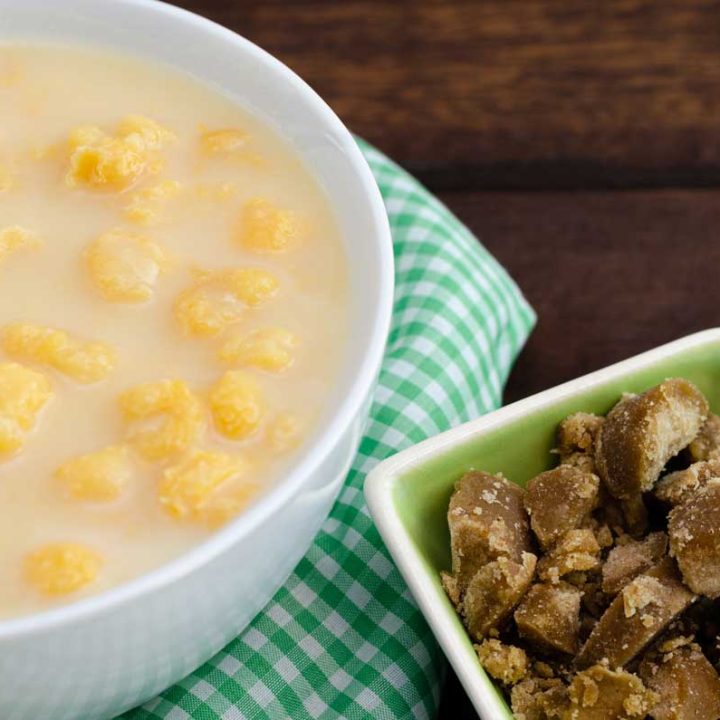
Mazamorra Paisa Recipe
Mazamorra Paisa is a traditional Colombian dessert from the Antioquia region made with slow-cooked dried white corn, sweet panela, and a splash of milk. Simple, rustic, and deeply comforting, this classic recipe has been enjoyed for generations after hearty meals like bandeja paisa. Below you’ll find the most authentic method, expert tips, and modern variations to help you make perfect mazamorra every time.
Ingredients
- 2 cups dried peeled white corn for mazamorra (maíz peto), or dried hominy
- Water, for soaking and cooking, plus more as needed
- 1 cup grated panela, or to taste
- 2–3 tablespoons water, for the panela syrup
- 1–2 cups whole milk, optional, for serving
- Sweetened condensed milk, optional, for serving
Instructions
- Rinse the dried corn and cover generously with water in a large bowl. Soak for 8–12 hours, preferably in the refrigerator.
- Drain and rinse. Put the corn in a large pot and add fresh water to cover by 2–3 inches. Bring to a boil, then reduce to a gentle simmer. Cook for about 2–3 hours, stirring occasionally and adding hot water as needed to keep the corn covered. Older or larger kernels may take longer.
- Check several kernels: they should be soft throughout with no hard center, while retaining some texture. Keep enough cooking liquid to spoon into the serving bowls.
- Near the end of cooking, heat the grated panela with 2–3 tablespoons water in a small saucepan, stirring until dissolved. Add a little more water if needed to make a pourable syrup, or serve panela grated on the side.
- Divide the cooked corn and some cooking liquid among 6 bowls. Add panela syrup to taste and optional milk just before serving. Serve warm, or refrigerate promptly and serve chilled.
Notes
Plan about 13 hours 10 minutes using a 10-hour soak, 10 minutes preparation and 3 hours stovetop cooking. The actual soak can be 8–12 hours and cooking about 2–3 hours or longer, depending on the corn.
For a shortcut, use about 4 cups drained canned hominy, skip soaking and simmer in fresh water for about 20 minutes before serving. This has a softer texture than dried corn. Pressure-cooker timing varies; follow the cooker and corn-package directions and allow for pressure build-up and release.
Cool cooked corn in shallow containers and refrigerate within 2 hours for up to 4 days. Keep panela syrup and milk separate until serving. The plain cooked corn can be frozen for up to 2 months, though its texture may soften. Reheat with a splash of water until thoroughly hot.
Nutrition Information:
Amount Per Serving: Calories: 320Total Fat: 5gSaturated Fat: 3gSodium: 35mgCarbohydrates: 62gFiber: 6gSugar: 28gProtein: 7g
More Colombian Foods
See all →
Jorge Garcia is the founder of AmigoFoods, where he has spent over 20 years helping readers discover authentic Latin American and Spanish cuisine. Raised in a Cuban-American household, Jorge learned to cook at the hands of his mother and grandmother, carrying forward generations of family recipes. That heritage, backed by his family’s four-generation history in the Latin food industry, inspired him to launch AmigoFoods in 2003. With more than 1,000 published articles on recipes, ingredients, and food culture, Jorge’s mission is simple: make authentic Latin cooking approachable for home cooks everywhere while honoring the traditions behind every dish.