

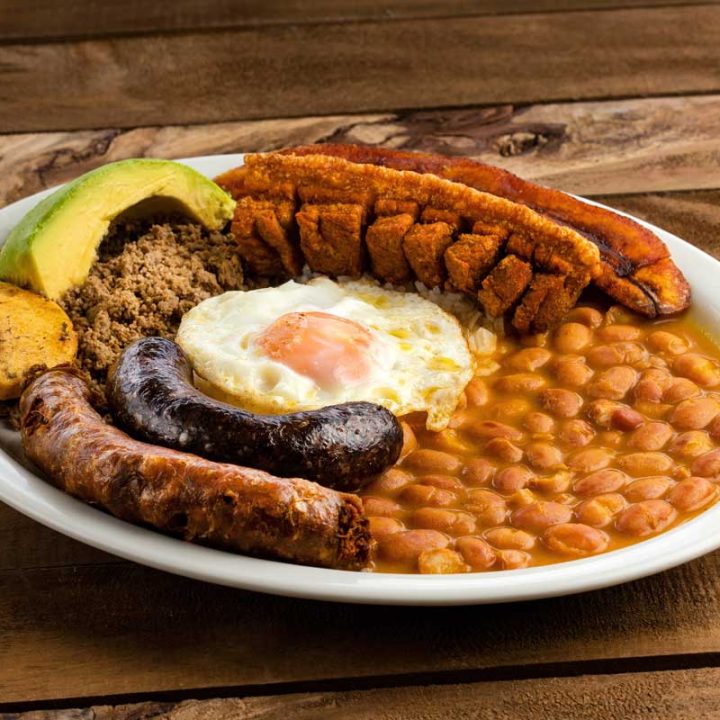
Bandeja Paisa brings together beans, rice, beef, crispy pork, chorizo, plantains, eggs and arepas on one generous platter. This feast from Colombia’s Paisa region is among the best-known Colombian dishes, with avocado and hogao completing the plate.
Bandeja Paisa at a Glance
What is Bandeja Paisa

Bandeja Paisa is a traditional Colombian dish that epitomizes the country’s culinary richness and cultural diversity.
This hearty and abundant platter typically includes an array of traditional Colombian favorites such as red beans cooked with pork, white rice, ground beef, chicharrón (crispy fried pork belly), chorizo (sausage), a fried egg, sweet plantain, avocado, an arepa (corn cake), and hogao (a savory tomato and onion sauce).
The term “Bandeja Paisa” translates to “Paisa Platter” in English. The word “Bandeja” means “platter” or “tray,” and “Paisa” refers to the people and culture from the Paisa region in Colombia.

Therefore, Bandeja Paisa literally means a platter of food from the Paisa region.
This huge dish is not just a meal but a celebration of Colombia’s agricultural bounty, making it a must-try for anyone looking to experience authentic Colombian cuisine.
History and Origin of the Famed Colombian Dish

The history of Bandeja Paisa is deeply intertwined with the cultural and agricultural traditions of Colombia’s Paisa region, encompassing the departments of Antioquia, Caldas, Risaralda, and Quindío.
This filling dish evolved from the daily sustenance of rural farmers and laborers who required a nutrient-dense meal to sustain them through long days of hard work.
Originally, it was known as the “Paisa Tray” due to its generous portions and variety of ingredients, each contributing to a balanced and hearty meal.

The origins of Bandeja Paisa can be traced back to the Spanish colonial era, when indigenous culinary practices began to merge with Spanish and African influences.
The use of beans, corn, and plantains highlights the indigenous agricultural practices, while the inclusion of pork, beef, and sausages reflects the Spanish introduction of livestock farming.
Over time, the dish has been adapted and refined, incorporating local ingredients and regional cooking techniques to create the distinct and flavorful meal enjoyed today.
Bandeja Paisa gained national recognition in the mid-20th century as Colombia sought to promote its cultural heritage and regional diversity.
It became a symbol of the Paisa identity, representing the resilience and industrious nature of the people from this region.
Today, Bandeja Paisa is celebrated not only for its delicious taste but also for its cultural significance, serving as a reminder of Colombia’s rich history and the fusion of its diverse culinary traditions.
Key Ingredients of Bandeja Paisa

Bandeja Paisa is renowned for its diverse and flavorful components, each contributing to the dish’s hearty and satisfying nature.
Here are the essential ingredients that make up this iconic Colombian platter:
- Red Beans (Frijoles Rojos): Typically cooked with pork, these beans are a staple in the dish, providing a rich and savory base.
- White Rice (Arroz Blanco): A generous serving of white rice helps to balance the richness of the other ingredients and adds a comforting, starchy element to the meal.
- Ground Beef (Carne Molida): Seasoned and cooked to perfection, the ground beef adds a meaty and flavorful component to the dish.
- Chicharrón (Crispy Pork Belly): This is one of the most distinctive elements of Bandeja Paisa. The pork belly is fried until crispy, offering a deliciously crunchy texture and rich taste.
- Chorizo (Sausage): A spicy and savory sausage that adds depth and a burst of flavor to the platter.
- Fried Egg (Huevo Frito): Typically served sunny-side-up, the fried egg adds richness and a creamy texture to the dish.
- Sweet Plantain (Plátano Maduro): Fried sweet plantains provide a sweet contrast to the savory elements of the dish.
- Arepa: A traditional Colombian corn cake that is lightly grilled and serves as a staple accompaniment.
- Avocado (Aguacate): Fresh slices of avocado add a creamy and refreshing element, balancing the richer components of the dish.
- Hogao: A traditional Colombian sauce made from tomatoes and onions, hogao is used to enhance the flavors of the other ingredients.
How to Make Bandeja Paisa

Use the quantities in the printable recipe card. The following method prepares four generous platters.
- Soak the beans in plenty of water in the refrigerator for 8 hours or overnight. Drain and rinse. In a large pot, soften the bean onion and garlic in 1 tablespoon oil. Add the beans, diced pork belly, cumin and fresh water to cover by 2 inches. Bring to a full rolling boil for 30 minutes, then reduce to a simmer until the beans and pork are completely tender, about 1½–2 hours more, adding water as needed. Season with salt and pepper.
- While the beans cook, prepare the chicharrón. Cut crosswise into the meat of each strip without cutting through the skin. Put in a deep heavy pan with salt and water to cover. Simmer until tender and the water evaporates, about 45–60 minutes, adding a little water if needed before the pork is tender. Once the water is gone, fry in its rendered fat over medium heat for 15–25 minutes, turning carefully until crisp. Use a splatter screen and drain on paper towels.
- Rinse the rice. Heat its tablespoon of oil in a covered saucepan, stir in the rice, then add 2 cups water and a pinch of salt. Bring to a boil, cover and simmer on low for 15–20 minutes. Remove from heat and rest covered for 5 minutes before fluffing.
- For the beef, soften its onion and garlic in 1 tablespoon oil in a skillet. Add the ground beef and break it up while browning. Add the tomato, cumin, salt and pepper; cook for 10–15 minutes until the tomato softens and the beef reaches 160°F (71°C).
- Cook the chorizos in a skillet over medium heat, turning until browned and cooked through, about 15–20 minutes depending on size. Fresh pork or beef sausages must reach 160°F (71°C); poultry sausages need 165°F (74°C).
- For the hogao, soften its onion and garlic in the tablespoon of oil. Stir in the tomatoes, cumin, salt and pepper. Cook gently for 10–15 minutes until saucy. Keep the cooked beans, rice, meat and sauce hot while finishing the remaining components.
- Mix the masarepa, warm water and salt. Rest for 5 minutes, then knead briefly, adding water a tablespoon at a time if the dough cracks. Shape into 4 thin arepas and cook on a lightly oiled griddle over medium heat for 5–7 minutes per side, until golden and cooked through.
- Peel and slice the ripe plantains diagonally. Shallow-fry in oil over medium heat for 2–4 minutes per side, until golden and tender. Drain on paper towels.
- Fry the eggs in a lightly oiled skillet until the whites and yolks are set. For a runny yolk, use pasteurized eggs. Slice the avocado just before serving.
- Divide the beans, rice and beef among 4 large plates. Add one piece of chicharrón, one chorizo, one egg, one arepa, plantain slices and avocado to each. Spoon over hogao and add optional cilantro or lime. Serve immediately.
Allow about 4 hours after soaking when cooking several components in parallel, plus at least 8 hours for the bean soak. Older beans can take longer. Beans and hogao can be made the day before: refrigerate within 2 hours and reheat thoroughly before serving. This version uses seasoned ground beef; finely shredded carne en polvo is another traditional choice. For a vegetarian version, omit the pork from the beans and replace all meats with vegetables or tempeh.
For more detail, see our guides to Colombian arepas and chicharrón.
Bandeja Paisa Serving Suggestions

Bandeja Paisa is best enjoyed when served with attention to detail, ensuring that each component is presented attractively and at the right temperature.
Here are some serving suggestions to enhance the dining experience:
- Presentation
- Use a large, oval platter or a wide, round plate to accommodate all the components without overcrowding.
- Arrange the ingredients neatly, starting with a generous scoop of white rice in the center.
- Place the red beans alongside the rice, slightly overlapping.
- Position the ground beef next to the beans, ensuring a balanced distribution of protein.
- Lay the chicharrón and chorizo on opposite sides of the plate, highlighting their distinct textures and flavors.
- Add the fried plantain slices and arepa around the edges, creating a visually appealing border.
- Place the fried egg on top of the rice or beans, showcasing its vibrant yolk.
- Arrange the avocado slices artfully on the side, adding a pop of green to the presentation.
- Spoon the hogao over the beans and rice, letting some of the sauce drizzle onto the other components.
- Garnishes and Accompaniments
- Garnish the dish with fresh cilantro leaves or a sprinkle of chopped green onions for added color and flavor.
- Serve lime wedges on the side for a zesty squeeze of freshness that complements the rich, savory elements of the dish.
- Offer a small bowl of aji (Colombian hot sauce) for those who enjoy a spicy kick.
- Beverage Pairings
- Pair Bandeja Paisa with a traditional Colombian beverage such as:
- Agua de Panela: A refreshing drink made from panela (unrefined cane sugar) dissolved in water, served cold.
- Colombian Coffee: A strong, aromatic cup of coffee to balance the hearty meal.
- Fresh Fruit Juices: Natural juices made from tropical fruits like lulo, guava, or passion fruit to add a sweet and tangy contrast.
- Pair Bandeja Paisa with a traditional Colombian beverage such as:
- Side Dishes
- Complement the Bandeja Paisa with light side dishes such as:
- Ensalada de Aguacate: A simple avocado salad with tomatoes, onions, and a light vinaigrette.
- Encurtido de Vegetales: Pickled vegetables that provide a crunchy and tangy accompaniment.
- Complement the Bandeja Paisa with light side dishes such as:
- Serving Temperature
- Ensure all components are served hot, especially the rice, beans, meats, and plantains.
- Cook the eggs just before serving; use pasteurized eggs if you prefer runny yolks.
- Serve the avocado and any fresh garnishes at room temperature for optimal flavor and texture.
Bandeja Paisa Nutritional Information
Bandeja Paisa is a substantial meal, and its nutritional content depends on the portion sizes, sausage brand, pork fat and frying oil used. The meats, eggs and beans supply protein; rice, beans, plantains and arepas contribute carbohydrates; avocado and beans provide fiber. A single fixed calorie figure would not describe every platter. For smaller portions, divide the components among more plates.
Bandeja’s Cultural Significance

Paisa serves as a cultural ambassador, introducing people to the flavors and traditions of the Paisa region.
It is celebrated in food festivals and culinary events, reinforcing its status as a the country’s beloved national dish.
By enjoying Bandeja Paisa, Colombians and visitors alike participate in a culinary tradition that honors the country’s history, diversity, and the enduring spirit of its people.
Bandeja Paisa Accompaniments and Side Dishes

Bandeja Paisa is a feast in itself, but it can be complemented with various accompaniments and side dishes to enhance the overall dining experience.
Here are some traditional and popular options that pair well with Bandeja Paisa:
- Arepas
- Description: Arepas are traditional Colombian corn cakes made from pre-cooked cornmeal. They are slightly crispy on the outside and soft on the inside.
- Serving Suggestion: Serve warm arepas alongside Bandeja Paisa, allowing guests to use them to scoop up beans or as a base for other components.
- Aji (Colombian Hot Sauce)
- Description: Aji is a spicy and tangy sauce made from a blend of chili peppers, tomatoes, onions, cilantro, and lime juice.
- Serving Suggestion: Provide small bowls of aji for guests to add a spicy kick to their meal. It complements the richness of the meats and beans perfectly.
- Avocado Salad (Ensalada de Aguacate)
- Description: A simple and refreshing salad made with ripe avocado slices, tomatoes, onions, and a light vinaigrette.
- Serving Suggestion: Serve the avocado salad as a side dish to add a fresh and creamy contrast to the hearty components of Bandeja Paisa.
- Pickled Vegetables (Encurtido de Vegetales)
- Description: A mix of pickled carrots, onions, and bell peppers in a tangy vinegar brine.
- Serving Suggestion: Offer pickled vegetables as a crunchy and acidic accompaniment to balance the richness of the dish.
- Fried Plantains (Patacones or Tostones)
- Description: Patacones (also known as tostones) are twice-fried green plantain slices that are crispy on the outside and tender on the inside.
- Serving Suggestion: Serve patacones with a sprinkle of salt and a side of hogao for dipping, adding another layer of texture and flavor to the meal.
- Rice with Coconut (Arroz con Coco)
- Description: A savory rice dish cooked with coconut milk, giving it a rich and slightly sweet flavor.
- Serving Suggestion: Substitute plain white rice with arroz con coco for a more indulgent and flavorful rice option that pairs well with the savory elements of Bandeja Paisa.
- Fresh Salads
- Description: Light and simple salads made with fresh greens, tomatoes, cucumbers, and a light dressing.
- Serving Suggestion: A fresh salad adds a crisp and refreshing component to the meal, helping to balance the richness of the main dish.
- Empanadas
- Description: Colombian empanadas are savory pastries filled with meat, potatoes, and spices, then fried to a golden crisp.
- Serving Suggestion: Serve empanadas as an additional appetizer or side, offering a deliciously crunchy and flavorful accompaniment.
- Yuca Fries
- Description: Fried yuca (cassava) sticks that are crispy on the outside and soft on the inside.
- Serving Suggestion: Offer yuca fries as a starchy side dish, perfect for dipping in aji or hogao.
- Corn on the Cob (Mazorca)
- Description: Grilled or boiled corn on the cob, often seasoned with butter, salt, and cheese.
- Serving Suggestion: Serve mazorca alongside Bandeja Paisa for a sweet and savory addition that complements the other flavors on the plate.
When is Bandeja Paisa Eaten?

Bandeja Paisa is typically enjoyed as a main meal, often served for lunch or dinner due to its substantial and hearty nature.
In Colombia, it is commonly eaten on special occasions, family gatherings, and weekends when people have more time to savor and appreciate the rich variety of flavors and textures it offers.

Given its large portion size and calorie-dense ingredients, Bandeja Paisa is considered too heavy for breakfast but makes for a fulfilling and satisfying midday or evening meal.
It is also popular in Colombian restaurants, both within the country and abroad, where it is often featured as a signature dish.
Variations and Adaptations of the Colombian Dish
Bandeja Paisa is a versatile dish that can be adapted to suit various dietary preferences and regional tastes.
Here are some popular variations and adaptations that maintain the essence of the traditional dish while offering new and exciting twists:
- Vegetarian Bandeja Paisa
- Ingredients: Replace the meat components with plant-based alternatives.
- Adaptations: Use grilled or sautéed vegetables such as zucchini, bell peppers, and mushrooms. Substitute chicharrón with crispy tofu or tempeh, and use vegetarian sausages instead of chorizo. Incorporate a hearty serving of legumes like lentils or chickpeas to replace ground beef.
- Vegan Bandeja Paisa
- Ingredients: Ensure all components are plant-based.
- Adaptations: In addition to the vegetarian substitutions, use plant-based oils for cooking and replace the fried egg with a tofu scramble or a slice of avocado. Make hogao with olive oil instead of traditional fats.
- Low-Carb Bandeja Paisa
- Ingredients: Reduce carbohydrate-rich components.
- Adaptations: Replace white rice with cauliflower rice or omit it altogether. Substitute fried plantains with grilled or baked zucchini slices. Ensure beans are consumed in moderation to maintain a low-carb profile.
- Healthier Bandeja Paisa
- Ingredients: Use leaner meats and healthier cooking methods.
- Adaptations: Opt for grilled or baked chicken breast instead of ground beef and chicharrón. Use turkey or chicken sausage in place of traditional chorizo. Incorporate more fresh vegetables and reduce the amount of oil used in frying.
- Regional Variations
- Ingredients: Incorporate regional ingredients and cooking styles.
- Adaptations: In coastal regions, include seafood such as shrimp or fish. In other regions, you might find variations that include additional ingredients like boiled cassava (yuca) or local vegetables. These regional twists add unique flavors while maintaining the dish’s core elements.
- Mini Bandeja Paisa (Bandeja Paisa Tapas)
- Ingredients: Smaller portions of each component.
- Adaptations: Serve smaller, tapas-style portions of each element, making it an ideal option for parties or gatherings where guests can sample a variety of dishes. This version allows for a more manageable serving size while still offering the full range of flavors.
- Bandeja Paisa Breakfast
- Ingredients: Include breakfast-friendly components.
- Adaptations: Add items like Colombian hot chocolate, almojábanas (cheese bread), and a variety of fresh fruits. Incorporate more eggs and possibly a smaller portion of beans and rice to make it suitable for a morning meal.
- Gourmet Bandeja Paisa
- Ingredients: High-quality and gourmet ingredients.
- Adaptations: Use premium cuts of meat, artisanal sausages, and organic produce. Incorporate gourmet touches like truffle oil in the rice or beans, and garnish with microgreens for an upscale presentation.
- Bandeja Paisa with a Twist
- Ingredients: Creative and non-traditional ingredients.
- Adaptations: Experiment with fusion flavors by incorporating international ingredients. For example, add a hint of Asian flavors with soy-marinated tofu, or introduce Mediterranean elements with a side of hummus and olives.
Bandeja Paisa Tips and Tricks
Preparing Bandeja Paisa involves several components, each requiring its own set of skills to ensure the dish comes together perfectly.

Here are some tips and tricks to help you achieve an authentic and delicious Bandeja Paisa:
- Soak the Beans Overnight
- Soak the beans in the refrigerator for at least 8 hours, drain, and cook in fresh water. Start with a full rolling boil for 30 minutes before simmering until completely tender.
- Season Generously
- Season each component of Bandeja Paisa well to enhance the flavors. Use traditional Colombian spices like cumin and achiote (annatto) for authenticity. Don’t forget to taste and adjust the seasoning as you cook.
- Achieve Crispy Chicharrón
- Cut into the meat without cutting through the skin. Simmer the pork in water until tender, let the water evaporate, then crisp it in its rendered fat. Use a splatter screen.
- Make Perfect Hogao
- To make a flavorful hogao, cook the tomatoes and onions slowly over low heat until they break down into a thick sauce. Use ripe tomatoes for a richer flavor, and add a touch of sugar if the tomatoes are too acidic.
- Cook Rice Fluffily
- Rinse the rice thoroughly to remove excess starch, ensuring it cooks up light and fluffy. Use a 1:2 ratio of rice to water and avoid stirring once the rice starts cooking to prevent it from becoming mushy.
- Balance the Flavors
- Bandeja Paisa is a rich and hearty dish. Balance the flavors by serving it with fresh avocado and a squeeze of lime to cut through the richness. The tanginess of aji (Colombian hot sauce) also adds a delightful contrast.
- Keep Components Warm
- Since Bandeja Paisa consists of multiple components, keep cooked items warm in a low oven (around 200°F or 95°C) until ready to serve. This ensures everything stays hot and fresh when plated.
- Make Ahead Tips
- Some components, like the red beans and hogao, can be made a day in advance and reheated before serving. This saves time on the day of preparation and allows the flavors to develop further.
- Use Quality Ingredients
- For the best results, use high-quality, fresh ingredients. Freshly made arepas and locally sourced meats will elevate the dish’s flavor and authenticity.
- Garnish Thoughtfully
- Garnish the plate with fresh cilantro or chopped green onions for added color and flavor. Serve lime wedges on the side for a fresh, citrusy kick that enhances the overall taste.
- Fry Plantains Just Right
- For perfectly fried sweet plantains, use ripe ones with black spots on the skin. Fry in moderately hot oil until golden brown on both sides, ensuring they are caramelized and tender inside.
- Customize to Taste
- Feel free to adjust the components to suit your taste. For a spicier version, add more aji or include jalapeños in the hogao. For a lighter version, use grilled chicken instead of fried pork belly.
For the national dishes of Colombia’s neighbors, from pabellón criollo to ropa vieja, see our guide to the national dish of every Latin American country.
Bandeja Paisa, the Heart of Colombian Cuisine

Bandeja Paisa is more than just a meal; it is a celebration of Colombia’s rich culinary heritage and the vibrant culture of the Paisa region.
This filling dish, with its hearty portions and diverse ingredients, offers a true taste of Colombia’s agricultural bounty and the ingenuity of its people.
From the crispy chicharrón to the creamy avocado, every component of Bandeja Paisa tells a story of tradition.
Whether you’re enjoying it with family, sharing it with friends, or savoring it on your own, Bandeja Paisa is sure to provide a satisfying and memorable culinary experience.
Bandeja Paisa Recipe
This traditional Bandeja Paisa recipe brings the heart of Colombia to your plate! Featuring red beans simmered with pork, fluffy white rice, crispy chicharrón, savory ground beef, sweet plantains, chorizo, a fried egg, creamy avocado, and arepa—all topped with homemade hogao. Perfect for a weekend feast or to impress guests with a truly authentic Colombian experience.
Ingredients
For the Red Beans (Frijoles Rojos)
- 1½ cups dried red beans
- ½ lb pork belly, diced
- 1 small onion, chopped
- 2 garlic cloves, minced
- 1 tsp ground cumin
- Salt and pepper to taste
- Water to soak and cover beans by 2 inches
- 1 tbsp oil
For the White Rice
- 1 cup white rice
- 2 cups water
- 1 tbsp oil
- Pinch of salt
For the Ground Beef
- 1 tbsp oil
- ½ lb ground beef
- 1 small onion, chopped
- 1 garlic clove, minced
- 1 medium tomato, chopped
- ½ tsp ground cumin
- Salt and pepper to taste
For the Chicharrón
- ½ lb skin-on pork belly, cut into 4 strips
- Salt to taste
- Water to cover pork belly
For the Chorizo
- 4 Colombian chorizo sausages
For the Fried Egg
- 4 eggs
- Oil for frying
For the Sweet Plantains
- 2 ripe plantains, sliced diagonally
- Oil for frying
For the Arepas
- 1 cup pre-cooked cornmeal (masarepa)
- 1 cup warm water, plus more as needed
- ½ tsp salt
For the Hogao
- 2 ripe tomatoes, chopped
- 1 small onion, chopped
- 1 garlic clove, minced
- ½ tsp cumin
- Salt and pepper to taste
- 1 tbsp oil
For Garnish
- 1 ripe avocado, sliced
- Fresh cilantro or lime wedges (optional)
Instructions
- Soak the beans in plenty of water in the refrigerator for 8 hours or overnight. Drain and rinse. In a large pot, soften the bean onion and garlic in 1 tablespoon oil. Add the beans, diced pork belly, cumin and fresh water to cover by 2 inches. Bring to a full rolling boil for 30 minutes, then reduce to a simmer until the beans and pork are completely tender, about 1½–2 hours more, adding water as needed. Season with salt and pepper.
- While the beans cook, prepare the chicharrón. Cut crosswise into the meat of each strip without cutting through the skin. Put in a deep heavy pan with salt and water to cover. Simmer until tender and the water evaporates, about 45–60 minutes, adding a little water if needed before the pork is tender. Once the water is gone, fry in its rendered fat over medium heat for 15–25 minutes, turning carefully until crisp. Use a splatter screen and drain on paper towels.
- Rinse the rice. Heat its tablespoon of oil in a covered saucepan, stir in the rice, then add 2 cups water and a pinch of salt. Bring to a boil, cover and simmer on low for 15–20 minutes. Remove from heat and rest covered for 5 minutes before fluffing.
- For the beef, soften its onion and garlic in 1 tablespoon oil in a skillet. Add the ground beef and break it up while browning. Add the tomato, cumin, salt and pepper; cook for 10–15 minutes until the tomato softens and the beef reaches 160°F (71°C).
- Cook the chorizos in a skillet over medium heat, turning until browned and cooked through, about 15–20 minutes depending on size. Fresh pork or beef sausages must reach 160°F (71°C); poultry sausages need 165°F (74°C).
- For the hogao, soften its onion and garlic in the tablespoon of oil. Stir in the tomatoes, cumin, salt and pepper. Cook gently for 10–15 minutes until saucy. Keep the cooked beans, rice, meat and sauce hot while finishing the remaining components.
- Mix the masarepa, warm water and salt. Rest for 5 minutes, then knead briefly, adding water a tablespoon at a time if the dough cracks. Shape into 4 thin arepas and cook on a lightly oiled griddle over medium heat for 5–7 minutes per side, until golden and cooked through.
- Peel and slice the ripe plantains diagonally. Shallow-fry in oil over medium heat for 2–4 minutes per side, until golden and tender. Drain on paper towels.
- Fry the eggs in a lightly oiled skillet until the whites and yolks are set. For a runny yolk, use pasteurized eggs. Slice the avocado just before serving.
- Divide the beans, rice and beef among 4 large plates. Add one piece of chicharrón, one chorizo, one egg, one arepa, plantain slices and avocado to each. Spoon over hogao and add optional cilantro or lime. Serve immediately.
Notes
Allow about 4 hours after soaking when cooking several components in parallel, plus at least 8 hours for the bean soak. Older beans can take longer. Beans and hogao can be made the day before: refrigerate within 2 hours and reheat thoroughly before serving. This version uses seasoned ground beef; finely shredded carne en polvo is another traditional choice. For a vegetarian version, omit the pork from the beans and replace all meats with vegetables or tempeh.
More Colombian Foods
See all →
Jorge Garcia is the founder of AmigoFoods, where he has spent over 20 years helping readers discover authentic Latin American and Spanish cuisine. Raised in a Cuban-American household, Jorge learned to cook at the hands of his mother and grandmother, carrying forward generations of family recipes. That heritage, backed by his family’s four-generation history in the Latin food industry, inspired him to launch AmigoFoods in 2003. With more than 1,000 published articles on recipes, ingredients, and food culture, Jorge’s mission is simple: make authentic Latin cooking approachable for home cooks everywhere while honoring the traditions behind every dish.