

Mexican peppers are the heart and soul of traditional Mexican cuisine, adding everything from subtle sweetness and smoky depth to tongue-tingling heat.
But with so many varieties—from the mild poblano and fruity guajillo to the fiery habanero and pequin—it can be difficult to know which pepper is right for your recipe.
That’s why we’ve created this Mexican Pepper Heat Scale Chart, ranking some of Mexico’s most popular chiles from mildest to hottest based on their Scoville Heat Units (SHU). Curious how that translates to dinner? See how spicy Mexican food really is, dish by dish.
Whether you’re making salsa, mole, enchiladas, or simply exploring authentic Mexican flavors, this guide will help you understand the heat, flavor, and best uses of each pepper before you take your first bite.
For the corn, cheeses, herbs and other staples that go alongside these chiles, explore our guide to essential Mexican ingredients.

Mexico grows the widest range of chiles in everyday use, but it is one branch of a bigger family. Our guide to Latin American and Spanish chile peppers sets these thirteen alongside Peru’s ajíes, Brazil’s malagueta and Spain’s padrón.
Cooking with these? Our Mexican ingredients hub pairs each one with the recipes that use it.
1. Chipotle

In the United States, most people are more familiar with Chipotle the restaurant then its namesake, the Mexican pepper.
However, this famous Mexican chili pepper is actually a ripened jalapeño pepper that has been dried and smoked.
There are two main varieties of chipotle peppers; morita and meco.
Meco chipotle peppers are smoked twice as long as morita.
Though morita chipotle peppers are more commonly used in Mexican cuisine, most notably to make adobo sauce.
The chipotle pepper measures between 2,500 to 8,00 Scoville units.
2. Anaheim

The Anaheim pepper is a medium-sized chili that grows 6-10 inches (15.24-25.4 cm) in length.
As the name suggests, it originates in Anaheim, California.
You can also find variations of this pepper under different names, including New Mexico peppers, California chili, and Magdalena.
Anaheim peppers range from 500 to 2,500 Scoville Heat Units (SHU) on the Scoville Scale.
However, the varieties mentioned above can vary further in heat depending on where they are grown and the amount of sunshine the plants get – the Bailey Piquin version, for example, can go up to 100,000 SHU.
Farmers usually harvest these peppers and leave them to dry, though some are also left to ripen on the plant until they are red.
The red chilies are called Chile Colorado.
You can easily spot them in Mexican dishes like salsa and as components of spice blends like chili powder.
3. Chile de Arbol
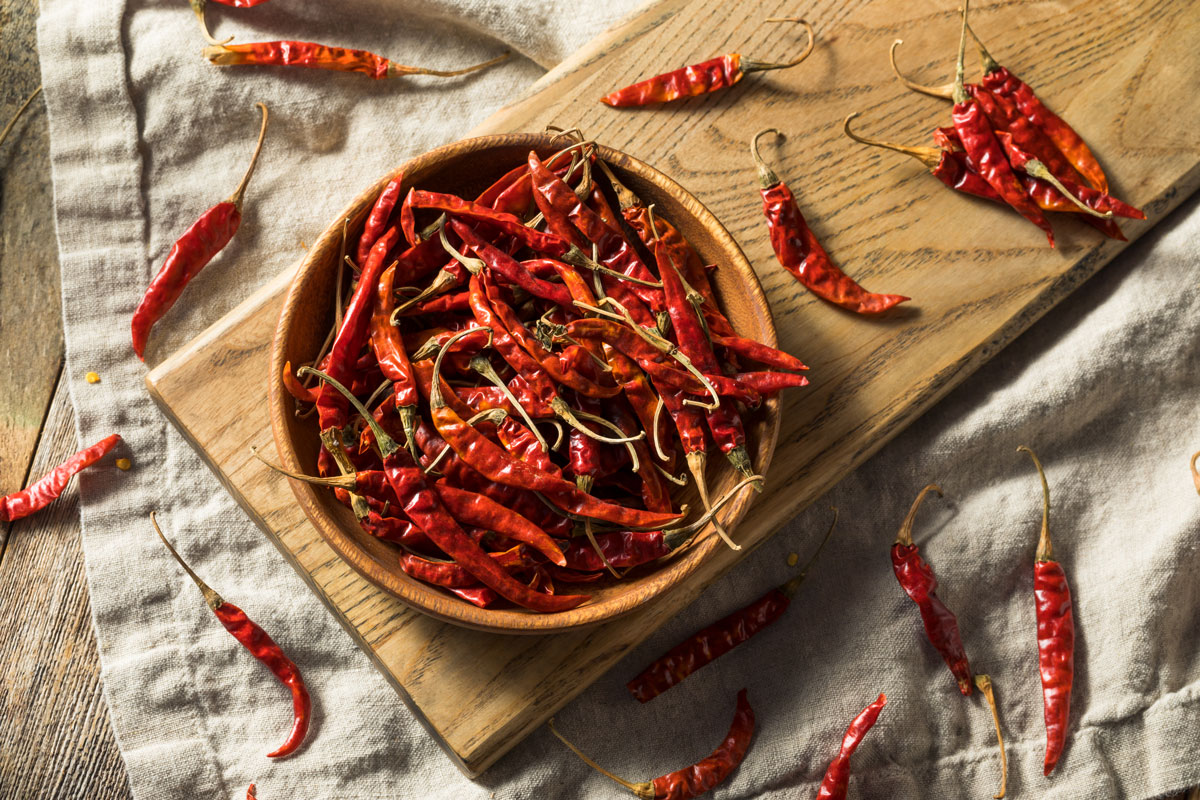
The literal translation is “chili of the tree”.
While the Chile de Arbol starts out as green, when fully mature it becomes bright red in color.
It measures 2 to 3 inches in length and 1/2 inch in width. But don’t let the size fool you.
Chile de Arbol may be small but packs a punch. It ranges from 15,000 to 30,000 on The Scoville Heat Unit.
They can be used in many different forms; dried, powdered or fresh.
Like most Mexican peppers they are used to flavor any number of Mexican dishes.
4. Poblano

Its pronunciation is “poh-blah-no.” Poblanos are large with a tear-drop shape and originate from the Mexican state of Puebla.
They’re usually dark green when fresh, and the dry ones are called ancho chiles.
Poblanos are mild to medium-heat peppers measuring between 1,000 and 2,000 SHU.
If you taste them, you can agree that they’re hotter than banana peppers but not as spicy as jalapeños.
The best time to pick poblanos is when they’re green.
Mexicans usually roast and peel the mild chili peppers to remove their waxy texture.
You can also preserve them by canning or freezing them.
Poblanos are most famously used for one of Mexico’s most famous dishes, Chiles en Nogada.
They are also used in Rajas con Crema and Chile Relleno.
These chilis also form the base for many sauces in traditional Mexican dishes.
5. Habanero

Named after the Cuban city of La Habana, habanero is a hot variety of chili. It’s usually green when unripe.
You’ll most likely identify them as bright orange or red when they mature.
Smaller peppers like habanero have a higher concentration of capsaicin.
Habaneros range in heat from 100,000 to 350,000 SHU. Super-hot, right?
While it packs a punch initially, trust me – the heat dissipates quickly, and the taste is well worth it!
You can use habaneros to make hot sauces and even add them to some fruits.
People also soak it in tequila or leave it in bottles for days to spice up the drinks.
6. Jalapeño

Jalapeño is the most widely known chili in the United States.
The majority of this pepper originates from Mexico, where the natives eat it as a snack food.
It comes in different varieties, where the red variety is a bit fruitier than the green ones.
You might be asking yourself, how hot are these peppers? Well, they measure 2,500-8,000 as far as the Scoville scale is concerned.
While they’re nowhere near as intense as habaneros, they’re pretty strong when compared to other small chiles.
Jalapeño’s spicy flavor makes this pepper perfect for various Mexican dishes, including tomatillo salsa and Chipotle chilies (smoked ripened jalapeño).
7. Mirasol
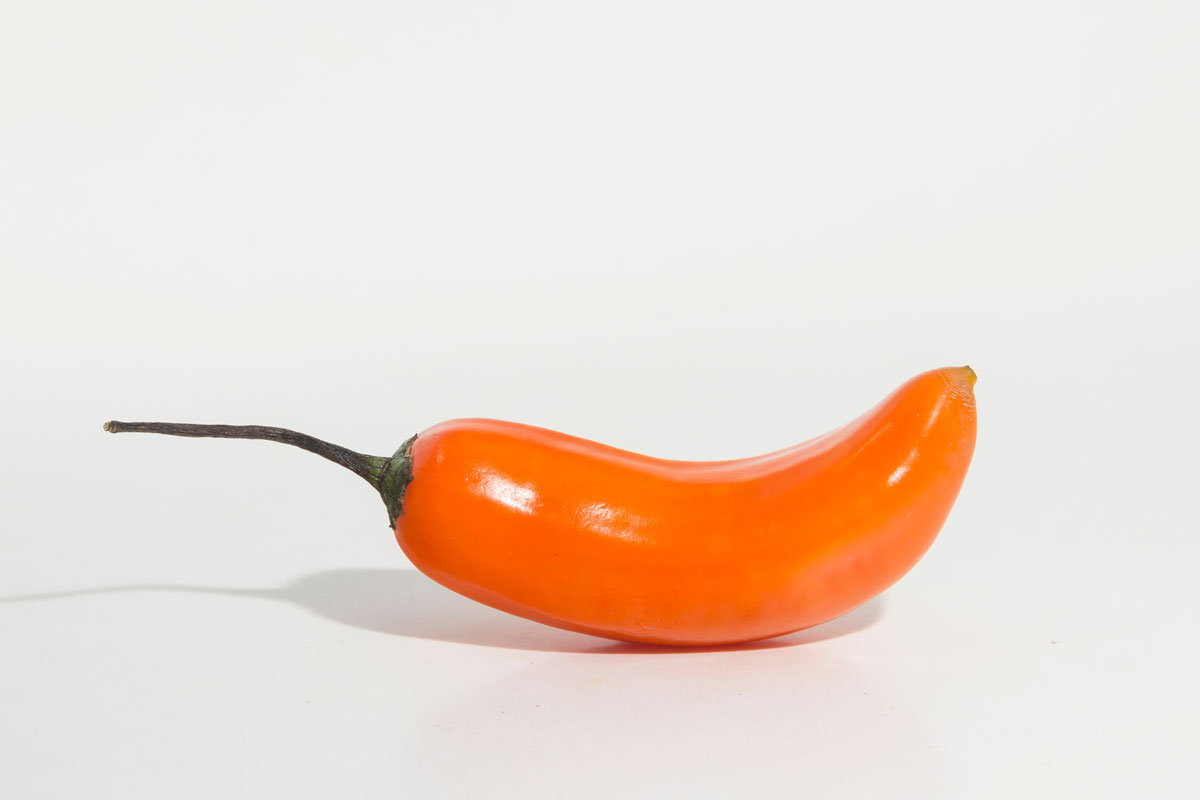
The mirasol pepper is a red to dark red Mexican chili.
The name Mirasol means “looking at the sun” in Spanish, and it describes how the chili grows upright on the plant facing the sun.
Mirasol peppers range from 2,500 to 5,000 SHU with a varying heat range.
When the pepper is dry, its name changes to guajillo pepper.
Mirasol is popular in Mexican culture for preparing traditional moles sauces, though they can be used in pretty much any Mexican dish that uses chilis.
If you’re a lover of Latin American food in general, they’re also pretty popular in many traditional Peruvian dishes.
8. Serrano

Have you noticed that most of these Mexican peppers’ names originate from cities?
Similarly, Serrano chilies come from the mountain region in Puebla, Mexico.
These small and pointy peppers have 10,000-23,000 Scoville Heat Units, making them about five times hotter than jalapeños.
While they come in various colors, they are most commonly found green.
The good thing about these peppers is that you can either eat them raw or fire-roasted.
Huevos a la Mexicana (Mexican scrambled eggs), with some Serrano, is one of the most popular breakfasts you can enjoy in a Mexican restaurant.
9. Chilhuacle Amarillo
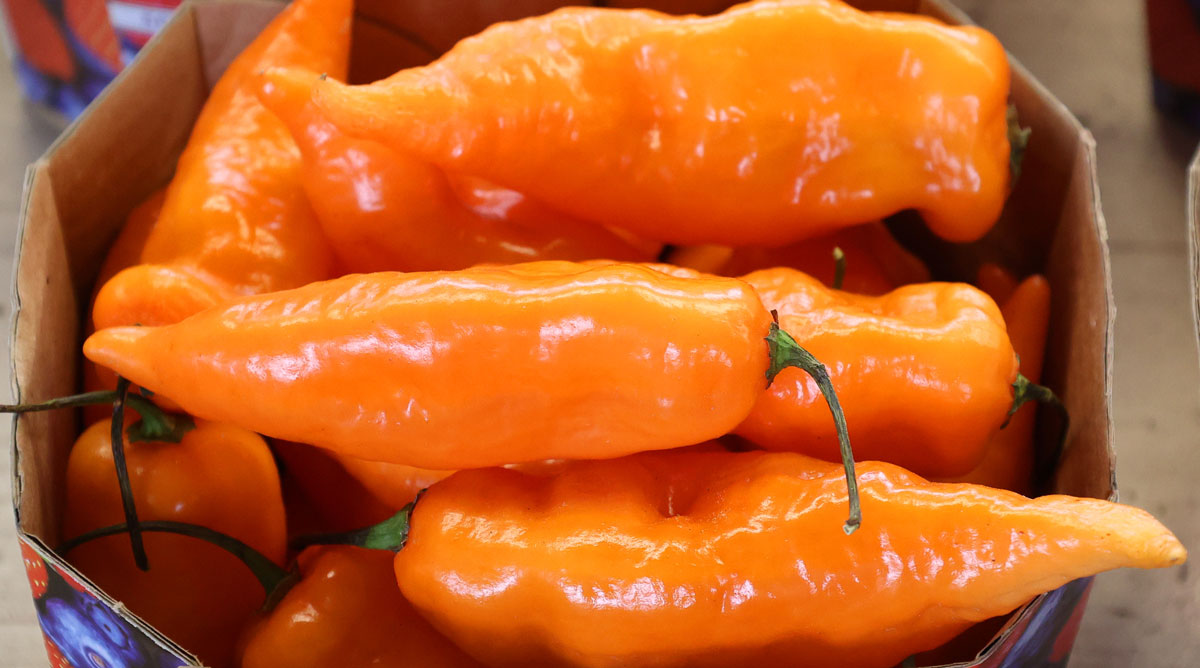
Chilhuacle Amarillo is notable for its distinctive orange-yellow color and is one of the rarest chilies in Mexico.
Its other two varieties include the Chilhuacle Negro (brown) and the Chilhuacle Rojo (Red).
The orange-yellow Chilhuacle Amarillo contains the heat of 5,000 SHU. Its heat level is close to that of Jalapeño.
With its sweet citrus-like flavor, it’s perfect for seasoning and preparing sauces.
It also makes the best pepper powder, a component of Oaxacan cooking, especially Oaxacan moles.
10. Pequin

Pronounced as “pee keen,” pequins are small peppers that ripen to a vibrant red.
These peppers are small but have a punch of heat. They have 30,000-60,000 SHU.
This heat scale is quite hot when you compare it with other peppers like jalapeños – in fact, they’re about 12 times hotter than their better-known cousins.
Pequin peppers are popularly used for making sauces and salsas and offer both heat and spiciness.
You can also grind and use them as chili flakes to add flavor to a pot of your favorite Mexican soup or stew.
Dried pequins are extremely popular in Mexico and are used as a seasoning and garnish.
11. Ancho

“Ancho” is a Spanish word that means “wide.”
Ancho peppers are unique – they’re not exactly a unique form of pepper on their own.
Rather, they’re the dried version of the poblano pepper.
These large and triangular-shaped peppers are the most common dried chiles in Mexico.
Ancho chiles have a SHU of 1,000-2,000. They’re pretty mild, so you don’t have to worry about being blown away by the heat.
These peppers add flavor to dishes like Carne de Puerco en chile negro (grilled pork in ancho and tomatillo sauce).
They’re also used in numerous sauces, including moles, adobo sauce, and enchilada sauce.
These peppers are either rehydrated before use or ground into chili powder, which is then added to dishes.
12. Chilaca

Chilaca has pods that range from 15 to 22 centimeters (5.91 to 8.66 in) in length.
The pepper is curvy and flat, with a conical shape, and is dark green in color.
Chilaca pods aren’t likely to set your mouth on flame.
They’re mildly hot peppers that have between 1000-2500 Scoville Heat Units.
When these peppers mature, they tend to rise towards the top end of the scale due to heat.
How do you use these chilies?
Well, you’ll probably find them in Mexican dishes used as an ingredient for spicing salsas.
They not only serve as food spices but can also be sliced and grilled.
Moreover, the dry ones add flavor to many sauces, including enchilada and mole sauce.
13. Guajillo

As mentioned earlier, the guajillo pepper comes from the Mirasol pepper.
It is the dried version of the Mirasol pepper and has a sweet, smoky flavor with mild heat. It registers 2,500 to 5,000 on the Scoville scale.
They measure approximately 3 to 5 inches in length, are maroon colored and have a leathery texture.
Guajillo chilis can be used in various ways, they can be ground into a paste, used as a rub for meats, and added into any number of Mexican soups or salsas.
Frequently Asked Questions About Mexican Peppers
What are the most popular Mexican peppers?
Some of the most popular Mexican peppers include jalapeño, serrano, poblano, ancho, guajillo, chipotle, habanero, chile de árbol, pasilla, and pequin peppers. Each offers a unique combination of heat, flavor, and culinary uses.
What is the hottest Mexican pepper?
The habanero is widely considered one of the hottest peppers commonly used in Mexican cuisine. It can range from 100,000 to 350,000 Scoville Heat Units (SHU), making it significantly hotter than jalapeños and serranos.
What is the mildest Mexican pepper?
Poblano peppers are among the mildest Mexican peppers, typically measuring between 1,000 and 2,000 SHU. Their mild heat and rich flavor make them ideal for dishes like chiles rellenos.
What is the difference between a fresh and dried Mexican pepper?
Many Mexican peppers change names when dried. For example, a poblano becomes an ancho, a jalapeño becomes a chipotle when smoked and dried, and a chilaca becomes a pasilla. Drying often deepens the pepper’s flavor while reducing its fresh, grassy notes.
Are Mexican peppers always spicy?
No. Mexican peppers range from very mild to extremely hot. Peppers such as poblano and ancho are relatively mild, while habaneros and chile de árbol peppers deliver much more heat.
What is the Scoville Scale?
The Scoville Scale measures the heat level of peppers based on their capsaicin content. The higher the Scoville Heat Unit (SHU) rating, the hotter the pepper. Jalapeños typically range from 2,500 to 10,000 SHU, while habaneros can exceed 300,000 SHU.
Which Mexican pepper is best for salsa?
Jalapeño and serrano peppers are among the most popular choices for salsa because they provide fresh flavor and moderate heat. Many traditional Mexican salsas also use chile de árbol for extra spice.
Which Mexican peppers are commonly used in mole sauce?
Ancho, pasilla, and guajillo peppers are the traditional foundation of many mole sauces. These dried peppers contribute rich, smoky, fruity, and slightly sweet flavors without overwhelming heat.
How should Mexican peppers be stored?
Fresh peppers can be stored in the refrigerator for up to a few weeks. Dried peppers should be kept in an airtight container in a cool, dry place to preserve their flavor and aroma.
Are Mexican peppers healthy?
Yes. Mexican peppers are low in calories and rich in vitamins, antioxidants, and capsaicin. Many peppers contain high levels of vitamins A and C, making them a flavorful addition to a balanced diet.
Why are peppers so important in Mexican cuisine?
Peppers have been a cornerstone of Mexican cooking for thousands of years. They provide flavor, aroma, color, and heat, making them one of the defining ingredients of traditional Mexican food.

Sources
- Chili Pepper Madness: A Guide to Mexican Chili Peppers
- Muy Bueno: An Introduction to Mexican Chiles
- Gran Luchito: Guide to Mexican Chillies
- The Spruce Eats: 7 Types of Mexican Green Chiles
- Pepper Scale: Anaheim Pepper Guide: Heat Flavor, Uses
- Mexican Please: How Hot are Habanero Peppers?
- Wikipedia: New Mexico chile
More Mexican Foods
See all →
Jorge Garcia is the founder of AmigoFoods, where he has spent over 20 years helping readers discover authentic Latin American and Spanish cuisine. Raised in a Cuban-American household, Jorge learned to cook at the hands of his mother and grandmother, carrying forward generations of family recipes. That heritage, backed by his family’s four-generation history in the Latin food industry, inspired him to launch AmigoFoods in 2003. With more than 1,000 published articles on recipes, ingredients, and food culture, Jorge’s mission is simple: make authentic Latin cooking approachable for home cooks everywhere while honoring the traditions behind every dish.