
On this page
Is Mexican food spicy? Some of it is, but most of it isn’t hot on its own. Plenty of classic dishes are mild, and in Mexico the serious heat usually sits on the table in a bowl of salsa, so each person decides how much to add.
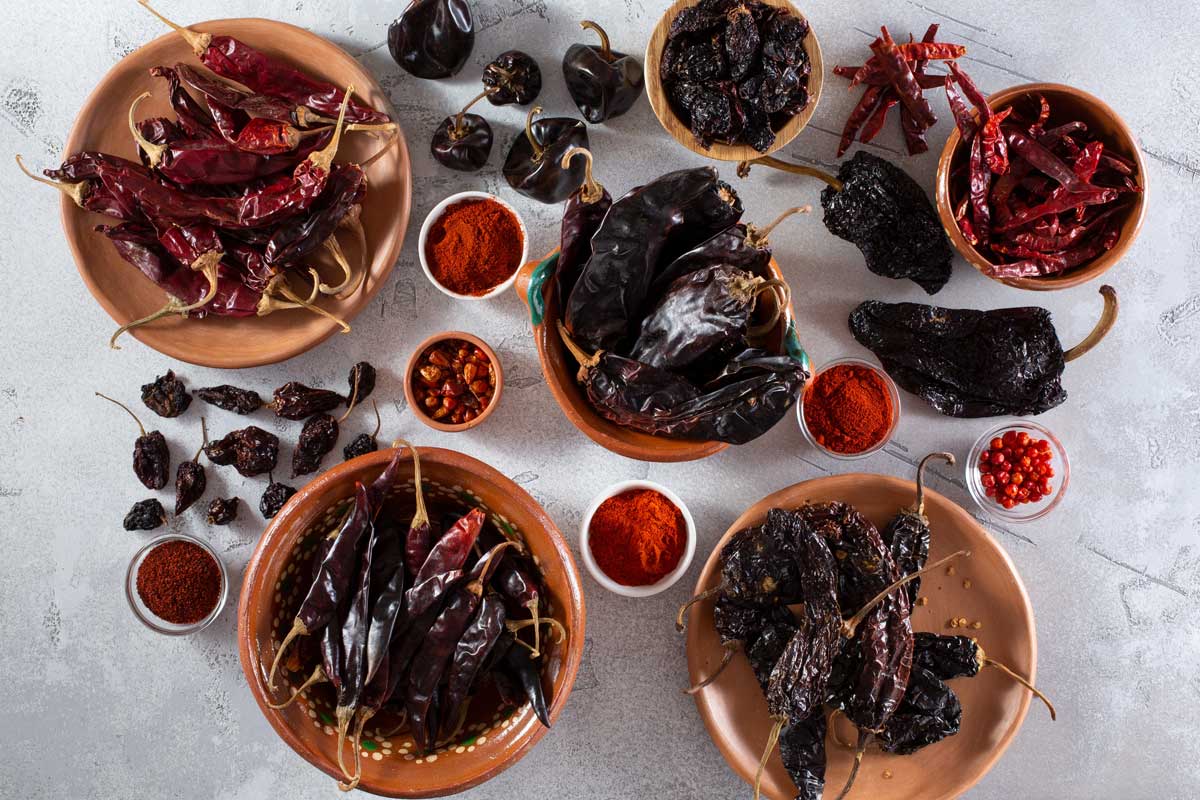
Chiles are in almost everything, which is where the reputation comes from. But many of them are used for smoky, fruity flavor rather than burn, and a mole with a long list of chiles can be gentler than a spoonful of table salsa.
- Not all Mexican food is spicy. Carnitas, pozole blanco, chiles en nogada and most rice and bean dishes are mild.
- The salsa is usually the hot part. Taste a little before you spoon it on.
- The hottest dishes are real. Aguachile and camarones a la diabla can be very hot, and habanero salsas are hotter still.
- Ordering mild is easy. Ask for la salsa aparte, the salsa on the side.
How Spicy Is Mexican Food, Really?
Think of Mexican food in two layers: the dish, and what you add to it. A taco of carnitas has almost no heat until you add salsa. A bowl of pozole rojo gets a gentle warmth from dried chiles, and the crushed chile on the table is what turns it up.
Heat also changes from kitchen to kitchen. Chiles vary from plant to plant, so one poblano can be noticeably hotter than the next, and every cook has a different idea of “a little.”
That’s why the same dish can be mild at one restaurant and sharp at the next. Our guide to Mexican salsas covers what’s in those table bowls.

The Chile Heat Scale: Mild to Very Hot
Heat is measured in Scoville Heat Units (SHU), and the chiles common in Mexican cooking cover a huge range. Here are the ones you’ll meet most often, mildest first. See our full guide to Mexican peppers for more.
Bars use a compressed scale so the milder chiles stay visible. In real terms, the hottest habanero can be over 40 times hotter than the hottest jalapeño. SHU ranges are typical figures and vary by plant.

How Spicy Is Each Mexican Dish?
These are typical heat levels for 18 well-known dishes, before you add table salsa. Home cooks and restaurants vary, so treat this as a guide.
| Dish | Typical heat | Where the heat comes from |
|---|---|---|
| Mexican rice | Mild | Little or none; tomato and garlic lead |
| Carnitas | Mild | None in the pork; it’s all in the salsa |
| Pozole blanco | Mild | No chile in the broth; added at the table |
| Chiles en nogada | Mild | Roasted poblano under walnut cream |
| Cochinita pibil | Mild | Achiote isn’t hot; habanero onions go on the side |
| Chile relleno | Mild | Poblano, with the occasional hot one |
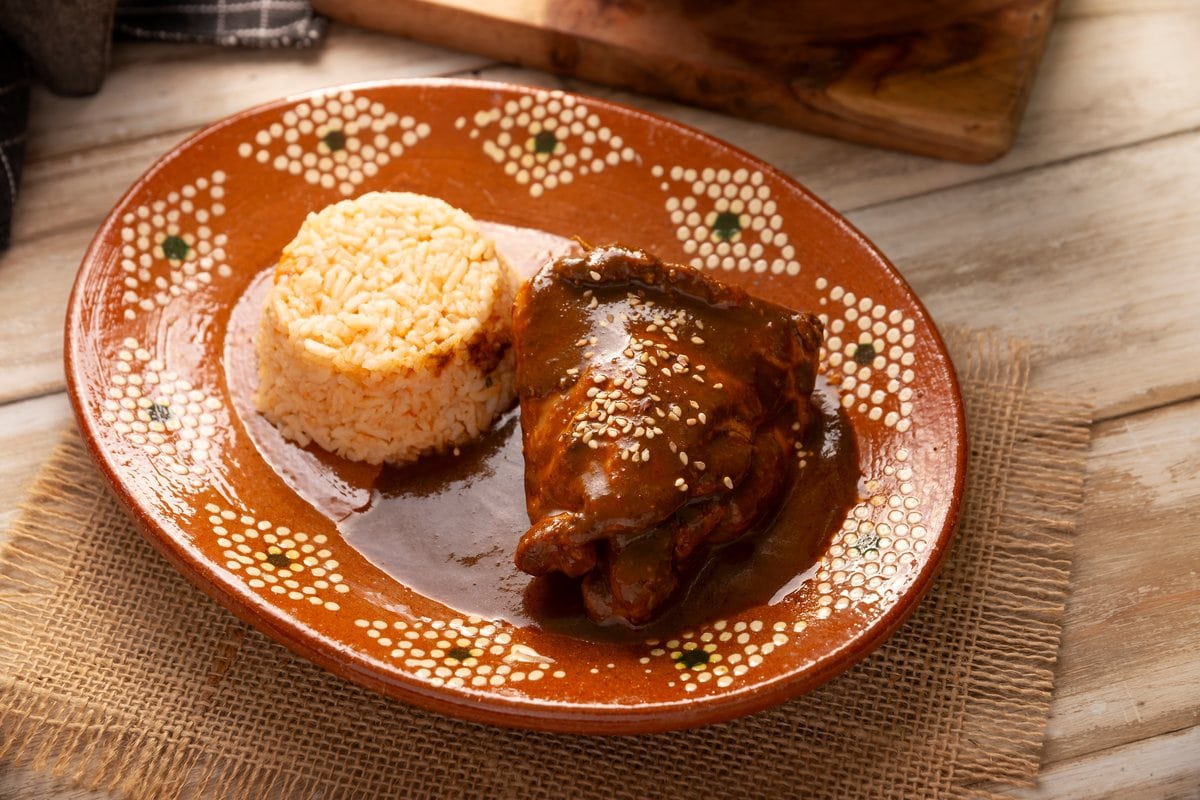
| Mole poblano | Mild to medium | Dried chiles balanced by nuts, fruit and chocolate |
| Tamales | Mild to medium | Depends on the filling and sauce |
| Tacos al pastor | Mild to medium | Guajillo marinade, plus salsa |
| Birria | Medium | Guajillo and ancho; more if árbol goes in |
| Pozole rojo | Medium | Dried red chiles in the broth |
| Chicken tinga | Medium | Smoky chipotle |
| Enchiladas rojas | Medium | Red chile sauce |
| Chilaquiles | Medium to hot | All in the salsa; serrano can run hot |
| Salsa macha | Medium to hot | Dried chiles fried in oil with nuts |
| Camarones a la diabla | Hot | Chile de árbol or chipotle sauce |
| Aguachile | Hot | Raw serrano or piquín blended with lime |
| Xnipec and habanero salsas | Very hot | Fresh habanero, barely diluted |
Is Birria, Mole or Pozole Spicy? Quick Answers
What Are the Spiciest Mexican Dishes?
The spiciest thing you’re likely to meet in Mexico is xnipec, a raw habanero salsa from the Yucatán whose Maya name is usually translated as “dog’s nose.” For an actual dish, aguachile is the usual answer. These are the ones to approach with care:
- Xnipec: Chopped habanero, onion and sour orange. It’s served in small amounts next to dishes like panuchos.
- Aguachile: Raw shrimp in lime and blended raw chile, from Sinaloa. The name means “chile water,” and with no cooking to soften the chile, the heat hits fast.
- Camarones a la diabla: “Devil’s shrimp” in a fiery red chile sauce.
- Salsa de chile de árbol: A thin, sharp red salsa that often comes with tacos and is easy to underestimate.
- Chiles toreados: Whole serranos or jalapeños blistered on the griddle and eaten alongside grilled meat.
- Chilaquiles with serrano salsa: Normally a comfort food, but a hot salsa soaks into every chip.

Hot sauce fans can compare bottles in our guide to the best Mexican hot sauces. One common mix-up: Tabasco sauce isn’t Mexican. It’s made in Louisiana and only borrows its name from the Mexican state.
Mexican Food That Isn’t Spicy
If you can’t take heat, you still have plenty to eat. All of these are traditionally mild, or easy to order without chile:

Which Regions of Mexico Have the Spiciest Food?
Heat doesn’t follow a simple north-to-south line. The Yucatán, for example, serves mild main dishes beside some of the country’s hottest salsas. This is a rough guide, and our traditional Mexican food roundup has more on each region’s dishes.
Why Is Mexican Food So Spicy?
The short version is history. Research published in PNAS in 2014 points to Mexico as the place where the common chile pepper, Capsicum annuum, was first domesticated. Chiles were part of cooking there long before the Spanish arrived, so the cuisine grew up around them.
Why do Mexicans like spicy food? Mostly because they grow up with it. Psychologists Paul Rozin and Deborah Schiller studied this in Mexico and the United States in 1980 and found that gradual exposure was enough to build a liking. People who love chile still feel the burn; they’ve simply learned to enjoy it.
A separate theory says hot climates favored spices because many of them slow the growth of food-spoiling bacteria. It’s an interesting idea, but it’s a hypothesis rather than a settled answer. It also misses the simplest reason: chiles add a lot of flavor, and they’re not just about heat.
Not everyone in Mexico eats very hot food, either. Tolerance varies from person to person, which is the reason salsa is so often served separately.
Is Authentic Mexican Food Spicier Than Tex-Mex?
Often, yes, though mostly because of the salsas. Tex-Mex tends to rely on cumin, chili powder, melted cheese and flour tortillas, and it’s usually tuned for a wide audience. In Mexico, the salsas on the table are more likely to be made fresh with serranos or habaneros.
The main dishes can actually be milder in Mexico, because the cook expects you to season your own plate. If you’re traveling, be careful with the phrase “no pica” (it’s not spicy). It may just mean it’s not spicy to the person telling you.
How to Order Mild Food in Mexico
A few words of Spanish go a long way. These work at taco stands and restaurants alike:
How to Make Mexican Food Less Spicy
Cooking at home gives you full control over the heat. These steps make the biggest difference:
- Remove the veins and seeds. Most of the heat sits in the pale inner veins, and the seeds pick it up from them.
- Choose a milder chile. Swap serrano for jalapeño, or chile de árbol for guajillo.
- Serve the salsa on the side. Everyone at the table can then add as much as they like.
- Add dairy. Crema, queso fresco or a spoon of sour cream softens the burn.
- Stretch the dish. More tomato, broth, beans or rice spreads the same heat further.
- Balance it. A little sugar, or a squeeze of lime, can make the heat seem less sharp.
What to drink when your mouth is on fire
Reach for milk. In a 2019 Penn State study of 72 people, whole milk and skim milk ranked among the best drinks for reducing chile burn, and skim worked nearly as well as whole. A sweet drink also helped, while carbonated drinks did poorly. The researchers also noted that alcoholic beer would probably make things worse. In Mexico, a sweet, creamy agua fresca or horchata is a traditional choice.
- Mild: Tajín Chile Lime Sauce, tangy with very little burn.
- Mild to medium: Tia Lupita Salsa Verde Hot Sauce, made with tomatillo and green jalapeño.
- Medium: Tia Lupita Chipotle Hot Sauce, smoky with medium heat.
- Hotter: Tia Lupita Habanero Hot Sauce, or try all the styles in the Tia Lupita 4-pack.
As an Amazon Associate, AmigoFoods earns from qualifying purchases.
Thinking about calories as well as heat? See our guide to whether Mexican food is healthy, with the best dishes to order.
Frequently Asked Questions
Is all Mexican food spicy?
No. Many traditional dishes are mild, including carnitas, pozole blanco, chiles en nogada, rice, beans and most desserts. Much of the heat comes from salsas that you add yourself.
Is authentic Mexican food spicy?
Some of it is, but authentic doesn’t automatically mean hot. Traditional cooking uses chiles for flavor as well as heat, and table salsas let each person choose how spicy to go.
Is Mexican food spicier than Indian or Thai food?
There’s no fair single answer, because all three range from mild to very hot. One real difference is that Mexican meals often put the strongest heat in a separate salsa, so it’s easier to avoid.
What is the spiciest food in Mexico?
Raw habanero salsas like xnipec are among the hottest things served. Among full dishes, aguachile and camarones a la diabla are the usual picks.
What is the mildest Mexican food to order?
Try cheese quesadillas, carnitas without salsa, milanesa, or rice and beans. They’re easy to find, and most cooks can make them without any chile.
Does Mexican food have to be spicy to taste authentic?
No. Chiles like ancho and guajillo bring plenty of flavor with little burn, and many home cooks in Mexico keep everyday meals gentle, especially for children.
Sources
- Kraft KH et al. Multiple lines of evidence for the origin of domesticated chili pepper, Capsicum annuum, in Mexico. PNAS, 2014.
- Rozin P, Schiller D. The nature and acquisition of a preference for chili pepper by humans. Motivation and Emotion, 1980.
- Billing J, Sherman PW. Antimicrobial functions of spices: why some like it hot. The Quarterly Review of Biology, 1998.
- Penn State. Milk is best drink to reduce burn of chili peppers, 2019.
More Mexican Foods
See all →
Jorge Garcia is the founder of AmigoFoods, where he has spent over 20 years helping readers discover authentic Latin American and Spanish cuisine. Raised in a Cuban-American household, Jorge learned to cook at the hands of his mother and grandmother, carrying forward generations of family recipes. That heritage, backed by his family’s four-generation history in the Latin food industry, inspired him to launch AmigoFoods in 2003. With more than 1,000 published articles on recipes, ingredients, and food culture, Jorge’s mission is simple: make authentic Latin cooking approachable for home cooks everywhere while honoring the traditions behind every dish.