

Olluquito con charqui combines tender Andean olluco tubers with savory dried meat in a traditional Peruvian dish. This version uses ají amarillo and tomato, and takes about an hour once the charqui has soaked overnight.
Olluquito con Charqui at a Glance
What is Olluquito con Charqui
Olluquito con Charqui is a traditional Peruvian dish known for its unique combination of flavors and textures. It features Olluco, a native Andean tuber that has a crunchy texture similar to jicama and a mildly sweet taste. Olluco is combined with Charqui, which is dried alpaca or llama meat.

Plain, unsweetened beef jerky can stand in for charqui, although its flavor and texture differ. Avoid sweet or heavily smoked snack varieties.
The dish is seasoned with aji amarillo, a yellow Peruvian chili paste that adds a warm and spicy element to the dish.
This hearty meal is typically served with steamed rice or quinoa.
Olluquito con Charqui is not only delicious but also carries historical and cultural significance as it has been enjoyed by the people of the Andean region for centuries.
History of Olluquito con Charqui
The history of Olluquito con Charqui dates back to the pre-Columbian era in the Andean region, where the indigenous peoples of present-day Peru cultivated and consumed both olluco tubers and charqui as staple foods.
Olluco (Ullucus tuberosus) is an ancient Andean tuber that has been cultivated for over 3,000 years. It is known for its high nutritional value, unique texture and colorful appearance.

In traditional Andean cuisine, olluco is used in various dishes, including stews and soups.
Charqui, dried and salted meat, has also been an essential food source for Andean peoples for centuries.
The technique of drying and salting meat was a practical way to preserve it for extended periods, especially in the high-altitude regions where fresh meat would spoil quickly.
Alpaca and llama were the primary sources of meat for charqui in ancient times, though beef is commonly used as a substitute today.
Olluquito con Charqui brings together these two ancient ingredients in a flavorful and hearty dish that has been enjoyed by generations of Peruvians.
The addition of aji amarillo, a native Peruvian chili pepper, adds a spicy and aromatic touch to the dish.
While the exact origins of the dish are difficult to trace, Olluquito con Charqui has undoubtedly been a part of Andean culinary tradition for centuries.
How to Make Olluquito con Charqui

Ingredients
- 1 lb (450 g) olluco tubers, scrubbed and cut into thin strips
- 8 oz (225 g) commercially prepared charqui, or plain unsweetened beef jerky (see notes)
- 1 medium onion, finely chopped
- 2–3 garlic cloves, minced
- 1–2 tablespoons ají amarillo paste, to taste
- 1 medium tomato, diced
- 2 tablespoons vegetable oil
- Water or unsalted broth, a few tablespoons as needed
- Black pepper and salt, to taste
- Chopped cilantro or parsley, optional garnish
- Cooked white rice or quinoa, to serve (optional)
Method
- Rinse the charqui and soak covered in plenty of cold water in the refrigerator for about 8 hours or overnight, changing the water if very salty. Follow the product instructions if they call for a different preparation. Drain, pat dry, and shred or slice finely.
- Scrub the ollucos, trim damaged areas and cut into thin, even strips. Their thin skin need not be peeled. Chop the onion, garlic and tomato.
- Heat the oil in a wide covered pan over medium heat. Fry the prepared charqui for about 5 minutes, stirring, then transfer to a plate.
- In the same pan, soften the onion for about 5 minutes. Add garlic for 30 seconds, then the ají paste for 1–2 minutes. Stir in the tomato and cook for 3–4 minutes.
- Return the charqui and add the olluco. Cover and cook gently for 25–30 minutes, stirring occasionally, until the meat is tender and hot throughout and the olluco is tender with a slight bite. Add water or unsalted broth a few tablespoons at a time only if needed; olluco releases moisture as it cooks.
- Taste before adding salt, since charqui can remain salty. Season with pepper, add optional herbs, and serve hot with rice or quinoa.
About 1 hour of preparation and cooking, plus approximately 8 hours of refrigerated soaking (9 hours total). Soaking and cooking vary with the dried meat; allow longer if it is still tough. Rice or quinoa timing is separate.
This version uses ají amarillo and tomato; ají panca and parsley are common alternatives. Plain unsweetened beef jerky is a practical substitute with a different flavor and texture. Avoid sweet or heavily smoked snack jerky, and follow its package directions; ready-to-eat jerky may need less soaking. Use commercially prepared meat rather than home-dried meat of uncertain preparation.
Olluquito con Charqui Variations & Tips

-
Meat variations:
- If you cannot find alpaca or llama charqui, use commercially prepared beef charqui or the plain jerky alternative described in the recipe. Fresh-meat olluquito is another variation, but it does not need the dried-meat soaking step and has different cooking requirements.
- For a vegetarian option, substitute the charqui with mushrooms, tofu, or seitan, which can still provide a satisfying texture and absorb the flavors of the dish.
-
Spice level adjustments:
- If you prefer a milder dish, use less aji amarillo paste or replace it with a milder chili paste or roasted bell pepper puree.
- For a spicier version, add more aji amarillo paste, or mix in some finely chopped fresh Peruvian yellow chilies, or another spicy chili variety.
-
Substitute ingredients:
- If you cannot find olluco tubers, you can substitute them with jicama, Jerusalem artichokes (sunchokes), or even potatoes, but these make a different dish; flavor, texture and cooking times will change.
- Aji amarillo paste can be found in Latin American grocery stores or online. If unavailable, you can use another chili paste or sauce with a similar heat level, like sriracha or harissa, but keep in mind that the flavor profile will change.
-
Complementary side dishes and beverages:
- Serve the dish with a side of traditional Peruvian sides like beans, a simple green salad, or fried plantains.
- To pair with the rich flavors of Olluquito con Charqui, consider a Peruvian beverage like Chicha Morada (a purple corn drink) or Maracuyá Sour (a passion fruit cocktail).
-
Presentation tips:
- Serve Olluquito con Charqui in a shallow bowl or a deep plate, allowing the sauce to pool around the olluco and charqui.
- Garnish with fresh cilantro leaves, thinly sliced red onion, or even a wedge of lime for added brightness and color.
Final Thoughts
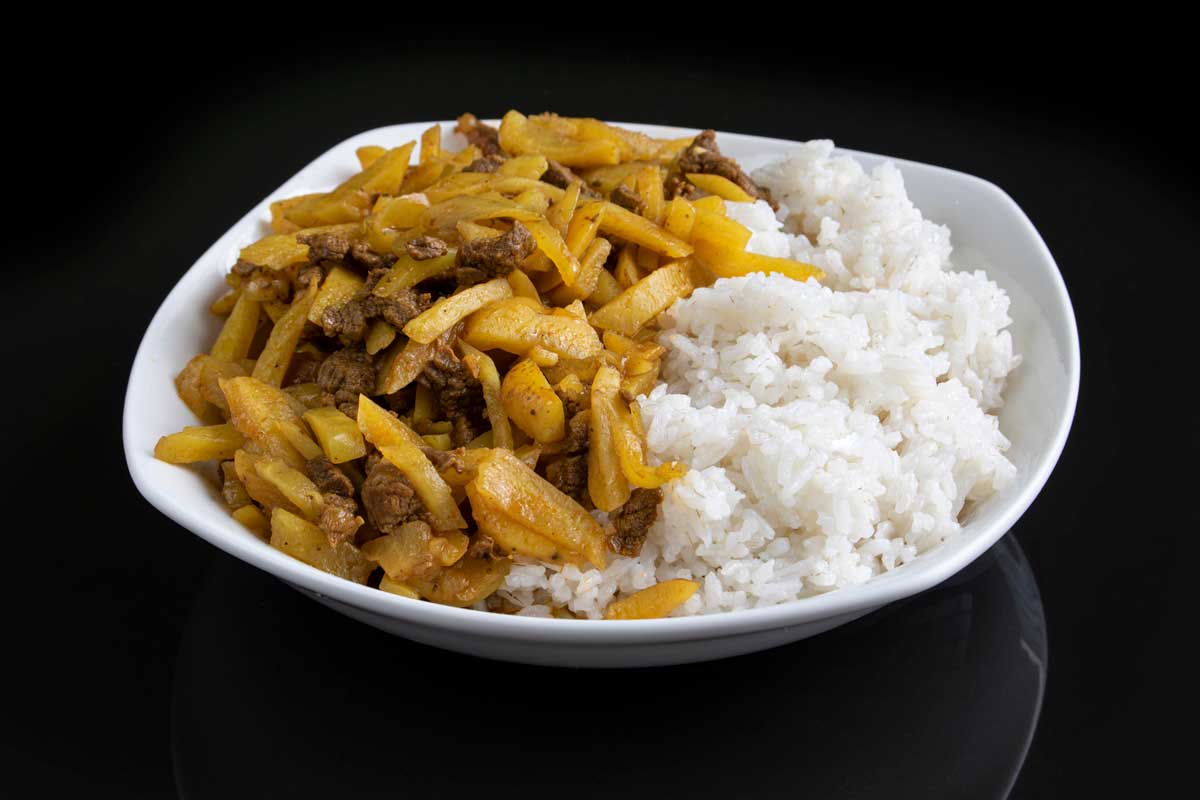
In conclusion, Olluquito con Charqui is a delectable and time-honored dish that represents the rich culinary heritage of Peru and the Andean region.
Combining the unique flavors and textures of olluco tubers, charqui or beef jerky and the spicy warmth of aji amarillo, this traditional meal offers a delightful and hearty experience for those looking to explore the diverse world of Peruvian cuisine.
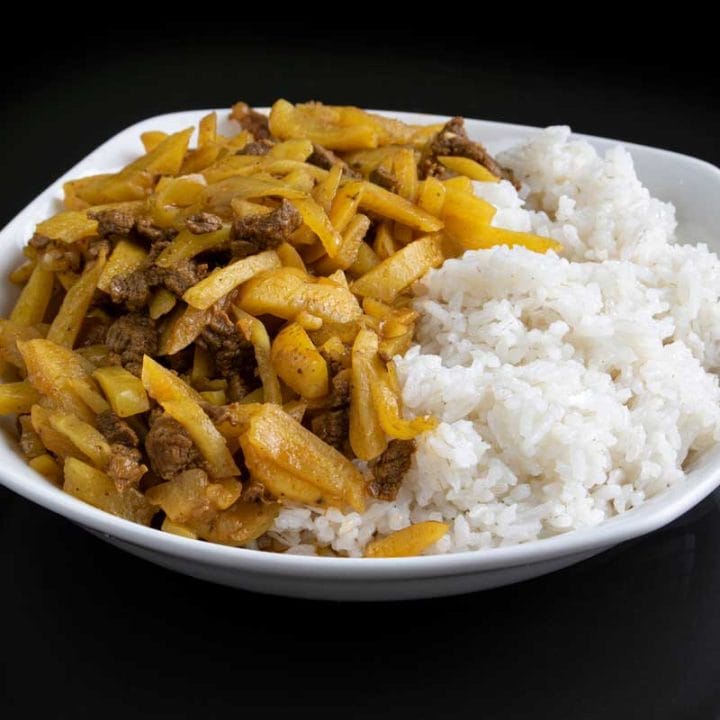
Olluquito con Charqui
Peruvian olluco tubers and charqui in an onion, garlic, tomato and ají amarillo sauce.
Ingredients
- 1 lb (450 g) olluco tubers, scrubbed and cut into thin strips
- 8 oz (225 g) commercially prepared charqui, or plain unsweetened beef jerky (see notes)
- 1 medium onion, finely chopped
- 2–3 garlic cloves, minced
- 1–2 tablespoons ají amarillo paste, to taste
- 1 medium tomato, diced
- 2 tablespoons vegetable oil
- Water or unsalted broth, a few tablespoons as needed
- Black pepper and salt, to taste
- Chopped cilantro or parsley, optional garnish
- Cooked white rice or quinoa, to serve (optional)
Instructions
- Rinse the charqui and soak covered in plenty of cold water in the refrigerator for about 8 hours or overnight, changing the water if very salty. Follow the product instructions if they call for a different preparation. Drain, pat dry, and shred or slice finely.
- Scrub the ollucos, trim damaged areas and cut into thin, even strips. Their thin skin need not be peeled. Chop the onion, garlic and tomato.
- Heat the oil in a wide covered pan over medium heat. Fry the prepared charqui for about 5 minutes, stirring, then transfer to a plate.
- In the same pan, soften the onion for about 5 minutes. Add garlic for 30 seconds, then the ají paste for 1–2 minutes. Stir in the tomato and cook for 3–4 minutes.
- Return the charqui and add the olluco. Cover and cook gently for 25–30 minutes, stirring occasionally, until the meat is tender and hot throughout and the olluco is tender with a slight bite. Add water or unsalted broth a few tablespoons at a time only if needed; olluco releases moisture as it cooks.
- Taste before adding salt, since charqui can remain salty. Season with pepper, add optional herbs, and serve hot with rice or quinoa.
Notes
About 1 hour of preparation and cooking, plus approximately 8 hours of refrigerated soaking (9 hours total). Soaking and cooking vary with the dried meat; allow longer if it is still tough. Rice or quinoa timing is separate.
This version uses ají amarillo and tomato; ají panca and parsley are common alternatives. Plain unsweetened beef jerky is a practical substitute with a different flavor and texture. Avoid sweet or heavily smoked snack jerky, and follow its package directions; ready-to-eat jerky may need less soaking. Use commercially prepared meat rather than home-dried meat of uncertain preparation.
More Peruvian Foods
See all →
Jorge Garcia is the founder of AmigoFoods, where he has spent over 20 years helping readers discover authentic Latin American and Spanish cuisine. Raised in a Cuban-American household, Jorge learned to cook at the hands of his mother and grandmother, carrying forward generations of family recipes. That heritage, backed by his family’s four-generation history in the Latin food industry, inspired him to launch AmigoFoods in 2003. With more than 1,000 published articles on recipes, ingredients, and food culture, Jorge’s mission is simple: make authentic Latin cooking approachable for home cooks everywhere while honoring the traditions behind every dish.