
On this page
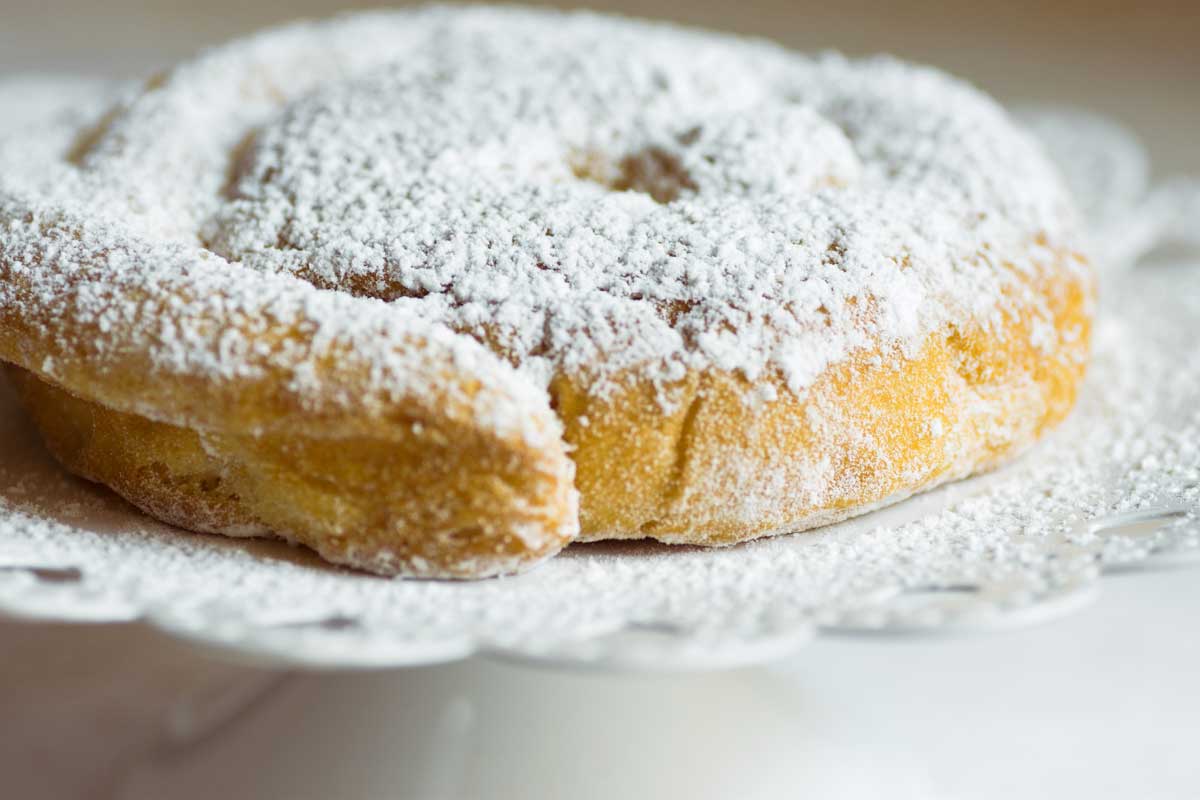
Pan de mallorca is Puerto Rico’s favorite breakfast roll: a soft, egg-rich yeast bun rolled into a loose coil, baked pale gold and buried under powdered sugar. Islanders just call it a mallorca. You eat it torn apart with café con leche, or split, griddled and pressed with ham and cheese, sugar and all.
This recipe makes eight bakery-size mallorcas with bread flour, egg yolks and butter (or lard, the old-school choice). Below you’ll also find where the roll comes from, how it differs from Spanish ensaimada, an overnight schedule, fixes for common problems and how to build the classic mallorca sandwich.
Pan de Mallorca at a Glance
Bread flour, egg yolks, whole milk, butter or lard, sugar, instant yeast and plenty of powdered sugar.
Stand mixer with a dough hook, rolling pin, two baking sheets, parchment or silicone mats and a fine sifter.
What Is Pan de Mallorca?
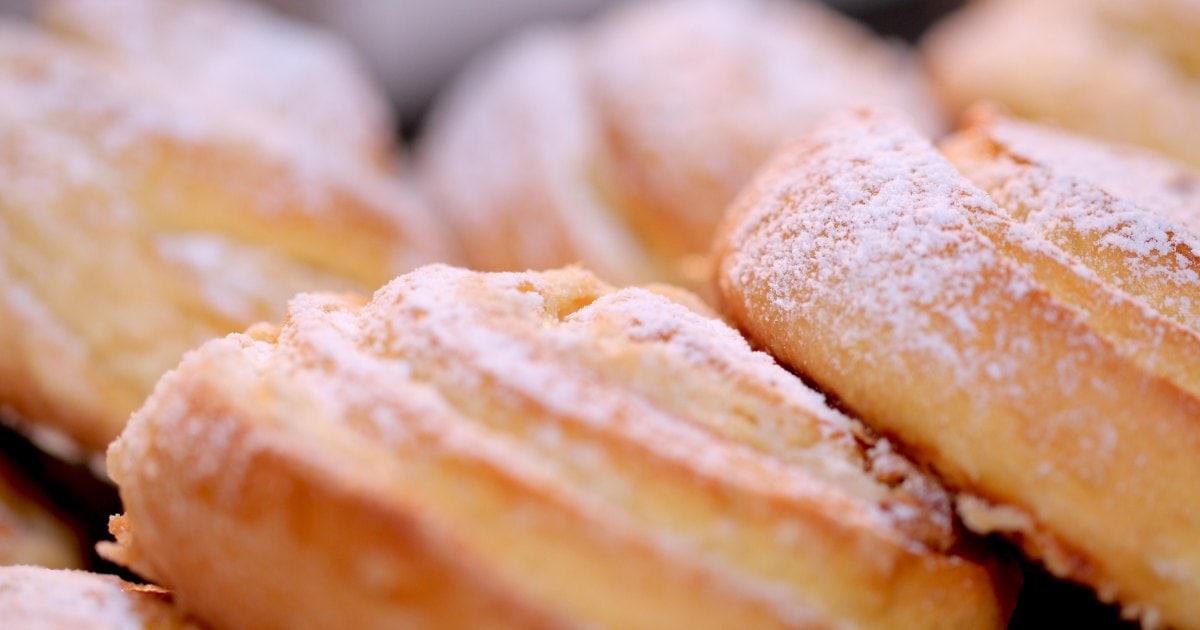
A mallorca (pronounced mah-YOR-kah, and often spelled mayorca on menus) is an enriched sweet bread, closer to brioche than to sandwich bread. The dough is heavy on egg yolks and fat, so the crumb is tender, yellow-tinged and slightly feathery when you pull it apart. The outside bakes thin and soft rather than crusty.
Three things make it recognizably a mallorca and not just another sweet roll:
- The coil. Each roll is a single rope of dough wound into a flat spiral, so it tears apart in rings.
- The fat between the layers. The dough is smeared with butter or lard before it’s rolled into a rope, which gives the coils faint, peelable layers.
- The snow. A heavy shower of powdered sugar goes on just before serving. A mallorca without it looks unfinished to anyone who grew up with them.
In Puerto Rico, mallorcas sit in the glass case of almost every panadería next to pan sobao and quesitos. They’re mostly breakfast food, part of the same morning routine as the dishes in our guide to the Puerto Rican breakfast, but they show up at merienda (afternoon snack) too.
Where Mallorcas Come From: Mallorca to Old San Juan
The roll is named after the Spanish island of Mallorca, in the Balearics, where bakers make the coiled pastry called ensaïmada. That name comes from saïm, the Mallorquín word for the pork lard worked into the dough. Written references to ensaïmadas go back to the 17th century, and the Ensaïmada de Mallorca has had a protected designation in Spain since 1996.
Puerto Rico was a Spanish colony until 1898, and immigrants from the Balearic Islands brought their baking with them. The most famous example is La Bombonera on Calle San Francisco in Old San Juan, opened in 1902 by Mallorcan immigrants and known for generations for its mallorcas. The café closed for several years and reopened in 2016. A short walk down the same street, Cafetería Mallorca built its name on the roll, served plain or pressed with ham and cheese.
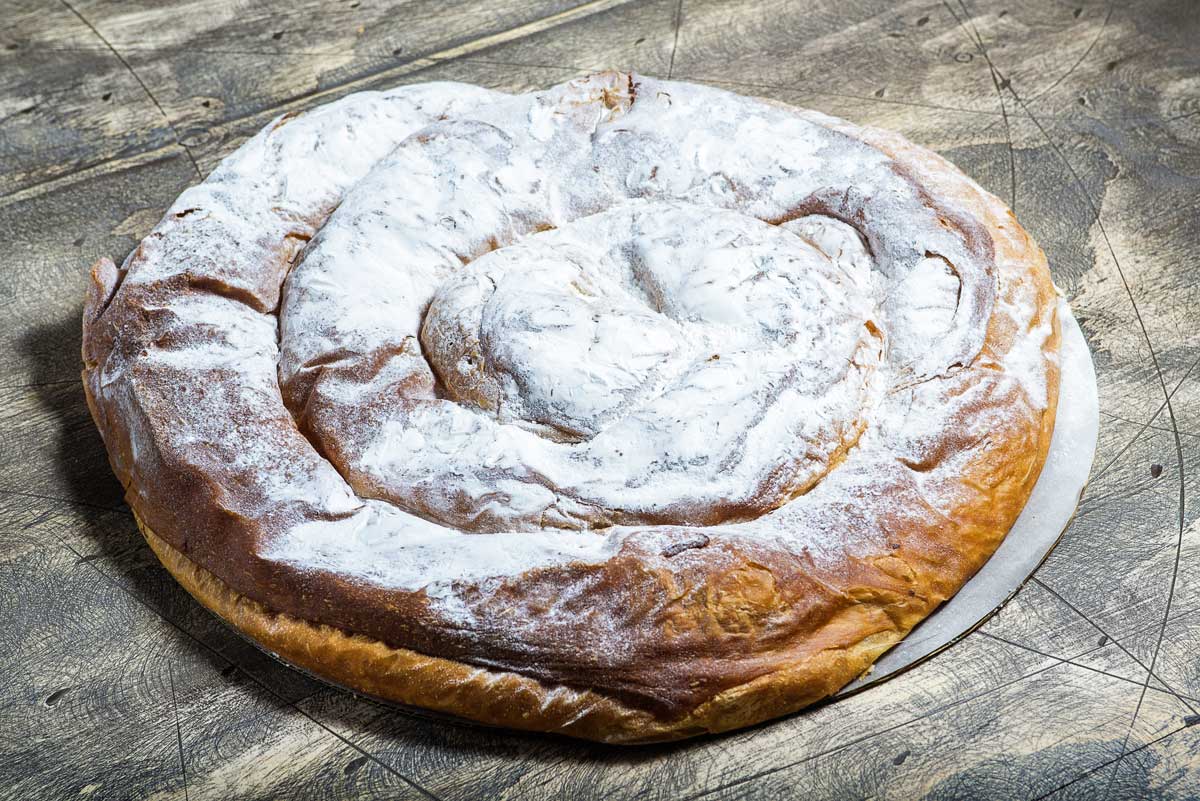
Over a century, the island’s version drifted from the original. Puerto Rican mallorcas are usually smaller, softer and more bread-like, with a tighter, cakier crumb, and they are almost never filled. In Mallorca, ensaïmadas are flakier and crisper, and bakeries sell them plain or filled with things like cabello de ángel (squash jam) or cream, and even topped with sobrasada. The same pastry traveled to the Philippines as ensaymada and to Argentina with Balearic emigrants.
Why “mallorca” and not “ensaimada”? In Puerto Rico the roll took the name of the island it came from, the way a Danish pastry is named for Denmark. Ask for an ensaimada in a San Juan bakery and you’ll probably get a puzzled look; ask for a mallorca and you’ll get a roll and a sugar shaker.
Pan de Mallorca vs. Ensaimada, Pan Sobao and Brioche
If you’ve seen “Spanish bread with sugar on top” and wondered which one it was, this is the quick way to tell them apart.
| Bread | Where | Dough & fat | Shape & texture | How it’s eaten |
|---|---|---|---|---|
| Pan de mallorca | Puerto Rico | Egg yolks, butter or lard, bread flour | Small loose coil; soft, brioche-like, tight crumb | Breakfast with coffee, or pressed with ham and cheese |
| Ensaïmada | Mallorca, Spain | Saïm (pork lard), long fermentation | Thin, wide spiral; flaky, crisp outside, very airy | Plain or filled; often bought in large sizes to share |
| Pan sobao | Puerto Rico | Lard, a little sugar, no egg-heavy enrichment | Loaf with a split top; soft and only lightly sweet | Everyday bread for butter, sandwiches and soups |
| Brioche | France | Lots of whole eggs and butter | Loaf or knotted roll; rich, shreddable, glossy crust | Breakfast, French toast, burger buns |
Mallorcas also get compared to Hawaiian sweet rolls. The sweetness is similar, but mallorcas are richer in yolks, less fluffy-squishy and are never baked as a pull-apart sheet. If you want Puerto Rico’s crusty everyday loaf instead, that’s pan de agua.
Pan de Mallorca Ingredients (and Why Each Matters)
The full amounts are in the recipe card below. These are the choices that decide whether your rolls taste like a San Juan bakery’s or like a dinner roll.
Bread flour
Higher protein builds the strong gluten an egg-and-fat-heavy dough needs to rise tall instead of spreading. All-purpose works, but the coils slump more.
Egg yolks (plus one whole egg)
Yolks give the yellow crumb, richness and tenderness. The one whole egg adds structure so the rolls hold their spiral.
Butter or lard
Butter tastes richer; lard, the traditional bakery fat, gives a softer, more melting texture and slightly flakier layers. Half and half is a good compromise.
Whole milk and sugar
Milk softens the crumb and browns gently. Half a cup of sugar makes the dough sweet but not cake-like, leaving room for the powdered sugar on top.
Instant yeast
It mixes straight into the flour and copes well with rich dough. Active dry works too if you bloom it in the warm milk first.
Powdered sugar
Use a lot, and use it last. It dissolves into warm or stored rolls, so dust right before serving. Non-melting topping sugar holds up longer.
How to Make Pan de Mallorca
This is an enriched dough, so it’s soft and a little sticky by design. A stand mixer makes the kneading easy; by hand, plan on 15 minutes of slap-and-fold kneading and resist adding extra flour.
1. Mix and knead to a windowpane
Whisk the flour, sugar, yeast and salt in the mixer bowl, then add the lukewarm milk and water, the yolks and the egg. Mix on low until no dry flour is left. Add the soft butter or lard a tablespoon at a time on medium-low, then knead on medium for 8 to 12 minutes. The dough is ready when it pulls cleanly from the bowl and a small piece stretches thin enough to see light through without tearing.
Keep the dough cool-ish. Aim for a dough temperature around 78–82°F after kneading. If the butter starts to look greasy, chill the bowl for 10 minutes and keep going.
2. Let it double
Cover the bowl and let the dough rise in a warm spot until doubled, 60 to 90 minutes. For an overnight version, refrigerate it right after kneading for up to 16 hours; it will rise slowly and become much easier to roll.
3. Divide, roll and butter
Press out the air and divide the dough into 8 equal pieces, about 125 g each (a kitchen scale keeps the rolls even). Rest them 10 minutes. Roll each into a 10 x 4-inch rectangle, spread a teaspoon of very soft butter or lard over the surface, then roll it up tightly from a long side into a rope. That thin layer of fat is what gives a mallorca its faint, peelable rings.
4. Coil loosely
Roll each rope under your palms until it’s 18 to 20 inches long. Starting at one end, wind it into a flat spiral, leaving a little space between the rings, and tuck the tail underneath so it can’t unwind in the oven. Set four rolls on each parchment-lined sheet, 3 inches apart.

Don’t coil tight. A tightly wound spiral has nowhere to expand, so it domes up and the rings split. A loose coil fills its own gaps during the second rise and bakes into the classic flat snail.
5. Proof until puffy
Cover loosely and let the rolls rise until they look puffy and the gaps between the coils have nearly closed, 60 to 90 minutes (up to 2 hours if the dough came from the fridge). A gentle fingertip press should spring back slowly.
6. Bake pale gold
Heat the oven to 350°F (175°C). Brush each roll with melted butter and bake one sheet at a time on the middle rack for 16 to 20 minutes, until pale golden and about 190°F in the center. Mallorcas should be blond, not brown, so a light-colored aluminum sheet is better than a dark one.
7. Cool, then shower with sugar
Cool the rolls completely on a rack. Right before serving, sift powdered sugar over them until the tops are white.
Make-Ahead Schedule for Breakfast Mallorcas
Bakeries have them out by 7 a.m.; you can too. Split the work across two days and the morning takes about 2 hours, most of it waiting.
| When | What to do | Time |
|---|---|---|
| Night before, 8:00 p.m. | Mix and knead the dough, cover and refrigerate. | 25 min |
| Morning, 6:00 a.m. | Divide, roll, butter and coil the cold dough. | 20 min |
| 6:20 a.m. | Second rise, covered, somewhere warm. | 1½–2 hr |
| 8:00 a.m. | Brush with butter and bake, one sheet at a time. | 35–40 min |
| 8:45 a.m. | Cool, dust with sugar, make the coffee. | 20 min |
Pan de Mallorca Troubleshooting
| Problem | Likely cause | Fix |
|---|---|---|
| Powdered sugar disappeared | Sugar went on warm rolls, or they were sealed in a container | Cool completely and dust just before serving; re-dust leftovers |
| Coils unwound in the oven | Tail not tucked under, or too much flour on the rope | Tuck the end firmly beneath the roll; brush off excess flour before coiling |
| Rolls domed and split | Coiled too tightly or underproofed | Coil loosely and wait until the gaps have nearly closed |
| Dense, heavy crumb | Too much flour added, or dough not kneaded to a windowpane | Keep the dough tacky and knead longer; weigh the flour |
| Bottoms too dark | Dark pan or lower rack | Use a light aluminum sheet on the middle rack, or double up two sheets |
| Flat, spreading rolls | All-purpose flour or overproofing | Use bread flour and bake as soon as the rolls look puffy |
How to Make a Mallorca Sandwich (Mallorca de Jamón y Queso)
In Puerto Rico, a “mallorca” on a café menu often means the sandwich. A split roll is buttered, toasted on the griddle, filled with ham and melted cheese, pressed flat and then, yes, dusted with powdered sugar. The sweet-salty-buttery combination is the point, and day-old rolls work even better than fresh ones.
- Split and butter. Slice a mallorca in half horizontally and butter both cut sides.
- Toast. Set the halves cut-side down on a hot griddle or skillet over medium heat until golden, about 1 minute.
- Fill. Layer thin-sliced sweet ham and Swiss or American cheese on the bottom half. Add a fried egg for a mallorca de jamón, huevo y queso.
- Press. Close the sandwich and press it on the griddle with a heavy pan or in a sandwich press, 1 to 2 minutes per side, until the cheese melts and the roll is flat and crisp.
- Sugar it. Dust the top with powdered sugar and serve right away with coffee.

Other popular fillings: bacon and American cheese, turkey and Swiss, or just butter on a pressed plain roll. Some cafés also serve a mallorca French toast, and leftovers are great in bread pudding.
How to Serve, Store and Freeze Mallorcas
- Serve: Warm or at room temperature with café con leche, plain or split with butter. They’re also a sweet side on a holiday brunch table next to other Puerto Rican desserts.
- Store: Keep unsugared rolls in a bread bag or loosely closed container at room temperature for up to 2 days.
- Freeze: Freeze cooled, unsugared rolls in a zip-top bag for up to 2 months. Thaw on the counter.
- Reheat: Warm at 325°F for 5 to 7 minutes, or split and griddle them, then dust with sugar.
What You’ll Need
You can make mallorcas by hand, but these make the job easier and the rolls more consistent.
As an Amazon Associate, AmigoFoods earns from qualifying purchases.
Pan de Mallorca FAQ
What is pan de mallorca made of?
Flour (ideally bread flour), egg yolks, milk, sugar, yeast, salt and butter or lard, with more fat spread between the layers and powdered sugar on top.
Why is it called pan de mallorca?
It’s named after the Spanish island of Mallorca, home of the ensaïmada it descends from. Mallorcan immigrants brought the pastry to Puerto Rico, where it took the island’s name.
Is pan de mallorca the same as an ensaimada?
They share an ancestor and a shape, but they’re not the same today. Spanish ensaïmadas are lard-based, flakier and crisper; Puerto Rican mallorcas are softer, smaller and more like brioche. Our ensaimada guide covers the Spanish version.
How do you pronounce mallorca?
Mah-YOR-kah. In Spanish the double L sounds like a Y, which is why you’ll also see it written “mayorca.”
Can I use all-purpose flour?
Yes. The rolls will be a little flatter and less springy. Add flour sparingly; the dough should stay soft and tacky.
Butter or lard: which is more authentic?
Lard is the traditional bakery fat in both Mallorca and Puerto Rico and gives a softer, more melting roll. Butter gives more flavor and is what most home recipes use. Either works in this recipe, or use half of each.
Why did my powdered sugar melt?
Powdered sugar absorbs moisture from warm or covered bread. Dust the rolls only once they’re completely cool and right before you serve them.
Can I make the dough the night before?
Yes, and it’s easier to shape that way. Refrigerate the kneaded dough for up to 16 hours, then shape, proof (allow 1½ to 2 hours) and bake.
Hungry for more from the island? Browse our full guide to Puerto Rican food or the Puerto Rican recipes hub.
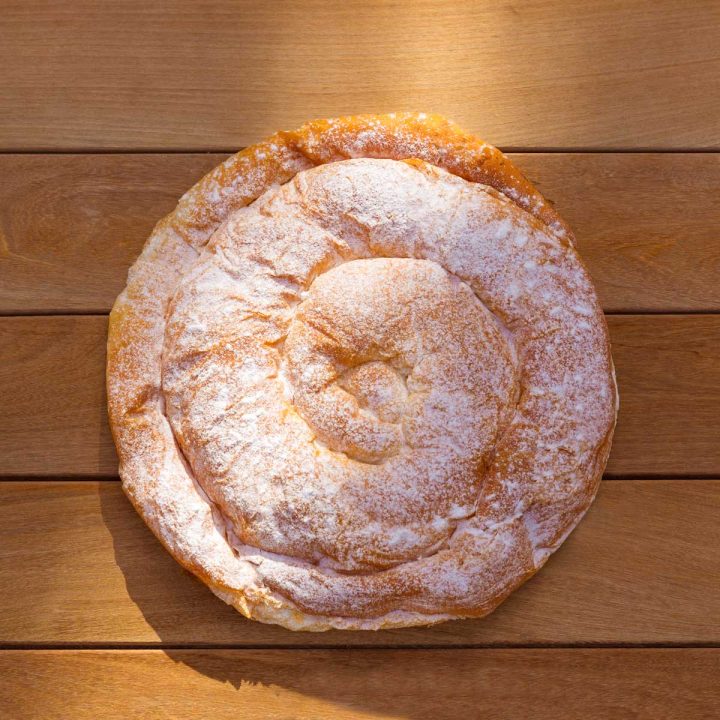
Pan de Mallorca (Puerto Rican Sweet Rolls)
Soft, buttery coiled Puerto Rican sweet rolls showered with powdered sugar, made bakery-style with bread flour, egg yolks and butter or lard.
Ingredients
For the dough
- 4 cups (480 g) bread flour, plus more for dusting
- 1/2 cup (100 g) granulated sugar
- 2 1/4 teaspoons (7 g, 1 packet) instant yeast
- 1 teaspoon (6 g) fine salt
- 2/3 cup (150 g) whole milk, lukewarm (about 95°F)
- 1/4 cup (60 g) water, lukewarm
- 4 large egg yolks
- 1 large egg
- 6 tablespoons (85 g) unsalted butter or lard, softened
For shaping and finishing
- 3 tablespoons (42 g) unsalted butter or lard, very soft, for spreading
- 2 tablespoons (28 g) unsalted butter, melted, for brushing
- 1/2 cup (60 g) powdered sugar, for dusting
Instructions
- Mix. In the bowl of a stand mixer, whisk the flour, sugar, yeast and salt. Add the lukewarm milk and water, the yolks and the whole egg. Mix on low with the dough hook for about 3 minutes, until no dry flour remains.
- Add the fat. On medium-low, add the softened butter or lard one tablespoon at a time, letting each piece disappear before adding the next.
- Knead. Raise the speed to medium and knead 8 to 12 minutes, until the dough pulls away from the bowl and stretches into a thin, translucent windowpane. It should feel soft and slightly tacky.
- First rise. Cover and let rise in a warm spot until doubled, 60 to 90 minutes. (Or refrigerate overnight, up to 16 hours.)
- Divide. Press out the air and divide the dough into 8 equal pieces, about 125 g each. Cover and rest 10 minutes.
- Roll and butter. Roll each piece into a 10 x 4-inch rectangle. Spread about 1 teaspoon of the very soft butter or lard over it, then roll it up tightly from a long side into a rope.
- Coil. Roll the rope under your palms to 18 to 20 inches. Coil it loosely into a spiral, leaving a little space between the rings, and tuck the end underneath. Set 4 rolls on each parchment-lined baking sheet, 3 inches apart.
- Second rise. Cover loosely and let rise until puffy and the gaps between the coils have nearly closed, 60 to 90 minutes.
- Bake. Heat the oven to 350°F (175°C). Brush the rolls with melted butter and bake one sheet at a time on the middle rack for 16 to 20 minutes, until pale golden and 190°F in the center.
- Finish. Cool completely on a rack, then sift a thick layer of powdered sugar over the tops just before serving.
Notes
Flour: Bread flour gives the tall, springy crumb of a Puerto Rican bakery mallorca. All-purpose flour works, but the rolls spread more and rise less.
Yeast: For active dry yeast, use the same amount and let it foam in the lukewarm milk for 5 minutes before mixing.
Make ahead: Cold dough from the fridge is easier to roll. Shaped rolls made from cold dough need 90 minutes to 2 hours for the second rise.
Sugar: Dust only when the rolls are completely cool and right before serving. Powdered sugar dissolves into warm or stored rolls.
Storage: Keep unsugared rolls airtight at room temperature for 2 days, or freeze up to 2 months. Warm 5 minutes at 325°F, then dust.
More Puerto Rican Breads and Pastries
- Pan sobao, the soft, lightly sweet lard bread from every Puerto Rican panadería
- Pan de agua, the crackly island water bread
- Quesitos, flaky cream cheese pastries
- Ensaimada, the Spanish pastry from Mallorca that started it all
- Puerto Rican breads and side dishes, all in one place
More Puerto Rican Foods
See all →
Jorge Garcia is the founder of AmigoFoods, where he has spent over 20 years helping readers discover authentic Latin American and Spanish cuisine. Raised in a Cuban-American household, Jorge learned to cook at the hands of his mother and grandmother, carrying forward generations of family recipes. That heritage, backed by his family’s four-generation history in the Latin food industry, inspired him to launch AmigoFoods in 2003. With more than 1,000 published articles on recipes, ingredients, and food culture, Jorge’s mission is simple: make authentic Latin cooking approachable for home cooks everywhere while honoring the traditions behind every dish.