

On this page
Sobrasada is a soft, spreadable cured pork sausage from Mallorca, Spain, seasoned with pimentón, salt and spices. You spread it on bread instead of slicing it. The classic way to eat it is on warm toast with a drizzle of honey, and the recipe is below.
Sobrasada Toast at a Glance
What Is Sobrasada?
Sobrasada (sobrassada in Catalan, pronounced soh-brah-SAH-dah) is a raw, cured sausage made from minced pork and pork fat. It’s kneaded with pimentón until it forms a soft red paste, stuffed into natural casings and hung to cure.
English has no word for it, so the Spanish name stays. “Spreadable chorizo” is the usual shorthand, and it gets you close on flavor. But chorizo slices. Sobrasada never sets firm enough to slice neatly.
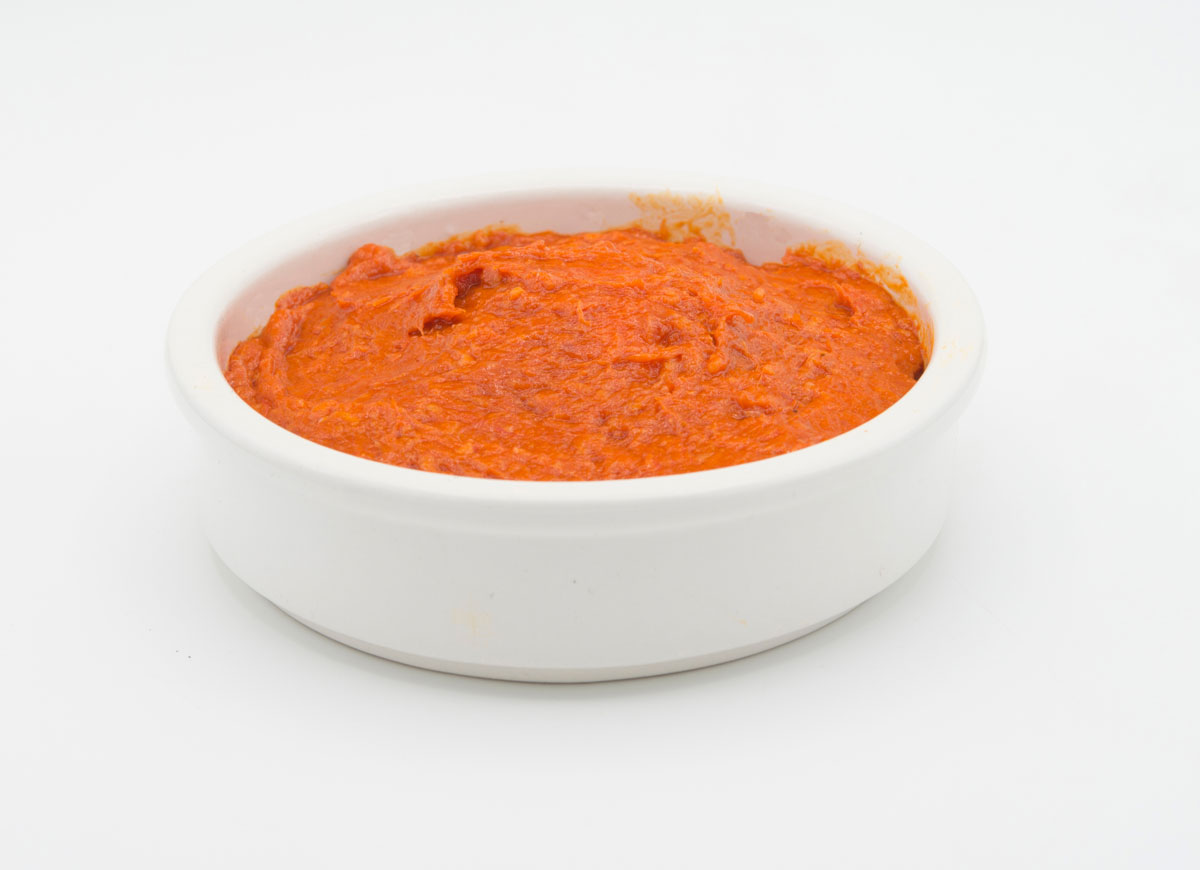
What does sobrasada taste like?
Rich, porky and sweet with paprika, with a gentle tang from curing. Standard sobrasada is mild, not hot. It isn’t smoked either, so it tastes cleaner and rounder than most Spanish chorizo. A little goes a long way, because it’s more than half fat.
What Is Sobrasada Made Of?
For Sobrasada de Mallorca, the recipe is set by its Protected Geographical Indication (PGI). Only a short list of ingredients is allowed.
| Ingredient | Allowed amount |
|---|---|
| Lean pork (magro) | 30% to 60% |
| Back fat (tocino) | 40% to 70% |
| Pimentón | 4% to 7% |
| Salt | 1.8% to 2.8% |
| Spices and natural flavorings | Pepper, rosemary, thyme and/or oregano |
The meat must be minced to pieces under 6 millimeters, then kneaded until the paste is uniform. Some Mallorcan producers use Tap de Cortí, a local pepper variety ground into pimentón. It adds character, but the rules don’t require it.
Why Does Sobrasada Spread Instead of Slice?
Three things keep it soft:
- It’s mostly fat. Fat, not protein, holds the paste together, so it stays soft at room temperature.
- The grind and kneading. Fine mincing and long kneading give a smooth, sticky paste.
- A gentle cure. Salami firms up as acid sets its proteins. Sobrasada’s milder fermentation doesn’t form that firm structure. It keeps through drying instead.
The PGI rules describe the ideal texture as soft, inelastic, sticky and unctuous. If it springs back when you press it, something went wrong.
Types of Sobrasada
Sobrasada de Mallorca
This is the standard PGI version, made and cured only on the island of Mallorca. It can use pork from any breed. Each piece carries a numbered back label from the regulatory council.
Sobrasada de Mallorca de Cerdo Negro
This second protected type uses only the native Mallorcan black pig (porc negre), raised on the island under traditional, largely outdoor conditions. It costs more and is hard to find outside Spain. Don’t rely on a black pig drawing alone. Look for the full protected name and the numbered label.
Sobrasada ibérica
Producers on the Spanish mainland make their own versions from Ibérico pork. The ones you’ll most likely see in the US, like Fermín’s, belong here. They’re good, but they aren’t Sobrasada de Mallorca PGI.
Sizes and aging
The part of the pig’s intestine used as the casing gives each shape its own name. Bigger pieces cure longer and taste deeper.
| Name | Casing | What to expect |
|---|---|---|
| Llonganissa | Small intestine | Thin, the youngest and mildest |
| Rissada | Large intestine | The everyday curved piece, often around 800 g |
| Culana | Rectum | Thicker, with a longer cure |
| Poltru | Cecum | Large and rounded, deeply flavored |
| Bufeta | Bladder | Very large, aged for months or more |
| Bisbe | Stomach | The giant “bishop,” weighing several kilos and aged the longest |
Sobrasada vs. Nduja, Chorizo and Soppressata
These four get mixed up constantly, and they won’t behave the same way in a recipe.
| From | Texture | Flavor | |
|---|---|---|---|
| Sobrasada | Mallorca, Spain | Spreadable | Mild, sweet paprika, unsmoked |
| Nduja | Calabria, Italy | Spreadable | Very hot Calabrian chile, often smoked |
| Spanish chorizo | Across Spain | Firm, sliceable | Garlic and pimentón, sometimes smoked |
| Soppressata | Southern Italy | Firm, sliceable | Pressed salami, with or without chile |
The names of sobrasada and soppressata are related, both tracing back to the idea of pressing, but they’re very different sausages today. If you use nduja in a sobrasada recipe, cut the amount and expect real heat.
How to Eat Sobrasada
Sobrasada is cured, so you don’t have to cook it. Slit the casing, scoop out what you need and let it come to room temperature first.

Cooking With Sobrasada
In a pan, sobrasada acts almost like seasoned butter. It melts fast and carries paprika through the whole dish. Salt lightly until you’ve tasted, since it brings plenty of its own.
- Pasta: Melt it with a splash of pasta water and white wine for a quick sauce.
- Rice: Stir a spoonful in partway through cooking.
- Sofrito: Melt it into onion and tomato as the base for stews, meat or fish.
- Croquetas: Fold it into the béchamel.
- Pastry: Mallorca’s bakeries fill their spirals with it in ensaimada de sobrasada.
- Pizza or flatbread: Dot it on before baking. It isn’t traditional, but it’s very good.

Where to Buy Sobrasada in the US
Check Spanish specialty shops, cheese counters and Amazon. Before you order, read the listing’s storage and shipping details, and follow the package once it arrives.
Round out the plate: raw honey, a Spanish cheese assortment and Spanish extra virgin olive oil.
As an Amazon Associate, AmigoFoods earns from qualifying purchases.
How to read the label
- “Sobrasada de Mallorca” + a numbered back label: the protected PGI product.
- “De Cerdo Negro”: the protected black pig version.
- “Sobrasada ibérica”: made from Ibérico pork, usually on the mainland, and not the Mallorcan PGI.
- “Sobrasada style”: a sausage made in that style. Check where it’s made and what’s in it.
How to Store Sobrasada
Follow the package first. Unopened tubs and vacuum packs have their own storage directions and dates.
Once cut, press the surface flat, wrap it in butcher or wax paper and keep it in the fridge. The Mallorcan regulatory council prefers paper to plastic so the sausage can breathe. Use it within a few weeks, and throw it out if it smells off or grows anything other than a thin white bloom.
Can You Make Sobrasada at Home?
Yes, but only if you already cure sausage and own a curing chamber. This is a raw pork product that hangs unrefrigerated for over a month.
The full homemade recipe is at the bottom of this page. If you enjoy making sausage, also see our guides to fuet and salchichón.

A Short History of Sobrasada
The word itself is old. It was already in use by the 14th century, and it appears to share a root with the Italian soppressata. One often-cited early mention is a 1403 letter in which King Martí of Aragon asked for some to be sent from Sicily.
Early sobrasada wasn’t red. That came after peppers arrived from the Americas. The official PGI file places pimentón in the recipe by the late 16th or early 17th century, though some food historians date the change later.
Mallorca’s climate helped make it a staple. The island’s humidity makes it hard to cure whole cuts, so minced sausages were a more reliable way to preserve the autumn pig slaughter, known as the matança. The EU registered Sobrasada de Mallorca as a PGI in June 1996.
Sobrasada FAQ
What is sobrasada in English?
There’s no direct translation. It’s best described as a soft, spreadable cured pork sausage from Mallorca, and it’s often sold as “spreadable chorizo.”
Can you eat sobrasada raw?
Fully cured commercial sobrasada is made to be eaten without cooking. It’s a cured raw product, so it’s also often warmed or cooked. If you’re not sure a piece is fully cured, check the label or cook it through.
Is sobrasada spicy?
Usually not. Most is made with sweet pimentón and tastes mild. Look for picante or coent on the label if you want heat.
Is sobrasada the same as chorizo?
No. Both are Spanish pork sausages colored with pimentón, but chorizo is firm enough to slice and often includes garlic. Sobrasada is a soft paste that you spread.
What’s the difference between sobrasada and nduja?
Sobrasada comes from Mallorca and is mild and paprika-sweet. Nduja comes from Calabria, Italy, and is hot with chile and often smoked. Both spread.
Does sobrasada need to be refrigerated?
Follow the package. Once it’s opened or cut, keep it in the fridge and bring it to room temperature before you serve it.
Can you eat sobrasada when pregnant?
Not uncooked. Health agencies including the UK’s NHS and Spain’s AESAN advise against uncooked cured meats during pregnancy because of listeria and toxoplasmosis risks. Cooking it until steaming hot addresses that. Ask your doctor or midwife if you’re unsure.
Sobrasada Toast with Honey Recipe
Five ingredients and a few minutes under the broiler. This is the best place to start if you’ve never had sobrasada.
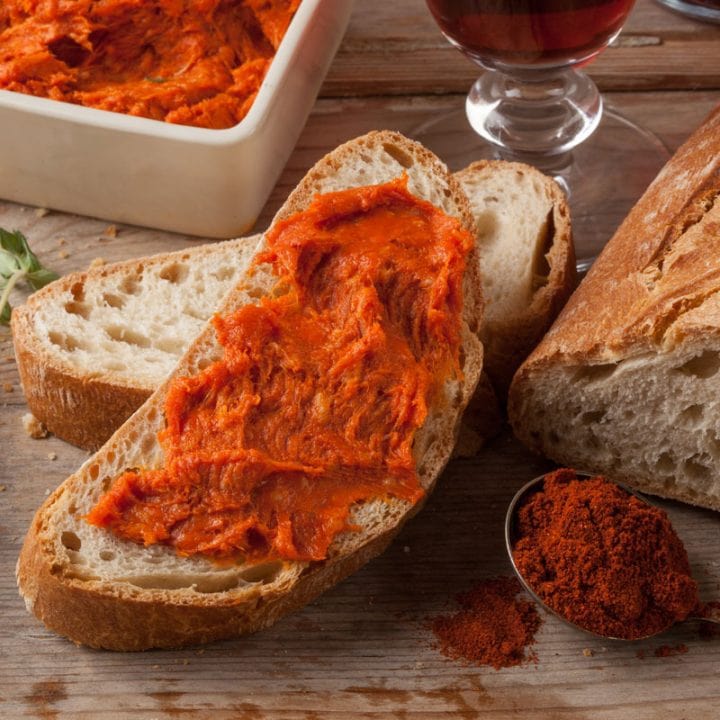
Sobrasada Toast with Honey
The way Mallorca eats sobrasada: spread thick on toast, warmed until the paprika fat loosens, then finished with honey.
Ingredients
- 4 thick slices rustic country bread
- 4 oz (115 g) sobrasada, at room temperature
- 1 tablespoon extra virgin olive oil
- 2 tablespoons honey
- Flaky sea salt, optional
Instructions
- Take the sobrasada out of the fridge 30 minutes ahead so it softens and spreads easily. Slit the casing and scoop out the paste.
- Heat the broiler with a rack about 6 inches from the element. Brush the bread with the olive oil and toast it on both sides until golden, about 1 minute per side.
- Spread about 1 oz (2 tablespoons) of sobrasada over each slice, all the way to the edges.
- Broil for 1 to 2 minutes, just until the fat turns glossy and the edges start to sizzle. Do not let the paprika burn or it turns bitter.
- Drizzle each toast with honey, add a pinch of flaky salt if you like, and serve right away.
Notes
Sobrasada is already salty, so taste before adding salt. No broiler? Warm the spread toasts in a covered skillet over medium-low heat for 2 to 3 minutes. Add a slice of Mahón or goat cheese before broiling for a richer version.
Homemade Sobrasada Recipe
For experienced sausage makers with a curing chamber. Read the safety notes above and in the recipe before you begin.
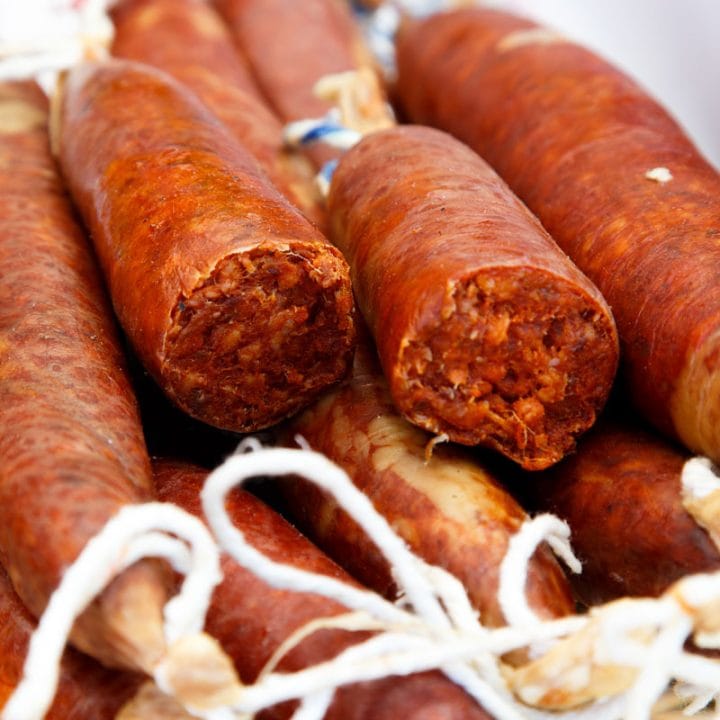
Homemade Sobrasada
A home-cured Mallorcan-style sobrasada made with Cure #2 in a controlled curing chamber. For experienced sausage makers only.
Ingredients
- 13.5 oz (380 g) lean pork shoulder
- 9.5 oz (270 g) pork belly
- 12.5 oz (350 g) pork back fat
- 22 g fine sea salt
- 2.5 g Cure #2 (Prague Powder #2)
- 36 g sweet Spanish pimentón (6 tablespoons), unsmoked
- 2 g ground black pepper (1 teaspoon)
- 2 g dried thyme (2 teaspoons)
- Natural pork casings, 40 to 60 mm, rinsed and soaked
Instructions
- Cut the lean pork, belly and back fat into 1-inch cubes, weigh them and chill until very cold and firm, about 1 hour in the freezer.
- Grind everything through a 1/4-inch (5 to 6 mm) plate into a chilled bowl.
- Weigh the salt and Cure #2 on a gram scale. Add them with the pimentón, pepper and thyme, then knead by hand for 3 to 4 minutes until the paste looks evenly red and feels sticky.
- Cover and refrigerate for 24 hours.
- Stuff the paste firmly into the rinsed casings, tie off, and prick any air pockets with a sterilized needle. Weigh each sausage and write down the starting weight.
- Hang in a curing chamber at 59 to 64°F (15 to 18°C) and about 70 to 75% humidity for 30 to 45 days, depending on thickness, until each sausage has lost about 30% of its starting weight.
- Wrap in butcher paper and refrigerate. Bring to room temperature before spreading.
Notes
Do not skip or swap the Cure #2. It protects against botulism during the long, unrefrigerated cure, and it is not the same as Cure #1 or table salt. Throw out any sausage with black, green or fuzzy mold or an off smell; only a thin white bloom is normal. Not suitable for anyone who is pregnant or immunocompromised unless cooked through.
More Spanish Cured Meats and Sausages
- Latin American & Spanish cured meats: a country-by-country guide
- Jamón ibérico guide
- Morcilla, Spanish blood sausage
- Salchichón
- Fuet
- The essentials of the Spanish pantry
- Traditional Spanish food
Sources: Sobrasada de Mallorca PGI registration (WIPO / Spanish Ministry of Agriculture); Foods & Wines from Spain; Tasting Palma; Meats and Sausages.
More Spanish Foods
See all →
Jorge Garcia is the founder of AmigoFoods, where he has spent over 20 years helping readers discover authentic Latin American and Spanish cuisine. Raised in a Cuban-American household, Jorge learned to cook at the hands of his mother and grandmother, carrying forward generations of family recipes. That heritage, backed by his family’s four-generation history in the Latin food industry, inspired him to launch AmigoFoods in 2003. With more than 1,000 published articles on recipes, ingredients, and food culture, Jorge’s mission is simple: make authentic Latin cooking approachable for home cooks everywhere while honoring the traditions behind every dish.