
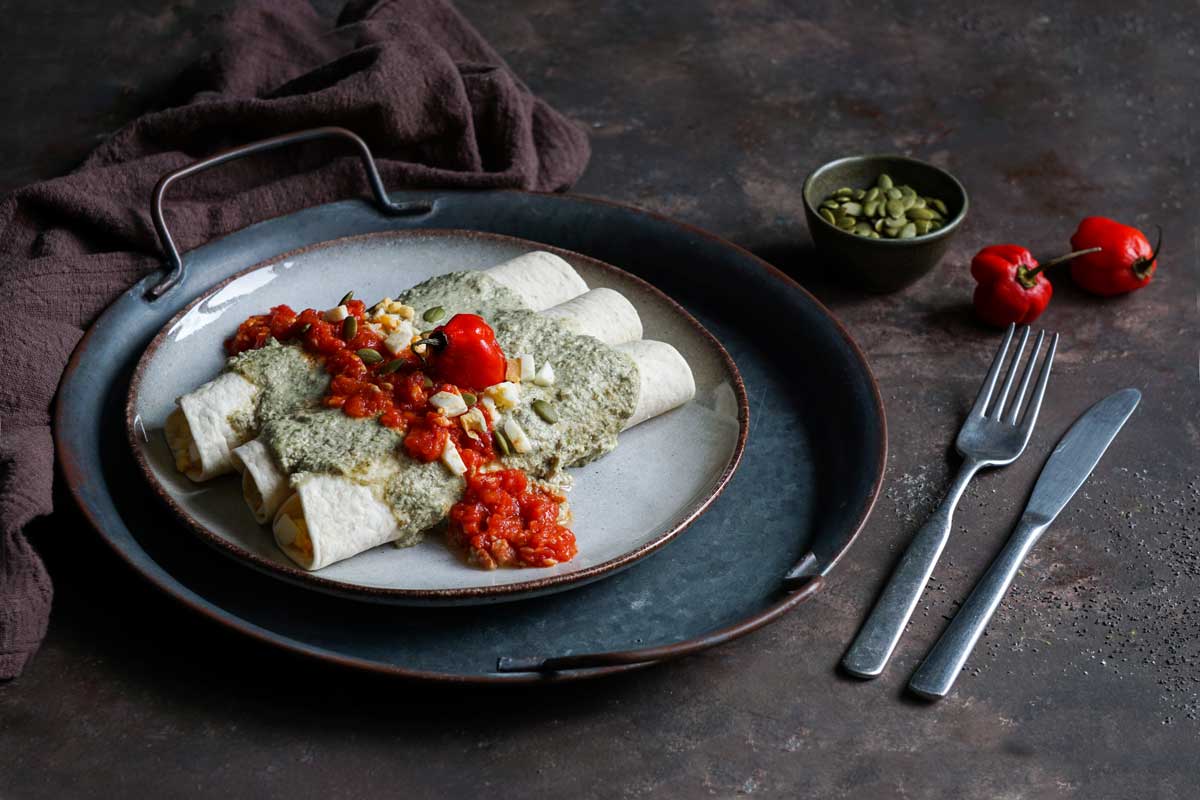
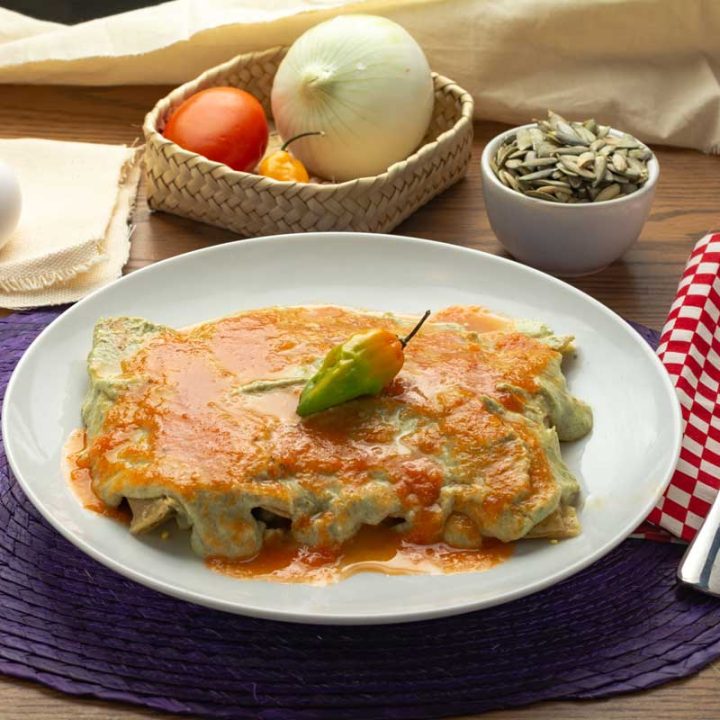
Papadzules are a Mexican specialty from Yucatán: soft corn tortillas filled with chopped hard-boiled eggs and covered in a nutty pumpkin seed sauce. Epazote gives the sauce its herbal character, and a little tomato sauce adds a bright finishing touch.
Papadzules at a Glance
What Are Papadzules? A Look into Their Mayan Roots

Papadzules are a traditional Mayan dish that has been enjoyed for centuries in the Yucatán Peninsula.
Often considered a precursor to modern enchiladas, this dish consists of corn tortillas filled with chopped hard-boiled eggs and drenched in a creamy pumpkin seed (pepita) sauce.
Unlike the spicy, cheese-covered enchiladas popular in other parts of Mexico, Papadzules have a milder, nuttier flavor that highlights the deep connection between Mayan cuisine and local ingredients.
History of Papadzules
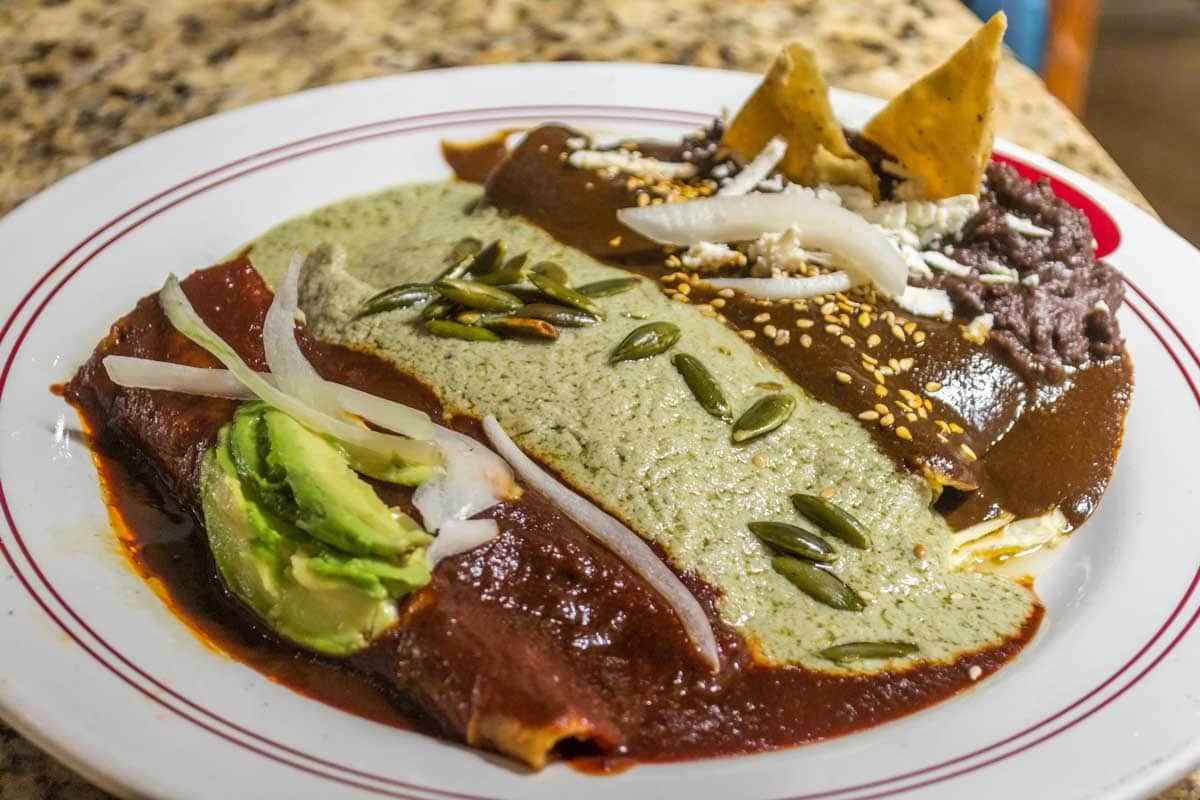
The Meaning and Origins of “Papadzules”
The name Papadzules is derived from the Mayan language, with some interpretations suggesting it means “food of the lords” or “to soak and soak again.”
This highlights the dish’s rich, sauce-heavy nature and its historical importance as a meal fit for Mayan nobility.
A Dish with Deep Mayan Roots
Papadzules date back to the time of the ancient Maya, who relied on corn, pumpkin seeds, and epazote as staple ingredients in their diet.
The dish is a reflection of pre-Hispanic cooking traditions, as it does not use ingredients like cheese, lard, or chili peppers, which were introduced later by the Spanish.
How Papadzules Compare to Enchiladas and Other Mexican Dishes
While Papadzules may look similar to enchiladas, there are some key differences:
- Sauce: Instead of chili-based or cheese sauces, Papadzules use a pepita (pumpkin seed) sauce with an epazote-infused broth.
- Filling: Traditional Papadzules are filled with hard-boiled eggs, unlike enchiladas, which typically contain meat, cheese, or beans.
- Flavor Profile: Papadzules have a mild, nutty, and earthy taste, while enchiladas often feature spicy, tangy, or cheesy flavors.
- Cultural Significance: While enchiladas are common throughout Mexico, Papadzules remain a distinctively Yucatecan dish with deep ties to Mayan heritage.
Why Papadzules Remain a Staple in Yucatán Cuisine
Despite the evolution of Mexican cuisine, Papadzules have remained a beloved dish in the Yucatán Peninsula.
They are commonly served at family gatherings, festivals, and local restaurants, offering a taste of history on every plate.
The dish’s simple yet flavorful combination of ingredients makes it both accessible and deeply rooted in Yucatán’s culinary identity.
Ingredients Needed to Make Traditional Papadzules

Papadzules rely on a handful of simple yet flavorful ingredients that come together to create a dish rich in Mayan tradition.
Each component plays a crucial role in delivering the nutty, earthy, and slightly herby flavors that make this dish unique.
Here’s what you’ll need to prepare authentic Papadzules at home.
1. Corn Tortillas – The Foundation of the Dish
- Traditional handmade corn tortillas are essential for Papadzules.
- Fresh, slightly thick tortillas work best to hold the filling and sauce.
- Avoid store-bought flour tortillas—they will not provide the right texture or flavor.
2. Pepita (Pumpkin Seed) Sauce – The Heart of the Dish
- Made from toasted and ground pepitas (pumpkin seeds), this sauce gives Papadzules their signature creamy, nutty flavor.
- The seeds are blended with epazote-infused broth to create a smooth consistency.
- Some variations add a bit of oil or lard to enrich the texture, but traditionally, it’s kept simple.
3. Epazote-Infused Broth – A Key Flavor Booster
- Epazote, a fragrant Mexican herb, is steeped in hot water to create a broth that enhances the pumpkin seed sauce.
- The herb has a unique, slightly medicinal flavor that adds authenticity to the dish.
- If epazote is unavailable, cilantro can be used as a substitute, though the taste will be slightly different.
4. Hard-Boiled Eggs – The Traditional Filling
- Chopped hard-boiled eggs serve as the classic Papadzules filling.
- Eggs add a rich, mild flavor that pairs perfectly with the pumpkin seed sauce.
- Some modern versions replace eggs with chicken, shrimp, or mushrooms, but the traditional recipe sticks with eggs.
5. Tomato Sauce (Optional) – For an Extra Layer of Flavor
- While not always included, some versions drizzle a light tomato sauce over the top.
- The sauce is typically made with blended tomatoes, onions, and garlic, sometimes cooked with a touch of oil.
- This adds a slight acidity and color contrast to the dish.
6. Salt and Other Seasonings (Minimal but Essential)
- Sea salt enhances the natural flavors of the pepitas and epazote.
- Some variations include black pepper or a hint of habanero chili for a subtle kick, but traditional Papadzules are not spicy.
A Dish Rooted in Simplicity and Tradition
One of the reasons Papadzules have endured for centuries is their simplicity—they use just a few essential ingredients but deliver a deep, comforting flavor.
By using high-quality, fresh ingredients, you can recreate an authentic taste of the Yucatán at home.
How to Make Papadzules at Home
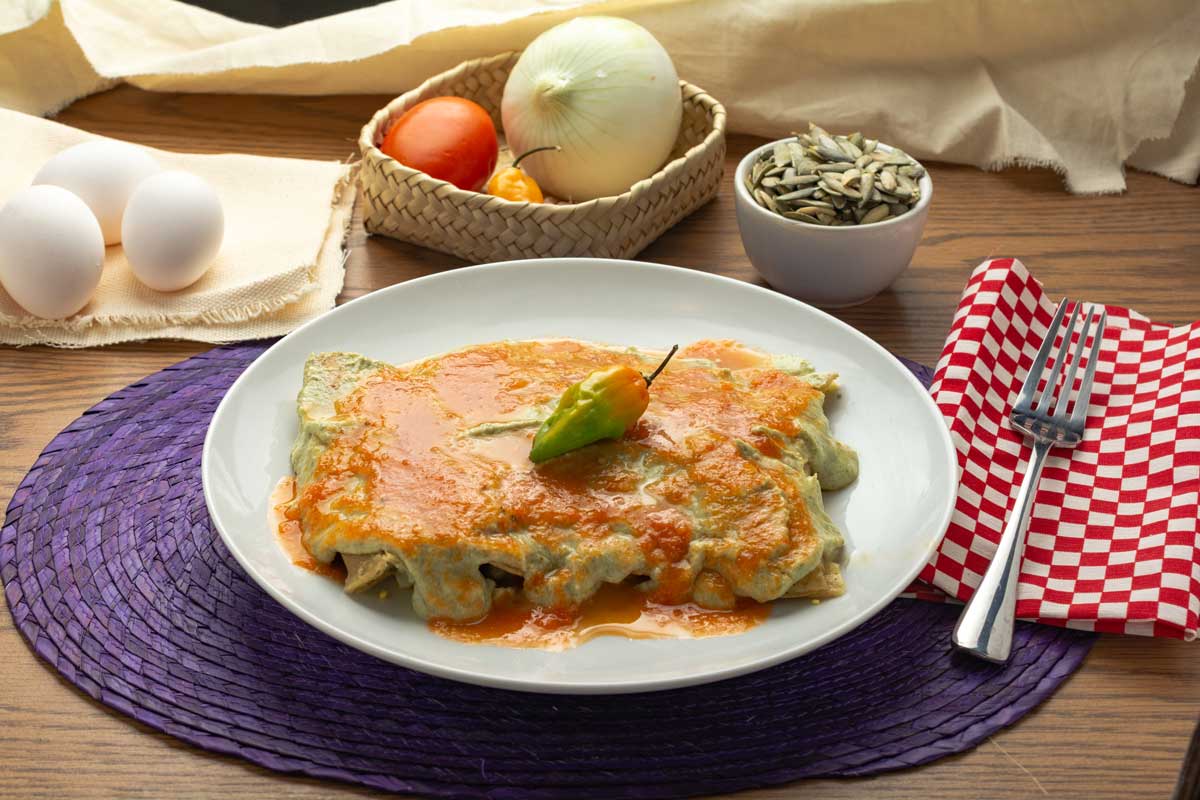
Making Papadzules at home is easier than you might think!
This traditional Yucatecan dish comes together with just a few ingredients and some simple techniques.
Follow this step-by-step recipe to create an authentic and delicious plate of Papadzules, just like they’re made in Mexico’s Yucatán Peninsula.
Ingredients
- 12 small corn tortillas
- 1 cup raw, hulled, unsalted pumpkin seeds (pepitas)
- 4 fresh epazote leaves
- 4 large eggs
- 2 cups water or light vegetable broth, for the infusion (add to the sauce only as needed)
- Salt, to taste
- Optional: prepared cooked tomato sauce or tomato salsa, for topping
Method
- Cover the eggs with water in a saucepan. Bring to a boil, lower to a gentle simmer and cook for about 10–12 minutes, until the whites and yolks are firm. Cool in ice water, peel and chop.
- While the eggs cook, lightly toast the raw pepitas in a dry skillet over medium heat, stirring, until fragrant and beginning to pop. Keep them pale rather than deeply browned. Let cool briefly, then grind finely in a blender or food processor. If using already toasted unsalted pepitas, skip toasting.
- Bring the 2 cups water or vegetable broth to a boil with the 4 epazote leaves. Simmer for 5 minutes, remove the leaves and let the infusion cool until warm enough for your blender’s instructions.
- Blend the ground pepitas with about 1 cup of the warm infusion to start. Add more gradually only until smooth and thick enough to coat a spoon; you may not need all 2 cups. Season to taste. Transfer to a pan and keep warm over very low heat without boiling.
- Warm the tortillas on a dry comal or skillet until pliable, keeping them wrapped as you work. Divide the chopped eggs evenly among the 12 tortillas, roll them and arrange seam-side down.
- Spoon the warm pepita sauce over the rolls. Finish with prepared tomato sauce if desired and serve immediately, 3 rolls per person. This is a lightly filled version; serve beans alongside for a more substantial meal.
Timing and Sauce Notes
Serves 4 (12 small rolls). Allow about 20 minutes prep and 25 minutes cooking, or 45 minutes total, with the optional tomato sauce already prepared. This includes cooking the eggs; ready-cooked eggs shorten the work. Making fresh tortillas or tomato sauce adds time.
Use hulled pepitas, not pumpkin seeds in their white shells. Toast only once and avoid browning heavily. Add the epazote infusion gradually: all 2 cups may make this small batch too thin. Keep the sauce warm without boiling to help it stay smooth.
The recipe uses 4 fresh epazote leaves for a mild infusion. Dried epazote is not interchangeable leaf-for-leaf; follow the product’s cooking guidance and adjust to taste. This simplified sauce is not the same as sikil p’ak, the separate pumpkin-seed-and-tomato dip.
A blender or food processor makes the sauce easier to smooth; a molcajete is a traditional grinding option. Warm tortillas on a comal before rolling.
Bringing Yucatán to Your Kitchen
Now that you’ve mastered this step-by-step guide, you can recreate this ancient Mayan dish at home!
The rich, nutty flavors of Papadzules offer a unique glimpse into Yucatán’s culinary history.
So grab your tortillas, blend up that pepita sauce, and enjoy a plate of authentic Papadzules!
The Cultural Significance of Papadzules in Yucatán

Papadzules are more than just a delicious dish—they are a living testament to the culinary traditions of the ancient Maya.
This simple yet flavorful meal has been passed down through generations, remaining a staple in Yucatecan cuisine and a symbol of regional identity.
From historical roots to modern celebrations, Papadzules hold a deep cultural significance in Yucatán.
1. A Dish with Ancient Mayan Origins
Papadzules date back to pre-Hispanic times, making them one of the oldest traditional dishes still enjoyed today.
The ingredients—corn tortillas, pumpkin seeds, and epazote—were dietary staples of the ancient Maya civilization.
Since the dish does not use dairy or pork, which were introduced by the Spanish, it represents an authentic taste of Mayan gastronomy.
Why Were Papadzules Important to the Maya?
- Corn was considered a sacred crop, deeply embedded in Mayan mythology.
- Pepitas (pumpkin seeds) were a major source of protein and nutrients in Mayan diets.
- Epazote was commonly used in cooking and for medicinal purposes.
It is believed that Papadzules may have been a dish reserved for high-ranking members of Mayan society, as the name roughly translates to “food of the lords.”
2. Papadzules in Traditional Yucatecan Cuisine
Despite its ancient roots, Papadzules never disappeared from Yucatán’s culinary scene.
Instead, they became a beloved dish served in homes, markets, and restaurants across the region.
Where Are Papadzules Most Commonly Eaten?
- Family Gatherings: Many Yucatecan families prepare Papadzules for casual meals or celebrations.
- Local Markets & Street Food Stalls: A common and affordable dish found in food markets in Mérida, Valladolid, and Campeche.
- Traditional Yucatecan Restaurants: Served as a specialty in fondas (small home-style restaurants) and more upscale establishments.
Papadzules are often overshadowed by cochinita pibil, panuchos, or salbutes, but they remain a comfort food that locals cherish.
3. Papadzules in Yucatán’s Festivities and Cultural Events
Though not exclusive to major holidays, Papadzules are frequently prepared during religious and cultural events in Yucatán.
- Día de los Muertos (Hanal Pixán): Papadzules are often served as part of ancestral food offerings during this Mayan Day of the Dead tradition.
- Carnival Celebrations in Mérida: Street food vendors sell Papadzules alongside other local dishes.
- Yucatán Food Festivals: Events like the Festival de la Gastronomía Yucateca highlight Papadzules as part of the region’s culinary heritage.
In rural communities, Papadzules are often made for Sunday family meals, reinforcing their role as a comfort food passed down through generations.
4. A Symbol of Yucatán’s Culinary Identity
Unlike tacos, enchiladas, or burritos, which have gained global popularity, Papadzules remain uniquely Yucatecan.
Their preparation reflects the region’s reliance on native ingredients, simple cooking techniques, and strong ties to Mayan heritage.
What Makes Papadzules Uniquely Yucatecan?
- Use of Epazote: A key herb in Yucatán’s cuisine, adding an earthy, herbal flavor.
- Pumpkin Seed Sauce (Sikil): Unlike other Mexican sauces, which often use chili peppers, Papadzules’ sauce is creamy and nutty.
- Mild, Yet Flavorful: While much of Mexican cuisine is known for spice, Papadzules offer a subtle and comforting taste.
Today, chefs and food historians in Yucatán work to preserve and promote traditional dishes like Papadzules, ensuring they remain an essential part of the region’s food culture.
5. Where to Experience the Best Papadzules in Yucatán
If you want to taste authentic Papadzules, visiting Yucatán is a must.
Some of the best places to try them include:
Mercado Lucas de Gálvez (Mérida): A historic market where locals sell homemade Papadzules.
️ La Chaya Maya (Mérida): One of Yucatán’s most famous restaurants specializing in traditional Mayan dishes.
Kinich Restaurant (Izamal): A highly-rated spot serving authentic Yucatecan food in a colonial setting.
Cenotes & Haciendas: Some rural haciendas and cenote restaurants serve home-style Papadzules with fresh local ingredients.
A Dish That Tells a Story
Papadzules are more than just a meal—they are a cultural legacy of the Maya, a symbol of Yucatecan identity, and a testament to Mexico’s rich culinary heritage.
Whether enjoyed at a bustling market in Mérida or recreated in your own kitchen, every bite of Papadzules carries the flavors and history of Yucatán.
Conclusion: Experience the Authentic Flavors of Papadzules
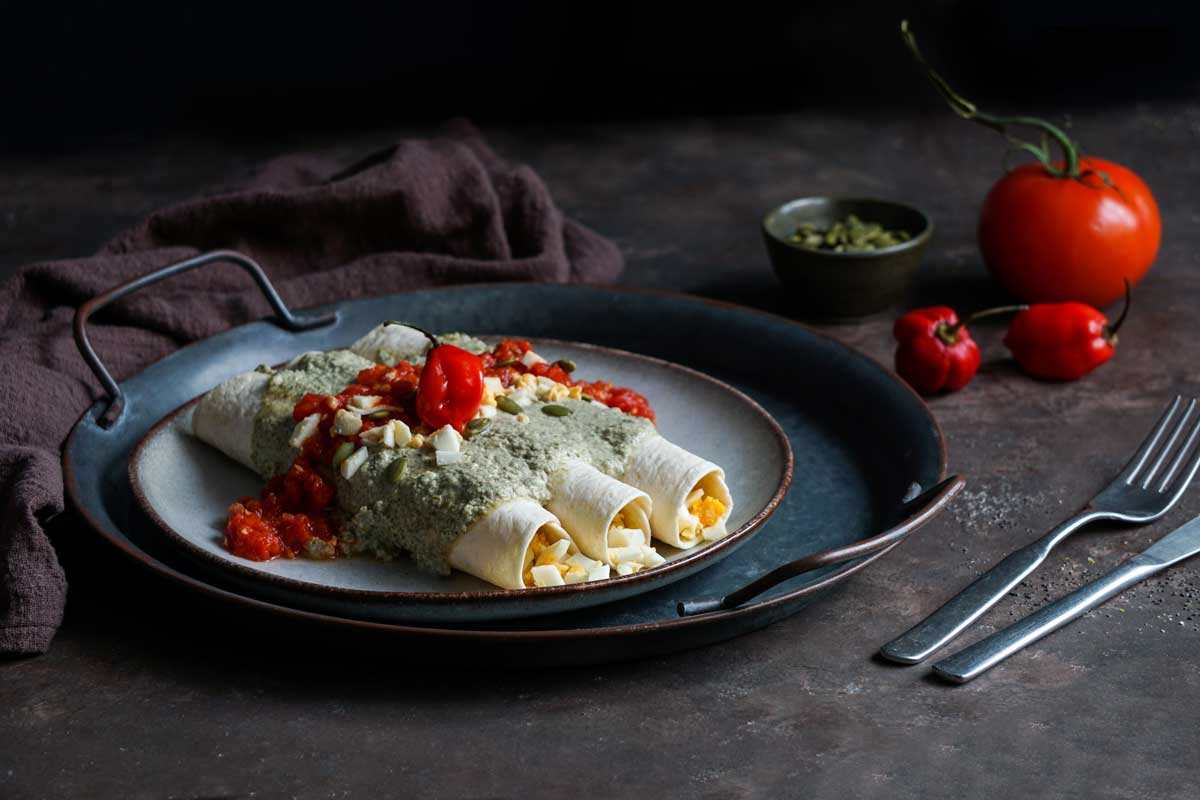
Papadzules are a hidden gem of Yucatán cuisine, offering a taste of ancient Mayan traditions with their rich pumpkin seed sauce, soft corn tortillas, and delicate egg filling.
Whether you’re exploring the vibrant streets of Mérida, dining at a specialty Yucatecan restaurant, or making them at home, this dish is a must-try for any Mexican food lover.
If you haven’t tried them yet, now is the perfect time to discover this authentic Mayan dish and bring the flavors of Yucatán to your table!
Papadzules Recipe
Papadzules are a classic Yucatecan dish featuring corn tortillas dipped in a rich and nutty pumpkin seed (pepita) sauce, filled with hard-boiled eggs, and optionally topped with a light tomato sauce. These enchilada-like rolls are a staple in Mexican cuisine, especially in the Yucatán Peninsula, where they are loved for their earthy flavors and smooth texture.
Ingredients
- 12 small corn tortillas
- 1 cup raw, hulled, unsalted pumpkin seeds (pepitas)
- 4 fresh epazote leaves
- 4 large eggs
- 2 cups water or light vegetable broth, for the infusion (add to the sauce only as needed)
- Salt, to taste
- Optional: prepared cooked tomato sauce or tomato salsa, for topping
Instructions
- Cover the eggs with water in a saucepan. Bring to a boil, lower to a gentle simmer and cook for about 10–12 minutes, until the whites and yolks are firm. Cool in ice water, peel and chop.
- While the eggs cook, lightly toast the raw pepitas in a dry skillet over medium heat, stirring, until fragrant and beginning to pop. Keep them pale rather than deeply browned. Let cool briefly, then grind finely in a blender or food processor. If using already toasted unsalted pepitas, skip toasting.
- Bring the 2 cups water or vegetable broth to a boil with the 4 epazote leaves. Simmer for 5 minutes, remove the leaves and let the infusion cool until warm enough for your blender’s instructions.
- Blend the ground pepitas with about 1 cup of the warm infusion to start. Add more gradually only until smooth and thick enough to coat a spoon; you may not need all 2 cups. Season to taste. Transfer to a pan and keep warm over very low heat without boiling.
- Warm the tortillas on a dry comal or skillet until pliable, keeping them wrapped as you work. Divide the chopped eggs evenly among the 12 tortillas, roll them and arrange seam-side down.
- Spoon the warm pepita sauce over the rolls. Finish with prepared tomato sauce if desired and serve immediately, 3 rolls per person. This is a lightly filled version; serve beans alongside for a more substantial meal.
Notes
Serves 4 (12 small rolls). Allow about 20 minutes prep and 25 minutes cooking, or 45 minutes total, with the optional tomato sauce already prepared. This includes cooking the eggs; ready-cooked eggs shorten the work. Making fresh tortillas or tomato sauce adds time.
Use hulled pepitas, not pumpkin seeds in their white shells. Toast only once and avoid browning heavily. Add the epazote infusion gradually: all 2 cups may make this small batch too thin. Keep the sauce warm without boiling to help it stay smooth.
The recipe uses 4 fresh epazote leaves for a mild infusion. Dried epazote is not interchangeable leaf-for-leaf; follow the product’s cooking guidance and adjust to taste. This simplified sauce is not the same as sikil p’ak, the separate pumpkin-seed-and-tomato dip.
More Mexican Foods
See all →
Jorge Garcia is the founder of AmigoFoods, where he has spent over 20 years helping readers discover authentic Latin American and Spanish cuisine. Raised in a Cuban-American household, Jorge learned to cook at the hands of his mother and grandmother, carrying forward generations of family recipes. That heritage, backed by his family’s four-generation history in the Latin food industry, inspired him to launch AmigoFoods in 2003. With more than 1,000 published articles on recipes, ingredients, and food culture, Jorge’s mission is simple: make authentic Latin cooking approachable for home cooks everywhere while honoring the traditions behind every dish.