
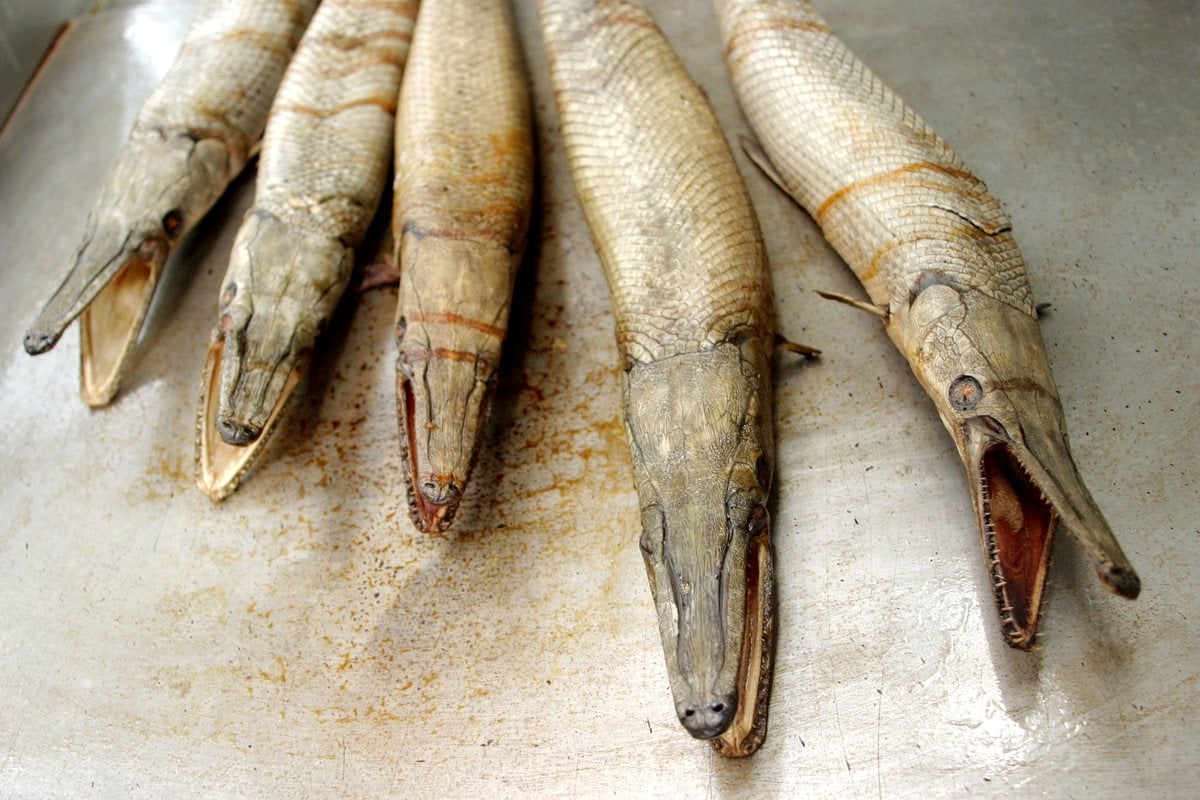
Pejelagarto asado is Tabasco’s roasted gar: a whole fish cooked over coals, then deboned and served in corn tortillas with chile, lime and salt. Its firm white meat takes on a smoky flavor, and the recipe below also includes a simpler white-fish fillet alternative.
Pejelagarto Asado at a Glance
What Is Pejelagarto?
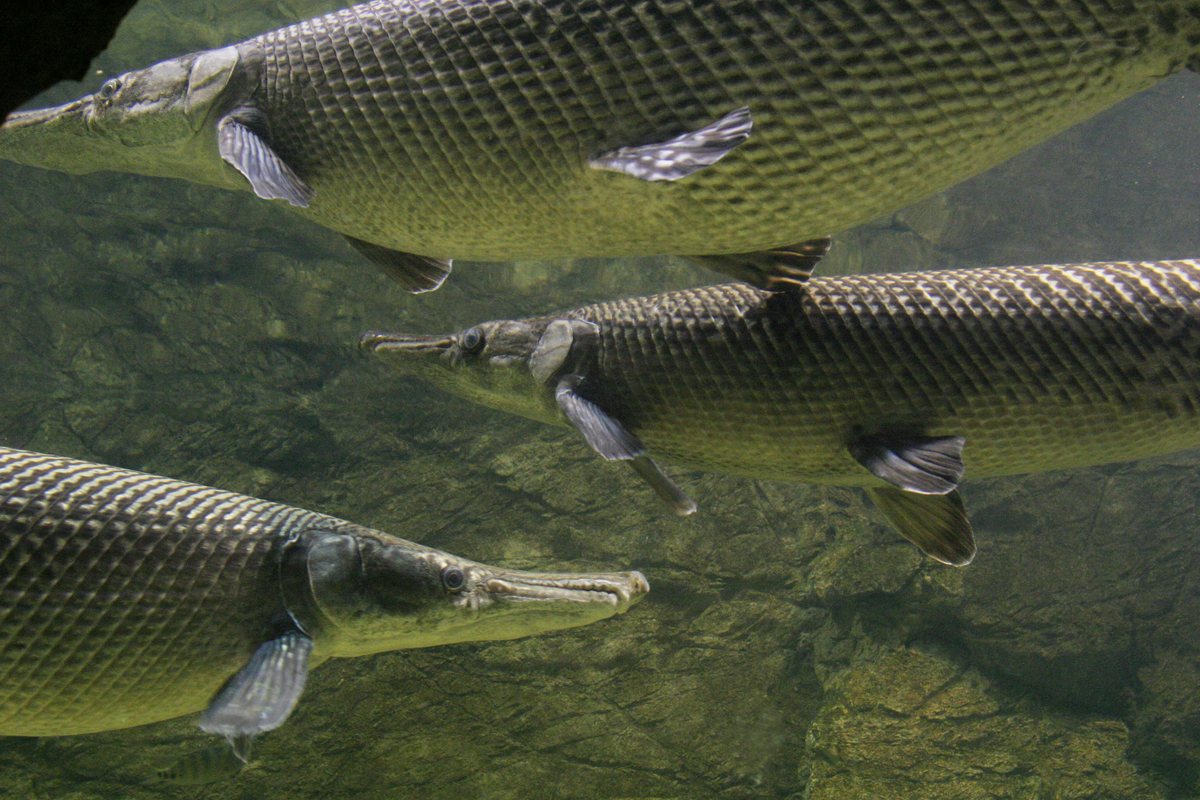
Pejelagarto is the Mexican name for the tropical gar (Atractosteus tropicus), one of seven living species of gar. It’s one of the smaller gars, usually under 3 feet long. Gars are often called living fossils: their lineage goes back more than 100 million years, and they still have hard, diamond-shaped ganoid scales that work like armor. They can also gulp air at the surface, which lets them survive in warm, oxygen-poor swamps.
Despite its name and long snout, pejelagarto is not related to alligators. It’s a fish through and through, and in Tabasco it has been food since the time of the Olmecs, one of Mexico’s earliest civilizations.
What Does Pejelagarto Taste Like?
Pejelagarto has firm, white meat with a mild, slightly sweet flavor and very little fishiness. Cooked whole over coals, it picks up a smoky flavor while the thick scales hold in the moisture, so the meat steams in its own juices. People often compare its texture to chicken or crab rather than to flaky white fish.
How Tabasco Cooks Pejelagarto
- Pejelagarto asado: the classic. The whole fish is skewered on a stick and roasted over coals, then the armored skin is peeled back and the meat is pulled off. It’s sold this way in Villahermosa’s markets.
- Tacos: roasted meat in corn tortillas with salt, lime and chile amashito, a tiny, fiery Tabasco chili.
- Tamales de pejelagarto: masa filled with flaked gar cooked with achiote, tomato, onion and garlic, wrapped in leaves and steamed. See more styles in our guide to tamales.
- Pejelagarto en verde: pieces of fish in a green sauce of local herbs and chiles.
- Empanadas and panuchos: masa turnovers or stuffed tortillas filled with flaked gar and fried.
- Scrambled: roasted gar sautéed with onion and tomato, then scrambled with eggs for breakfast.
Important: gar roe (eggs) is toxic to people. Always remove and discard the eggs when cleaning a gar, and never eat them.
Can You Buy Pejelagarto in the US?
Pejelagarto itself is hard to find outside southern Mexico, although it’s now farmed in Tabasco to protect wild populations. In the US, the closest option is a related gar, such as spotted, longnose or alligator gar, caught in the Gulf states and sold by some fish markets and fishermen. Check local fishing regulations before keeping gar you catch. If you can’t find gar, a firm white fish such as snook or catfish makes a good stand-in for the tacos.
How to Make Tabasco-Style Roasted Gar
Season a cleaned whole gar inside with salt and lime, roast it over medium coals, turning now and then, until the scales are charred and the meat is cooked through. Split the armored skin, pull the meat off the bones in big flakes, and season it with lime, salt and chile. Serve it in warm tortillas. The full recipe, with quantities, is in the card below.
Tips for Cooking Gar
- Use kitchen shears or tin snips. Gar scales are too hard for a knife. Most cooks cut along the belly and sides with shears to open the skin.
- Leave the scales on to roast. The armor protects the meat and keeps it juicy over the fire.
- Discard the roe. Gar eggs are toxic. Remove them completely when cleaning the fish.
- Pull, don’t slice. After roasting, peel back the skin and pull the meat away from the backbone in big pieces.
- Season at the end. Fresh lime juice, salt and chile on the warm meat are all you need.
How to Serve It
Put the roasted gar on a platter with warm corn tortillas, lime wedges, chopped onion and cilantro, sliced radishes and a hot salsa so everyone can build their own tacos. In Tabasco, it’s often eaten with a cold beer or pozol, the region’s cacao and corn drink. For more Mexican fish and shellfish, see our guide to Mexican seafood dishes.
Pejelagarto Asado Recipe
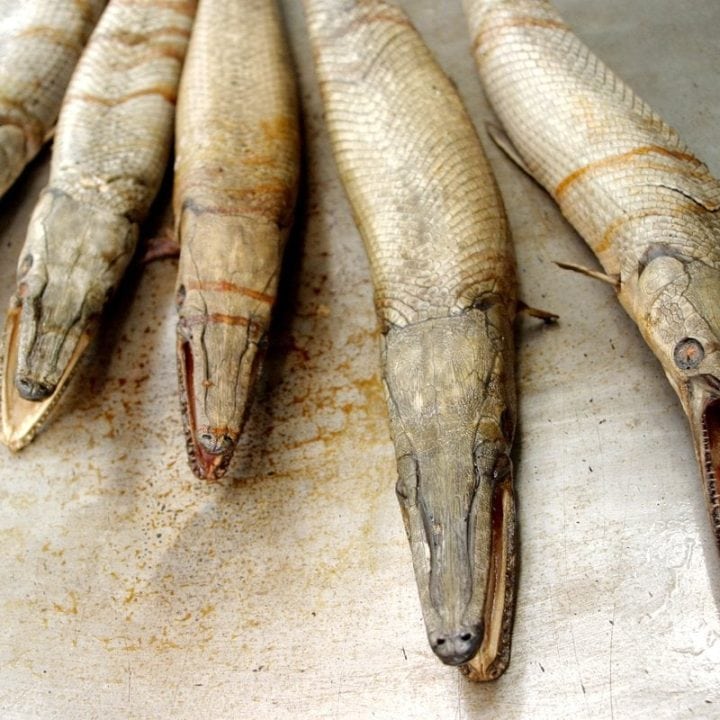
Pejelagarto Asado (Tabasco Roasted Gar Tacos)
Tabasco-style roasted gar: a whole gar roasted over coals in its armored skin, then flaked and seasoned with lime, salt and chile and served in warm tortillas.
Ingredients
- 1 whole gar (3 to 4 lb), cleaned, roe removed and discarded
- 2 teaspoons salt, plus more to taste
- 3 limes
- 2 to 3 fresh chiles (amashito, piquín, serrano or habanero), finely chopped
- 12 corn tortillas, warmed
- ½ white onion, finely chopped
- ½ cup chopped cilantro
- 6 radishes, thinly sliced
- Hot salsa, for serving
Instructions
- Prepare a charcoal grill with medium coals. Rinse the gar and pat it dry.
- Rub the inside of the fish with 1 teaspoon salt and the juice of 1 lime.
- Roast the gar over the coals, turning every 10 minutes, until the scales are charred and the meat is opaque and pulls away from the bone, 40 to 50 minutes depending on size.
- Transfer to a board. With kitchen shears, cut open the skin along the belly and peel it back.
- Pull the meat off the backbone in large flakes, removing any bones.
- Season the meat with the remaining salt, the juice of 1 lime and the chopped chiles.
- Serve in warm tortillas with onion, cilantro, radishes, lime wedges and salsa.
Notes
Safety: gar roe is toxic. Remove all eggs when cleaning the fish and never eat them.
No gar? Grill 1½ lb of firm white fish fillets, such as snook or catfish, in a fish basket for 8 to 10 minutes, then flake and season the same way.
Pejelagarto FAQ
What is pejelagarto in English?
Tropical gar. Its scientific name is Atractosteus tropicus.
What does pejelagarto taste like?
Mild, slightly sweet and not fishy, with firm white meat often compared to chicken or crab.
Is pejelagarto related to alligators?
No. It’s a fish. The name means “fish-lizard” because of its long, toothy snout.
Where is pejelagarto from?
The rivers, lagoons and wetlands of southern Mexico and Central America. It’s most famous as food in Tabasco.
Is gar safe to eat?
The meat is safe and good to eat, but gar roe (eggs) is toxic and must be discarded.
How is pejelagarto cooked?
Most often roasted whole over coals and eaten in tortillas with chile, lime and salt. It’s also used in tamales, empanadas and green sauces.
More Mexican Fish Dishes
Pejelagarto is one of the regional specialties in our guide to Mexican seafood dishes. For more whole fish, try mojarra frita, crispy fried whole fish. From the nearby Yucatán Peninsula, don’t miss cochinita pibil and sopa de lima.
More Mexican Foods
See all →
Jorge Garcia is the founder of AmigoFoods, where he has spent over 20 years helping readers discover authentic Latin American and Spanish cuisine. Raised in a Cuban-American household, Jorge learned to cook at the hands of his mother and grandmother, carrying forward generations of family recipes. That heritage, backed by his family’s four-generation history in the Latin food industry, inspired him to launch AmigoFoods in 2003. With more than 1,000 published articles on recipes, ingredients, and food culture, Jorge’s mission is simple: make authentic Latin cooking approachable for home cooks everywhere while honoring the traditions behind every dish.