
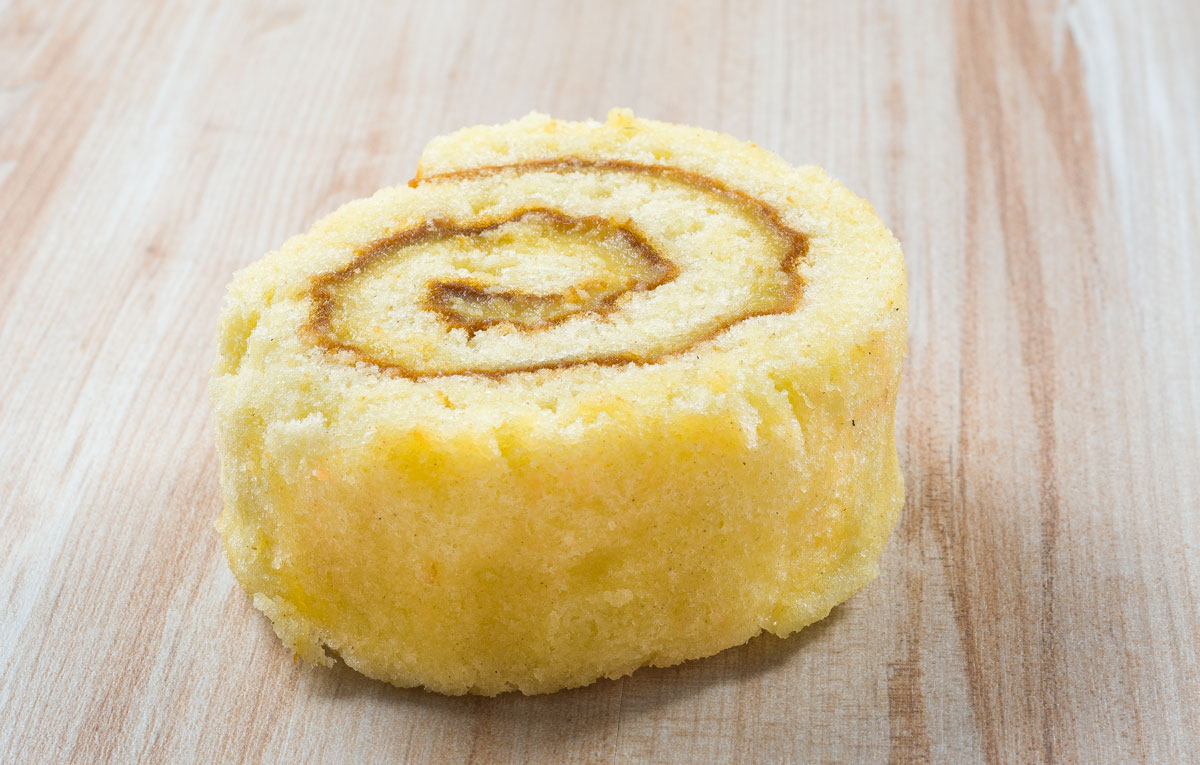
Pionono is a thin, airy sponge cake rolled around a thick layer of dulce de leche, or manjar blanco in Peru, and dusted with powdered sugar. You will find it in bakeries from Buenos Aires to Lima, and at Christmas it shows up on Argentine dessert tables next to pan dulce and turrón. The name, though, comes from a tiny syrup-soaked pastry from Granada, Spain, and in Puerto Rico a pionono is something else entirely. Below is what pionono is in each country, followed by a step-by-step recipe for the classic dulce de leche roll.
Pionono at a Glance
AmigoFoods may earn a commission from qualifying Amazon purchases made through links on this page.
What is pionono?
In most of South America, pionono means two things at once: the thin sponge sheet itself, and the rolled cake you make with it. Argentine supermarkets even sell the baked sheets ready to fill. The sponge has no butter or oil. It is an egg foam, whipped until the eggs triple in volume, stabilized with a little flour and baked in a shallow pan so it stays about 1/2 inch (1 cm) thick and flexible enough to roll without cracking.

The sweet version is filled with dulce de leche in Argentina and Uruguay, manjar blanco in Peru, manjar in Chile and arequipe in Colombia. These are all names for the same slow-cooked milk caramel. Whipped cream, fruit and chocolate are common additions. There is also a savory version, pionono salado, made with the same sponge and rolled around ham, cheese and mayonnaise. Pionono appears in our roundups of Latin American desserts and Latin American and Spanish cakes and pastries.
Where pionono comes from: Santa Fe, Granada
The original pionono was created in 1897 by Ceferino Isla González, a pastry maker in Santa Fe, a town just outside Granada in southern Spain. He named it after Pope Pius IX, known in Spanish as Pío Nono, who had proclaimed the dogma of the Immaculate Conception in 1854. El País notes that he made it short and plump, with a little cap of cream to imitate the papal skullcap. The bakery he founded, now called Casa Ysla, still makes it. In 1916 King Alfonso XIII named the bakery an official supplier to the royal household.

The Spanish pionono looks nothing like the Latin American roll cake. It is a single small cylinder, about two bites, made from a thin sponge soaked in syrup, rolled tight, stood on end and topped with a dome of pastry cream that is toasted until glossy. It is still a Granada specialty. El País reported in 2025 that Casa Ysla makes about 50,000 piononos a week for its 13 shops. You can read about it with other regional sweets in our guides to Spanish desserts and Spanish pastries.
Recetas de Argentina traces the cake’s arrival in Argentina to the waves of Spanish immigration in the early 20th century. Along the way the name moved from the small pastry to the sponge itself, and the Latin American pionono became a large roll that serves a crowd.
Pionono in Argentina, Peru and beyond
Argentina and Uruguay
In Argentina, pionono is everyday baking. The sponge is very thin, usually under 1 cm, and is often brushed with a light syrup before it is filled. The classic filling is dulce de leche repostero, the thick bakers’ style that holds its shape, sometimes with canned peaches or strawberries and whipped cream. The finished roll may be covered in more dulce de leche, chocolate or meringue. Uruguay makes it the same way; see our Uruguayan desserts for its neighbors on the table, and torta rogel for another Argentine cake built around dulce de leche.
Argentines are just as fond of pionono salado. Recetas de Argentina describes the most traditional version as the same sweet sponge spread with mayonnaise or cream cheese, layered with cooked ham and hearts of palm, rolled and cut into thin slices. Tuna, shredded chicken, blue cheese and even pineapple turn up too. It is a fixture at weddings and holiday buffets.

Peru
Peruvian pionono is filled with manjar blanco and finished with a thick snow of powdered sugar. It sits in the glass case of nearly every Lima bakery, sold by the slice or as a whole roll, and is a favorite at birthdays and afternoon coffee. El Comercio’s recipes bake the sponge at 175°C (350°F) for about 12 to 15 minutes, and some Peruvian cooks replace part of the flour with chuño (potato starch) for a softer crumb. It belongs with the Peruvian desserts that rely on manjar blanco, such as alfajores and the giant King Kong.
Chile, Colombia and the Philippines
Chile’s version of the same idea is brazo de reina, filled with manjar and sometimes rolled in coconut, while Spain’s jam- or cream-filled roll is called brazo gitano. In Colombia a similar roll is filled with arequipe. The cake also traveled to the Philippines, where pianono is a soft sponge roll filled with butter and sugar. Kawaling Pinoy’s recipe spreads it with margarine and sugar and rolls it while still warm.
Puerto Rican piononos are a different dish
If you are searching for pionono because of a Puerto Rican recipe, you may be looking for a savory dish. In Puerto Rico, piononos are slices of fried sweet plantain (amarillos) curled into a ring or cup, filled with picadillo (seasoned ground beef with sofrito and olives), bound with beaten egg and baked or fried. Goya’s recipe lines a muffin tin with the plantain slices to make little cups, and some cooks top them with cheese. They are served as a side or appetizer, including at holiday parties.

The name probably comes from the same rolled shape. You will find them in our Puerto Rican side dishes and the wider guide to Puerto Rican food. The plantains and sofrito are covered in Puerto Rican ingredients, and the rest of the holiday table is in our Puerto Rican Christmas foods guide. The rest of this article is about the sweet sponge roll.
Pionono at Christmas
In Argentina, Christmas Eve is a summer night, and the meal is mostly cold: vitel toné, salads, cold cuts and a platter of sliced pionono salado. When midnight comes, the sweet table appears, with pan dulce, turrón, garrapiñadas and very often a dulce de leche pionono. Recetas de Argentina calls the sweet roll a Christmas classic, since it can be made a day ahead and needs no oven on a hot night. Our Argentine Christmas foods guide and the Argentina holiday dishes page cover the whole menu.
In Peru, the star of Christmas is panetón with hot chocolate. Pionono is a year-round bakery cake there, but a manjar blanco roll is an easy addition to a holiday dessert table. See our Peruvian Christmas foods guide and the Peru holiday dishes page. In Puerto Rico, the holiday pionono is the savory plantain kind, listed with other Puerto Rico holiday dishes. For sweet ideas from every country, see our Latin and Spanish Christmas desserts.
How to make pionono
There are only five ingredients in the sponge. The trick is the technique: whip the eggs long enough, fold gently, bake briefly and roll the cake while it is warm. Full measurements are in the recipe card below.
1. Prepare the pan
Heat the oven to 350°F (175°C). Grease a 10 x 15-inch jelly roll pan, line it with parchment paper and grease the paper too. A light-colored aluminum pan bakes the thin sponge evenly without browning the bottom.
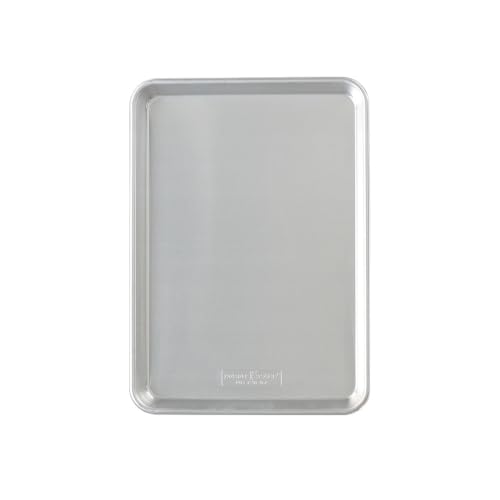
- Naturals commercial bakeware is made of pure aluminum which will never rust for a lifetime of...
- Foods bake and brown evenly due to aluminum’s superior heat conductivity. Reinforced encapsulated...

2. Whip the eggs and sugar
Beat 4 room-temperature eggs with 1/2 cup of sugar, 1 tablespoon of honey and a pinch of salt on high speed for 8 to 10 minutes. The mixture should triple in volume, turn pale and thick, and fall from the beaters in a ribbon that sits on the surface for a few seconds. Beat in the vanilla. This foam is the only leavening, so don’t rush it. The honey is an Argentine bakers’ trick that keeps the sponge moist and flexible.
3. Fold in the flour
Sift 3/4 cup of flour over the eggs in three additions, folding each one in with a large spatula. Cut down through the middle, sweep along the bottom and turn the bowl as you go. Stop as soon as no dry flour is visible. Overmixing deflates the foam and gives you a flat, rubbery cake.
4. Bake the sheet
Pour the batter into the pan and spread it gently into the corners with an offset spatula, keeping it even. Bake for 9 to 11 minutes, until the top is pale gold and springs back when you touch it. Argentine recipes usually bake it for only 8 to 10 minutes at 180°C, because a thin sheet overbakes quickly, and a dry sponge cracks when rolled.
5. Roll it warm
Dust a clean kitchen towel (or a sheet of parchment) with powdered sugar. Run a knife around the edges of the pan and turn the hot sponge out onto the towel. Peel off the baking parchment, then roll the sponge up from a short end with the towel inside. Let it cool completely in the roll, about 30 minutes. This “teaches” the cake its shape so it won’t crack when you fill it.
6. Fill and roll again
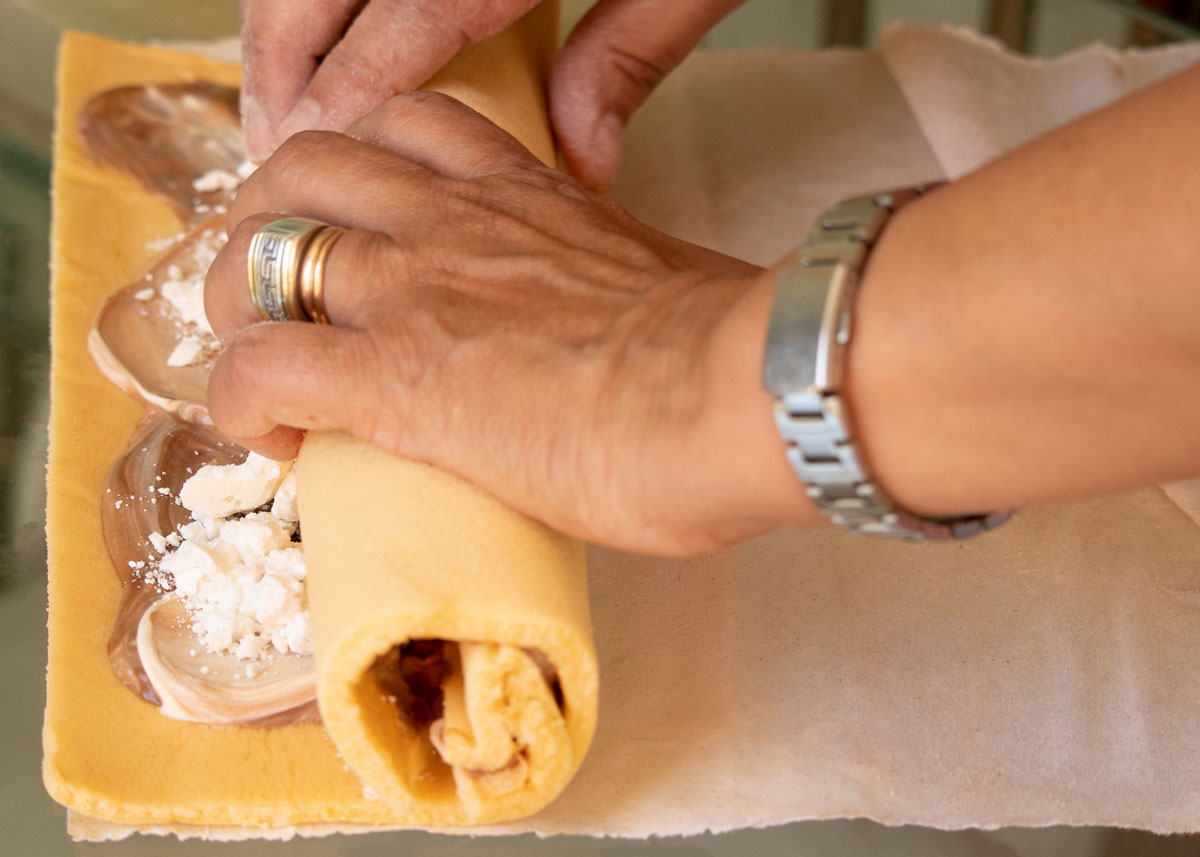
Unroll the cooled sponge. If you like, brush it with a little syrup (2 tablespoons of sugar dissolved in 1/4 cup of hot water, with a splash of rum or Pisco). Spread about 1 1/2 cups of thick dulce de leche over the sponge, leaving a 1-inch border at the far end. Roll it back up, without the towel, and place it seam side down on a platter.
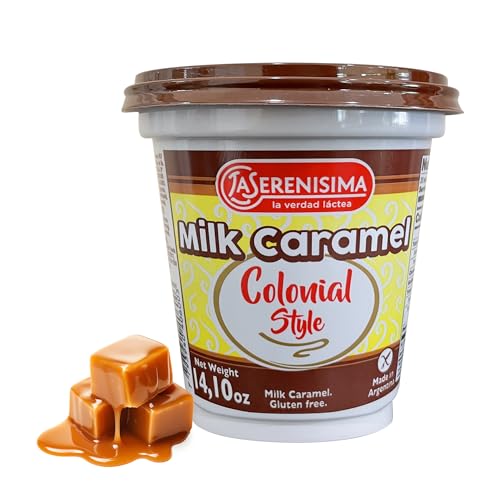
- Made from Premium Ingredients: Made with real milk and cane sugar, this dulce de leche sauce is...
- Rich, Authentic Flavor: Our dulce de leche argentino delivers a deep caramelized taste, slow-cooked...
7. Chill and finish
Wrap the roll in plastic wrap and refrigerate for at least 1 hour so the filling sets and the slices are clean. Trim the ends, dust with powdered sugar and cut into 1-inch slices with a serrated knife.
Fillings and toppings
- Peruvian: manjar blanco filling and a heavy dusting of powdered sugar.
- Argentine fruit and cream: dulce de leche plus sliced canned peaches or strawberries and a layer of whipped cream.
- Chocolate: cover the finished roll in melted chocolate, or add a tablespoon or two of cocoa in place of the same amount of flour for a chocolate sponge.
- Meringue: cover the roll in Italian meringue and toast it with a torch, a nod to the toasted top of the Granada original.
- Coconut: spread a thin layer of dulce de leche on the outside and roll the cake in shredded coconut, as Chileans do with brazo de reina.
- Salado: skip the honey and vanilla, then fill with mayonnaise, ham, cheese, hearts of palm and lettuce.
Rolled cakes are popular all over Latin America. For more, see our guides to Mexican desserts and Cuban desserts, and Chile’s crisp manjar-filled wafer rolls, cuchuflí.
Pionono vs. brazo de reina and Swiss roll
| Pionono (Argentina, Peru) | Pionono (Granada) | Brazo de reina / brazo gitano | Swiss roll | |
|---|---|---|---|---|
| Shape | Large roll, sliced | Single bite-size cylinder | Large roll, sliced | Large roll, sliced |
| Sponge | Very thin egg foam, no fat | Thin sponge soaked in syrup | Egg foam sponge | Sponge or genoise |
| Filling | Dulce de leche or manjar blanco | Rolled plain, with toasted cream on top | Manjar (Chile), pastry cream or cream (Spain) | Jam or buttercream |
| Savory version | Yes, pionono salado | No | Rarely | No |
| When | Year-round, Christmas in Argentina | Year-round, a Granada souvenir | Holidays and afternoon tea | Year-round |
Make ahead and storage
You can bake and roll the plain sponge a day ahead. Keep it rolled in its towel inside a large plastic bag at room temperature, then fill it the next day. A filled dulce de leche pionono keeps for up to 4 days, wrapped, in the refrigerator. Fillings with whipped cream or fresh fruit are best within 2 days. For a savory pionono with mayonnaise and ham, keep it refrigerated and don’t leave it out for more than 2 hours.
Troubleshooting
| Problem | Why it happens | Fix |
|---|---|---|
| The sponge cracks when rolled | It was overbaked, or rolled after cooling. | Take it out as soon as it springs back, and roll it while it is still hot. |
| Flat, dense sponge | The eggs were cold or underwhipped, or the flour was overmixed. | Use room-temperature eggs, whip to the ribbon stage and fold gently. |
| Sticks to the towel | Not enough sugar on the towel. | Dust the towel generously, or roll it in parchment instead. |
| Filling oozes out | The dulce de leche was too runny, or spread to the edge. | Use repostero style, chill it first and leave a 1-inch border. |
| Wet, gummy bottom | Too much syrup. | Brush the syrup on lightly, or skip it. |
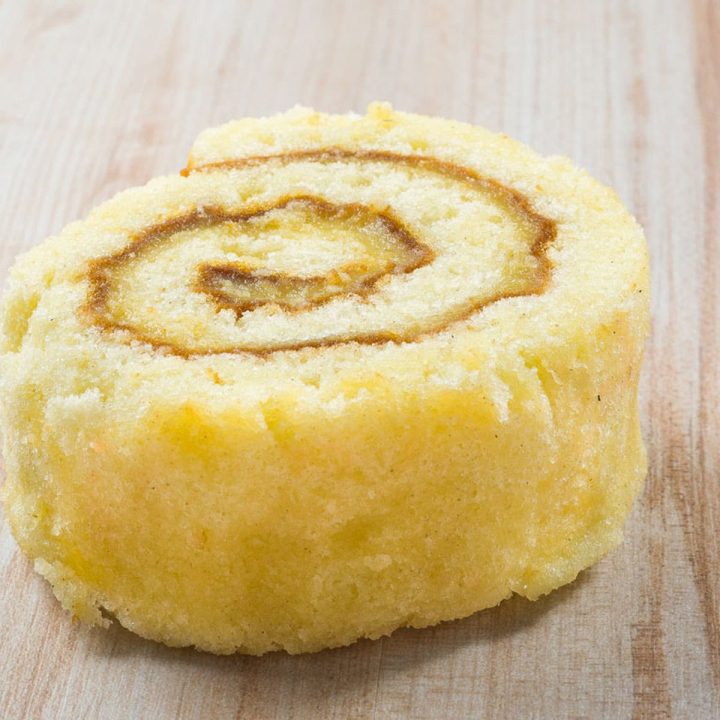
Pionono (Rolled Sponge Cake with Dulce de Leche)
The Argentine and Peruvian pionono: a thin, fat-free egg sponge baked for 10 minutes, rolled warm so it never cracks, then filled with thick dulce de leche (or Peruvian manjar blanco) and dusted with powdered sugar. Make it a day ahead for Christmas or any party.
Ingredients
- 4 large eggs, at room temperature
- 1/2 cup (100 g) granulated sugar
- 1 tablespoon honey
- Pinch of salt
- 1 teaspoon vanilla extract
- 3/4 cup (90 g) all-purpose flour, sifted
- Butter or baking spray for the pan
- 1 1/2 cups (about 450 g) thick dulce de leche (repostero style) or manjar blanco
- 2 tablespoons powdered sugar, plus more for the towel
- 2 tablespoons sugar (optional syrup)
- 1/4 cup hot water (optional syrup)
- 1 teaspoon rum or Pisco (optional syrup)
Instructions
- Prepare the pan. Heat the oven to 350°F (175°C). Grease a 10 x 15-inch jelly roll pan, line it with parchment paper and grease the paper too. A light-colored aluminum pan bakes the thin sponge evenly without browning the bottom.
- Whip the eggs and sugar. Beat 4 room-temperature eggs with 1/2 cup of sugar, 1 tablespoon of honey and a pinch of salt on high speed for 8 to 10 minutes. The mixture should triple in volume, turn pale and thick, and fall from the beaters in a ribbon that sits on the surface for a few seconds. Beat in the vanilla. This foam is the only leavening, so don’t rush it. The honey is an Argentine bakers’ trick that keeps the sponge moist and flexible.
- Fold in the flour. Sift 3/4 cup of flour over the eggs in three additions, folding each one in with a large spatula. Cut down through the middle, sweep along the bottom and turn the bowl as you go. Stop as soon as no dry flour is visible. Overmixing deflates the foam and gives you a flat, rubbery cake.
- Bake the sheet. Pour the batter into the pan and spread it gently into the corners with an offset spatula, keeping it even. Bake for 9 to 11 minutes, until the top is pale gold and springs back when you touch it. Argentine recipes usually bake it for only 8 to 10 minutes at 180°C, because a thin sheet overbakes quickly, and a dry sponge cracks when rolled.
- Roll it warm. Dust a clean kitchen towel (or a sheet of parchment) with powdered sugar. Run a knife around the edges of the pan and turn the hot sponge out onto the towel. Peel off the baking parchment, then roll the sponge up from a short end with the towel inside. Let it cool completely in the roll, about 30 minutes. This “teaches” the cake its shape so it won’t crack when you fill it.
- Fill and roll again. Unroll the cooled sponge. If you like, brush it with a little syrup (2 tablespoons of sugar dissolved in 1/4 cup of hot water, with a splash of rum or Pisco). Spread about 1 1/2 cups of thick dulce de leche over the sponge, leaving a 1-inch border at the far end. Roll it back up, without the towel, and place it seam side down on a platter.
- Chill and finish. Wrap the roll in plastic wrap and refrigerate for at least 1 hour so the filling sets and the slices are clean. Trim the ends, dust with powdered sugar and cut into 1-inch slices with a serrated knife.
Notes
Thick filling: Use dulce de leche repostero or a dense jar. If it's soft, chill it 1 hour before spreading so it doesn't squeeze out.
Peruvian style: Fill with manjar blanco and finish with a heavy layer of powdered sugar.
Argentine variations: Add sliced canned peaches or strawberries and whipped cream over the dulce de leche, or cover the roll in melted chocolate or toasted meringue.
Chocolate sponge: Replace 2 tablespoons of the flour with 2 tablespoons of cocoa powder.
Pionono salado: Leave out the honey and vanilla. Fill with mayonnaise, sliced ham, cheese, hearts of palm and lettuce.
Make ahead: Bake and roll the plain sponge in its towel a day ahead, kept in a large plastic bag at room temperature.
Storage: Refrigerate, wrapped, up to 4 days (2 days with whipped cream or fruit). Freeze a dulce de leche roll up to 2 months, wrapped in plastic wrap and foil, and thaw overnight in the refrigerator.
Nutrition Information:
Serving Size: 1/10 of recipe (1 slice)Amount Per Serving: Calories: 255Total Fat: 5gSaturated Fat: 3gTrans Fat: 0gUnsaturated Fat: 2gCholesterol: 87mgSodium: 100mgCarbohydrates: 45gFiber: 0gSugar: 36gProtein: 7g
Pionono FAQ
What is pionono in English?
A rolled sponge cake, similar to a jelly roll or Swiss roll. In Latin America it is usually filled with dulce de leche or manjar blanco. The name comes from Pope Pius IX, Pío Nono in Spanish.
Where is pionono from?
The name and the first pionono come from Santa Fe, near Granada in Spain, where Ceferino Isla created a small syrup-soaked pastry in 1897. The large rolled cake known as pionono today developed in Argentina, Peru and other Latin American countries.
What is the difference between pionono and brazo de reina?
Very little. Both are thin sponge cakes rolled around a filling. Pionono is the name used in Argentina, Peru and Uruguay, and brazo de reina is used in Chile, where it is usually filled with manjar. In Spain the similar roll is brazo gitano.
What is a Puerto Rican pionono?
A savory dish of fried sweet plantain slices shaped into a ring or cup, filled with picadillo (seasoned ground beef) and bound with egg. It shares the name but not the recipe.
Is pionono eaten at Christmas?
Yes, especially in Argentina, where both sweet dulce de leche pionono and savory pionono salado are part of the cold Christmas Eve spread. In Peru it is a year-round bakery cake, and panetón is the main Christmas sweet.
Why does my pionono crack?
Usually because the sponge was overbaked or rolled after it cooled. Bake it just until it springs back and roll it up in a sugared towel right away.
How many calories are in a slice of pionono?
One slice of this recipe, a tenth of the roll, has about 255 calories, most of them from the dulce de leche filling.
More Latin Christmas desserts
For more rolled cakes, try Chile’s brazo de reina, or make your own dulce de leche for the filling. Our Latin and Spanish Christmas desserts list has sweets from every country, and the Christmas guides for Argentina, Peru and Puerto Rico cover the rest of the holiday table. For more Argentine cooking, see our guide to Argentine food.
Shopping list: La Serenísima dulce de leche, dulce de leche repostero for bigger batches, a Nordic Ware jelly roll pan, parchment paper sheets and an offset spatula for spreading the batter and filling.
Sources
- El País (El Comidista): Pionono, el gran éxito de la repostería de Granada que rinde homenaje a un papa
- Casa Ysla (pionono.com): Obrador
- Recetas de Argentina: Pionono argentino, dulce o salado
- El Comercio (Perú): Receta de pionono con manjar blanco
- Endúlzate Perú: Pionono peruano relleno de manjar blanco
- Kawaling Pinoy: Pianono (Filipino Sponge Cake Roll)
- Goya Foods: Puerto Rican Piononos
- Wikipedia: Pionono
- USDA FoodData Central (nutrition estimate)
More Argentine Foods
See all →
Jorge Garcia is the founder of AmigoFoods, where he has spent over 20 years helping readers discover authentic Latin American and Spanish cuisine. Raised in a Cuban-American household, Jorge learned to cook at the hands of his mother and grandmother, carrying forward generations of family recipes. That heritage, backed by his family’s four-generation history in the Latin food industry, inspired him to launch AmigoFoods in 2003. With more than 1,000 published articles on recipes, ingredients, and food culture, Jorge’s mission is simple: make authentic Latin cooking approachable for home cooks everywhere while honoring the traditions behind every dish.