
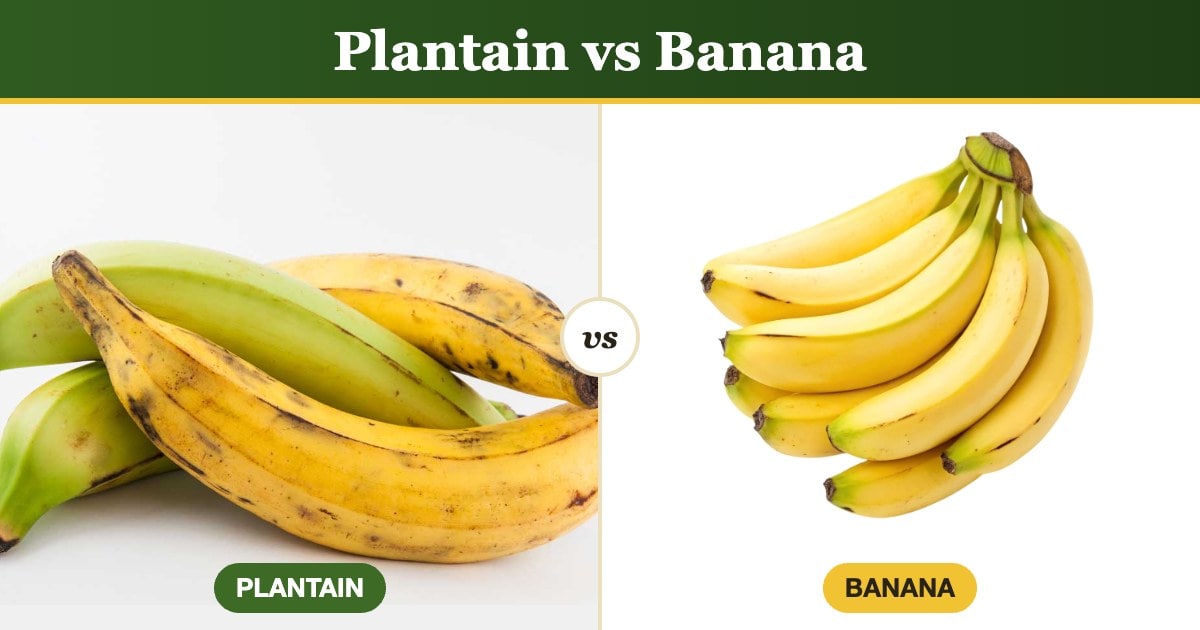
Plantain vs banana comes down to starch. Plantains are big, thick-skinned cooking bananas that stay starchy and are almost always eaten cooked, like a potato. Bananas are the sweet dessert fruit you peel and eat raw. They belong to the same plant family, but you can’t swap one for the other in most recipes.
If you’ve ever fried a banana expecting tostones, or bitten into a raw green plantain, you already know the difference matters. Here’s how to tell them apart at the store, how they taste and compare nutritionally, what Latin Americans actually call them, and what to cook with each.
Plantain vs Banana at a Glance
| Plantain | Banana | |
|---|---|---|
| Size | Long and thick, often 10 to 12 inches | Shorter and slimmer, usually 6 to 8 inches |
| Peel | Thick, tough, with sharp ridges; needs a knife when green | Thin and smooth; peels by hand |
| Starch and sugar | Very starchy; turns sweeter as it ripens | Mostly sugar once yellow |
| Eaten raw? | Rarely; almost always cooked | Yes, that’s the usual way |
| Best stage to use | Every stage, from green to black | Yellow to lightly spotted |
| How it’s cooked | Fried, boiled, mashed, baked, grilled | Eaten fresh, blended, baked into sweets |
| Taste | Green: potato-like. Black: sweet but dense | Sweet, creamy, fruity |
| Calories (100 g raw) | 122 | 89 |
| In Spanish | Plátano, plátano macho, verde, maduro | Guineo, banano, cambur, plátano |
What Is a Plantain?
A plantain is a type of banana grown to be cooked. It’s larger than a dessert banana, with a thick, angular peel and firm, starchy flesh. Across Latin America, the Caribbean and West and Central Africa, plantains are an everyday staple, used the way potatoes, rice or yuca are used elsewhere.
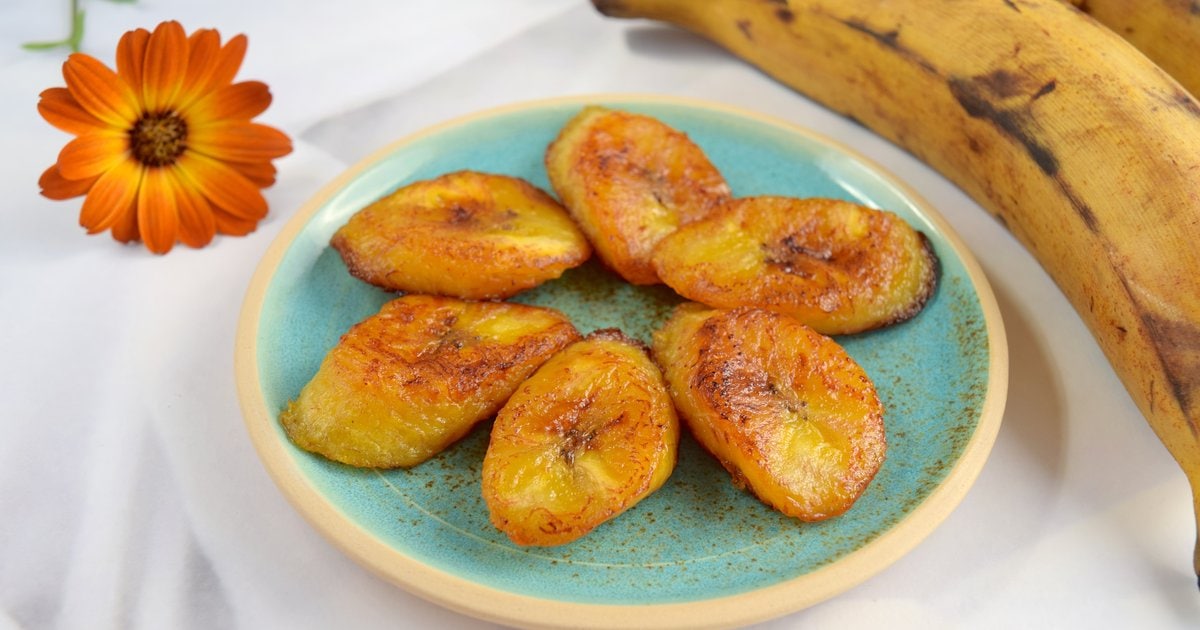
What makes plantains so useful is that they work at every stage of ripeness. Green plantains are hard and savory, perfect for tostones, mofongo and mangú. Fully black plantains are sweet and soft, the only kind that makes proper maduros.

What Is a Banana?
When people in the US say “banana,” they almost always mean a dessert banana, and usually one variety: the Cavendish. It’s bred to turn sweet and soft as it ripens, so it can be eaten straight from the peel. Most of the starch in a green banana has turned to sugar by the time it’s yellow.
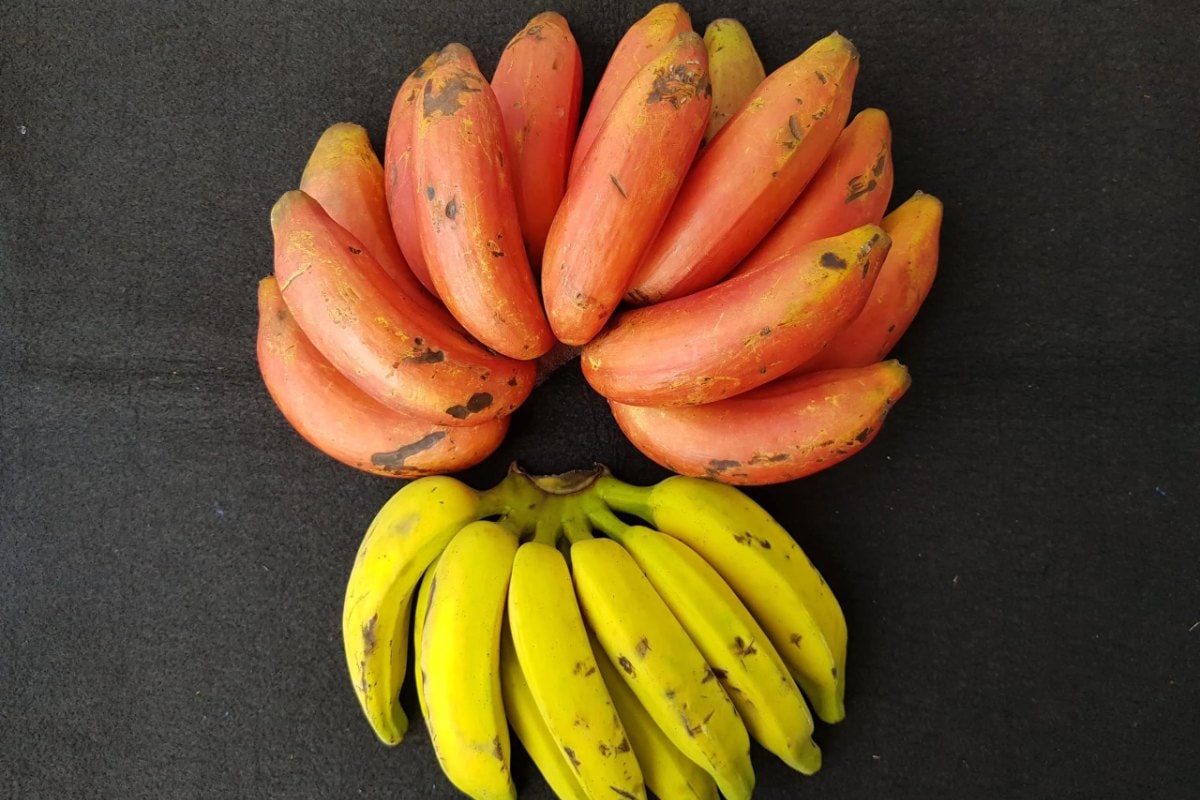
Latin American markets sell many more kinds, from tiny guineos niños (baby bananas) to red bananas and the tart, apple-flavored manzano. Nearly all of them are eaten raw or used in sweets and drinks.
Are Plantains Bananas?
Yes. Plantains and bananas are both fruits of plants in the genus Musa. Nearly all cultivated varieties descend from two wild species, Musa acuminata and Musa balbisiana, crossed in different combinations. Botanists group the sweet Cavendish banana in one cluster and true plantains in another, which carries more of the starchy balbisiana side.
In other words, every plantain is a banana, but not every banana is a plantain. That’s why some people simply call plantains “cooking bananas.” A few more surprises:
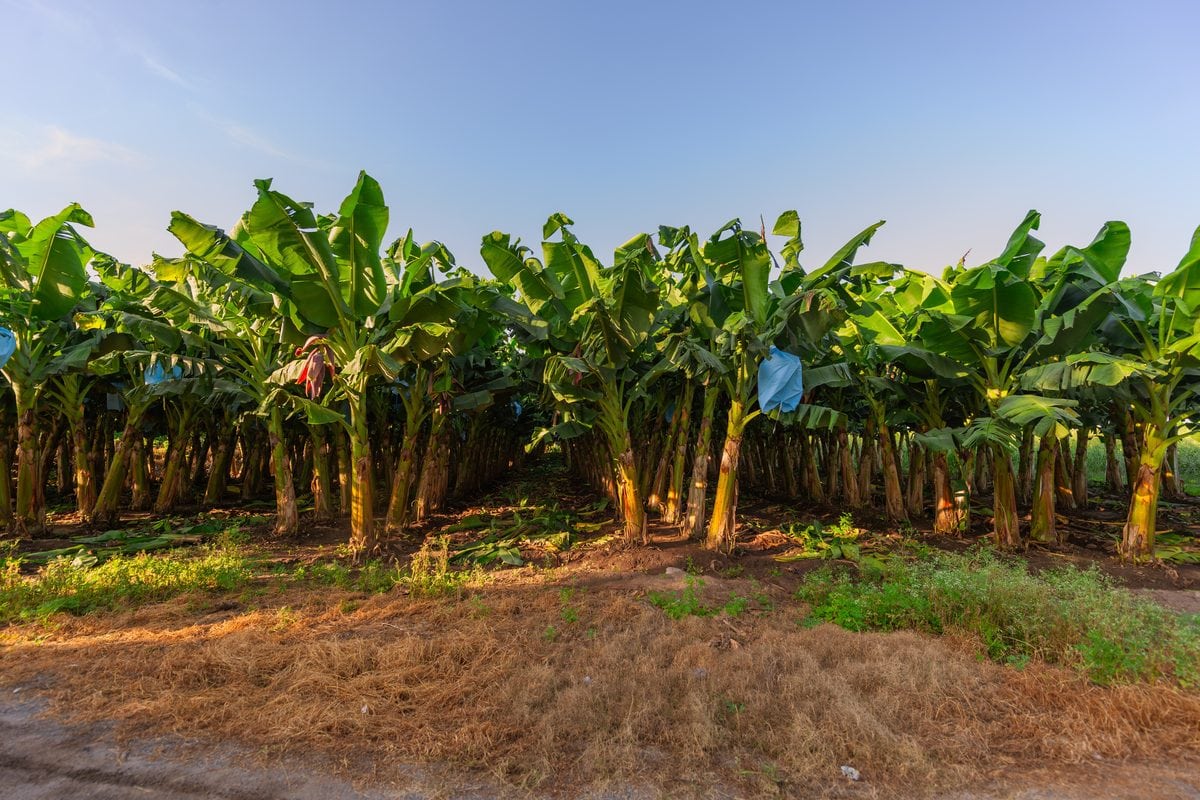
- It’s not a tree. The banana plant is a giant herb. Its “trunk” is made of tightly rolled leaf stalks, not wood.
- Botanically, both are berries. Each fruit develops from a single flower.
- “Plantain” is also the name of a weed. The broadleaf plantain growing in your lawn (Plantago) is completely unrelated to the fruit.
7 Key Differences Between Plantains and Bananas
1Size and shape
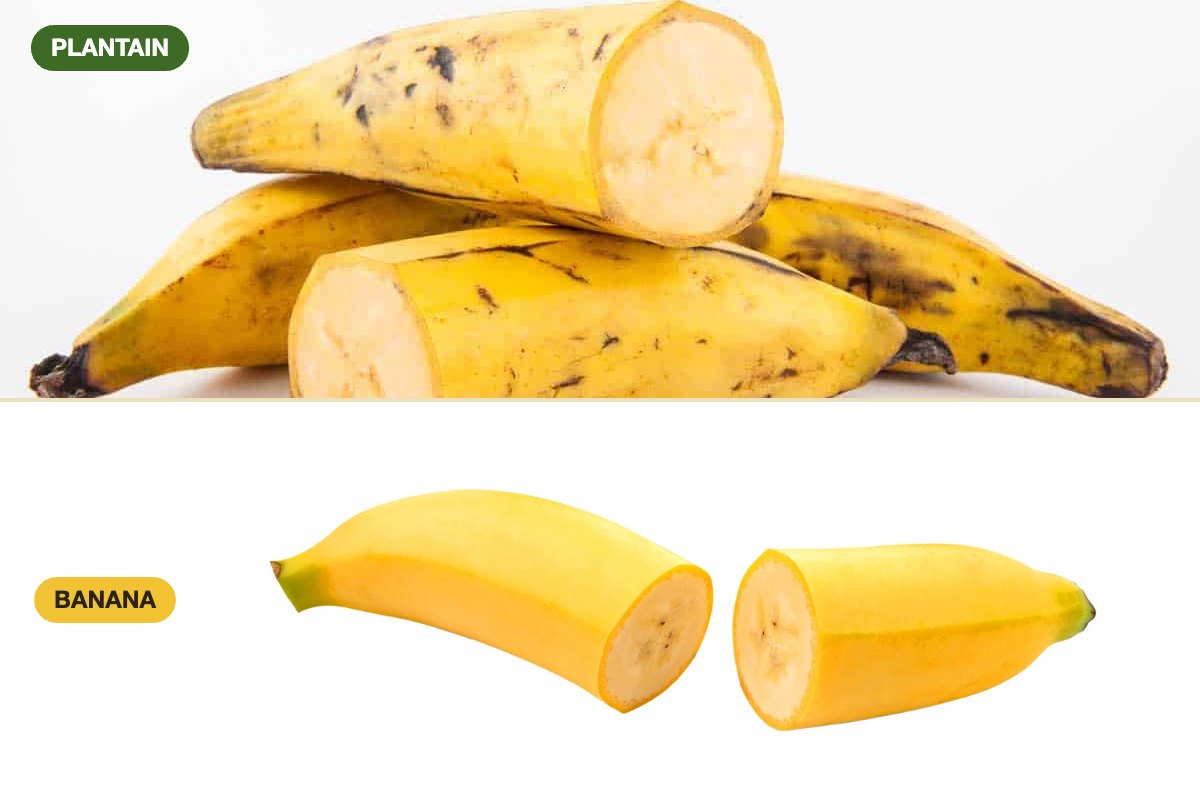
Plantains are noticeably bigger, often a foot long, and thicker through the middle. They’re also more angular, with distinct ridges running down the sides. A Cavendish banana is shorter, rounder and smoother.
2The peel
A banana peel is thin enough to strip by hand at any stage. A green plantain’s peel is thick, tough and clings to the flesh, so you’ll need to trim the ends and score it with a knife. Ripe plantains peel more easily, but the skin is still noticeably heavier than a banana’s.
3Starch and sugar
This is the big one. A green plantain is mostly starch, and even a fully ripe plantain stays denser and less sugary than a ripe banana. That starch is why plantains crisp up in hot oil and hold their shape in soups, while bananas turn soft and mushy.
4Taste and texture
A ripe banana is sweet, creamy and fruity. A green plantain tastes like a firm, mild potato. Ripe plantains land in between: sweet with a hint of banana, but with a denser, almost bready texture.
5Raw vs cooked
Bananas are made to be eaten raw. Plantains are made to be cooked: green plantains are hard and chalky raw, and even ripe ones taste better fried, baked or boiled.
6How ripeness changes them
A banana is really only useful once it’s yellow, and it’s past its prime for eating once it’s mostly brown. A plantain is useful at every stage, and many cooks wait until the peel is almost fully black. Our plantain ripeness chart shows all five stages and what to cook at each one.
7Where and how they’re eaten
In the US and Europe, bananas are a snack fruit. In Puerto Rico, the Dominican Republic, Cuba, Colombia, Venezuela, Ecuador, Central America and much of Africa, plantains are a daily staple. They’re served as a side with rice and beans, mashed for breakfast, and turned into chips, dumplings and stews.
What Do Plantains Taste Like?
It depends entirely on how ripe they are. Here’s what to expect at each stage.
Green plantain
Mild, starchy and savory, like a firm potato with a faint banana note. Crisp and golden when fried.
Yellow plantain
Slightly sweet and still firm. Good boiled, baked or grilled, but not yet sweet enough for maduros.
Black plantain
Sweet, soft and caramel-like when fried, with a dense texture that bananas never have.
So do plantains taste like bananas? Only a little, and mostly when they’re very ripe. Even then, the texture gives them away.

Can You Eat Plantains Raw?
Technically yes, but it’s not pleasant and not how they’re meant to be eaten. A raw green plantain is hard, dry and chalky, and its high starch content makes it tough to digest. A fully black, very ripe plantain is soft enough to eat raw, but it still tastes starchier and less sweet than a banana.
That’s why almost every plantain recipe starts with heat: frying, boiling, baking or grilling turns the starch tender and brings out the sweetness.
Plantain vs Banana Nutrition
Ounce for ounce, plantains have more calories and carbohydrates than bananas, along with more potassium, vitamin C and vitamin A. Bananas have a little more fiber and vitamin B6. Here’s how they compare raw.
| Per 100 g, raw | Plantain | Banana |
|---|---|---|
| Calories | 122 | 89 |
| Carbohydrates | 31.9 g | 22.8 g |
| Sugars | 15.0 g | 12.2 g |
| Fiber | 2.3 g | 2.6 g |
| Protein | 1.3 g | 1.1 g |
| Fat | 0.4 g | 0.3 g |
| Potassium | 499 mg | 358 mg |
| Magnesium | 37 mg | 27 mg |
| Vitamin C | 18.4 mg | 8.7 mg |
| Vitamin A | 56 µg | 3 µg |
| Vitamin B6 | 0.30 mg | 0.37 mg |
Source: USDA FoodData Central (SR Legacy), raw plantains and raw bananas.
Which is healthier, a plantain or a banana?
Neither one wins outright. Both are good sources of potassium, fiber and vitamins, and the bigger difference is how you prepare them:
- Green plantains are high in resistant starch, which digests slowly and acts more like fiber. Boiled or baked, they’re a filling, low-fat side.
- Ripe plantains have more sugar, and fried maduros soak up oil, which adds a lot of calories.
- Bananas are lower in calories and need no cooking, which makes them an easy everyday snack.
A boiled green plantain and a deep-fried maduro are very different foods, even though they started as the same fruit. If you’re managing diabetes or watching your carbs, talk to your doctor or dietitian about how plantains fit your plan.
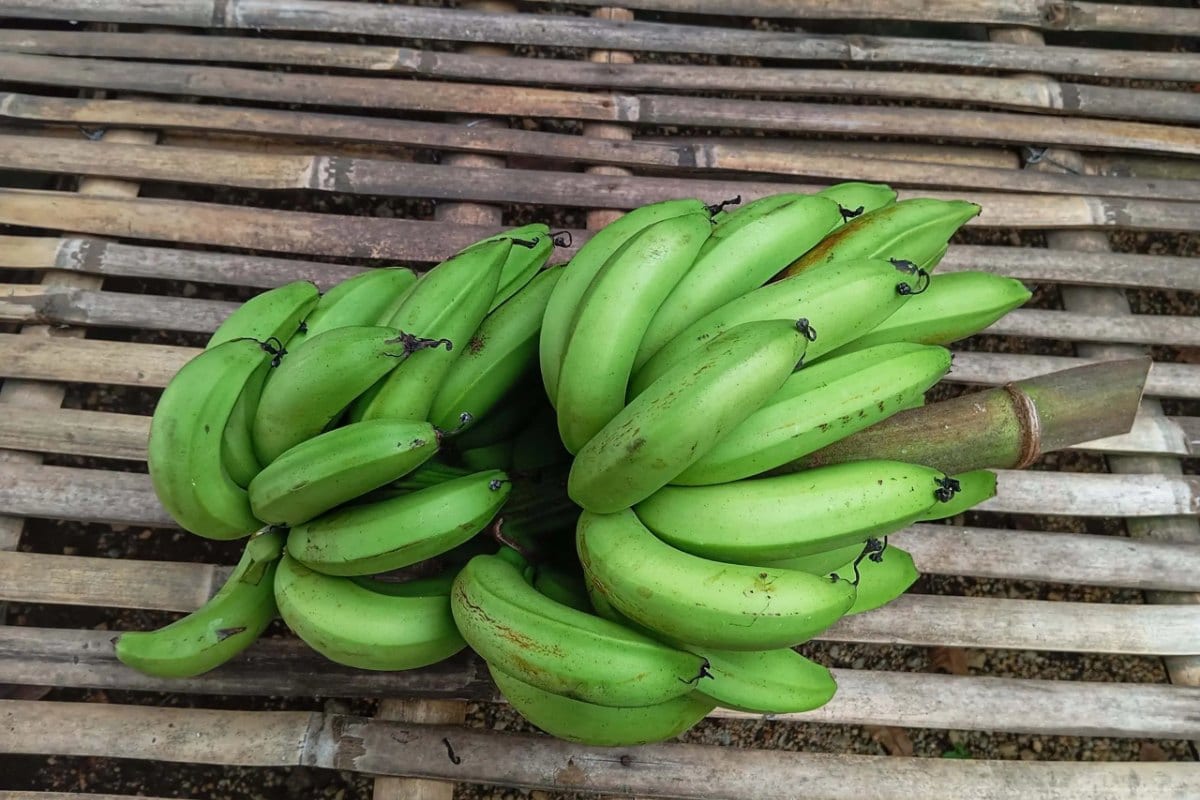
Green Bananas vs Plantains
This is where people get tripped up. Green bananas and green plantains look alike at a glance, and in Puerto Rico and the Dominican Republic both are cooked as starches. But they aren’t the same thing.
Green plantains (plátanos verdes)
- Larger, with thick, ridged peels
- Dry, dense, very starchy flesh
- Fry up crisp; ideal for tostones, mofongo and chips
- Ripen slowly into sweet maduros
Green bananas (guineos verdes)
- Smaller, with thinner, smoother peels
- Softer, moister flesh
- Usually boiled, as in Puerto Rico’s guineítos en escabeche
- Ripen into sweet eating bananas
Can You Substitute Bananas for Plantains?
Sometimes, but rarely in the dishes plantains are famous for. Use this as a guide.
| Swap | Does it work? | What happens |
|---|---|---|
| Bananas for green plantains (tostones, chips, mofongo) | No | Bananas are too soft and sweet. They won’t crisp, smash or hold together. |
| Bananas for ripe plantains (maduros) | Not really | Firm, barely ripe bananas will fry, but they turn mushy and taste like banana, not maduro. |
| Ripe plantains for bananas (banana bread, pancakes) | Yes, if very ripe | Use mostly black plantains and mash well. Expect a denser, less sweet result. |
| Plantains for bananas raw (smoothies, snacking) | No | Raw plantains are too starchy and hard to digest. |
| Green bananas for green plantains (boiled or in stews) | Sometimes | Fine boiled or in sancocho. They cook faster and turn softer. |

What Latin Americans Call Plantains and Bananas
Here’s where it gets confusing: plátano means plantain in the Caribbean but banana in Mexico and Spain. If you’re shopping or reading a recipe, check which country it comes from.
| Country | Plantain | Banana |
|---|---|---|
| Puerto Rico | Plátano | Guineo |
| Dominican Republic | Plátano | Guineo |
| Cuba | Plátano macho | Plátano fruta |
| Mexico | Plátano macho | Plátano |
| Colombia | Plátano | Banano |
| Venezuela | Plátano | Cambur |
| Ecuador | Verde (green), maduro (ripe) | Guineo |
| Peru | Plátano de freír, plátano bellaco | Plátano de seda |
| Central America | Plátano | Banano, guineo |
| Spain | Plátano macho | Plátano, banana |
| Brazil | Banana-da-terra | Banana |

How to Cook Plantains (and What to Do With Bananas)
Plantain dishes to try
- Tostones and Colombian patacones (green)
- Mofongo (green)
- Dominican mangú (green)
- Ecuadorian bolón de verde (green)
- Chifles and mariquitas (green)
- Plátanos maduros (black)
- Tajadas (ripe)
- Pastelón (ripe)
Ways Latin cooks use bananas
- Sliced over açaí na tigela in Brazil
- In fruit cups like Guadalajara’s biónico
- In Mexican ensalada de frutas
- Frozen and chocolate-dipped as chocobananos, a favorite among Guatemalan desserts
- Blended into batidos and licuados
Want the full list? Browse our best Latin plantain dishes, or see tostones vs. maduros for the two most famous ones side by side.
For your plantain kitchen
- Wooden pilón and tostonera set: smash green plantains into even tostones and mash mofongo the traditional way.
- Iberia Saladito plantain chips: thin, salty chips made from green plantains.
- Chifles Maduritos: chips made from ripe plantains, for a taste of the sweet side.
- Zambos Chile Limón plantain chips: thick-cut and tangy, a good way to taste the difference from banana chips.
As an Amazon Associate, AmigoFoods earns from qualifying purchases.
Plantain vs Banana FAQ
Is a plantain a fruit or a vegetable?
Botanically, a plantain is a fruit, just like a banana. In the kitchen, it’s treated more like a starchy vegetable, cooked and served as a side the way you’d serve potatoes or rice.
Are plantains just unripe bananas?
No. Plantains are a different group of banana varieties. A green Cavendish banana will ripen into a sweet eating banana, while a green plantain ripens into a sweet but still starchy plantain that’s best cooked.
Do plantains taste like bananas?
Only faintly. Green plantains taste more like potatoes. Very ripe, black plantains pick up a sweet, banana-like flavor, but they stay denser and less fruity than a banana.
Which has more calories, a plantain or a banana?
Plantains do: about 122 calories per 100 grams raw, compared with 89 for bananas. A whole plantain is also much bigger, and frying adds more calories on top.
Can you make banana bread with plantains?
Yes, as long as the plantains are very ripe and mostly black. The bread will be denser and a little less sweet, so some bakers add an extra spoonful of sugar.
How do I know when a plantain is ripe?
For sweet dishes, wait until the peel is mostly or completely black and the plantain gives slightly when pressed. For savory dishes, buy them hard and green. Our guide to picking and ripening plantains covers every stage.
The Bottom Line
Plantains and bananas are close cousins, but they do different jobs. Reach for a banana when you want something sweet to eat raw. Reach for a plantain when you want a starch to fry, boil, mash or bake: green for crisp, savory dishes, black for sweet ones. And if a Puerto Rican recipe calls for plátanos, don’t grab bananas.
Ready to cook? Start with our full collection of plantain recipes, or explore plantains alongside yuca, malanga and other Latin American roots and tubers.
More Ingredients
See all →
Jorge Garcia is the founder of AmigoFoods, where he has spent over 20 years helping readers discover authentic Latin American and Spanish cuisine. Raised in a Cuban-American household, Jorge learned to cook at the hands of his mother and grandmother, carrying forward generations of family recipes. That heritage, backed by his family’s four-generation history in the Latin food industry, inspired him to launch AmigoFoods in 2003. With more than 1,000 published articles on recipes, ingredients, and food culture, Jorge’s mission is simple: make authentic Latin cooking approachable for home cooks everywhere while honoring the traditions behind every dish.