

Locro de zapallo is Peru’s creamy squash stew, made with potatoes, corn, peas and ají amarillo, then finished with fresh cheese, evaporated milk and huacatay. Serve it with white rice and an optional fried egg for a comforting meatless meal.
Locro de Zapallo at a Glance
What Is Locro de Zapallo?
Locro is an old Andean word for a thick stew, and zapallo is squash. In Peru, locro de zapallo is a vegetable stew in which the squash is cooked until it partly falls apart and turns the whole pot thick and orange. The other vegetables stay in chunks, and fresh cheese and evaporated milk make it creamy at the end.
It’s a weekday lunch dish in Peruvian homes and a fixture at the small menú restaurants that serve a set lunch. Because it has no meat, it’s also a traditional dish for Lent. Many families top each plate with a fried egg, and almost everyone serves it with rice.
Peruvian Locro vs. Argentine and Ecuadorian Locro
Several South American countries have a dish called locro, and they are quite different:
- Peruvian locro de zapallo is a squash stew, usually meatless, with cheese, ají amarillo and huacatay, served over rice.
- Argentine locro is a rich, meaty stew of hominy, white beans, squash, beef, pork and chorizo, eaten on national holidays.
- Ecuadorian locro de papa is a creamy potato and cheese soup topped with avocado.
Which Squash to Use
In Peru, cooks use zapallo macre, a huge squash sold by the slice in markets, with dense, sweet, deep-orange flesh. Outside Peru, the best substitutes are kabocha, butternut or calabaza (West Indian pumpkin), which is sold in wedges at Latin markets. A mix of kabocha and butternut gets close to macre’s flavor and texture. Avoid jack-o’-lantern pumpkins, which are watery and bland.
What You Need
- Winter squash, about 3 pounds, peeled and cut into chunks.
- Potatoes, Yukon Gold or Peruvian yellow potatoes.
- Corn. Peruvian choclo has big, chewy kernels; frozen choclo or regular sweet corn both work. Learn more in our guide to Peruvian corn.
- Peas and cooked fava beans (or cooked lima beans). Remove any tough fava skins; if using frozen beans, cook them according to the package first.
- Onion, garlic and dried oregano.
- Ají amarillo paste for color and fruity warmth. You can find ají amarillo paste on Amazon.
- Huacatay, Peruvian black mint. Fresh is rare outside Peru, but jarred huacatay paste works well. Use a little: it’s strong.
- Queso fresco, cubed, and evaporated milk.
Make it vegan: skip the cheese, use coconut milk or an unsweetened plant milk instead of evaporated milk, and serve it without the egg.
How to Make Locro de Zapallo
Start with an aderezo, the Peruvian flavor base: onion, garlic, ají amarillo and oregano cooked slowly in oil. Add the squash and a little water and simmer until it starts to fall apart, then add potatoes and corn, and later the peas and cooked beans. Stir in cheese, evaporated milk and huacatay at the end. The full recipe, with quantities, is in the card below.
Tips for the Best Locro de Zapallo
- Cut the squash two ways. Cut half into small pieces that will melt into the sauce and half into bigger chunks that keep their shape.
- Use very little water. Squash releases liquid as it cooks. Start with just a cup and add more only if it sticks.
- Mash a little. Press some of the squash against the side of the pot with a wooden spoon to thicken the stew.
- Add cheese off the heat. Stir in the queso fresco at the end so it softens without melting completely.
- Go easy on the huacatay. Start with a teaspoon of paste or a few leaves, taste, and add more if you like.
How to Serve It
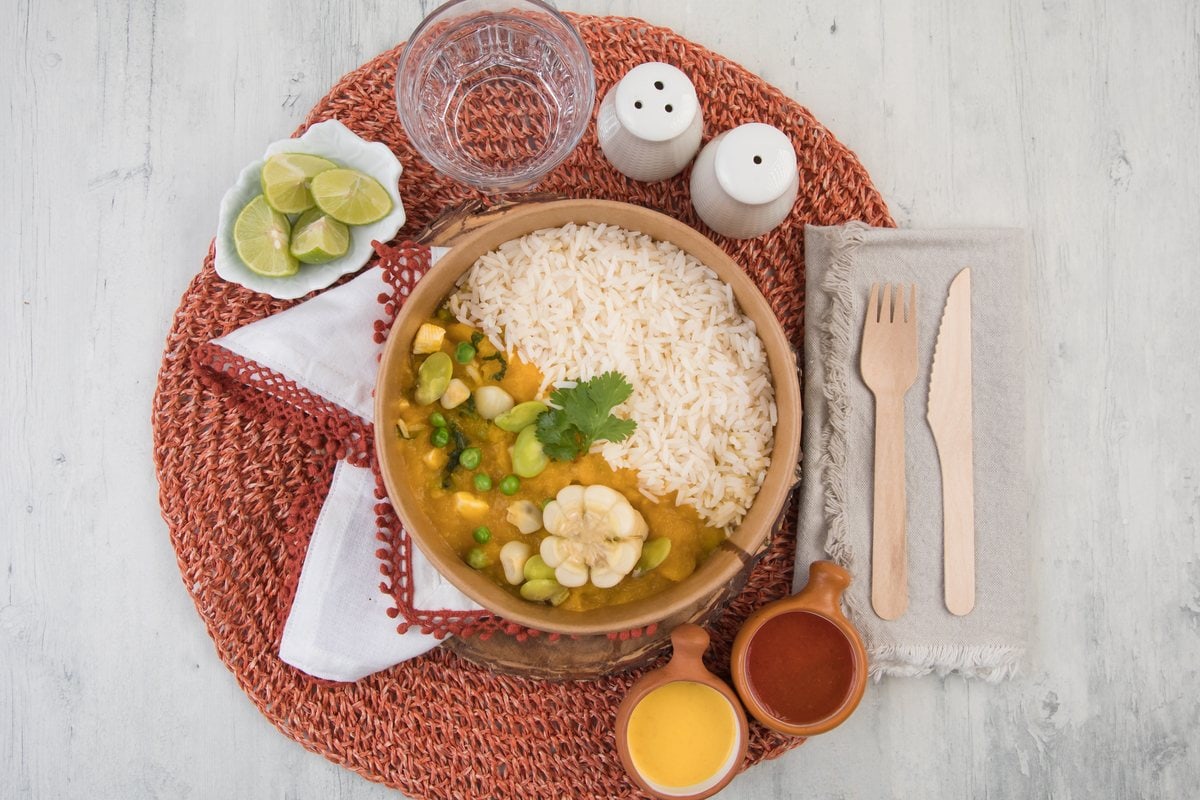
Spoon the locro next to a mound of white rice and top it with a fried egg, if you like. Set out lime wedges, salsa criolla and ají on the side. For a bigger Peruvian meal, start with choclo con queso or a bowl of caldo de gallina.
Locro de Zapallo Recipe
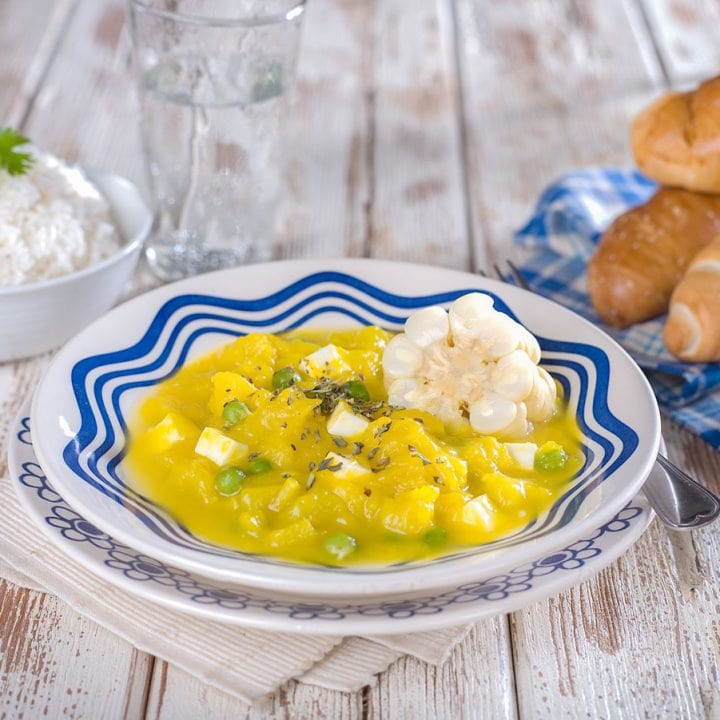
Locro de Zapallo (Peruvian Squash Stew)
Peru’s creamy squash stew with potatoes, corn, peas and ají amarillo, finished with queso fresco, evaporated milk and huacatay and served with rice.
Ingredients
- 3 lb winter squash (kabocha, butternut or calabaza), peeled, seeded and cut into chunks
- 3 tablespoons vegetable oil
- 1 large red onion, finely chopped
- 4 garlic cloves, minced
- 2 tablespoons ají amarillo paste
- 1 teaspoon dried oregano
- 1 cup water or vegetable broth, plus more if needed
- 3 medium yellow potatoes (Yukon Gold), peeled and cut into 1-inch cubes
- 1 cup corn kernels (Peruvian choclo or sweet corn)
- ½ cup peas
- ½ cup cooked fava beans or lima beans (drained; remove tough fava skins)
- 1 teaspoon huacatay paste, or a few fresh huacatay leaves, chopped
- ½ cup evaporated milk
- 6 oz queso fresco, cut into small cubes
- Salt and black pepper
- Cooked white rice, for serving
- 6 fried eggs, for serving (optional)
Instructions
- Cut half of the squash into ½-inch pieces and the rest into 1½-inch chunks.
- Heat the oil in a large pot over medium heat. Add the onion and cook until soft and golden, about 8 minutes. Add the garlic, ají amarillo paste and oregano and cook, stirring, for 3 minutes.
- Add all the squash and the water, season with salt and pepper, cover and simmer until the small pieces start to fall apart, about 15 minutes.
- Add the potatoes and corn, cover and cook until the potatoes are tender, about 15 minutes, stirring now and then. Mash some of the squash against the pot to thicken the stew. Add a little water if it sticks.
- Add the peas and beans and cook 5 minutes more.
- Remove from the heat and stir in the huacatay, evaporated milk and queso fresco. Taste and adjust the salt.
- Serve with white rice, topped with a fried egg if you like.
Notes
Vegan option: skip the cheese and use coconut milk or unsweetened plant milk instead of evaporated milk.
Leftovers: keep in the fridge for up to 3 days. Reheat with a splash of water.
Timing: Allow about 1 hour 10 minutes for the stew: 20 minutes prep and 50 minutes cooking. The listed stages total about 46 minutes, with a little allowance for the pot to return to a simmer. Squash and potato size can change the time. Start with cooked beans; cook rice and optional eggs separately while the stew simmers. If using frozen beans, cook them according to the package before adding.
Locro de Zapallo FAQ
What is locro de zapallo in English?
Peruvian squash stew, or pumpkin stew. Locro is a thick Andean stew and zapallo means squash.
What is in Peruvian locro?
Winter squash, potatoes, corn, peas and fava beans cooked with onion, garlic, ají amarillo and oregano, then finished with fresh cheese, evaporated milk and huacatay.
Is locro de zapallo vegetarian?
Yes, the traditional Peruvian version is meatless, which is why it’s popular during Lent. Some cooks add a little beef or chicken broth.
What squash is best for locro?
Peruvian zapallo macre. Kabocha, butternut or calabaza are the best substitutes.
What is huacatay?
A Peruvian herb also called black mint, with a strong flavor somewhere between mint, basil and tarragon. Jarred huacatay paste is easy to find online.
How is it different from Argentine locro?
Argentine locro is a meaty hominy and bean stew with pork and chorizo. Peruvian locro de zapallo is a meatless squash stew served with rice.
More Peruvian Comfort Food
Locro de zapallo is one of the classics in our guide to Peruvian soups and stews. If you like it, try shambar, Trujillo’s hearty bean soup, or olluquito con charqui, an Andean stew of ollucos and dried meat. For more ideas, see our guide to Peruvian food.
More Peruvian Foods
See all →
Jorge Garcia is the founder of AmigoFoods, where he has spent over 20 years helping readers discover authentic Latin American and Spanish cuisine. Raised in a Cuban-American household, Jorge learned to cook at the hands of his mother and grandmother, carrying forward generations of family recipes. That heritage, backed by his family’s four-generation history in the Latin food industry, inspired him to launch AmigoFoods in 2003. With more than 1,000 published articles on recipes, ingredients, and food culture, Jorge’s mission is simple: make authentic Latin cooking approachable for home cooks everywhere while honoring the traditions behind every dish.