
Tembleque is Puerto Rico’s silky coconut pudding, and one of the desserts that says Navidad on the island. The name comes from the Spanish temblar, “to tremble,” because a well-made tembleque holds its shape but wobbles when you set it on the table. You only need coconut milk, sugar, cornstarch and a pinch of salt: cook it on the stove for about 10 minutes, chill it in ramekins, and dust it with cinnamon. It is naturally dairy-free and egg-free, it is made the day before, and it sits proudly next to arroz con dulce and a glass of coquito on every Puerto Rican Christmas table.

Tembleque at a Glance
What Is Tembleque?
Tembleque (tem-BLEH-keh) is a coconut milk pudding set with cornstarch rather than eggs or gelatin. It is snow-white, smooth and only lightly sweet, with a texture somewhere between a panna cotta and a firm custard. Puerto Rican cooks often pour it into a ring or flower mold, unmold it onto a platter, and cover the top with ground cinnamon; individual ramekins, like the ones in this recipe, are just as traditional at home.
Because it uses no dairy or eggs, tembleque is one of the starch-set puddings in our guide to Latin American and Spanish custards and puddings, alongside its cousin majarete. If you love coconut desserts, also try our flan de coco.
Tembleque at Christmas in Puerto Rico
Tembleque is eaten all year, but it truly belongs to the Puerto Rican holiday season, which runs from early December through Three Kings Day on January 6 and the Fiestas de la Calle San Sebastián in mid-January. It is the cool, light finish after a Nochebuena plate of pernil, arroz con gandules and pasteles, and it travels well to a parranda, the late-night musical house visits of the season.
It is also one of the easiest holiday desserts to plan around: make it a day ahead, keep it in the fridge, and unmold it right before guests arrive. For the whole holiday menu, see our guides to Puerto Rican Christmas food and Nochebuena, or browse more Latin and Spanish Christmas desserts.
Ingredient Notes
Coconut milk: Choose unsweetened, full-fat canned coconut milk for this version. Stir any separated cream back into the liquid and use the entire contents of both cans. Check the label carefully: sweetened cream of coconut and refrigerated coconut beverages are different products and should not be substituted directly.
Sugar: Use granulated white sugar. This recipe calls for ½ cup.
Cornstarch: This recipe calls for ½ cup. Measure with a level cup. Mix it into the unheated liquid thoroughly so that no dry pockets remain before cooking.
Salt and cinnamon: Salt goes into the pudding; ground cinnamon goes on top before serving.
Coconut Milk, Coconut Cream, or Cream of Coconut?
These similar names can make shopping confusing. Unsweetened coconut milk is the ingredient specified here. Coconut cream is generally richer and should not be swapped in without adjusting and testing the recipe. Cream of coconut is a sweetened product often used in drinks and desserts; using it in place of the milk changes both sweetness and consistency.

Before opening a can, check its name, whether it is sweetened, and its volume. Buying two cans of a different size can change the liquid-to-starch ratio even if everything else is measured correctly.

Tembleque Recipe
Puerto Rican coconut pudding made with coconut milk, sugar, cornstarch, and salt, then chilled and finished with cinnamon. Plan ahead for at least four hours of chilling.
Ingredients
- 2 cans (13.5 fluid ounces each; about 800 ml total) unsweetened full-fat coconut milk
- ½ cup granulated sugar (about 100 g)
- ½ cup cornstarch (approximately 64 g; weight varies by brand)
- ¼ teaspoon fine salt
- Ground cinnamon, for serving
Instructions
- Prepare the dishes. Set six heatproof 6-ounce ramekins on a tray. If you plan to unmold the puddings, rinse the interiors with water and shake out the excess.
- Mix before heating. In a medium heavy-bottomed saucepan, whisk the sugar, cornstarch, and salt together. Gradually whisk in the coconut milk until evenly combined, checking the corners of the pan for dry starch.
- Cook while stirring. Place over medium heat. Stir continuously, sweeping the bottom and corners with a flexible spatula. Watch for the mixture to become thick and for bubbles to break through the surface. Do not stop at the first slight thickening. Once it has reached a gentle boil and is uniformly thick and smooth, remove from the heat. Reduce the heat if it starts catching on the bottom. Allow about 5–10 minutes, using these texture cues rather than the clock alone.
- Fill and chill. Divide among the ramekins and smooth the tops. Cover and refrigerate for at least 4 hours, until cold and set throughout. If the centers are still soft, allow more chilling time.
- Finish and serve. Serve directly from the ramekins, or loosen each pudding’s edge with a thin knife and invert onto a plate. Lift the ramekin carefully, then sprinkle the pudding with cinnamon.
Notes
Equipment: A medium heavy-bottomed saucepan, whisk, flexible spatula, and six heatproof 6-ounce ramekins. Divide the mixture evenly rather than filling each dish to the brim.
Timing: Cooking takes approximately 5–10 minutes. Use bubbling and thickening as your endpoint; the time varies with the pan and stove. Chill for at least 4 hours, or overnight if needed.
Make ahead: Prepare the day before serving. Keep covered in the refrigerator and aim to enjoy within 48 hours for the best texture. Add cinnamon just before serving.
The bubbling and thickening cues are consistent with GOYA’s tembleque method. Cooking time will depend on your pan, stove, and starting temperature.
Troubleshooting
| Problem | What to Check | What to Do |
|---|---|---|
| Pudding is still soft | Has it chilled for the full time and become cold in the center? | Give it more time before attempting to unmold. |
| Pudding stays runny after chilling | Ingredient quantities, substitutions, and whether the mixture reached the cooking endpoint | Check those details before repeating the recipe. Extra chilling cannot reliably correct a problem with the mixture itself. |
| Texture is too firm | A heaped cornstarch measure or less coconut milk than called for | Use level measures and the full quantity of coconut milk next time. Avoid changing several ingredients at once. |
| Mixture has lumps | Dry starch may not have dispersed before heating | For the next batch, whisk thoroughly while cold and scrape the pan’s corners as you cook. |
| Pudding will not release | It may need more chilling, or the edge may still be attached | Loosen the edge gently. If it resists, serve it in its dish rather than damaging it. |
Make Ahead and Storage
Prepare tembleque the day before serving and keep it covered in the refrigerator. Leave it in its mold until you are ready to serve, then add cinnamon. Aim to enjoy it within 48 hours for the best texture. GOYA also gives a refrigerated make-ahead window of up to 48 hours in its recipe directions.


Questions Before You Start
Is This Recipe Vegan and Dairy-Free?
The ingredients in this homemade version contain no dairy, eggs, or gelatin, making it suitable for a vegan diet when the products you choose meet your requirements. Check any toppings separately. A packaged coconut pudding can have different ingredients and preparation directions, so do not assume it has the same dietary profile.
Do I Have to Unmold It?
No. Individual serving dishes work well and remove the pressure of getting a perfect release. Add cinnamon directly to the top and serve with a spoon.

Can I Make One Large Pudding?
Yes, but the vessel’s depth affects chilling, and individual-portion timing should not be assumed to apply. Use a mold that comfortably holds the whole batch and allow extra time for the center to set. For this version, the individual ramekins are the specified option.
Can I Add Toppings?
Cinnamon is the simplest finish. Toasted coconut adds crunch; treat it as an optional garnish. Add toppings just before serving.

Flavor Variations
The recipe above is the plain, classic version. These are traditional ways to add flavor without changing the ratio of coconut milk to cornstarch:
- Cinnamon stick and citrus peel: Warm the coconut milk with a cinnamon stick and a strip of lime or orange peel, then remove them before you cook the pudding.
- Orange blossom water: Older Puerto Rican recipes, including the one in Carmen Aboy Valldejuli’s classic Cocina Criolla, perfume tembleque with orange blossom water. Stir in about ½ teaspoon after cooking, since it is strong.
- Vanilla: A teaspoon of vanilla extract, added off the heat, softens the coconut flavor.
- Toasted coconut: Sprinkle toasted coconut over the cinnamon for crunch, as shown below.
Serving Tembleque for a Gathering

For a dinner party, individual ramekins make portioning straightforward and let you finish dessert before guests arrive. Set aside refrigerator space before cooking, and keep the dishes on a tray so they are easy to move together.
For a dessert buffet with several choices, consider smaller tasting portions. Divide the cooked mixture among additional heatproof dishes, leaving room for garnish. Smaller portions change the serving count; they do not increase the amount of pudding the recipe makes.
Keep the finish simple with cinnamon, or offer toasted coconut separately so guests can choose a smooth or crunchy topping. For a variation, serve fresh berries alongside the pudding. A small sieve helps distribute cinnamon evenly without leaving a heavy patch on one portion.
Buy Tembleque Mix on Amazon
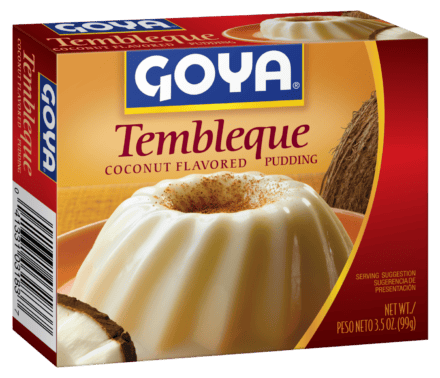
Prefer a shortcut to making tembleque from scratch? Look for GOYA Tembleque Coconut Flavored Pudding mix, a packaged option that saves you measuring the dry pudding ingredients. GOYA uses its 3.5-ounce mix in a coconut parfait recipe, where it is combined with milk, cooked, and chilled.
Look for GOYA Tembleque Mix on Amazon
The link opens an Amazon search so you can check available listings. Before ordering, compare the package count, total price including delivery, and preparation directions. A multipack may be more than you need for one dessert.
Remember that this is a mix that requires preparation. Follow the package instructions for added ingredients, cooking, and chilling rather than using the homemade recipe above. In particular, check whether the directions call for dairy milk if you need a dairy-free dessert.
If you want tembleque with no cooking at all, ask a local Puerto Rican bakery, restaurant, or caterer whether it offers prepared portions. Confirm that you are ordering finished pudding; the Amazon search above is for mix, and availability varies.
Tembleque in Puerto Rican Cooking
Tembleque is part of a family of Puerto Rican desserts built on coconut, rice, corn and cinnamon, and it is one of the island’s most loved Christmas sweets. Tasting Puerto Rico’s account describes making it to begin the festive season and shows both individual and larger presentations. At a holiday table it usually shares space with arroz con dulce, flan de queso and a bottle of homemade coquito.

For more ideas, explore our Puerto Rican desserts guide or browse our Latin American and Spanish desserts.
Tembleque FAQ
What does tembleque mean?
Tembleque comes from the Spanish verb temblar, “to tremble” or “to shake,” which describes the way the set pudding wobbles.
Is tembleque a Christmas dessert?
Yes. It is eaten all year in Puerto Rico, but it is a classic of the Christmas season, served with arroz con dulce, coquito and the rest of the Puerto Rican Christmas menu.
What is the difference between tembleque and flan?
Tembleque is thickened with cornstarch and has no eggs or dairy, so it is light, white and coconut-forward. Flan de coco is an egg custard baked with caramel. Tembleque is cooked on the stove; flan is baked in a water bath.
What is the difference between tembleque and majarete?
Both are smooth, stovetop puddings finished with cinnamon. Majarete is thickened with rice flour or fresh corn and usually includes milk as well as coconut milk, so it is richer and, in the Dominican corn version, pale yellow. Tembleque is just coconut milk set with cornstarch.
Why didn’t my tembleque set?
Usually because it came off the heat too soon. The mixture needs to reach a gentle boil and be thick all the way through before you pour it. Sweetened cream of coconut or light coconut milk in place of full-fat coconut milk can also keep it soft. See the troubleshooting table above.
How far ahead can I make tembleque?
Make it the day before, keep it covered in the refrigerator, and serve it within 48 hours. Add the cinnamon just before serving.
Can I freeze tembleque?
It is not recommended. Cornstarch puddings tend to weep and turn spongy after freezing and thawing.
More Puerto Rican Foods
See all →
Jorge Garcia is the founder of AmigoFoods, where he has spent over 20 years helping readers discover authentic Latin American and Spanish cuisine. Raised in a Cuban-American household, Jorge learned to cook at the hands of his mother and grandmother, carrying forward generations of family recipes. That heritage, backed by his family’s four-generation history in the Latin food industry, inspired him to launch AmigoFoods in 2003. With more than 1,000 published articles on recipes, ingredients, and food culture, Jorge’s mission is simple: make authentic Latin cooking approachable for home cooks everywhere while honoring the traditions behind every dish.