
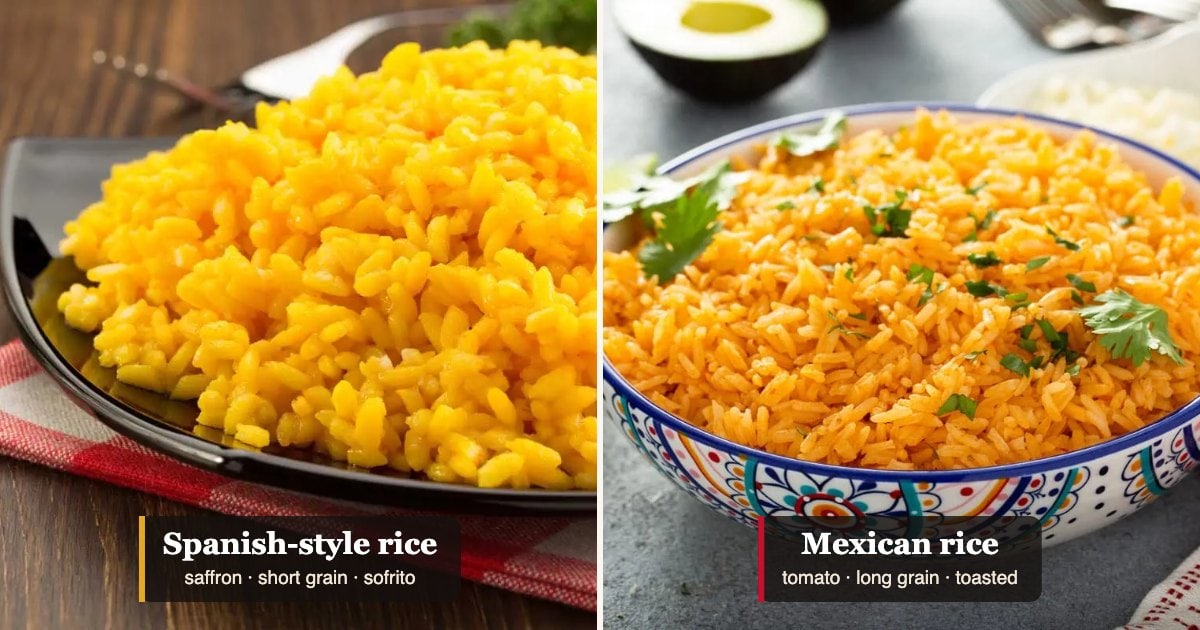
In the United States, Spanish rice is usually just another name for Mexican rice: long-grain rice toasted in oil, then simmered in tomato and chicken broth until it turns red-orange and fluffy. Rice cooked the way Spain cooks it is a different thing: short or medium grains, a slow sofrito, and saffron or pimentón that turn it golden and tender. Below you will find the full side-by-side, where the name came from, and a recipe for Spanish-style saffron rice.
Spanish Saffron Rice at a Glance
AmigoFoods may earn a commission from qualifying Amazon purchases made through links in this article, at no extra cost to you.
Spanish Rice vs. Mexican Rice, Side by Side
The short version: the two dishes differ in the grain, the cooking method, and what gives them their color. Here is how they compare when “Spanish rice” means rice cooked the way it is in Spain.
| Spanish-style rice | Mexican rice (arroz rojo) | |
|---|---|---|
| Where it comes from | Spain, mainly Valencia and the Mediterranean coast | Mexico; popular across the U.S. Southwest |
| What locals call it | Arroz, arroz con azafrán, or a named dish such as paella | Arroz rojo, arroz a la mexicana, sopa de arroz |
| Color | Golden-yellow | Red-orange |
| Where the color comes from | Saffron, often with a little pimentón | Blended tomato |
| Rice | Short or medium grain (bomba, Calasparra, bahía) | Long or medium grain |
| Rinsed first? | No; the surface starch is wanted | Yes, usually rinsed or soaked |
| Method | Grains coated in a sofrito, then simmered | Grains fried until golden, then simmered in tomato broth |
| Texture | Tender, plump, slightly creamy | Fluffy, separate grains |
| Typical extras | Peas, red pepper, seafood, chicken, rabbit, beans | Peas, diced carrot, a whole serrano, cilantro |
| Cumin? | No | Not traditional in Mexico; common in Tex-Mex versions |
| How it is eaten | Often the main dish | Almost always a side |
Is Spanish Rice the Same as Mexican Rice?
In everyday American English, yes. On a Tex-Mex menu, on a boxed mix such as Goya Spanish Rice, or in most recipes titled “Spanish rice,” you are getting tomato-red Mexican rice, sometimes with cumin, chili powder or green pepper added along the way.
Nobody in Mexico calls it Spanish rice, though. There it is arroz rojo (red rice), arroz a la mexicana, or sopa de arroz. That last name comes from the traditional Mexican meal, where rice is served as the sopa seca (“dry soup”) course after the brothy soup and before the main plate.
And nobody in Spain calls anything “Spanish rice” either. Spain has dozens of rice dishes, but no single dish by that name, and none of them looks like the red rice on a combination plate.
Why Is It Called Spanish Rice?
Rice reached Mexico with the Spanish in the 1500s, and it was cooked there with tomato, an ingredient native to the Americas. The red rice that grew out of that is a Mexican dish, not a Spanish one.
The “Spanish” label is an American one. U.S. cookbooks were printing recipes called Spanish rice by the early 1900s, and the earliest of them did not always look like today’s dish; one from 1902 was closer to a chicken paella. By the 1920s, when food associated with Mexico was in fashion in the U.S., tomato rice had settled in under that name. The most common explanation is simple: the people who made it spoke Spanish, so English-speaking cooks called it Spanish. “Spanish” also sounded more familiar to American diners of the time than “Mexican.”
The name stuck on menus and boxed mixes, especially in Texas and California, which is why the question still comes up today.
What Spanish Rice Means in Spain
Rice came to Spain with the Moors, who were growing it in the wetlands around Valencia in the Middle Ages, and the Valencian coast is still the center of Spain’s rice country. Spanish cooks do not have a generic side of rice the way Mexican cooks do. They have arroces: rice dishes that are usually the whole meal, cooked in a wide pan or a clay dish with whatever the region has on hand.
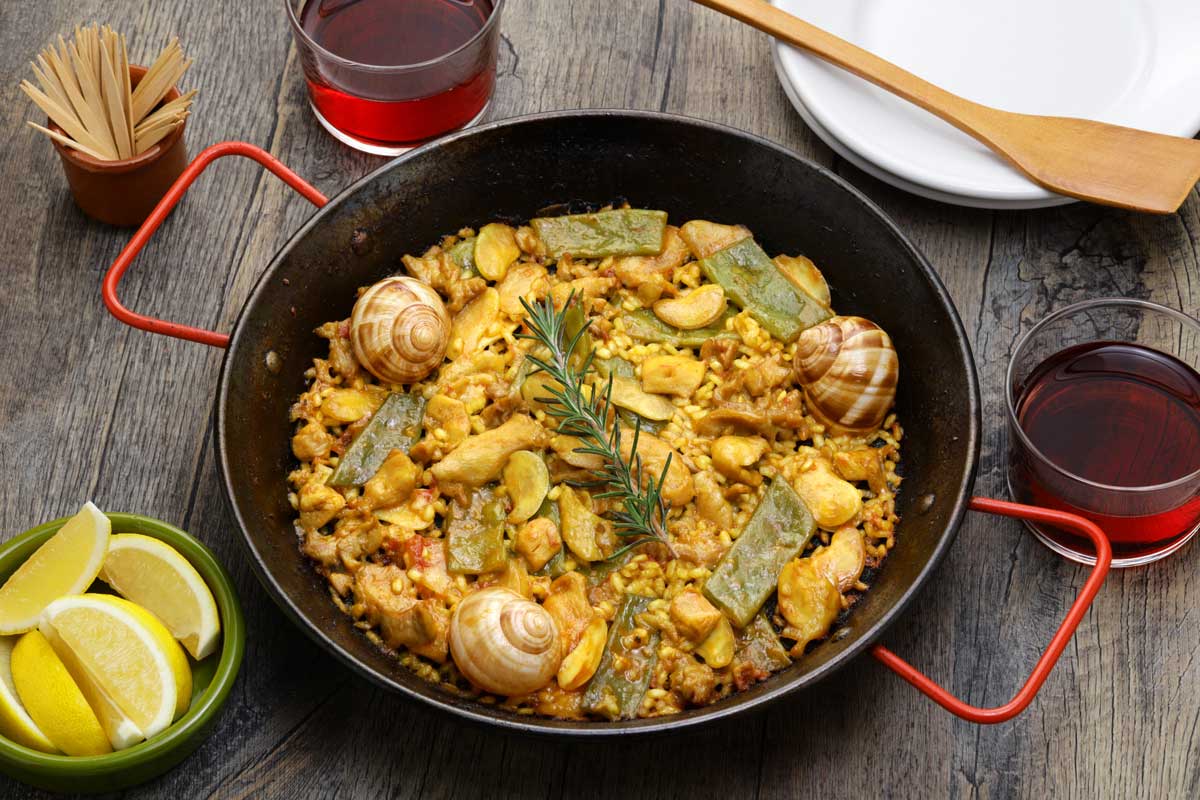
- Paella valencianaChicken, rabbit, flat green beans and saffron, cooked dry in a wide pan. Recipe
- Seafood paellaShrimp, mussels, squid and fish stock. Recipe
- Arroz a bandaRice cooked in a rich fish stock, served with alioli.
- Arroz negroBlack from squid ink, with cuttlefish or squid.
- Arroz al hornoValencia’s oven-baked rice with pork, chickpeas, morcilla and potato.
- Arroz caldosoA soupy rice, often with lobster or crab.
What these dishes share is what makes Spanish rice Spanish: short or medium round grains that absorb a lot of flavorful stock, a sofrito of onion, tomato and garlic in olive oil, and saffron or pimentón for color and aroma. For more on the most famous one, read the history of paella.
What Mexican Rice Is
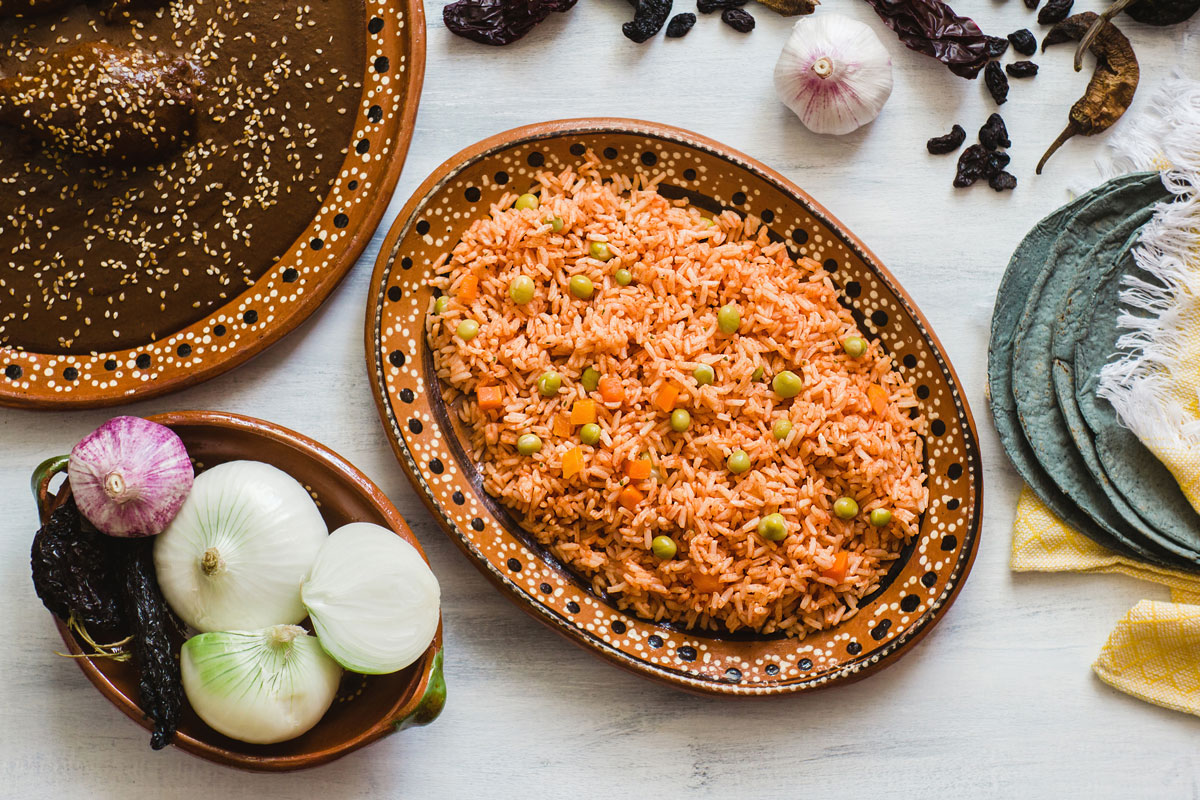
Mexican rice, arroz rojo, is one of the most common side dishes in Mexico and the rice you know from taquerías and combination plates. The method is what defines it:
- Long- or medium-grain rice is rinsed or soaked, then drained well.
- The dry rice is fried in oil until the grains turn golden and smell nutty.
- Tomato, onion and garlic are blended smooth, often with chicken broth or a spoon of tomato bouillon, and poured over the rice.
- The pot is covered and the rice simmers for about 20 minutes, often with a whole serrano chile, a sprig of cilantro, peas or diced carrot.
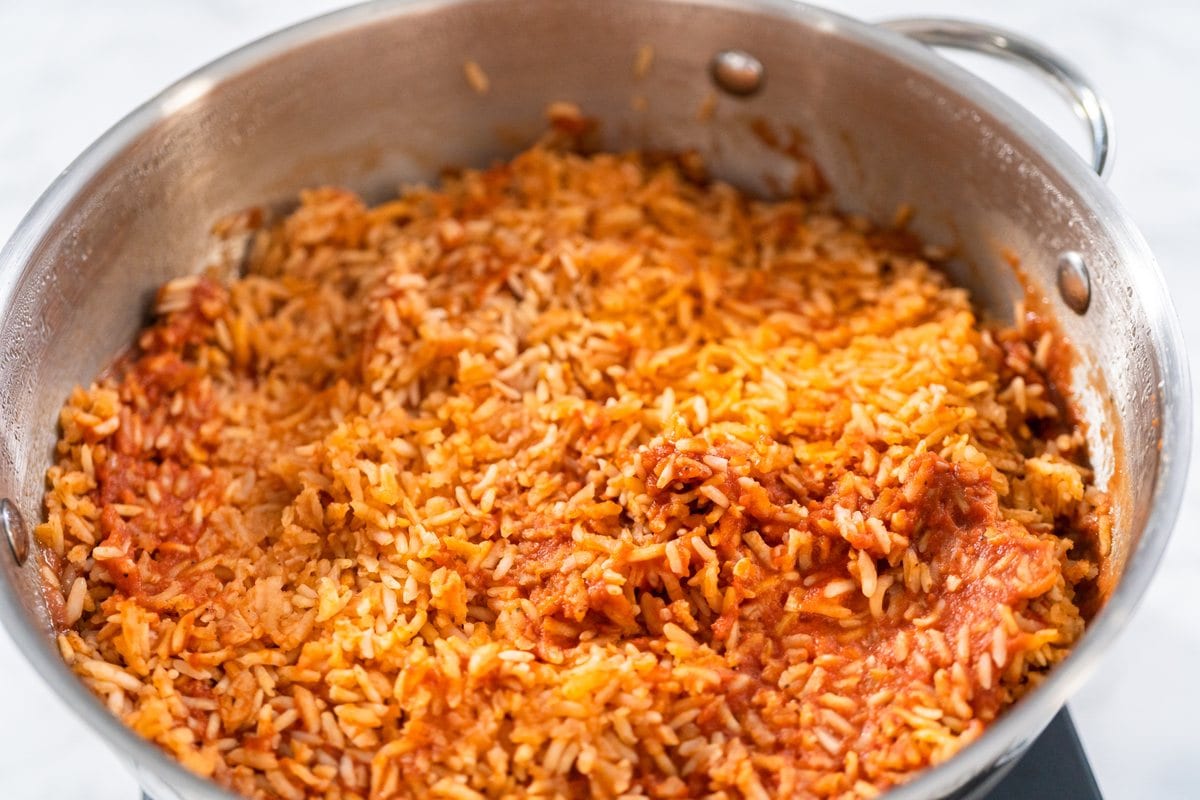
Toasting is the step that matters most. It seals each grain so the rice cooks up fluffy and separate instead of sticky. Many Mexican home cooks use Knorr tomato chicken bouillon for the deep savory flavor you taste in restaurant rice, and a long-grain rice such as Goya Canilla for separate grains.
The 5 Differences That Matter
1. The grain
Spanish rice dishes use short or medium round grains. Bomba and Calasparra rice can absorb two to three times their volume in stock and still hold their shape, which is why paella can soak up so much flavor. Mexican rice favors long or medium grains that cook up light and separate.

2. Toast versus coat
Mexican cooks fry the dry rice until golden before any liquid goes in. Spanish cooks stir the rice into the finished sofrito for a minute or two, just long enough to coat each grain in oil and flavor, and do not brown it.
3. Saffron versus tomato (and the cumin myth)
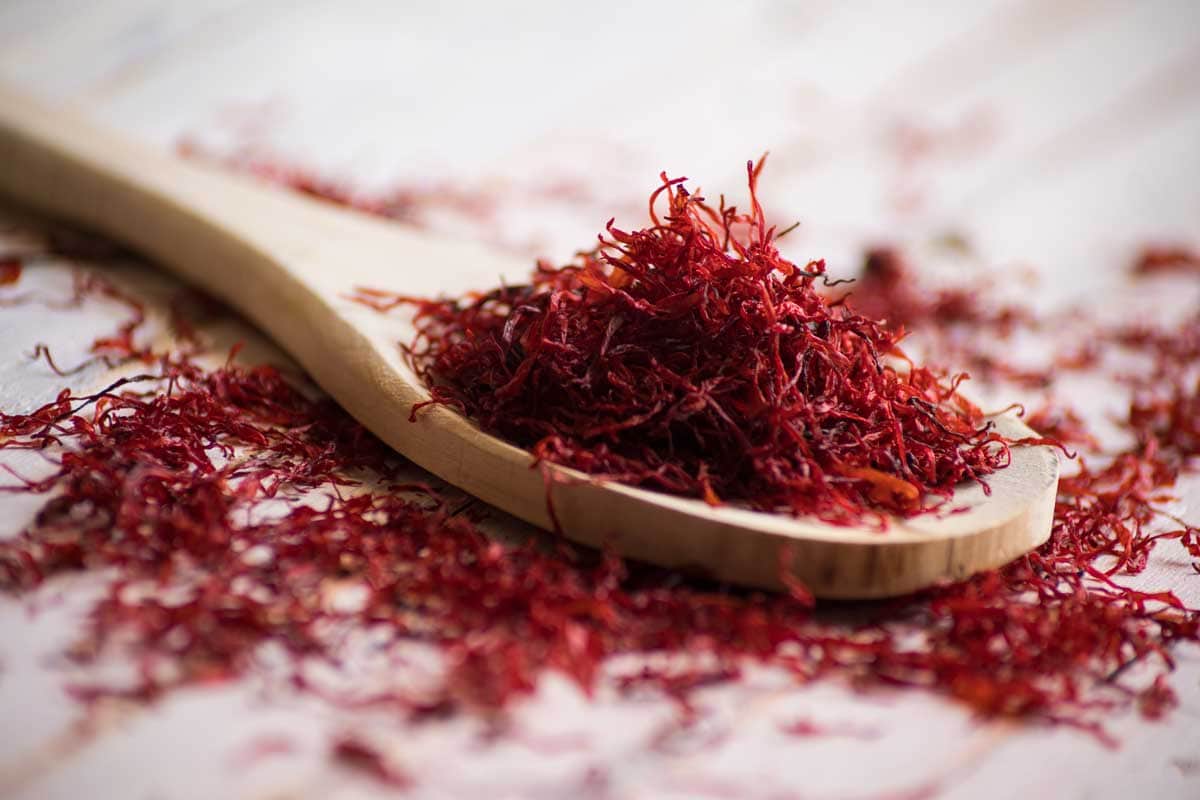
Spanish rice is yellow because of saffron. Mexican rice is red because of tomato. You will often read that cumin is what colors Mexican rice, but cumin is a pale brown spice and adds almost no color; it is also not a standard ingredient in arroz rojo in Mexico. Cumin shows up in many Tex-Mex versions, which is where the confusion comes from.
4. Texture
Mexican rice should be fluffy, with grains that fall apart on a fork. Spanish-style rice is plumper and a little creamier, because the round grains release some starch and nobody rinses it off.
5. Side dish or main event
Mexican rice is a side, served with beans next to enchiladas, mole or carne asada. In Spain, rice is usually the meal itself, with meat, seafood or vegetables cooked right in it.
What About Yellow Rice?
Yellow rice, arroz amarillo, is a Caribbean and Latin American cousin of the Spanish style. Cuban, Puerto Rican and Dominican cooks color it with saffron, with bijol (an annatto-based coloring), or with a packet of sazón, and it is the base of dishes like Cuban arroz con pollo and arroz con gandules.
So is Spanish rice the same as yellow rice? Not exactly. Spanish-style saffron rice is one kind of yellow rice. Boxed yellow rice mixes like Goya Yellow Rice and seasoning packets such as Sazón Goya con Azafrán are convenient, but check the label: much of their color usually comes from added coloring rather than real saffron.
Which Rice and Spices to Buy
You do not need specialty shopping for either dish, but the right rice makes the biggest difference.
Learn more in our guides to the best rice for paella, buying and using Spanish saffron, and pimentón.
How to Make Spanish Saffron Rice
This is a Spanish-style side dish: simpler than paella, made in an ordinary saucepan, and ready in 45 minutes. It is the golden rice people mean when they compare Spanish rice with Mexican rice. The method in brief:
- Steep the saffron. Crumble the threads into a few spoonfuls of hot stock and give them 10 minutes.
- Build a sofrito. Soften onion and red pepper slowly in olive oil, add garlic, then pimentón and grated tomato, and cook until jammy.
- Coat, do not toast. Stir the unrinsed rice into the sofrito for a minute or two.
- Simmer covered. Add hot stock, the saffron, a bay leaf and salt, then cover and cook on low without stirring.
- Rest. Five minutes off the heat with the lid on finishes the grains evenly.
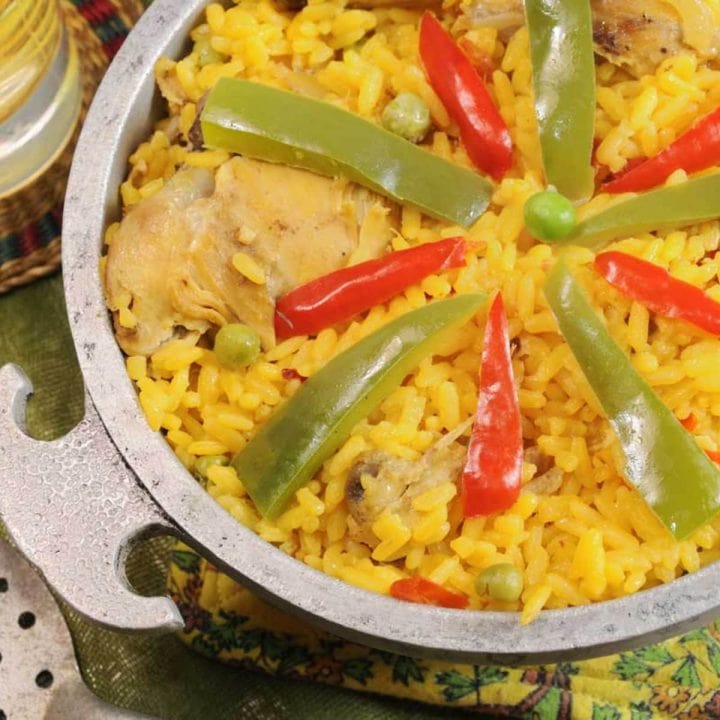
Spanish Saffron Rice (Arroz con Azafrán)
A Spanish-style saffron rice side dish: medium-grain rice simmered in a tomato and pepper sofrito with saffron and a little pimentón. Golden, tender and ready in 45 minutes. It is the yellow rice people mean when they compare Spanish rice with Mexican rice.
Ingredients
- ½ teaspoon loosely packed saffron threads (about 0.25 g)
- 3 cups hot low-sodium chicken stock (or vegetable stock)
- 3 tablespoons Spanish extra virgin olive oil
- 1 small yellow onion, finely diced (about ¾ cup)
- ½ red bell pepper, finely diced
- 2 garlic cloves, minced
- 1 teaspoon sweet pimentón (Spanish paprika)
- 1 ripe tomato, halved and grated on a box grater, skin discarded (about ½ cup pulp)
- 1½ cups Spanish medium-grain rice, not rinsed
- 1 bay leaf
- ¾ teaspoon kosher salt, or to taste (less if your stock is salted)
- ½ cup frozen peas (optional)
- 2 tablespoons chopped fresh parsley
- Lemon wedges, to serve
Instructions
- Crumble the saffron into a small bowl, add 3 tablespoons of the hot stock and let it steep for 10 minutes while you prep the vegetables.
- Heat the olive oil in a 3- to 4-quart heavy saucepan or lidded straight-sided skillet over medium heat. Add the onion and bell pepper with a pinch of salt and cook, stirring often, until soft and sweet but not browned, 7 to 8 minutes.
- Add the garlic and cook 1 minute. Take the pan off the heat and stir in the pimentón for 10 seconds (it scorches fast), then add the grated tomato. Return to medium heat and cook until the tomato darkens and the oil starts to separate, 4 to 5 minutes.
- Add the rice and stir for 1 to 2 minutes so every grain is coated in the sofrito. Do not rinse the rice and do not toast it golden; that is the Mexican method.
- Pour in the rest of the hot stock, the saffron with its liquid, the bay leaf and the salt. Stir once, bring to a boil, then cover, turn the heat to low and cook for 15 minutes without stirring or lifting the lid.
- Scatter the peas over the top, if using, cover again and cook 3 to 5 minutes more, until the liquid is absorbed and the rice is just tender.
- Turn off the heat and let the rice rest, covered, for 5 minutes. Remove the bay leaf, fluff gently with a fork, scatter with parsley and serve with lemon wedges.
Notes
Bomba or Calasparra rice: use 3¾ cups stock and add 3 to 5 minutes to the covered cooking time. These grains absorb more liquid and stay firmer.
Long-grain rice: it works, but use 2¾ cups stock; the result is fluffier and less creamy.
No saffron? Use an extra ½ teaspoon pimentón and a pinch of turmeric for color. It will look right but taste different.
Make ahead: refrigerate up to 4 days and reheat with a splash of stock.
No saffron in the pantry? Our paella without saffron guide covers the substitutes that work and the ones that do not.
What to Serve With Each
Spanish-style saffron rice goes with grilled or pan-fried fish, garlic shrimp, roast chicken, or chorizo al vino. Stir in shrimp or leftover chicken for an easy one-pot dinner.
Mexican rice belongs next to refried beans with enchiladas, chiles rellenos, mole, carne asada or tacos. Browse more ideas in our list of Mexican side dishes and our guide to traditional Mexican food.
Spanish Rice vs. Mexican Rice FAQ
What do Mexicans call Spanish rice?
Arroz rojo (red rice), arroz a la mexicana, or sopa de arroz. “Spanish rice” is an American name.
Does Mexican rice have cumin?
Traditional arroz rojo in Mexico usually does not. Cumin is common in Tex-Mex versions sold as Spanish rice, and it adds flavor, not the red color.
Is paella Spanish rice?
Paella is the best-known Spanish rice dish, but it is a complete meal cooked in a wide, shallow pan, not a side. The saffron rice recipe above uses the same flavors in a simpler, everyday form.
Is Spanish rice spicy?
Neither style is very hot. Spanish-style rice is aromatic rather than spicy. Mexican rice is mild unless a serrano chile bursts in the pot, and Tex-Mex Spanish rice may include chili powder or jalapeño.
Which is healthier, Spanish or Mexican rice?
They are nutritionally very close: mostly white rice cooked with vegetables, oil and broth. The amount of oil and the saltiness of the stock or bouillon make more difference than the style.
Can I use Spanish rice mix to make paella?
No. Boxed Spanish rice mixes are seasoned long-grain rice for the Mexican-style side. For paella, use a short-grain rice such as bomba and real saffron.
Can I make Mexican rice with Spanish rice?
You can, but medium or short grains turn softer and stickier after toasting. Long-grain rice gives the classic fluffy result.
Whichever pot you are cooking, the difference comes down to this: Spain builds its rice on round grains, sofrito and saffron, and Mexico builds its rice on toasted grains and tomato. Try both side by side once and you will never mix them up again. For more of Spain’s kitchen, see our list of traditional Spanish foods and our guide to Spanish ingredients.
More Spanish Foods
See all →
Jorge Garcia is the founder of AmigoFoods, where he has spent over 20 years helping readers discover authentic Latin American and Spanish cuisine. Raised in a Cuban-American household, Jorge learned to cook at the hands of his mother and grandmother, carrying forward generations of family recipes. That heritage, backed by his family’s four-generation history in the Latin food industry, inspired him to launch AmigoFoods in 2003. With more than 1,000 published articles on recipes, ingredients, and food culture, Jorge’s mission is simple: make authentic Latin cooking approachable for home cooks everywhere while honoring the traditions behind every dish.