

Almendras rellenas are Spanish Christmas sweets with crisp, almond-shaped wafer shells and a soft filling of toasted almonds, powdered sugar and white chocolate. Their nutty center recalls mazapán and turrón de Jijona, and this version makes about 36 pieces for a holiday tray or gift tin.
Almendras Rellenas at a Glance
What Are Almendras Rellenas?
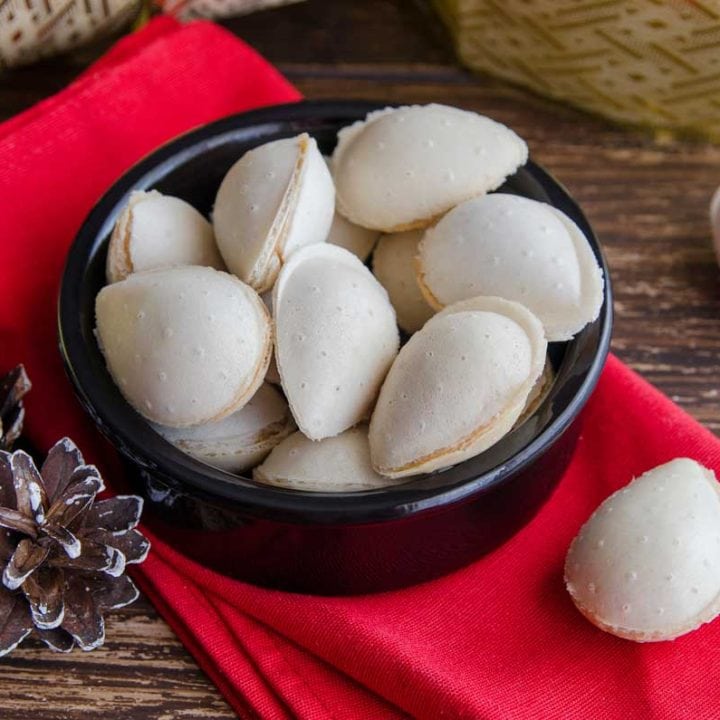
Almendras rellenas are a Spanish confection made to look like an oversized almond. Each one is built from two hollow wafer halves called cascarillas or cáscaras de oblea. The wafer is the same thin, crisp, unsweetened sheet that sits under a bar of hard turrón: it has almost no flavor of its own and exists to give crunch and a clean surface to hold.
The filling is where the flavor lives. The traditional version is a paste of toasted almonds and powdered sugar, ground fine and bound with melted white chocolate. Some makers use part hazelnuts and milk chocolate, others use pure turrón paste. Bite one in half and you see a pale golden almond cream inside a white shell, like this:

You will also see them sold as almendritas rellenas (little filled almonds) and, on Spanish labels, as almendras rellenas de almendra (almonds filled with almond) to distinguish the classic from chocolate or turrón versions.
Where Almendras Rellenas Come From
Almonds have been central to Spanish sweets since the Moorish period, when almond and honey confections spread across al-Andalus. That legacy gave Spain its great almond sweets: turrón from Xixona (Jijona) and Alicante, mazapán from Toledo, and dozens of convent sweets still made by nuns today.
Almendras rellenas sit inside that tradition. They use the oblea wafer that Alicante turrón makers have long used, and a filling that is essentially soft turrón bound with chocolate. Today they are made commercially by turrón and Christmas-sweet producers, including firms based in Xixona, and they are sold alongside turrón, polvorones and mazapán in the Christmas aisle.
They are also a home tradition. In parts of northern Spain, such as Asturias, home cooks buy the empty wafer shells by weight from local pastry shops and fill them in big batches each December. That is exactly the method in the recipe below.

Almendras Rellenas vs. Other Spanish Almond Sweets
Spain has a lot of almond sweets, and the names get confused. Here is how almendras rellenas compare with the ones you are most likely to see next to them.
| Sweet | What it is | Texture |
|---|---|---|
| Almendras rellenas | Almond-shaped wafer shells filled with almond cream | Crisp outside, creamy inside |
| Peladillas | Whole almonds in a hard, smooth sugar coating; Alcoy (Alicante) is famous for them | Hard, crunchy |
| Almendras garrapiñadas | Almonds cooked in sugar until they caramelize in a rough, sandy crust | Crunchy, brittle |
| Turrón de Jijona | Ground toasted almonds, honey and sugar pressed into a bar | Soft, oily, crumbly |
| Turrón de Alicante | Whole almonds in honey-egg-white nougat on an oblea wafer | Hard, chewy-crunchy |
| Mazapán | Almond and sugar paste shaped into small figures | Dense, smooth |
| Polvorones | Toasted flour, lard, sugar and almond shortbread | Dry, melts into powder |
| Huesos de santo | Marzipan tubes filled with egg-yolk cream, eaten for All Saints’ Day (Nov. 1) | Soft, sweet |
The short version: if it looks like a big white almond and crunches before it melts, it is an almendra rellena. If it is a real almond in a candy shell, it is a peladilla.
Ingredients for Almendras Rellenas
This makes about 36 pieces. Weights are given first because they are more reliable for nut pastes.

- Wafer shells72 almond-shaped wafer halves (cascarillas), enough for 36 pieces. See the note below if you can’t find them.
- Blanched almonds250 g (about 1¾ cups). Spanish Marcona almonds give the richest, sweetest filling.
- Powdered sugar125 g (about 1 cup). Grinding it with the nuts gives a smoother paste than granulated sugar.
- White chocolate100 g (3½ oz), chopped. Use a bar with cocoa butter, not “white coating” chips.
- SaltA pinch, to keep the filling from tasting flat.
- Flavoring (optional)½ tsp finely grated lemon zest or ¼ tsp ground cinnamon, both classic Spanish dessert flavors.
Where to get the wafer shells. Spanish pastry shops and some online Spanish grocers sell the empty almond-shaped shells (search for cascarillas para almendras rellenas or cáscaras de oblea). They are fragile and light, so buy extra: a few always crack.
No luck? Skip to No wafer shells? Three ways around it. You can still make excellent filled almonds.
How to Make Almendras Rellenas
There is no baking. You toast the almonds, grind them into a paste, bind it with chocolate, then sandwich it between the shells.
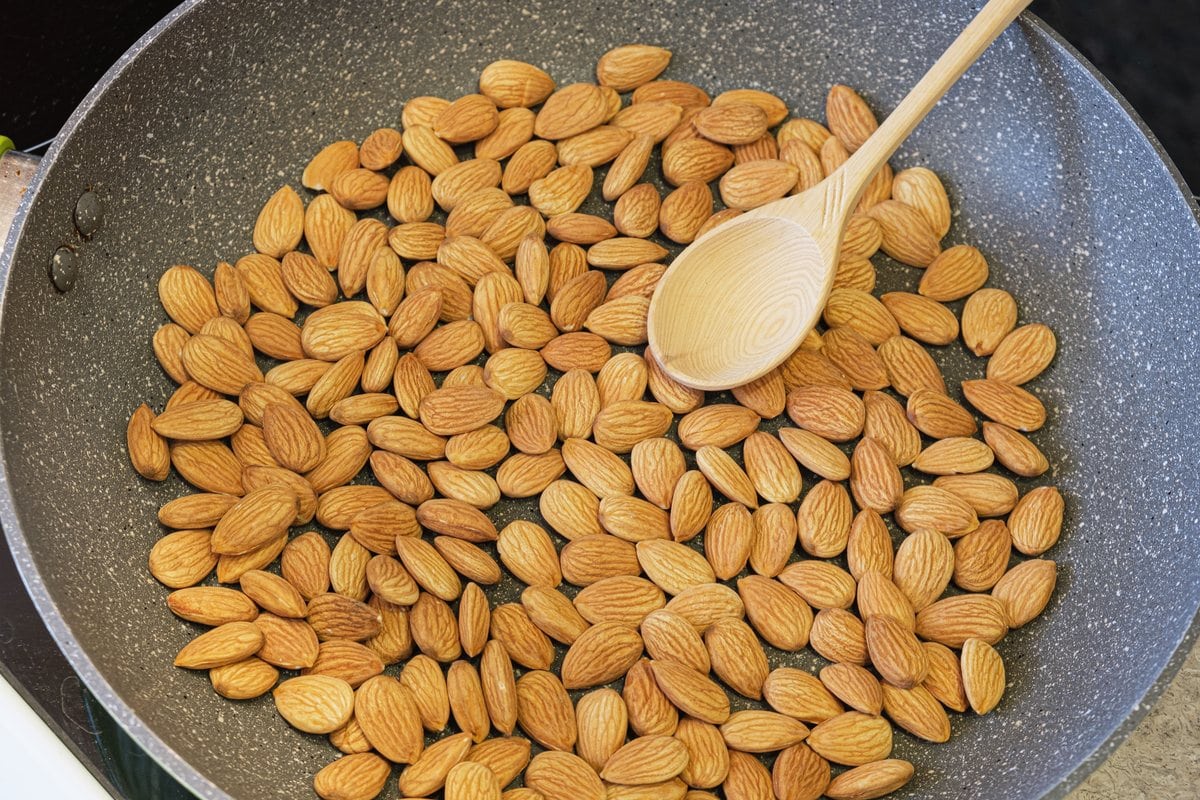
- Toast the almonds. Put the almonds in a dry skillet over medium-low heat and stir often for 8 to 10 minutes, until light golden and fragrant. (Or bake at 350°F / 175°C for 8 to 10 minutes.) Tip them onto a plate and let them cool completely, about 15 minutes. Warm almonds turn oily when ground.
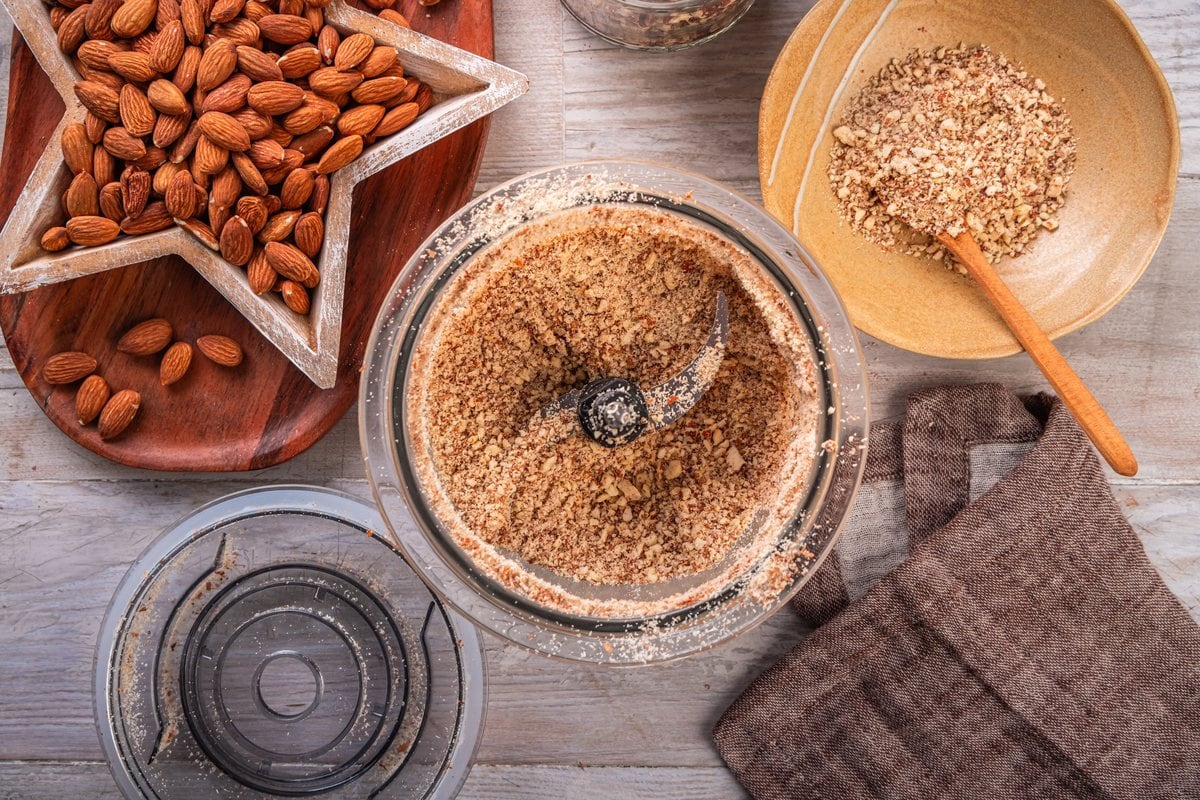
- Grind with the sugar. Add the cooled almonds, powdered sugar and salt to a food processor. Pulse until fine and sandy, then process for about another minute until the mixture starts to clump like damp sand. Stop before it turns into almond butter.
- Melt the chocolate. Melt the white chocolate gently in a bowl set over barely simmering water, or in the microwave in 15-second bursts, stirring between each. White chocolate scorches easily, so keep the heat low.
- Make the filling. Scrape the almond mixture into a bowl, add the melted chocolate and the zest or cinnamon, and mix with a spatula until it comes together into a soft paste that holds when squeezed. Too crumbly? Add 1 teaspoon of honey. Too soft? Let it sit a few minutes longer.
- Let it firm up. Leave the paste at room temperature for 15 to 20 minutes, until it can be rolled without sticking to your hands.
- Shape the centers. Pinch off about 13 g (a heaping teaspoon) of paste and roll it into a small oval, slightly fuller than one shell half. Repeat with the rest.
- Fill the shells. Press one oval into a wafer half, top with a second half and squeeze gently so the filling grips both sides. Run a fingertip or small knife around the seam to remove any excess.
- Set and store. Lay the finished almonds on a tray for 30 minutes to set, then pack them into an airtight tin.

Almendras Rellenas (Spanish Filled Christmas Almonds)
Almendras rellenas are a Spanish Christmas sweet: crisp almond-shaped wafer shells filled with a no-bake cream of toasted almonds, powdered sugar and white chocolate.
Ingredients
- 72 almond-shaped wafer shell halves (cascarillas), for 36 pieces
- 250 g (1¾ cups) blanched almonds, preferably Marcona
- 125 g (1 cup) powdered sugar
- 100 g (3½ oz) white chocolate, chopped
- 1 pinch fine salt
- ½ teaspoon finely grated lemon zest or ¼ teaspoon ground cinnamon (optional)
- 1 teaspoon honey, only if the paste is crumbly (optional)
Instructions
- Toast the almonds in a dry skillet over medium-low heat, stirring often, for 8 to 10 minutes until light golden and fragrant (or bake at 350°F / 175°C for 8 to 10 minutes). Cool completely, about 15 minutes.
- Add the cooled almonds, powdered sugar and salt to a food processor. Pulse until fine and sandy, then process about 1 minute more until the mixture clumps like damp sand. Stop before it turns into almond butter.
- Melt the white chocolate gently over barely simmering water, or in the microwave in 15-second bursts, stirring between each.
- Scrape the almond mixture into a bowl, add the melted chocolate and the lemon zest or cinnamon, and mix with a spatula into a soft paste that holds when squeezed. If crumbly, add 1 teaspoon honey.
- Let the paste rest at room temperature 15 to 20 minutes, until it can be rolled without sticking.
- Roll about 13 g (a heaping teaspoon) of paste into a small oval, slightly fuller than one shell half. Repeat with the rest.
- Press each oval into a wafer half, top with a second half and squeeze gently so the filling grips both. Trim any excess at the seam.
- Let the almendras rellenas set on a tray for 30 minutes, then store in an airtight tin.
Notes
Wafer shells: Look for cascarillas para almendras rellenas or cáscaras de oblea from Spanish pastry shops or online Spanish grocers. Buy a few extra; some always crack.
No shells? Cut almond shapes from thin tort wafer sheets, or shape the filling into almonds, chill 20 minutes and dip in melted white chocolate.
Turrón shortcut: Replace the filling with 300 g soft turrón de Jijona, crumbled and kneaded until pliable.
Chocolate version: Use half toasted hazelnuts and 50 g white plus 50 g milk chocolate.
Storage: Keep in an airtight tin at cool room temperature for about 2 weeks. Do not refrigerate; moisture softens the wafers.
Timing: Allow about 15 minutes to toast the almonds and melt the chocolate, plus 20 minutes for mixing and assembly. Cooling the almonds, resting the filling and setting the finished sweets take about 65 minutes. The total is an estimate; shaping may take longer.
Three Fillings to Try
The method stays the same; only the filling changes. These are the three versions you will see most often in Spanish shops and family kitchens.
- Almendras rellenas de almendraThe classic in the recipe above: toasted almonds, powdered sugar and white chocolate. Sweet, nutty and pale.
- Almendras rellenas de turrónThe shortcut. Crumble 300 g (about 10½ oz) of soft turrón de Jijona and knead it until pliable. If it feels oily or sticky, work in a spoonful of powdered sugar. Fill as usual.
- Almendras rellenas de chocolateSwap half the almonds for toasted, skinned hazelnuts and use 50 g white plus 50 g milk chocolate. The result tastes like a gianduja truffle.
No Wafer Shells? Three Ways Around It
The shells are the hardest part to source outside Spain. These workarounds keep the spirit of the sweet.
- Flat wafer “almonds”Cut almond shapes from thin tort wafer sheets with sharp kitchen scissors. Sandwich a flattened oval of filling between two pieces and trim the edges.
- White chocolate almondsShape the filling into almonds, chill 20 minutes, dip in melted white chocolate and set on parchment. Top each with a sliced almond. Gluten-free if your chocolate is.
- Sugar-dusted bitesRoll the shaped centers in powdered sugar mixed with a little cinnamon, like small mazapán sweets.
Tips for Perfect Almendras Rellenas
Cool the almonds fully. Grinding warm nuts releases their oil and gives you a greasy filling.
Watch the food processor. You want damp sand, not almond butter. A minute too long and the paste turns loose and oily.
Keep moisture away from the shells. Wafers soften quickly in humid air or in the fridge. Fill them in a dry kitchen and store them in a tin, not plastic.
Don’t overfill. Too much filling pushes the halves apart and cracks the shells.
Fix cracked shells. A small dab of filling glues a broken half back together. Badly broken ones are the cook’s reward.
How to Store and Gift Almendras Rellenas
Store homemade almendras rellenas in an airtight tin at cool room temperature, away from heat and humidity, for about 2 weeks. Do not refrigerate them: the cold makes the filling hard and the condensation softens the wafers. The filled centers can be made up to 3 days ahead, wrapped well, and assembled when you are ready.
They make a lovely homemade gift. Nestle them in paper candy cups inside a small tin or box, and add a few polvorones or a piece of turrón to build a mini Spanish Christmas assortment.
How to Serve Them
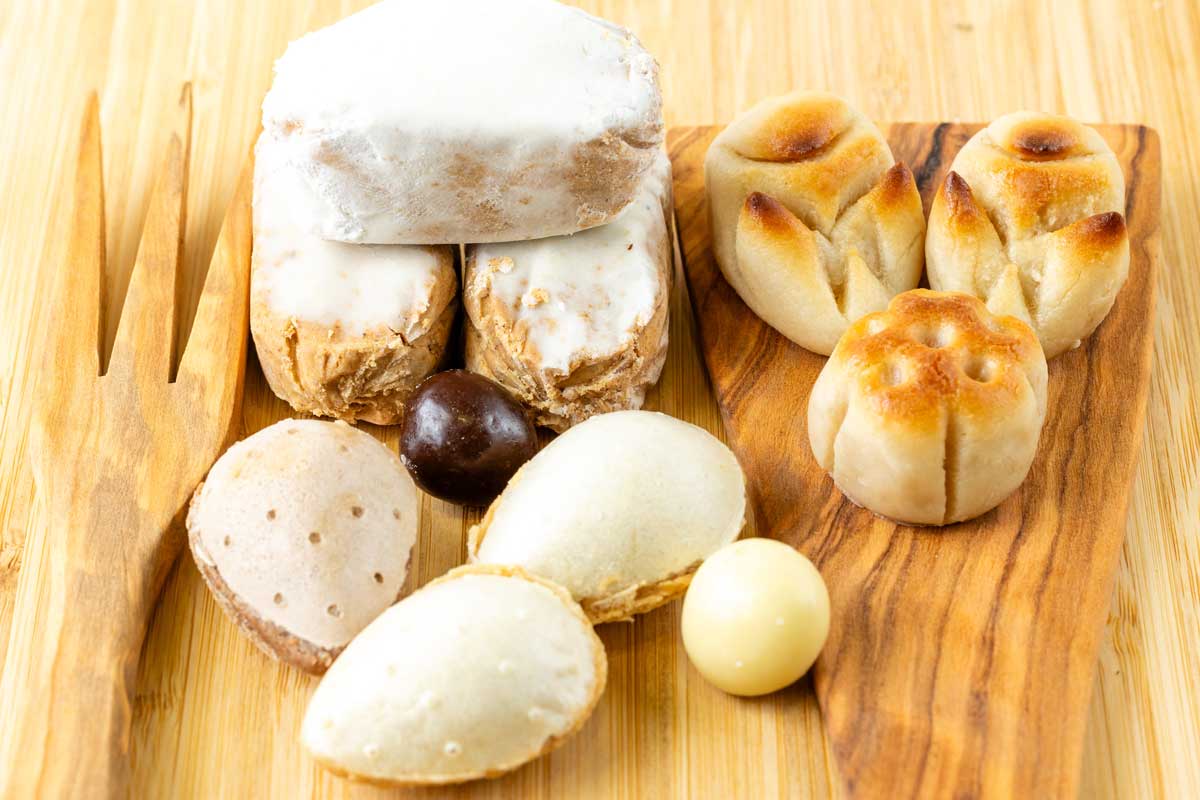
In Spain, almendras rellenas go on the bandeja de Navidad, the Christmas tray that comes out after dinner on Nochebuena and stays on the table through Three Kings’ Day. Pair them with:
- Other Christmas sweets: turrón, mazapán, polvorones and pan de Cádiz.
- Something to drink: a glass of cava, a sweet Pedro Ximénez or cream sherry, or a small coffee.
- New Year’s Eve: set them out after the 12 grapes at midnight.
Where to Buy Almendras Rellenas
If you would rather buy them, look for boxes from Spanish turrón and Christmas-sweet makers such as 1880, San Andrés or Coloma García. In the US, look for them in Spanish specialty shops around the holidays, or online.
Our Picks on Amazon
- Ready to eat1880 Almendras Rellenas Artesanas, 165 g boxSee on Amazon
- For the fillingBlanched Marcona almonds from SpainSee on Amazon
- The shortcut fillingEl Lobo turrón de Jijona (soft almond nougat)See on Amazon
As an Amazon Associate, AmigoFoods earns from qualifying purchases.
For a whole Christmas tray, see our guide to the best Spanish turrón brands.
Almendras Rellenas FAQ
What are almendras rellenas made of?
Two almond-shaped wafer shells (oblea) and a filling of toasted ground almonds, powdered sugar and white chocolate. Variations use hazelnuts, milk chocolate or soft turrón.
Do almendras rellenas have a whole almond inside?
No. Despite the name, the “almond” is the wafer shape. The almonds are ground into the filling. If you want a whole almond in a candy shell, that is a peladilla.
Are almendras rellenas gluten-free?
Not with traditional shells, because the oblea wafers are made from wheat flour. The filling itself contains no gluten, so the white chocolate version in the workarounds above can be gluten-free.
When are almendras rellenas eaten in Spain?
Mainly at Christmas, from Nochebuena (December 24) through Three Kings’ Day (January 6), as part of the tray of Christmas sweets.
How long do homemade almendras rellenas last?
About 2 weeks in an airtight tin at cool room temperature. Keep them out of the fridge so the wafers stay crisp.
Can I make almendras rellenas without wafer shells?
Yes. Cut almond shapes from tort wafer sheets, dip the shaped filling in white chocolate, or roll it in powdered sugar and cinnamon. See the three workarounds above.
More Spanish Christmas Sweets
- Spanish Turrón: The Ultimate Guide
- Spanish Polvorones Recipe
- Spanish Mazapán Recipe (Almond Marzipan Figuritas)
- 12 Traditional Spanish Sweets for Christmas
- 17 Latin & Spanish Christmas Desserts
- Spanish Desserts: 25 Traditional Sweets
- Spanish Holiday Dishes
More Spanish Foods
See all →
Jorge Garcia is the founder of AmigoFoods, where he has spent over 20 years helping readers discover authentic Latin American and Spanish cuisine. Raised in a Cuban-American household, Jorge learned to cook at the hands of his mother and grandmother, carrying forward generations of family recipes. That heritage, backed by his family’s four-generation history in the Latin food industry, inspired him to launch AmigoFoods in 2003. With more than 1,000 published articles on recipes, ingredients, and food culture, Jorge’s mission is simple: make authentic Latin cooking approachable for home cooks everywhere while honoring the traditions behind every dish.