

Cava is Spain’s traditional-method sparkling wine, known for its crisp fruit and fine bubbles. It also makes a refreshing sangría: combine citrus, strawberries, juice and spirits, chill the base for an hour, then gently add cava just before pouring.
Sangría de Cava at a Glance
What Is Cava? The Short Version
Cava is a protected Designation of Origin (DO), so only sparkling wine made under the rules of the Consejo Regulador del Cava can use the name. The word means “cellar” in Spanish and Catalan, a nod to the underground cellars where bottles age.
Legally, cava must fall between 10.8% and 12.8% alcohol and carry at least 3.5 bar of pressure. In practice, most bottles you’ll find in the US are dry, crisp and lightly toasty, with citrus, green apple and almond notes.
A brief history, with dates
The DO Cava’s own history puts the first traditional-method bottles in Sant Sadurní d’Anoia in 1872, work usually credited to Josep Raventós of the Codorníu family. After phylloxera hit the region’s vineyards in the 1880s, growers replanted heavily with local white grapes, which set the stage for cava’s growth.
The name “cava” first appeared in an official Spanish document in 1959. A regulatory council approved the denomination in 1972, the production region was legally demarcated in 1986, and the current DO regulations date from 1991. (Some English-language sources give 1970 for the adoption of the name; the Consejo Regulador’s own timeline uses 1959 and 1972.)
Where cava is made
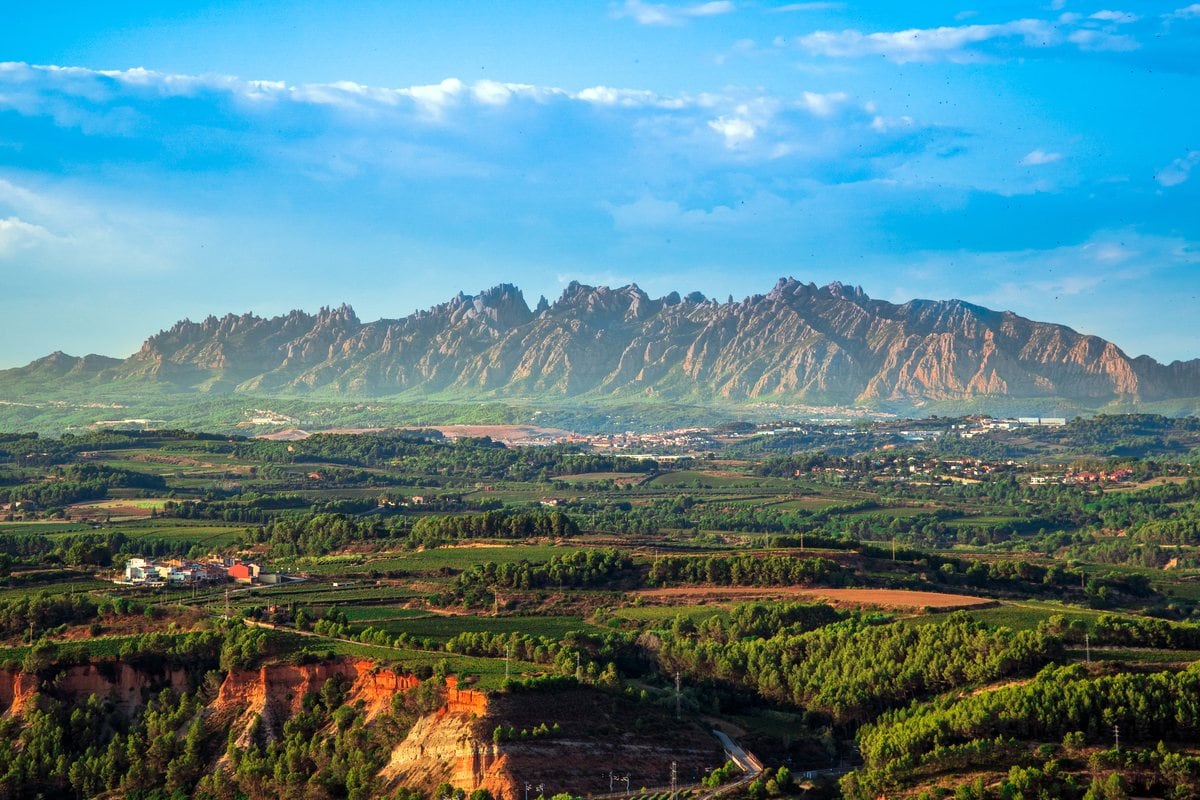
Unlike most Spanish DOs, cava isn’t one continuous region. It covers vineyards in several autonomous communities, including Catalonia, Aragón, La Rioja, Navarra, the Basque Country, Valencia and Extremadura. Still, the Penedès in Catalonia accounts for the vast majority of production, often cited at around 95%.
The grapes
- Macabeo (called Viura in Rioja): the most planted cava grape, bringing freshness and gentle fruit.
- Xarel·lo: the second most planted, adding body, structure and ageing power. Many serious producers lean on it.
- Parellada: delicate, floral and citrusy, grown in cooler, higher sites.
- Also permitted: Chardonnay and Malvasía (Subirat Parent) for white cava; Garnacha, Monastrell, Trepat and Pinot Noir for cava rosado. Pinot Noir has also been allowed for white “blanc de noirs” cava since 2007.
Cava Categories After the 2020–2021 Reforms
In 2020 the Consejo Regulador unanimously approved a new quality structure and zoning map, published in Spain’s official gazette (BOE) in June 2021 and applied from 2022. If you’ve read that “Reserva needs 15 months,” that’s the old rule, and several popular guides still repeat it.
| Category | Minimum ageing on lees | Key extra rules |
|---|---|---|
| Cava de Guarda | 9 months | The standard, everyday tier |
| Cava Reserva (Guarda Superior) | 18 months | Vines 10+ years old, max 10,000 kg/ha, vintage on label, organic grapes from the 2025 harvest |
| Cava Gran Reserva (Guarda Superior) | 30 months | Same as Reserva; only Brut Nature, Extra Brut or Brut |
| Cava de Paraje Calificado (Guarda Superior) | 36 months | Single site, hand harvest, max 8,000 kg/ha, made at the same winery, tasting-panel approval |
Cava de Guarda vs. Cava de Guarda Superior
Cava de Guarda is the entry tier with nine months of ageing. Cava de Guarda Superior is an umbrella for the three longer-aged categories, with stricter vineyard rules, separately registered grapes and a vintage on every label.
The organic requirement took full effect in 2025. According to the DO’s 2025 report, Guarda Superior cavas made up about 12% of sales, so most of the cava you’ll see is still the Guarda tier.
Cava de Paraje Calificado
Approved in 2017, Paraje Calificado is cava’s single-vineyard top tier. Each site is individually approved, grapes are picked by hand, and every wine gets 36 months or more on its lees before it can wear the seal.
The new zones: Comtats de Barcelona and beyond
- Comtats de Barcelona: the historic heartland, with the subzones Valls d’Anoia-Foix, Serra de Mar, Conca del Gaià, Serra de Prades and Pla de Ponent.
- Valle del Ebro: subzones Alto Ebro and Valle del Cierzo.
- Viñedos de Almendralejo: in Extremadura’s Tierra de Barros.
- Levante: the high-altitude Requena area of Valencia. Local press reported the name “Altos de Levante” in 2020, while some DO communications simply call it the Levante zone.
Putting the zone on the label is optional, so don’t be surprised if your bottle doesn’t mention it.
Cava Sweetness Levels: Brut Nature to Dulce
Sweetness depends on the dosage, the small amount of sugar added after disgorgement. Here are the official ranges.
| Label term | Sugar per liter | What to expect |
|---|---|---|
| Brut Nature | 0–3 g | Bone dry, no added sugar; great with salty tapas |
| Extra Brut | 0–6 g | Very dry and crisp |
| Brut | up to 12 g | Dry; the most versatile style |
| Extra Seco | 12–17 g | Off-dry, softer edges |
| Seco | 17–32 g | Noticeably sweet despite the name (“dry”) |
| Semiseco | 32–50 g | Sweet; traditional with Christmas sweets |
| Dulce | over 50 g | Dessert-sweet |
Cava vs. Prosecco vs. Champagne
The biggest difference is how the bubbles get into the wine. Cava and Champagne referment in each bottle, which gives finer bubbles and bready, nutty notes. Prosecco is refermented in large pressurized tanks, which keeps it fruity, floral and simple.
| Cava | Prosecco (DOC) | Champagne | |
|---|---|---|---|
| Country | Spain (mainly Penedès) | Italy (Veneto, Friuli) | France (Champagne) |
| Method | Traditional, second fermentation in bottle | Tank (Charmat/Martinotti) | Traditional, second fermentation in bottle |
| Minimum ageing | 9 months (18/30/36 for top tiers) | No lees-ageing minimum for most styles | 15 months non-vintage; 36 months vintage |
| Main grapes | Macabeo, Xarel·lo, Parellada | Glera (85% minimum) | Chardonnay, Pinot Noir, Meunier |
| Typical flavor | Citrus, apple, almond, light toast | Pear, green apple, white flowers | Citrus, brioche, toast, chalk |
| Rough US shelf price | About $10–$20; top tiers $25+ | About $12–$20 | Usually $40+ |
Prices are approximate and vary by state and store, but the pattern holds: cava gives you Champagne’s method at prosecco’s price.
Why Cava Is Such Good Value
- Same method, shorter minimum: entry-level cava must age 9 months, versus 15 for non-vintage Champagne. Less time in the cellar means less money tied up.
- Lower land and grape costs: Penedès vineyards cost a fraction of land in Champagne, and the native grapes thrive in a warm, sunny climate.
- Scale: the DO sold about 190 million bottles in 2025, around 60% exported, and big houses use mechanized riddling to keep costs down. The US is consistently one of cava’s top three export markets.
- Long-aged bargains: an 18-month Reserva or 30-month Gran Reserva often costs less than entry-level Champagne.
Corpinnat, Clàssic Penedès and the Breakaway Producers
Some of Spain’s most admired sparkling wines no longer say “cava” on the label, which confuses many shoppers. Several quality-focused Penedès growers felt the DO was too big and too loose, so they left.
Raventós i Blanc (2012)
Raventós i Blanc left the DO in 2012 and labels its wines under Conca del Riu Anoia, a name tied to the Anoia river valley. Its rules call for native varieties and at least 18 months of ageing.
Clàssic Penedès (2014)
Clàssic Penedès is a sparkling-wine category inside the still-wine DO Penedès. Every wine must be certified organic and aged at least 15 months, according to the group’s own site. One Spanish government trade publication cites 18 months, so check the back label.
Corpinnat (2019)
Corpinnat is an EU-registered collective brand, not a DO. Its founding wineries, including Gramona, Recaredo and Llopart, left DO Cava in 2019. Sources date the brand itself to 2017 or 2018. The rules require organic, hand-harvested grapes from the historic heart of Penedès, vinification entirely on the estate, and at least 18 months of ageing.
Members have also committed to phasing out Chardonnay and Pinot Noir by the 2035 vintage. The group made headlines in April 2026, when Juvé & Camps, a producer of about 2.5 million bottles a year, left DO Cava to become its largest member. Expect bottles labeled cava and Corpinnat from the same house to share shelves for a while.
How Spaniards Drink Cava
With food, not just for toasts
In Catalonia, cava is an everyday wine with food. People pour it with lunch, alongside tapas and through a long sobremesa (the lingering chat after a meal), not just when someone pops a cork to celebrate.
Christmas and New Year’s Eve
Across Spain, the Christmas season is cava’s big moment. Back in 2002 the Consejo Regulador reported that 53% of Spain’s annual cava consumption happened over the holidays, and semiseco cava with turrón de Jijona and polvorones is still a holiday classic. See our guide to Spanish Christmas foods for the full table.
On Nochevieja (New Year’s Eve), Spaniards eat las doce uvas, one grape for each chime at midnight, famously broadcast from the Puerta del Sol clock in Madrid. The custom is often traced to 1882 Madrid or to a bumper Alicante grape harvest in 1909. The toast that follows the last grape is very often cava.
Serving temperature and glass
The DO recommends about 46°F (8°C) for Cava de Guarda and about 50°F (10°C) for Reserva and Gran Reserva. It also suggests a tulip-shaped glass, which keeps bubbles better than a coupe and shows aromas better than a narrow flute.
If you need glasses, look for tulip sparkling wine glasses. AmigoFoods earns a commission on qualifying Amazon purchases.
A sparkling wine bottle stopper keeps an opened bottle lively for a day or two in the fridge.

Cava and Tapas Pairings
Cava’s high acidity and bubbles cut through salt, fat and fried food, which makes it one of the best partners for Spanish tapas. Start with these matches.
- Brut Nature + jamón ibérico: the bubbles cleanse the palate after each rich, nutty slice.
- Brut + boquerones en vinagre or gildas: vinegary, briny bites need a wine with bright acidity.
- Brut + patatas bravas: crisp, fried and spicy food loves cold bubbles.
- Reserva + Manchego cheese: the extra toasty depth stands up to aged sheep’s milk cheese.
- Gran Reserva + paella valenciana: a long-aged cava has the body for a full rice dish.
- Rosado + garlic shrimp or grilled seafood: the red-fruit notes suit shellfish and a little chili heat.
- Semiseco + turrón or crema catalana: pick a sweeter style for dessert, or a dry cava will taste sour.
How to Make Sangría de Cava
Sangría de cava (also called sangría blanca con cava) swaps red wine for sparkling. The result is lighter and fizzier than the classic red wine sangría, and it’s popular on Spanish summer terraces. The golden rule: macerate the fruit first and add the cava at the very last moment, so it keeps its bubbles.
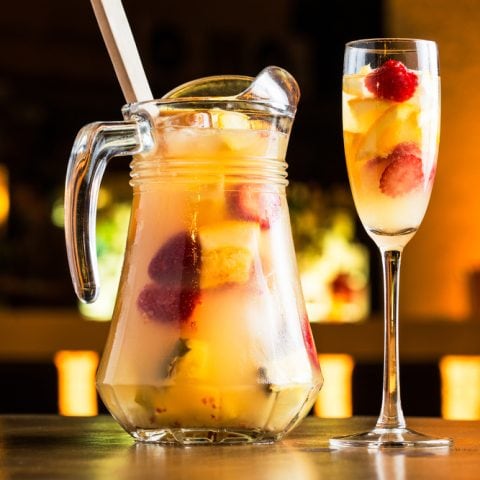
Sangría de Cava (Sparkling White Sangría)
A lighter, fizzy take on Spanish sangría made with brut cava, citrus, strawberries, brandy and orange liqueur. The fruit macerates first and the cava goes in at the last moment.
Ingredients
- 1 bottle (750 ml) brut cava, well chilled
- 6 oz (180 ml) freshly squeezed orange juice, chilled
- 2 oz (60 ml) Spanish brandy
- 2 oz (60 ml) orange liqueur, such as Cointreau or triple sec
- 2 tbsp (25 g) sugar, optional
- 1 orange, thinly sliced
- 1 lemon, thinly sliced
- 1 cup (150 g) strawberries, hulled and sliced
- 1 cinnamon stick, optional
- Ice cubes, to serve
- Fresh mint leaves, to garnish (optional)
Instructions
- Wash the orange and lemon well, since they go into the pitcher unpeeled. Slice them thinly and slice the strawberries.
- In a large pitcher, stir the orange juice, brandy, orange liqueur and sugar (if using) until the sugar dissolves.
- Add the sliced fruit and the cinnamon stick. Cover and refrigerate for at least 1 hour so the fruit absorbs the flavors.
- Just before serving, tilt the pitcher and slowly pour the chilled cava down the side. Stir once, gently.
- Fill glasses with ice, pour in the sangría with some fruit, and garnish with mint. Serve right away.
Notes
Substitutions: use rosé cava (cava rosado) with raspberries for a pink version; swap brandy for more orange juice for a lighter pitcher; any dry traditional-method sparkling wine works if cava is unavailable. Add 1 sliced peach or half an apple in summer. Batch notes: the fruit, juice and spirit base keeps up to about 6 hours in the fridge; double it in a large pitcher but add the cava only at serving time and pour within about 30 minutes. ABV estimate: about 12.8% before ice (cava 750 ml at 11.5%, brandy and orange liqueur 60 ml each at 40%, in 1,050 ml of liquid), about 10% in the glass after some ice melts.
Tips for getting it right
- Use a dry cava. Brut or extra brut balances the juice and liqueur. Save your Gran Reserva for sipping.
- Chill everything. Cold cava poured over cold fruit foams less and stays fizzy longer.
- Pour gently down the side of a tilted pitcher, then give it one slow stir.
- Make it in a big pitcher. A wide glass sangría pitcher leaves room for fruit and ice.
- Don’t prep the whole thing ahead. The fruit base keeps for several hours in the fridge, but once you add the cava, serve it within about 30 minutes.

More Ways to Drink Cava
- Agua de Valencia: Valencia’s party jug of fresh orange juice, cava, gin and vodka. It tastes like juice but is as strong as wine.
- Sorbete de limón al cava: lemon sorbet whisked with cava, a Spanish favorite between courses or as dessert at Christmas dinners and weddings.
- Cava rosado sangría: make the recipe above with rosé cava and raspberries for a pinker, berry-forward pitcher.
- Cava with fresh orange juice: Spain’s answer to a mimosa for a late brunch.
- Cava cocktails: it’s a great, affordable base for any “royale” or spritz-style drink. Find more ideas in our Latin American and Spanish cocktails guide.
Cava Buying Guide for US Readers
Everyday cava (usually under $15)
Freixenet, Segura Viudas, Codorníu and Jaume Serra Cristalino are widely available in US supermarkets. These are mostly Cava de Guarda, and they’re perfect for sangría, mimosas and parties.
Step-up bottles
Look for “Reserva” or “Gran Reserva” and a vintage on the label. The big brands’ Reserva bottlings and family houses from Sant Sadurní such as Mestres are good places to start. Keep a wine ice bucket handy on the table, since these show best a little warmer than supermarket cava, but still cold.
Grower-level sparkling from Penedès
For the breakaway wines, look for Corpinnat producers like Gramona, Recaredo, Llopart and now Juvé & Camps, or Raventós i Blanc. They’re often shelved with cava even though the label doesn’t say it.
Label checklist
- “Brut” or “Brut Nature” for dry styles; “Semiseco” means sweet.
- Reserva, Gran Reserva and Paraje Calificado mean longer ageing and a vintage.
- A disgorgement date, when shown, helps: fresher is better for basic cava.
- Store bottles cool and dark, and drink everyday cava within a year or so of buying.
As with any sparkling wine, the bubbles speed up how fast alcohol hits, so pace yourself and keep water on the table.
Cava Wine FAQ
Is cava the same as Champagne?
No. Both use the traditional method, but cava comes from Spain and uses different grapes, mainly Macabeo, Xarel·lo and Parellada. Its minimum ageing is also shorter: 9 months versus 15 for non-vintage Champagne.
Is cava sweet or dry?
Most cava sold in the US is brut, which is dry. Sweetness ranges from brut nature (0–3 g/L sugar) to dulce (over 50 g/L), so check the label.
Is cava better than prosecco?
It depends on taste. Cava’s bottle fermentation gives finer bubbles and toasty, savory notes, while prosecco is fruitier and more floral. At similar prices, cava usually offers more complexity.
What does “Cava de Guarda” mean?
It is the standard category created in the 2020–2021 reforms, aged at least 9 months. Guarda Superior covers Reserva (18 months), Gran Reserva (30 months) and Paraje Calificado (36 months).
Why don’t Gramona or Recaredo say “cava” anymore?
They helped found Corpinnat and left DO Cava in 2019 to follow stricter rules of their own: organic hand-harvested grapes, estate winemaking and at least 18 months of ageing.
How long does cava last once opened?
With a good stopper in the fridge, expect about one to two days of decent fizz. Flat leftovers still work in sangría or for cooking.
Where is the capital of cava?
Sant Sadurní d’Anoia, in the Penedès roughly 45 km (28 miles) west of Barcelona, is home to Codorníu, Freixenet and many smaller cellars.
Final Thoughts
Cava is Champagne-method sparkling wine with a Spanish accent: native grapes, a real food culture and prices that make bubbles an everyday pleasure. Grab a brut for tapas night, a Gran Reserva for something special, and a bottle for a pitcher of sangría de cava.
For more from Spain’s glass, explore our full guide to Spanish drinks. ¡Salud!
More Spanish Foods
See all →
Jorge Garcia is the founder of AmigoFoods, where he has spent over 20 years helping readers discover authentic Latin American and Spanish cuisine. Raised in a Cuban-American household, Jorge learned to cook at the hands of his mother and grandmother, carrying forward generations of family recipes. That heritage, backed by his family’s four-generation history in the Latin food industry, inspired him to launch AmigoFoods in 2003. With more than 1,000 published articles on recipes, ingredients, and food culture, Jorge’s mission is simple: make authentic Latin cooking approachable for home cooks everywhere while honoring the traditions behind every dish.