
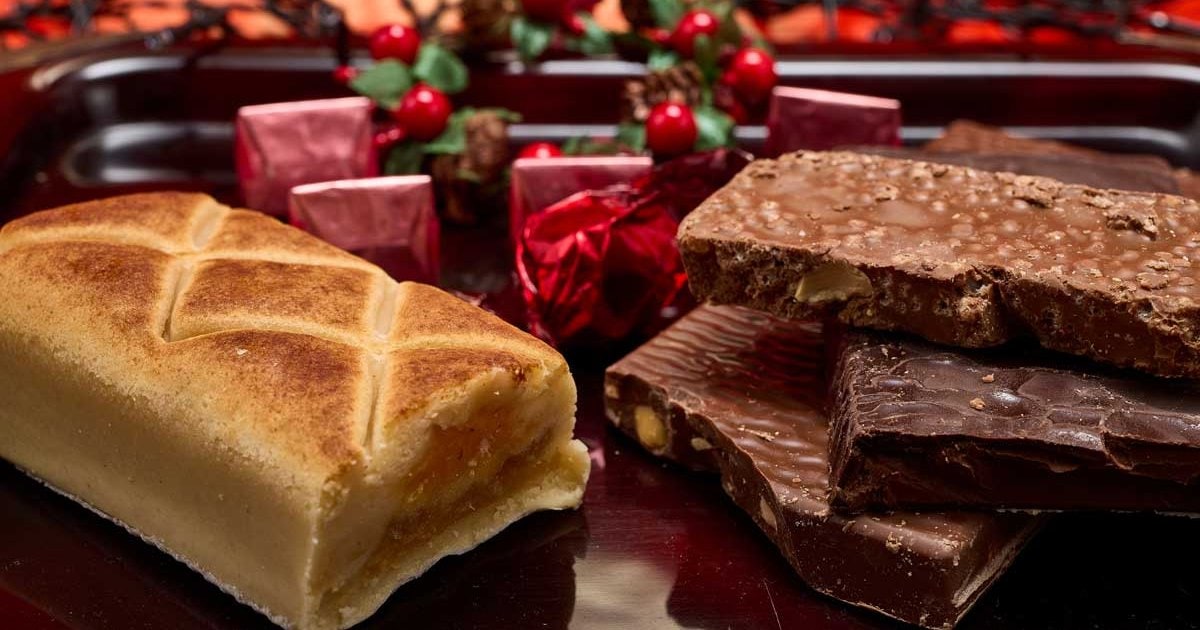
Pan de Cádiz is a Spanish Christmas confection with layers of marzipan, sweet egg-yolk cream and fruit preserve beneath a golden top. This loaf-pan version makes about 16 thin slices and is best prepared ahead so the layers have time to set.
Pan de Cádiz at a Glance
What Is Pan de Cádiz?
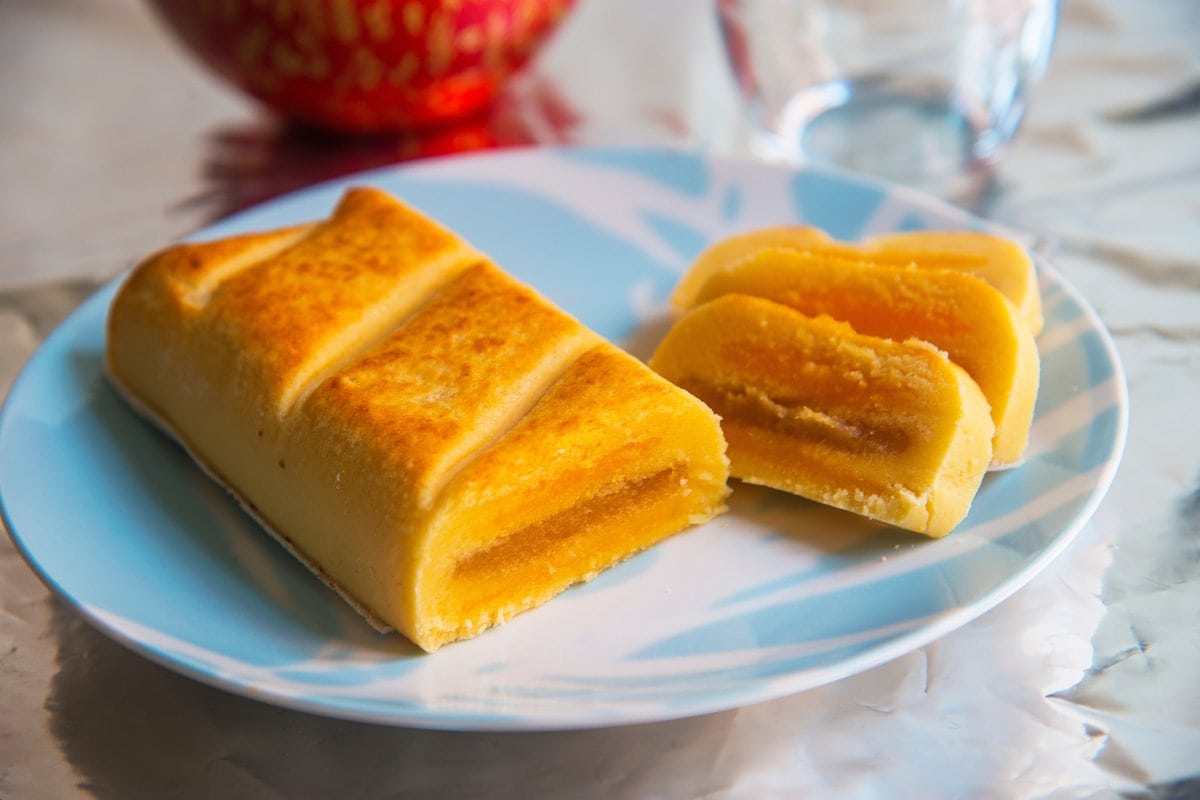
Pan de Cádiz is a filled marzipan confection from the port city of Cádiz, on Spain’s Atlantic coast in Andalusia. The outside is Spanish mazapán, a dough of ground almonds, sugar and egg white. Inside are thin layers of yema confitada (a thick, sweet egg-yolk cream), batata (sweet potato preserve) or cabello de ángel (candied squash strands), and often a few pieces of candied fruit.
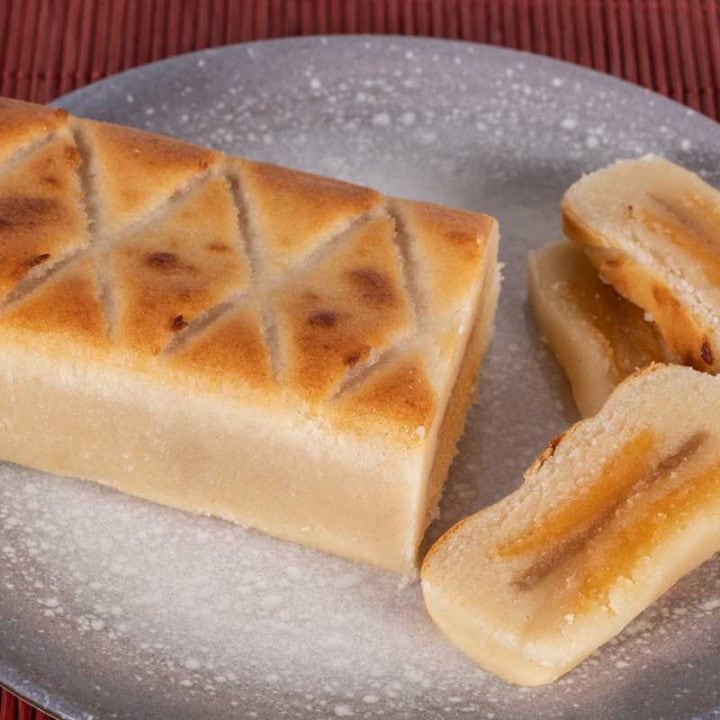
The name means “Cádiz bread,” and it comes from the shape. The loaf is rectangular, about the size of a small sandwich loaf, and the top is scored in a diamond lattice that browns in the oven the way a bread crust does. There is no flour or yeast in it. The sides stay pale, and the inside stays soft.
Shops in the province sell it in sizes from a small half-kilo bar to loaves of 3 kilos or more. Families buy one for Nochebuena (Christmas Eve), set it out after dinner in thin slices, and keep picking at it through New Year’s and the 12 grapes at midnight.
Inside a Slice: The Layers of Pan de Cádiz
Every bakery has its own order of fillings, but the classic Cádiz build has three pale bands of marzipan and two fillings between them. This is the layout the recipe below follows:
Marzipan
Equal weights of finely ground blanched almonds and sugar, bound with egg white. The best Andalusian versions use Marcona almonds, which are sweeter and richer.
Yema confitada
Egg yolks cooked into a hot sugar syrup until thick, glossy and bright yellow. It tastes like a firm, sweet custard and gives the slice its color.
Batata
A firm, sliceable sweet potato preserve flavored with vanilla. It’s easy to find in the US as Argentine dulce de batata.
Cabello de ángel
“Angel hair”: strands of fig-leaf gourd or spaghetti squash candied in syrup. It’s very common in Spain, but in the US you’ll mostly find it in Spanish specialty shops.
Candied fruit
Diced candied orange peel, cherries or citron (fruta escarchada) add color, and some bakeries also stud the top with them.
Quince paste
Some home cooks use membrillo in place of batata. It isn’t the Cádiz classic, but it’s tasty, a little tart, and easy to buy.
History of Pan de Cádiz
Ask in Cádiz and someone will tell you the siege story. In 1810–1812, while Napoleon’s army surrounded the city, wheat ran out and bakers shaped “bread” from almonds stored in the port. Food historians in Cádiz doubt it. Nobody has found a record of almond stores or of almond bread from those years, and almonds cost far more than wheat, so it would have been a strange way to cope with a shortage.
The paper trail tells a slower story. Spain’s taste for almond-and-sugar sweets goes back to al-Andalus and was kept alive by convents for centuries. Filled marzipan rolls were sold in Cádiz in the 19th century, and a Madrid newspaper advertised “turrón de Cádiz” as early as 1812.
- Medieval Spain: Almond-and-sugar pastes spread through al-Andalus. Later, convent kitchens make mazapán a Christmas tradition, especially in Toledo.
- 1812: “Turrón de Cádiz” appears in a Madrid newspaper ad, the earliest known mention of a Cádiz-style almond sweet under that name.
- 1800s: Cádiz confectioners sell marzipan rolls filled with fruit, the likely ancestor of today’s loaf.
- 1929: Antonio Valls Garrido, a confectioner from Málaga, takes over Pastelería Viena in Cádiz.
- 1950s: Valls is credited with the modern rectangular loaf, a marzipan “treasure chest” packed with fillings.
- Today: Pastry shops across the province, from Cádiz to Medina Sidonia, make it every Christmas, and versions are sold all over Spain.

How to Make Pan de Cádiz at Home
The homemade version is easier than it looks. You’ll make one batch of marzipan and one pot of yema, open a jar of sweet potato preserve, and build the loaf in a small loaf pan so the sides come out straight. The oven only toasts the top, which takes a few minutes. The rest of the time is chilling and resting.
Before you start: make the yema first so it has time to cool, and use blanched, superfine almond flour for a smooth, pale marzipan (almond meal with skins turns it gray and gritty). The marzipan uses raw egg white and only the top gets baked, so use pasteurized egg whites if you’re serving anyone pregnant, very young or elderly.
What you’ll need from the store
- Blanched, finely sifted almond flour: the base of the marzipan
- Dulce de batata (vanilla sweet potato preserve): the classic Cádiz filling
- Candied fruit mix: for color inside and on top
- Spanish membrillo (quince paste): an easy swap if you can’t find batata
As an Amazon Associate, AmigoFoods earns from qualifying purchases.
Pan de Cádiz Recipe
Pan de Cádiz (Spanish Marzipan Christmas Loaf)
Andalusia's marzipan Christmas loaf, filled with candied egg-yolk cream and sweet potato preserve, with a toasted lattice top. Built in a loaf pan, so the layers and sides come out neat.
Ingredients
Marzipan
- about 3¾ cups (400 g) blanched, superfine almond flour
- about 3⅓ cups (400 g) powdered sugar, plus more for rolling
- 2 large egg whites (about ¼ cup / 70 g), pasteurized if you like
- ½ teaspoon finely grated lemon zest (optional)
- water, ½ teaspoon at a time, only if needed
Yema filling
- 5 large egg yolks
- ⅓ cup (70 g) granulated sugar
- 3 tablespoons (45 ml) water
- 1 teaspoon cornstarch
Sweet potato filling
- ¾ cup (about 200 g) dulce de batata (sweet potato preserve), cabello de ángel or quince paste
- ⅓ cup (50 g) candied fruit, finely diced (optional)
Glaze
- 1 large egg yolk
- 1 teaspoon milk
- 1 tablespoon sugar plus 1 tablespoon water, for an optional shiny syrup
Instructions
- Make the yema: Bring the sugar and water to a boil in a small saucepan over medium heat and boil for 2 minutes, until slightly syrupy. In a bowl, whisk the egg yolks with the cornstarch. Slowly pour the hot syrup into the yolks while whisking constantly.
- Pour the mixture back into the saucepan and cook over low heat, stirring constantly with a heatproof spatula, for 4 to 6 minutes, until it is as thick as pudding and pulls away from the bottom of the pan. Scrape it into a bowl, press plastic wrap onto the surface and let it cool completely, about 30 minutes (or 15 minutes in the fridge).
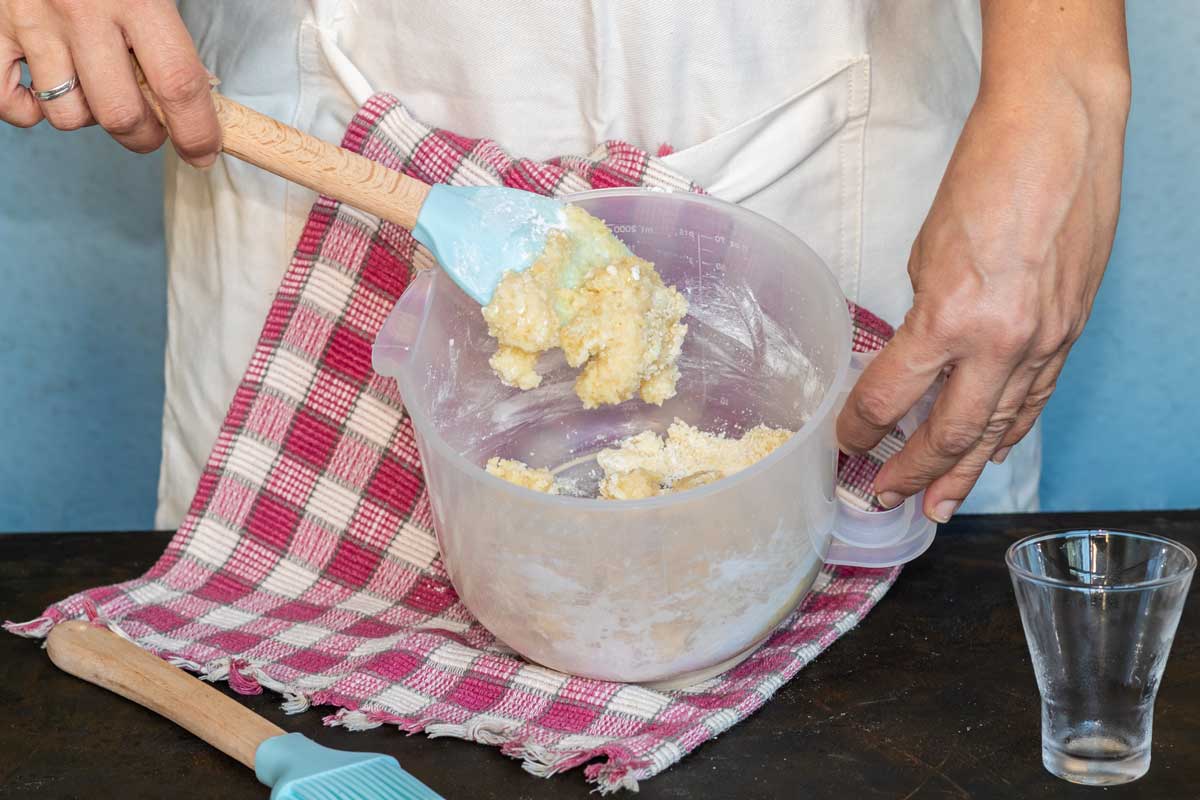
- Make the marzipan: Whisk the almond flour, powdered sugar and lemon zest in a large bowl. Add the egg whites and mix with a spatula, then knead by hand until you have a smooth, firm dough that doesn't stick to your hands. If it's crumbly, knead in water ½ teaspoon at a time. If it's sticky, add a spoonful of almond flour. Wrap and let it rest for 20 minutes.
- Prepare the filling: If the dulce de batata is firm, cut it into slices about ¼ inch (5 mm) thick. If it's soft, stir it until spreadable. Finely dice the candied fruit.
- Line the pan: Line an 8½ x 4½-inch (22 x 11 cm) loaf pan with plastic wrap, leaving plenty of overhang. Set aside 40% of the marzipan. Roll the larger piece between two sheets of parchment into a rectangle about 13 x 9 inches (33 x 23 cm) rolled evenly and thinly enough to fit the pan. Ease it into the pan so it covers the bottom and sides, press it into the corners, and trim the edges level with the rim. Keep the trimmings.
- Layer: Spread the cooled yema in an even layer over the marzipan in the bottom of the pan. Roll half of the reserved marzipan into an 8 x 4-inch (20 x 10 cm) sheet, lay it on top and press gently. Cover it with the batata, leaving a ¼-inch (5 mm) border, and scatter the candied fruit over it.
- Close the loaf: Knead the rest of the marzipan together with the trimmings and roll it into a lid that fits the pan. Lay it on top, then pinch it to the side walls so the loaf is fully sealed. Fold the plastic wrap over and refrigerate for 1 hour, until firm.
- Score and glaze: Heat the oven to 475°F (245°C) with a rack in the upper third, and line a baking sheet with parchment. Turn the loaf out onto the sheet, so the smooth bottom is now the top, and peel off the plastic. With a sharp knife, score the top in diagonal lines about 1 inch (2.5 cm) apart using shallow marks that do not cut through the marzipan, then score the opposite way to make diamonds. Beat the egg yolk with the milk and brush it over the top only.
- Toast the top: Bake for 6 to 8 minutes, until the lattice is deep golden. If it's still pale, run it under the broiler for 1 to 2 minutes, watching closely. The sides should stay pale.
- If you'd like a glossy finish, warm the sugar and water for the syrup until the sugar dissolves and brush it over the hot top. Let the loaf cool completely on the baking sheet, about 1 hour.
- Rest: Wrap the loaf tightly and refrigerate for at least 8 hours, or overnight, so the layers set. Take it out 30 minutes before serving and cut it into slices about ⅓ inch (1 cm) thick with a thin, sharp knife.
Notes
Filling swaps: Cabello de ángel (candied squash) is the other classic Cádiz filling. Quince paste (membrillo) works too and is slightly tart. Use the same amount of either.
Store-bought marzipan: Instead of making it, use 2 pounds (900 g) of marzipan with at least 50% almonds, and skip step 3.
Raw egg white: Only the top is baked, so use pasteurized egg whites if you're serving anyone pregnant, very young, elderly or immune-compromised.
Make ahead and storage: The loaf tastes best 1 to 2 days after it's made. Keep it wrapped in the fridge for up to 1 week, or freeze it for up to 2 months and thaw it overnight in the fridge.
Gluten-free: This recipe is naturally gluten-free. If you use store-bought marzipan or fillings, check the labels.
Tips for a Perfect Pan de Cádiz
| Problem | Why it happens | Fix |
|---|---|---|
| Marzipan cracks when rolled | Too dry, or too cold | Knead in water ½ teaspoon at a time, and roll between two sheets of parchment. |
| Marzipan is sticky | Too much egg white | Knead in 1 to 2 tablespoons more almond flour or powdered sugar. |
| Yema turned grainy | The yolks scrambled | Cook it over low heat and stir constantly. Pull it off the heat as soon as it thickens, then whisk hard. A few grains won’t show once it’s in the loaf. |
| Filling leaks out the sides | Too much filling, or edges not sealed | Leave a ½-inch border around each filling layer and pinch the marzipan seams closed. |
| Sides browned along with the top | Oven not hot enough, so it baked too long | Use a very hot oven or the broiler, and pull the loaf as soon as the lattice is golden. |
| Slices crumble | Cut too soon | Let it rest overnight, then slice cold with a thin knife wiped clean between cuts. |

Variations
- Cabello de ángel: swap the batata for candied squash if you can find a jar. This is the most common version in Spain after batata.
- Toasted almond center: some bakeries add a layer of toasted ground almonds mixed with egg white for a nuttier slice.
- Glazed top: brush the hot loaf with a little sugar syrup for a shiny bakery finish, then press a few candied cherries into the lattice.
- Mini bars: build two small loaves instead of one and wrap them as gifts. They need 1 to 2 fewer minutes under the heat.
Where to Buy Pan de Cádiz
In Spain, you’ll find it from November on in supermarkets, El Corte Inglés and the turrón aisle of any grocery store. The best ones come from the pastry shops of Cádiz province. Medina Sidonia, a hill town known for its alfajores, is home to Aromas de Medina, one of the best-known makers.

In the US it’s seasonal and sells out. La Tienda imports the Aromas de Medina loaf every holiday season, and a few Spanish grocers carry it in December. Pan de Cádiz itself is rarely listed on Amazon, so if you can’t find it, the recipe above is the most reliable way to get one on your table. For a ready-made Spanish Christmas tray, Amazon carries El Almendro soft turrón and El Almendro marzipan figuritas, and both go well next to a homemade loaf.
How to Serve Pan de Cádiz at Christmas
Serve it at room temperature, in slices about ⅓ inch (1 cm) thick so every layer shows. It’s rich, and two thin slices are plenty after a big Nochebuena dinner.
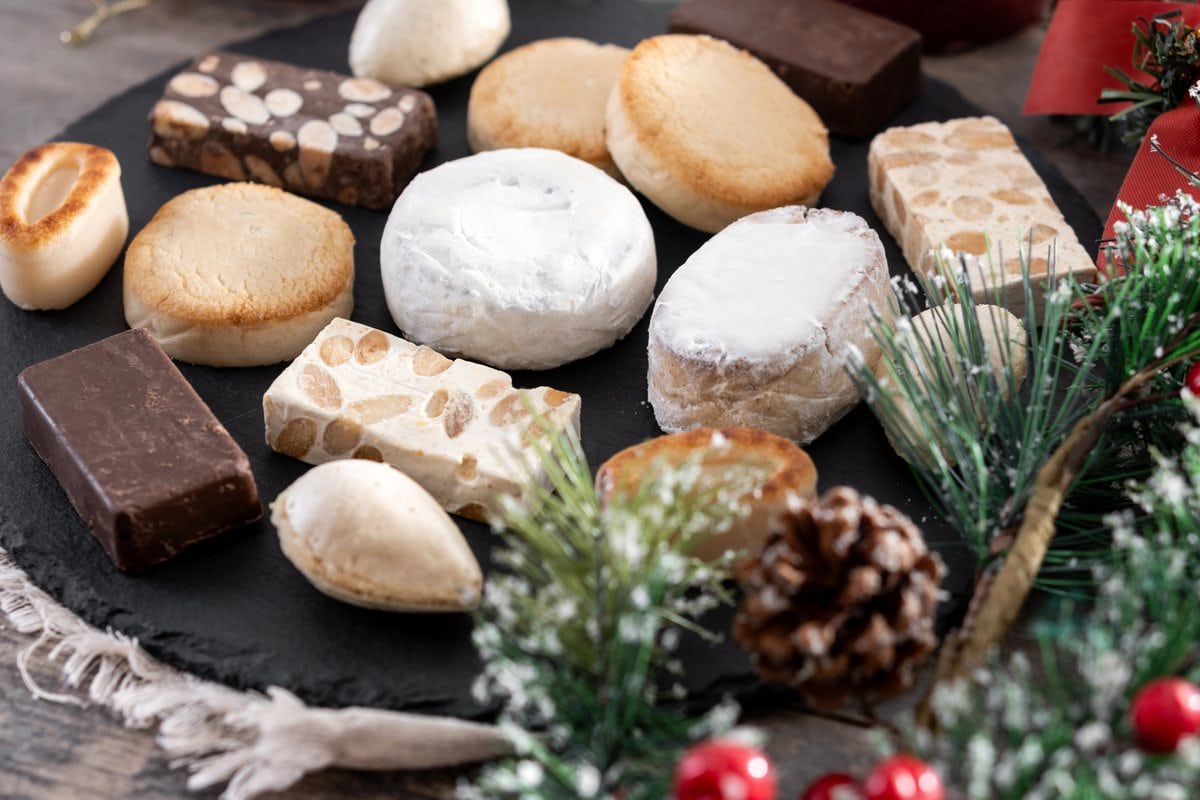
- On the Christmas tray: arrange it with polvorones, turrón, marzipan figuritas, dried figs and Marcona almonds, the way Spanish families set out dulces navideños.
- With a drink: a small glass of Pedro Ximénez or cream sherry, both made just up the road in Jerez. Sweet anís, a glass of cava or a strong café solo also cut through the sweetness.
- With fruit: orange or mandarin segments balance the almond richness.
- As a gift: wrap a whole loaf in parchment and cellophane with a ribbon. It holds its shape well and makes a lovely hostess gift.
How to Store It
Wrap homemade pan de Cádiz tightly in plastic wrap and keep it in the refrigerator for up to 1 week. The yema filling is the reason it needs the fridge. It also freezes well for up to 2 months; thaw it overnight in the fridge, still wrapped. Store-bought loaves are made to last longer, so follow the date on the package.

Pan de Cádiz vs. Other Spanish Christmas Sweets
| Sweet | Made from | How it differs |
|---|---|---|
| Pan de Cádiz | Marzipan with yema and batata fillings | A filled, layered loaf with a toasted lattice top, sliced to serve |
| Mazapán de Toledo | Almonds, sugar and sometimes egg | Small shaped figurines, unfilled or with a little yema, browned all over |
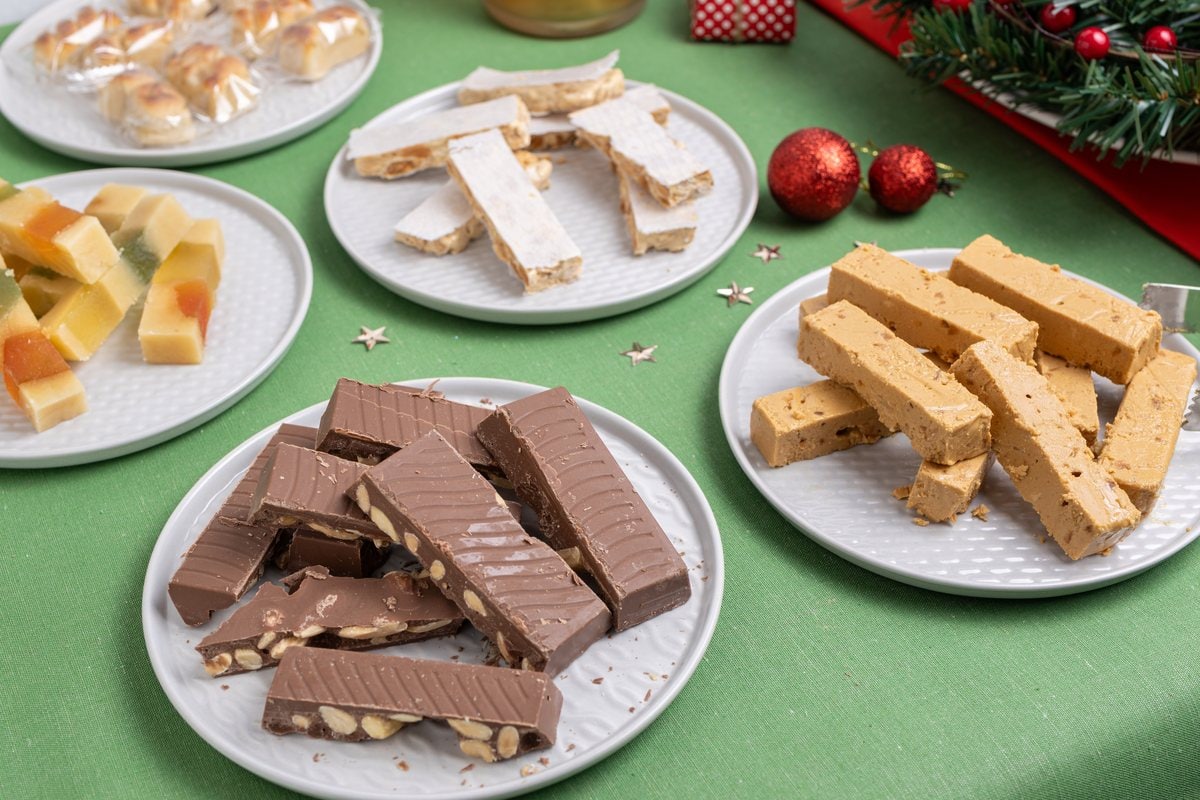
| Turrón | Almonds, honey, sugar and egg white | Nougat: hard (Alicante) or soft and creamy (Jijona) |
| Polvorones | Toasted flour, almonds, lard and sugar | Crumbly shortbread cookies that melt in your mouth |
Pan de Cádiz FAQ
What is pan de Cádiz made of?
Marzipan (ground almonds, sugar and egg white) wrapped around fillings, most often yema confitada (candied egg-yolk cream) and batata (sweet potato preserve). Many versions also add candied fruit, cabello de ángel or quince paste.
Why is it called “bread” if there’s no flour?
Because of how it looks. The rectangular loaf with its browned, scored top looks like a small loaf of bread. Inside, it’s all almond paste and sweet fillings.
Is pan de Cádiz the same as turrón de Cádiz?
Yes. Spanish shops sell it under both names, and sometimes as mazapán de Cádiz. It isn’t a nougat, though. It belongs to the marzipan family, not the honey-and-almond turrón family.
Who invented pan de Cádiz?
The modern loaf is usually credited to Antonio Valls Garrido of Pastelería Viena in Cádiz, around the 1950s. Filled marzipan sweets were already being made in Cádiz in the 1800s, so he refined an older local tradition rather than inventing it from scratch.
Is pan de Cádiz gluten-free?
The homemade recipe here is naturally gluten-free, since it’s made from almonds, sugar, eggs and fruit preserves. Some commercial loaves sit on a thin wafer (oblea) made with wheat, so check the label if you’re buying one.
How long does pan de Cádiz last?
Homemade loaves keep up to 1 week in the fridge, tightly wrapped, or up to 2 months in the freezer. Packaged loaves from Spain last much longer, so check the best-by date.
Can I use store-bought marzipan or almond paste?
Yes. Use about 2 pounds (900 g) of good marzipan with at least 50% almonds. Almond paste is softer and less sweet, so knead in powdered sugar until it can be rolled without sticking.
Bring a Taste of Cádiz to Your Christmas Table
Pan de Cádiz is the Spanish Christmas sweet that most surprises people outside Spain. It looks like bread, cuts like a terrine and tastes like the best marzipan you’ve had. Make it a day or two before Nochebuena, slice it thin, and put it on the tray with the turrón. Then tell us in the comments: did you fill yours with batata, cabello de ángel or quince?
More Spanish Christmas sweets and traditions:
More Spanish Foods
See all →
Jorge Garcia is the founder of AmigoFoods, where he has spent over 20 years helping readers discover authentic Latin American and Spanish cuisine. Raised in a Cuban-American household, Jorge learned to cook at the hands of his mother and grandmother, carrying forward generations of family recipes. That heritage, backed by his family’s four-generation history in the Latin food industry, inspired him to launch AmigoFoods in 2003. With more than 1,000 published articles on recipes, ingredients, and food culture, Jorge’s mission is simple: make authentic Latin cooking approachable for home cooks everywhere while honoring the traditions behind every dish.