

Colombian street food runs on corn, cheese and hot oil: arepas off the grill, crisp corn-shell empanadas, cheesy buñuelos and pandebono, plus fruit, shaved ice and coffee sold from carts on nearly every corner. Most of it costs less than a dollar or two, and every region has its own specialty.
Short on time? Start with these five


Below are the 30 Colombian street foods worth seeking out, grouped by type, with the city that does each one best, what it costs, and a link to make it at home.
Just want the recipes? Our Colombian street food recipes page collects a step-by-step recipe for each of these.
- Top 10
- Arepas & fritos
- Cheese breads
- Plantains & pork
- Late-night
- Sweets
- Fruit & drinks
- By city
- How to order
- FAQ
Colombian Street Food at a Glance: The Top 10
Prices are typical street prices in Colombian pesos, converted at roughly 3,300 pesos to the US dollar. Expect to pay more in tourist areas like Cartagena’s walled city.
| Street food | What it is | Best in | Typical price |
|---|---|---|---|
| Arepa con queso | Grilled corn cake with melted cheese | Everywhere | COP 3,000–7,000≈ US$1–2 |
| Empanada | Crisp corn-shell turnover, potato and beef | Everywhere | COP 1,500–3,500≈ US$0.50–1 |
| Arepa de huevo | Fried corn arepa with an egg sealed inside | Caribbean coast | COP 4,000–8,000≈ US$1.25–2.50 |
| Buñuelo | Golden fried cheese fritter | Everywhere, all year | COP 1,500–3,000≈ US$0.50–1 |
| Pandebono | Chewy cassava-and-cheese bread | Cali and Valle del Cauca | COP 2,000–4,000≈ US$0.60–1.25 |
| Patacón con todo | Giant smashed plantain piled with toppings | Cali and the coast | COP 12,000–25,000≈ US$3.75–7.50 |
| Perro caliente | Hot dog with pineapple sauce and crushed chips | Bogotá, late at night | COP 8,000–18,000≈ US$2.50–5.50 |
| Oblea | Thin wafers sandwiched with arequipe | Bogotá and Floridablanca | COP 3,000–10,000≈ US$1–3 |
| Cholado | Shaved ice, fruit and condensed milk | Cali and Jamundí | COP 8,000–16,000≈ US$2.50–5 |
| Mango biche | Green mango with salt and lime | Cali and the coast | COP 3,000–6,000≈ US$1–1.75 |
Corn & Dough: Arepas, Empanadas and Fritos
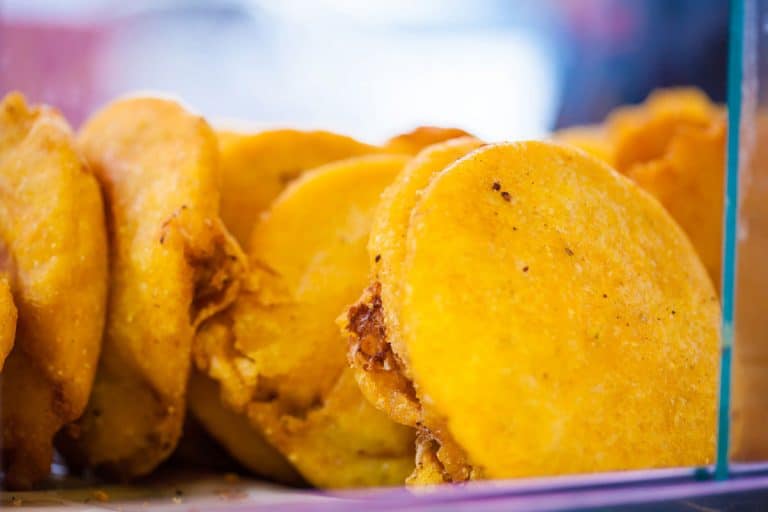
Corn is the backbone of Colombian street food. Some of it is grilled on a flat iron plate, and much more of it is fried and stacked in the glass cases Colombians call fritos stands, which open early so office workers can grab breakfast on the way in.
1 Arepa con Queso
- Where: Everywhere
- When: Breakfast and evening
- Price: COP 3,000–7,000
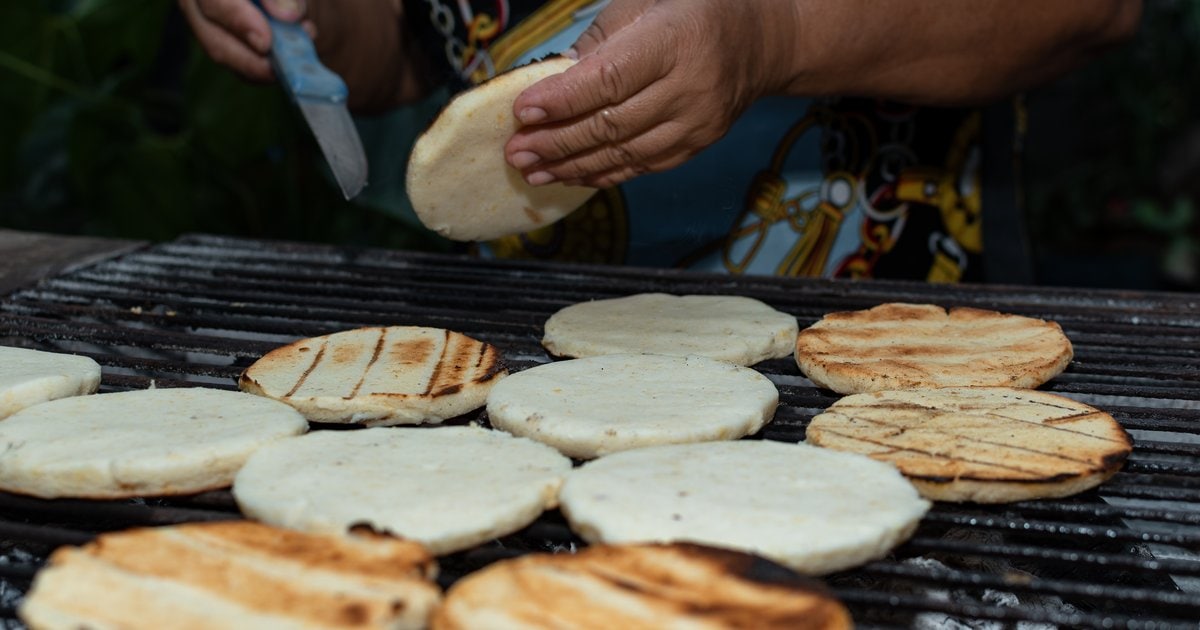
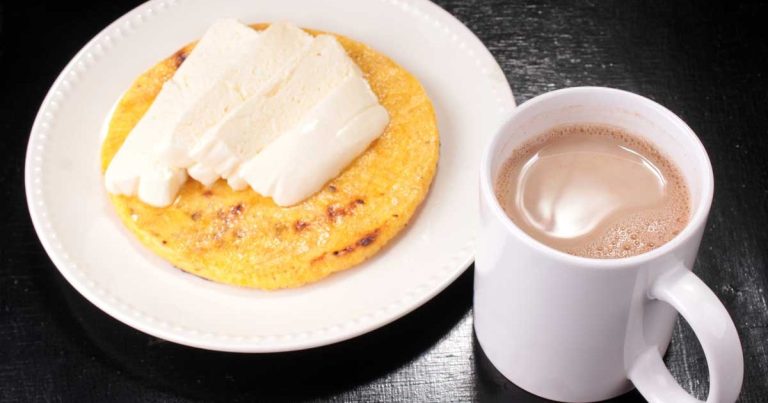
The arepa is the most common street food in Colombia. Street vendors grill thick discs of corn dough on a flat iron, split them, and fill them with melted white cheese, or simply brush them with butter and salt. In Antioquia you get a thin, plain arepa as a side; in Bogotá it is often thicker and stuffed with cheese.
Ask for it con queso and it comes oozing; add hogao, a tomato and onion sauce, and it becomes a meal.
Make it at home: our Colombian arepas recipe and the different types of Colombian arepas. No time to make the dough? LA MEJOR vacuum-packed white Colombian arepas go straight on a skillet.
2 Arepa de Huevo
- Where: Caribbean coast: Cartagena, Barranquilla, Luruaco
- When: Breakfast
- Price: COP 4,000–8,000
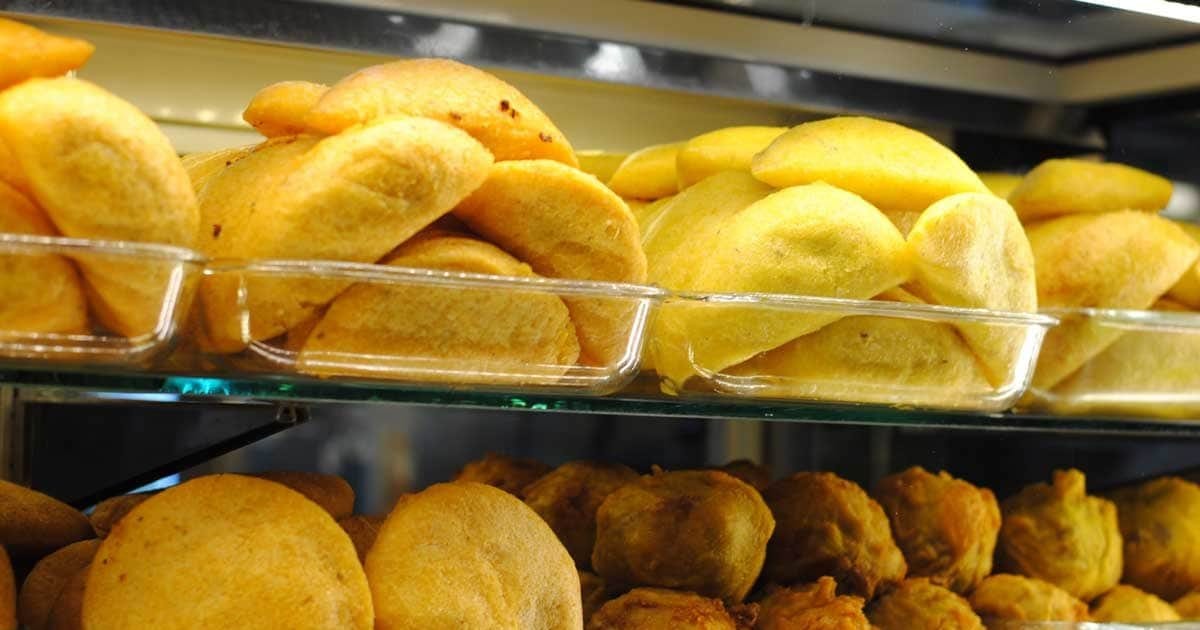
The coast’s great street snack is fried twice. The corn arepa goes into hot oil until it puffs into a pocket, the cook slits it, slides in a raw egg (often with a spoon of seasoned ground beef), seals the opening with a little dough and fries it again until the egg sets inside.
The small town of Luruaco, on the road between Barranquilla and Cartagena, calls itself the arepa de huevo capital and holds a festival for it.
Make it at home: our step-by-step arepa de huevo recipe.
3 Arepa de Choclo
- Where: Bogotá, Boyacá and roadside stands across the Andes
- When: Any time
- Price: COP 5,000–9,000

Made from fresh sweet corn instead of dried, the arepa de choclo is thick, a little sweet and griddled until the edges caramelize. Vendors fold it around a slab of fresh quesito or mozzarella-style cheese and add butter. It is the arepa that converts people who think arepas are bland.
Make it at home: our arepa de choclo recipe, or start with LA MEJOR ready-made arepas de chócolo.
4 Empanadas
- Where: Everywhere; Valle del Cauca and Popayán for empanadas de pipián
- When: All day
- Price: COP 1,500–3,500 each
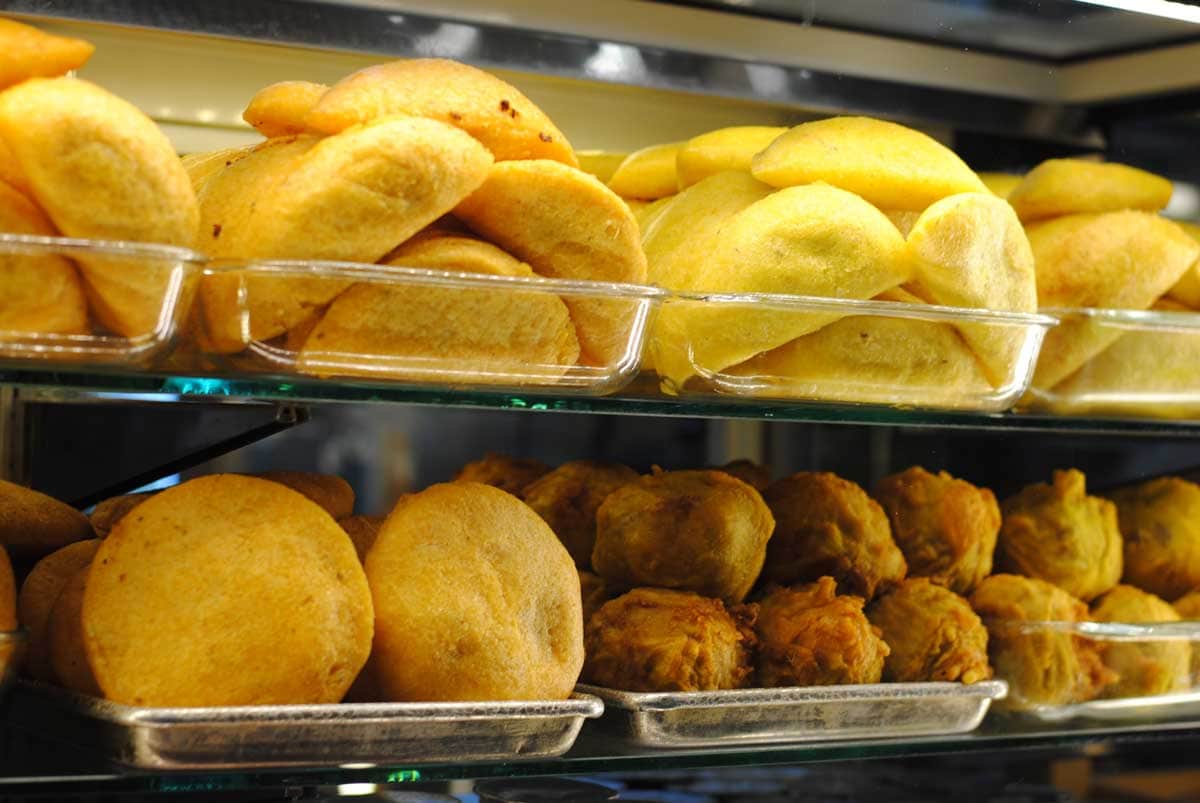
Colombian empanadas are not the baked wheat pastries of Argentina. The shell is yellow corn dough, fried until it shatters, and the classic filling is potato and seasoned beef. In Popayán, empanadas de pipián are stuffed with potato and peanut and served with a peanut sauce.
The real reason to eat them is the ají: a loose, vinegary salsa of cilantro, onion and hot pepper that you spoon into each bite.
Make it at home: our Colombian empanadas recipe and our guide to empanada dough.
5 Carimañolas
- Where: Cartagena and the Caribbean coast
- When: Breakfast
- Price: COP 2,500–4,500

A carimañola is a torpedo-shaped fritter of boiled, mashed yuca filled with ground beef or queso costeño, then deep-fried. The outside turns crisp and blistered while the yuca stays soft and slightly chewy. On the coast it is eaten for breakfast with a cup of coffee or a cold juice.
Make it at home: our carimañola recipe.
Cheese Breads from the Panadería Window
Colombian bakeries open onto the sidewalk, and their window counters are as much street food as anything sold from a cart. These five cheese breads are best eaten warm, standing up, with a tinto or a hot chocolate.
6 Buñuelos
- Where: Everywhere
- When: All year; every table at Christmas
- Price: COP 1,500–3,000

Round, golden and about the size of a golf ball, buñuelos are made from grated salty white cheese and starch, then fried in moderately hot oil so they roll over on their own as they puff. A good one sounds hollow when you tap it and is soft and cheesy inside. In December they are served with natilla at every Christmas gathering.
Make it at home: our Colombian buñuelos recipe.
7 Pandebono
- Where: Cali and Valle del Cauca, now everywhere
- When: Breakfast and afternoon
- Price: COP 2,000–4,000

Pandebono comes from Valle del Cauca and is made from cassava starch, fresh cheese and egg, sometimes with a little corn flour. The result is chewy, springy and naturally gluten-free. Bakeries shape it as balls or rings, and it is at its best within an hour of leaving the oven.
Make it at home: our pandebono recipe.
8 Almojábanas
- Where: Bogotá, Boyacá and Cundinamarca
- When: Breakfast
- Price: COP 2,500–4,500

Softer and more cake-like than pandebono, the almojábana is made with cuajada (fresh curd cheese) and corn flour. It is the classic Bogotá breakfast bread, paired with a hot chocolate or a café con leche.
Make it at home: our almojábanas recipe.
9 Pan de Yuca
- Where: Cali and the southwest
- When: Breakfast and afternoon
- Price: COP 2,000–4,000

A close cousin of pandebono, pan de yuca is cassava starch and cheese with no corn at all, usually shaped into a horseshoe. It is lighter and crisper on the outside, and it goes stale fast, which is why Colombians buy it hot from the oven.
Make it at home: our pan de yuca recipe. See our guide to Colombian breads for the rest of the bakery case.
10 Achiras
- Where: Huila, sold by the bag at bus stops and road stops
- When: Any time
- Price: COP 4,000–8,000 per bag

These crunchy, finger-shaped biscuits from Huila are made from the starch of the achira plant mixed with cheese, butter and egg. They are light enough to eat by the handful and travel well, so you see them sold in plastic bags at bus terminals and roadside stops all over the south.
Make it at home: our achiras recipe.
Plantains, Pork and Fritanga
11 Patacón con Todo
- Where: Cali, Medellín and the Caribbean coast
- When: Evening
- Price: COP 12,000–25,000

Patacones are green plantains fried, smashed flat and fried again. On the street they are pressed into a disc the size of a dinner plate and piled con todo, with everything: shredded beef or chicken, melted cheese, hogao, and a zigzag of pink and pineapple sauces. One is dinner for two.
Make it at home: our patacones recipe.
12 Aborrajados
- Where: Cali and Valle del Cauca
- When: Afternoon
- Price: COP 4,000–8,000

Cali’s sweet-and-salty snack starts with a very ripe plantain, fried, flattened and wrapped around white cheese (and often a slice of guava paste). The bundle is dipped in a light batter and fried again until golden. Eat it hot so the cheese is still stretching.
Make it at home: our aborrajados recipe.
13 Chicharrón
- Where: Antioquia and everywhere
- When: Any time
- Price: COP 6,000–12,000

Colombian chicharrón is not a pork rind. It is a thick strip of pork belly, skin on, fried slowly until the skin blisters into crackling and the meat underneath stays juicy. Street stands chop it into pieces and serve it with an arepa and a wedge of lime.
Make it at home: our Colombian chicharrón recipe, or try chicharrón de pollo for a chicken version.
14 Fritanga and Picada
- Where: Bogotá markets and roadside asaderos
- When: Weekends
- Price: COP 25,000–50,000 for two
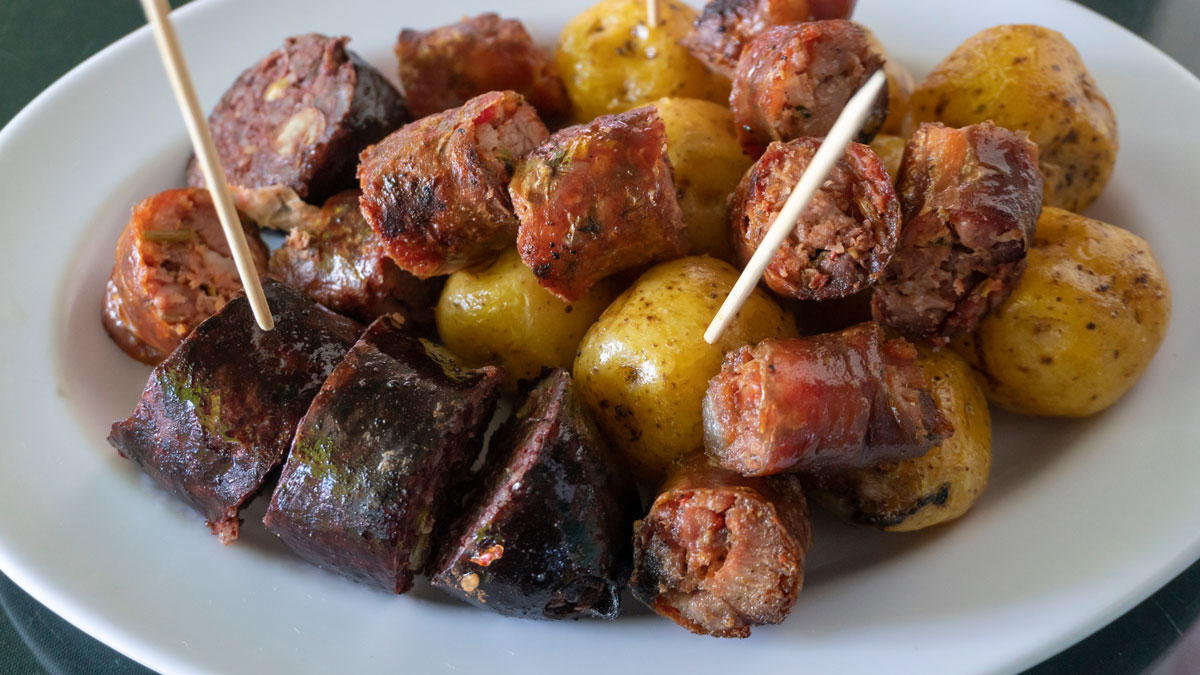
Fritanga is the big shared platter of everything fried and grilled: chorizo, morcilla (blood sausage), chicharrón, beef, small yellow papa criolla, plantain and arepa. Picada is the same idea cut into bite-size pieces. Both are eaten with toothpicks and plenty of lime and ají.
Make it at home: our Colombian fritanga guide.
15 Lechona by the Plate
- Where: Tolima, Bogotá and market stalls
- When: Weekends and holidays
- Price: COP 15,000–28,000

Lechona is a whole pig, deboned, stuffed with rice, yellow peas and its own meat, then roasted for hours until the skin turns into a sheet of crackling. You do not need a party to try it: stalls in markets and on busy corners sell it by the plate with an arepa and, in Tolima, a sweet corn cake called insulso.
Learn more: what lechona is and how it is made.
Grill Carts and Late-Night Fast Food
After dark, the corner carts switch from coffee and fruit to the griddle. This is where Colombian street food gets loud: everything comes with a choice of four or five squeeze-bottle sauces.
16 Perro Caliente Colombiano
- Where: Bogotá, Medellín and every city after dark
- When: Late night
- Price: COP 8,000–18,000
The Colombian hot dog is a build, not a sausage in a bun. On top of the frankfurter go melted cheese, crushed potato chips, a sweet pineapple sauce, pink sauce, mustard and often a few quail eggs on a toothpick. Some carts add bacon, shredded chicken or coleslaw. It is messy, sweet and salty, and nobody eats just half.
See also: how other Latin countries build their hot dogs.
17 Salchipapa
- Where: Everywhere
- When: Afternoon and late night
- Price: COP 8,000–16,000

Fries topped with sliced, fried hot dogs. The salchipapa began in Peru but Colombian kids and teenagers have made it their own, piling on cheese, chorizo, quail eggs and all the sauces, especially salsa rosada, the pink mix of mayonnaise and ketchup.
Make it at home: our salchipapa recipe.
18 Chuzos and Desgranados
- Where: Bogotá and university neighborhoods
- When: Late night
- Price: COP 7,000–14,000
A chuzo is a big skewer of chicken, beef or pork grilled over charcoal and served on top of an arepa with a boiled potato. The desgranado is its cousin in a bowl: sweet corn kernels covered with shredded meat, cheese, chips and sauces. Both are the default food after a night out in Bogotá.
19 Mazorca Asada
- Where: Parks, plazas and highway stops
- When: Afternoon
- Price: COP 4,000–8,000

Grilled corn on the cob, brushed with butter and salt and sometimes rolled in grated cheese. Colombian street corn is usually starchier and less sweet than corn in the US, with a chewy, nutty bite.
Compare: how Latin America does street corn.
Sweets: Obleas, Cholado and Shaved Ice
20 Obleas
- Where: Bogotá parks, Floridablanca (Santander)
- When: Afternoon
- Price: COP 3,000–10,000

Two paper-thin wafers the size of a saucer, spread with arequipe (Colombian dulce de leche) and whatever else you point to: blackberry jam, grated cheese, whipped cream, condensed milk, sprinkles. Floridablanca, outside Bucaramanga, is famous for them, but every park in Bogotá has an oblea cart.
Make it at home: our obleas guide and how to make arequipe. Colombina dulce de leche is a Colombian brand that works well for filling.
21 Cholado
- Where: Cali and Jamundí
- When: Hot afternoons
- Price: COP 8,000–16,000

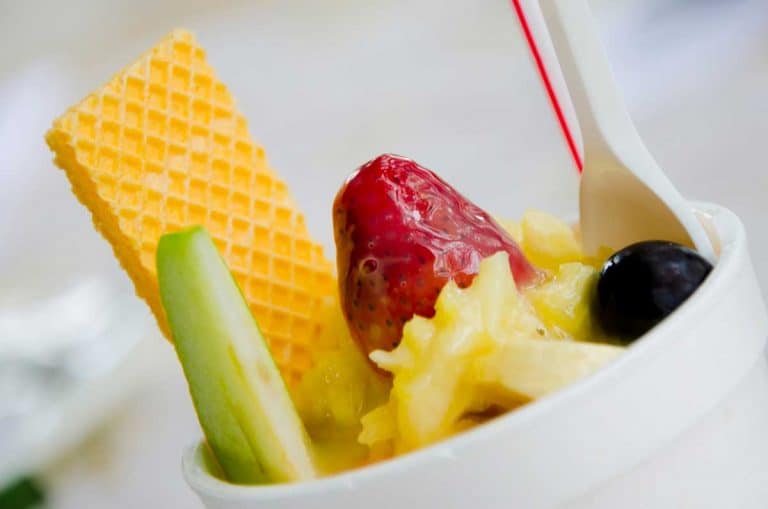
Cali’s answer to the heat is a tall cup of shaved ice layered with chopped fruit (papaya, banana, pineapple, mango, strawberries), fruit syrups and condensed milk, topped with coconut, a wafer cookie and a cherry. The town of Jamundí, just south of Cali, is lined with cholado stands.
Make it at home: our cholado recipe.
22 Salpicón de Frutas
- Where: Everywhere
- When: Afternoon
- Price: COP 5,000–10,000

Finely chopped fruit (watermelon, papaya, pineapple, banana, mango) floating in watermelon juice or, very often, in Colombiana, the kola-champagne soda. Vendors serve it in a cup with a spoon and sometimes a scoop of ice cream or grated cheese on top.
Make it at home: our salpicón de frutas recipe. For the real thing, use Colombiana soda by Postobón.
23 Raspao
- Where: Cartagena, Barranquilla and the coast
- When: Hot afternoons
- Price: COP 3,000–7,000
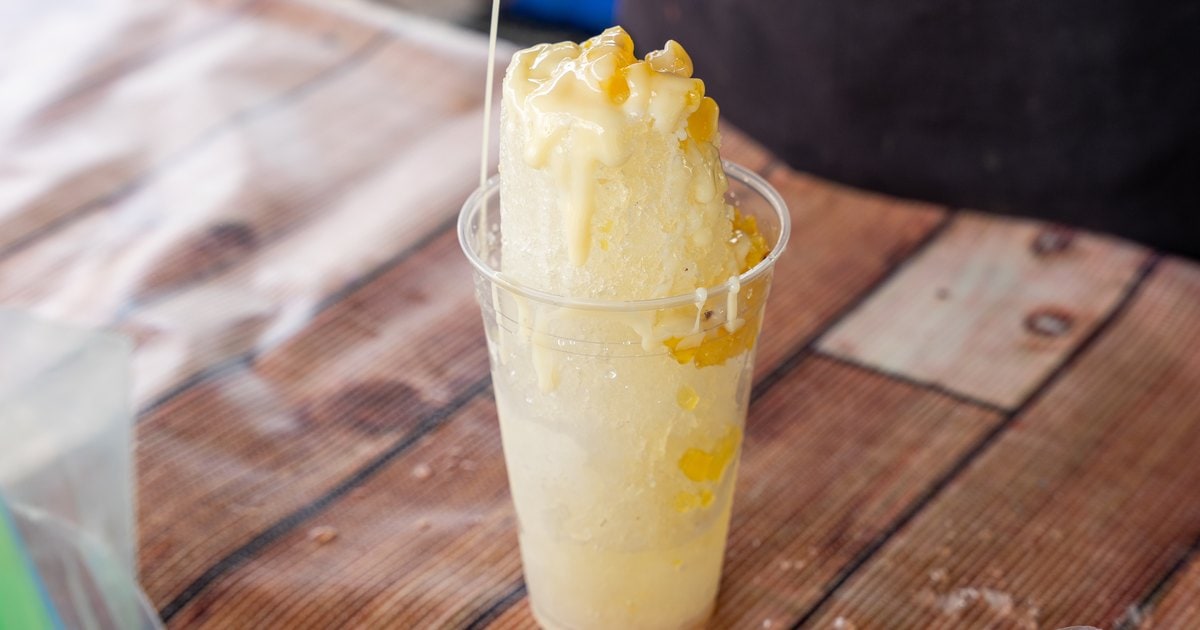
The coastal shaved ice. A vendor scrapes a block of ice into a cup, floods it with bright fruit syrup (kola, tamarind, lulo, mango) and finishes it with condensed milk. Simpler than a cholado, and far cheaper.
Compare: shaved ice across Latin America.
24 Cocadas
- Where: Cartagena, from palenqueras and the Portal de los Dulces
- When: Any time
- Price: COP 1,500–4,000

Chewy coconut candies cooked with sugar or panela, sometimes flavored with pineapple, guava or arequipe. In Cartagena they are sold by palenqueras in bright dresses and from the long row of candy stalls at the Portal de los Dulces, beside the Clock Tower gate.
Make it at home: our Colombian cocadas recipe.
25 Mazamorra
- Where: Medellín and Antioquia, from pushcarts
- When: Afternoon
- Price: COP 3,000–5,000
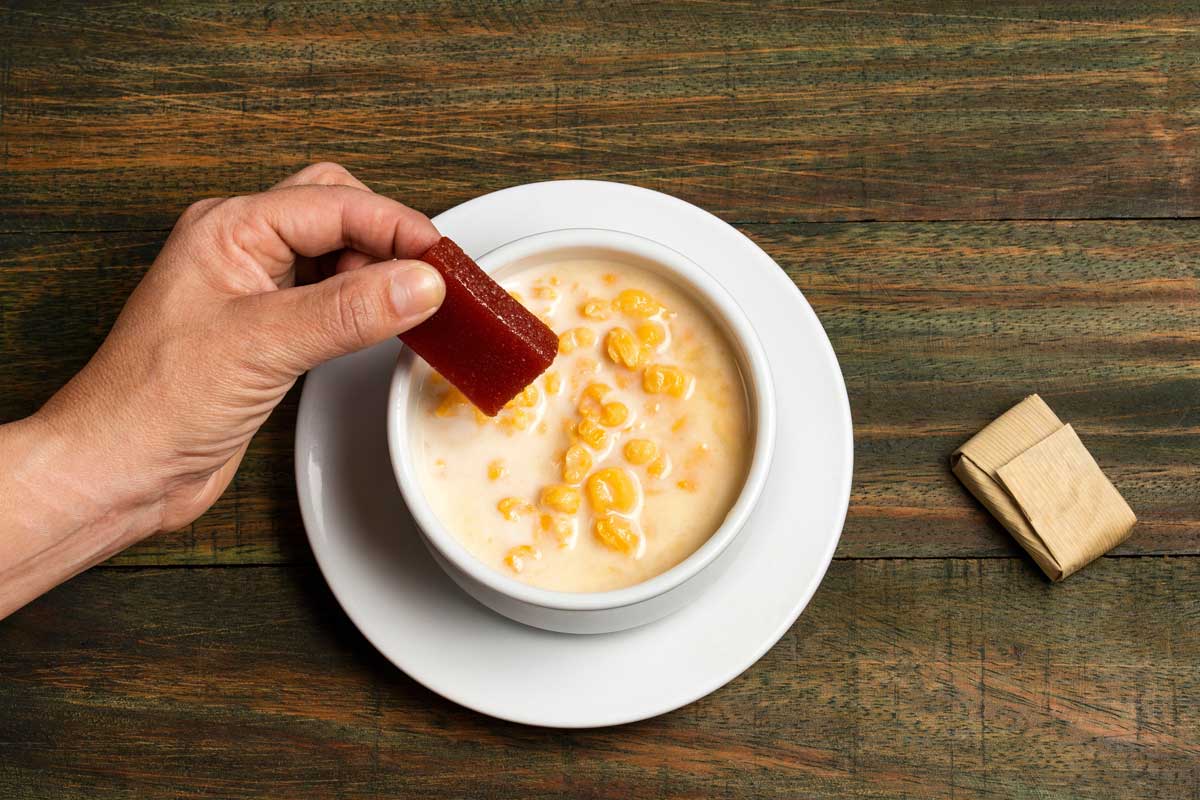
In Medellín, pushcarts sell cups of mazamorra: boiled hominy-style corn served cold in its own cooking liquid with milk. You eat it with a piece of panela or bocadillo (guava paste) on the side. It is mild, filling and very paisa.
Make it at home: our mazamorra paisa recipe.
Street Fruit, Juices and Coffee
Colombia grows more fruit than almost anywhere, and a lot of it is sold on the street ready to eat. Look for carts with fruit cut in front of you and juice stands with blenders lined up on the counter.
26 Mango Biche
- Where: Cali, Medellín and the Caribbean coast
- When: Any time
- Price: COP 3,000–6,000
Unripe green mango, cut into long strips and sold in a plastic cup or bag with salt, lime and sometimes black pepper or chile. It is sour, crunchy and salty, and on hot days it is everywhere. Vendors also sell it with sal y limón next to the aguardiente on festival nights.
Learn more: the Colombian fruits you can find at street stands.
27 Chontaduro
- Where: Cali and the Pacific coast
- When: Morning and afternoon
- Price: COP 3,000–6,000

The fruit of the peach palm, boiled and sold peeled from street baskets in Cali. It is dense, starchy and a little like a cross between a chestnut and a squash. Locals eat it with salt and honey, and it has a reputation (not proven) as an aphrodisiac.
Learn more: our chontaduro guide.
28 Lulada
- Where: Cali and Valle del Cauca
- When: Afternoon
- Price: COP 7,000–12,000

Cali’s signature drink is not a smooth juice. Lulo fruit is mashed (not blended) with lime, sugar and ice, so the cup is full of tart green pulp and seeds. It is refreshing, sour and nothing like any juice sold in the US.
Make it at home: our lulada recipe and our guide to lulo.
29 Avena Colombiana
- Where: Everywhere, at juice and bakery counters
- When: Breakfast and afternoon
- Price: COP 2,500–5,000

A thick, cold oat drink cooked with milk, sugar and cinnamon, then chilled until it is almost spoonable. Colombians drink it with a pandebono or a buñuelo, and it is sold in plastic cups at juice stands and bakery counters.
30 Tinto
- Where: Everywhere, from thermos sellers
- When: All day
- Price: COP 1,000–2,500

In Colombia a tinto is a small cup of black coffee, often already sweetened with panela or sugar. Tinteros walk the streets and parks with thermoses and plastic cups, selling it for small change. If you want milk, ask for a perico or café con leche.
Learn more: our guide to Colombian coffee. For tinto at home, Café Quindío single-origin Colombian coffee is a good, low-acid start.
On the coast, also look for limonada de coco (a frozen coconut limeade), and in the highlands, a hot cup of aguapanela or Colombian hot chocolate with cheese.
Where to Eat Street Food in Colombia, City by City
Colombian street food changes a lot from region to region. Here is what to look for in each place.
Bogotá
Cold mornings mean almojábanas and hot chocolate; nights mean chuzos, desgranados and perros calientes. La Perseverancia market and Paloquemao are the places to eat with locals.
Look for: arepas de choclo, obleas in the parks, tinto from thermos sellers, fritanga at the markets
Medellín
Paisa food is hearty and plain. Bakeries and corner stands sell empanadas by the dozen, and pushcarts sell mazamorra in the afternoon.
Look for: empanadas, buñuelos, chicharrón, mazamorra, arepa with quesito
Cali
The sweet-and-sour capital. Fruit stands are everywhere, and Jamundí, just south of the city, is lined with cholado stands.
Look for: cholado, lulada, chontaduro, mango biche, aborrajados, pandebono
Cartagena
Morning fritos stands in Getsemaní and the old city, palenqueras selling fruit and cocadas, and raspao carts all afternoon.
Look for: arepa de huevo, carimañolas, cocadas, raspao, limonada de coco
Barranquilla and Luruaco
The arepa de huevo heartland. Stop in Luruaco on the drive to Cartagena, and come to Barranquilla during Carnaval for street food on every corner.
Look for: arepa de huevo, patacón con todo, butifarra from nearby Soledad
Tolima, Huila and Santander
The south-central highlands bring lechona and achiras; Santander is the home of obleas, especially in Floridablanca.
Look for: lechona tolimense with insulso, achiras del Huila, obleas
For the bigger picture of how food changes across the country, see our guide to regional Colombian cuisine.
How to Order Colombian Street Food Like a Local
Most stands have a squeeze-bottle lineup, and the sauces matter as much as the food. These are the ones you will see:
| Sauce | What it is |
|---|---|
| Salsa rosada | Pink-orange mix of mayonnaise and ketchup; the default on fries, hot dogs and patacones |
| Salsa de piña | Sweet pineapple sauce, essential on a perro caliente |
| Ají | Loose salsa of vinegar, cilantro, onion and hot pepper; the spoon-on sauce for empanadas |
| Salsa de ajo | Garlic mayonnaise |
| Suero costeño | Tangy fermented cream from the coast, for arepas and yuca |
| Hogao | Cooked tomato and green onion sauce for arepas and patacones |
A few phrases help. Colombians are famously polite, so street orders often start with ¿Me regala…? (literally “would you give me…”), as in ¿Me regala una empanada? Then: ¿Cuánto vale? (how much is it?), con todo (with everything), sin salsas (no sauces) and para llevar (to go). A ñapa is the little extra a vendor throws in for a regular customer.
Bring Colombian Street Food Home
Most of these are easy to make in a US kitchen. Our Colombian street food recipes page links every recipe in one place. A few Colombian products make it easier:
As an Amazon Associate, AmigoFoods earns from qualifying purchases.
Looking for packaged treats rather than street food? See the best Colombian snacks.
Colombian Street Food FAQ
What is the most popular street food in Colombia?
The arepa. It is sold on almost every street in the country, grilled with cheese or butter, and eaten at any time of day. Empanadas are a close second, followed by buñuelos and pandebono.
What is the orange or pink sauce on Colombian street food?
It is salsa rosada, a mix of mayonnaise and ketchup, sometimes with a little lime or garlic. It goes on salchipapas, hot dogs, patacones and burgers, usually alongside pineapple and garlic sauces.
What are fritos in Colombia?
Fritos are the fried snacks sold from glass cases at bakeries, corner stands and bus stations: empanadas, arepas de huevo, carimañolas, buñuelos, papas rellenas (mashed potato balls stuffed with meat) and more.
Is Colombian street food spicy?
Rarely. Colombian food is mild, and the heat comes from the ají served on the side, so you control how hot it gets.
How much does street food cost in Colombia?
Most snacks, like empanadas, buñuelos, pandebono and tinto, cost under 5,000 pesos (about US$1.50). Bigger plates such as a patacón con todo, a loaded hot dog or a plate of lechona run about 8,000 to 28,000 pesos (roughly US$2.50 to $8.50).
Is street food safe to eat in Colombia?
Generally yes, if you use common sense: choose busy stands, eat fried food while it is hot, and buy fruit that is peeled in front of you. If your stomach is sensitive, be careful with ice and raw garnishes outside the big cities.
What is the difference between Colombian and Venezuelan arepas?
Colombian arepas are usually thinner and eaten plain, with butter, or with cheese melted inside or on top. Venezuelan arepas are thicker, split open and stuffed with fillings like a sandwich.
More Colombian Food to Explore
Street food is only one side of Colombian cooking. For the sit-down classics like ajiaco, bandeja paisa and sancocho, see our guide to traditional Colombian food. For sweets, browse Colombian desserts; for drinks, Colombian drinks; and for everything else, start at our Colombian food hub.
More Colombian Foods
See all →
Jorge Garcia is the founder of AmigoFoods, where he has spent over 20 years helping readers discover authentic Latin American and Spanish cuisine. Raised in a Cuban-American household, Jorge learned to cook at the hands of his mother and grandmother, carrying forward generations of family recipes. That heritage, backed by his family’s four-generation history in the Latin food industry, inspired him to launch AmigoFoods in 2003. With more than 1,000 published articles on recipes, ingredients, and food culture, Jorge’s mission is simple: make authentic Latin cooking approachable for home cooks everywhere while honoring the traditions behind every dish.