

Ask a Bolivian what Christmas tastes like and the answer is almost always the same: picana. This wine-laced stew of beef, chicken and sometimes pork or lamb is what families eat late on Nochebuena, December 24, after the nativity scene is set and Mass is over. Around it goes a table of roast pork, turkey, fried buñuelos and a hot cup of chocolate with a slice of panetón.
Here are 10 foods and drinks that make a Bolivian Christmas, with the regional twists that change from La Paz to Tarija.
Just want the recipes? Our Bolivian holiday dishes page collects them in one place.
Bolivian Christmas Foods at a Glance
| Dish | What it is | When |
|---|---|---|
| Picana | Wine-laced stew of beef, chicken and other meats | Late on Dec 24 |
| Lechón al horno | Roast pork with potatoes and llajua | Christmas Eve and Day |
| Pavo relleno | Roast stuffed turkey | Christmas Eve dinner |
| Llajua | Spicy tomato and locoto salsa | With every main dish |
| Buñuelos | Fried dough with cane syrup | All December |
| Chocolate caliente | Hot chocolate | After midnight and Christmas morning |
| Panetón | Sweet fruit bread | With chocolate, all season |
| Api | Hot purple-corn drink | Cold mornings in the highlands |
| Rosquetes | Meringue-glazed ring cookies | Family gatherings, especially in Tarija |
| Cola de mono | Spiced milk and coffee liqueur | Tarija visits and toasts |
How Bolivia Celebrates Christmas
Christmas in Bolivia falls in the rainy season. In the highlands it is cool, and in the lowlands of Santa Cruz and the Beni it is hot and humid, which shapes what ends up on the table. In most homes the season revolves around the nacimiento, the nativity scene, which families build in early December and gather around on Christmas Eve.
Nochebuena, the night of December 24, is the main celebration. Families attend the Misa de Gallo, the midnight Mass, or gather at home. The big meal is served late, around midnight, and it runs into the early hours with hot chocolate and sweets.
In Tarija, in the south, the season has its own traditions. Children dance and play music in adoraciones before the nativity scenes, and hosts welcome them with buñuelos, rosquetes and cola de mono. In Aymara communities of the Altiplano, a quinoa bread called jakhoilisa is traditionally eaten on December 25.
1. Picana
Picana is the defining dish of a Bolivian Christmas. It is a hearty stew, somewhere between a soup and a braise, of beef and chicken, often with pork or lamb, simmered for hours with onion, carrots, corn on the cob, potatoes and red or white wine. Many versions also add tunta (white freeze-dried potato), raisins and a little ají for heat, so the broth ends up both a little spicy and a little sweet.
It was born in Potosí in the 19th century, and each region still claims its own style:
- Potosí: the original, from a simple beef version to one with several meats.
- Chuquisaca (Sucre): beef brisket with vegetables, slightly spicier than the rest.
- La Paz: several meats, including chicken, lamb and pork, with tunta and cheese-filled potatoes.
- Tarija: more wine and fewer extras. Locals say it isn’t Christmas without it.
Picana is served in deep bowls after midnight, with the meat, corn and potato in the broth. Read about the dried potatoes that go into it in our Bolivian ingredients guide.
2. Lechón al Horno
For many families, the star is lechón al horno, roast pork. The meat is rubbed with ground ají, garlic, cumin, oregano and vinegar, left to marinate overnight and roasted until the skin crackles. It is served with potatoes, sweet potatoes, corn and a bowl of llajua, and many households serve it on Christmas Day after picana the night before.
3. Pavo Relleno
A roast pavo relleno, stuffed turkey, is the other common centerpiece, particularly in cities. The stuffing is typically ground chicken with breadcrumbs, prunes, raisins and green apple, moistened with white wine and a splash of brandy. The bird is glazed with wine as it roasts.
4. Llajua

No Bolivian meal is complete without llajua, the fresh salsa of tomato and locoto pepper ground in a stone batán with quirquiña or huacatay. At Christmas it goes on the table next to the lechón, the turkey and the picana, so everyone can add as much heat as they like.
5. Buñuelos
Bolivian buñuelos are rounds of yeasted dough flavored with anise, stretched thin by hand and fried until puffed and golden. They are drizzled with miel de caña (cane syrup) or a simple syrup, or dusted with sugar. December is their season: they are sold at street stalls, served to children visiting nativity scenes and eaten at home with hot chocolate or api. Find more sweets in our guide to Bolivian desserts.
6. Chocolate Caliente
After the midnight meal, and again on Christmas morning, Bolivian families drink hot chocolate. It is made thick and sweet, sometimes with cinnamon and cloves, and it comes with buñuelos or a slice of panetón. In the highlands, where December nights are cold, the chocolate is as much about warmth as flavor.
7. Panetón

Panetón, the tall sweet bread studded with raisins and candied fruit, came to South America with Italian immigrants and is now a Christmas staple in Bolivia, just as in Peru. Families buy boxed panetones or order them from local bakeries, and many consider a slice with hot chocolate the best part of the season.
8. Api

Api is a thick hot drink made from purple or white corn, sweetened and spiced with cinnamon and cloves. It is a year-round breakfast in the highlands, but on cold December mornings it becomes a holiday treat alongside buñuelos. The classic pairing is api con pastel, api with a fried cheese pastry.
9. Rosquetes
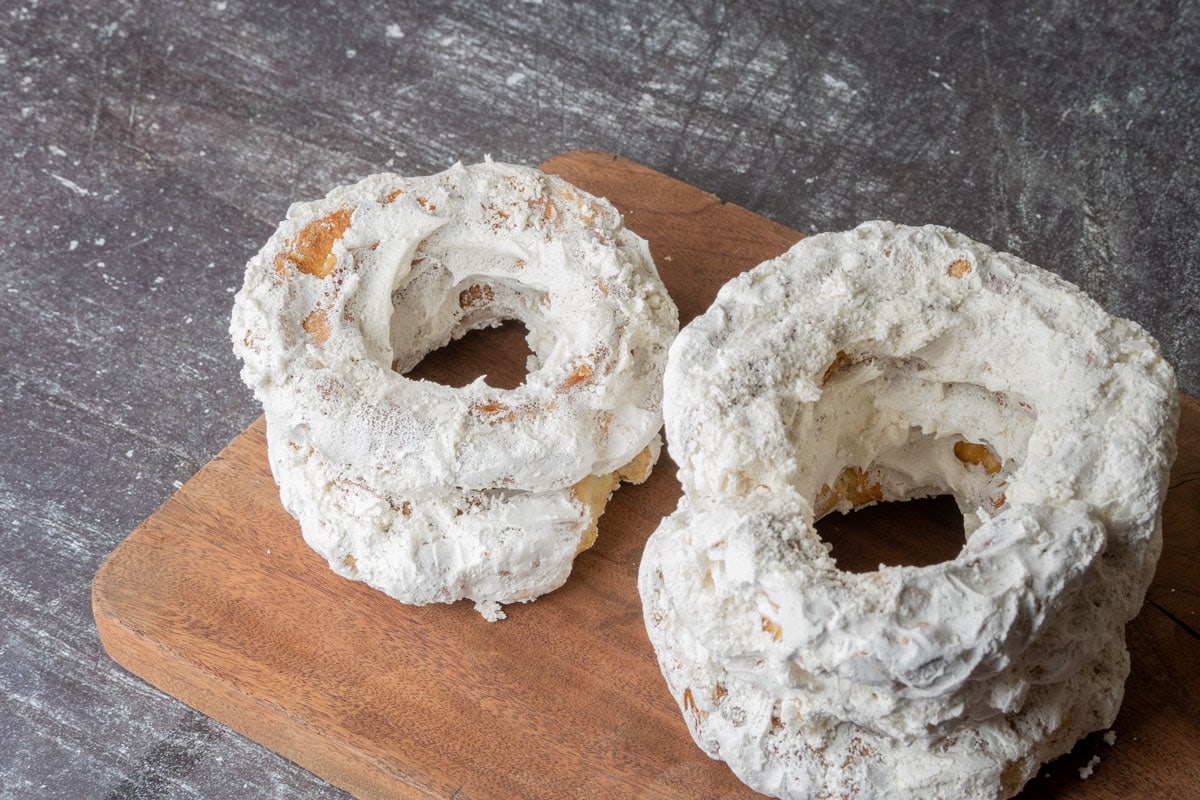
Rosquetes are crisp, ring-shaped cookies coated in a shiny white meringue glaze. They are a specialty of Tarija, where they are offered at Christmas gatherings to guests and to the children who come to sing before the nativity scene.
10. Cola de Mono

Best known as a Chilean Christmas drink, cola de mono is also served in southern Bolivia, particularly in Tarija. It is a chilled blend of milk, coffee, sugar, cinnamon and cloves, spiked with a clear spirit. Tarija is also the home of singani, Bolivia’s grape brandy, made in the same valleys as the region’s wine.
Before Christmas: Todos Santos
Bolivia’s other big food holiday comes earlier. For Todos Santos on November 1 and 2, families build altars for their departed and bake t’anta wawas, bread figures shaped like babies, along with bread ladders and horses. The breads are shared among family and visitors, opening a season of baking that runs straight through to Christmas.
Bolivian Christmas Food FAQ
What is the traditional Bolivian Christmas dish?
Picana, a stew of beef, chicken and sometimes pork or lamb simmered with wine, corn, potatoes and vegetables, eaten late on December 24.
When do Bolivians eat their Christmas dinner?
Late on Nochebuena, December 24, usually around midnight after the Misa de Gallo. Hot chocolate and sweets follow.
What do Bolivians drink at Christmas?
Hot chocolate and api, wine and singani from Tarija, and, in the south, cola de mono.
What is tunta?
Tunta is white chuño, a potato freeze-dried in the Andean cold and then soaked and sun-dried. It adds a soft, slightly tangy bite to picana.
More Bolivian Food
Discover the rest of the country’s cooking in our guide to Bolivian food, or browse everything on the Bolivian food hub. Many Bolivian pantry staples, from api mixes to dried ají, are on Amazon. To compare Christmas tables across the region, visit our Latin Christmas foods hub.
More Bolivian Foods
See all →
Jorge Garcia is the founder of AmigoFoods, where he has spent over 20 years helping readers discover authentic Latin American and Spanish cuisine. Raised in a Cuban-American household, Jorge learned to cook at the hands of his mother and grandmother, carrying forward generations of family recipes. That heritage, backed by his family’s four-generation history in the Latin food industry, inspired him to launch AmigoFoods in 2003. With more than 1,000 published articles on recipes, ingredients, and food culture, Jorge’s mission is simple: make authentic Latin cooking approachable for home cooks everywhere while honoring the traditions behind every dish.