
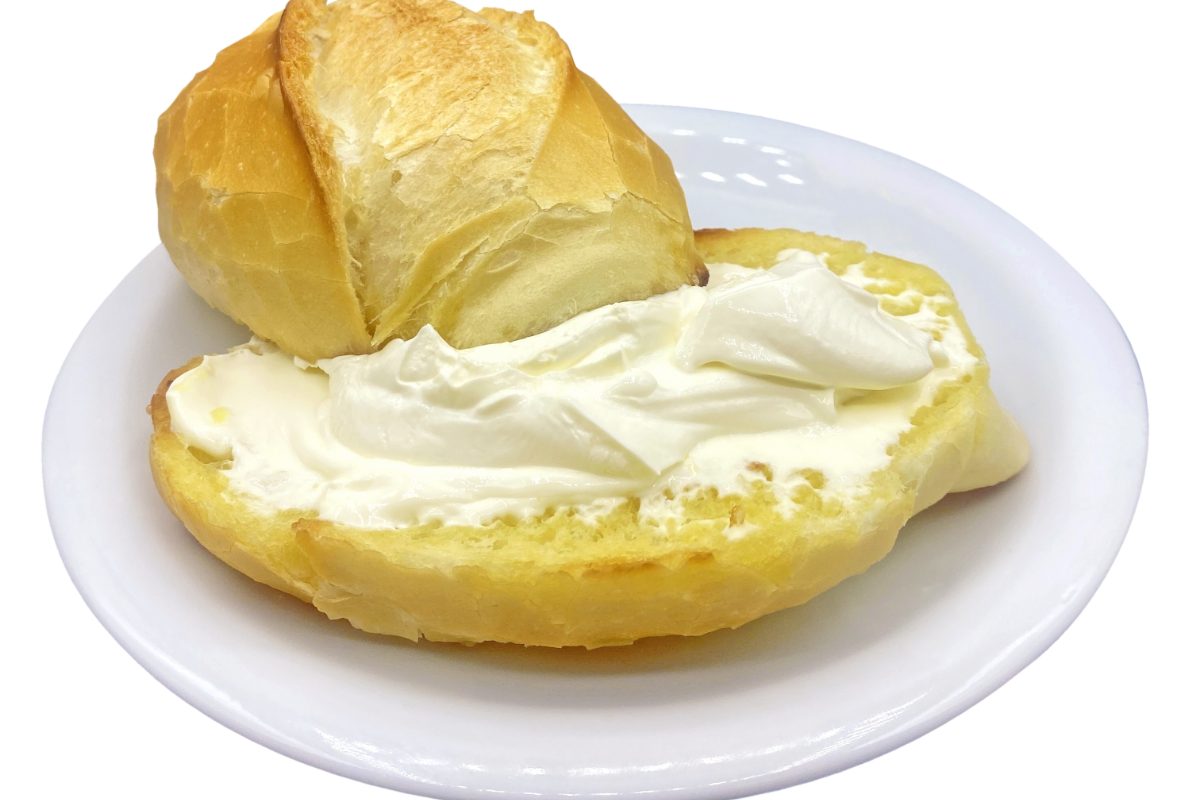
Requeijão cremoso is Brazil’s mild, creamy cheese spread for toast, pasta and savory fillings. This homemade shortcut uses milk, cream cheese and mozzarella, with about 15 minutes of preparation and cooking before a four-hour chill.
Requeijão at a Glance
What Is Requeijão?
Requeijão cremoso is made by heating milk, separating the curd with an acid, then working it back into a smooth emulsion with cream, butter and melting salts until it pours. That last step is the difference: American cream cheese is a set, sliceable block, while requeijão stays fluid enough to fall off a spoon in a ribbon.
The flavor is deliberately mild, with a low acidity that keeps it from tasting sour or tangy. It is closer to a very soft, salted cream than to a sharp cheese, which is exactly why Brazilians use it as a background ingredient in so many savory dishes.
Requeijão Cremoso vs. Requeijão de Corte
Requeijão cremoso is the supermarket product in the glass: smooth, pourable, industrial, and the one meant when Brazilians say simply “requeijão.”
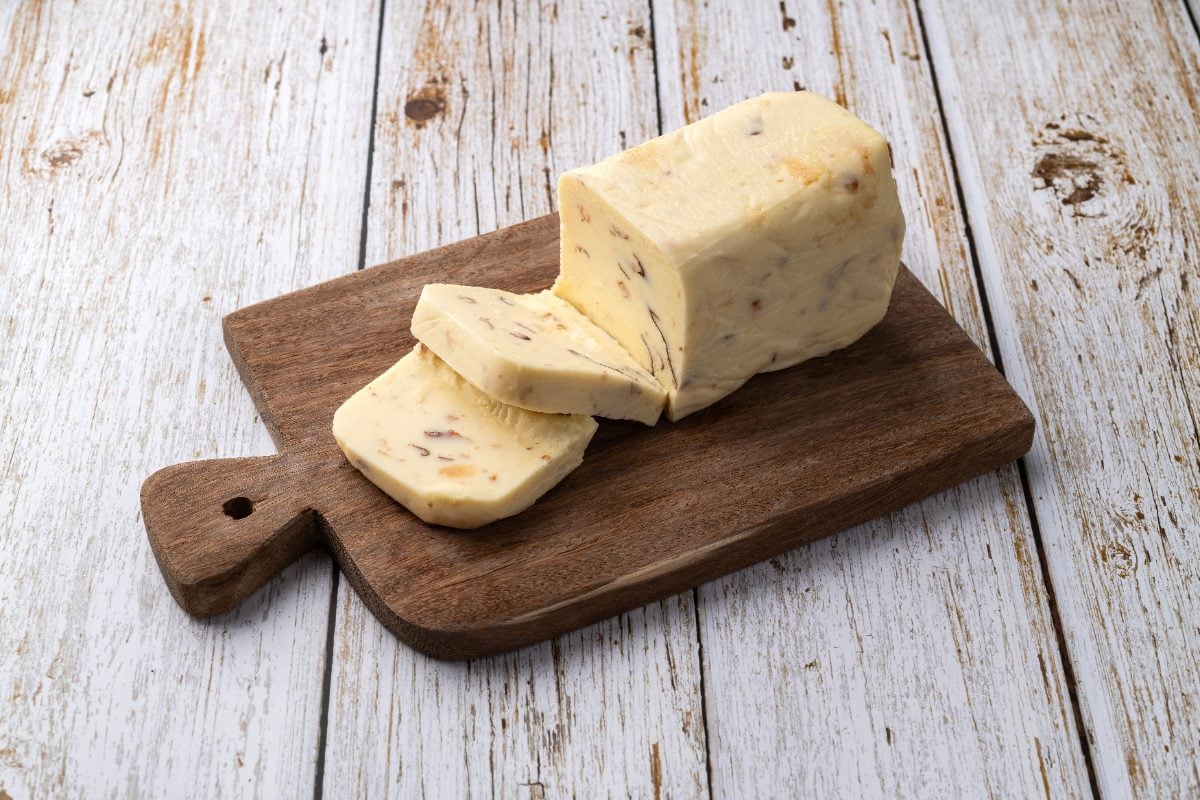
Requeijão de corte is the older, farmhouse version, mostly from Minas Gerais and the Northeast: the same curd cooked down and pressed into a firm block you slice with a knife. It is chewier, saltier and often studded with herbs, and it turns up on the breakfast table beside cheese and bread rather than being spread.
Both come from the same Portuguese tradition of reworking curd, and both are closer kin to processed cheese than to fresh cheese.
Catupiry and the Brand That Became the Word
The most famous requeijão in Brazil is Catupiry, created in 1911 in Minas Gerais by Italian immigrants Mário and Isaíra Silvestrini. The name comes from a Tupi word meaning “excellent.”
Catupiry became so dominant that Brazilians use the name generically: a menu that says “frango com Catupiry” often means chicken with whatever creamy requeijão the kitchen has. The company still runs several factories and exports to a handful of countries, and the round wooden box is instantly recognizable.
For the many Brazilian dishes built on it, see our guide to Brazilian ingredients.
How Brazilians Use Requeijão
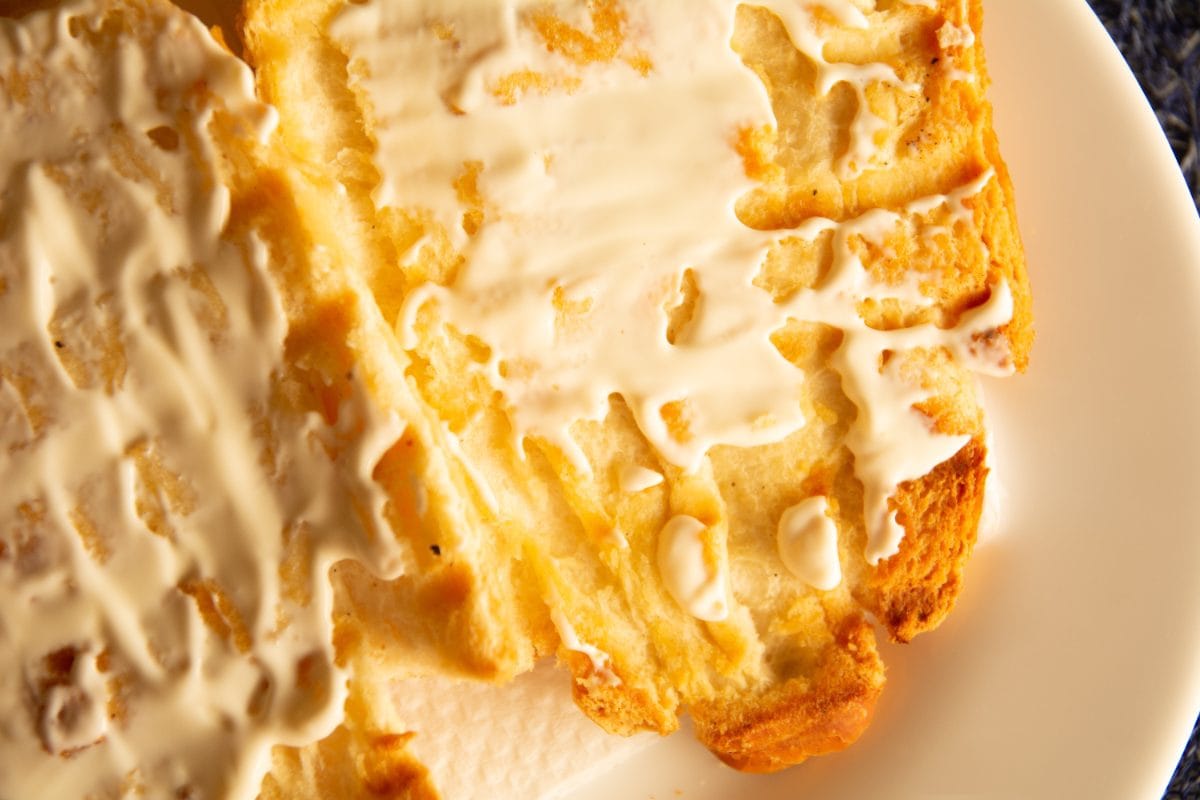
- On bread: spread on pão francês or pão na chapa at breakfast, often instead of butter.
- In pão de queijo: split a hot cheese bread and fill the middle.
- On pizza: the border piped with requeijão, or frango com catupiry as a topping, is standard in São Paulo.
- Inside salgadinhos: the creamy core of coxinhas, empadinhas and pastéis.
- In pasta and casseroles: stirred into macarronada, spooned over escondidinho, melted into strogonoff.
- With guava paste: the sweet-savory pairing Brazilians call Romeu e Julieta.
Where to Buy Requeijão
Prefer to skip the prep? Buy ready-made requeijão on Amazon or at Brazilian grocery stores, then enjoy it on toast, in sandwiches or stirred into your favorite dishes.

Ready to spread
Itambé Requeijão
Brazilian cream cheese spread · 2-pack
A convenient way to bring a Brazilian breakfast favorite to your table.
Paid link. Check Amazon for current price, availability and pack details.
Making Requeijão at Home
Outside Brazil, requeijão is sold in Brazilian markets and online, but it is easy enough to approximate in a blender and a saucepan. Milk thickened with cornstarch, enriched with butter and cream cheese, and finished with melted mozzarella gives you the texture and the mild flavor.
The full recipe is in the card below. Allow about 15 minutes of preparation and cooking plus at least four hours of chilling. It thickens as it chills, so judge the consistency cold, not hot; the estimated yield is about 3 cups and varies with evaporation.
Homemade Requeijão Cremoso (Brazilian Cream Cheese Spread)
Requeijão cremoso is a creamy Brazilian cheese spread for toast, pasta and fillings. Allow 15 minutes of preparation and cooking, plus at least 4 hours of chilling.
Ingredients
- 2 cups (500 ml) whole milk
- 4 oz (115 g) cream cheese
- 3 tablespoons butter
- 2 tablespoons cornstarch
- 1 teaspoon salt
- 1 cup (100 g) shredded low-moisture mozzarella
Instructions
- Put the milk, cream cheese, butter, cornstarch and salt in a blender and blend until completely smooth.
- Pour into a saucepan and cook over medium-low heat, whisking constantly, for 5 to 8 minutes, until it thickens to the consistency of a loose pudding.
- Off the heat, whisk in the shredded mozzarella a handful at a time until it melts and the mixture is glossy.
- Blend again for 30 seconds if you want it perfectly smooth, using a blender rated for hot liquids and following its venting instructions.
- Transfer to shallow clean containers and refrigerate promptly, within two hours of cooking. Chill for at least 4 hours to thicken. Keep refrigerated at 40°F/4°C or below and use within 3–4 days.
Notes
Requeijão should pour slowly off a spoon, not hold its shape like American cream cheese. If yours sets too firm, blend in a splash of warm milk. Low-moisture mozzarella gives it the stretch and mild flavor of the commercial kind.
Frequently Asked Questions
Is requeijão the same as cream cheese?
No. Requeijão cremoso is generally softer and more fluid than block cream cheese, although thickness and tanginess vary by brand. Spreadable cream cheese and firmer requeijão products also exist.
What can I substitute for requeijão?
For spreading, thin cream cheese with a little milk or heavy cream until it pours. For cooking, a mix of cream cheese and melted mozzarella comes closest to the way requeijão behaves under heat.
Why is a drinking glass called a copo de requeijão?
Because requeijão is sold in a squat glass jar, and Brazilian households wash them out and keep them as everyday drinking glasses. The copo de requeijão is also the unofficial measuring cup in home recipes.
Does requeijão need refrigeration?
Yes. Refrigerate this homemade version promptly and use it within three to four days. For commercial products, follow the label both before and after opening; do not assume an unopened jar is shelf-stable.
More Brazilian Breakfast Foods
Requeijão belongs on the Brazilian breakfast table with pão francês, misto quente, tapioca, cuscuz and a vitamina. See our guide to traditional Brazilian breakfast foods and the Brazilian breakfast hub.
More Brazilian Foods
See all →
Jorge Garcia is the founder of AmigoFoods, where he has spent over 20 years helping readers discover authentic Latin American and Spanish cuisine. Raised in a Cuban-American household, Jorge learned to cook at the hands of his mother and grandmother, carrying forward generations of family recipes. That heritage, backed by his family’s four-generation history in the Latin food industry, inspired him to launch AmigoFoods in 2003. With more than 1,000 published articles on recipes, ingredients, and food culture, Jorge’s mission is simple: make authentic Latin cooking approachable for home cooks everywhere while honoring the traditions behind every dish.