
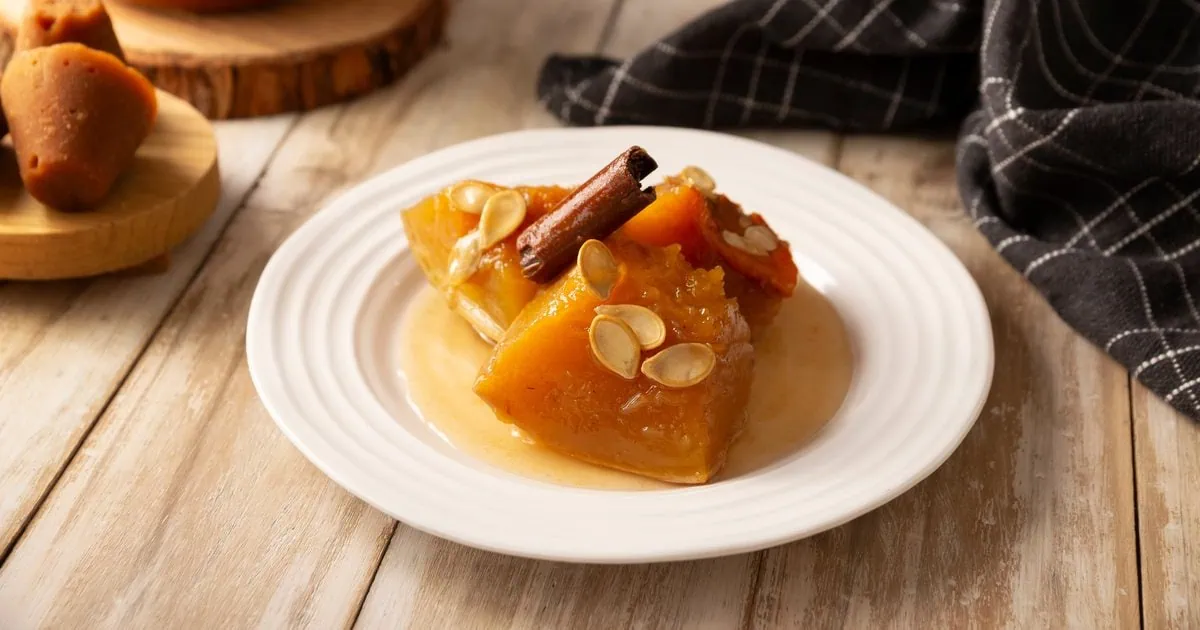
Calabaza en tacha is Mexican candied pumpkin simmered in piloncillo syrup with cinnamon and orange. The skin-on wedges become tender and glossy, ready to serve with their syrup or a splash of milk for Día de Muertos or an autumn dessert.
Calabaza en Tacha at a Glance
This post contains Amazon affiliate links. As an Amazon Associate I earn from qualifying purchases, at no extra cost to you.
What Is Calabaza en Tacha?
Calabaza en tacha is pumpkin cooked slowly in a syrup of piloncillo (unrefined cane sugar), cinnamon sticks and orange until the flesh turns translucent and amber and the syrup reduces to a glaze. The skin stays on, which holds each wedge together and gives you a natural handle. The result tastes like a cross between pumpkin pie filling and candied yams, but darker and less fussy.
The name comes from the sugar mills. A tacho was the big copper cauldron used to boil down cane juice into piloncillo during the colonial era, and pumpkin cooked in that dark, molasses-rich syrup became “calabaza en tacha.” You will also hear it called calabaza en dulce, calabaza enmielada or simply dulce de calabaza, which is the name the dish travels under in Guatemala, Puerto Rico and the rest of Latin America. I cover those regional versions in my dulce de calabaza guide; this page is about the Mexican one.
Pumpkin itself is far older than the sugar. Squash was among the first plants domesticated in Mexico, thousands of years before the Spanish arrived, and early versions of sweetened pumpkin used honey or maguey syrup. Sugarcane came with the Spanish in the 1500s, and with it the piloncillo that defines the dish today.

Calabaza en Tacha and Día de Muertos
The pumpkin harvest lands right on top of Día de Muertos, so calabaza en tacha has been part of the celebration for generations. Families set a plate of it on the ofrenda for the souls who come back to visit on the nights of November 1 and 2, next to marigolds, candles, sugar skulls, a cup of atole and the loved one’s favorite foods. When the visit is over, the living eat what is left.
It sits on the table beside the other foods of the season: pan de muerto, thick champurrado, mole and tamales. If you are planning a full menu, my roundup of Día de los Muertos foods walks through what goes on the ofrenda and why.
The Ingredients
The list is short, so every ingredient matters.
The Pumpkin
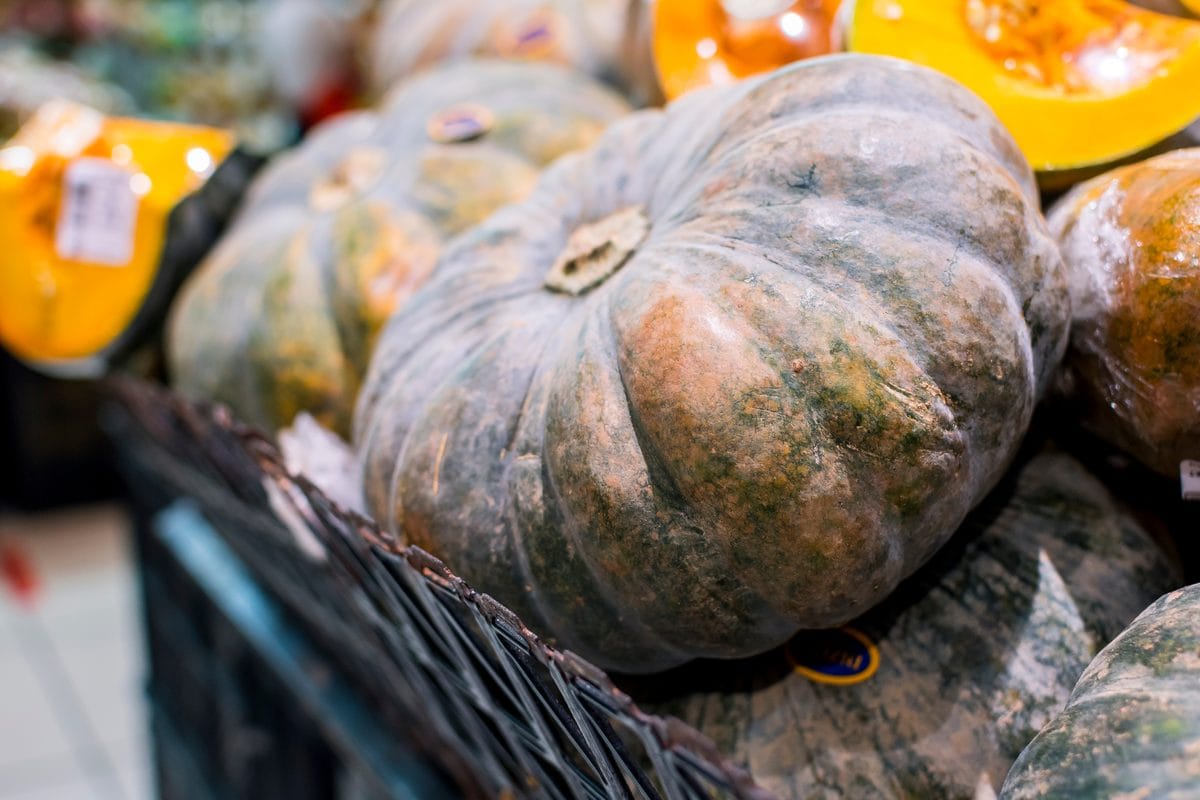
In Mexico the classic choice is calabaza de Castilla, a big, ribbed squash with hard green-and-orange skin and dense, sweet flesh. It holds its shape through a long simmer. Outside Mexico you can find it in Latin markets in the fall, sometimes labeled calabaza or tropical pumpkin. If you can’t, here is how the substitutes behave:
| Pumpkin | How it works in calabaza en tacha |
|---|---|
| Calabaza de Castilla | The traditional pick. Firm, sweet, keeps its shape. |
| Kabocha | My favorite substitute. Dense, sweet and close in texture; cooks a little faster. |
| Sugar pie pumpkin | Works well. Slightly more watery, so reduce the syrup longer at the end. |
| Butternut squash | Very sweet and smooth, but softens quickly. Cut bigger pieces and check early. |
| Jack-o’-lantern pumpkin | Skip it. Stringy, bland and full of water. |
Piloncillo
Piloncillo is unrefined cane sugar pressed into hard cones, with deep molasses and caramel notes that white or light brown sugar can’t match. It is what gives calabaza en tacha its color. You can find it in Latin grocery stores or online; Badia piloncillo cones are easy to get and melt cleanly. In a pinch, use dark brown sugar with a spoonful of molasses.

Canela, Orange and Spices
Use Mexican cinnamon (canela, which is Ceylon cinnamon) if you can. It is softer and more floral than the cassia sold as cinnamon in most US stores, and the sticks flake apart in the syrup. Look for Mexican canela sticks. Orange slices add brightness, and a few whole cloves or a star anise pod are common additions.
Optional Additions
Many families add fruit to the pot: halved guavas, tejocotes (small tart hawthorn fruits that also go into Christmas ponche), or peeled lengths of sugarcane to chew on. All of them soak up the syrup and turn the pot into something closer to a fruit compote.
How to Make Calabaza en Tacha
The full recipe with measurements is in the card below. These are the steps that make the difference:
- Leave the skin on and cut big pieces. About 3-inch wedges. Small cubes fall apart before the syrup has time to soak in.
- Score the flesh. A shallow crosshatch on the cut side lets the syrup reach the center.
- Melt the piloncillo first. Dissolve it in the water with the spices before the pumpkin goes in, so nothing scorches.
- Pack the pot tightly, skin side down. A snug single layer cooks evenly and stays submerged in less liquid.
- Simmer covered, then uncover. Covered first to cook the pumpkin through, then uncovered to reduce the syrup to a glaze. Baste every 10 minutes.
- Let it rest. It is good the same day and better the next. The pumpkin keeps drinking the syrup as it cools.
The Old Trick: Soaking the Pumpkin in Cal
In parts of Mexico, cooks soak the cut pumpkin for a few hours in water mixed with a little cal (food-grade calcium hydroxide, the same pickling lime used to make nixtamal for tortillas) before cooking it. The cal firms the outside of each piece, so the pumpkin comes out with a slightly crisp, candied shell and a soft center that does not collapse, even after a long simmer.
It is optional, and most home recipes skip it. If you want to try it, use only food-grade cal (sold as pickling lime or cal para tortillas), follow the package directions for the amount, and rinse the pumpkin very well in several changes of fresh water before it goes into the syrup.
How to Serve Calabaza en Tacha
- With cold milk. The classic way: a wedge in a bowl, a ladle of syrup, and cold milk poured over. Many people eat it like this for breakfast.
- Warm with the syrup. Straight from the pot, as dessert.
- Cold from the fridge. The syrup sets to a thick glaze and the flavor deepens.
- With coffee. A piece alongside a mug of café de olla, which shares the same piloncillo and canela.
- With ice cream or crema. Not traditional, but a scoop of vanilla over warm pumpkin is hard to argue with.
Calabaza en tacha can also bring pumpkin and cinnamon to a Thanksgiving dessert course. For a seasonal menu adaptation, see our Mexican Thanksgiving food guide, with savory dishes to serve before dessert.
Storing and Making Ahead
Keep calabaza en tacha in its syrup in a covered container in the refrigerator for up to a week. Make it a day or two ahead for Día de Muertos; it only gets better. Reheat gently in a covered pot or serve it cold. I don’t recommend freezing it, because the thawed pumpkin turns soft and watery.
Calabaza en Tacha vs. Dulce de Calabaza
They are close cousins, and some people use the names interchangeably. In practice, “calabaza en tacha” points to the Mexican version: big skin-on wedges, a dark piloncillo glaze, and a strong tie to Día de Muertos. “Dulce de calabaza” is the broader Latin American family, which includes Guatemala’s dulce de ayote, Puerto Rico’s pumpkin in syrup and spoon sweets cooked down until they are almost a jam. My guide to dulce de calabaza covers them country by country.
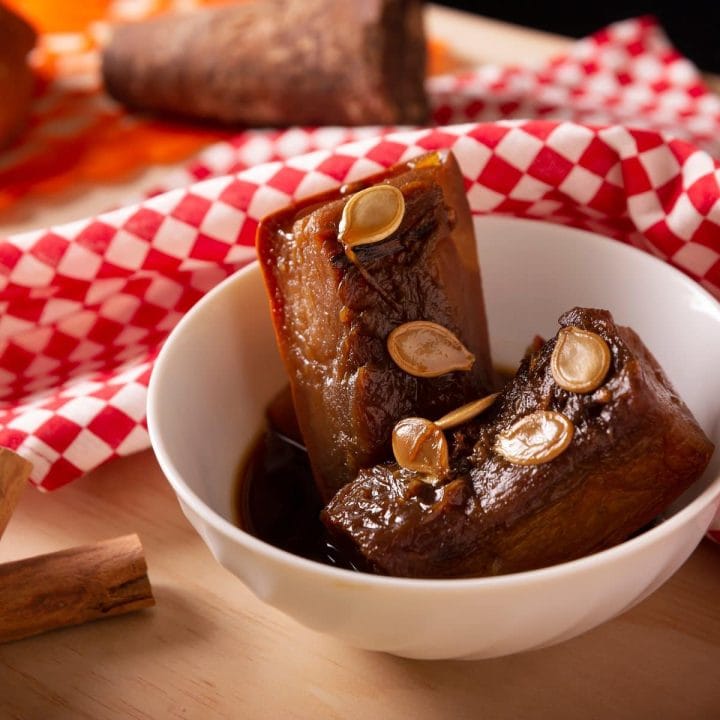
Calabaza en Tacha (Mexican Candied Pumpkin)
Mexico’s Día de Muertos candied pumpkin: big skin-on wedges simmered in piloncillo syrup with canela and orange until glossy and amber. Serve it warm, cold, or in a bowl of cold milk.
Ingredients
- 3 lb (1.4 kg) calabaza de Castilla, kabocha or sugar pie pumpkin
- 12 oz (340 g) piloncillo (about 1½ large cones), or see notes
- 1½ cups (360 ml) water
- 3 Mexican cinnamon sticks (canela)
- 1 orange, sliced into rounds
- 4 whole cloves
- 1 star anise pod (optional)
- 6 guavas, halved (optional)
Instructions
- Scrape the seeds and strings out of the pumpkin and cut it into 3-inch pieces, leaving the skin on. Score the cut flesh in a shallow crosshatch, about ½ inch deep.
- In a wide, heavy pot, combine the water, piloncillo, cinnamon sticks, cloves and star anise. Cook over medium heat, stirring now and then, until the piloncillo melts completely, 8 to 10 minutes.
- Lay the orange slices in the syrup. Arrange the pumpkin on top, skin side down, in one snug layer (if you need a second layer, place those pieces flesh side down). Tuck in the guavas, if using.
- Bring to a simmer, cover, and cook over low heat for 35 to 45 minutes, spooning syrup over the pumpkin every 10 minutes, until a knife slides easily through the flesh.
- Uncover and simmer 15 to 20 minutes more, still basting, until the pumpkin is deep amber and the syrup is thick and glossy. If the syrup gets too thick before the pumpkin is done, add 2 to 3 tablespoons of water. If it is still thin when the pumpkin is tender, lift the pumpkin out, boil the syrup until it coats a spoon, and return the pumpkin.
- Take the pot off the heat and let the pumpkin cool in the syrup for at least 1 hour. For the best flavor, refrigerate it in the syrup overnight.
- Serve warm, at room temperature or cold, with syrup spooned over the top. For the traditional breakfast, set a piece in a bowl and pour cold milk over it.
Notes
Pumpkin: Calabaza de Castilla is traditional. Kabocha is the best substitute; sugar pie pumpkin and butternut also work (check butternut early, it softens fast). Avoid carving pumpkins.
No piloncillo? Use 1½ cups packed dark brown sugar plus 1 tablespoon molasses.
Optional cal soak: For firmer pieces with a candied shell, soak the cut pumpkin in water with food-grade cal (pickling lime), following the package directions, for a few hours. Rinse very well in several changes of fresh water before cooking.
Storage: Refrigerate in its syrup, covered, for up to 1 week. Freezing is not recommended; the pumpkin turns watery.
Timing: The 2 hour 30 minute total includes 1 hour resting in the syrup. Optional lime-water soaking and overnight refrigeration are additional. Cooking time varies with the squash; check early for softer varieties and remove tender pieces before reducing a watery syrup.
Frequently Asked Questions
What is calabaza en tacha in English?
It translates to Mexican candied pumpkin: pumpkin simmered in piloncillo syrup with cinnamon until glossy and caramelized.
Why is it called “en tacha”?
The name comes from the tachos, the copper cauldrons used in colonial sugar mills to boil cane juice into piloncillo. Pumpkin cooked in that dark syrup became “calabaza en tacha.”
How long does it take to cook?
About 35 to 45 minutes covered, until a knife slides through the flesh, then 15 to 20 minutes uncovered to thicken the syrup. Plan on an hour and a half in total, plus resting time.
Can I use a regular pumpkin or butternut squash?
Yes. Kabocha and sugar pie pumpkins are the best substitutes for calabaza de Castilla. Butternut works but softens quickly, so check it early. Avoid carving pumpkins, which are stringy and watery.
Is calabaza en tacha eaten hot or cold?
Both. It is served warm as dessert, cold from the fridge, or in a bowl with cold milk poured over, which is the way many Mexican families eat it for breakfast.
Do I have to soak the pumpkin in cal?
No. The cal soak is a traditional option for firmer pieces with a candied shell. Without it, you get softer, spoonable pumpkin, which is how most home cooks make it.
Why is calabaza en tacha made for Día de Muertos?
Pumpkins are harvested in the fall, right when Día de Muertos arrives, and sweet pumpkin has long been an offering on the ofrenda for the visiting souls. Families share what is left once the celebration is over.
More Recipes for Día de Muertos
- Pan de Muerto, the sweet orange-blossom bread of the season
- Atole and Champurrado, the warm corn drinks served alongside
- Atole de Elote, made with fresh sweet corn
- Mole Poblano, the dish that anchors many ofrenda feasts
- Día de los Muertos Foods, the full guide
- Mexican Desserts, more sweets from across Mexico
More Mexican Foods
See all →
Jorge Garcia is the founder of AmigoFoods, where he has spent over 20 years helping readers discover authentic Latin American and Spanish cuisine. Raised in a Cuban-American household, Jorge learned to cook at the hands of his mother and grandmother, carrying forward generations of family recipes. That heritage, backed by his family’s four-generation history in the Latin food industry, inspired him to launch AmigoFoods in 2003. With more than 1,000 published articles on recipes, ingredients, and food culture, Jorge’s mission is simple: make authentic Latin cooking approachable for home cooks everywhere while honoring the traditions behind every dish.