

Chancho al palo is Huaral’s wood-fire roasted pork, with juicy meat and crisp crackling. This large-batch version uses skin-on belly or ribs, simple seasoning and an outdoor roasting frame; plan around three hours over the embers, with extra time for the fire.
Chancho al Palo at a Glance
What Is Chancho al Palo? Understanding Peru’s Fire-Roasted Pork Tradition
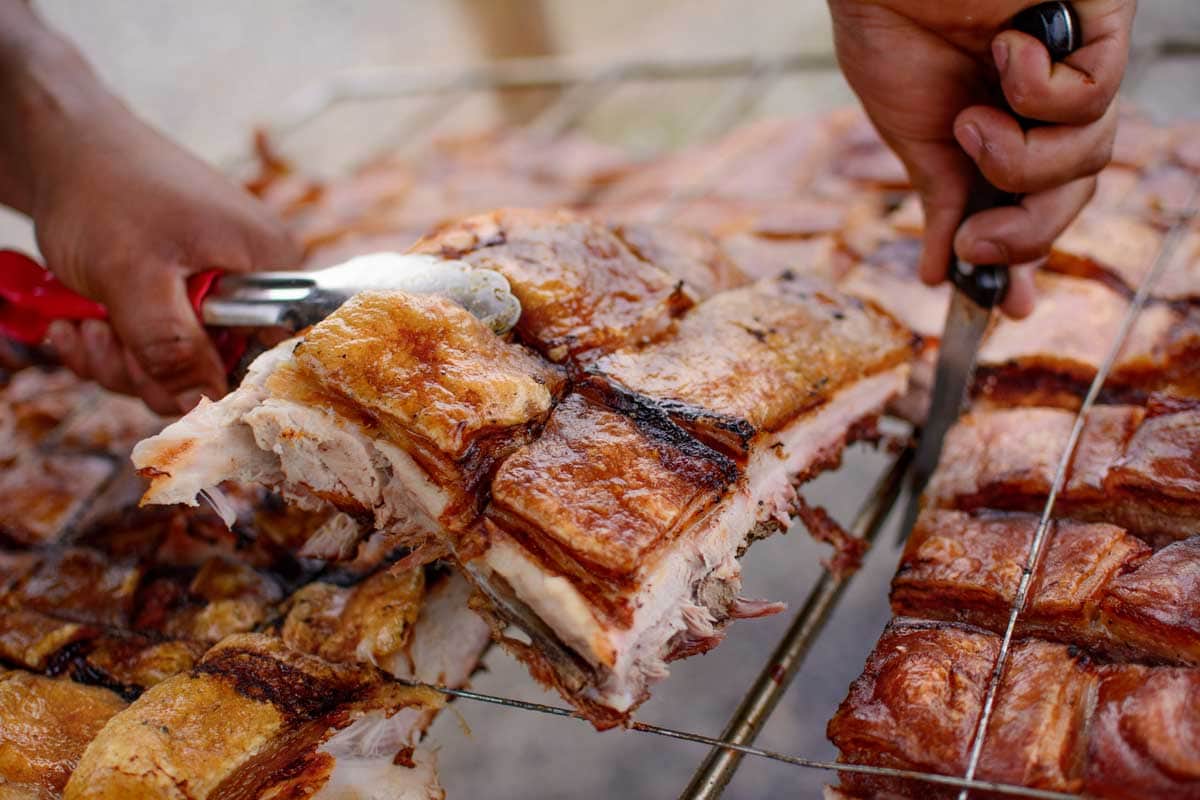
Chancho al palo is a specialty of Huaral, north of Lima. Large slabs of pork roast beside a wood fire, held in a frame so they can be turned evenly. The contrast between tender meat and crisp skin is central to the dish.
The frame is not a cedar grilling plank. In the method documented by Carlos Ramírez, skin-on belly or ribs are seasoned simply with salt and finished with beer. Garlic, cumin and citrus can be used in a cook’s variation, but a long marinade is not essential to this preparation.
Essential Ingredients Used in Authentic Chancho al Palo
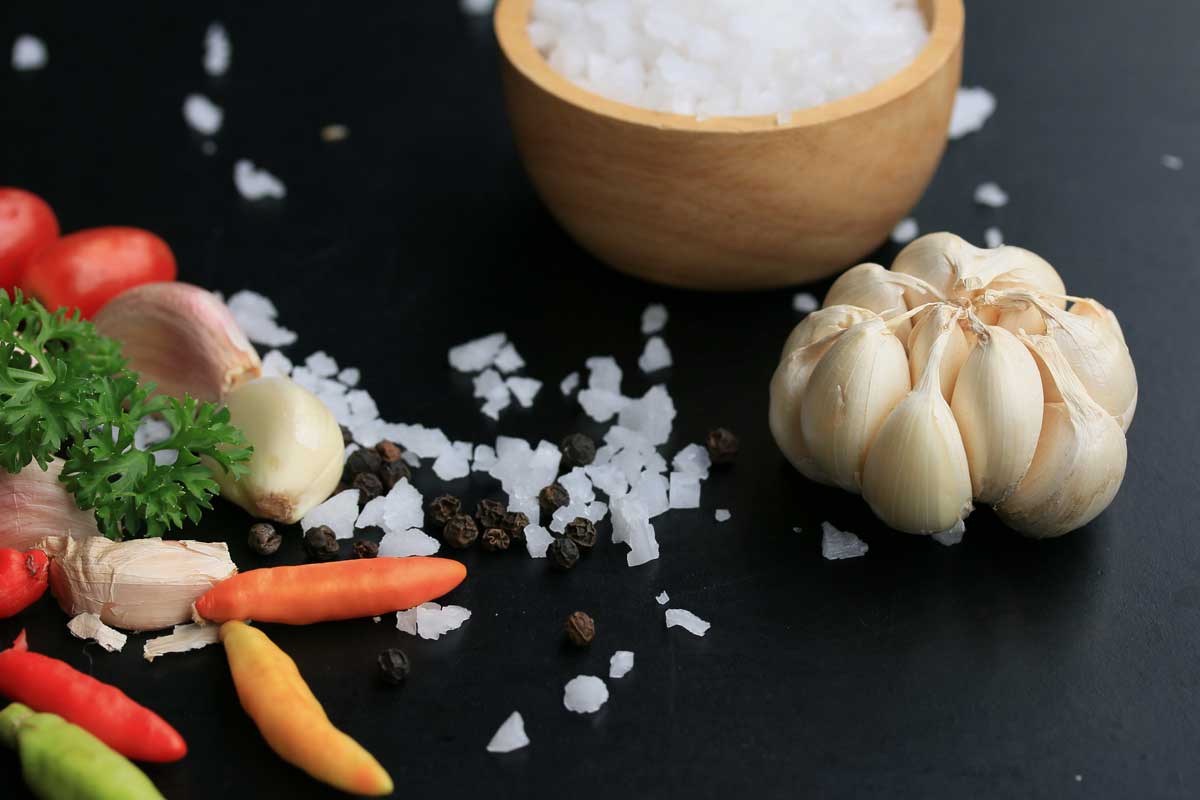
For the recipe below, use an evenly opened slab of skin-on pork belly or ribs. A thick shoulder joint will roast differently and is not an interchangeable cut for the stated timing.
- 5 kg (11 lb) skin-on pork belly or pork rib section, opened into an even slab
- Coarse salt, to taste
- 620 ml (about 2 1/2 cups) beer
- Salsa criolla and cooked yuca, potatoes or corn, to serve (optional)
Optional flavor variations include garlic, cumin, pepper, citrus, ají panca or chicha de jora. Keep any marinating pork refrigerated. These additions are optional, rather than a required Huaral marinade.
How to Make Chancho al Palo at Home (Step-by-Step Guide)
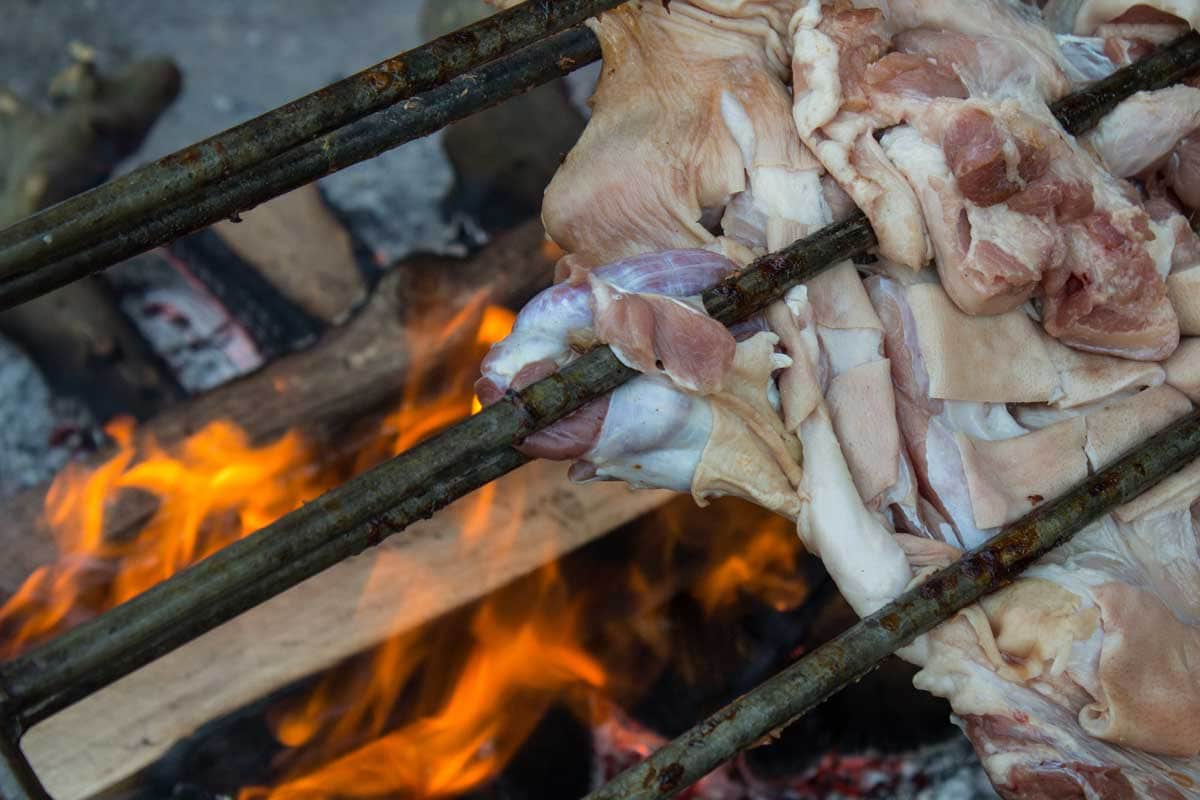
This is an outdoor wood-fire recipe for cooks with a suitable roasting frame. The salt-and-beer approach is informed by Carlos Ramírez’s recipe; the instructions here add temperature checks and specify food-contact stainless equipment.
- Pat the pork dry and score the skin shallowly without cutting into the flesh. Salt both sides. Keep refrigerated until the fire and equipment are ready.
- Use a purpose-built, stable stainless-steel roasting frame rated for this weight, with food-contact stainless fasteners. Build an outdoor wood fire and let it settle to steady embers; keep flame away from dripping fat.
- Secure the slab flat in the frame. Position beside the embers, initially about 40 cm (16 inches) away, adjusting for actual heat. Turn about every 15 minutes for even roasting. Allow roughly 2 1/2 hours before the finishing stage.
- Brush the beer onto both sides in several light applications and continue roasting for about 30 minutes, until the skin is crisp and the meat is tender. Move away from flare-ups. Thickness and fire intensity can extend total cooking to 4 hours.
- Check several thick areas away from bone with a thermometer: whole pork must reach at least 145°F (63°C), followed by at least 3 minutes rest. Belly and ribs usually require further cooking for tenderness; a skewer should enter easily. Do not judge safety by color or juices alone.
- Rest 10–15 minutes, release the fasteners carefully, and slice. Serve with salsa criolla and cooked starches.
Plan about 20 minutes preparation, 3 hours roasting and 15 minutes resting (3 hours 35 minutes), plus time to establish the fire. Roasting may take 2 1/2–4 hours or longer; use tenderness and a thermometer, not the clock alone. This large batch makes approximately 12–16 main-dish portions with sides, depending on bone and fat loss.
This outdoor frame-roasted version uses simple salt seasoning and beer. Garlic, cumin, citrus and ají marinades are optional variations, not required ingredients. If marinating, refrigerate throughout and keep the skin dry. A shoulder joint or an oven roast needs a different cooking plan. Do not improvise a heavy roasting frame from cedar planks, coated wire or treated lumber. Refrigerate leftovers promptly in shallow containers and use within 3–4 days.
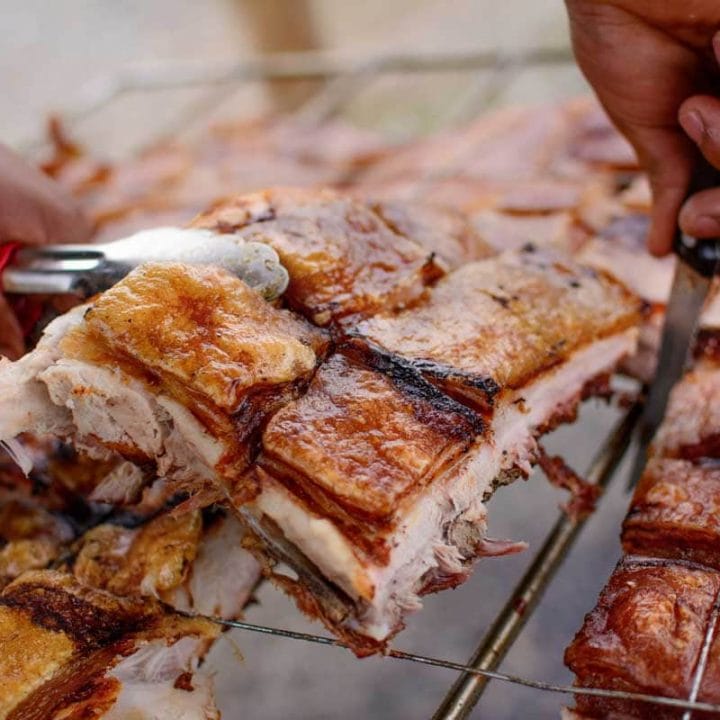
Chancho al Palo (Huaral-Style Pork)
Skin-on pork roasted beside a wood fire until tender with crisp crackling. Requires a purpose-built outdoor roasting frame.
Ingredients
- 5 kg (11 lb) skin-on pork belly or pork rib section, opened into an even slab
- Coarse salt, to taste
- 620 ml (about 2 1/2 cups) beer
- Salsa criolla and cooked yuca, potatoes or corn, to serve (optional)
Instructions
- Pat the pork dry and score the skin shallowly without cutting into the flesh. Salt both sides. Keep refrigerated until the fire and equipment are ready.
- Use a purpose-built, stable stainless-steel roasting frame rated for this weight, with food-contact stainless fasteners. Build an outdoor wood fire and let it settle to steady embers; keep flame away from dripping fat.
- Secure the slab flat in the frame. Position beside the embers, initially about 40 cm (16 inches) away, adjusting for actual heat. Turn about every 15 minutes for even roasting. Allow roughly 2 1/2 hours before the finishing stage.
- Brush the beer onto both sides in several light applications and continue roasting for about 30 minutes, until the skin is crisp and the meat is tender. Move away from flare-ups. Thickness and fire intensity can extend total cooking to 4 hours.
- Check several thick areas away from bone with a thermometer: whole pork must reach at least 145°F (63°C), followed by at least 3 minutes rest. Belly and ribs usually require further cooking for tenderness; a skewer should enter easily. Do not judge safety by color or juices alone.
- Rest 10–15 minutes, release the fasteners carefully, and slice. Serve with salsa criolla and cooked starches.
Notes
Plan about 20 minutes preparation, 3 hours roasting and 15 minutes resting (3 hours 35 minutes), plus time to establish the fire. Roasting may take 2 1/2–4 hours or longer; use tenderness and a thermometer, not the clock alone. This large batch makes approximately 12–16 main-dish portions with sides, depending on bone and fat loss.
This outdoor frame-roasted version uses simple salt seasoning and beer. Garlic, cumin, citrus and ají marinades are optional variations, not required ingredients. If marinating, refrigerate throughout and keep the skin dry. A shoulder joint or an oven roast needs a different cooking plan. Do not improvise a heavy roasting frame from cedar planks, coated wire or treated lumber. Refrigerate leftovers promptly in shallow containers and use within 3–4 days.
Chancho al Palo Seasoning and Serving Variations

Huaral is the best-documented home of chancho al palo. Its fire-roasting technique matters more than a prescribed spice blend. Cooks can adapt the accompaniments and seasoning without treating each variation as a separate regional tradition.
For a different flavor, try a little ají amarillo or ají panca in a refrigerated marinade, keeping the skin dry. Garlic, oregano and citrus also suit pork. Sweet additions such as panela can burn near the fire, so use sparingly and watch closely.
Serve with sweet potatoes, yuca, corn, potatoes or salsa criolla according to your meal. These are serving choices, not evidence of distinct coastal, Andean or northern recipes.
What to Serve with Chancho al Palo (Traditional Peruvian Side Dishes)

The rich, smoky, fire-kissed flavor of chancho al palo shines even brighter when paired with classic Peruvian side dishes.
These accompaniments balance the dish’s savory depth with freshness, texture, and regional authenticity.
Whether you’re preparing a full fiesta-style spread or a simple family meal, here are the traditional sides that complete the experience.
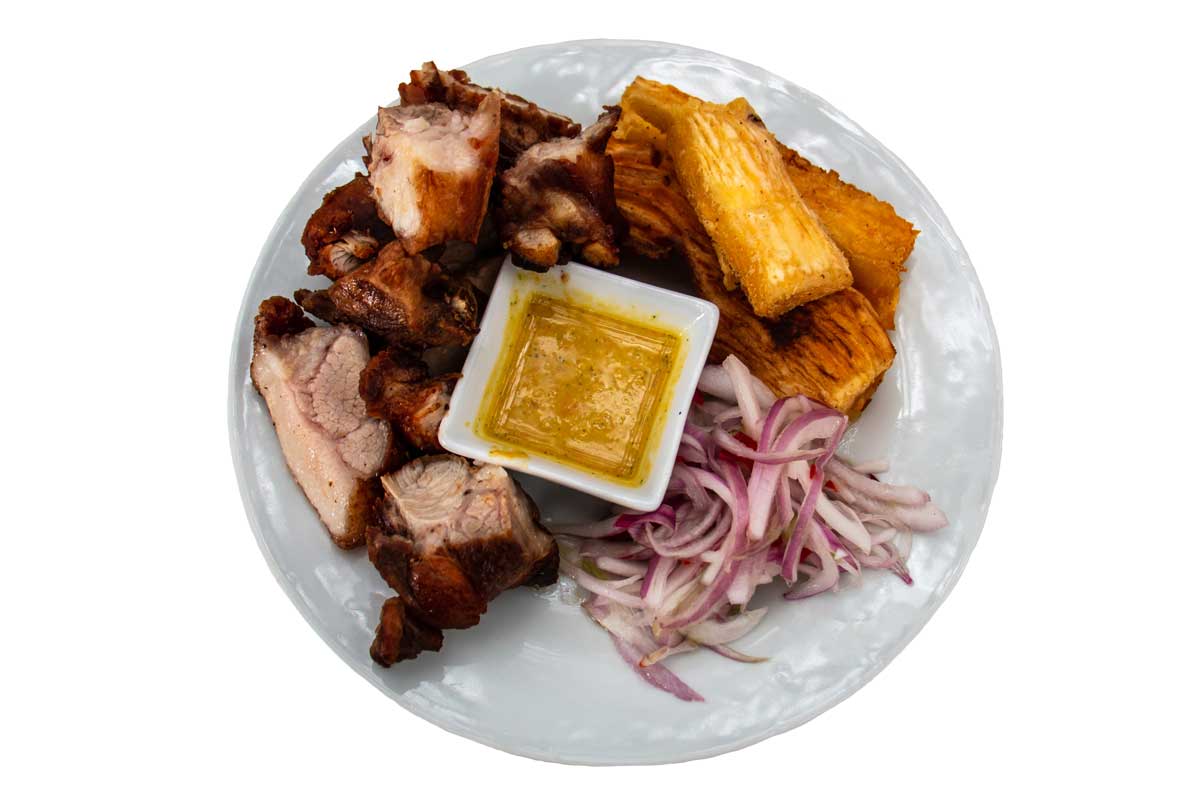
Yucca (Yuca Frita or Yuca Sancochada)
-
A staple pairing thanks to its mild flavor and hearty texture.
-
Can be served boiled (sancochada) for a soft, creamy contrast.
-
Or fried (yuca frita) for an extra-crispy side that soaks up juices perfectly.
Choclo Peruano (Peruvian Giant Corn)
-
Large, tender kernels that offer a subtle sweetness.
-
Often served simply boiled with a sprinkle of salt.
-
Provides a gentle flavor that pairs well with smoky pork.

Papa Andina (Andean Potatoes)
-
A wide variety of colorful native potatoes adds vibrant appeal.
-
Roasted, boiled, or grilled depending on the region.
-
Earthy, buttery notes complement the richness of the pork.
Salsa Criolla
-
The quintessential Peruvian topping for roasted meats.
-
Made with red onion, lime juice, cilantro, and aji peppers.
-
Bright, acidic, and refreshing—cuts through the fat beautifully.
Ají Amarillo or Ají Criollo Sauces
-
Ají amarillo delivers creamy heat and traditional Peruvian flavor.
-
Ají criollo is thinner, citric, and spicier—ideal for drizzling over pork.
-
Optional: add rocoto sauce for a serious kick.
Ensalada de Lechuga (Simple Lettuce Salad)
-
A light, crisp side with tomatoes, cucumbers, and lime dressing.
-
Helps balance the richness of the pork-heavy plate.
Sweet Potatoes (Camote)
-
Roasted or boiled camote adds natural sweetness to the meal.
-
Especially popular in coastal regions.
Arroz Blanco (White Rice)
-
A neutral, comforting base that absorbs the juices from the pork.
-
Sometimes served with corn kernels or herbs for extra aroma.
Chicha Morada or Local Beverages
-
Though technically a drink, this iconic purple-corn beverage is a classic pairing.
-
Its fruity, cinnamon-infused flavor complements smoky meat.
-
In festivals, beer or chicha de jora is also common.
Whether you opt for crispy yucca, tangy salsa criolla, or creamy ají sauces, the right side dishes elevate chancho al palo from a rustic celebration food to a full traditional Peruvian feast.
Where to Eat Chancho al Palo in Peru (Restaurants, Festivals & Events)
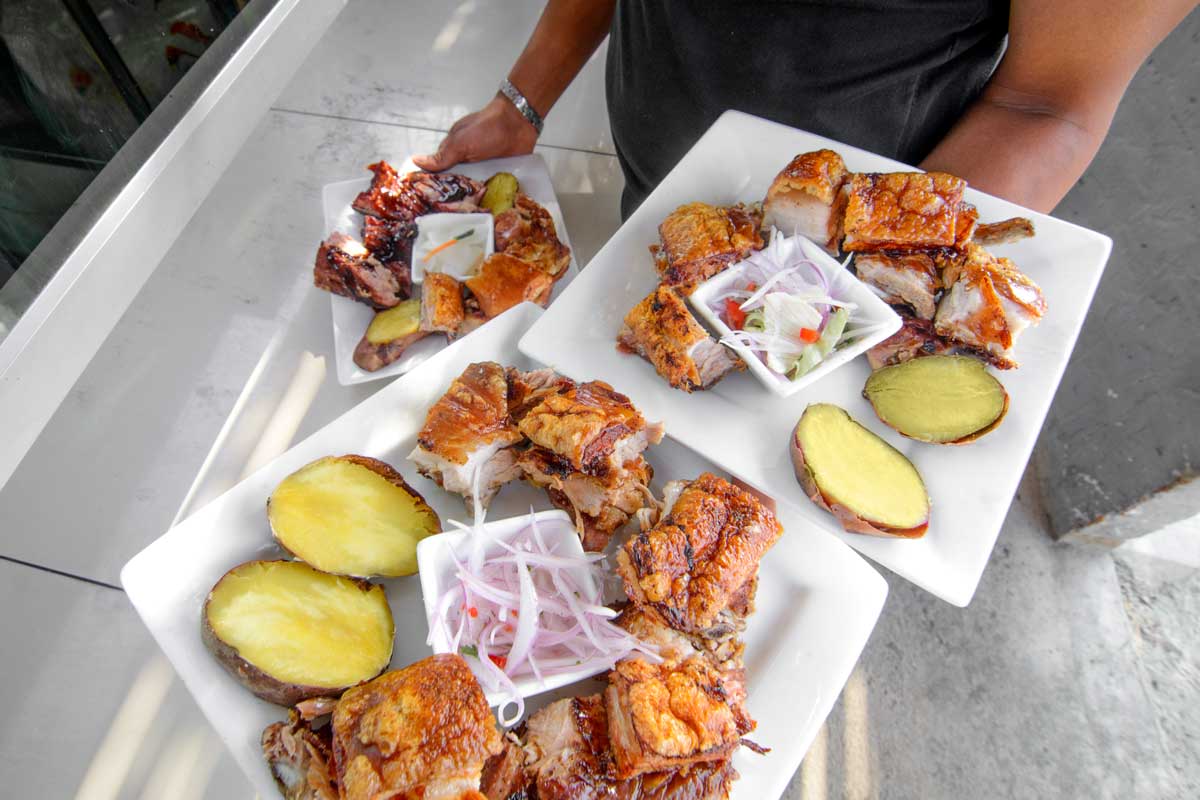
If you want to enjoy authentic Chancho al Palo — tender, fire-roasted pork with crispy skin — these are some of the best places, festivals, and events where the dish truly shines.
Huaral — The Capital of Chancho al Palo
-
Huaral is widely recognized as the birthplace and stronghold of chancho al palo.
-
In Huaral you’ll find multiple restaurants and rustic eateries that specialize in the dish, offering traditional recipes rooted in decades-old local culinary culture.
-
The ambience in Huaral — countryside surroundings, wood-fired cooking, and a strong sense of tradition — makes it the ideal place to taste chancho al palo as it was meant to be.
Las Dalias (Huaral) — A Countryside Dining Option
- Las Dalias has become a reference point for chancho al palo lovers, offering a refined yet rustic take on the classic dish — including versions with local citrus like “naranja huando.”
-
It’s a restaurant-campestre setting, ideal for families, travelers, or anyone wanting a memorable meal outside the capital.
-
If you visit Peru and are near Lima, Las Dalias presents an accessible and reliable option for authentic chancho al palo without needing deep local connections.
Festival del Chancho al Palo‑Chancay (and Huaral’s Chancho al Palo Festival) — Food Festivals Dedicated to the Dish
-
The festival in Chancay — close to Lima — draws tens of thousands of visitors eager to try chancho al palo cooked over authentic firewood embers.
-
This event revives the communal, celebratory spirit of the dish: fire-roasted pork, live music, parades, and a festive atmosphere that celebrates Peru’s gastronomic heritage.
-
Additionally, the festival tradition continues in Huaral: many restaurants and local hosts participate in a special annual celebration — often around October — making it an ideal time to visit if you want authenticity and abundance.
Tips for Visiting & Eating Chancho al Palo in Peru
-
Go to Huaral or Chancay if you want the real deal: these places have the strongest tradition and best execution of the recipe.
-
If you’re near Lima and don’t have time for a long trip, look for restaurants like Las Dalias that cater to outsiders while preserving authenticity.
-
Try to visit during festival time — the communal energy, multiple stands, and live roasting over wood fire amplify the experience.
-
Pair your meal with traditional sides (yuca, choclo, salsa criolla) and local drinks for the full Peruvian vibe.
Where to Buy Kits, Seasonings & Tools Online for Chancho al Palo
Buy the equipment for the cooking method first: a stable, purpose-built stainless-steel pork-roasting frame with suitable fasteners, heat-resistant gloves, long tongs and an instant-read thermometer. Check the manufacturer’s weight and heat limits before loading a large slab.
Use dry firewood sold for cooking, such as suitable fruitwood. Cedar grilling planks do not replace a heavy roasting frame. Avoid treated, painted or coated materials near food and heat.
Ají pastes and Peruvian seasonings can be useful for accompanying sauces or optional marinades. They are not needed for the simple salt-and-beer recipe above.
What to Know When Buying Seasonings & Tools
Choose food-contact equipment designed for open-fire roasting. A chicken marinade or generic Peruvian spice blend changes the flavor, so treat it as an optional variation and check its salt level. Keep raw pork and its utensils separate from cooked food.
The History & Cultural Origins of Chancho al Palo
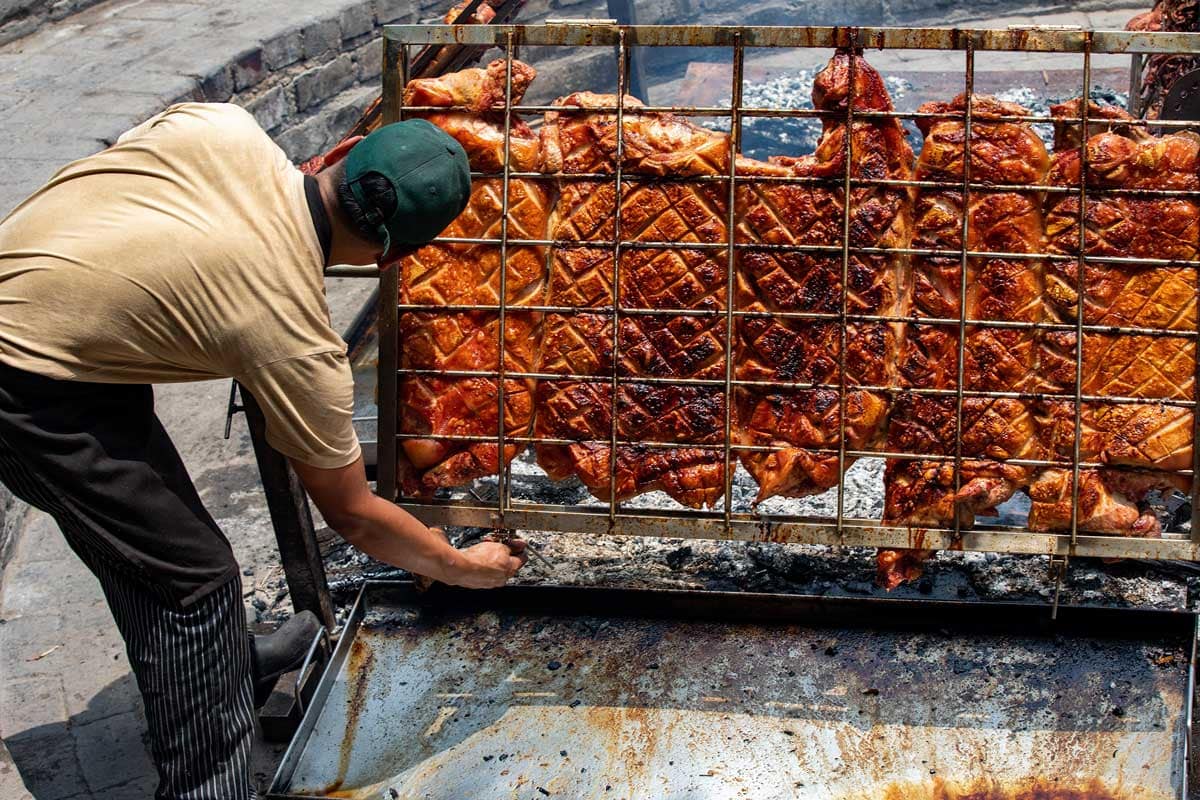
Chancho al palo is closely associated with family gatherings in rural Huaral. Peru’s tourism inventory credits the Ramírez family with developing the metal-frame roasting technique in the 1980s. It should not be described as an unchanged pre-Hispanic pork recipe.
Restaurant cooks and food festivals helped bring the Huaral specialty to a wider audience. Peru now observes Día del Chancho al Palo on the third Sunday of October.
Conclusion: Why Chancho al Palo Remains a Must-Try Peruvian Classic
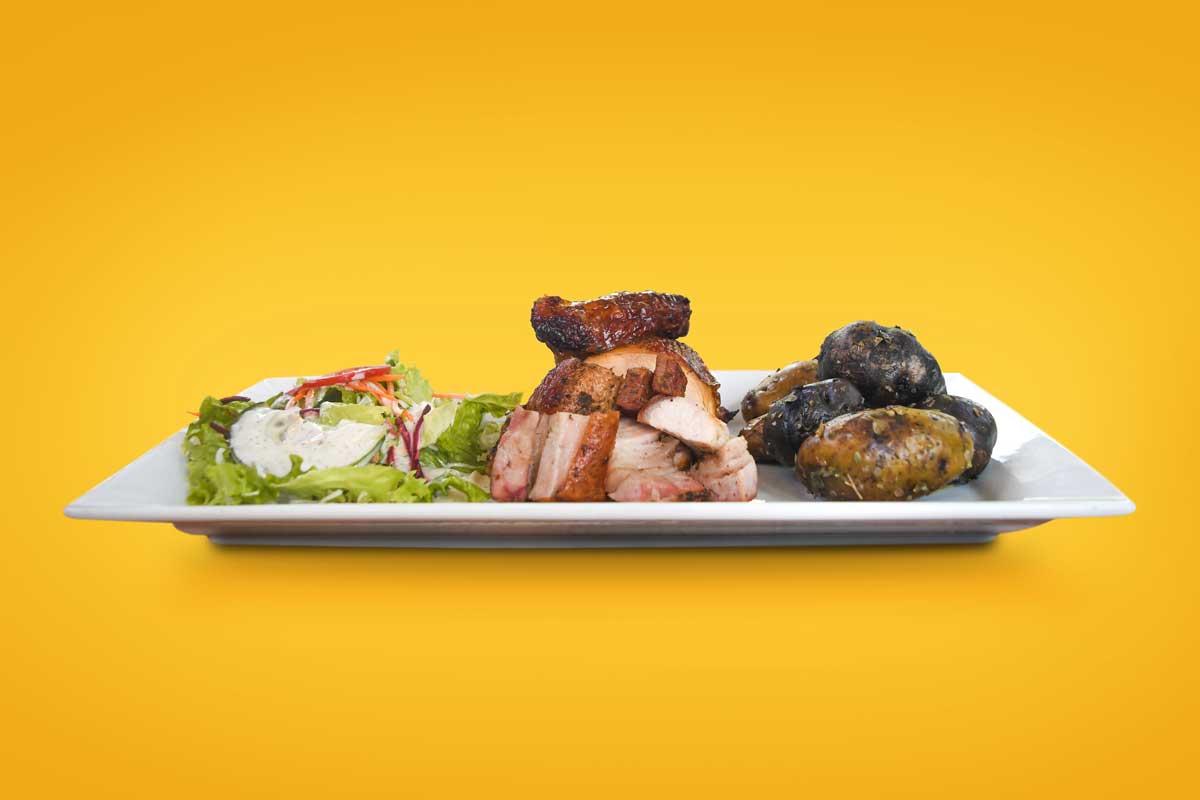
Chancho al palo isn’t just pork—it’s a sensory experience rooted in tradition, community, and pure fire-kissed flavor.
From its rustic origins to its modern festival fame, this Peruvian dish continues to delight locals and travelers alike.
If you’ve never tried it, add it to your culinary bucket list!
And if you’re ready to make it yourself, choose a suitable roasting frame and plan your fire to recreate authentic flavors at home. ¡Buen provecho!
More Peruvian Foods
See all →
Jorge Garcia is the founder of AmigoFoods, where he has spent over 20 years helping readers discover authentic Latin American and Spanish cuisine. Raised in a Cuban-American household, Jorge learned to cook at the hands of his mother and grandmother, carrying forward generations of family recipes. That heritage, backed by his family’s four-generation history in the Latin food industry, inspired him to launch AmigoFoods in 2003. With more than 1,000 published articles on recipes, ingredients, and food culture, Jorge’s mission is simple: make authentic Latin cooking approachable for home cooks everywhere while honoring the traditions behind every dish.