

Tomate de árbol is the egg-shaped “tree tomato” of the Andes, sold in English as tamarillo. Despite the name it is not a garden tomato. It’s a tart, slightly sweet fruit that Colombians and Ecuadorians mostly drink: peeled, blended with water or milk, strained and poured over ice as jugo de tomate de árbol.
This guide covers what the fruit is, how it tastes, how to eat it and find it in the US, and the juice recipe, with the one step that keeps it from turning bitter.
Jugo de Tomate de Árbol at a Glance
AmigoFoods may earn a commission from qualifying Amazon purchases made through links in this article.
What is tomate de árbol?
Tomate de árbol (Solanum betaceum) is the fruit of a small, fast-growing tree in the nightshade family, the same family as tomatoes, potatoes and peppers. It’s native to the Andes of Colombia, Ecuador, Peru, Bolivia, Chile and Argentina, and it grows on a woody tree a few meters tall rather than on a vine, which is where the name “tree tomato” comes from.
The fruit is about the size and shape of a large egg, with smooth, glossy skin that ripens red, orange or gold. Cut one open and it looks a lot like a tomato: juicy flesh around a dark, seedy center. The skin, though, is bitter and is almost always removed before eating.
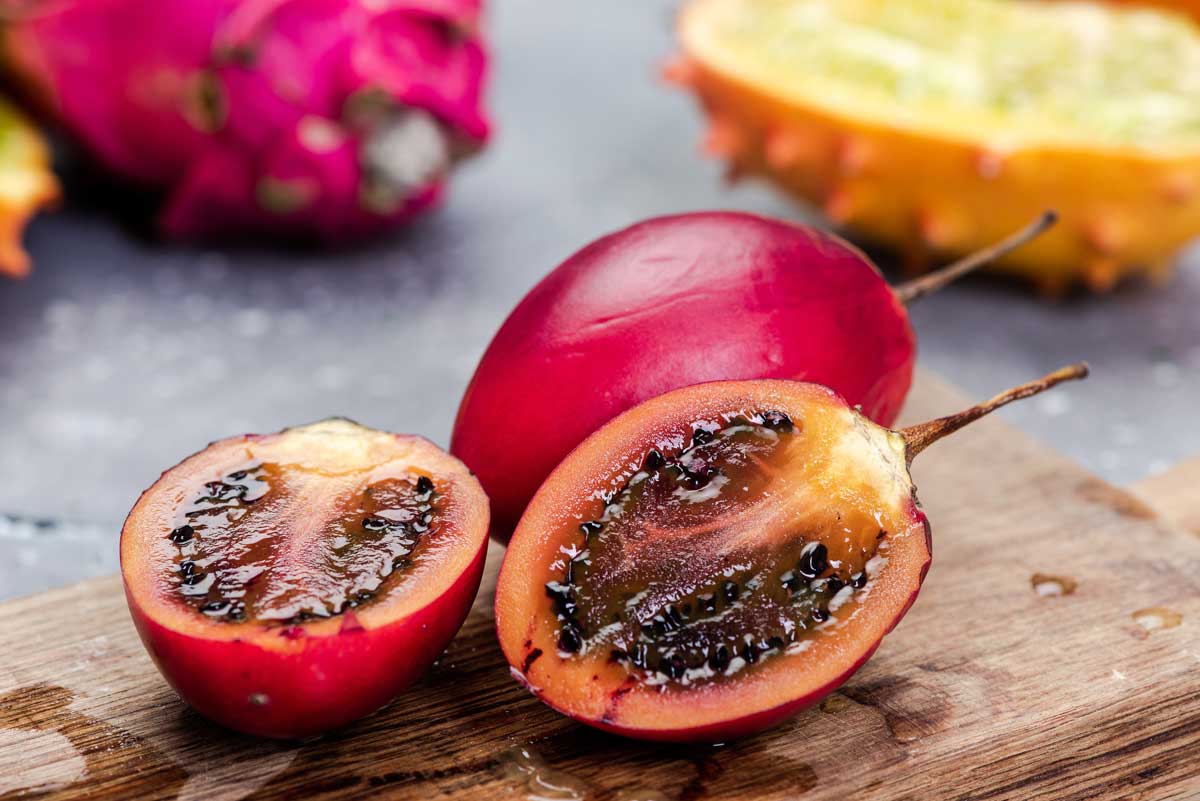
What is tomate de árbol called in English?
In English it’s called tamarillo or, more literally, tree tomato. US grocery stores and produce suppliers almost always label it tamarillo.
The word tamarillo is younger than you’d think. Until the 1960s, New Zealand growers sold the fruit as “tree tomato,” but they worried the name confused shoppers who expected a salad tomato. The New Zealand Tree Tomato Promotions Council picked “tamarillo” instead, and the new name was officially adopted in February 1967. It has nothing to do with Spanish or the Andes. It was a marketing name that stuck.
Across Latin America the fruit has a handful of local names:
- Tomate de árbol: Colombia, Ecuador and most of Spanish-speaking South America
- Tomate de palo and tomate andino: regional names in the Andes
- Sachatomate: Peru, from Quechua sacha (“wild” or “of the forest”)
- Chilto: parts of Bolivia and northern Argentina
What does tomate de árbol taste like?
Raw tomate de árbol is sharp and tangy first, sweet second. The usual comparison is passion fruit crossed with a ripe tomato, with a little kiwi or plum in the background. The flesh is juicy and a bit savory, which is why the same fruit works in a sweet juice and in a spicy salsa.
Two things affect the flavor more than anything else: ripeness (an underripe fruit is astringent) and the skin, which is properly bitter. Peel it and use ripe fruit, and the bitterness people complain about mostly disappears.
Red, gold and purple tomate de árbol
All three are the same species. Color tells you roughly how tart the fruit will be.
How to eat tomate de árbol
There are two easy ways, depending on whether you’re eating it on the spot or cooking with it.
Raw, with a spoon. Cut a ripe fruit in half crosswise and scoop the flesh out of the skin, seeds and all. A light sprinkle of sugar takes the edge off. Leave the skin behind.
Blanched and peeled. For juice, sauces and desserts, drop whole fruit into boiling water for 2 to 3 minutes, cool them in ice water, then slip the skins off with your fingers. Blanching loosens the skin and keeps its bitterness out of whatever you’re making.
The seeds are soft and edible. In juice they’re strained out because crushed seeds add bitterness and grit, not because they’re harmful.
How to buy and store tomate de árbol
Choosing fresh fruit: look for smooth, glossy skin with full color and no wrinkles or soft spots. A ripe tomate de árbol gives slightly when you press it, like a ripe plum, and smells fruity at the stem end. Rock-hard fruit will ripen on the counter in a few days.
Where to find it in the US: fresh tamarillos turn up at Latin and international markets and some specialty grocers, but supply is patchy. The reliable option is frozen pulp, sold as pulpa de tomate de árbol in the freezer aisle next to the lulo, guanábana and maracuyá. One 14-ounce (400 g) pack replaces the four fresh fruits in the juice recipe below, already peeled and seeded.
Storing: keep ripe fruit in the fridge and use it within about a week. To freeze, blanch and peel the fruit, then freeze it whole or blended into pulp in a zip-top bag, and use it straight from frozen for juice.
Ingredients for jugo de tomate de árbol
- Tomate de árbol: 4 ripe fruits, about 1 pound (450 g). Red or orange-red types give the classic color and tang. Swap in one 14-ounce pack of frozen pulp if fresh isn’t available.
- Cold water or whole milk: 3 cups. Water gives a bright, tangy juice; milk gives the creamy Colombian jugo en leche.
- Sugar or panela: ⅓ cup to start, more to taste. Grated panela adds a light caramel note that suits the fruit; you can also buy grated panela on Amazon.
- Ice: for serving.
You’ll also need a fine-mesh strainer. A bowl-style one with a hook that rests on the pitcher makes straining much faster (see fine-mesh strainers on Amazon).
How to make jugo de tomate de árbol
1. Blanch the fruit
Bring a small pot of water to a boil. Add the whole tomates de árbol and cook for 2 to 3 minutes, until the skins wrinkle or split. Lift them into a bowl of ice water to cool for a couple of minutes.
2. Peel and trim
Slip the skins off with your fingers. They come away easily after blanching. Pull out the stems. Don’t skip this: blending the skin is the main reason homemade tomate de árbol juice tastes bitter.
3. Blend briefly
Put the peeled fruit in the blender with 1 cup of the cold water and the sugar. Pulse in short bursts for 10 to 15 seconds total, just until the flesh breaks up. Blending on high for a long time crushes the seeds and makes the juice bitter and gritty.
4. Strain out the seeds
Pour the mixture through a fine-mesh strainer into a pitcher, pressing the pulp with a spoon to get every bit of juice. Discard the seeds.
5. Thin, sweeten and serve
Stir in the remaining 2 cups of cold water (or milk, see below). Taste and add more sugar if needed; the fruit’s tartness varies a lot. Serve right away over ice.
Jugo en agua vs. jugo en leche
Colombians order juice en agua or en leche, and tomate de árbol is a favorite either way. Same fruit, two different drinks:
| En agua (with water) | En leche (with milk) | |
|---|---|---|
| Taste | Bright, tangy, refreshing | Creamy and mellow, like a thin fruit milkshake |
| Color | Translucent orange-red | Opaque salmon-pink |
| Liquid | 3 cups cold water | 1 cup cold water to blend, then 2 cups cold whole milk |
| Best with | Lunch, hot afternoons | Breakfast or as a snack on its own |
Why is my tomate de árbol juice bitter?
Almost always one of four things:
- The skin went in the blender. Blanch and peel every fruit.
- The seeds were pulverized. Pulse briefly instead of blending on high, then strain.
- The fruit wasn’t ripe. Wait until it gives slightly when pressed.
- Not enough sugar for that batch. Tartness varies from fruit to fruit; taste and adjust.
Other ways to use tomate de árbol
Ají de tomate de árbol (Ecuador)
In Ecuador the fruit’s best-known job is in ají de tomate de árbol, the table hot sauce that sits on nearly every lunch table: blanched tamarillo blended with ají chiles, onion, cilantro, salt and lime. It’s the classic partner for empanadas de morocho, and there’s more on it in our guide to Ecuadorian ingredients.
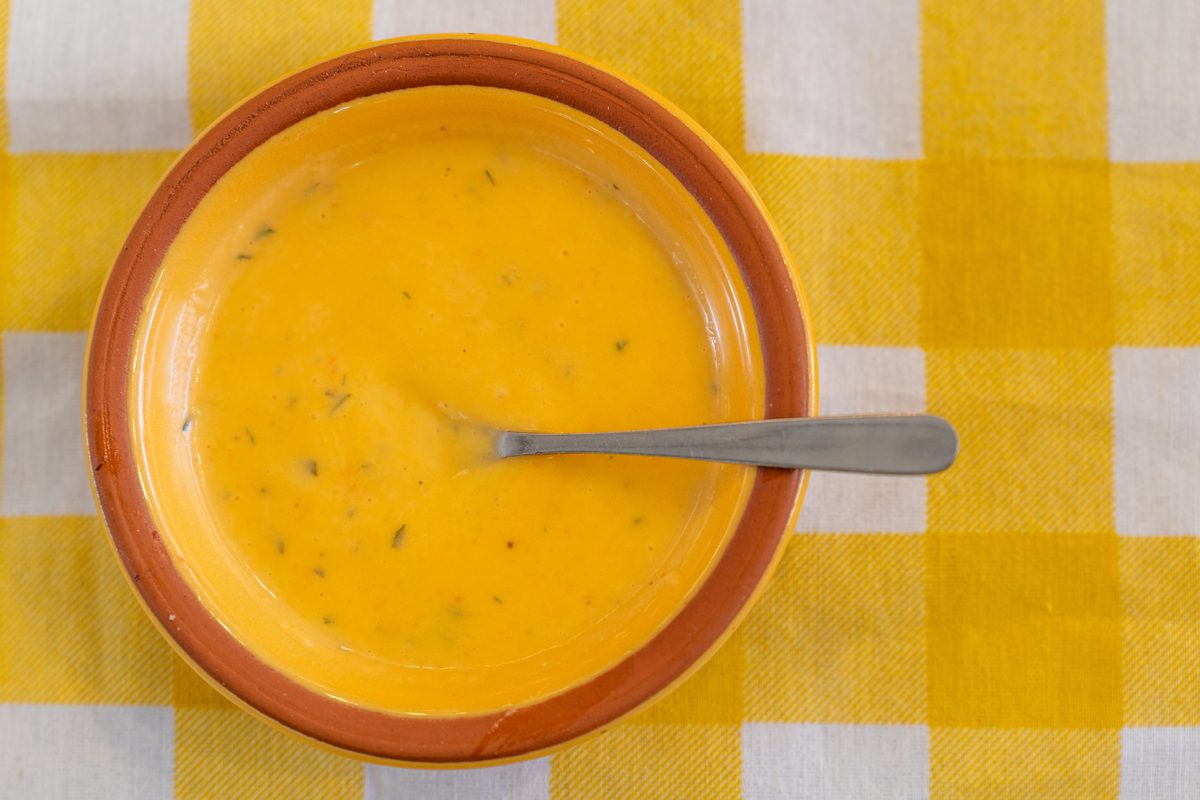
Tomate de árbol en almíbar
Whole peeled fruit simmered in syrup with cinnamon and cloves becomes a simple dessert in both Ecuador and Colombia. Find it in our roundup of Ecuadorian desserts.

More ideas
- Fruit cups: diced gold tamarillo in a Colombian salpicón de frutas.
- Jam and sauces: cooked down with sugar, it makes a tangy jam, and a savory version goes well with roast pork.
- Ice cream: its sharp flavor works in Ecuadorian-style helado de paila.
Is tomate de árbol good for you?
It’s a low-calorie fruit with useful amounts of vitamin C, vitamin A (from carotenes, highest in the gold types), potassium and fiber. Published figures vary with variety and ripeness, so treat these as ballpark numbers:
| Per 100 g raw fruit (approx.) | Amount |
|---|---|
| Calories | About 30–50 |
| Vitamin C | About 20–34 mg |
| Potassium | About 320–430 mg |
| Fiber | About 1.4–4 g |
| Vitamin A | A good source, more in gold and yellow fruit |
Most of the vitamin C is lost with long cooking, so fresh juice keeps more of it than a fruit simmered in syrup. Sugar is the other thing to watch: a glass of sweetened juice carries most of its calories from what you add, not from the fruit.
Tomate de árbol FAQ
What is tomate de árbol in English?
Tamarillo, or tree tomato. US stores usually sell it as tamarillo.
Is tomate de árbol a tomato?
No. It’s a relative in the same nightshade family, but a different species (Solanum betaceum) that grows on a tree and tastes fruity and tart. It’s also different from the tomatillo, the husk-covered green fruit used in Mexican salsa verde.
Can you eat the skin of a tamarillo?
You can, but it’s bitter and tough, so almost nobody does. Scoop the flesh out raw or blanch the fruit and peel it.
How do you take the bitterness out of jugo de tomate de árbol?
Blanch and peel the fruit, use ripe fruit, pulse the blender briefly so the seeds aren’t crushed, and strain. Those four steps remove nearly all of it.
Where can I buy tomate de árbol in the US?
Look for fresh tamarillos at Latin markets and some specialty grocers. Frozen pulpa de tomate de árbol in the Latin freezer section is easier to find year-round and works perfectly for juice.
Does tomate de árbol juice raise hemoglobin?
It isn’t a treatment for anemia. The fruit has only a little iron, though its vitamin C helps your body absorb iron from other foods eaten at the same meal. If you’re worried about low hemoglobin, talk to a doctor.
How long does the juice keep?
The water version keeps up to 2 days in a covered pitcher in the fridge; stir before serving. Make the milk version fresh.
Jugo de Tomate de Árbol Recipe
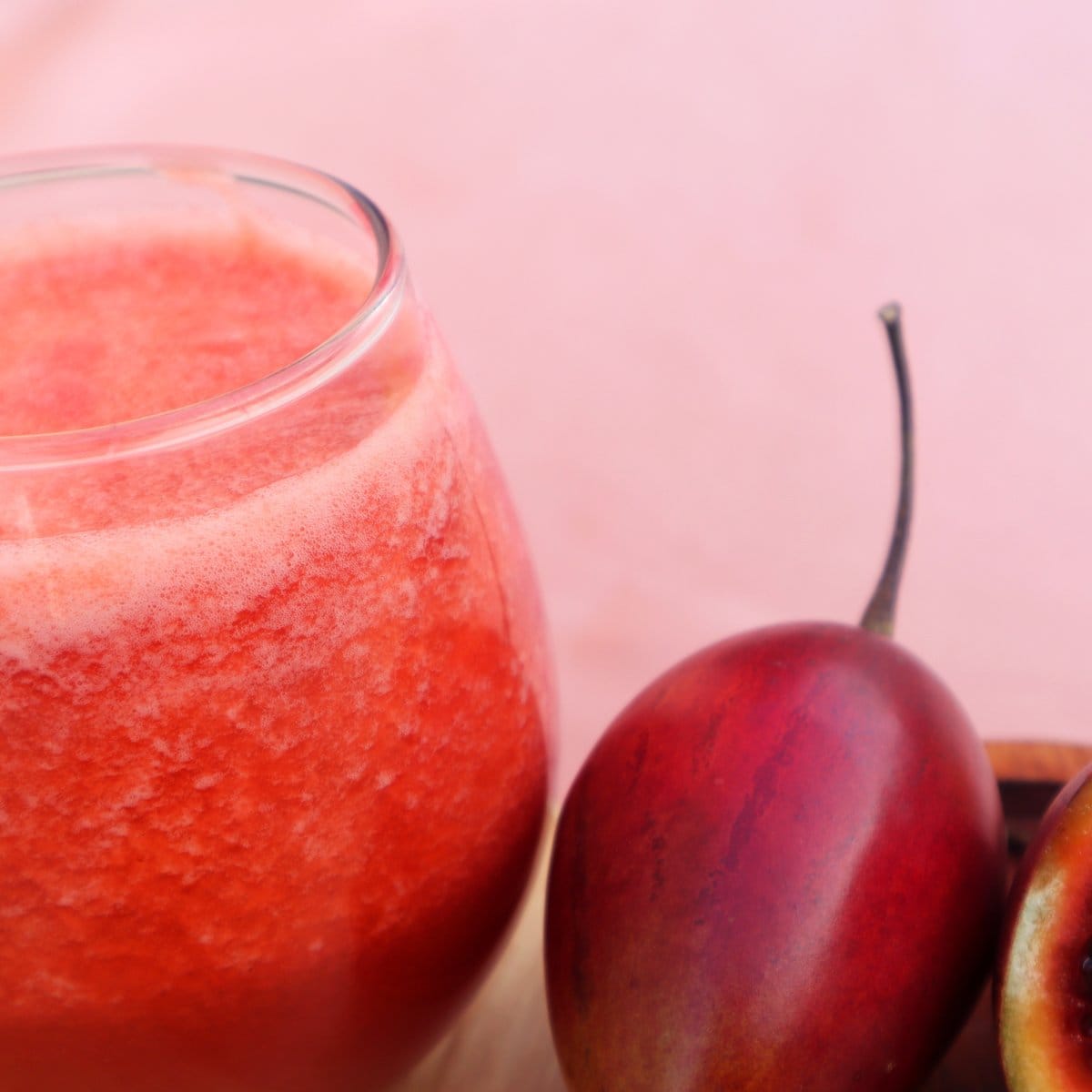
Jugo de Tomate de Árbol (Tree Tomato Juice)
Colombian and Ecuadorian tree tomato juice: blanched, peeled tamarillos pulsed with water or milk, strained and served over ice. Tangy, fruity and never bitter.
Ingredients
- 4 ripe tomates de árbol (tamarillos), about 1 pound (450 g), or one 14-ounce pack frozen tomate de árbol pulp
- 3 cups cold water, or 1 cup cold water plus 2 cups cold whole milk for jugo en leche
- 1/3 cup sugar or grated panela, plus more to taste
- Ice, for serving
Instructions
- Bring a small pot of water to a boil. Add the whole tomates de árbol and cook 2 to 3 minutes, until the skins wrinkle or split. Transfer to a bowl of ice water for 2 minutes.
- Slip off the skins with your fingers and pull out the stems. Do not blend the skins; they make the juice bitter.
- Put the peeled fruit in a blender with 1 cup of the cold water and the sugar. Pulse in short bursts for 10 to 15 seconds total, just until the flesh breaks up, so the seeds are not crushed.
- Pour through a fine-mesh strainer into a pitcher, pressing the pulp with a spoon. Discard the seeds.
- Stir in the remaining 2 cups of cold water (or cold whole milk for jugo en leche). Taste and add more sugar if needed. Serve right away over ice.
Notes
Frozen pulp: use one 14-ounce (400 g) pack of pulpa de tomate de árbol instead of fresh fruit. Skip blanching and peeling; soften 10 minutes, then blend with 1 cup water and the sugar.
Jugo en leche: blend and strain with water first, then stir in very cold milk at the end and serve immediately so the acidic fruit does not curdle the milk.
Storage: the water version keeps up to 2 days covered in the fridge; stir before serving. Make the milk version fresh.
More Colombian and Ecuadorian fruit
Tomate de árbol is one of dozens of Andean fruits that end up in a blender. Meet the rest in our guides to Colombian fruit and Ecuadorian fruit, see why it makes the list of Colombian superfoods, or pour something else from our Colombian drinks and Ecuadorian drinks roundups.
More Colombian Foods
See all →
Jorge Garcia is the founder of AmigoFoods, where he has spent over 20 years helping readers discover authentic Latin American and Spanish cuisine. Raised in a Cuban-American household, Jorge learned to cook at the hands of his mother and grandmother, carrying forward generations of family recipes. That heritage, backed by his family’s four-generation history in the Latin food industry, inspired him to launch AmigoFoods in 2003. With more than 1,000 published articles on recipes, ingredients, and food culture, Jorge’s mission is simple: make authentic Latin cooking approachable for home cooks everywhere while honoring the traditions behind every dish.