

To order coffee in Spain, name the drink and add por favor: café solo for espresso, cortado for a splash of milk, or café con leche for roughly equal parts coffee and hot milk. This guide covers the everyday orders and includes a simple café con leche recipe for home.
Café con Leche at a Glance

Spanish Coffee Ordering Cheat Sheet
Use this table as your cheat sheet. Proportions are typical, not fixed rules, and every bar pours a little differently.
| Order | What you get | Typical moment |
|---|---|---|
| Café solo | A single espresso, no milk | Any time, especially after lunch |
| Café doble | A double espresso | When you need a real jolt |
| Cortado | Espresso with a small splash of milk, often in a little glass | Mid-morning or after a meal |
| Café con leche | About half espresso, half hot milk | Breakfast and the afternoon merienda |
| Manchado / leche manchada | Mostly milk “stained” with a little coffee | Breakfast, for a gentle cup |
| Café bombón | Espresso layered over sweetened condensed milk | An afternoon treat |
| Café con hielo | Hot espresso plus a separate glass of ice to pour it over | Summer afternoons |
| Café del tiempo | Valencian iced espresso with lemon | Summer in the Valencia region |
| Americano | Espresso lengthened with extra hot water | Any time |
| Descafeinado | Decaf, either de máquina (espresso) or de sobre (instant) | Evenings |
| Carajillo | Hot coffee with a shot of spirits | After a long lunch |
The Everyday Orders
Café solo
The default Spanish coffee is a short, strong espresso served in a small cup. The RAE, Spain’s language authority, defines café solo simply as coffee made by adding only water to ground coffee.
Ask for un café solo, or just un café in many bars. Want a larger espresso serving? Order un doble.
Cortado
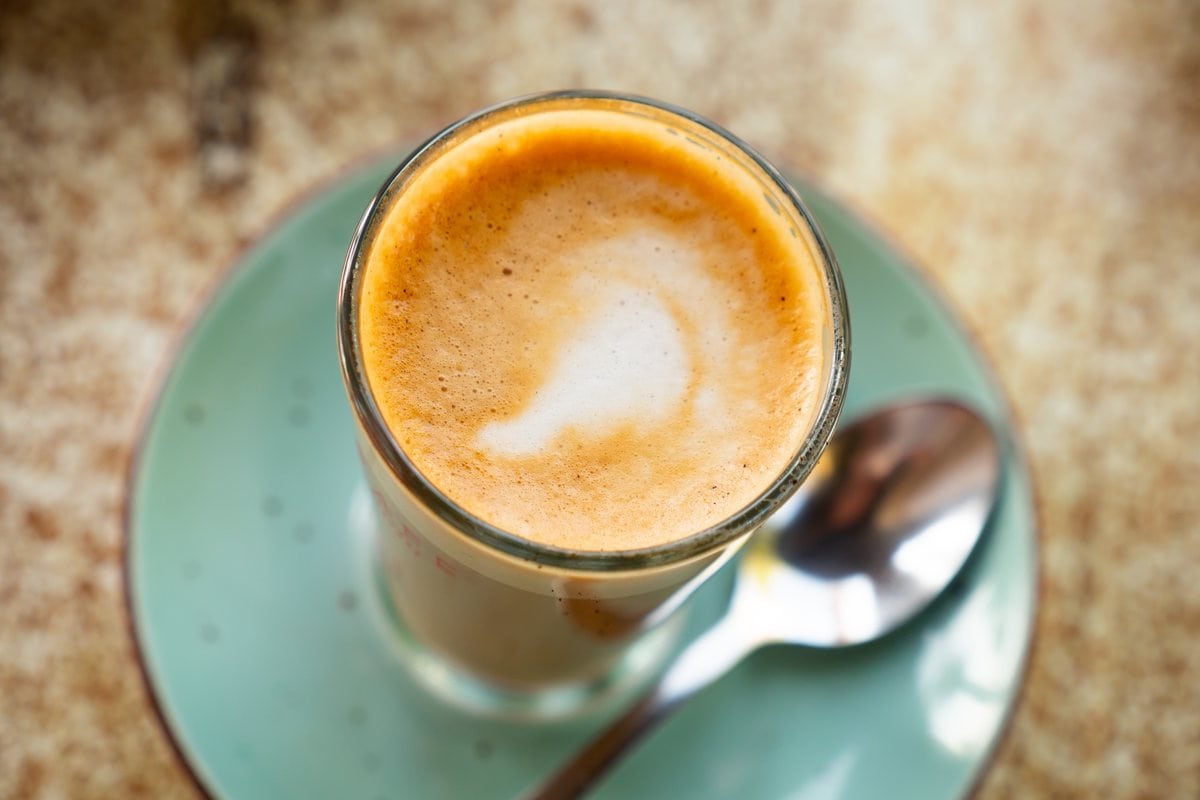
Cortado means “cut,” and the RAE defines it as coffee with very little milk. Think of it as Spain’s answer to a macchiato, usually served in a small glass or cup.
In Catalonia you’ll hear it called a tallat. It’s the classic order after lunch, when a milky coffee would feel too heavy.
Café con leche
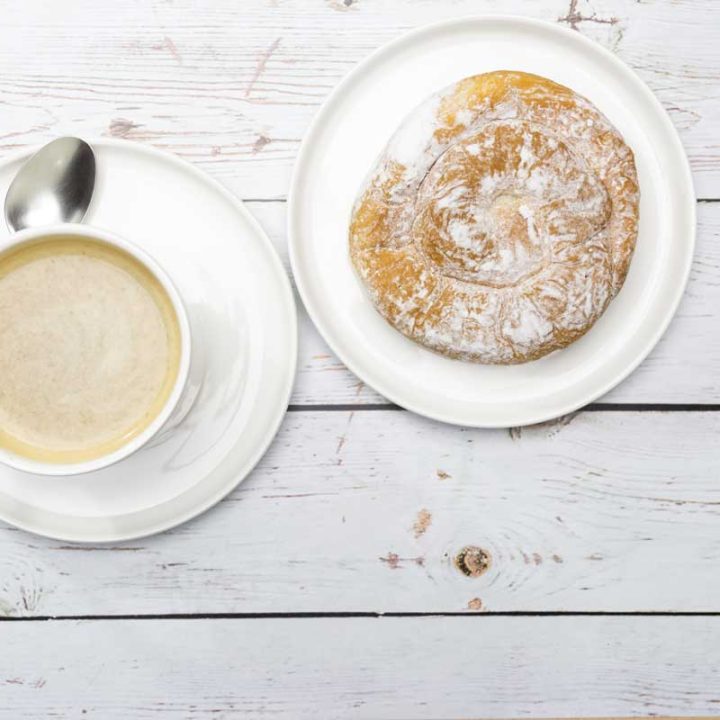
This is the Spanish breakfast coffee: espresso topped up with about the same amount of hot milk, with little or no foam. It’s a natural partner for Spanish breakfast foods like toast and pastries.
Many locals order it en vaso (in a glass) instead of en taza (in a cup). A glass cools faster and, in many bars, holds a bit more milk.
Manchado and leche manchada
Manchado means “stained.” A leche manchada is hot milk with just a little coffee, the mildest way to get a caffeine fix.
Sources and bars don’t fully agree on the names. Some use café manchado for a milky coffee and leche manchada for mostly milk, while others treat them as the same drink. If you care about the ratio, just say con mucha leche (with lots of milk).
Americano
A Spanish americano is espresso with more water than usual, served in a larger cup. It’s still closer to a long espresso than to American drip coffee, so don’t expect a 12-ounce mug.
Sweet, Iced and Spiked Coffees
Café bombón
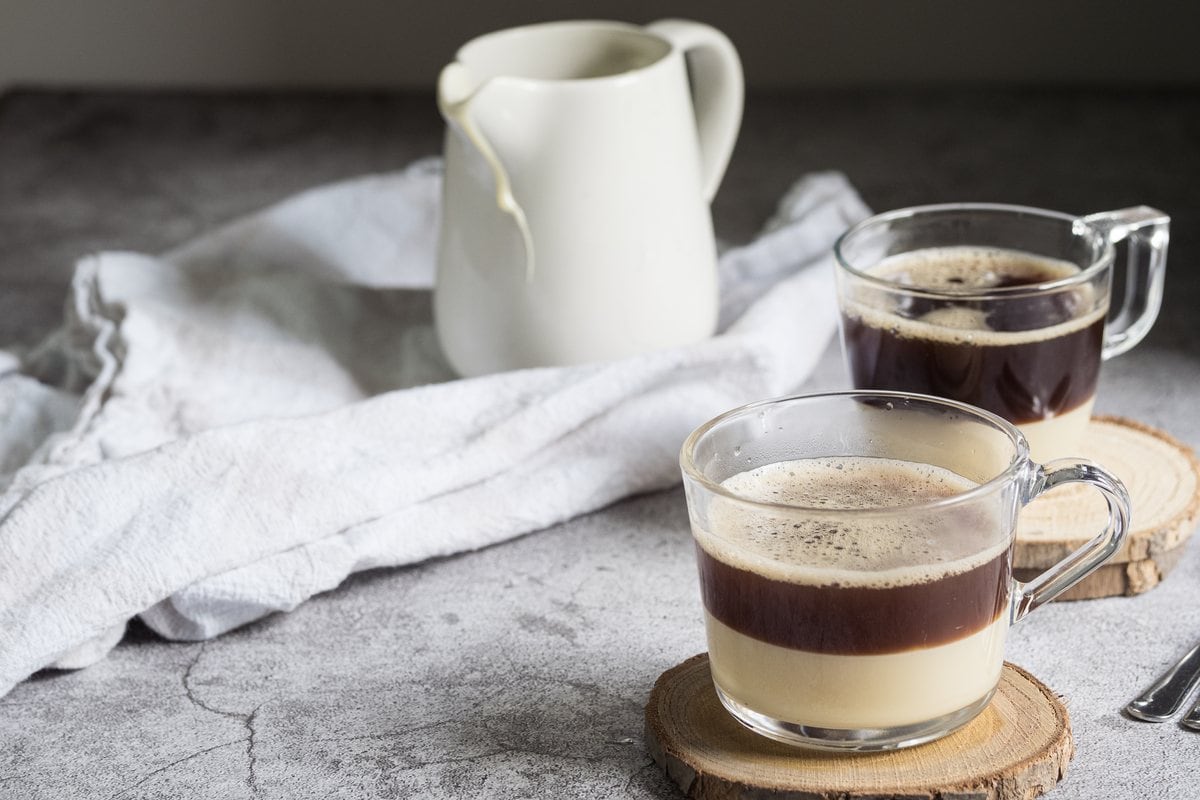
A bombón is espresso poured over a layer of sweetened condensed milk, usually in a small glass so you can see the two bands. You stir it together before drinking.
It’s very sweet, which is exactly the point. Pair it with something plain, such as a couple of Spanish magdalenas.
Café con hielo
Order un café con hielo and you’ll typically get a hot café solo and a separate glass of ice. Sweeten the hot coffee first, since sugar dissolves more readily while the coffee is hot, then pour it over the ice.
You can do the same with a cortado. Just ask for un cortado con hielo.
Café del tiempo (Valencia)
In the Valencia region, a café del tiempo (cafè del temps in Valencian) is a café solo with lemon and plenty of ice, according to the Comunitat Valenciana tourism board. It’s the region’s summer coffee.
Careful: elsewhere in Spain, del tiempo usually just means “room temperature.” Ask for milk del tiempo in Madrid and you’ll get unheated milk, not lemon and ice.
Carajillo and other coffee with alcohol
The RAE defines a carajillo as hot coffee mixed with a high-proof alcoholic drink. Brandy, rum, whisky and anise are all common, and in Catalonia the drink is known as a cigaló.
In the Canary Islands, the barraquito layers condensed milk, Licor 43, espresso and milk, finished with cinnamon and lemon peel. Locals argue about the names: an alcohol-free version is often sold as leche y leche, and in northern Tenerife the classic spiked version is called a zaperoco.
If you order one of these, enjoy it slowly and responsibly, and never drive after drinking.
Descafeinado: De Máquina or De Sobre?
Ask for decaf in Spain and the waiter will often reply, “¿De máquina o de sobre?” Knowing the difference makes ordering easier.
De máquina means decaf espresso pulled from the bar’s machine. De sobre means a packet of instant decaf served with hot milk or water so you can stir it in yourself.
Why would anyone choose the packet? Some customers like knowing for certain the coffee is decaf, since a busy bar may not grind decaf beans for every order. The trade-off is flavor: machine decaf tastes like real coffee, and some instant sachets include added ingredients, so check the packet.
If you want espresso-style decaf, say un descafeinado de máquina up front. It works for any drink: un cortado descafeinado de máquina.
What Is Torrefacto Coffee?
Torrefacto is one of the main reasons coffee in a traditional Spanish bar tastes different from coffee elsewhere. Under Spain’s coffee quality standard (Royal Decree 1676/2012), torrefacto is coffee roasted with sugar or glucose syrup added before the roast finishes, capped at 15 kilograms of sugar per 100 kilograms of green coffee.
The sugar caramelizes and burns onto the beans, leaving them glossy and nearly black. The coffee tastes darker and more bitter, not sweeter, which is partly why Spaniards traditionally take plenty of milk and sugar.
Where it came from
Accounts of its origin differ. Several Spanish sources credit José Gómez Tejedor, founder of Cafés La Estrella, with bringing the method to Spain in the early 1900s, while encyclopedia entries date it more loosely to the 1920s.
What’s widely agreed is that it spread in the lean years after the Spanish Civil War. Coating beans in sugar helped preserve them and stretch scarce, often low-quality coffee.
Natural, torrefacto and mezcla
On Spanish supermarket shelves you’ll see three labels. Natural is conventionally roasted coffee, torrefacto is sugar-roasted, and mezcla is a blend of the two.
Spanish law requires a mezcla label to state the percentages, so you’ll often see something like 50/50 printed on the bag. Specialty roasters in Spain avoid torrefacto entirely, but it’s still easy to find.
Málaga’s Nine Coffees: Solo to Nube
Málaga has its own coffee language. Instead of cortado or café con leche, locals order by how much coffee versus milk they want.
The system came from Café Central on Plaza de la Constitución. Its owner, José Prado, merged three cafés there in 1954 and created named proportions so orders would come out the same every time, according to reporting in El Español and Directo al Paladar.
The names, in the order of the original tile
- Solo: just coffee.
- Largo: mostly coffee with a little milk.
- Semilargo: a little more milk than a largo.
- Solo corto: a small black coffee.
- Mitad: half coffee, half milk.
- Entrecorto: a bit more milk than coffee.
- Corto: clearly more milk than coffee.
- Sombra: “shadow,” mostly milk.
- Nube: “cloud,” milk with just a touch of coffee.
A tenth joke option, no me lo ponga (“don’t serve it to me”), completed the famous ceramic tile chart. Exact percentages vary by source, so treat the list as a scale, not a formula.
Café Central closed in January 2022, citing rising rent and the owner’s retirement. The city council said it would find a public spot to display the tile, and the names remain the everyday way to order in Málaga bars.
Coffee Etiquette in Spain
Time of day
Milky coffee belongs to the morning and to the late-afternoon merienda. After lunch, most people switch to a solo or cortado, and the sobremesa (lingering at the table) is when spiked coffees appear.
These are habits, not laws. Nobody will refuse you a café con leche at 4 p.m.
Customizing your order
- Milk temperature: caliente (hot), templada (warm), or fría or del tiempo (cold or room temperature).
- Milk type: desnatada (skim), sin lactosa (lactose-free), de soja (soy), de avena (oat).
- More or less coffee: corto de café (weaker) or largo de café (stronger).
- Sugar: it comes in packets on the side, so you sweeten it yourself.
At the bar
Coffee in Spain is usually drunk sitting or standing at the counter, not carried down the street. Traditional bars may not have to-go cups, though para llevar (to go) is common in city chains.
A simple, polite order sounds like this: “Buenos días, un café con leche en vaso, por favor.”
How to Make Café con Leche at Home
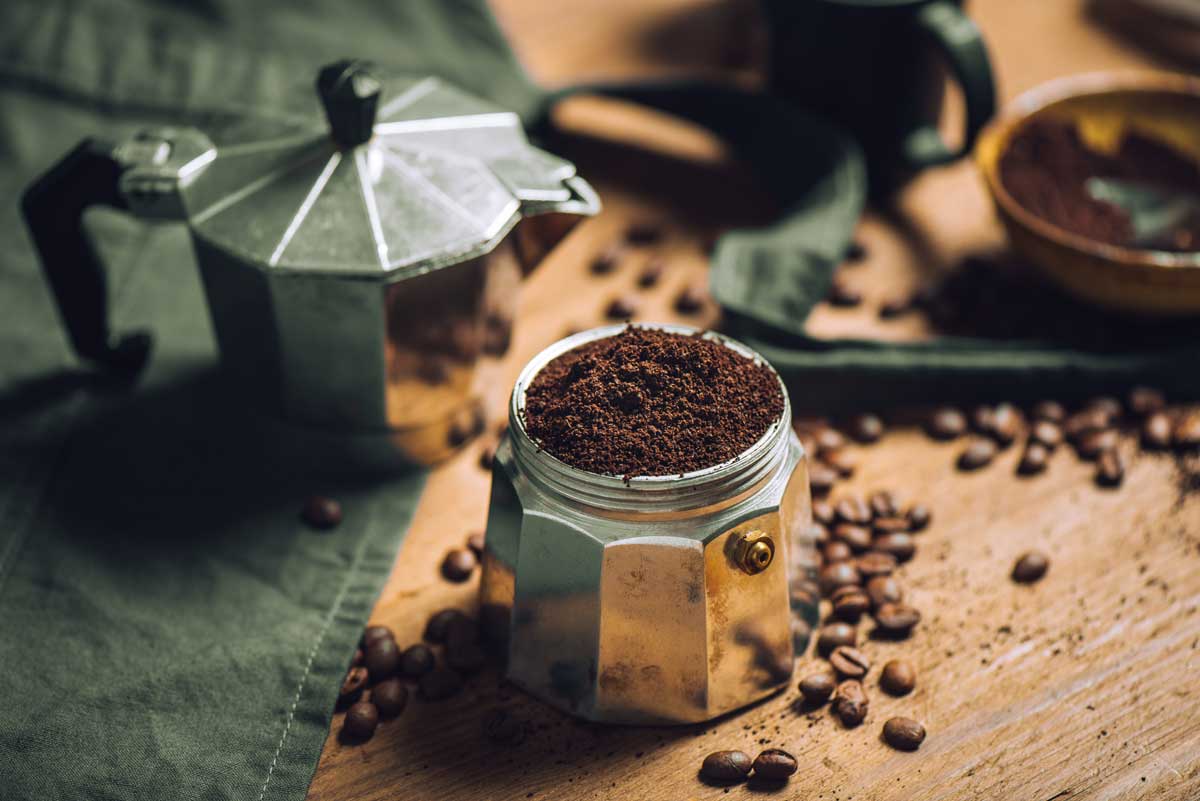
You don’t need an espresso machine. A common home option is a stovetop moka pot, called a cafetera italiana, which makes strong, concentrated coffee that stands up to milk.
The recipe below combines 120 ml of brewed coffee with 120 ml of hot milk for two small servings of about 120 ml each. Moka pots vary: follow your pot’s fill line below the safety valve, loosely fill its basket with moka-ground coffee without tamping, and measure the brewed coffee before adding an equal volume of milk. The estimated 8-minute brewing time depends on the pot and stove. The card also covers espresso and dairy-free options, plus cortado, manchado and bombón variations.
Spanish Café con Leche (Moka Pot Method)
Spain's classic breakfast coffee: strong moka-pot coffee topped with an equal amount of hot milk. No espresso machine needed.
Ingredients
- Cold filtered water, to the moka pot manufacturer’s fill line below the safety valve (about 180 ml for some 3-cup pots; models vary)
- Moka-ground coffee, enough to fill the filter basket loosely and level (about 18 g for some 3-cup pots; models vary)
- 1/2 cup (120 ml) whole milk, or enough to match the volume of brewed coffee used
- 2 to 4 teaspoons (8 to 16 g) sugar, optional, to serve
Instructions
- Fill the lower chamber to your moka pot manufacturer’s indicated level, below the safety valve; do not cover the valve.
- Loosely fill the basket with coffee ground for moka pots, level without tamping, clean the rim, and assemble the pot securely.
- Brew over low to medium heat, keeping the flame within the base and following the manufacturer’s lid instructions.
- Remove from the heat when the coffee finishes rising and begins to gurgle. Yield varies by pot; measure out 1/2 cup (120 ml) brewed coffee for two small servings.
- Warm 1/2 cup (120 ml) milk over medium-low heat until steaming, not boiling. Whisk briefly if desired; keep foam minimal.
- Divide the measured coffee between two heat-resistant cups or glasses. Add an equal volume of hot milk to each.
- Serve immediately with optional sugar on the side.
Notes
Cortado: use only 1 to 2 tablespoons of milk per cup. Manchado: use mostly milk with just a splash of coffee. Bombón: put 1 to 2 tablespoons of sweetened condensed milk in a small glass and slowly pour the hot coffee over it to form two layers; stir before drinking. Iced version: sweeten the hot coffee, then pour it over a glass of ice. Coffee: natural roast gives a cleaner cup; a Spanish mezcla (with torrefacto) gives the darker, more bitter bar flavor. Espresso machine: measure 120 ml brewed espresso in place of the moka coffee and match it with 120 ml hot milk; shot volumes vary. Dairy-free: oat or soy milk works; heat gently. Batch: moka-pot cup labels refer to small coffee measures, not full mugs. Brew according to the pot’s capacity, then match the coffee you use with an equal volume of milk. Timing varies with the pot and stove; 8 minutes is an estimate. Serve right away, as reheated coffee turns bitter.
Tips for getting it right
- Keep the heat low to medium so the coffee doesn’t scorch and turn harsh.
- Remove the pot from the heat when coffee finishes rising and begins to gurgle; follow the manufacturer’s instructions.
- Heat the milk until steaming, not boiling. Spanish café con leche has little foam, so a quick whisk is plenty.
- Pour the coffee first, then the milk, and add sugar at the table.
Variations to Try
- Cortado: use far less milk, just a splash on top of the coffee.
- Manchado: flip the ratio, with mostly milk and a little coffee.
- Bombón: spoon sweetened condensed milk into a small glass, then slowly pour the hot coffee over it for two layers.
- Café con hielo: sweeten a hot solo, then pour it over a glass of ice.
- Café del tiempo: do the same with a strip of lemon peel in the glass.
What to Serve with Spanish Coffee
A café con leche and something to dunk is the classic Spanish breakfast. Browse our Spanish breakfast dishes for ideas, or start with these pairings:
- Toast: pan con tomate with a drizzle of olive oil.
- Something fried: Spanish churros, though many people pair those with thick chocolate a la taza instead.
- A savory bite: a slice of Spanish tortilla, a mid-morning bar favorite.
- Pastries: a Mallorcan ensaimada or, around Easter, torrijas.
Buying Guide: Spanish Coffee Gear and Brands
AmigoFoods earns a commission on qualifying Amazon purchases.
A moka pot
A 3- to 6-cup stovetop moka pot is a traditional, affordable way to make Spanish-style coffee at home. Check that it works on your stovetop; induction cooktops need a steel base.
Spanish coffee brands
Marcilla is one of Spain’s best-known supermarket brands, and Marcilla coffee is sold on Amazon in the US. Saimaza and Bonka are also classic Spanish names, but US availability comes and goes, so check import sellers.
Read the label: choose natural for a cleaner cup, or mezcla if you want the dark, bitter bar flavor that torrefacto brings. For more pantry staples, browse our curated list of Spanish foods on Amazon.
Glasses
Small, sturdy glass cortado cups make a bombón’s layers look the part. Choose heat-resistant glass for hot drinks.
Frequently Asked Questions
What is the most popular coffee in Spain?
Café con leche and café solo are the everyday staples, with the cortado close behind. Which one people order depends heavily on the time of day.
What is the difference between a cortado and a café con leche?
A cortado is espresso with just a splash of milk. A café con leche is roughly half espresso and half hot milk, so it’s bigger and much milder.
Is “Spanish coffee” a drink from Spain?
Not the flaming cocktail. The American “Spanish coffee” of rum, triple sec, Kahlúa, coffee and whipped cream was popularized at Huber’s Cafe in Portland, Oregon, and has no real counterpart on Spanish bar menus. In Spain, coffee with alcohol means a carajillo.
Why does coffee taste different in Spain?
Traditional bars often use blends that include torrefacto, sugar-roasted beans that brew darker and more bitter. Specialty cafés serving natural-roast coffee are increasingly common in larger cities.
How do you order decaf in Spain?
Say un descafeinado, and add de máquina for espresso-machine decaf or de sobre for instant. If you don’t specify, expect to be asked.
Can you get iced coffee in Spain?
Yes. Order un café con hielo and you’ll get hot espresso and a glass of ice to pour it over. In Valencia, try a café del tiempo with lemon.
Do Spaniards drink coffee after dinner?
Many do, usually a small solo, cortado or decaf rather than a milky coffee. Spaniards eat dinner late, so plenty of people choose descafeinado in the evening.
Order Like a Local
Learn five words, solo, cortado, con leche, bombón and con hielo, and you can order in almost any Spanish bar. Add de máquina for decaf, remember that Valencia and Málaga play by their own rules, and you’re set.
For more on what Spaniards pour, explore our guide to Spanish drinks and our Latin American and Spanish coffee hub, where Mexico’s café de olla makes a great next cup.
Recipe References
The equal-parts coffee-and-milk approach was cross-checked against Spanish Sabores’ café con leche recipe, with moka-pot fill and no-tamping guidance checked against Bialetti’s brewing instructions. Pot capacities and serving sizes vary. This was a source-based editorial review, not a kitchen test.
More Spanish Foods
See all →
Jorge Garcia is the founder of AmigoFoods, where he has spent over 20 years helping readers discover authentic Latin American and Spanish cuisine. Raised in a Cuban-American household, Jorge learned to cook at the hands of his mother and grandmother, carrying forward generations of family recipes. That heritage, backed by his family’s four-generation history in the Latin food industry, inspired him to launch AmigoFoods in 2003. With more than 1,000 published articles on recipes, ingredients, and food culture, Jorge’s mission is simple: make authentic Latin cooking approachable for home cooks everywhere while honoring the traditions behind every dish.