

Molletes are Mexico’s favorite open-faced sandwich: a bolillo roll split in half, buttered and toasted, spread with refried beans, covered in melting cheese and baked until bubbly, then finished with fresh pico de gallo. They take about 30 minutes, cost very little and feed four, which is why they show up at breakfast tables, school lunches and late-night kitchens all over Mexico.
Molletes at a Glance
What Are Molletes?
A mollete (moh-YEH-teh) is a halved bolillo roll that is toasted with butter, topped with refried beans and cheese, and baked until the cheese melts. Salsa mexicana, better known in English as pico de gallo, goes on at the end. In English you will see molletes called Mexican bean and cheese toasts or open-faced bean and cheese sandwiches.
Molletes are associated above all with Mexico City, where they are a standard order at cafeterias and diners, but you will find them in homes across the country. They sit in the same family as other bread-based classics in our guide to Mexican sandwiches, and they are one of the easiest dishes on our list of traditional Mexican breakfast foods.

The name is borrowed from Spain, where a mollete is a soft, flat white roll; the word comes from an old Spanish term for “soft.” In Mexico the name moved from the bread to the dish, and today “molletes” almost always means the bean-and-cheese version described here.
The Four Building Blocks of Molletes
Molletes have only four essential parts, so each one matters. Get these right and the dish is hard to mess up.
Bolillo or telera
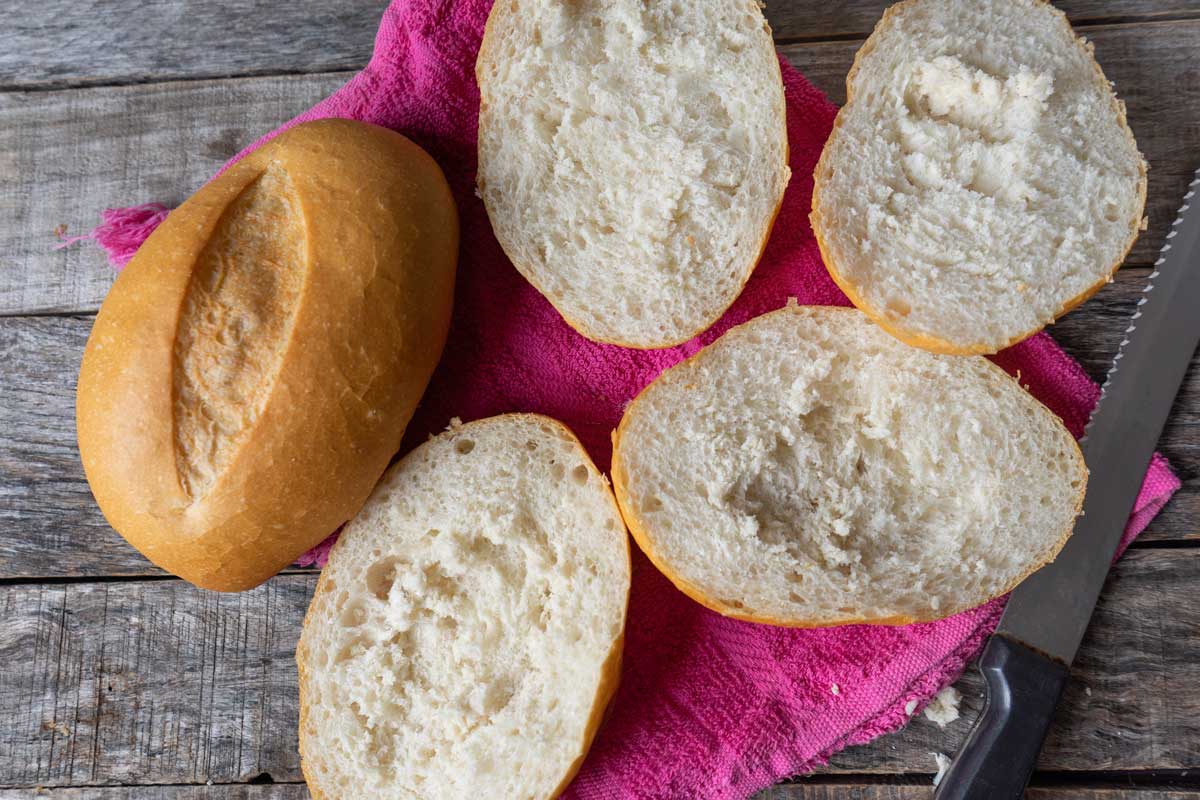
A bolillo has a crisp crust and a soft crumb that toasts beautifully. Teleras (flatter, three-section rolls) work too. Outside Mexico, use crusty French rolls or a short baguette.
Refried beans
Pinto-type beans are the classic choice in central Mexico; refried black beans are common in the south and along the Gulf coast. Either works, as long as they are thick enough to spread.
Melting cheese
Oaxaca, asadero, Chihuahua or Mexican Manchego melt into soft, stretchy pools. Mozzarella and Monterey Jack are good substitutes.
Fresh salsa
Pico de gallo adds acid, crunch and heat to cut the rich beans and cheese. Any Mexican salsa works, from salsa verde to a smoky chipotle salsa.
Canned or homemade beans?
Homemade refried beans taste best, especially when they are fried in a little lard or bacon fat with onion. Good canned or pouch beans are perfectly fine for a weekday mollete, though. If yours are stiff, loosen them in the pan with a splash of water or bean broth until they spread easily; if they are runny, cook them a few minutes longer so they don’t soak the bread.
Beans worth keeping in the pantry
- La Sierra Refried Pinto Beans: vegetarian, ready-to-heat pouches, a smooth spread for classic molletes.
- La Costeña Refried Black Beans: for black-bean molletes in the southern style.
- Iberia Dry Pinto Beans: a 4 lb bag for making your own frijoles refritos in batches and freezing them.
As an Amazon Associate, AmigoFoods earns from qualifying purchases.
Best Cheese for Molletes
The cheese needs to melt, not just soften. Fresh crumbly cheeses hold their shape in the oven, so save them for sprinkling on top after baking.
| Cheese | How it melts | Use it for |
|---|---|---|
| Oaxaca | Soft, stretchy, mild and milky | The classic choice; shred or pull into strands |
| Asadero | Very smooth, creamy melt | Molletes with a gooey, even layer |
| Chihuahua (queso menonita) | Melts well with a little tang | A slightly sharper, more savory mollete |
| Mexican Manchego | Smooth and buttery | Golden, lightly browned tops |
| Mozzarella or Monterey Jack | Reliable stretch | Easy supermarket substitutes |
| Queso fresco or cotija | Does not melt | Crumbling over the top after baking |

For a closer look at each of these, see our guide to Mexican cheeses.
How to Make Molletes
Here is the short version. Exact amounts, times and notes are in the recipe card below.
- Split and butter the rolls. Cut 4 bolillos in half lengthwise. If they are very thick, pull out a little of the soft crumb, leaving a sturdy shell. Spread the cut sides with softened butter.
- Toast first. Bake the buttered halves cut-side up at 400°F (200°C) for about 5 minutes. This first toast is what keeps molletes crisp instead of soggy.
- Warm the beans. Heat the refried beans until hot and spreadable, adding a splash of water if they are stiff.
- Spread and cover. Spread about ¼ cup of beans over each half, all the way to the edges, then pile on the shredded cheese.
- Bake until bubbly. Return the molletes to the oven for 10 to 15 minutes, until the cheese melts and the crust edges are deep golden.
- Finish at the table. Spoon pico de gallo over the top and add crema, cilantro or sliced jalapeños if you like. Serve right away.
Skipping the first toast is the most common mistake. Wet beans soak straight into untoasted bread. Toast the buttered halves first, keep the beans thick, and add the salsa only when you serve.
Oven, toaster oven, air fryer or comal
| Method | How | Best for |
|---|---|---|
| Oven | 400°F (200°C): 5 minutes to toast, 10 to 15 minutes after topping | A full batch of 8 halves |
| Toaster oven | Same temperatures; check a few minutes early | 2 to 4 halves |
| Air fryer | Toast the buttered halves at 375°F for about 3 minutes, then top and cook about 5 minutes more | Very crisp edges, small batches |
| Comal or skillet | Toast cut-side down, flip, top, then cover with a lid until the cheese melts | No oven at all |
For the stovetop method, a heavy flat griddle such as the Lodge reversible cast iron griddle holds heat evenly, and a sturdy aluminum sheet like the Nordic Ware half sheet pan fits all 8 halves in the oven.
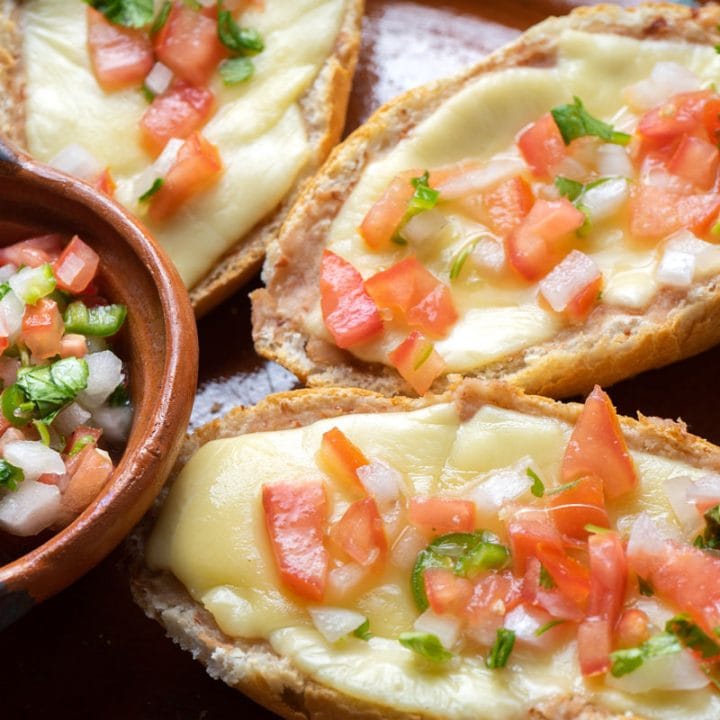
Mexican Molletes
Toasted bolillo halves with warm refried beans, melted cheese and fresh salsa.
Ingredients
- 4 bolillo rolls
- 3 tablespoons (42 g) butter, softened
- 1 can (16 oz / about 450 g) refried beans, or about 2 cups prepared refried beans
- 200 g (7 oz) shredded Oaxaca, mozzarella, Monterey Jack or cheddar cheese
- 1 cup prepared pico de gallo or Mexican salsa, for serving
- Mexican crema and chopped cilantro, optional
- Cooked chorizo, cooked bacon, sautéed mushrooms, roasted poblano strips, avocado or cooked eggs, optional toppings
Instructions
- Heat the oven to 400°F (200°C). Split the bolillos lengthwise to make 8 halves. Remove a little soft crumb if the rolls are very thick, keeping a sturdy base.
- Spread the butter over the cut sides and place cut-side up on a baking sheet. Toast about 5 minutes until lightly crisp.
- Meanwhile, empty the beans into a saucepan or microwave-safe bowl and heat until hot, stirring and adding a splash of water if needed. Do not heat an unopened can.
- Spread about 1/4 cup warm beans over each bread half, then divide the shredded cheese evenly over the tops.
- Bake another 10–15 minutes, until the cheese is melted and the bread edges are crisp. Check early and remove before the bread gets too dark.
- Top with the prepared salsa and any optional crema, cilantro or cooked toppings. Serve immediately; 2 halves make one serving.
Notes
Makes 8 open-faced halves, or 4 servings. Allow about 10 minutes preparation and 20 minutes cooking, 30 minutes total, using prepared beans and salsa. Making beans or salsa from scratch and cooking extra toppings takes additional time. Three tablespoons butter is about 42 g.
Use a melting cheese; queso fresco stays crumbly instead of melting. For vegetarian molletes, choose beans made without lard or meat stock, suitable cheese and meat-free toppings. Add salsa at serving time so the bread stays crisp. Refrigerate leftovers within 2 hours, use within 3–4 days, and reheat to 165°F (74°C); store salsa separately when possible.
Mollete Variations
Once you have the basic method down, molletes become a way to use whatever is in the fridge. These are the versions you are most likely to find in Mexico.
Molletes con chorizo
Brown crumbled Mexican chorizo, drain the fat, and scatter it over the beans before the cheese goes on.
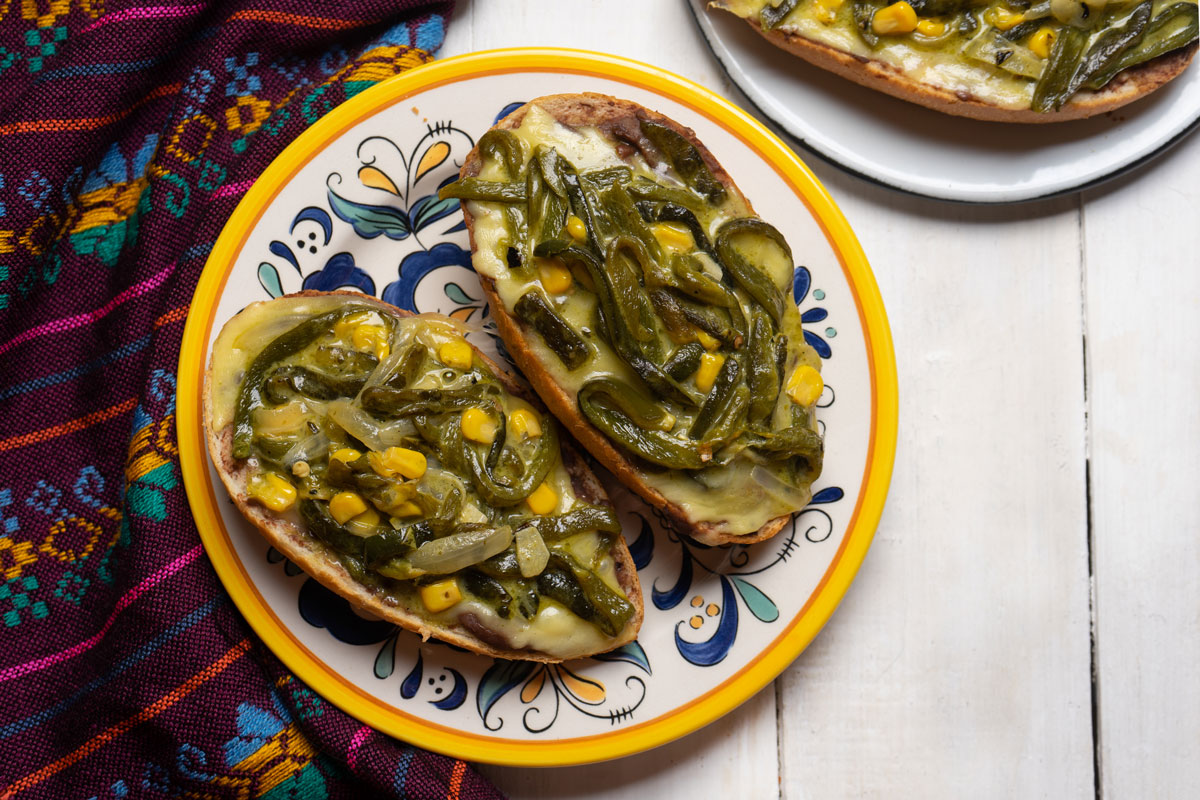
Molletes con rajas
Top the cheese with strips of roasted poblano sautéed with onion. Add corn kernels for rajas con elote.
Molletes divorciados
One half gets salsa verde and the other gets salsa roja, the same idea as huevos divorciados.
Molletes con huevo
Finish each half with a fried egg or a spoonful of scrambled eggs for a heartier morning plate.
Chipotle beans
Blend one or two chipotles in adobo into the beans for a smoky, gently spicy spread.
Ham, bacon or mushrooms
Diced ham, crisp bacon or sautéed mushrooms go under the cheese. Many diners let you choose two toppings.

Molletes Dulces (Sweet Molletes)
Molletes dulces are a simple sweet version with no beans or cheese. A halved bolillo is spread with butter, sprinkled with sugar (and often cinnamon) or drizzled with honey, then toasted or broiled until the sugar caramelizes into a crackly top. They are especially associated with Jalisco and Guadalajara and are eaten for breakfast or merienda with coffee, hot chocolate or café de olla.
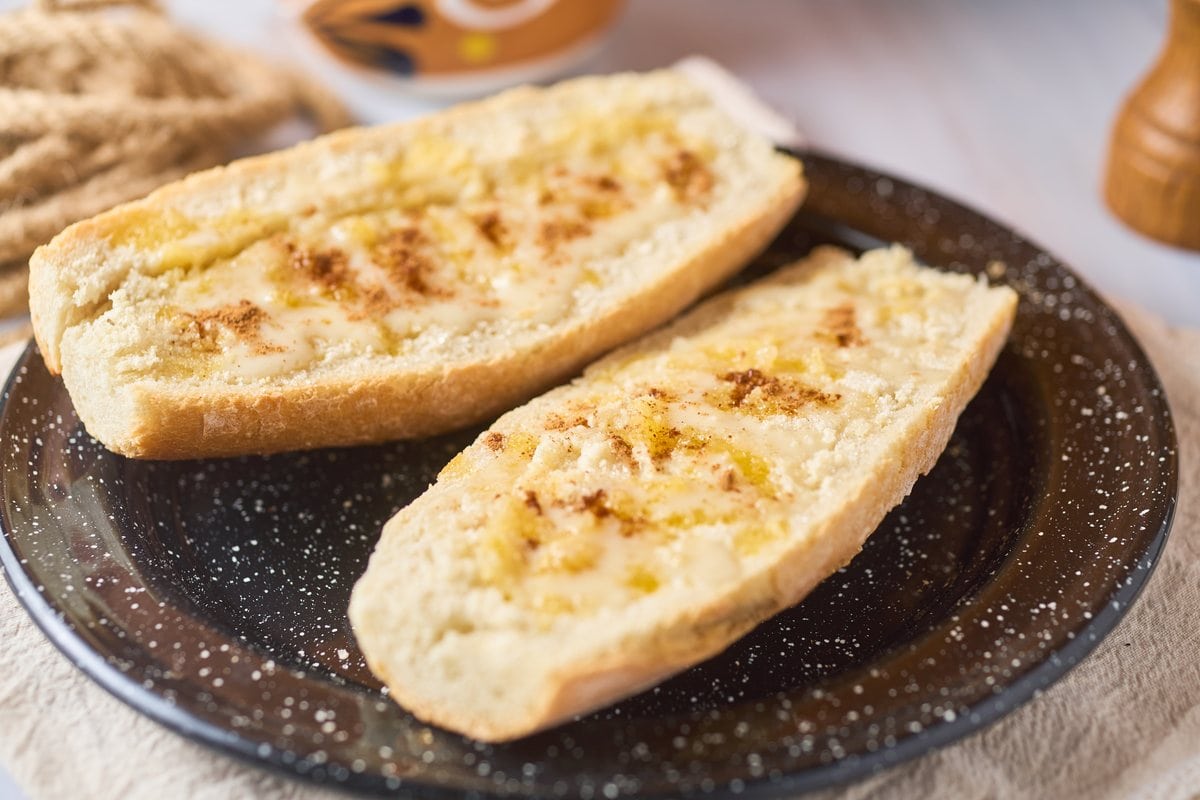
Split 2 bolillos and spread each half with about 1 tablespoon of soft butter. Mix ¼ cup sugar with ½ teaspoon ground cinnamon and sprinkle it thickly over the butter. Broil 2 to 3 minutes, watching closely, until the sugar bubbles and turns golden. Let it cool for a minute so the topping can set.
Molletes Beyond Mexico: Spain and Guatemala
If you search for molletes and find something that looks nothing like a bean-and-cheese toast, you have probably found one of these.
Spanish mollete bread
In Andalusia, a mollete is the bread itself: a soft, flattish, lightly baked white roll eaten at breakfast with olive oil, crushed tomato and often jamón. The best known is the Mollete de Antequera, which the European Union registered as a Protected Geographical Indication in November 2020. Only molletes made in Antequera and Fuente de Piedra, in the province of Málaga, can carry that name. In Seville, molletes are also one of the breads used for the serranito sandwich; see our roundup of Spanish sandwiches for more.
Guatemalan molletes
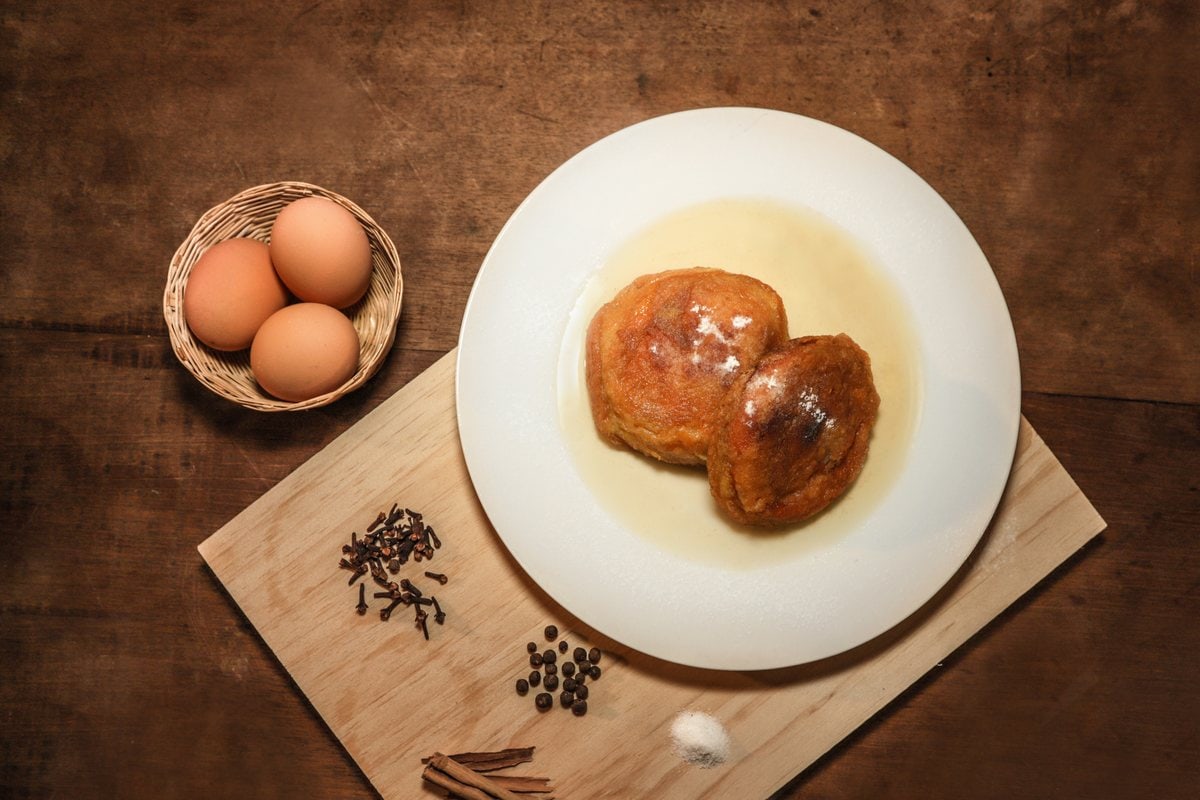
Guatemalan molletes are a dessert. Sweet egg bread is hollowed out and stuffed, usually with a milky custard, then coated in beaten egg, fried and soaked in a spiced panela syrup. They are made for Semana Santa and for All Saints’ Day on November 1, alongside torrejas and garbanzos en miel. Read more in our guide to Guatemalan desserts.
What to Serve With Molletes
Molletes are filling on their own, but these round out a breakfast or brunch spread:
- Fresh fruit: papaya, mango or a fruit cup with lime and chile.
- Something hot to drink: café de olla, Mexican hot chocolate or a glass of fresh orange juice.
- Eggs or a second dish: pair them with chilaquiles rojos or enfrijoladas for a larger table.
- Extra salsa and crema: set out a couple of salsas so everyone can choose their heat.
Storing and Reheating Molletes
Molletes are best straight from the oven. To get ahead, toast the buttered bread and warm the beans up to a day early, store them separately, and assemble and bake just before serving. Refrigerate leftover molletes, without the salsa, within 2 hours and eat them within 3 to 4 days. Reheat in a 375°F (190°C) oven or air fryer until hot in the center (165°F / 74°C), which re-crisps the bread in a way the microwave cannot.
Molletes FAQ
What part of Mexico are molletes from?
Molletes are most closely associated with Mexico City, where they are a staple of cafeterias, diners and home breakfasts. Today they are eaten all over Mexico, with regional touches such as black beans in the south.
What does mollete mean?
Mollete comes from Spain, where it names a soft white roll; the word traces back to an old Spanish term for “soft.” In Mexico it came to mean the toasted bean-and-cheese dish made on a bolillo.
What are molletes called in English?
There is no single English name. They are usually described as Mexican open-faced bean and cheese sandwiches or bean and cheese toasts.
Are molletes healthy?
Molletes give you protein and fiber from the beans along with the bread and cheese. To make them lighter, use beans made without lard, go easy on the butter and cheese, choose whole-wheat rolls and load up on pico de gallo.
What are Guatemalan molletes?
Guatemalan molletes are a sweet dessert: stuffed egg bread that is battered in egg, fried and soaked in panela syrup, made for Holy Week and All Saints’ Day. They are not related to Mexican bean-and-cheese molletes beyond the name.
What is the difference between a mollete and a torta?
A torta is a closed sandwich with a top and bottom bun. A mollete is open-faced and baked, so the cheese melts over the beans.
Can I make molletes without a bolillo?
Yes. Any crusty white roll works, including French rolls, short baguettes, ciabatta or teleras. Avoid very soft sandwich buns, which go soggy under the beans.
More Mexican Favorites
Love molletes? Try more easy, bread-and-tortilla classics in our guides to Mexican breakfast foods, Mexican breads, Mexican street food and our big list of traditional Mexican food.
Sources
- Wikipedia: Mollete
- Official Journal of the European Union: Regulation (EU) 2020/1710 registering Mollete de Antequera (PGI)
More Mexican Foods
See all →
Jorge Garcia is the founder of AmigoFoods, where he has spent over 20 years helping readers discover authentic Latin American and Spanish cuisine. Raised in a Cuban-American household, Jorge learned to cook at the hands of his mother and grandmother, carrying forward generations of family recipes. That heritage, backed by his family’s four-generation history in the Latin food industry, inspired him to launch AmigoFoods in 2003. With more than 1,000 published articles on recipes, ingredients, and food culture, Jorge’s mission is simple: make authentic Latin cooking approachable for home cooks everywhere while honoring the traditions behind every dish.