
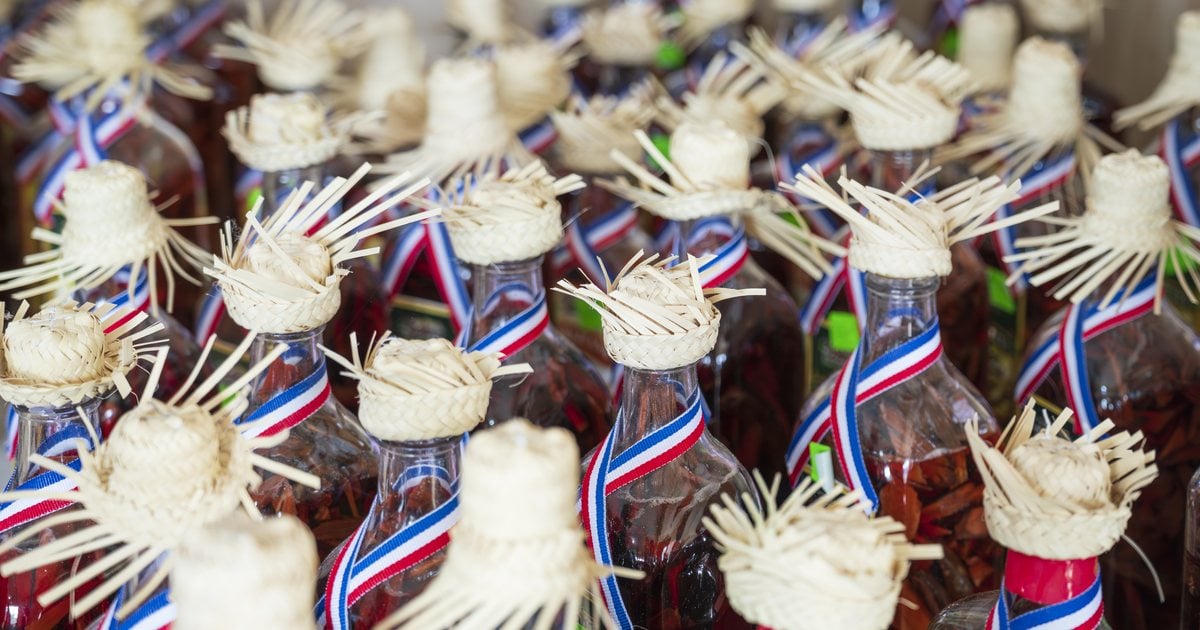
Mamajuana is a Dominican infusion of rum, red wine and honey steeped with a prepared botanical blend. It is usually sipped in small pours for its sweet, spiced and woody flavor; the hands-on preparation is short, but the first bottle takes time to infuse.
Mamajuana at a Glance
What Is Mamajuana?
Mamajuana (also written mama juana, and often misspelled mamawana or mama wanna) is a bottle of dried botanicals that you fill with alcohol and let steep. The bark and roots do the work: over a week or two they tint the liquid deep red-brown and give it a spiced, slightly bitter, woody flavor that the honey then rounds off.
It is less a recipe than a ritual. You buy the dry mix once, cure it, fill it, drink it, and refill it again and again. A good bottle gets passed around after a big Sunday meal, poured for visitors, and packed in suitcases as the souvenir every tourist brings home from Punta Cana.

What does “mamajuana” mean?
The name comes from the bottle, not the drink. A damajuana in Spanish (a demijohn in English, from the French dame-jeanne, “Lady Jane”) is a big, short-necked glass jug, often wrapped in wicker. Dominicans turned damajuana into mamajuana, and the name stuck to whatever was steeping inside.
A short history
The idea is older than rum on the island. The Taíno, Hispaniola’s Indigenous people, brewed barks and herbs as medicinal teas; after the Spanish arrived, the same plants began going into wine and later rum. The modern drink took off in the 1950s, when a salesman from San Juan de la Maguana, Jesús Rodríguez, promoted his bottled blend so widely that people started calling him “Mamajuana” too. Merengue típico musicians of the era helped make it famous, and it has been the country’s unofficial house drink ever since.
What’s in Mamajuana? The Bark, Roots and Spices
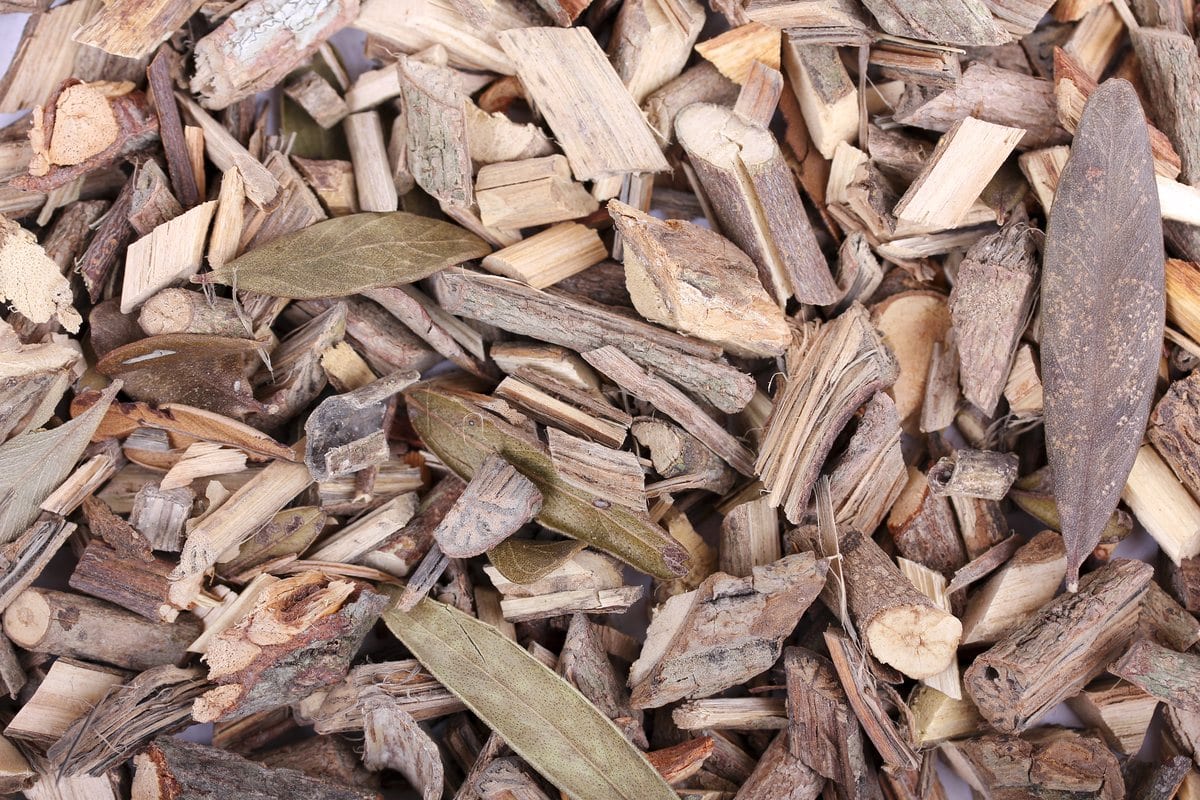
Every family and every market stall has its own blend, but most dry mamajuana kits draw from the same short list of Dominican plants. These are the names you’ll see on the bag:
| Name on the bag | What it is | What it brings |
|---|---|---|
| Canelilla | Bark of a wild cinnamon-like tree (Cinnamodendron ekmanii) | Warm, cinnamon-clove spice |
| Bohuco pega palo | A climbing vine (Cissus verticillata) | The vine famous for the drink’s “vitality” reputation; earthy |
| Marabelí | Woody shrub (Securidaca virgata) | Deep color and bitterness |
| Timacle | Snowberry root (Chiococca alba) | Bitter, rooty backbone |
| Bojuco caro | A woody vine used in many regional blends | Tannin and structure |
| Anamú | Guinea hen weed (Petiveria alliacea) | Pungent, garlicky herbal note (used sparingly) |
| Clavo dulce | Whole cloves | Sweet spice |
| Anís estrellado | Star anise | Licorice sweetness |
| Canela | Cinnamon stick | Rounds out the bitterness |
The liquid is simpler: dark rum (ideally Dominican), red wine and honey. Some families add raisins, a strip of orange peel or a vanilla bean. On the coast you’ll also find mamajuana de mariscos, where shellfish go into the bottle alongside the bark, but that is a regional curiosity, not the standard.
No bark kit? A “spice-only” mamajuana made with cinnamon, cloves, allspice and star anise steeped in rum, wine and honey gets you close to the flavor, though it lacks the woody bitterness and the deep color of the real thing.
How to Make Mamajuana
Use a sealed, labeled kit intended for drinks, with identified ingredients. Follow its quantity, curing, temperature and storage instructions over this general timeline. Do not gather unidentified bark or roots yourself.
Homemade mamajuana has two stages that most recipes blur together: curing the dry mix (a throwaway soak that pulls out harsh sap and dust) and the real fill that you’ll actually drink. Skip the cure and the first batch tastes like a tree. Here’s the whole timeline:
- Day 0Pack the bottleTip the dry bark, roots and spices into a clean 750 ml or 1 liter glass bottle with a tight cap. They should fill it about a third to halfway.
- Days 1–7Cure itFollow the kit’s curing directions; for this method, cover the botanicals with inexpensive rum, cap it, and leave it somewhere dark for 5 to 7 days. Pour this liquid out — it’s bitter and cloudy. Very bitter blends get a second cure.
- Day 7The real fillMix good dark rum, red wine and honey (ratio below), pour it over the cured bark, cap and shake.
- Days 8–21SteepLet it sit at room temperature, out of the sun, for at least 1 week and ideally 2. Turn the bottle every few days so the honey doesn’t settle.
- Day 14+Taste and pourTaste it. Too bitter? Add honey. Too sweet? Add rum. Serve it in shot glasses — and start thinking about the refill.
The mamajuana ratio
Once the bark takes up its share of the bottle, a 750 ml bottle holds roughly 500 ml of liquid. This is the classic Dominican balance — mostly rum, some wine, a little honey:
That is 12 parts rum : 5 parts wine : 3 parts honey by volume (60%, 25% and 15%). Bottle capacity varies with the botanicals, so scale the liquid mixture proportionally to fit without overfilling. Different ratios change the flavor and alcohol strength. Stir the honey into the wine first — it dissolves far better than in cold rum.
The full ingredient list, timings and printable steps are in the recipe card below.
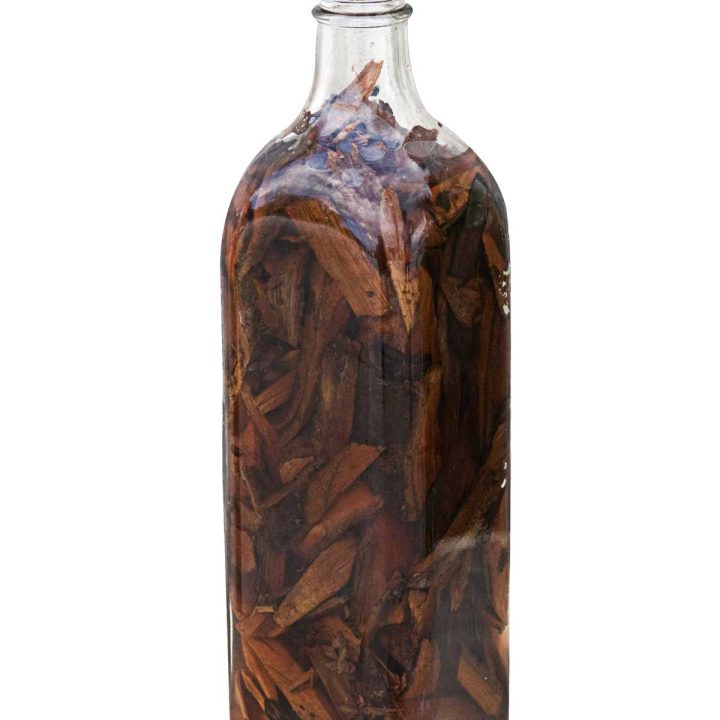
Homemade Mamajuana
Dominican mamajuana made with a prepared botanical kit, dark rum, red wine and honey. Follow the kit’s curing and storage instructions, then allow time for the drinking infusion to develop.
Ingredients
- 1 sealed, labeled food-grade mamajuana kit, using the supplier’s amount for a 750 ml bottle
- About 2 cups inexpensive rum, or the curing liquid specified by the kit, enough to cover the botanicals (discarded)
- 1 ¼ cups (300 ml) Dominican dark rum
- ½ cup (125 ml) red wine
- 5 tablespoons (75 ml) honey
- Optional: 1 cinnamon stick, 4 whole cloves, 1 culinary star anise, a small handful of raisins
Instructions
- Use a sealed, labeled kit intended for drink preparation and follow its instructions for quantity, curing and storage. Put the recommended amount in a clean 750 ml glass bottle with a tight cap, leaving room for the liquid. Do not collect unidentified bark or roots yourself.
- Cure the bark as directed by the supplier. For a kit that calls for this method, cover with inexpensive rum, cap and leave out of direct sun for 5 to 7 days.
- Pour out and discard the curing liquid. It is bitter and cloudy and is not for drinking. If the bark is very bitter, cure it a second time.
- Stir the honey into the red wine until it dissolves, then stir in the dark rum.
- Pour the rum, wine and honey mixture over the cured bark, cap tightly and shake.
- For this general method, steep for at least 7 days and ideally 14, protected from direct sun; follow your kit’s temperature and storage directions. Turn or shake the bottle every few days.
- Taste. Add more honey if it is too bitter or more rum if it is too sweet. Serve in small shot glasses at room temperature or with one ice cube.
- Refill only as directed by the kit supplier, using the same rum, wine and honey mix and steeping again. Discard the entire contents if mold or other spoilage appears; do not top up a spoiled bottle.
Notes
Ratio: 300 ml rum, 125 ml wine and 75 ml honey equals 12:5:3 by volume (60% rum, 25% wine and 15% honey). Actual bottle capacity depends on the botanicals; scale the liquid mix proportionally to fit without overfilling.
Strength: approximately 27% ABV when using 40% ABV rum and 12% ABV wine, before absorption and volume changes. This is an estimate, not a measured result; changing the mix changes its strength.
Timing: 15 minutes of active preparation plus up to 7 days curing and 14 days steeping, about 21 days total. Supplier instructions take precedence; a second cure adds time.
Storage and refills: follow the kit supplier’s directions. Homemade blends do not have a universal verified shelf life. Keep equipment clean and discard the entire contents if mold, slime, unexpected gas or off odors appear; absence of these signs does not establish safety.
Use only labeled ingredients intended for drinks. Herbal ingredients can have effects and interact with medicines; this is an alcoholic drink, not a treatment.
The best rum, wine and honey for mamajuana
Rum
A Dominican dark or añejo rum — Brugal, Barceló or Bermúdez — is traditional. A spiced rum makes it sweeter; a white rum makes a lighter, sharper bottle. Save the good sipping rum for the real fill, never the cure.
Red wine
An inexpensive, fruity, slightly sweet red. Dominicans often use a sweet table wine. Very dry, tannic wines fight the bark’s bitterness instead of softening it.
Honey
A mild, runny honey. Dark honeys add molasses notes, which some people love. Adjust after tasting — it’s easy to add more, impossible to take it out.
How to Drink Mamajuana
The Dominican way is simple: a small shot, poured from the bottle at room temperature, usually after a meal and never on an empty stomach. It’s a drink for sharing — the bottle comes out when guests arrive, and pouring it is a small act of hospitality.

Neat, as a shot
The classic. Sip, don’t slam — it’s sweet, spiced and stronger than it tastes.
With one ice cube
A single cube or a quick chill softens the bitterness. Good for first-timers.
Warm
Gently warmed, it drinks like mulled wine — a traditional fix for a cold night.
With food
Pour it after a big lunch of Dominican dishes or alongside a plate of picaderas — fried salami, cheese and tostones.
Easy mamajuana cocktails
Bartenders have picked up mamajuana as a cocktail ingredient because it acts like a spiced rum and a sweet vermouth in one. Three easy ways to use it:
Mamajuana & Ginger
2 oz mamajuana, ½ oz lime juice, top with ginger beer over ice. Garnish with a lime wheel.
Tall glass · ice
Mamajuana Sour
2 oz mamajuana, ¾ oz lemon juice, ½ oz simple syrup, 1 egg white (optional). Dry-shake, shake with ice, strain.
Coupe · no ice
Mamajuana Libre
1½ oz mamajuana and ½ oz rum, top with cola and a squeeze of lime — a Dominican spin on the Cuba Libre.
Highball · ice
For more rum drinks from the region, see our guide to Latin American and Spanish cocktails, or stay on the island with our favorite Dominican drinks and Dominican drink recipes.
What Does Mamajuana Taste Like, and How Strong Is It?
Think of a spiced port with a rum kick: honey and red fruit up front, cinnamon, clove and anise in the middle, and a dry, woody, slightly bitter finish from the bark. A young bottle is sharper and more bitter; after a few refills the bark mellows and the drink gets smoother.
It is stronger than it tastes. Bottled brands such as Candela are 30% ABV (60 proof). A homemade bottle using the ratio above works out to roughly 25–28% ABV — 40% rum diluted by the wine and honey — so a mamajuana shot carries about three-quarters of the alcohol of a shot of straight rum.
How to Refill Mamajuana
Refilling is the whole point. The cure only happens once; after that, the bark keeps giving flavor through refill after refill.

- Refill before it runs dryTop it up when the liquid drops to about a third. Bark left exposed to air is where mold starts.
- Pour in the same mixAdd fresh rum, wine and honey in the same ratio you started with. No need to cure again.
- Wait a weekCap, shake, and give it at least 7 days before drinking. Older bark needs longer.
- Freshen when it fadesWhen a refill stays pale after two weeks, the bark is spent. Start a new labeled kit and follow its curing directions.
How many times can you refill mamajuana? Many Dominicans refill the same bark for years — 20 to 30 refills is commonly quoted — until it stops giving color and flavor. That is why the dry kits are such good value.
Does Mamajuana Go Bad? How Long Does It Last?
Short answer
Homemade mamajuana does not have a universal verified shelf life. Its ingredients, alcohol strength and handling vary. Follow the kit supplier’s storage and refill directions, and discard the entire contents if mold or other spoilage appears; topping up cannot make a spoiled bottle safe.
Changes that can occur — not proof of safety
- Fine sediment at the bottom
- Color getting darker over time
- Honey settling (just shake it)
- Flavor mellowing after refills
Discard the entire contents if you notice
- White or green fuzz on the bark
- Sour, vinegar or nail-polish smell
- Fizzing or bubbles when you open it
- A slimy film on the surface
How to store it: keep the bottle clean and tightly capped, away from heat and direct sun, and follow the supplier’s temperature, shelf-life and refill instructions. Follow the label for commercial ready-to-drink bottles. Absence of visible spoilage does not establish safety.
Mamajuana Benefits: What It’s Good For (and What It Isn’t)
In the Dominican Republic, mamajuana is spoken of as a tonic: good for digestion, for colds, for “strengthening the blood” and — most famously — as an aphrodisiac, which is why it’s jokingly called “Dominican Viagra.” Those claims are folk tradition, and they deserve an honest look:
| The claim | Where it comes from | What’s actually known |
|---|---|---|
| Aphrodisiac | The 1950s sales pitch and plants like bohuco pega palo | No studies on mamajuana. The warmth and relaxation are the alcohol. |
| Aids digestion | Bitter barks and spices, drunk after meals | Bitter digestifs are an old tradition worldwide; evidence for this drink specifically doesn’t exist. |
| Colds and flu | Taíno herbal teas; warm “remedy” shots | Some of the plants have been studied in the lab, but not as a rum infusion, and alcohol doesn’t treat a cold. |
| Energy and “vitality” | Tradition and marketing | Sugar and alcohol give a short lift, not lasting energy. |
So what is mamajuana good for? A great after-dinner drink, a piece of Dominican culture in a bottle, and a conversation starter. Enjoy it for that.
Bringing Mamajuana Home from the Dominican Republic
Mamajuana is legal in the United States, and it’s the most common souvenir from Punta Cana. How you pack it decides whether it makes it home:
Filled bottles
Pack them in your checked bag; carry-on liquids are limited to 3.4 oz. The TSA allows up to 5 liters of 24–70% alcohol per passenger in checked bags, in unopened retail packaging — so sealed, store-bought bottles are safest. Adults 21+ can bring 1 liter duty-free and must declare alcohol to CBP; more is allowed but may be taxed.
Dry bark kits
Plant material has to be declared as an agricultural product. Sealed, commercially packaged dry kits usually get through; loose bark from a market stall is more likely to be inspected or taken. If it’s confiscated, you can buy a kit in the US.

Where to Buy Mamajuana in the US
You no longer need a trip to the Caribbean. Here’s where to look:
Dry bark kits
The traditional route: a bottle or bag of ready-to-cure botanicals that you fill yourself and refill for years. Look for a kit that lists its plants and comes sealed.
Ready-to-drink bottles
Filtered, bottled mamajuana from brands like Candela (30% ABV) and Kalembu, plus Karibú and Don Ramón. Look for them at larger liquor stores, especially in Dominican neighborhoods in New York, New Jersey and Florida.
Dominican pantry
Stock up on the rest of the Dominican kitchen, from coffee to sazón, on our Dominican Republic list on Amazon, or read our guide to Dominican ingredients.
Mamajuana FAQ
Is mamajuana legal in the US?
Yes. Bottled mamajuana is sold legally in US liquor stores, and dry kits are sold online. When flying home from the Dominican Republic, declare both the alcohol and any dry plant material.
Can you drink the first batch of mamajuana?
No — the first soak is the cure. It pulls harsh sap, dust and bitterness out of the bark and should be poured away. The first batch you drink is the fill that goes in afterwards.
How long does mamajuana need to sit?
At least 7 days after the real fill, and 2 weeks is better. Refills of well-used bark can take a little longer to reach full color.
Do you refrigerate mamajuana?
Follow your kit or bottled product’s storage directions. Recipes and alcohol strengths vary; do not assume every homemade blend can be stored the same way.
What is the best rum for mamajuana?
A Dominican dark or añejo rum such as Brugal, Barceló or Bermúdez. Use cheap rum (or wine) for the cure and your better rum for the fill.
Can you make mamajuana with only rum?
Yes. Rum-and-honey mamajuana without wine is common, stronger; follow the supplier’s storage directions. Some people also fill with only red wine and honey for a softer, lower-alcohol version.
Why is mamajuana called “Dominican Viagra”?
Because it has been sold as an aphrodisiac since the 1950s. It’s a nickname and a joke, not a medical effect.
Does mamajuana have drugs in it?
Traditional mamajuana contains alcohol and botanical ingredients; those herbs are not necessarily inert. For example, anamú has potential drug interactions, although their clinical relevance is uncertain. Treat it as an alcoholic drink, not a medicine.
More Dominican Foods
See all →
Jorge Garcia is the founder of AmigoFoods, where he has spent over 20 years helping readers discover authentic Latin American and Spanish cuisine. Raised in a Cuban-American household, Jorge learned to cook at the hands of his mother and grandmother, carrying forward generations of family recipes. That heritage, backed by his family’s four-generation history in the Latin food industry, inspired him to launch AmigoFoods in 2003. With more than 1,000 published articles on recipes, ingredients, and food culture, Jorge’s mission is simple: make authentic Latin cooking approachable for home cooks everywhere while honoring the traditions behind every dish.