

Pan de jamón is Venezuela’s Christmas ham bread: a soft, slightly sweet yeast dough rolled around ham, bacon, raisins and pimento-stuffed olives, baked into a golden log and sliced to show the spiral. It is a fixture of the Venezuelan Christmas table next to hallacas, pernil and ensalada de gallina. Below you will find where the bread comes from, how much filling the classic recipes use, and our folded, buttery version that makes four loaves.
Pan de Jamón at a Glance
AmigoFoods may earn a commission from qualifying Amazon purchases made through links on this page.
What is pan de jamón?
Pan de jamón means “ham bread.” The dough is rolled out into a rectangle, covered with thin layers of filling and rolled up like a jelly roll, so every slice shows a spiral of bread, ham, raisins and olives. The dough is lightly sweet, the ham and bacon are salty and the olives add a briny bite, which is why the bread works both as a side and as a snack on its own.
In Venezuela it is a December bread. Bakeries sell it through the holidays, families bake it at home, and it is one of the dishes on the Christmas Eve plate, the plato navideño, together with hallacas, roast pork leg and chicken salad. A glass of ponche crema usually goes alongside.

Where pan de jamón comes from
Pan de jamón is a Caracas invention, and a fairly recent one. Food historian Miro Popíc, author of El libro del pan de jamón (1986), traced its first public record to December 1905, when the Panadería Ramella, on the corner of Gradillas in central Caracas, advertised a “pan con jamón.” El Estímulo credits the bakery’s owner, Dr. Lucas Manuel Ramella Martínez (1855–1914), a physician trained in France, with the idea. That first version was a beer-leavened dough filled with small cubes of ham taken from the meat left on the bone.
The bread caught on quickly. By December 1906 other Caracas bakeries, including Solís, Altagracia and Montaubán, were selling their own versions, and they began adding raisins and olives. A 1909 advertisement from the Solís bakery already offered “pan salado y de jamón y pasas.” Over the following decades bakers experimented with almonds, nuts and capers, but the combination that stuck is the one most Venezuelans know today: sliced ham, raisins and pimento-stuffed olives, often with bacon and a glaze sweetened with papelón (unrefined cane sugar).
For the wider holiday menu, see our guide to Nochebuena dinners across Latin America.

The filling, and how much of each
Recipes vary a lot in how generous they are, so we compared our card with several Venezuelan and Spanish-language recipes. Per kilogram (about 2.2 pounds) of flour, they use roughly 500 to 800 g of ham, 200 to 680 g of bacon, 100 to 300 g of olives and 80 to 200 g of raisins. Ham is always the main ingredient, which is what gives the bread its name.
- Ham: thinly sliced cooked ham, such as a boiled or smoked deli ham. Thin slices roll more tightly than thick ones.
- Bacon: smoked bacon in thin strips. It bakes into the dough and adds fat and smoke.
- Raisins: dark seedless raisins.
- Olives: manzanilla olives stuffed with pimento, drained well and sliced or halved.
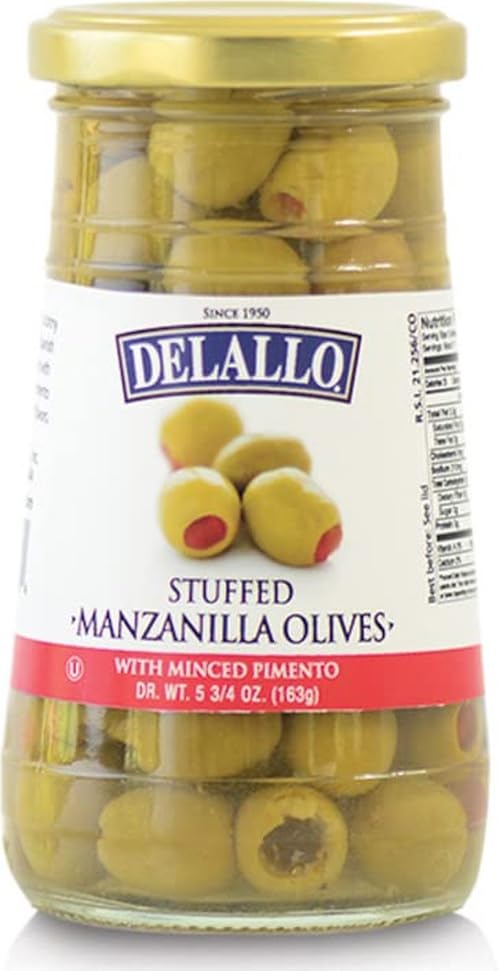
- Plump, green Spanish olives with a tart, briny flavor stuffed with sweet red pimento
- As an appetizer, salad topping or martini olive, the Stuffed Manzanilla has an elegant presence on...
Ingredients
These are the ingredients from the recipe card. The full card, with print and save buttons, is further down.
Dough
- 4 1/2 cups self-rising flour, spooned and leveled
- 3 1/3 cups all-purpose flour, spooned and leveled, plus a little for dusting
- 1 cup whole milk
- 1/2 cup warm water
- 1 lb (454 g) salted butter, softened, divided: 3/4 cup for dough, 18 tablespoons for folds, 2 tablespoons for greasing
- 1/4 cup plus 2 tablespoons granulated sugar, divided
- 4 1/2 teaspoons (14 g) instant yeast
- 1/2 teaspoon salt
- 7 large eggs
Filling
- 18 oz (510 g) smoked bacon, cut into thin strips
- 1 1/4 lb (567 g) fully cooked ham, thinly sliced
- 1 cup sliced pimento-stuffed green olives, drained
- 1 cup raisins
Glaze
- 1/4 cup whole milk
- 1 tablespoon granulated sugar
The card uses about 1 1/4 pounds of ham, 1 cup of olives and 1 cup of raisins for four loaves, which keeps ham as the main filling, in line with the Venezuelan recipes we checked. For a more traditional glaze, sweeten the milk with grated papelón (panela) instead of sugar.
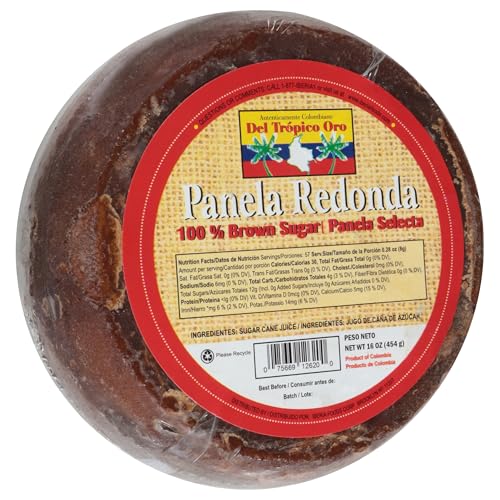
- AUTHENTIC FLAVOR: Iberia Panela offers a rich, natural sweetness with a traditional taste, perfect...
- ALL-NATURAL INGREDIENTS: Made from 100% pure sugarcane, this unrefined sweetener retains the...

How to make pan de jamón
These are the steps from the recipe card.
- Heat the milk until small bubbles appear at the edge, then remove from the heat and cool until lukewarm. Stir the yeast and 2 tablespoons of the measured sugar into the warm water. Let stand about 5 minutes.
- Beat 3/4 cup softened butter with the remaining 1/4 cup sugar and salt. Mix in the eggs, cooled milk and yeast mixture. Switch to a dough hook and gradually add the combined flours. Mix to a soft dough, rest 5 minutes, then knead until smooth and elastic, adding only a little dusting flour if needed. Divide into 2 equal pieces.
- Roll each piece to about 15 by 20 inches on a lightly floured surface. Spread each with 3 tablespoons butter. Fold in thirds like a letter, then fold crosswise into a compact packet. Wrap and refrigerate for 4 hours.
- Repeat that rolling, buttering and folding process twice more for each packet, refrigerating for 4 hours after each round. There are 3 rounds in total, using 18 tablespoons butter and at least 12 hours chilling. Keep the dough cold; do not substitute egg wash for the butter layers.
- Divide each chilled packet in half to make 4 pieces. Working with one piece at a time, roll to a thin rectangle about 15 by 20 inches. Divide the ham, bacon, raisins and drained olives evenly among the 4 rectangles, arranging thin, even layers. Keep the unused dough refrigerated.
- Roll each rectangle from a short edge into a tight log. Seal the seam and tuck the ends underneath. Set seam-side down on 2 parchment-lined baking sheets, 2 loaves per sheet. Cover and let rise until puffy, about 45 minutes; allow longer if the dough remains cold.
- Heat the oven to 350°F (175°C). Bake 2 loaves at a time for about 40 minutes. Stir the glaze milk and sugar together, brush over the tops and bake about 5 minutes more, or until golden and fully cooked. Check that the center of each loaf reaches about 190°F (88°C), extending baking as needed and tenting with foil if the crust browns too quickly. Repeat with the second batch.
- Rest the baked loaves on racks for about 30 minutes before slicing. Refrigerate leftovers within 2 hours; wrap well and use within 3–4 days, or freeze for up to 3 months. Thaw in the refrigerator and reheat leftovers to 165°F (74°C).
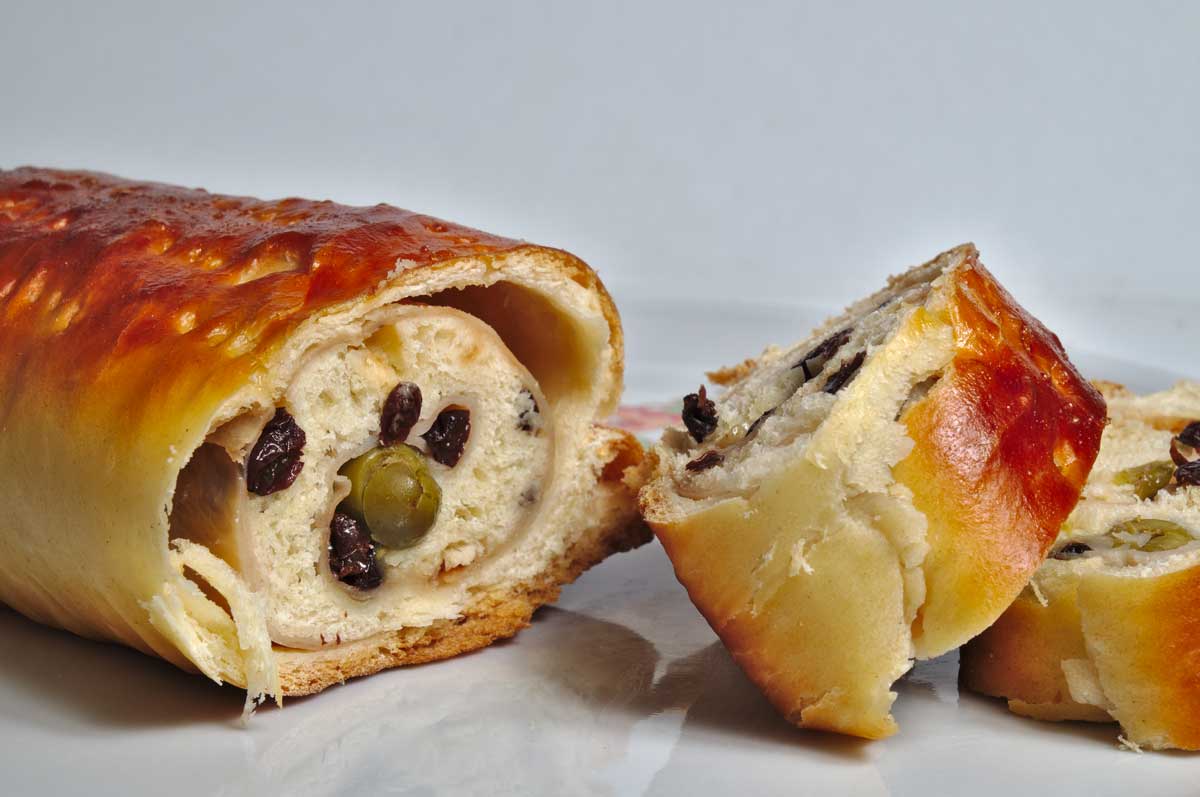
Tips for a tight, even spiral
- Keep the dough cold. The butter folds only work if the butter stays in layers. If the dough softens or the butter starts to smear while you roll, wrap it and chill it again.
- Leave a clean border. Keep the filling about an inch from the far edge so the seam seals, and pinch it closed before you tuck the ends under.
- Dry the olives. Wet olives make the dough slide and leave gaps. Drain them well and pat them dry.
- Use a thermometer. The crust can look done before the center is. Serious Eats bakes its loaf to 185°F in the center, and King Arthur Baking gives about 190°F for soft, enriched breads, so the card uses about 190°F.
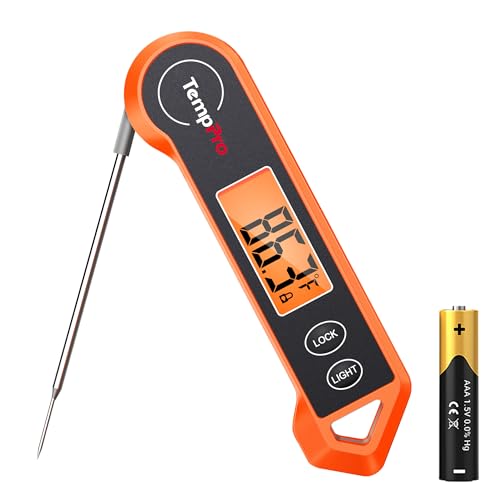
- Fast & Accurate: Get precise readings in just 1 second with ±0.9°F accuracy. NSF Certified for...
- 2.0" Large Auto-Rotating Backlit Display: A large 2.0-inch backlit display with 180° auto-rotation...
Serving at a Venezuelan Christmas
Pan de jamón is at its best the day it is baked, slightly warm, cut into thick slices so the spiral shows. On Christmas Eve it shares the plate with an hallaca, a slice of pernil and ensalada de gallina, and through the rest of December it turns up at breakfast with coffee or hot chocolate. Arrange slices on a platter for a holiday buffet, or add them to a cheese board, where the sweet raisins and salty ham sit well next to sharp cheese.

Storing and reheating
Because the filling contains meat, treat pan de jamón like any cooked meat dish rather than plain bread. Refrigerate it within 2 hours, wrap it well and use it within 3 to 4 days, or freeze it for up to 3 months. Thaw frozen loaves in the refrigerator and reheat slices to 165°F before serving.


Pan de Jamón Recipe
This authentic Pan de Jamón recipe brings the flavors of a traditional Venezuelan Christmas to your kitchen. A soft, golden bread roll filled with savory ham, sweet raisins, and briny green olives, this festive favorite is easier to make than you think. Whether you're celebrating the holidays or simply craving a taste of Venezuela, this step-by-step recipe will guide you to perfect results every time.
Ingredients
Dough
- 4 1/2 cups self-rising flour, spooned and leveled
- 3 1/3 cups all-purpose flour, spooned and leveled, plus a little for dusting
- 1 cup whole milk
- 1/2 cup warm water
- 1 lb (454 g) salted butter, softened, divided: 3/4 cup for dough, 18 tablespoons for folds, 2 tablespoons for greasing
- 1/4 cup plus 2 tablespoons granulated sugar, divided
- 4 1/2 teaspoons (14 g) instant yeast
- 1/2 teaspoon salt
- 7 large eggs
Filling
- 18 oz (510 g) smoked bacon, cut into thin strips
- 1 1/4 lb (567 g) fully cooked ham, thinly sliced
- 1 cup sliced pimento-stuffed green olives, drained
- 1 cup raisins
Glaze
- 1/4 cup whole milk
- 1 tablespoon granulated sugar
Instructions
- Heat the milk until small bubbles appear at the edge, then remove from the heat and cool until lukewarm. Stir the yeast and 2 tablespoons of the measured sugar into the warm water. Let stand about 5 minutes.
- Beat 3/4 cup softened butter with the remaining 1/4 cup sugar and salt. Mix in the eggs, cooled milk and yeast mixture. Switch to a dough hook and gradually add the combined flours. Mix to a soft dough, rest 5 minutes, then knead until smooth and elastic, adding only a little dusting flour if needed. Divide into 2 equal pieces.
- Roll each piece to about 15 by 20 inches on a lightly floured surface. Spread each with 3 tablespoons butter. Fold in thirds like a letter, then fold crosswise into a compact packet. Wrap and refrigerate for 4 hours.
- Repeat that rolling, buttering and folding process twice more for each packet, refrigerating for 4 hours after each round. There are 3 rounds in total, using 18 tablespoons butter and at least 12 hours chilling. Keep the dough cold; do not substitute egg wash for the butter layers.
- Divide each chilled packet in half to make 4 pieces. Working with one piece at a time, roll to a thin rectangle about 15 by 20 inches. Divide the ham, bacon, raisins and drained olives evenly among the 4 rectangles, arranging thin, even layers. Keep the unused dough refrigerated.
- Roll each rectangle from a short edge into a tight log. Seal the seam and tuck the ends underneath. Set seam-side down on 2 parchment-lined baking sheets, 2 loaves per sheet. Cover and let rise until puffy, about 45 minutes; allow longer if the dough remains cold.
- Heat the oven to 350°F (175°C). Bake 2 loaves at a time for about 40 minutes. Stir the glaze milk and sugar together, brush over the tops and bake about 5 minutes more, or until golden and fully cooked. Check that the center of each loaf reaches about 190°F (88°C), extending baking as needed and tenting with foil if the crust browns too quickly. Repeat with the second batch.
- Rest the baked loaves on racks for about 30 minutes before slicing. Refrigerate leftovers within 2 hours; wrap well and use within 3–4 days, or freeze for up to 3 months. Thaw in the refrigerator and reheat leftovers to 165°F (74°C).
Notes
This folded, buttery version makes 4 loaves. Plan about 15 hours 45 minutes: 1 hour active preparation, 90 minutes for two baking batches, 12 hours dough chilling, 45 minutes final rising and 30 minutes cooling. Extra chilling, a cool kitchen or longer baking extends the schedule. Butter allocation is 12 tablespoons in the dough plus 18 tablespoons across the three folding rounds; the remaining 2 tablespoons are for greasing. Milk and water must be lukewarm before meeting the yeast. Because the filling contains meat, do not store these loaves at room temperature for days. Keep refrigerated leftovers at 40°F (4°C) or below.
Pan de Jamón FAQ
Who invented pan de jamón?
The earliest record is a December 1905 advertisement from the Panadería Ramella in Caracas, whose owner, Dr. Lucas Manuel Ramella Martínez, is credited with the idea. Other Caracas bakeries copied it in 1906 and added raisins and olives.
What is inside pan de jamón?
Thinly sliced ham, raisins and pimento-stuffed green olives are the classic filling. Many recipes, including ours, add smoked bacon.
Can I make pan de jamón ahead?
Yes. The dough needs at least 12 hours in the refrigerator for the folds, so start the day before. Baked loaves can be frozen for up to 3 months and reheated.
How do I know when it is done?
The crust should be deep golden, and an instant-read thermometer in the center of the loaf should read about 190°F (88°C). Tent with foil if the top browns too fast.
Can I leave pan de jamón out at room temperature?
Not for days. It is filled with meat, so refrigerate it within 2 hours and reheat slices to 165°F.
More Venezuelan dishes
Browse our Venezuelan foods, or try another bakery favorite, cachitos, the ham-filled rolls sold at every Venezuelan panadería. For the rest of the holiday spread, see Venezuelan desserts and Venezuelan drinks, and for everyday cooking start with our guide to traditional Venezuelan food, from tequeños to golfeados.
Shopping list: pimento-stuffed manzanilla olives, panela for the glaze and an instant-read thermometer.
Sources
- El Estímulo (Bienmesabe): La historia completa del pan de jamón
- Wikipedia (ES): Pan de jamón
- NYT Cooking: Pan de Jamón (Venezuelan Ham Bread)
- Serious Eats: Pan de Jamón (Venezuelan Christmas Ham Bread)
- Chef Goya: Pan de jamón venezolano
- Venezolanos Arrechos: Pan de jamón venezolano, receta tradicional
- De Rechupete (ABC): Pan de jamón, receta venezolana
- King Arthur Baking: Using a thermometer with yeast bread
- USDA FSIS: Leftovers and Food Safety
More Venezuelan Foods
See all →
Jorge Garcia is the founder of AmigoFoods, where he has spent over 20 years helping readers discover authentic Latin American and Spanish cuisine. Raised in a Cuban-American household, Jorge learned to cook at the hands of his mother and grandmother, carrying forward generations of family recipes. That heritage, backed by his family’s four-generation history in the Latin food industry, inspired him to launch AmigoFoods in 2003. With more than 1,000 published articles on recipes, ingredients, and food culture, Jorge’s mission is simple: make authentic Latin cooking approachable for home cooks everywhere while honoring the traditions behind every dish.