
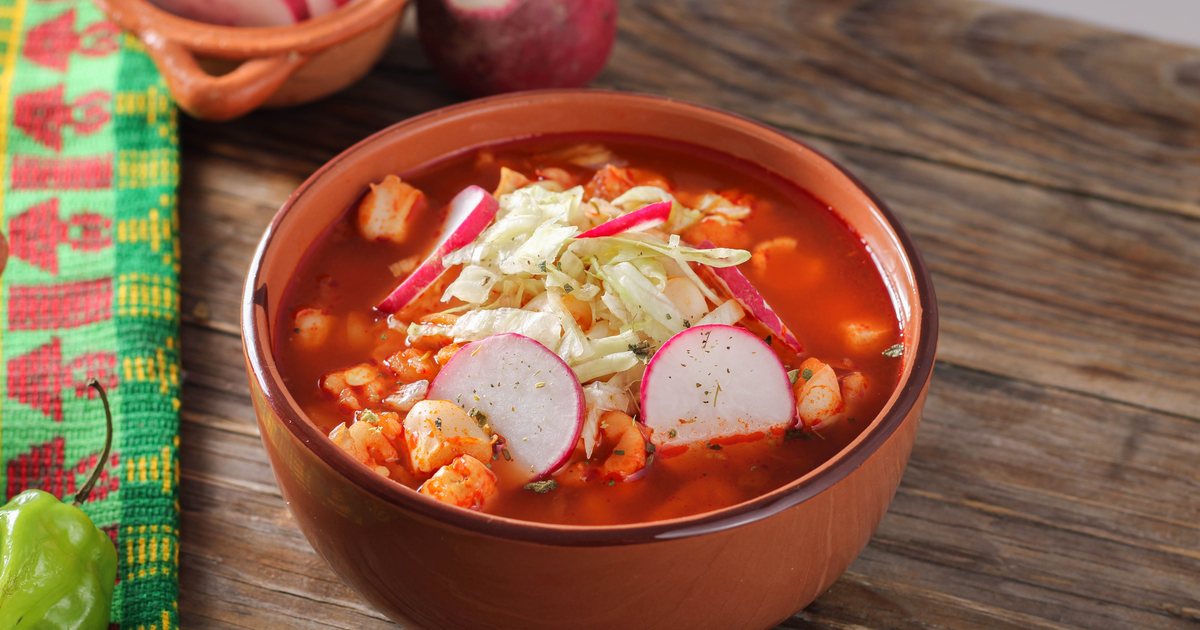
Pozole rojo combines tender pork and white hominy in a rich guajillo-and-ancho broth. Serve this Mexican celebration soup with cabbage, radishes, onion, oregano and lime so everyone can finish their own bowl.
Pozole Rojo at a Glance
What Is Pozole Rojo?
Pozole (also spelled posole) is a family of Mexican soups built on hominy: large kernels of white corn that have been cooked in an alkaline lime solution, the same process that turns corn into masa for tortillas. As the hominy simmers, the kernels burst open like flowers and turn soft and chewy. The broth around them decides which pozole you are eating.
Pozole rojo is the red one. Its color comes from a smooth sauce of guajillo chiles, often with ancho for depth, blended with garlic and onion and stirred into a slow-simmered pork broth. The result tastes earthy, a little fruity and gently smoky, with more warmth than real fire. The heat and freshness come from what each person adds at the table, which is why pozole is always served with a spread of toppings.
In pozole rojo de puerco, the classic version, the meat is pork shoulder, often with bony cuts such as neck, ribs or trotters for a richer broth. Chicken pozole rojo is common too, and lighter.

Pozole Rojo Essentials
| Also called | Red pozole, pozole rojo de puerco, pozole estilo Jalisco; posole in the U.S. Southwest |
|---|---|
| Type | Hominy and pork soup (a brothy stew) |
| Origin | Pre-Hispanic central Mexico; the red style is most associated with Jalisco and western Mexico |
| Key ingredients | Nixtamalized white hominy (maíz pozolero), pork shoulder, guajillo and ancho chiles, garlic, onion, Mexican oregano |
| Flavor | Earthy, lightly fruity and smoky; mild to medium heat |
| Toppings | Cabbage or lettuce, radish, white onion, dried oregano, ground chile, lime, tostadas |
| When it’s eaten | Mexican Independence Day (September 15–16), Christmas, New Year’s, birthdays and big family gatherings |
| Time to make | About 3 hours with canned hominy, mostly hands-off simmering |
The History of Pozole: From Aztec Ritual to Fiesta Staple
Few dishes on a modern Mexican table go back as far as pozole. Its story runs from temple ceremonies to street stalls, and it is closely tied to corn, the crop at the center of life in ancient Mexico (our guide to maize in Mexican cuisine tells that side of the story).
Before 1521
A sacred maize stew
The name comes from the Nahuatl word pozolli, generally linked to the foamy, bursting look of the corn as it cooks. For the Mexica (Aztecs) and their neighbors, maize was sacred, and a stew of whole hominy kernels was a food for ceremonies. The 16th-century Franciscan friar Bernardino de Sahagún recorded that during Tlacaxipehualiztli, a spring festival for the god Xipe Tótec, a maize stew called tlacatlaolli was prepared with the flesh of sacrificed captives and shared by the captor’s family. How often this happened is still debated by historians, but the ritual role of the dish is well documented.
1500s–1600s
Pork arrives
After the Spanish conquest, ritual sacrifice was banned and the dish changed. The Spanish brought pigs, and pork became the standard meat. Pozole moved from the temple to the family kitchen, keeping its hominy base and its place at celebrations.
Colonial era onward
Three colors take shape
Regional styles grew up around local chiles and herbs. Western Mexico, especially Jalisco, turned its pozole red with dried chiles; Guerrero became known for green pozole made with pumpkin seeds and tomatillos; plain white pozole stayed common across central Mexico.
Today
The fiesta soup
Pozole is now eaten all over Mexico and wherever Mexican families live. It is the traditional dinner for the night of El Grito on September 15, the eve of Independence Day, and a fixture at Mexican Christmas and New Year’s. In Guerrero, jueves pozolero (Pozole Thursday) is a weekly tradition, and pozolerías serve nothing else.
The corn itself is part of the tradition. Pozole is made with cacahuazintle, an heirloom white maize with very large, soft, floury kernels grown mainly in the State of Mexico and Morelos. After nixtamalization, the tip of each kernel is removed so it can open fully in the pot. When a pozole cook says the corn has “flowered” (floreado), the soup is nearly ready.
Pozole Rojo vs. Pozole Verde vs. Pozole Blanco
All three share the same hominy and pork base. What changes is the sauce, and with it the region and the flavor.
Pozole rojo
- Broth colored with a purée of dried guajillo and ancho chiles
- Most associated with Jalisco, plus Michoacán, Sinaloa and Nayarit
- Earthy, lightly smoky, mild to medium heat
- Usually pork; chicken is common too
Pozole verde
- Green sauce of tomatillos, pepitas (pumpkin seeds), fresh chiles and herbs such as epazote
- The specialty of Guerrero, famous on Pozole Thursdays
- Tangy, herbal and nutty
- See our pozole verde guide
Pozole blanco
- No sauce in the pot: just pork, hominy and a clear broth
- Heat and color are added at the table with chile and salsa
- The oldest and simplest style
- See our pozole blanco recipe

Want the bigger picture? Our overview of pozole, Mexico’s hominy soup covers every style.
Pozole Rojo Ingredients: What You Need and Why
The hominy
Hominy is the heart of pozole, so it is worth a moment of thought. You have two choices:
- Canned white hominy (Juanita’s, Teasdale or Goya, often labeled “Mexican-style” or “maíz pozolero”). It is already cooked, so it only needs rinsing and 30 minutes in the pot. Two 25-ounce cans are right for this recipe.
- Dried prepared hominy (about 1 pound). It has a deeper corn flavor and a chewier bite. Soak it overnight, then simmer it in unsalted water for 2 to 3 hours until the kernels burst open before adding it to the soup.
Either way, use white hominy, not yellow, for the classic look and taste.

The chiles
The red sauce is where pozole rojo gets its identity. Most cooks use guajillos alone or a mix of guajillo and ancho, with a couple of árbol chiles for anyone who wants more heat. You can read more about each in our guide to Mexican peppers.
| Chile | What it adds | Heat | Swap |
|---|---|---|---|
| Guajillo | The backbone: bright brick-red color, tangy, berry-like flavor | Mild | New Mexico or California dried chiles |
| Ancho | Dried poblano. Deeper color and a sweet, raisin-like richness | Mild | Pasilla for a darker, more bitter-chocolate note |
| Chile de árbol (optional) | Clean, sharp heat. One or two is plenty | Hot | A pinch of cayenne, or chile piquín at the table |
| Puya (optional) | A smaller, hotter cousin of the guajillo, used in some Jalisco kitchens | Medium | An extra guajillo plus one árbol |
Buy chiles that are soft and flexible, not brittle, with a deep color and no dusty patches. Old chiles make a flat, bitter sauce.
The meat
- Pork shoulder (Boston butt) is the best choice. It has enough fat to stay tender after two hours of simmering. Bone-in is better for the broth.
- Bony cuts such as pork neck bones, spare ribs or a split pig’s foot add body and gelatin. Traditional Jalisco pozole often includes pork head for the same reason.
- Chicken works well for a lighter pozole rojo. Use bone-in thighs and breasts (see the chicken variation below).
- Avoid lean pork loin or tenderloin, which turns dry and stringy in soup.
How to Make Pozole Rojo, Step by Step
Pozole rojo is simple cooking with a long, gentle simmer. While the pork cooks, you make the chile sauce; then everything goes into one pot with the hominy. The full ingredient amounts are in the recipe card below.

1Simmer the pork
Put the pork pieces in a large pot with a halved onion, a head of garlic, bay leaves and salt. Cover with water and bring to a boil. For the first 10 minutes, skim off the gray foam so the broth stays clear.
Lower the heat and simmer, partly covered, for about 1½ to 2 hours, until the pork is tender enough to pull apart with a fork.

2Make the red chile sauce
Cut the stems off the guajillos and anchos, split them open and shake out the seeds. Toast them on a dry comal or skillet for 15 to 20 seconds per side, just until fragrant. Burnt chiles make the sauce bitter.
Soak them in hot water for 15 to 20 minutes, then blend with fresh garlic, a little onion, oregano, cumin and about 1½ cups of pork broth until very smooth. Strain it, then fry it in a spoonful of lard or oil for 5 minutes, until it darkens.

3Add the sauce and hominy
Lift out the pork and discard the onion, garlic, bay leaves and any bones. Shred the meat into bite-size pieces.
Stir the chile sauce and the rinsed hominy into the broth and simmer for 30 minutes, until the kernels have opened. Return the pork and simmer 10 minutes more, then taste and season with salt. Pozole needs more salt than you expect.

4Serve with the toppings
Ladle the pozole into deep bowls with plenty of broth. Set out the toppings in small bowls so everyone can build their own: cabbage, radish, onion, lime, oregano rubbed between the fingers, and ground chile.
Serve with tostadas on the side for crunch.
Secrets to a great pozole rojo
- Toast the chiles lightly. A few seconds per side is enough. If they smoke or blacken, start again; burnt chiles are the most common cause of bitter pozole.
- Blend with broth, not soaking water. The soaking water can taste bitter. Use pork broth from the pot or fresh water.
- Strain and fry the sauce. Straining removes the tough skins. Frying the sauce in lard or oil (sazonar) deepens the color and rounds out the flavor.
- Salt at the end. Hominy soaks up salt. Season after it has simmered in the broth, a teaspoon at a time.
- Make it a day ahead. Pozole tastes better the next day, and the fat that sets on top overnight is easy to lift off.
Pozole Rojo Recipe
This makes about 4 quarts, enough for 8 generous bowls. It uses canned hominy for a same-day pozole; the notes explain how to use dried.

Pozole Rojo (Mexican Red Pozole With Pork)
Authentic Mexican pozole rojo: tender pork and white hominy simmered in a guajillo and ancho chile broth, served with shredded cabbage, radishes, onion, oregano and lime. A big pot for a crowd, and even better the next day.
Ingredients
For the pork and broth
- 3 pounds bone-in pork shoulder (Boston butt), cut into 3-inch pieces
- 1 pound pork neck bones or 1 split pig's foot (optional, for a richer broth)
- 1 white onion, halved
- 1 head garlic, halved crosswise
- 2 bay leaves
- 1 tablespoon kosher salt, plus more to taste
- 14 cups (3 1/2 quarts) water
For the red chile sauce
- 6 dried guajillo chiles (about 1 1/2 ounces)
- 3 dried ancho chiles
- 1 to 2 dried chiles de árbol (optional, for heat)
- 4 garlic cloves, peeled
- 1/4 white onion
- 1 teaspoon dried Mexican oregano
- 1/2 teaspoon ground cumin
- 1 1/2 cups pork broth from the pot (or water)
- 1 tablespoon lard or vegetable oil
For the pozole
- 2 cans (25 ounces each) white hominy, drained and rinsed
For serving
- 3 cups finely shredded green cabbage
- 8 radishes, thinly sliced
- 1 white onion, finely diced
- 3 limes, cut into wedges
- Dried Mexican oregano
- Ground chile piquín or chile de árbol
- Tostadas
Instructions
- Cook the pork. Put the pork, neck bones (if using), halved onion, garlic, bay leaves and 1 tablespoon salt in an 8-quart pot. Add the water and bring to a boil over high heat. Skim off the foam for the first 10 minutes. Reduce the heat to low, partly cover and simmer 1½ to 2 hours, until the pork is very tender.
- Prepare the chiles. While the pork cooks, cut the stems off the guajillo, ancho and árbol chiles, slit them open and remove the seeds and veins. Toast them in a dry skillet or comal over medium heat for 15 to 20 seconds per side, until fragrant and pliable. Do not let them blacken. Cover with very hot water and soak 15 to 20 minutes, until soft.
- Blend the sauce. Drain the chiles and discard the soaking water. Blend them with the garlic cloves, ¼ onion, oregano, cumin and 1½ cups broth from the pot until completely smooth. Strain through a fine-mesh sieve, pressing on the solids.
- Fry the sauce. Heat the lard or oil in a large skillet over medium-high heat. Pour in the sauce (it will splatter) and cook, stirring, 5 to 6 minutes, until it darkens and thickens slightly.
- Shred the pork. Lift the pork onto a board. Discard the onion, garlic, bay leaves and bones from the broth. Shred the pork into bite-size pieces, removing any large pieces of fat.
- Finish the pozole. Stir the chile sauce and hominy into the broth and simmer 30 minutes, until the kernels have opened and the broth is deep red. Add the pork and simmer 10 minutes more. Taste and season with salt, usually 1 to 2 teaspoons more. You should have about 4 quarts; add a little water if it has reduced too much.
- Serve. Ladle into deep bowls and serve with the cabbage, radishes, onion, lime wedges, oregano, ground chile and tostadas at the table so everyone can add their own.
Notes
Dried hominy: Soak 1 pound dried prepared hominy (maíz pozolero) overnight. Drain, cover with fresh unsalted water and simmer 2 to 3 hours until the kernels burst open, then add it with the chile sauce in step 6.
Chicken pozole rojo: Use 3 pounds bone-in chicken thighs and breasts instead of pork and simmer only 35 to 40 minutes, until the thickest part reaches 165°F (74°C).
Heat: Guajillos and anchos are mild. For a spicier pot, add 1 or 2 árbol chiles to the sauce; otherwise let everyone add ground chile at the table.
Storage: Cool promptly in shallow containers and refrigerate within 2 hours. Refrigerate up to 4 days or freeze up to 3 months, without the toppings. Pozole tastes even better the next day.
Slow Cooker, Instant Pot and Chicken Pozole Rojo
The stovetop method gives you the most control over the broth, but pozole adapts easily. In every version, make the chile sauce the same way (step 2).
Slow cooker
- Put the pork, onion, garlic, bay leaves, salt and 8 cups of water in a 6-quart or larger slow cooker.
- Cook on low for 7 to 8 hours or high for 4 to 5 hours.
- Shred the pork, discard the aromatics, then add the fried chile sauce and hominy.
- Cook on high for 45 minutes more and season with salt.
Instant Pot
- Add the pork, aromatics, salt and 8 cups of water to an Instant Pot (do not go above the max line).
- Pressure cook on high for 45 minutes, then let the pressure release naturally for 15 minutes.
- Shred the pork, discard the aromatics, add the chile sauce and hominy.
- Simmer on Sauté for 15 minutes and season.
Chicken pozole rojo
- Swap the pork for 3 pounds of bone-in, skin-on chicken thighs and breasts.
- Simmer 35 to 40 minutes, until the thickest part reaches 165°F (74°C).
- Shred the meat, discard skin and bones, and use chicken broth to blend the sauce.
- Finish exactly as for pork. It is lighter and ready in about 1½ hours.
Pozole Rojo Toppings
Toppings are not a garnish here; they are half the dish. They add crunch, freshness and acidity to a rich broth, and every family has its own must-haves. These are the classics.

Some families also put out Mexican crema, crumbled queso fresco or chicharrón.
What to Serve With Pozole Rojo
Pozole is a full meal, so keep the rest of the table simple. Tostadas are the classic side. For a party, set the pot on the stove, line up the toppings, and let everyone serve themselves.

TamalesThe other half of a Mexican holiday dinner
Agua de jamaicaTart, chilled hibiscus drink
Agua de tamarindoSweet-sour tamarind cooler
MicheladaBeer with lime and spice
Ponche navideñoWarm fruit punch for Christmas pozole nights
For more ideas, see our aguas frescas guide and the Mexican drinks roundup.
Make Ahead, Storage and Reheating
Make ahead: Pozole rojo is one of the best make-ahead dishes there is. Cook it up to 2 days before a party, cool it promptly in shallow containers, and refrigerate within 2 hours. Lift off the solid fat before reheating. Prepare the toppings the day you serve, since cut radishes and cabbage wilt.
Refrigerator: Keep pozole in a covered container for up to 4 days. Store the toppings separately.
Freezer: Freeze pozole (without toppings) for up to 3 months. The hominy softens slightly but holds up well. Thaw overnight in the refrigerator.
Reheating: Warm it gently on the stove over medium heat until simmering, adding a splash of water or broth if it has thickened.
Pozole Rojo FAQ
Is pozole rojo spicy?
Usually not very. Guajillo and ancho chiles are mild, so the broth is flavorful rather than hot. Most of the heat is added at the table with ground chile or salsa. Add one or two árbol chiles to the sauce if you want the pot itself to be spicy.
What is the difference between pozole and posole?
They are the same word. Pozole is the standard Mexican spelling; posole is common in the U.S. Southwest, especially New Mexico, where it can also mean the hominy itself.
What is pozole rojo made of?
Hominy (nixtamalized white corn), pork, and a red sauce of dried guajillo and ancho chiles blended with garlic, onion and oregano, all simmered in the pork broth. It is topped with cabbage, radish, onion, oregano, chile and lime.
What is the best meat for pozole rojo?
Bone-in pork shoulder, ideally with some neck bones or a pig’s foot for body. Chicken thighs are the best choice for chicken pozole rojo.
Can I use canned hominy?
Yes. Canned hominy is what most home cooks use, and it gives excellent results. Drain and rinse it well to remove the canning liquid. Dried hominy has a slightly deeper corn flavor but needs an overnight soak and 2 to 3 hours of cooking.
Why is my pozole bitter?
The usual cause is chiles that were toasted too long or blended with their soaking water. Toast them just until fragrant and blend with fresh broth. A small pinch of sugar or a longer simmer can soften a slightly bitter pot.
Why is pozole eaten on Mexican Independence Day?
Pozole is a celebration dish that feeds a crowd, and many people point out that a bowl of red broth, white onion and green cabbage carries the colors of the Mexican flag. It is the traditional dinner on the night of September 15, when Mexico celebrates El Grito.
Is pozole rojo healthy?
It is a balanced meal: protein from the pork, fiber from the hominy, and a lot of fresh vegetables from the toppings. For a lighter version, use chicken and skim the fat from the broth. Pozole is naturally gluten-free.
More Mexican Soups and Stews
If you love pozole rojo, try its green and white cousins, or another of Mexico’s great soups. Browse them all on our Mexican soups and stews page or in our list of the 12 best Mexican soups and stews.
Pozole blancoThe original white pozole
MenudoRed chile tripe soup, often made with hominy
BirriaJalisco’s other famous red chile stew
Sopa de tortillaTomato-chile broth with crisp tortilla strips
Latin soups and stews21 sopas from across Latin America
Stock up for pozole night. Good chiles and hominy make all the difference. Find dried guajillo chiles, white hominy for pozole and Mexican oregano on Amazon, or browse our guide to Mexican pantry essentials.
Sources
- Wikipedia: Pozole
- Wikipedia: Cacahuazintle
- Familia Kitchen: History of Pozole, A Tale of Celebration and Sacrifice
- The Culture Trip: A Brief History of Pozole
More Mexican Foods
See all →
Jorge Garcia is the founder of AmigoFoods, where he has spent over 20 years helping readers discover authentic Latin American and Spanish cuisine. Raised in a Cuban-American household, Jorge learned to cook at the hands of his mother and grandmother, carrying forward generations of family recipes. That heritage, backed by his family’s four-generation history in the Latin food industry, inspired him to launch AmigoFoods in 2003. With more than 1,000 published articles on recipes, ingredients, and food culture, Jorge’s mission is simple: make authentic Latin cooking approachable for home cooks everywhere while honoring the traditions behind every dish.