

Latin American and Spanish non-alcoholic drinks range from bright fruit waters to creamy corn beverages and aromatic herbal infusions. A glass of tart agua de Jamaica can accompany lunch, a mug of champurrado can warm a cool morning, and a pitcher of horchata can turn a few pantry ingredients into a refreshing treat.
Just want the recipes? Every drink here has its own card on our Latin American non-alcoholic drinks page, with the fruit blends on the smoothies and juices page.
This guide groups them by their main ingredients and preparation styles: fruit waters and blended refreshers, grain and tigernut drinks, and herbal infusions, followed by Colombia’s sugarcane-based aguapanela. The groupings overlap: Mexican horchata is both a rice drink and an agua fresca, for example. Regional and family recipes vary, and the places in the chart identify the traditions discussed here rather than exclusive national ownership.
Explore fourteen entries below, including both Mexican and Spanish horchata. Each profile explains the flavor, main ingredients, serving customs, and useful preparation tips, with links to fuller recipes when you are ready to make a batch.
Every Drink in This Guide
| Drink | Origin | Family / base | Served |
|---|---|---|---|
| 01Aguas frescas | Mexico | Fruit water | Cold |
| 02Agua de Jamaica | Mexico | Fruit water | Cold |
| 03Agua de tamarindo | Mexico | Fruit water | Cold |
| 04Limonada de coco | Colombia | Fruit water | Cold, blended |
| 05Horchata | Mexico | Grain (rice) | Cold |
| 06Horchata de chufa | Spain | Tigernut (tuber) | Very cold |
| 07Chicha morada | Peru | Grain (purple corn) | Cold |
| 08Atole & champurrado | Mexico | Grain (masa) | Hot |
| 09Chicheme | Panama | Grain (corn) | Cold, thick |
| 10Colada morada | Ecuador | Grain & fruit | Hot |
| 11Emoliente | Peru | Herbal | Hot |
| 12Mate de coca | Andes | Herbal | Hot |
| 13Yerba mate | Southern Cone | Herbal | Hot or iced |
| 14Aguapanela | Colombia | Sugarcane | Hot or cold |
Fruit Waters

Aguas Frescas
Aguas frescas are a whole family of Mexican drinks, rather than one recipe. Fruit, flowers, seeds, or grains flavor a water-based drink that is usually sweetened and served cold. Watermelon, cantaloupe, pineapple, cucumber, and lime are familiar choices. Jamaica, tamarindo, and Mexican horchata belong to this family too; they have their own entries below because each uses a different preparation method.
A good fruit agua fresca should taste clearly of its main ingredient while remaining light enough to sip throughout a meal. Ripe fruit does much of the work. Blend it with water, then strain if you prefer a smoother drink; watermelon often needs less straining than a fibrous pineapple. Add sugar gradually, since two pieces of the same fruit can have very different sweetness.
These pitchers are at home beside tacos, quesadillas, or a simple weekday lunch. For a first batch, try one fruit before combining several flavors. Chill the mixture before adding ice so it does not become watery, and stir before pouring because natural pulp settles. Our aguas frescas guide explains the main variations and how to adjust their consistency.
Agua de Jamaica

Deep red agua de Jamaica gets its color and tartness from dried hibiscus calyces, commonly sold as flor de jamaica. Its flavor is bright and floral with a cranberry-like tang. Although it is often called hibiscus tea, the Mexican table drink is usually diluted, sweetened, and served over ice. It is one of the classic aguas frescas you will see alongside horchata and tamarindo.
The basic method is to simmer or steep the dried hibiscus in water, strain the concentrated liquid, and add more water to taste. Stir in sugar while the infusion is still warm so it dissolves evenly. Cinnamon can give the drink a warmer spice note, while a squeeze of lime makes the finish sharper. Start with a plain batch to learn how much acidity you enjoy.
If the result is too strong, dilute it before adding more sugar; sweetness alone can leave you with a heavy drink that is still intensely tart. Serve chilled with savory foods such as tacos or enchiladas. Hibiscus on its own is caffeine-free, though a packaged blend may contain other tea ingredients. See the full recipe for quantities and steeping guidance.
Agua de Tamarindo

Agua de tamarindo has a brown, sometimes cloudy appearance and a sweet-sour flavor with a deeper, fruitier finish than lemonade. Tamarind pulp is naturally tangy, with notes that can suggest dates or dried apricots. Diluted into an agua fresca, it becomes a refreshing accompaniment to a savory meal rather than the thick paste used in sauces and candies.
When starting with whole pods, remove the brittle shells and stringy fibers, soften the pulp in warm water, and separate it from the hard seeds. Straining is important: the finished drink can retain a little fine pulp, but it should not contain tough fibers or seed fragments. Packaged pulp can save time, provided you check whether it is already sweetened and whether seeds remain.
Taste after dilution and then sweeten gradually. Tamarind concentrates vary considerably, so substituting one spoonful for another brand may change the drink’s strength. If it tastes syrupy, add water; if it is flat, it may need more tamarind rather than more sugar. Serve it cold with ice and stir the pitcher before pouring. The linked recipe walks through preparing the pods and balancing the finished drink.
Limonada de Coco

Limonada de coco is a frosty Colombian coconut-and-lime drink associated with the Caribbean coast. Fresh lime gives it a sharp citrus edge, while coconut supplies the creamy body. The combination is rich but refreshing, especially when blended with ice until it has a soft, slushy texture. Despite the English name coconut lemonade, lime is the citrus used in many Colombian versions.
Recipes vary: coconut milk produces a lighter drink, coconut cream makes it thicker, and some versions use sweetened cream of coconut or condensed milk. These ingredients are not interchangeable without adjusting the sweetness. Check the label before adding sugar, particularly if you are using a product intended for cocktails. A version made with unsweetened coconut milk or cream can be sweetened exactly to your taste.
Blend just before serving, since the ice melts and the mixture separates as it stands. If it is too thick for a straw, add a little cold water rather than more lime juice. Try it with grilled fish, patacones, or a light coastal-style lunch. The full limonada de coco recipe includes a starting ratio you can adjust for a lighter or creamier result.
Brazil has its own creamy lime drink. Brazilian lemonade, called limonada suíça in Brazil, blends whole limes with cold water for just a few seconds, then adds sweetened condensed milk. It is quicker than limonada de coco and best drunk the moment it is made, before the lime peel turns it bitter.
Grain and Tigernut Drinks
Rice, corn, and tigernuts give these drinks very different textures. Some are strained and light; others retain enough starch or tender grain to feel like a snack. Spanish horchata belongs here for comparison with its Mexican namesake, although chufas are tubers rather than grains.
Horchata — Two Different Drinks
Mexico and Spain share the name horchata, but the main ingredient changes the drink completely. Here is what to expect from each version.

Mexican horchata: rice and cinnamon. Mexican horchata begins with rice that is soaked, blended with water and cinnamon, and strained. It is sweet, creamy, and gently spiced, with a lighter texture than a milkshake. Vanilla is a common addition. Some recipes contain milk, evaporated milk, or condensed milk, while others rely on rice and water, so the name alone does not tell you whether a glass contains dairy.
The most useful preparation steps are giving the rice enough time to soften and straining the blended mixture carefully. Rushing the soak or using a coarse sieve can leave a gritty drink. Follow the recipe’s soaking directions, then sweeten gradually, especially if condensed milk is included. Stir before serving because rice sediment can settle at the bottom of the pitcher.
Serve Mexican horchata cold with tacos, tamales, or a spicy lunch. A little ground cinnamon on top emphasizes its aroma. If you like rice pudding but want something lighter to drink, this is an approachable place to begin. The full recipe covers ingredient amounts and different ways to make it creamy.

Spanish horchata de chufa: tigernuts and water. Horchata de chufa uses soaked tigernuts, small edible tubers that are neither rice nor tree nuts. The strained drink is pale, sweet, and earthy, with a nutty flavor that differs from the cinnamon-led Mexican version. Traditional preparations use chufas and water, with sweetness adjusted to taste; check packaged products for their particular ingredients.
The drink is closely associated with Valencia and nearby Alboraia. Visit Valencia highlights the local custom of serving it with fartons, long sweet pastries that can be dipped into the glass. Horchaterías serve it very cold, and granizado versions have an icy, slushy texture. It makes a distinctive afternoon snack as well as a warm-weather refreshment.
At home, the essential ingredient is food-grade dried chufa. Soak and blend it according to a reliable recipe, strain thoroughly, and keep the finished drink refrigerated. Using rice instead produces a different horchata rather than a substitute with the same flavor. Tasting the Spanish and Mexican versions side by side makes the difference in their main ingredients especially clear.
Chicha Morada

Chicha morada is Peru’s purple-corn refresher, made by simmering dried maíz morado with fruit and spices, then straining and chilling the liquid. Pineapple peel, apple, cinnamon, and cloves are common additions. Its dark purple color can suggest grape juice, but the flavor is more like a gently spiced fruit drink with an earthy corn note and a bright citrus finish.
The corn is used to infuse the liquid rather than turn it into a thick porridge. Choose dried purple corn intended for chicha morada; yellow sweet corn will not create the same flavor or color. After straining, adjust the sugar and add lime to taste. Some households include small pieces of apple in the pitcher, giving the finished drink a little fresh crunch.
Serve it well chilled alongside dishes such as lomo saltado or a plate of Peruvian chicken and rice. It is different from chicha de jora, which is fermented and contains alcohol. The name chicha alone does not tell you which beverage you are getting. Our full chicha morada recipe explains the ingredients, simmering, and final flavor adjustments.
Atole and Champurrado
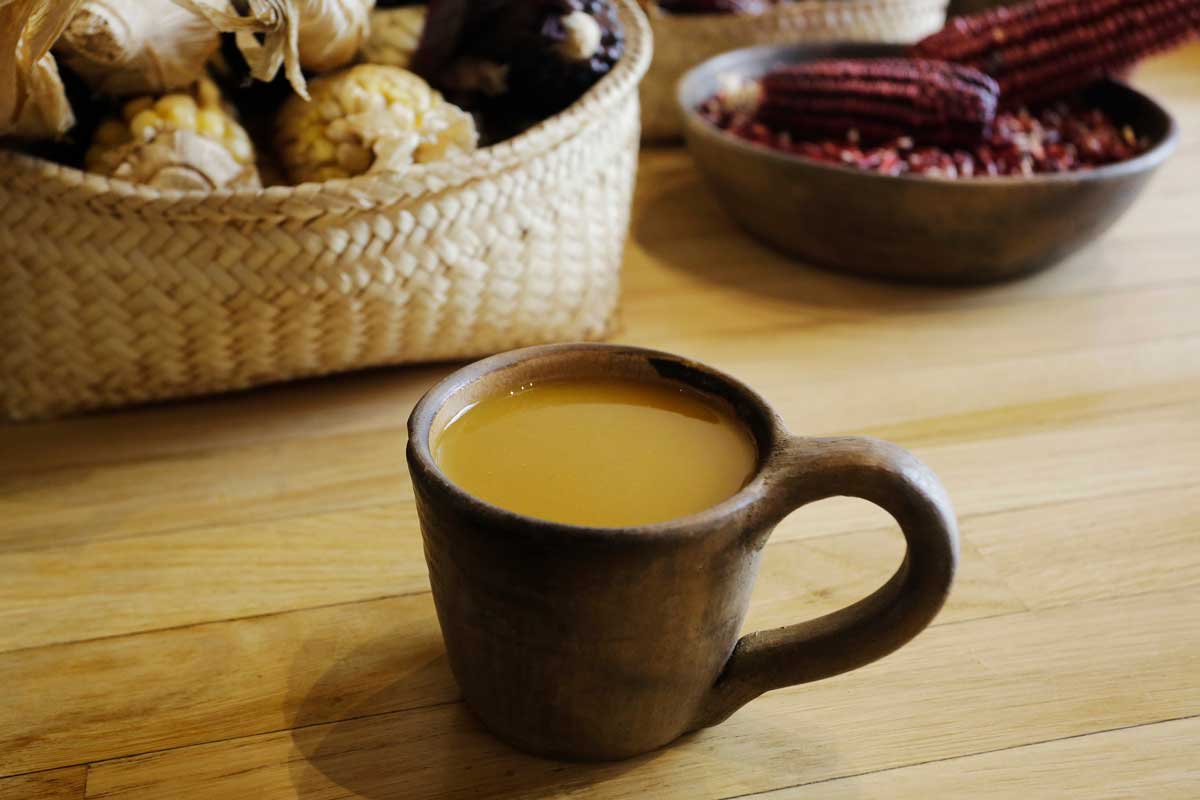
Atole is a warm, thickened drink with roots in Mexico’s maize traditions. Masa or masa harina gives many versions their body, while water, milk, or a combination forms the liquid base. Cinnamon, vanilla, and piloncillo are common flavorings. Atole can also be made in fruit flavors, and regional recipes use different grains or starches, so the name describes a broader family than one fixed formula.
Champurrado is the chocolate member of that family. Mexican chocolate adds cacao, sweetness, and often cinnamon, while the corn thickener gives it more substance than ordinary hot chocolate. Both are especially appealing with tamales or pan dulce on a cool morning. Champurrado is also closely associated with festive gatherings such as Las Posadas.
The useful cooking trick is to disperse the masa in cool or lukewarm liquid before whisking it into the hot pot. Adding dry flour directly can create lumps. Stir as it cooks, scraping the bottom to prevent scorching, and stop when it is smooth and comfortably pourable. It thickens as it cools; loosen it with a little water or milk when reheating. Follow the separate recipes for the right proportions and cooking times.
Chicheme

Panamanian chicheme combines tender corn with milk, sugar, and warm spices. It is particularly associated with La Chorrera, whose corn-based food traditions are documented by Panama’s Ministry of Culture. Cinnamon and vanilla are familiar flavorings, and nutmeg appears in some preparations. Served cold, it tastes somewhere between a sweet corn drink and a loose milk pudding.
Texture is a major part of its appeal. Unlike strained horchata, chicheme can retain soft pieces of corn, so a spoon may be more useful than a narrow straw. The corn should be thoroughly tender before the drink is finished; a gritty center is a sign it needs more cooking. Whole or coarsely broken corn takes considerably longer than a powdered thickener.
For a home version, plan around the corn’s soaking and cooking requirements rather than assuming this is a quick blender drink. Stir the milk mixture gently and let it chill before judging its final thickness. Add a little milk if it becomes too dense. The version described here is a sweet, unfermented drink; beverages with the same name elsewhere can differ in ingredients and preparation.
Colada Morada

Ecuador’s colada morada is a thick purple drink built from fruit, spices, and a corn-flour base. Berries such as mora and mortiño, pineapple, and naranjilla are among the ingredients used in different household recipes. Cinnamon, cloves, and sometimes ishpingo contribute a fragrant finish. Expect a rich, spoonable or slowly pourable drink with sweetness balanced by the fruit’s acidity.
Its most important setting is Día de los Difuntos on November 2, when families share it with guaguas de pan, decorated breads shaped like babies or dolls. Visit Quito describes the pairing as part of a tradition of remembrance and family gathering. It is especially prominent around the holiday, rather than a drink that can only be served on a particular date.
Preparation usually involves making a spice infusion, preparing the fruit, and incorporating the thickener. Mix corn flour with cool liquid before adding it to the pot, and stir as it cooks to avoid lumps. Serve warm with the bread for a traditional pairing. Our recipe also explains ingredient substitutions for cooks who cannot find mortiño or naranjilla locally.
Herbal Infusions
Emoliente

Emoliente is a Peruvian street drink made from toasted barley and a changing mix of herbs and seeds. Flaxseed is a common addition, alongside ingredients such as horsetail, alfalfa, chamomile, or lemongrass. Vendors finish individual glasses with citrus and sweetener, so the balance can change from one stall to the next. The toasted grain gives it an earthy base, while the herbs contribute grassy or floral notes.
Its body is unusual for an infusion: flaxseed can give the liquid a smooth, slightly slippery texture. A glass may be lightly sweet and lemony rather than strongly medicinal in flavor. Warm emoliente is a familiar choice for breakfast or a cool evening, though chilled versions are also enjoyed. It offers a different experience from the clear, light teas that the word herbal might suggest.
For home preparation, use a food-grade blend with clearly identified ingredients and follow its directions, then strain and adjust the citrus at serving time. Barley makes traditional emoliente unsuitable for a gluten-free diet. The drink has a history of use in folk remedies, but that tradition should not be treated as proof that it cures a medical condition. Our guide focuses on its ingredients and preparation.
Mate de Coca

Mate de coca is an Andean infusion made by steeping coca leaves in hot water. It is commonly encountered in Peru and Bolivia, where loose leaves or tea bags may be served in cafés, markets, and accommodations. The liquid is usually pale yellow-green, with a mild grassy flavor and a little bitterness. Some people drink it plain, while others add sugar.
Despite sharing the word mate, it is a different drink from yerba mate. Coca and yerba mate come from different plants, and coca tea is generally served in an ordinary cup rather than repeatedly poured through a gourd. Its place in Andean hospitality and traditional plant use is part of what makes it culturally distinctive.
It is often offered to visitors at altitude, but it should not replace acclimatization or medical care for altitude illness. The CDC’s altitude guidance emphasizes gradual ascent and appropriate care. Travelers should also check their destination’s customs rules before carrying coca products across a border; being sold locally does not mean a tea is permitted in your luggage at home.
Yerba Mate

Yerba mate is an infusion of the leaves and stems of Ilex paraguariensis, enjoyed across Argentina, Uruguay, Paraguay, and southern Brazil. Its flavor is grassy and bitter, sometimes with roasted or smoky notes depending on processing. The drink contains caffeine, but its strength depends on the amount of yerba, the water, and how many times the leaves are infused.
The familiar setup is a gourd or cup and a bombilla, a metal straw with a filter at its base. Here is how to make yerba mate in a gourd, step by step. One person may prepare and refill it for a group, although drinking mate alone is equally ordinary. Argentina’s cultural heritage record describes both individual drinking and the shared serving ritual, and traces the use of yerba mate to the Guaraní people.
For a first taste, a tea-bag version called mate cocido offers an easy introduction. With loose yerba, follow the package’s water-temperature guidance and avoid stirring the bombilla once it is positioned, which can disturb the filter. Paraguay’s cold tereré provides a refreshing alternative. Our guide explains the equipment and preparation; yerba mate and gourd-and-bombilla sets are available online (paid links).
A Sugarcane Classic
Aguapanela

Aguapanela, also written agua de panela, is a Colombian drink made by dissolving panela in water. Panela is concentrated, unrefined cane juice sold in solid blocks, cones, or granulated form. It gives the drink an amber color and a caramel-like flavor with molasses notes. That depth is the reason plain white sugar and water will not taste quite the same.
The preparation is simple: break or grate a manageable portion of panela, dissolve it in hot water, and adjust the strength. Serve it warm for a comforting drink or cool it and pour over ice. Lime juice adds a bright counterpoint to the sweetness. In some Colombian traditions, warm aguapanela is served with cheese, creating a sweet-and-salty pairing; bread or an arepa makes a good companion too.
Start with a light concentration, since panela varies in flavor and sweetness and it is easier to add more than to correct an overly sweet pot. Granulated panela is convenient when you want to make one cup without cutting a hard block. Although it is less refined than white sugar, panela is still a sugar, so enjoy aguapanela for its flavor and tradition rather than treating it as a health tonic.
Making Them at Home
Choose the method before shopping. Fresh fruit aguas frescas and limonada de coco are blender projects; hibiscus and purple-corn drinks begin with an infusion or simmer; atole, champurrado, and chicheme need cooking to develop their texture. Rice horchata and horchata de chufa need advance soaking. The linked recipes provide quantities and timing for each preparation.
A blender, fine-mesh sieve, saucepan, and covered pitcher will handle most of these drinks. For a smooth horchata, a clean fine straining cloth can catch particles that pass through a coarse sieve. Whisk grain thickeners into cool liquid first, and stir while heating. Chill drinks intended for serving cold before adding ice, then taste again and adjust the sweetness or dilution.
Refrigerate prepared drinks promptly, particularly those containing milk, cooked grains, or fresh fruit. Stir chilled pitchers before serving and follow each recipe’s storage guidance. For guests avoiding dairy or caffeine, check the actual ingredients rather than relying on the drink’s name. Traditional emoliente contains barley, and chocolate-based champurrado is not necessarily caffeine-free.
Specialty ingredients such as purple corn, panela, and dried hibiscus are available at Latin grocery stores and online. These Amazon links are paid links; as an Amazon Associate I earn from qualifying purchases.
Frequently Asked Questions
Why do Mexican and Spanish horchata taste nothing alike?
Because they are made from different plants. Mexican horchata is rice; Spanish horchata is chufa, or tigernut, a small tuber grown around Valencia. Both can look milky, but their main ingredients produce different flavors and textures.
Is chicha alcoholic?
It depends which chicha. Chicha morada is a boiled purple corn drink with no alcohol. Chicha de jora is fermented and mildly alcoholic. They are not the same beverage.
Can I bring mate de coca home from a trip?
Do not assume a product sold locally can cross an international border. U.S. Customs and Border Protection lists coca leaves among restricted narcotics in its import guidance. Check the current customs requirements for your destination before purchasing coca tea to take home.
Does yerba mate have caffeine?
Yes. The amount varies with the product, serving size, brewing method, and repeated infusions. A tea-bag cup and a gourd refilled several times are not equivalent servings.
What is the difference between atole and champurrado?
Champurrado is atole with chocolate. Both are thickened with masa harina and drunk hot.
Which one should I try first?
For a tart, refreshing drink, start with agua de Jamaica. Choose Mexican horchata if you prefer a creamy cinnamon flavor, or champurrado for a warm chocolate drink. Limonada de coco is a good choice when you want a frosty blender drink.
Sources and Further Reading
The individual AmigoFoods guides linked throughout this article provide fuller recipes. The following cultural and travel references support the regional context and travel notes.
- Mexico’s agricultural information service: Aguas frescas mexicanas
- Visit Valencia: Horchata and fartons
- Panama Ministry of Culture: Chicheme chorrerano
- Visit Quito: Colada morada
- Argentina’s cultural heritage inventory: Mate
- CDC Yellow Book: High-altitude travel and altitude illness
- U.S. Customs and Border Protection: Importing into the United States
More Latin Favorites
See all →
Jorge Garcia is the founder of AmigoFoods, where he has spent over 20 years helping readers discover authentic Latin American and Spanish cuisine. Raised in a Cuban-American household, Jorge learned to cook at the hands of his mother and grandmother, carrying forward generations of family recipes. That heritage, backed by his family’s four-generation history in the Latin food industry, inspired him to launch AmigoFoods in 2003. With more than 1,000 published articles on recipes, ingredients, and food culture, Jorge’s mission is simple: make authentic Latin cooking approachable for home cooks everywhere while honoring the traditions behind every dish.