

Sancocho Panameño is Panama’s comforting chicken soup, simmered with ñame and culantro until the broth thickens. Garlic, onion and oregano round out the pot, with white rice served alongside.
Sancocho Panameño at a Glance
What Makes Panamanian Sancocho Different
Sancocho is cooked all over the Spanish-speaking Caribbean, and every country has its own idea of what goes in the pot. The Dominican sancocho de siete carnes piles in seven meats. Colombia’s sancocho de gallina adds potato, yuca, plantain and corn.
Panama’s classic version is the simplest of them all. It is built on three things: chicken, ñame and culantro, with garlic, onion and oregano doing the seasoning. The name comes from the Spanish verb sancochar, to parboil, which says a lot about how humble the dish is.
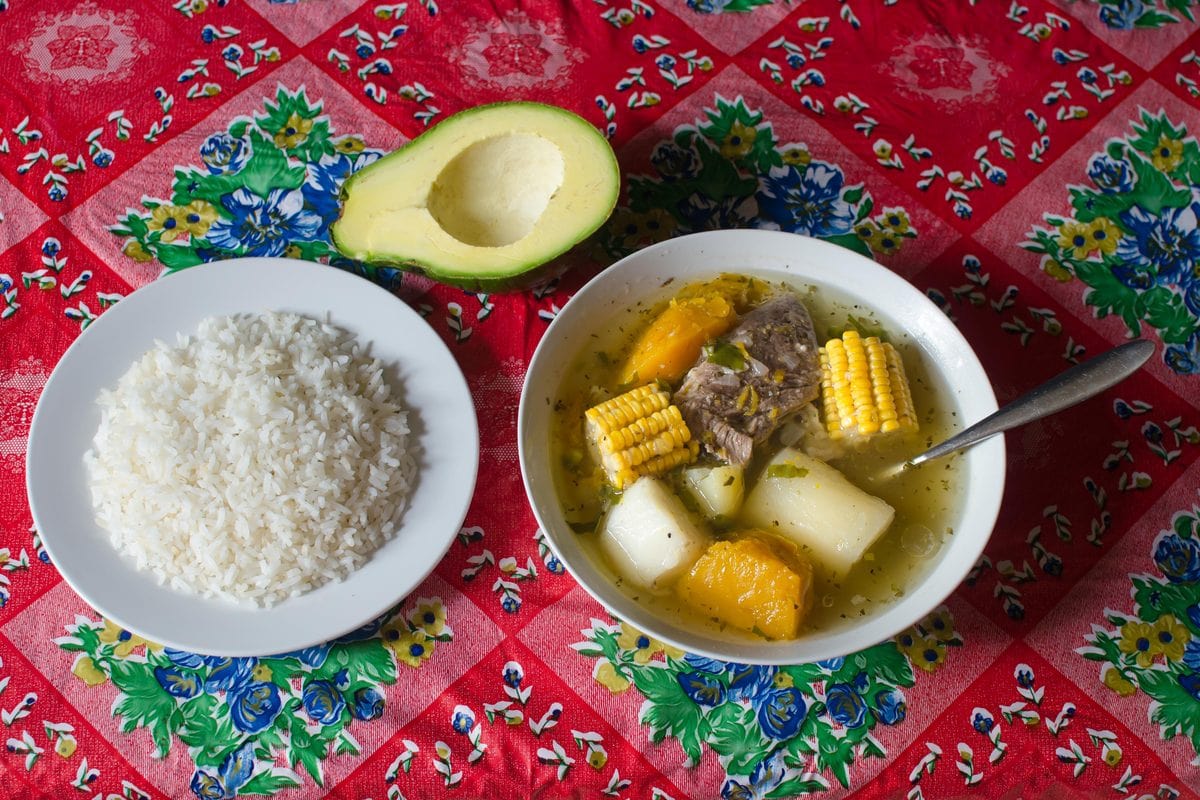
Next door, Costa Rica takes the same one-pot idea in a different direction: its olla de carne swaps the hen for beef shank and adds a much longer list of vegetables.
The Three Ingredients That Matter
Ñame
Ñame is true yam, a starchy tuber from the Dioscorea family with rough brown skin and dense white flesh. It is not the orange sweet potato that US supermarkets sometimes label “yam.” As it simmers, the outside of each chunk softens and dissolves into the pot, which is what gives Panamanian sancocho its thick, almost creamy broth. Look for it fresh or frozen in Latin and Caribbean markets. Read more about it in our guide to Panamanian ingredients.
Culantro
Culantro (Eryngium foetidum) is a different plant from cilantro, with long, serrated leaves and a much stronger flavor. It holds up to long boiling, so half goes in early and half at the end. If you can’t find it, use about twice as much cilantro and add it only in the last few minutes.
The hen
Traditional cooks use a gallina de patio, a free-range yard hen. Its meat is firmer and needs longer cooking, and it gives a deeper broth. A regular chicken works fine and cooks faster.
Regional Versions
The basic recipe changes as you travel around the country:
- Azuero Peninsula: the purist version, with chicken or guinea fowl and ñame as the only root vegetable, traditionally cooked in an iron pot over a wood fire.
- Chiriquí and Veraguas: a fuller pot with yuca, malanga, squash, corn, potato, plantain and chayote.
- Bocas del Toro: beef ribs, pig’s tail and tripe join the chicken.
Panamanians take the dish seriously enough that in 2003, the year of the country’s centennial, a giant “sancocho centenario” entered the Guinness record book as the largest pot of chicken and ñame soup ever made.
How It’s Made
The chicken is seasoned with garlic, oregano, salt and pepper and left to rest in the refrigerator for 15 minutes while you prepare the vegetables, then browned in a little oil. Onion, half the culantro, water and the whole ají chombo go in, and the pot simmers for about half an hour while you skim the foam.
If using a tough stewing hen, allow extra simmering until it is nearly tender before adding the ñame. Then the ñame goes in. It needs 40 to 50 minutes, until the chicken is tender and the ñame starts to break apart. For a thicker soup, mash a few pieces against the side of the pot. The rest of the culantro goes in at the end, and the soup is served in deep bowls with white rice.
Tips for the Best Sancocho
- Take the ají chombo out before it bursts. Left whole, it adds fragrance and gentle heat. Once it splits, the whole pot turns fiery.
- Don’t rush the ñame. The broth only thickens once the edges of the ñame have softened into it.
- Make it a day ahead. Sancocho tastes even better the next day, and it freezes well.
- Add-ins are fine. Add peeled otoe, yuca, green plantain or rounds of corn early enough to cook fully; the time depends on the vegetable and chunk size. Check each for tenderness rather than relying on a fixed 15-minute finish.
Sancocho Panameño FAQ
Is sancocho the national dish of Panama?
Yes. Sancocho is widely considered Panama’s national dish and is eaten across the country, from home kitchens to roadside fondas.
What can I use instead of ñame?
Ñame is what makes the broth thick, so it is worth seeking out in Latin or Caribbean markets, where it is also sold frozen. If you can’t find it, use waxy potatoes, and mash a few pieces at the end to thicken the broth.
Can I use a regular chicken instead of a hen?
Yes. A regular chicken cooks faster, so start checking it about 30 minutes after you add the ñame. It must reach 165°F (74°C); a stewing hen may need extra simmering to become tender.
Why do Panamanians eat sancocho after a party?
A hot, salty, restorative broth is the traditional cure for a long night, the same role chicken soup plays in many other kitchens.
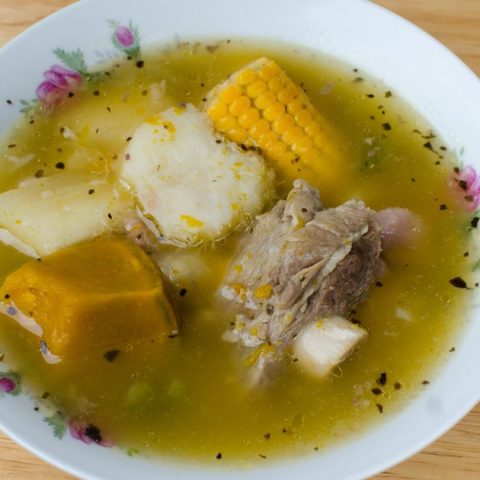
Sancocho Panameño
Panama's national soup: chicken simmered with ñame and culantro until the broth turns thick and golden. Serve with white rice.
Ingredients
- 1 (3½ to 4 lb) chicken, ideally a stewing hen, cut into pieces
- 4 garlic cloves, minced
- 2 tablespoons chopped fresh oregano (or 1 tablespoon dried)
- 1 teaspoon black pepper
- 2½ to 3 teaspoons salt, divided
- 1 tablespoon vegetable oil
- 1 large onion, chopped
- 1 bunch culantro (about 12 leaves, ½ cup chopped), divided
- 8 to 10 cups water
- 1 whole ají chombo pepper (optional)
- 2 lb ñame, peeled and cut into 2-inch chunks
- Cooked white rice, for serving
Instructions
- Season the chicken with the garlic, oregano, pepper and 1 teaspoon of the salt. Let it sit for 15 minutes.
- Heat the oil in a large pot over medium heat. Brown the chicken for 8 to 10 minutes.
- Add the onion, half the culantro, the water and the whole ají chombo, if using. Bring to a boil, then cover and simmer for 30 minutes, skimming off the foam.
- Add the ñame and simmer for 40 to 50 minutes more, until the chicken is tender and the ñame starts to fall apart. For a thicker broth, mash a few pieces against the side of the pot.
- Season with the remaining salt to taste. Remove the ají chombo before it bursts. Stir in the rest of the culantro, simmer for 5 minutes and serve with white rice.
Notes
Culantro: if you can't find it, use about 1 cup chopped cilantro and add it only in the last 5 minutes.
Ñame: look for it fresh or frozen in Latin and Caribbean markets. Don't substitute orange sweet potatoes sold as "yams."
Regular chicken: start checking about 30 minutes after adding the ñame; the meat must reach 165°F (74°C). A stewing hen may need extra simmering to become tender; let it become nearly tender before adding the ñame.
Sancocho keeps for 3 days in the fridge and freezes well.
Prep timing includes the 15-minute seasoning rest: prepare the onion, culantro and ñame while the chicken rests in the refrigerator. Allow extra cooking time for a tough hen.
Keep Cooking Panamanian
Serve sancocho with a side of patacones, or start the meal with carimañolas, Panama’s stuffed yuca fritters, or a cup of Panamanian ceviche de corvina. The next morning, fry a batch of hojaldras, Panama’s breakfast bread. For something sweet afterward, try chicheme, a spiced corn drink. Find more of the country’s cooking in our guide to Panamanian food, or browse everything on the Panamanian food hub.
More Panamanian Foods
See all →
Jorge Garcia is the founder of AmigoFoods, where he has spent over 20 years helping readers discover authentic Latin American and Spanish cuisine. Raised in a Cuban-American household, Jorge learned to cook at the hands of his mother and grandmother, carrying forward generations of family recipes. That heritage, backed by his family’s four-generation history in the Latin food industry, inspired him to launch AmigoFoods in 2003. With more than 1,000 published articles on recipes, ingredients, and food culture, Jorge’s mission is simple: make authentic Latin cooking approachable for home cooks everywhere while honoring the traditions behind every dish.