

On this page
Carimañolas are torpedo-shaped yuca fritters stuffed with seasoned ground beef or cheese, then fried until the outside is crisp and the inside stays soft. They are a breakfast and street food staple on Colombia’s Caribbean coast and across Panama. This carimañola recipe makes 12, with a dough of only yuca and salt.
Carimañolas at a Glance
AmigoFoods may earn a commission from qualifying Amazon purchases made through links on this page.
What is a carimañola?
A carimañola (kah-ree-mah-NYOH-lah) is a stuffed fritter made from boiled, mashed yuca, also called cassava. The closest English name is “stuffed yuca fritter.” You will also see it spelled carimanola or called a caribañola.
The shell fries up crisp and lightly blistered, while the inside stays soft and a little chewy. Yuca tastes mild, so the filling carries the flavor. And because the dough is yuca rather than wheat, a traditional carimañola is naturally free of gluten.
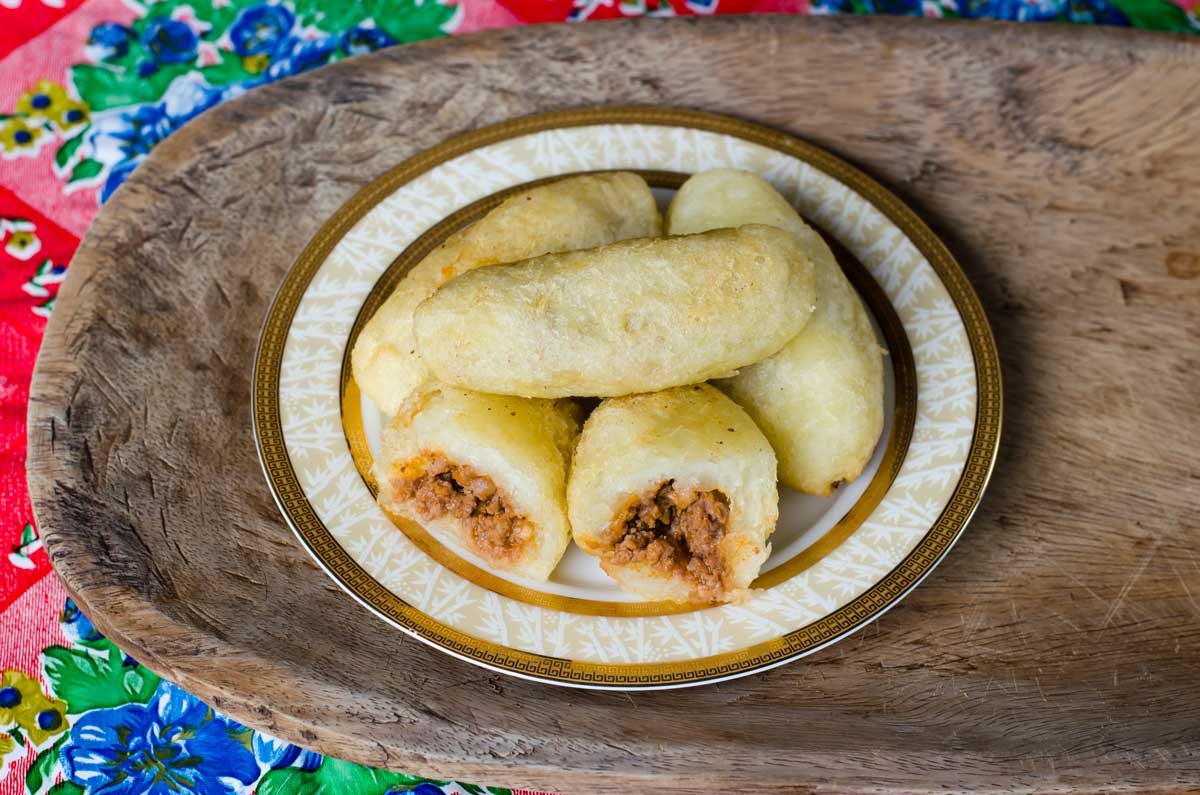
Colombian vs. Panamanian carimañolas
Both countries claim this fritter, and no documented origin settles it. Panama was part of Colombia until 1903, which helps explain why the two kitchens share it. The dough is essentially the same, but what goes around it changes.
- Where: The Caribbean coast, especially Atlántico, Bolívar and Córdoba
- When: Breakfast, a cafeteria snack or part of a fried picada
- Filling: Ground beef, shredded chicken or queso costeño
- Served with: Suero costeño or ají
- Worth a trip: Cartagena’s Festival del Frito, held each January
- Where: Nationwide, from street vendors to neighborhood fondas
- When: Mostly breakfast, or a snack later in the day
- Filling: Usually ground beef, also chicken or queso blanco
- Served with: Coffee, and often hojaldras, tortillas or white cheese
- Flavor note: Culantro is a common herb in Panamanian cooking
For the wider picture, see our guides to Colombian street food and Panamanian food.
Carimañola vs. empanada and other stuffed fritters
A carimañola is often compared to an empanada, but the shell makes it a different food. These are the closest relatives.
| Fritter | Where | Shell | How it differs |
|---|---|---|---|
| Carimañola | Colombia, Panama | Boiled, mashed yuca | Torpedo shape, soft and chewy inside |
| Empanada | Across Latin America | Wheat or corn dough | Half-moon shape with a thinner, flakier crust |
| Alcapurria | Puerto Rico | Grated green banana and yautía, or raw grated yuca | The dough starts raw, so the texture is denser |
| Enyucado | Costa Rica | Boiled yuca with butter or margarine | A richer dough, often filled with achiote-tinted meat |
| Pastel de yuca | Bogotá, Cúcuta | Boiled yuca | Filled with rice and beef, sometimes hard-boiled egg |
| Papa rellena | Peru, Colombia, Cuba | Mashed potato | Same idea, softer shell and a more delicate crust |
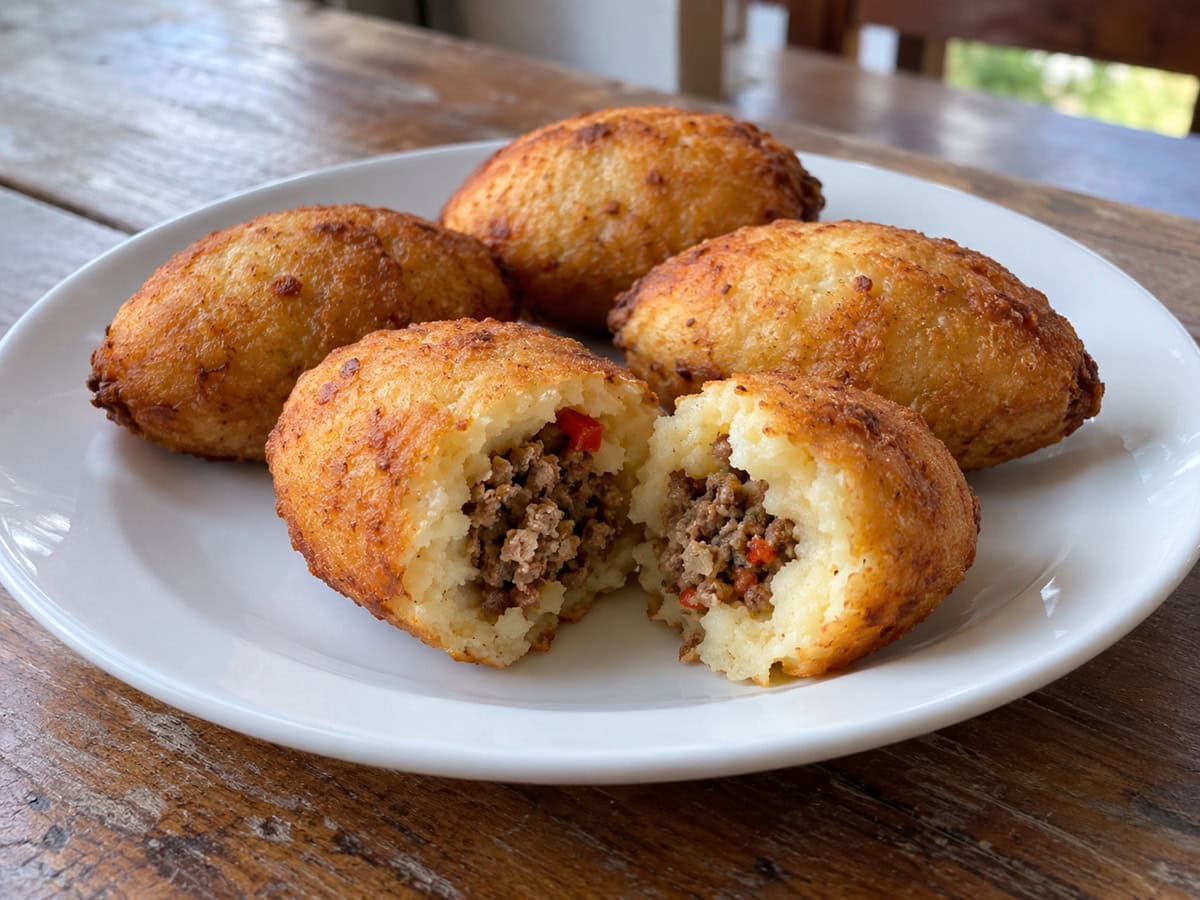
Which yuca to use for carimañolas
Any of these works. Frozen is the best balance of quality and effort, especially for a first batch.

For the filling, use ground beef cooked down with onion, bell pepper, garlic, cumin and tomato paste. On a busy morning, a few spoonfuls of ready-made sofrito, such as NATURA’S Sofrito Criollo, can stand in for the chopped onion and pepper.
For cheese, salty queso costeño is the coastal Colombian choice, and queso blanco is common in Panama. If you cannot find either, use low-moisture mozzarella and add a pinch of salt.
How to make carimañolas
Exact amounts are in the recipe card. These are the visual cues that make the difference.
1. Boil the yuca until it starts to split
Start it in cold, salted water and simmer until a fork slides in and the pieces crack open. Drain it well and discard the water.

2. Mash it while it is hot
Pull out the woody string that runs through the center of each piece, then mash or rice the yuca right away. It stiffens as it cools, and cold yuca will not smooth out. Let it cool just enough to handle, then knead briefly. The dough should feel like soft modeling clay and hold a ball without cracking.

3. Cook a dry filling and let it cool
Keep cooking the beef until the pan looks dry. Any liquid will turn to steam inside the shell, and warm filling softens the dough. Spread it on a plate so it cools faster.
4. Fill and shape into torpedoes
Oil your palms lightly. Flatten about ⅓ cup of dough into a 4-inch round, cup it in your hand, add 1½ tablespoons of filling and pinch it closed. Roll gently to a tapered oval, about 4 inches long, then smooth any cracks with a damp finger.


5. Fry at 350°F
Use 2 to 3 inches of oil in a heavy pot and fry 3 or 4 at a time for 4 to 5 minutes, turning occasionally. They are ready when deep golden all over. Drain on a wire rack so the bottoms stay crisp.

Why carimañolas burst or fall apart
Bursting in the oil is the classic carimañola failure. It nearly always comes down to moisture or a weak seal.
Carimañolas de queso, pollo and other fillings
What to serve with carimañolas

- Suero costeño: The tangy cultured cream of Colombia’s coast. Sour cream thinned with a little buttermilk and salt comes close.
- Ají: A fresh, spicy salsa that cuts through the fried shell.
- Hogao: Colombia’s warm tomato and scallion sauce.
- Hot sauce: For Panama-style heat, a Caribbean habanero sauce is a reasonable stand-in for ají chombo.
- A Panamanian breakfast: Strong coffee, white cheese and hojaldras.
- A Colombian picada: A platter with patacones, empanadas and chicharrón.
For more ideas, browse our list of 40 Latin appetizers and our guide to Colombian breakfast foods.
How to make ahead, freeze and reheat carimañolas
| Stage | Refrigerator | Freezer | To finish |
|---|---|---|---|
| Shaped, not fried | Up to 1 day, airtight | Up to 3 months; freeze on a tray first | Thaw in the refrigerator, pat dry and fry |
| Fried | Up to 3 days; refrigerate within 2 hours | Up to 3 months | Reheat in a 375°F oven until the center reaches 165°F |
What to buy for carimañolas
Carimañola FAQ
What is carimañola in English?
It is usually translated as a stuffed yuca fritter or stuffed cassava fritter. There is no exact English word, so most English menus keep the Spanish name.
What are carimañolas made of?
The shell is boiled, mashed yuca with salt. The filling is usually seasoned ground beef, shredded chicken or white cheese. Some cooks add egg, butter or a little flour to the dough.
Where are carimañolas from?
They are tied to the Caribbean coast of Colombia and to Panama. Both claim the dish, and its exact origin is not documented.
Are carimañolas gluten-free?
Traditional carimañolas made from only yuca are naturally gluten-free. Some recipes add wheat flour, so ask when eating out, and watch for shared fryers.
Can I use frozen yuca for carimañolas?
Yes. Frozen yuca is already peeled and makes a smooth dough. Boil it from frozen until tender, then remove the central strings before mashing.
What is the difference between a carimañola and an empanada?
A carimañola has a soft, chewy shell of mashed yuca and a torpedo shape. An empanada is a half-moon turnover made with a wheat or corn dough.
Can you bake carimañolas instead of frying them?
Yes, though you lose some of the crisp shell. Brush them with oil and air fry or bake at 350°F for 20 to 25 minutes, turning halfway.
Carimañola Recipe
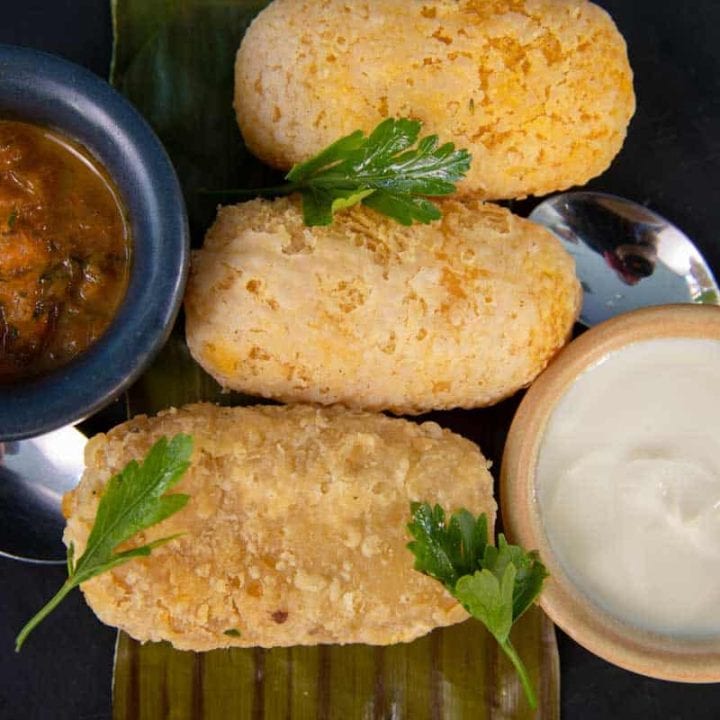
Carimañolas (Stuffed Yuca Fritters)
Crisp, torpedo-shaped yuca fritters from Colombia and Panama, stuffed with seasoned ground beef or cheese. The dough is just yuca and salt, so there is no wheat flour.
Ingredients
Yuca dough
- 2 pounds (900 g) peeled fresh or frozen yuca, cut into chunks
- 2½ teaspoons salt, divided
- 1 to 2 tablespoons cornstarch or tapioca starch, only if the dough is sticky
Beef filling
- 1 tablespoon vegetable oil
- ½ cup finely chopped onion
- ¼ cup finely chopped red bell pepper
- 2 garlic cloves, minced
- 1 scallion, finely chopped
- ½ teaspoon ground cumin
- ½ pound (227 g) ground beef
- 1 tablespoon tomato paste
- ½ teaspoon salt and ¼ teaspoon black pepper, or to taste
- 1 tablespoon chopped cilantro or culantro
Cheese option (instead of beef)
- ¾ cup diced queso costeño, queso blanco or low-moisture mozzarella
For frying
- About 6 cups vegetable or canola oil
Instructions
- Put the yuca in a large pot, cover with cold water by 2 inches and add 2 teaspoons of the salt. Boil until a fork slides in easily and the pieces start to split, 20 to 35 minutes depending on the yuca. Drain well and discard the cooking water.
- While the yuca is hot, pull out the woody central strings. Mash or rice it until completely smooth, then mix in the remaining ½ teaspoon salt. Cover and let cool until you can handle it comfortably, about 15 minutes. Knead briefly. If it cracks, work in warm water 1 teaspoon at a time. If it is sticky, work in 1 to 2 tablespoons of cornstarch or tapioca starch.
- Meanwhile, make the filling. Heat the oil in a skillet over medium heat. Cook the onion and bell pepper until soft, about 5 minutes. Add the garlic, scallion and cumin and stir for 1 minute. Add the beef and cook, breaking it up, until no pink remains and it reaches 160°F, about 7 minutes. Stir in the tomato paste, salt and pepper and cook until the pan is dry, about 2 minutes. Stir in the cilantro or culantro and let the filling cool completely.
- Oil your palms lightly. Divide the dough into 12 portions, about ⅓ cup each. Flatten one into a 4-inch round in your palm, add 1½ tablespoons of filling (or 1 tablespoon of diced cheese) and pinch the dough closed. Roll gently into a tapered torpedo and smooth any cracks with a damp finger. Set on an oiled plate and repeat.
- Heat 2 to 3 inches of oil to 350°F in a heavy pot, leaving plenty of headroom. Fry 3 or 4 at a time, turning occasionally, until deep golden, 4 to 5 minutes. Let the oil return to 350°F between batches.
- Drain on a wire rack and serve hot with suero costeño, ají or hot sauce.
Notes
Gluten-free: Yuca contains no gluten, and this dough uses no wheat flour. Check the labels on your other ingredients.
Yuca safety: Use yuca sold for eating. Peel it completely, cook it until fully tender and discard the cooking water. Never eat it raw.
Make ahead: Refrigerate shaped, unfried carimañolas for up to 1 day, or freeze for up to 3 months. Thaw in the refrigerator and pat dry before frying. Refrigerate fried leftovers within 2 hours for up to 3 days, then reheat in a 375°F oven until the center reaches 165°F.
Air fryer: Brush with oil and cook at 350°F for 20 to 25 minutes, turning halfway. The crust will be drier and less blistered than a fried one.
Nutrition: Estimated per carimañola with the beef filling, about 230 calories. The figure changes with how much oil is absorbed.
Sources
- Wikipedia (Spanish): Carimañola
- Wikipedia: Carimañola
- Food Standards Australia New Zealand: Cassava
- RPP: Los desayunos que definen la gastronomía panameña
- Exoticca: What to eat in Cartagena
More Colombian Foods
See all →
Jorge Garcia is the founder of AmigoFoods, where he has spent over 20 years helping readers discover authentic Latin American and Spanish cuisine. Raised in a Cuban-American household, Jorge learned to cook at the hands of his mother and grandmother, carrying forward generations of family recipes. That heritage, backed by his family’s four-generation history in the Latin food industry, inspired him to launch AmigoFoods in 2003. With more than 1,000 published articles on recipes, ingredients, and food culture, Jorge’s mission is simple: make authentic Latin cooking approachable for home cooks everywhere while honoring the traditions behind every dish.