
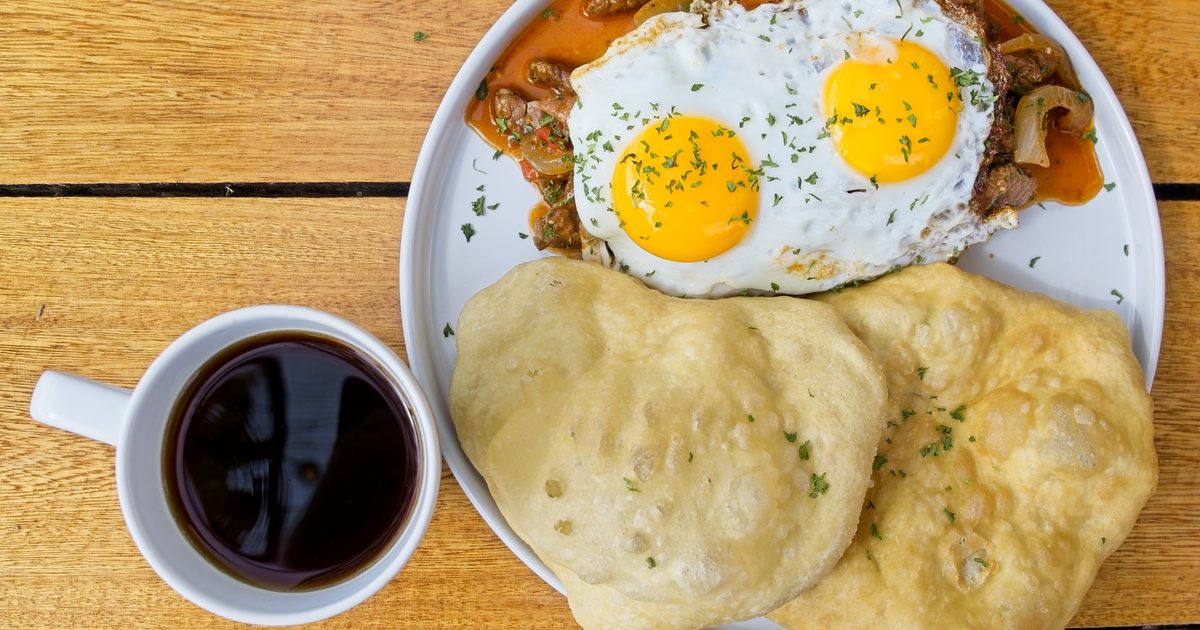
Hojaldras are Panamanian breakfast breads fried until puffed and golden, with soft centers and crisp edges. Made with six pantry ingredients, they are served hot with eggs, fresh cheese, steak and onions or stewed sausages.
Hojaldras at a Glance
Hojaldra, Hojaldre or Hojalda?
All three names are used in Panama, and in the plural you will see both hojaldras and hojaldres. Nobody will correct you for picking one. Say it “oh-HAHL-drah”: the j is a soft, breathy h. In Colón province, on the Caribbean side, they are often simply called harinas, “flours.”
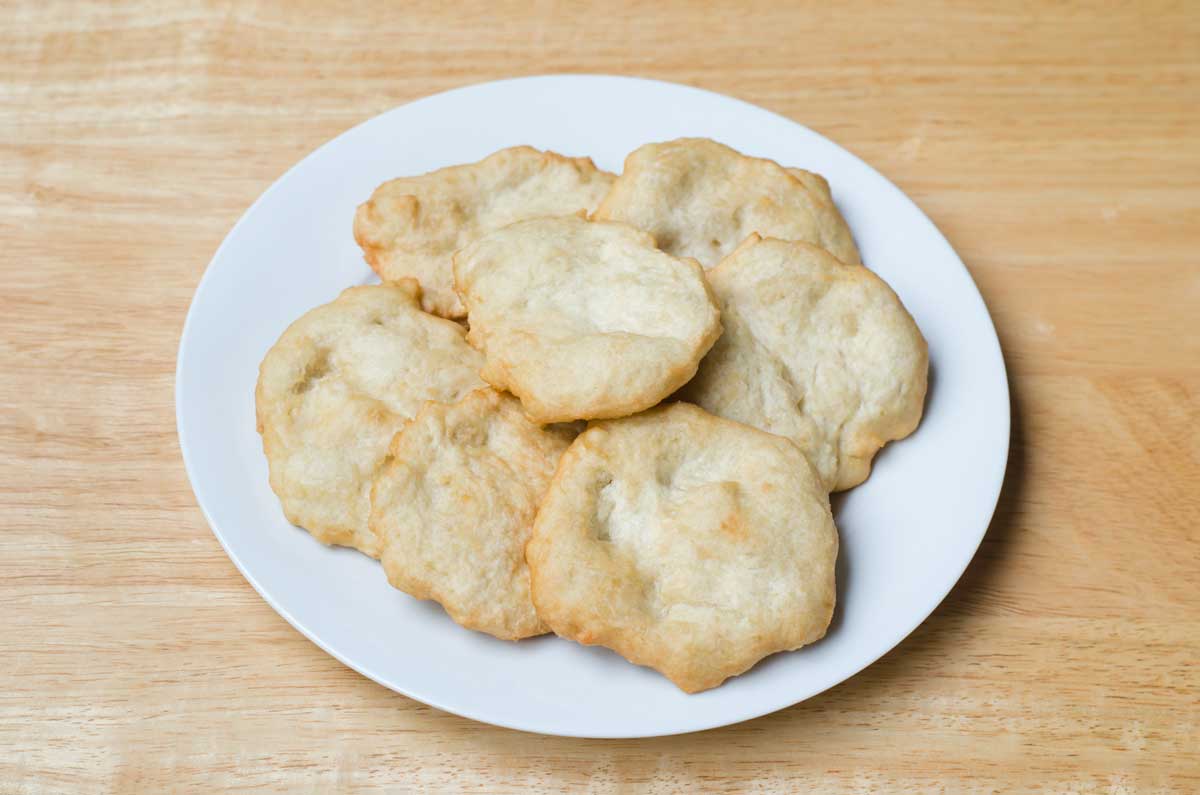
Despite the name, they have nothing to do with the layered puff pastry Spain calls hojaldre. Panamanian hojaldras are a simple leavened dough, closer to a flat fried bread.
Where Hojaldras Come From
Panamanian gastronomer Ana Alfaro traces them to the Spanish, who brought wheat flour to the isthmus along with the habit of frying dough, a habit they had learned from the Moors. Over centuries the recipe settled into what Panama cooks today, and it became part of the everyday breakfast.
The same idea shows up across Latin America. Uruguay and Argentina have tortas fritas, Chile has sopaipillas and Peru has cachangas. The Panamanian version is thinner and usually unsweetened, because it is meant to go with savory food.
Not to Be Confused With Mexican or Colombian Hojaldras
Search for hojaldras and you will find recipes for three different things. The name travels, the food does not.
- Mexico: in Puebla and Tlaxcala, hojaldra is the local name for pan de muerto, the round, sugar- or sesame-topped bread baked for Día de Muertos. It is a baked, enriched bread, often made with a buttery layered dough, and bakeries sell it plain or filled with cream, chocolate or fruit. More in our guide to Mexican pastries.
- Colombia: hojuelas, sometimes called hojaldras, are paper-thin sheets of fried dough dusted with sugar, a Christmas treat.
- Central America: the word is attached to other local breads too, so a recipe labeled “hojaldras” may come from El Salvador, Honduras or Guatemala rather than Panama.
- Panama: the subject of this article. Plain, savory, fried, and eaten on ordinary mornings, not holidays.
What to Eat With Hojaldras
- Eggs: fried or scrambled, often with tomato and onion.
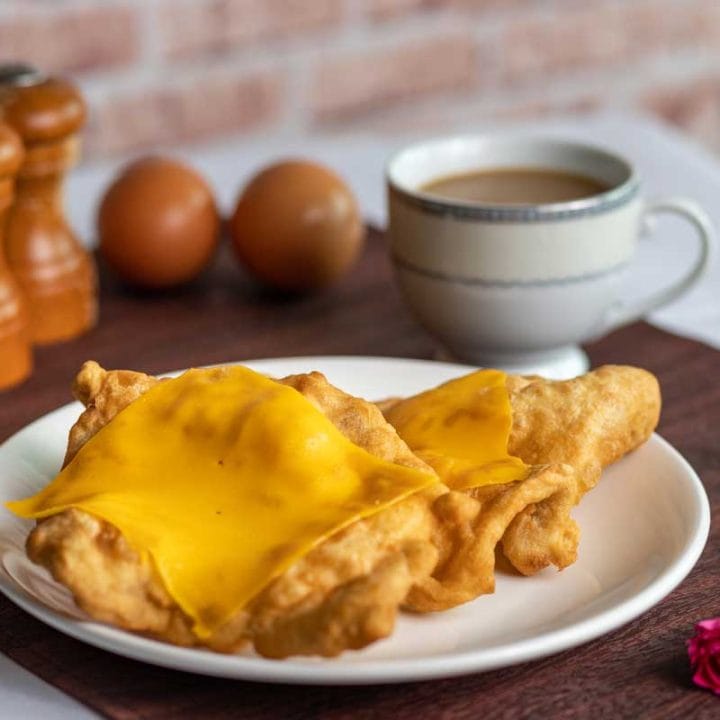
- Queso blanco: a thick slice of mild fresh white cheese.
- Bistec encebollado: thin steak cooked with onions.
- Salchichas guisadas: sliced sausages stewed in a tomato sauce.
- Hígado: liver cooked with onions, an old-school favorite.
- Sugar or honey: for a sweet version, dust them while hot.
How They’re Made
Flour, baking powder, salt and a spoonful of sugar are whisked together, then a little oil and warm water are mixed in to make a soft dough. It is kneaded for five minutes until smooth, then left to rest for at least 30 minutes, which relaxes it so it stretches easily.
The dough is divided into eight balls, and each one is stretched by hand into a thin round about 5 to 6 inches across. They fry one or two at a time in an inch of hot oil, about 2 minutes a side, until puffed and golden.
Tips for Light, Puffy Hojaldras
- Use fresh baking powder. Old baking powder is the main reason hojaldras come out dense.
- Get the oil hot enough. About 350°F. A clip-on deep-fry thermometer takes out the guesswork; without one, a scrap of dough should sizzle and float right away.
- Stretch them thin. Oil your hands and stretch, rather than rolling, so the rounds stay tender.
- Rest overnight if you can. The dough keeps in the fridge for up to 24 hours, and many cooks say it fries up better the next morning.
Panamanian Hojaldras
Panama's favorite breakfast bread: thin rounds of dough fried until puffed and golden. Serve with eggs, white cheese or steak and onions.
Ingredients
- 2 cups (250 g) all-purpose flour
- 2 teaspoons baking powder
- 1 teaspoon salt
- 1 tablespoon sugar
- 1 tablespoon vegetable oil, plus about 2 cups for frying
- ¾ cup (180 ml) warm water
Instructions
- Whisk together the flour, baking powder, salt and sugar in a large bowl.
- Add the 1 tablespoon of oil, then add the warm water a little at a time, mixing until a soft dough forms.
- Knead for 5 minutes, until smooth and no longer sticky. Cover and let rest for at least 30 minutes, or refrigerate for up to 24 hours.
- Divide the dough into 8 balls. With oiled hands, stretch each one into a thin round about 5 to 6 inches across.
- Heat 1 inch of oil in a heavy skillet to about 350°F. Fry the hojaldras one or two at a time for 1½ to 3 minutes per side, until puffed and golden. Drain on paper towels and serve hot.
Notes
Richer dough: use warm milk instead of water for a softer hojaldra.
Sweet version: dust with sugar or drizzle with honey while hot.
If they come out dense, check that your baking powder is fresh and your oil is hot enough.
Hojaldras FAQ
How do you pronounce hojaldras?
Oh-HAHL-drahs. The j sounds like a breathy English h, and the stress falls on the middle syllable. The Panamanian spelling hojaldres is said oh-HAHL-dres.
Are hojaldras sweet or savory?
Both. The dough has only a little sugar, so hojaldras usually go with savory food, but they can be dusted with sugar or drizzled with honey.
Can I make the dough ahead?
Yes. Wrap it and keep it in the fridge for up to 24 hours. Let it sit at room temperature for 15 minutes before stretching.
How do I store leftovers?
Keep them in an airtight container at room temperature for up to 2 days, and reheat in a dry skillet.
Do hojaldras have a filling?
Panamanian hojaldras do not. They are a plain fried bread you eat alongside eggs or cheese, or tear and pile food onto. The filled hojaldras sold in Mexican bakeries in late October are pan de muerto, a different bread.
Why did my hojaldras come out flat or greasy?
Flat and dense usually means tired baking powder or dough that was not rested long enough to stretch thin. Greasy means the oil was too cool: below about 340°F the dough soaks up oil before it can puff. Fry in small batches so the temperature does not crash, and drain on a rack.
Can I bake or air-fry hojaldras?
You can, but they will not puff and blister the way they do in hot oil. Baked or air-fried, the dough comes out closer to a flat biscuit. If you want something lighter, make them smaller and fry them just as hot.
Keep Cooking Panamanian
Hojaldras share the breakfast table with carimañolas, Panama’s stuffed yuca fritters. For lunch, the country’s national soup is sancocho panameño, and for a starter, ceviche de corvina. For more ideas, see our guide to Panamanian side dishes and the full roundup of Panamanian food, or browse everything on the Panamanian food hub.
More Panamanian Foods
See all →
Jorge Garcia is the founder of AmigoFoods, where he has spent over 20 years helping readers discover authentic Latin American and Spanish cuisine. Raised in a Cuban-American household, Jorge learned to cook at the hands of his mother and grandmother, carrying forward generations of family recipes. That heritage, backed by his family’s four-generation history in the Latin food industry, inspired him to launch AmigoFoods in 2003. With more than 1,000 published articles on recipes, ingredients, and food culture, Jorge’s mission is simple: make authentic Latin cooking approachable for home cooks everywhere while honoring the traditions behind every dish.