

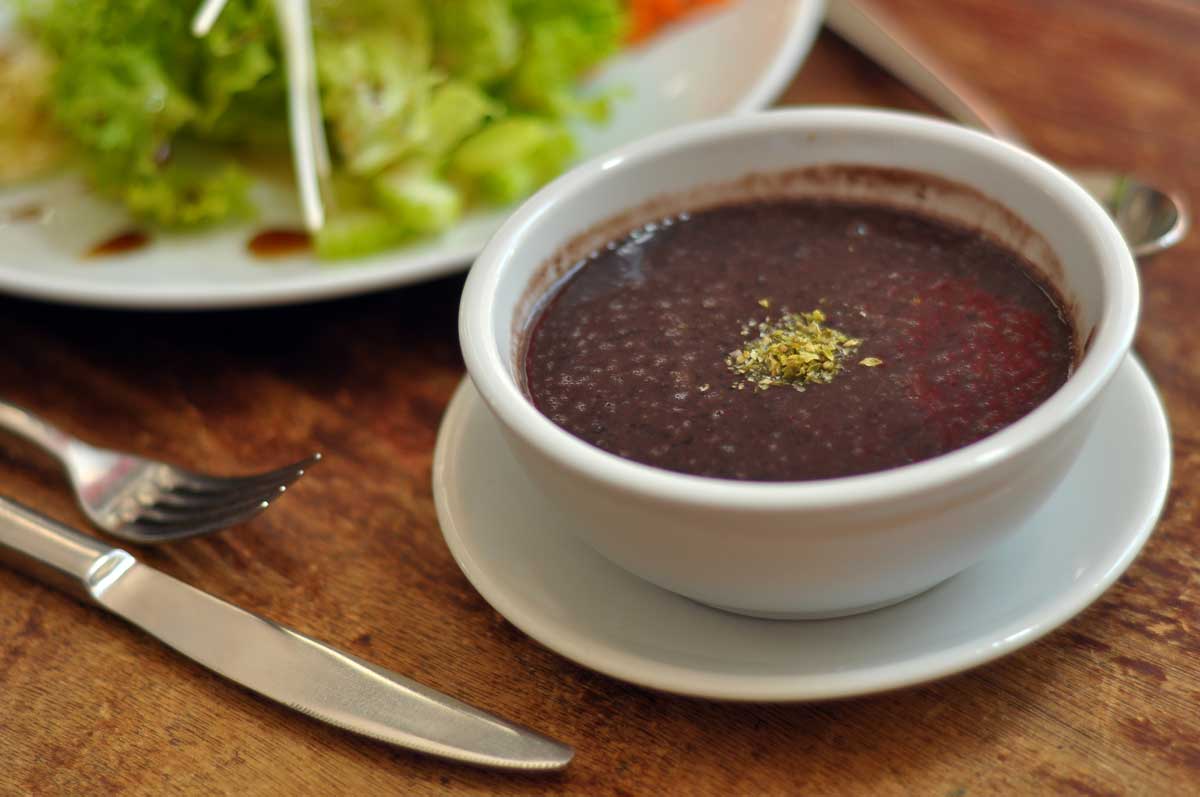
Sopa negra is a Costa Rican black bean soup with a dark, savory broth, sweet pepper and fresh cilantro. Add an egg to each bowl and serve with rice or tortillas for a comforting meal.
Sopa Negra at a Glance
What is Sopa Negra?

Sopa Negra, or “black soup,” is a deeply flavorful black bean soup that holds a special place in Costa Rican cuisine.
At its core, this dish features black beans simmered to perfection with garlic, onions, bell peppers, and cilantro, creating a hearty, savory base.
Commonly garnished with a poached egg, Sopa Negra is a versatile dish often customized with local ingredients, like fresh lime or avocado, to add brightness and balance.
In Costa Rica, Sopa Negra is enjoyed in many variations, reflecting the unique flavors of different regions.
Some families add more vegetables, like carrots or potatoes, others keep it simple, focusing on the beans and aromatic herbs, while omitting the egg to make a vegan dish.
With its adaptable nature, Sopa Negra is enjoyed year-round and can be served as a standalone dish or as part of a larger meal, making it a beloved staple in Costa Rican homes.
Ingredients and Nutrition
Black beans contribute fiber and plant protein, while the optional egg adds another source of protein. Portion size, toppings and added salt affect the finished soup’s nutritional values. The base recipe is plant-based; omit eggs for a vegan bowl.
How to Make Sopa Negra
Ingredients
- 2 cups dried black beans, sorted and rinsed
- 8 cups water, plus extra for soaking and topping up
- 1 medium onion, finely chopped
- 1 red bell pepper, finely chopped
- 4 garlic cloves, minced
- 1/2 cup chopped fresh cilantro, plus more to serve
- 1 tablespoon vegetable oil
- Salt and black pepper, to taste
- Optional: 1 egg per bowl (up to 6 eggs)
- Optional: cooked rice, tortillas, lime or avocado, to serve
Method
- Cover the beans generously with water and soak in the refrigerator for 8–12 hours. Drain and rinse. Place in a large pot with 8 cups fresh water. Bring to a boil, then simmer for 1–2 hours, or until completely tender. Add water as needed to keep the beans covered; older beans may take longer. Retain the flavorful bean broth.
- Toward the end of cooking, heat the oil in a skillet. Soften the onion and bell pepper for 5–7 minutes, then add garlic and cook for about 1 minute.
- Add the cooked vegetables and cilantro to the beans and their broth. Season to taste and simmer for 15–20 minutes. Add hot water if the soup is too thick.
- If using eggs, crack each into a small cup and gently slide into the simmering soup, leaving space between them. Cover and cook gently for about 6–8 minutes, or until both white and yolk are firm; timing varies. Alternatively, add peeled hard-boiled eggs to each serving.
- Ladle into bowls with the eggs and extra cilantro. Serve with rice or tortillas and optional lime or avocado.
Serves 6. Total time allows 15 minutes prep, about 2½ hours cooking and 8 hours soaking. Bean age, soaking and stove affect timing; tenderness is the deciding test.
Canned-bean shortcut: Use 3 standard 15-ounce cans black beans, drained and rinsed (about 4½ cups), plus 4 cups low-sodium vegetable broth or reserved bean broth. Start with the sautéed vegetables, then add beans, broth and cilantro. Simmer 15–20 minutes and finish with optional eggs as above, adding water as needed. Allow about 40–45 minutes overall; no soaking is needed. This version has a different yield and flavor from freshly cooked beans.
Omit eggs for a vegan soup. Cool leftovers promptly in shallow containers, refrigerate within 2 hours, and use within 3–4 days. Freeze the soup without eggs for up to 3 months; thaw in the refrigerator and reheat thoroughly. Add freshly cooked eggs when serving.
Cooking extra beans? Save some broth for gallo pinto the next morning. A large pot and ladle are useful for this recipe.
Sopa Negra (Costa Rican Black Bean Soup)
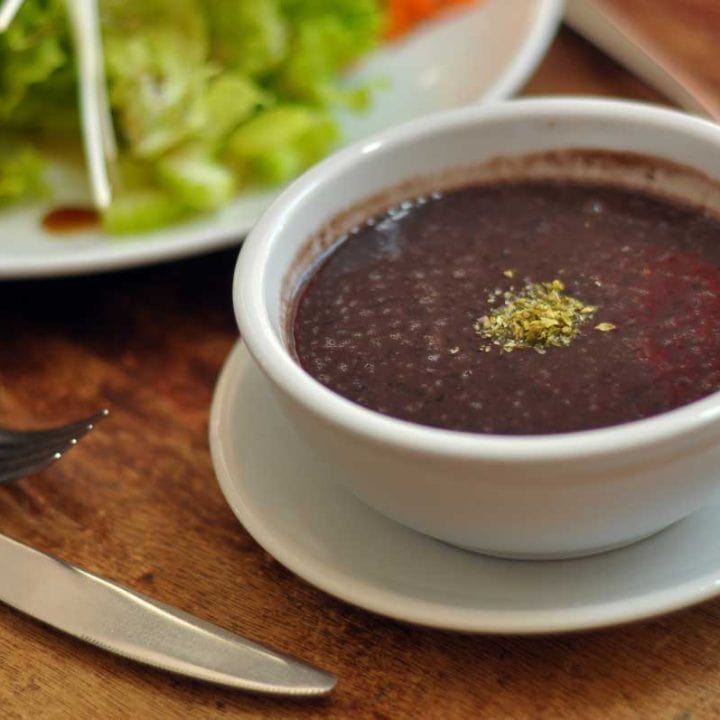
Costa Rican black bean soup with onion, sweet pepper, cilantro and optional eggs. Made from dried beans, with a separate canned-bean shortcut.
Ingredients
- 2 cups dried black beans, sorted and rinsed
- 8 cups water, plus extra for soaking and topping up
- 1 medium onion, finely chopped
- 1 red bell pepper, finely chopped
- 4 garlic cloves, minced
- 1/2 cup chopped fresh cilantro, plus more to serve
- 1 tablespoon vegetable oil
- Salt and black pepper, to taste
- Optional: 1 egg per bowl (up to 6 eggs)
- Optional: cooked rice, tortillas, lime or avocado, to serve
Instructions
- Cover the beans generously with water and soak in the refrigerator for 8–12 hours. Drain and rinse. Place in a large pot with 8 cups fresh water. Bring to a boil, then simmer for 1–2 hours, or until completely tender. Add water as needed to keep the beans covered; older beans may take longer. Retain the flavorful bean broth.
- Toward the end of cooking, heat the oil in a skillet. Soften the onion and bell pepper for 5–7 minutes, then add garlic and cook for about 1 minute.
- Add the cooked vegetables and cilantro to the beans and their broth. Season to taste and simmer for 15–20 minutes. Add hot water if the soup is too thick.
- If using eggs, crack each into a small cup and gently slide into the simmering soup, leaving space between them. Cover and cook gently for about 6–8 minutes, or until both white and yolk are firm; timing varies. Alternatively, add peeled hard-boiled eggs to each serving.
- Ladle into bowls with the eggs and extra cilantro. Serve with rice or tortillas and optional lime or avocado.
Notes
Serves 6. Total time allows 15 minutes prep, about 2½ hours cooking and 8 hours soaking. Bean age, soaking and stove affect timing; tenderness is the deciding test.
Canned-bean shortcut: Use 3 standard 15-ounce cans black beans, drained and rinsed (about 4½ cups), plus 4 cups low-sodium vegetable broth or reserved bean broth. Start with the sautéed vegetables, then add beans, broth and cilantro. Simmer 15–20 minutes and finish with optional eggs as above, adding water as needed. Allow about 40–45 minutes overall; no soaking is needed. This version has a different yield and flavor from freshly cooked beans.
Omit eggs for a vegan soup. Cool leftovers promptly in shallow containers, refrigerate within 2 hours, and use within 3–4 days. Freeze the soup without eggs for up to 3 months; thaw in the refrigerator and reheat thoroughly. Add freshly cooked eggs when serving.
Serving Suggestions and Pairings

Sopa Negra is often enjoyed with a variety of traditional Costa Rican sides, making it a versatile dish that can be customized to your taste.
Here are some popular serving suggestions and pairings to elevate your Sopa Negra experience:
- Rice: In Costa Rica, Sopa Negra is commonly served with a side of white rice, which can be added directly to the soup or enjoyed on the side. The rice adds a hearty texture and helps to balance the rich flavors of the soup.
- Tortillas: Corn tortillas are a perfect accompaniment, providing a subtle crunch and a touch of corn flavor. You can tear pieces of tortilla into the soup or enjoy them with a bit of butter on the side.
- Avocado Slices: Fresh avocado adds creaminess and a mild, buttery flavor that pairs beautifully with the earthy black beans. Top your bowl with avocado slices for a refreshing contrast.
- Fresh Lime: Squeezing a bit of lime juice into the soup brightens the flavors, adding a zesty twist that complements the herbs and spices.
- Pickled Vegetables (Chilera): For those who enjoy a bit of heat, Costa Rican chilera (pickled vegetables) is a popular choice. The tanginess of chilera adds a spicy kick and a crunchy texture to the soup.
These accompaniments enhance the traditional flavors of Sopa Negra making the meal a true celebration of Costa Rican culinary traditions.
Tips for a Perfect Sopa Negra at Home
To bring out the authentic flavors of Costa Rican Sopa Negra, follow these helpful tips for making the perfect bowl:
- Use High-Quality Beans: Fresh black beans offer the best texture and taste. If using dried beans, ensure they’re not too old, as older beans can take longer to cook and may not soften as well.
- Soak the Beans Overnight: Soaking dried black beans overnight not only reduces cooking time but also helps create a smoother, more uniform texture for the soup.
- Season Generously: Black beans absorb flavors wonderfully, so be sure to season your soup well. Taste before serving and adjust the seasoning; salt does not need to be withheld to keep beans tender.
- Slow Simmer for Depth of Flavor: Allow the soup to simmer on low heat for an extended period to let the flavors meld together. This slow cooking enhances the earthy, savory notes in Sopa Negra.
- Don’t Skip the Cilantro: Fresh cilantro is a key herb in Costa Rican cooking, and its bright, aromatic flavor is essential to Sopa Negra. Add a portion of cilantro during cooking and save some for garnishing to keep the herb’s freshness in the final dish.
- Consider Adding a Poached Egg: For an authentic touch, poach an egg in the soup just before serving. Cook until both the white and yolk are firm, or use a peeled hard-boiled egg.
By following these tips, you’ll achieve a Sopa Negra that’s full of depth, true to Costa Rican tradition, and irresistibly delicious.
Sopa Negra in Costa Rican Culture
Sopa Negra holds a cherished place in Costa Rican culture, often seen as a symbol of warmth and hospitality.
Traditionally served in family settings, this comforting soup is not only a staple at the dinner table but also a popular remedy for those feeling under the weather.
Many Costa Ricans associate it with memories of home-cooked meals prepared by loved ones, often enjoyed as a wholesome meal after a long day.
This iconic dish also has roots in Costa Rican hospitality, frequently offered to guests as a hearty, satisfying welcome meal.
Beyond its status as a comfort food, Sopa Negra is enjoyed during special gatherings and celebrations, often paired with local sides to create a complete Costa Rican feast.
Whether served as a nutritious everyday meal or a cherished dish at family events, Sopa Negra remains a beloved part of Costa Rica’s culinary identity.
Bringing Costa Rican Comfort to Your Table with Sopa Negra

Sopa Negra is more than just a black bean soup—it’s a beloved symbol of Costa Rican heritage and comfort.
With its rich, savory flavors and nourishing ingredients, it brings a piece of Costa Rica’s culinary tradition right to your table.
Whether you’re savoring it on a chilly evening or preparing it as a hearty meal for friends and family, Sopa Negra offers a taste of the warmth and hospitality that defines Costa Rican culture.
Give this recipe a try and experience the joy of Costa Rican cooking firsthand.
Don’t forget to share your own Sopa Negra creations and let us know how you enjoy this traditional dish!
FAQs
Can I use canned beans?
Yes. Use 3 standard 15-ounce cans drained and rinsed black beans plus 4 cups broth, following the separate 40–45-minute shortcut in the recipe notes.
How should I store leftovers?
Cool promptly in shallow containers and refrigerate within 2 hours. Use within 3–4 days. For longer storage, freeze without eggs for up to 3 months, thaw in the refrigerator and reheat thoroughly. Add freshly cooked eggs when serving.
Can I make it vegan?
Yes. Omit the optional eggs and use vegetable or bean broth for the shortcut.
Can I add vegetables?
Yes. Small pieces of carrot or potato can simmer in the broth until tender; add spinach near the end.
More Costa Rican Foods
See all →
Jorge Garcia is the founder of AmigoFoods, where he has spent over 20 years helping readers discover authentic Latin American and Spanish cuisine. Raised in a Cuban-American household, Jorge learned to cook at the hands of his mother and grandmother, carrying forward generations of family recipes. That heritage, backed by his family’s four-generation history in the Latin food industry, inspired him to launch AmigoFoods in 2003. With more than 1,000 published articles on recipes, ingredients, and food culture, Jorge’s mission is simple: make authentic Latin cooking approachable for home cooks everywhere while honoring the traditions behind every dish.