
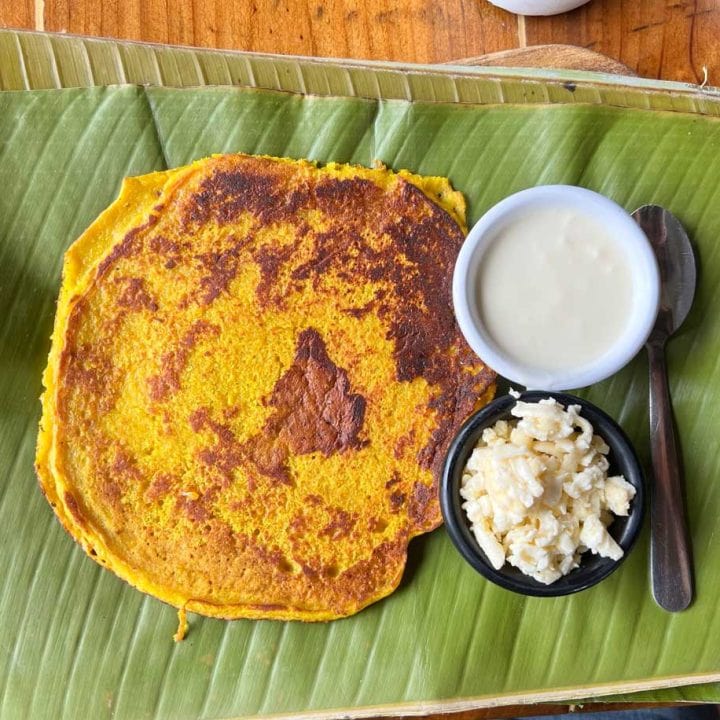
Chorreadas are Costa Rican corn pancakes, served warm with natilla or sour cream. This home version uses fresh corn, flour and eggs, with a choice of sweet sugar batter or savory cheese batter.
Chorreadas at a Glance
What are Chorreadas

Chorreadas are traditional Costa Rican pancakes made primarily from fresh corn. Unlike pancakes in many other cuisines, Chorreadas are either sweet or savory, based on the type of corn used and the additional ingredients mixed into the batter.
The process of making Chorreadas involves grinding fresh corn into a coarse mixture, which is then combined with other ingredients to form a batter.
This batter is poured onto a hot griddle and cooked until golden, resulting in a pancake-like dish that is a beloved part of Costa Rican cuisine.
Sweet Chorreadas are often enjoyed as a traditional breakfast dish, usually topped with honey or Costa Rican natilla, a type of sour cream.
Savory Chorreadas, on the other hand, may be paired with cheese or chorizo, and can be served as a hearty snack or a light meal.
History of Chorreadas
The history of Chorreadas in Costa Rica is deeply interwoven with the country’s agricultural traditions.
Corn, a staple ingredient in many Costa Rican dishes, has been cultivated in the region for thousands of years, ever since the indigenous peoples discovered its nutritious benefits and versatile uses.
Chorreadas, derived from the Spanish verb ‘chorrear’ meaning ‘to pour’, is a testament to this time-honored relationship with corn, a nod to a simpler time when fresh produce from the fields was turned into hearty meals on the family table.
The traditional preparation of Chorreadas involves grinding fresh corn into a pulp, which is then poured onto a hot griddle to cook, hence the name.
The result is a sweet or savory pancake-like treat that’s been a beloved part of Costa Rican breakfast tables for generations.
Chorreadas are not just a popular home-made dish, but they also feature prominently in local fiestas and community gatherings, reinforcing their status as a symbol of Costa Rican culture and hospitality.
They’re a comforting reminder of the country’s agrarian roots and the simple yet flavorful culinary traditions that have been passed down through generations.
In recent years, Chorreadas have gained popularity beyond Costa Rica’s borders as more people across the world become enchanted by the country’s rich and diverse gastronomy.
Whether served in a high-end restaurant or a local soda (small Costa Rican restaurant), the humble Chorreada continues to carry forward the legacy of Costa Rica’s culinary heritage, providing a delicious bite into the country’s culture and history.
Ingredients & Tools Needed
Choose either the sweet or savory version; the quantities below make about 20 small pancakes.
- 4 cups fresh corn kernels (about 5–6 ears; measure the kernels)
- 1 cup all-purpose flour
- 1 teaspoon salt
- 1/2 teaspoon baking powder
- 2 large eggs
- Up to 1/2 cup milk, as needed
- 1/2 cup granulated sugar for the sweet version OR 1/2 cup grated mild white cheese for the savory version
- 2–3 tablespoons butter or oil for the griddle, as needed
- Natilla or sour cream for serving; honey for sweet pancakes or extra cheese for savory pancakes, optional
Tools needed
Food processor or blender, large bowl, measuring cups and spoons, knife and cutting board, griddle or nonstick skillet, and a wide spatula.
Chorreadas Recipe

- Cut the kernels off the cobs and measure 4 cups. Pulse in a food processor until finely ground with a little texture, not large intact kernels.
- Combine the corn, flour, salt and baking powder in a bowl. Add the sugar for sweet chorreadas, or omit it for the savory version.
- Mix in the eggs, then add milk a tablespoon or two at a time, up to 1/2 cup, until the batter is thick but pourable. Fold in the cheese only for savory chorreadas. Corn moisture varies; you may not need all the milk.
- Warm a large griddle or nonstick skillet over medium heat and grease lightly. Use about 1/4 cup batter per pancake, spreading into a thin 4-inch round. Cook several at a time without crowding.
- Cook about 2–3 minutes until the underside is golden and the edges and surface begin to set. Flip carefully and cook about 2 minutes more, until the middle is cooked through. Reduce the heat if the outside browns before the center sets. Repeat, greasing the pan as needed.
- Serve hot with natilla or sour cream, plus the optional sweet or savory toppings.
Makes approximately 20 small 4-inch pancakes, or 6 servings; yield varies with corn moisture and pancake size. Allow about 15 minutes preparation and 30 minutes for batches on a large griddle. A small skillet will take longer.
This is the article’s flour-and-egg home variation. Some Costa Rican versions use much less flour or no eggs; those are legitimate variations. Choose sugar OR cheese, rather than adding both. Milk is added gradually to avoid a runny batter.
Fresh corn gives the best flavor. Thawed frozen corn or well-drained canned corn can be used; drain thoroughly and adjust milk to consistency. Refrigerate leftovers promptly in a covered container for up to 2 days and reheat until hot.
Recipe check: Compared with Christa Jimenez’s chorreadas and Pakus’s corn pancakes. Flour, eggs and sweetness vary by household; the article’s existing variation is retained, with clearer batter and batch instructions.
Chorreadas (Costa Rican Corn Pancakes)
Costa Rican fresh corn pancakes, with a choice of sweet sugar batter or savory cheese batter.
Ingredients
- 4 cups fresh corn kernels (about 5–6 ears; measure the kernels)
- 1 cup all-purpose flour
- 1 teaspoon salt
- 1/2 teaspoon baking powder
- 2 large eggs
- Up to 1/2 cup milk, as needed
- 1/2 cup granulated sugar for the sweet version OR 1/2 cup grated mild white cheese for the savory version
- 2–3 tablespoons butter or oil for the griddle, as needed
- Natilla or sour cream for serving; honey for sweet pancakes or extra cheese for savory pancakes, optional
Instructions
- Cut the kernels off the cobs and measure 4 cups. Pulse in a food processor until finely ground with a little texture, not large intact kernels.
- Combine the corn, flour, salt and baking powder in a bowl. Add the sugar for sweet chorreadas, or omit it for the savory version.
- Mix in the eggs, then add milk a tablespoon or two at a time, up to 1/2 cup, until the batter is thick but pourable. Fold in the cheese only for savory chorreadas. Corn moisture varies; you may not need all the milk.
- Warm a large griddle or nonstick skillet over medium heat and grease lightly. Use about 1/4 cup batter per pancake, spreading into a thin 4-inch round. Cook several at a time without crowding.
- Cook about 2–3 minutes until the underside is golden and the edges and surface begin to set. Flip carefully and cook about 2 minutes more, until the middle is cooked through. Reduce the heat if the outside browns before the center sets. Repeat, greasing the pan as needed.
- Serve hot with natilla or sour cream, plus the optional sweet or savory toppings.
Notes
Makes approximately 20 small 4-inch pancakes, or 6 servings; yield varies with corn moisture and pancake size. Allow about 15 minutes preparation and 30 minutes for batches on a large griddle. A small skillet will take longer.
This is the article’s flour-and-egg home variation. Some Costa Rican versions use much less flour or no eggs; those are legitimate variations. Choose sugar OR cheese, rather than adding both. Milk is added gradually to avoid a runny batter.
Fresh corn gives the best flavor. Thawed frozen corn or well-drained canned corn can be used; drain thoroughly and adjust milk to consistency. Refrigerate leftovers promptly in a covered container for up to 2 days and reheat until hot.
Serving Suggestions

Chorreadas can be enjoyed in a variety of ways depending on whether you’ve prepared the sweet or savory version, and they are versatile enough to be paired with a number of different accompaniments.
Sweet Chorreadas
Sweet Chorreadas are traditionally served warm with a drizzle of honey or a dollop of Costa Rican natilla (sour cream) on top.
The creaminess of the natilla and the sweetness of the honey beautifully complement the corn’s natural sweetness.
For a fruity twist, you could also serve them with a side of fresh tropical fruits like pineapple, mango, or papaya.
The vibrant flavors of the fruits make a lovely contrast with the sweetness of the Chorreadas.
If you’re serving these as a dessert, a scoop of vanilla ice cream on the side can also work wonderfully, creating a comforting and indulgent treat.
Savory Chorreadas
Savory Chorreadas are often enjoyed with extra cheese or chorizo on top.
The saltiness of the cheese or chorizo pairs beautifully with the subtle sweetness of the corn.
For a more substantial meal, you can serve them with a side of black beans or a traditional Costa Rican gallo pinto (rice and beans).
The heartiness of these sides adds a savory depth that makes the meal more satisfying.
Finally, remember that whether sweet or savory, Chorreadas are best enjoyed fresh off the griddle while they’re still warm and the edges have that perfect crispiness.
Living the Pura Vida with Chorreadas

Chorreadas, with their sweet corn taste and light, fluffy texture, create dishes that delight the senses and comfort the soul.
While these corn pancakes might seem humble at first glance, they hold within them a rich history and a taste that’s deeply interwoven with the heart and soul of Costa Rica.
I hope this journey into the world of Chorreadas has not only enriched your culinary knowledge but also inspired you to bring a piece of the pura vida lifestyle into your own kitchen.
FAQs and Troubleshooting
Q: Can I use canned or frozen corn instead of fresh?
A: Yes, you can substitute fresh corn with canned or frozen corn. However, using fresh corn will give you a more authentic flavor and texture. If using canned corn, make sure to drain it well. If using frozen corn, defrost and drain before using.
Q: My Chorreadas are falling apart when I try to flip them. What am I doing wrong?
A: Your batter might be too thin, or you might be trying to flip them too early. Make sure your batter has a thick, pourable consistency, like pancake batter. Also, wait until the edges look set and bubbles form on the top before flipping.
Q: Can I make Chorreadas without a blender or food processor?
A: If you don’t have a blender or food processor, you can still make Chorreadas. You can grate the corn manually using a box grater. This will result in a rougher texture, but the flavor will still be great.
Q: Can I make Chorreadas gluten-free?
A: Yes, you can substitute the all-purpose flour with a gluten-free alternative. Just ensure that the batter consistency remains the same.
Q: Can I store leftover Chorreadas?
A: Yes, leftover Chorreadas can be stored in an airtight container in the refrigerator for up to 2 days. To reheat, warm them in a dry pan over medium heat or in the oven at 350°F until hot. However, they are best enjoyed fresh.
Q: Can I add other flavors to my Chorreadas?
A: Absolutely! Feel free to experiment with your Chorreadas. For sweet versions, consider adding a bit of vanilla or cinnamon to the batter. For savory versions, you could add finely chopped herbs like cilantro or scallions. Make the recipe your own and enjoy the process of creating and tasting!
More Costa Rican Foods
See all →
Jorge Garcia is the founder of AmigoFoods, where he has spent over 20 years helping readers discover authentic Latin American and Spanish cuisine. Raised in a Cuban-American household, Jorge learned to cook at the hands of his mother and grandmother, carrying forward generations of family recipes. That heritage, backed by his family’s four-generation history in the Latin food industry, inspired him to launch AmigoFoods in 2003. With more than 1,000 published articles on recipes, ingredients, and food culture, Jorge’s mission is simple: make authentic Latin cooking approachable for home cooks everywhere while honoring the traditions behind every dish.