
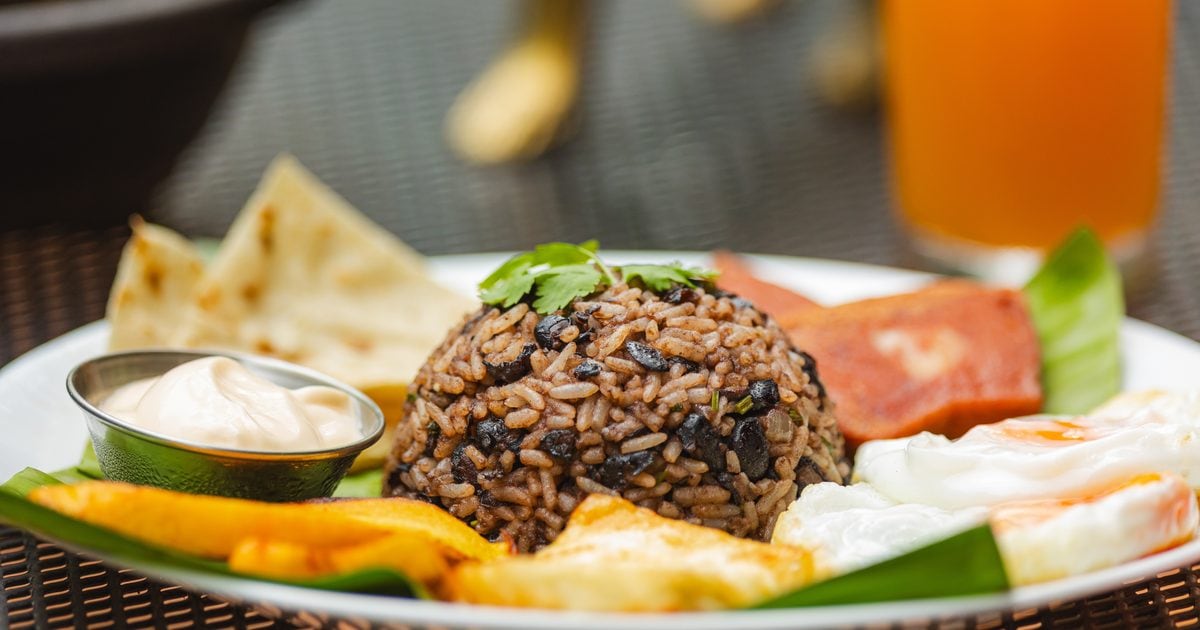
Gallo pinto brings rice and black beans together with onion, sweet pepper, cilantro and Salsa Lizano for Costa Rica’s everyday breakfast. With cooked rice and beans ready, this savory skillet dish takes 25 minutes and pairs naturally with eggs, plantains and warm tortillas.
Gallo Pinto at a Glance
What Is Gallo Pinto?
At its simplest, gallo pinto is leftover rice and beans turned into something much better than the sum of its parts. The beans are cooked first, usually black beans in Costa Rica, and kept in their dark, savory cooking liquid. A little of that liquid goes into the pan with the beans and a quick sofrito of onion, sweet pepper and garlic. Then day-old white rice is folded in until it soaks up the broth and turns a speckled tan. A handful of cilantro and a few spoonfuls of Salsa Lizano finish it.
The result is not a side dish of rice with beans on top. It is one unified dish: soft, savory, slightly sweet and tangy from the Lizano, with whole beans dotted through the rice like the markings on a speckled hen.
What does gallo pinto mean in English?
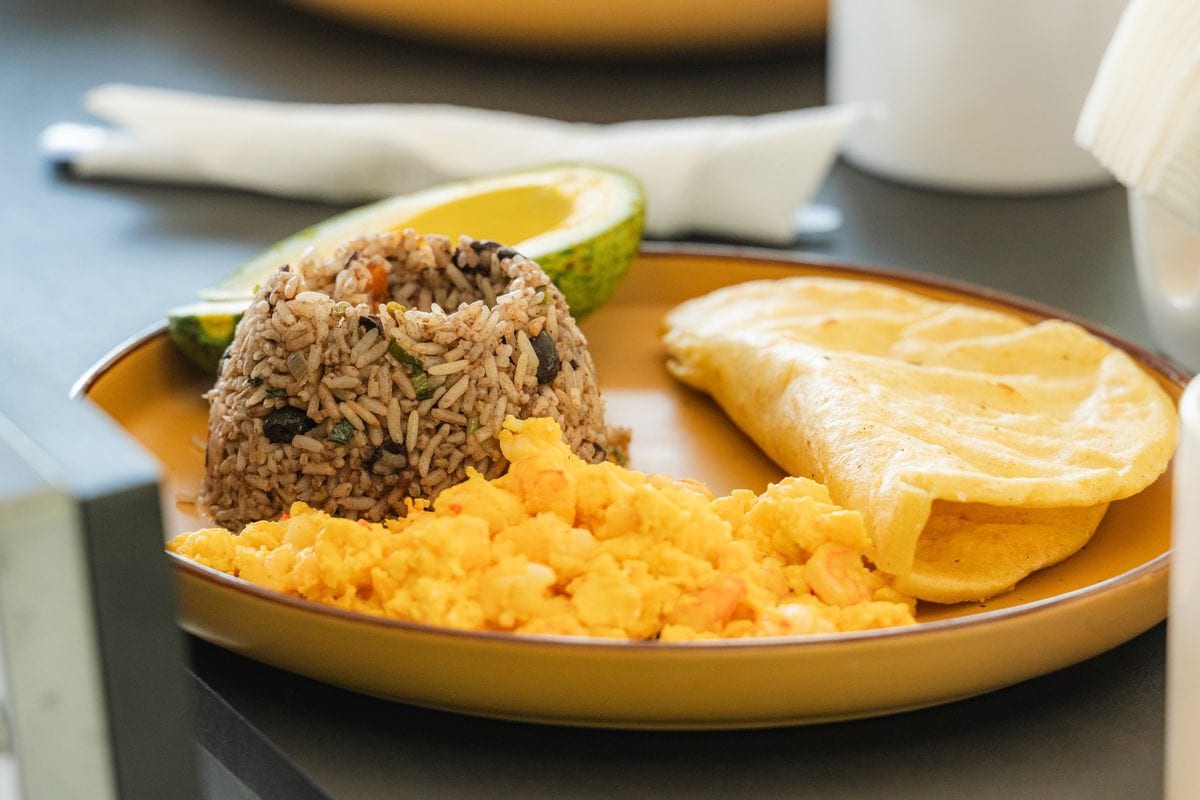
Gallo pinto translates to “spotted rooster” or “painted rooster.” Gallo is rooster and pinto means spotted or speckled, the same word English borrowed for the pinto horse and the pinto bean. In Costa Rica it is often shortened to just pinto, as in “¿quiere pinto?” at a breakfast counter. It is pronounced GAH-yoh PEEN-toh; in Costa Rica the double L sounds like an English Y.
Gallo Pinto Essentials
| Also called | Pinto; gallopinto (Nicaragua) |
|---|---|
| Type | Fried rice and beans; served as a breakfast staple or side |
| Countries | Costa Rica and Nicaragua, both of which call it a national dish |
| Costa Rican ingredients | Day-old white rice, black beans with some of their broth, onion, sweet red pepper (chile dulce), garlic, cilantro, Salsa Lizano |
| Flavor | Savory and earthy, with a gentle tang and sweetness from the Lizano; not spicy |
| Served with | Fried or scrambled eggs, natilla (Costa Rican sour cream), fried sweet plantains, tortillas, fresh cheese, avocado and coffee |
| When it’s eaten | Breakfast above all, but also at lunch, dinner and as a late-night meal |
| Time to make | About 25 minutes with cooked beans and rice |
Where Gallo Pinto Comes From
Nobody can prove exactly where gallo pinto began, and that uncertainty has fueled one of the friendliest rivalries in Central America. What historians broadly agree on is that the pairing of rice and beans came to the region with enslaved Africans and Afro-Caribbean communities, and that the dish took on its own identity in Costa Rica and Nicaragua in the 20th century.
Colonial era
Rice meets beans
Beans had been eaten in Central America for thousands of years. Rice arrived with the Spanish, and the combination of the two, common across West African and Caribbean cooking, spread along the Caribbean coast with enslaved Africans and their descendants. That is the root most food historians give for gallo pinto and its many cousins, from Cuba’s moros y cristianos to Puerto Rico’s arroz con gandules.
1930s
The spotted rooster legend
Costa Rica’s favorite origin story is set in San Sebastián, a neighborhood in the south of San José. A farmer was said to have boasted that he would kill a speckled rooster, a gallo pinto, for the Saint Sebastian feast day. Neighbors took it as an invitation and showed up hungry. One bird could never feed them all, so he served a big pot of rice and beans instead, and the joke name stuck.
1941
Into Costa Rican literature
Mamita Yunai, a Costa Rican novel about life on the banana plantations of the Caribbean coast, describes workers eating rice and beans, one of the early written links between the plantation economy and the dish.
2003 to 2005
The “Gallo Pinto War”
In August 2003, Costa Rica cooked about 970 pounds of gallo pinto in one go for a world-record attempt. The next month Nicaragua answered with roughly 1,200 pounds for its Independence Day. In January 2005, Costa Rica struck back in San José with a pot made from about 1,825 pounds of beans and 3,042 pounds of rice, enough for some 15,000 plates.
Today
Breakfast of a nation
Gallo pinto is on the table in nearly every Costa Rican home and soda (small local restaurant), from the Central Valley to the beach towns of Guanacaste. It is the center of the Costa Rican breakfast and one of the first dishes any visitor learns to love.
Costa Rican vs. Nicaraguan Gallo Pinto
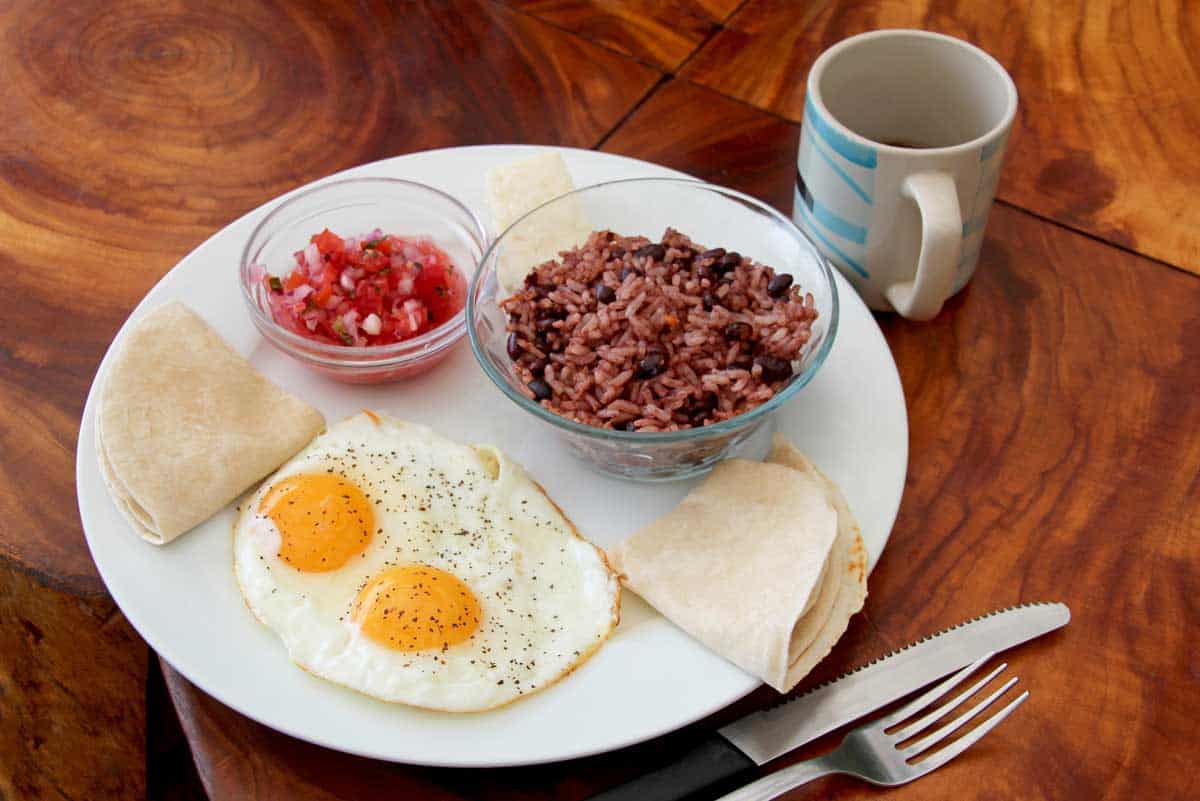
Ask a Tico and a Nica who makes the real gallo pinto and you will get two confident, different answers. Both versions fry rice and beans together; what changes is the bean, the seasoning and the texture. Costa Rica’s Caribbean coast has a third, related dish that is often confused with pinto.
Costa Rican pinto
- Black beans, with some of their cooking broth to color the rice
- Sofrito of onion, sweet pepper and garlic, plus cilantro
- Seasoned with Salsa Lizano
- Soft, moist and evenly speckled
- In Guanacaste, red beans are common too
Nicaraguan gallopinto
- Small red beans (frijoles rojos de seda)
- Fried with onion and garlic in plenty of oil, usually no Lizano
- Drier, with a slightly crisp, toasty rice
- Served with cuajada or fresh cheese, crema and maduros
- See our Nicaraguan gallo pinto recipe
Caribbean rice and beans
- Not fried: rice is cooked together with red beans from raw
- Simmered in coconut milk with thyme and a whole hot Panama pepper
- Traditionally a Sunday dish in Afro-Costa Rican homes
- Rich and fragrant, served with chicken or fish

Is gallo pinto just rice and beans? Not quite. In a plain plate of rice and beans, the two are cooked and served separately. In gallo pinto they are fried together until the rice absorbs the bean broth and seasoning, and in Caribbean rice and beans they are cooked together from the start in coconut milk. El Salvador and Honduras have their own fried version, called casamiento (“marriage”), which you will find on a Salvadoran breakfast plate.
Gallo Pinto Ingredients: What You Need and Why
Gallo pinto has only a handful of ingredients, so each one matters. The full amounts are in the recipe card below.
Day-old white rice
Use plain long-grain white rice cooked the day before and refrigerated. Chilled rice is drier and firmer, so it absorbs the bean broth without turning to mush. Freshly cooked rice works in a pinch if you spread it on a tray to cool and dry for 30 minutes. In Costa Rica the rice is usually cooked with a little oil, onion and sweet pepper, which adds another layer of flavor.
Black beans and their broth
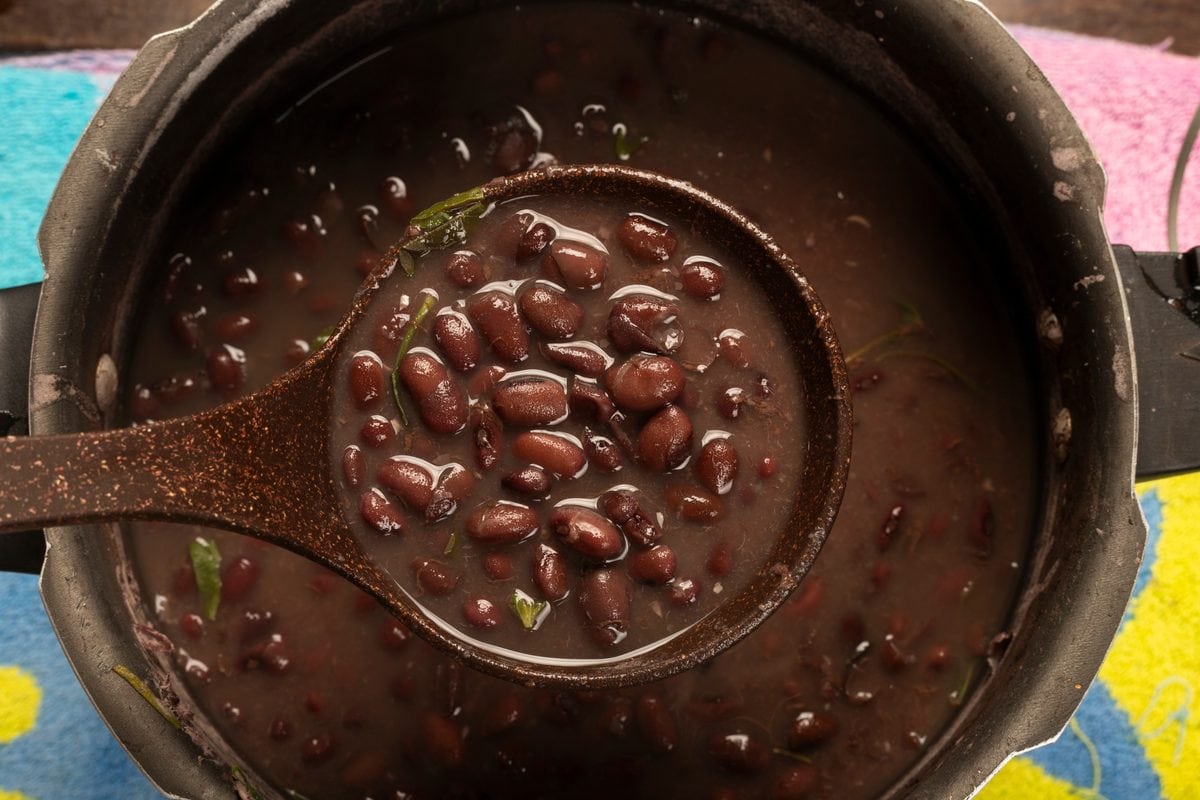
This is the part most recipes get wrong. Costa Rican cooks do not rinse their beans: they keep the dark, starchy cooking liquid, called caldo de frijoles, and add a ladle of it to the pan. That broth is what stains the rice, carries the flavor and gives pinto its speckled color. Beans cooked at home with onion, garlic and cilantro make the best broth, but canned black beans with their liquid are a perfectly good shortcut.
Onion, sweet pepper, garlic and cilantro
A quick sofrito builds the base. Costa Ricans use chile dulce, a small, mild sweet pepper; a red bell pepper is the easiest substitute. Cilantro goes in at the end so it stays fresh and green. Some cooks also add a little culantro de coyote (culantro), which tastes like a stronger cilantro.
Salsa Lizano

The flavor that makes it Tico. Salsa Lizano is a thin, light-brown vegetable sauce that is slightly sweet, tangy and mildly spiced, with a hint of cumin. It is on every table in Costa Rica, and pinto without it tastes like something is missing.
Outside Costa Rica, look for it in Latin grocery stores or buy Salsa Lizano on Amazon. No bottle? Mix Worcestershire sauce with a pinch of ground cumin and a pinch of sugar; it is not the same, but it gets you close.
How to Make Gallo Pinto, Step by Step
Once the beans and rice are cooked, gallo pinto takes about 15 minutes in one large skillet. A 12-inch pan gives the rice room to fry instead of steam.
1Get the rice and beans ready
Measure out 3 cups of cold, cooked rice and break up any clumps with your fingers. Have 2 cups of cooked black beans ready with about ¾ cup of their cooking liquid. If you are using canned beans, measure 2 cups of beans from about 1⅓ to 1½ standard 15-ounce cans. Reserve ¾ cup of their liquid, topping up with water if needed.
2Cook the sofrito
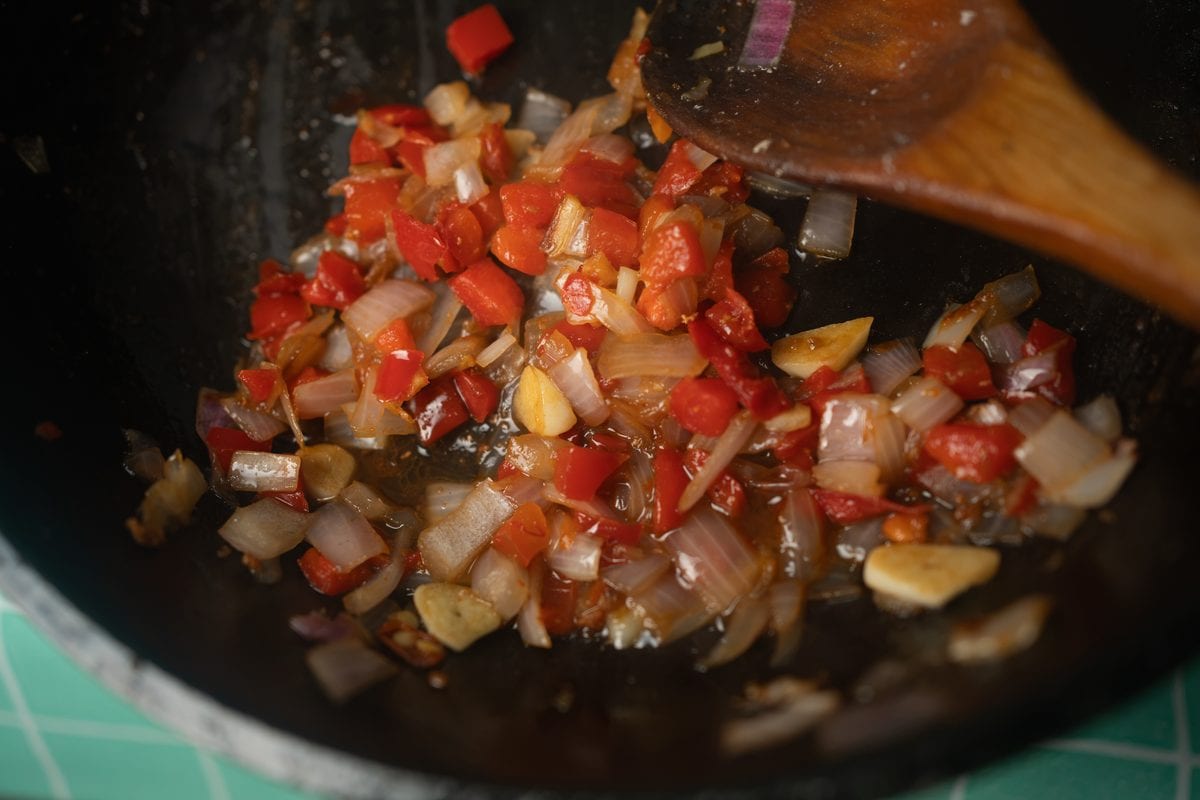
Heat 2 tablespoons of oil in a large skillet over medium heat. Add the diced onion and sweet pepper and cook, stirring, for 4 to 5 minutes until soft and translucent. Add the garlic and cook 1 minute more, until fragrant.
3Simmer the beans in their broth
Pour in the beans and their liquid. Let them simmer for 3 to 4 minutes, until the liquid has reduced by about half. Lightly crush a spoonful of the beans against the pan; they thicken the broth and help it cling to the rice. Stir in the Salsa Lizano.

4Fold in the rice
Add the rice and fold it through the beans with a spatula, lifting from the bottom rather than stirring hard, so the grains stay whole. Keep folding for 3 to 5 minutes until the rice is evenly speckled and tan and has absorbed the liquid. It should be moist but not wet; add a splash more bean broth if it looks dry.
5Finish and serve
Taste and add salt if needed (canned beans and Lizano are already salty). Fold in the chopped cilantro and serve right away, with extra Salsa Lizano on the table.
Secrets to real Tico gallo pinto
- Never rinse the beans. The bean broth is the dish. Without it you get rice with beans in it, not pinto.
- Cold rice, always. Rice cooked the day before stays in separate grains. Fresh, warm rice turns gluey.
- Beans first, rice second. Let the beans and broth reduce before the rice goes in, so the rice absorbs flavor instead of sitting in liquid.
- Fold, don’t stir. Gentle folding keeps the grains and beans whole and the texture light.
- Find your ratio. About 3 parts rice to 2 parts beans is typical; many Costa Rican families like it even “beanier.”
- Want it toasty? For a crisper, Nicaraguan-style finish, press the pinto flat and let it fry undisturbed for 2 minutes before the last fold.
Gallo Pinto Recipe
This makes about 5 cups, enough for 6 breakfast servings or 4 generous sides. It uses cooked beans and rice; the notes explain how to cook black beans from scratch.
Costa Rican Gallo Pinto
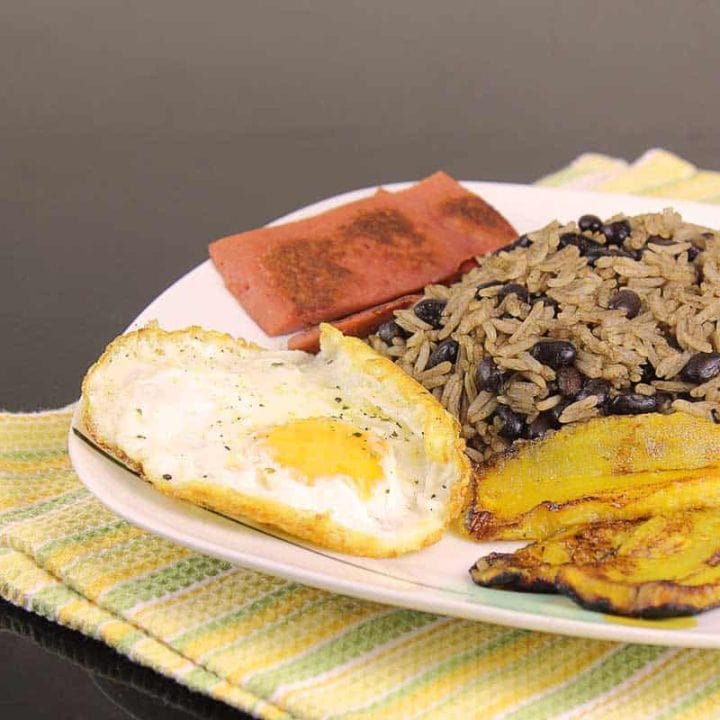
Authentic Costa Rican gallo pinto: day-old white rice and black beans fried together with onion, sweet pepper, garlic and a splash of the beans’ own broth, seasoned with Salsa Lizano and finished with cilantro. Ready in 25 minutes and made for breakfast with eggs, plantains and tortillas.
Ingredients
- 3 cups cooked long-grain white rice, preferably cooked a day ahead and chilled
- 2 cups cooked black beans plus ¾ cup of their cooking liquid (or measure 2 cups canned beans from about 1⅓ to 1½ standard 15-ounce cans, reserving ¾ cup liquid)
- 2 tablespoons vegetable oil
- 1 small white onion, finely diced (about ¾ cup)
- ½ red bell pepper or 2 Costa Rican chiles dulces, finely diced
- 2 cloves garlic, minced
- 3 tablespoons Salsa Lizano, plus more for serving
- ¼ cup chopped fresh cilantro
- Salt, to taste
Instructions
- Prep the rice and beans. Break up the cold rice with your fingers so there are no clumps. Measure the beans with about ¾ cup of their cooking liquid. If using canned beans, measure 2 cups of beans from about 1⅓ to 1½ standard 15-ounce cans, reserving ¾ cup of the can liquid (top up with water if needed).
- Cook the sofrito. Heat the oil in a large (12-inch) skillet over medium heat. Add the onion and sweet pepper and cook, stirring, 4 to 5 minutes, until soft and translucent. Add the garlic and cook 1 minute more.
- Simmer the beans. Add the beans and their liquid. Simmer 3 to 4 minutes, until the liquid has reduced by about half, lightly crushing a spoonful of beans against the pan to thicken it. Stir in the Salsa Lizano.
- Fold in the rice. Add the rice and fold it through the beans with a spatula, lifting from the bottom so the grains stay whole. Cook 3 to 5 minutes, folding, until the rice is evenly speckled and tan and has absorbed the liquid. It should be moist but not wet; add a splash more bean liquid or water if it looks dry.
- Season and serve. Taste and add salt only if needed. Fold in the cilantro and serve hot with extra Salsa Lizano, eggs, fried sweet plantains, natilla or sour cream and warm tortillas.
Notes
Beans from scratch: Soak 1 cup dried black beans overnight. Drain, cover with 6 cups fresh water, add ½ onion, 2 garlic cloves and a few cilantro stems, and simmer 1½ to 2 hours until very tender, adding 1 teaspoon salt near the end. Keep the beans in their broth; measure 2 cups for this recipe and refrigerate any extra.
Rice: 1 cup of raw long-grain rice makes about 3 cups cooked. Cook it the day before and refrigerate uncovered for an hour, then covered. If you only have fresh rice, spread it on a tray to cool and dry for 30 minutes.
No Salsa Lizano? Use 2 tablespoons Worcestershire sauce with a pinch of ground cumin and a pinch of sugar.
Storage: Cool promptly in shallow containers and refrigerate within 2 hours. Keep up to 3–4 days, counting from when the rice and beans were first cooked, or freeze up to 3 months. Reheat with a splash of water until the center reaches 165°F.
Nutrition: Estimated per serving using home-cooked beans, not including salt added to taste. Sodium varies with the brand of canned beans and sauce.
Nutrition Information:
Yield: 6 Serving Size: about 3/4 cupAmount Per Serving: Calories: 240Total Fat: 5gSaturated Fat: 0.5gTrans Fat: 0gUnsaturated Fat: 4.5gCholesterol: 0mgSodium: 180mgCarbohydrates: 40gFiber: 6gSugar: 2gProtein: 8g
How to Serve Gallo Pinto
In Costa Rica, gallo pinto is the heart of desayuno tico, the traditional breakfast. A typical plate puts a scoop of pinto next to eggs, fried sweet plantains, a spoonful of natilla and a warm tortilla, with a mug of Costa Rican coffee. At lunch, the same rice and beans (served separately rather than fried together) anchor a casado, the country’s classic set plate.
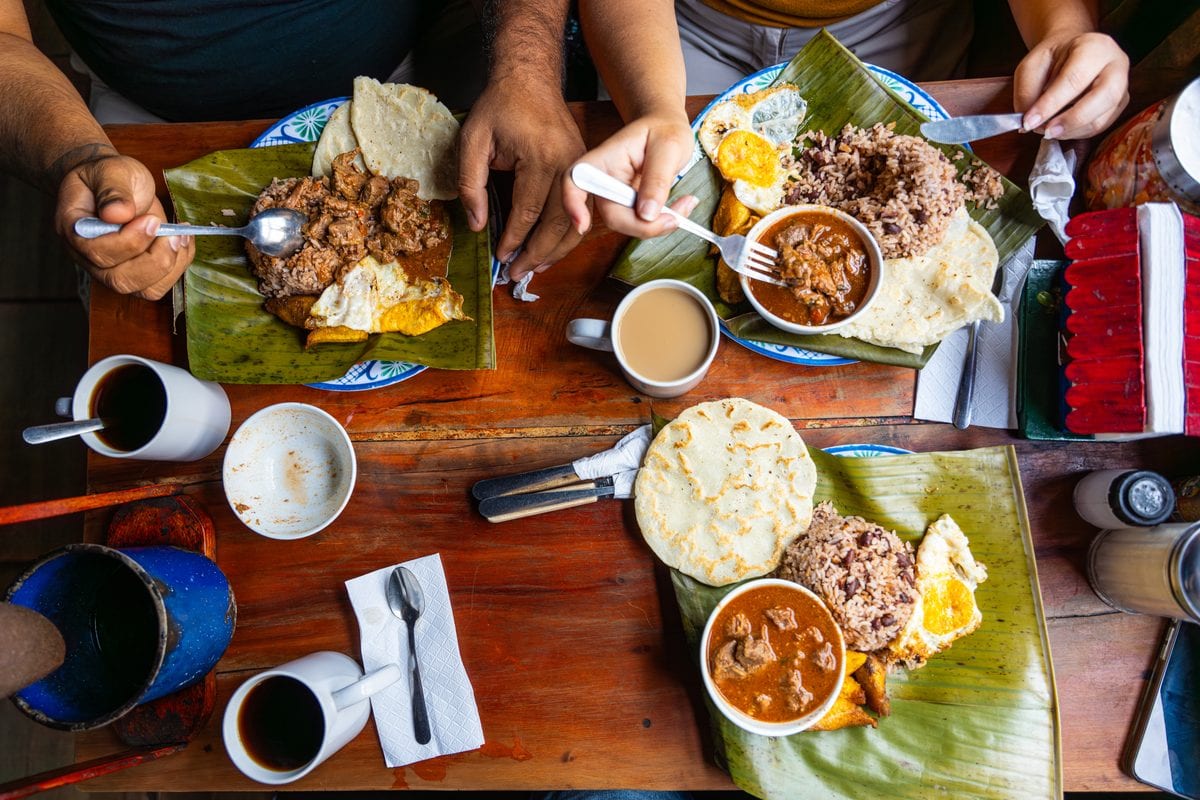
Want the full spread? Our guide to the Costa Rican breakfast covers every dish and drink on the table, and our Costa Rican drinks list goes beyond coffee.
Gallo Pinto Variations
Red bean pinto
Swap the black beans for small red beans, as many cooks in Guanacaste do. The rice turns a warmer reddish brown and the flavor is a little sweeter.
Pinto con huevo
Push the pinto to one side of the pan, scramble two eggs in the space, then fold them through. It is a one-pan breakfast many Costa Ricans make on busy mornings.
Coconut pinto
Replace some of the bean broth with a few tablespoons of coconut milk for a nod to the Caribbean coast. Add a pinch of dried thyme.
Brown rice or leftovers
Cold brown rice works well and adds fiber. Diced leftover chicken, pork or chorizo can be folded in with the rice for a heartier meal.
Is Gallo Pinto Healthy?
Gallo pinto is a simple, filling everyday food. Rice and beans eaten together provide complementary proteins, so the pair supplies all the essential amino acids, and the beans add plenty of fiber, iron and slow-release carbohydrates. It is also a traditional staple of Costa Rica’s Nicoya Peninsula, one of the world’s “Blue Zones,” where people are known for unusually long lives.
To keep it light, use just enough oil to cook the sofrito, go easy on the Salsa Lizano if you are watching salt, and pair it with eggs, fruit and vegetables rather than fried meat. The dish itself is dairy-free, and it is naturally gluten-free as long as your sauce is; check the labels on Salsa Lizano and Worcestershire sauce if you need to avoid gluten.
Make Ahead, Storage and Reheating
Make ahead: Cook a big pot of beans and a batch of rice on the weekend, and you can make fresh pinto in 15 minutes any morning. Keep some of the bean broth with the beans.
Refrigerator: Cool promptly in shallow containers and refrigerate within 2 hours. Keep for up to 3–4 days, counting from when the rice and beans were first cooked.
Freezer: Freeze it in portions for up to 3 months. Thaw overnight in the refrigerator.
Reheating: Warm it in a skillet over medium heat with a teaspoon of oil and a splash of water or bean broth, folding until the center reaches 165°F. Leftover pinto often tastes even better the next day.
Gallo Pinto FAQ
Is gallo pinto Costa Rican or Nicaraguan?
Both countries claim it as their national dish, and both have eaten it for generations. The rice-and-beans pairing most likely arrived with Afro-Caribbean communities, and each country developed its own style: black beans and Salsa Lizano in Costa Rica, red beans and a drier, toastier finish in Nicaragua.
What is gallo pinto made of?
Cooked white rice and beans (black beans in Costa Rica) fried together with onion, sweet pepper, garlic and some of the beans’ cooking liquid, then seasoned with Salsa Lizano and cilantro.
What is the difference between gallo pinto and rice and beans?
Plain rice and beans are cooked and served separately. In gallo pinto the two are fried together until the rice absorbs the bean broth. Caribbean “rice and beans” is different again: the rice is cooked with red beans in coconut milk.
Can I use canned beans for gallo pinto?
Yes. Use black beans and keep the liquid from the can instead of draining and rinsing them; it plays the role of the bean broth. Add a few tablespoons of water if the mix looks thick.
Why is my gallo pinto mushy?
Usually because the rice was freshly cooked or there was too much liquid in the pan. Use cold, day-old rice, reduce the bean broth by half before the rice goes in, and fold gently rather than stirring.
What can I use instead of Salsa Lizano?
Worcestershire sauce with a pinch of ground cumin and a pinch of sugar is the most common substitute. It is saltier and less sweet, so start with less and taste.
Is gallo pinto spicy?
No. It is savory and mild. Costa Ricans add heat at the table with hot sauce or chilero, a pickled vegetable and chile relish.
When do Costa Ricans eat gallo pinto?
Mostly at breakfast, every day of the week, but it is eaten at any meal. It is common at dinner, as a late-night meal, and on the menu of nearly every roadside soda.
More Costa Rican Food to Try
Gallo pinto is just the start. Explore the rest of the country’s kitchen in our guide to traditional Costa Rican foods and our list of Costa Rican ingredients.
ChifrijoRice, beans and chicharrón in one bowl
Sopa negraBlack bean soup with a boiled egg
Olla de carneBeef and vegetable soup
ChorreadasSweet corn pancakes with natilla
Nicaraguan gallo pintoThe red bean version from next door
Stock your Tico pantry. Salsa Lizano and good black beans are the two things that make pinto taste like Costa Rica. Find Salsa Lizano and more Costa Rican staples in our Costa Rica shop on Amazon.
Sources
- Wikipedia: Gallo pinto
- The Tico Times: Costa Rica Strikes Back in Gallo Pinto War
- CentralAmerica.com: The Great Gallo Pinto Debate
- Wikipedia: Costa Rican cuisine
More Costa Rican Foods
See all →
Jorge Garcia is the founder of AmigoFoods, where he has spent over 20 years helping readers discover authentic Latin American and Spanish cuisine. Raised in a Cuban-American household, Jorge learned to cook at the hands of his mother and grandmother, carrying forward generations of family recipes. That heritage, backed by his family’s four-generation history in the Latin food industry, inspired him to launch AmigoFoods in 2003. With more than 1,000 published articles on recipes, ingredients, and food culture, Jorge’s mission is simple: make authentic Latin cooking approachable for home cooks everywhere while honoring the traditions behind every dish.