

Nicaraguan food is built on corn, red beans, rice, plantains and yuca, with bright sour orange and pickled onion cutting through slow-cooked pork and beef. The national dish is gallo pinto, but the food goes much further, from banana-leaf nacatamales to Granada’s vigorón. These are the 20 dishes to know.
Nicaraguan Food at a Glance
AmigoFoods may earn a commission from qualifying Amazon purchases made through links on this page.
What is Nicaraguan food like?
Most of the country’s cooking comes from the Pacific side, where Indigenous corn, beans, squash and cacao met Spanish pork, beef, rice and citrus. Corn is so central that Nicaraguans are nicknamed pinoleros, after their corn drink.
The Caribbean coast is its own world, with seafood, coconut milk and root vegetables. Everywhere, meals tend to be filling and affordable, and a plate of rice, beans, fried plantain and a tangy cabbage salad is never far away.
Traditional Nicaraguan main dishes
1. Gallo pinto

The national dish: rice and small red beans fried together with onion until the rice takes on the color and flavor of the bean broth. It is eaten at any meal, most often at breakfast with eggs, cheese and fried plantain. Make it with our Nicaraguan gallo pinto recipe, and see what else goes on the table in our guide to Nicaraguan breakfast foods.
2. Nacatamales

Nicaragua’s big weekend tamale: corn dough with pork, rice, potato, tomato, onion and sweet pepper, wrapped in banana leaves and steamed for hours. Families often buy or make them on Saturdays and eat them with bread and coffee. Here is our full nacatamales recipe.
3. Indio viejo
The name means “old Indian,” and the dish is one of the country’s oldest. Shredded beef is simmered with onion, tomato, sweet pepper and achiote, then thickened with soaked tortilla or corn dough and sharpened with sour orange and mint. It has the texture of a thick, savory porridge and is served with rice and fried plantains.
4. Vaho (baho)
A Sunday dish for a crowd. Salted beef brisket, green and ripe plantains and yuca are layered in banana leaves in a big pot and steamed for hours. It is served with the same tangy cabbage salad you will see on many Nicaraguan plates.
5. Rondón

The classic of the Caribbean coast. Fish, shrimp or lobster and root vegetables such as yuca, plantain and potato simmer in coconut milk until the broth thickens. Its name is often traced to “run down,” the English Creole word for the same style of stew in the Caribbean.
6. Carne asada and fritanga plates
As the sun goes down, street grills called fritangas start cooking marinated beef, pork and chicken. A plate comes with gallo pinto, fried cheese, tajadas and cabbage salad. Learn how it works in our guide to the Nicaraguan fritanga.
7. Salpicón
Finely chopped beef with onion, sweet pepper and plenty of lime, served cold or at room temperature over hot rice. Light and sharp, it is a good way to stretch a piece of beef.
8. Sopa de mondongo
A slow-cooked tripe soup with yuca, plantain, squash and vegetables, flavored with garlic, sour orange and achiote. The town of Masatepe is especially known for it.
9. Arroz aguado

Literally “watery rice,” this is a loose, comforting cross between soup and rice dish, usually with chicken or other meat, vegetables and achiote. Serve it with tortillas and avocado.
10. Sopa de queso
A Lenten favorite for meatless Fridays, this golden broth holds fried dumplings of corn dough and cheese. Make it with our sopa de queso recipe.
Nicaraguan street food and snacks
11. Vigorón
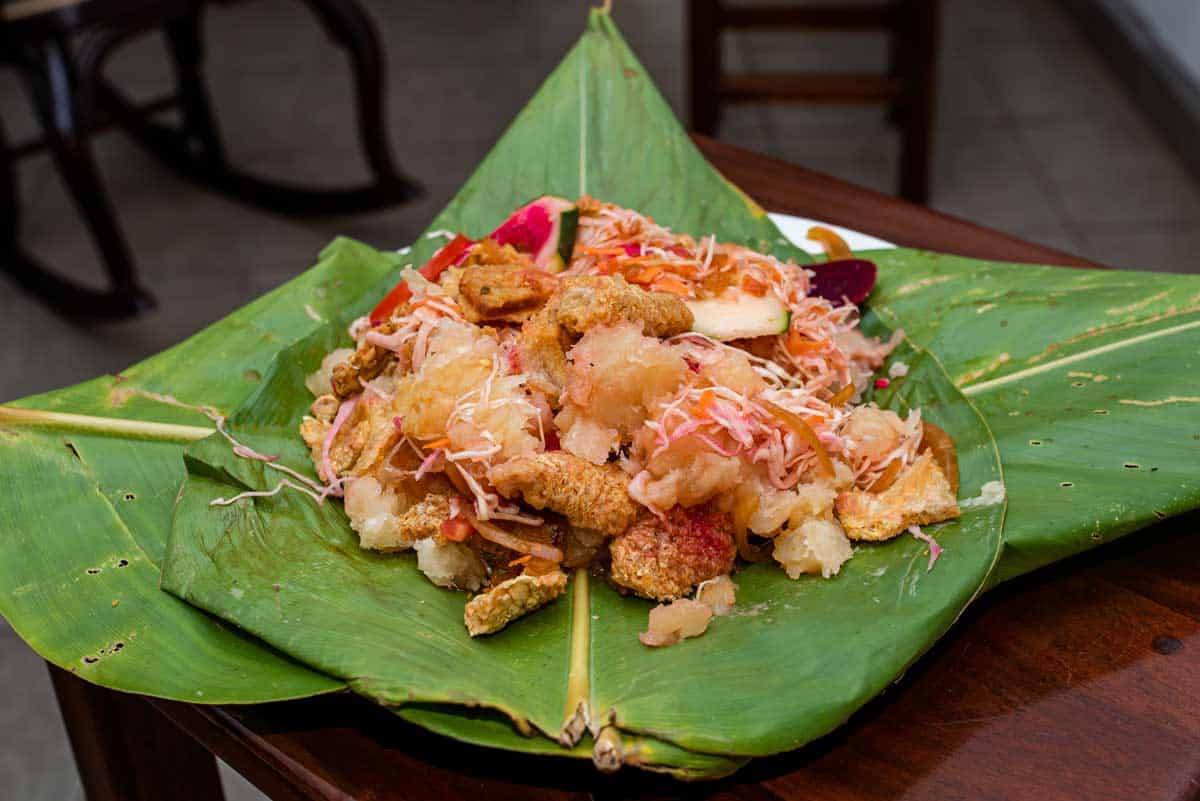
Nicaragua’s best-known street plate is soft boiled yuca topped with crunchy chicharrón and a tangy salad of cabbage, tomato and chile, all served on a banana leaf. It is linked with Granada, where it is said to have been created in 1914 by a vendor nicknamed “La Loca,” who sold it at baseball games. The kiosks in Granada’s Parque Central are still the classic place to eat it. Try our vigorón recipe. For a quick version, bagged pork rinds like Goya Chicharrones stand in for the meaty chicharrón.
12. Chancho con yuca

Vigorón’s close cousin swaps the chicharrón for chunks of pork marinated in sour orange and garlic, then fried until crisp. Boiled yuca and tangy cabbage salad balance the richness.
13. Quesillo

A warm, thick corn tortilla wrapped around soft string cheese, pickled onion and salted cream, usually eaten from a plastic bag. Vendors along the highway at Nagarote and La Paz Centro are famous for them. It is unrelated to Venezuelan quesillo, which is a flan. Here is our Nicaraguan quesillo recipe.
14. Tajadas

Long, thin slices of plantain fried until crisp and sprinkled with salt, tajadas are served on nearly every street plate. Green plantains make them salty and crunchy, and ripe ones make them sweeter. See our tajadas guide.
15. Tostones

Thick rounds of green plantain, fried, flattened and fried again until crisp outside and starchy inside. They often come with salty fried cheese.
16. Güirila

A thick, slightly sweet griddle cake of young corn from Nicaragua’s northern highlands. It is usually served warm with soft cheese or cream.
Nicaraguan sweets and desserts
These three are just the start. Our guide to Nicaraguan desserts covers many more.
17. Rosquillas

Crunchy baked rings of corn dough and aged cheese, best dunked in coffee. The town of Somoto is famous for them. Despite the name, they are more salty snack than cookie.
18. Tres leches

Nicaraguans proudly claim this sponge cake soaked in evaporated milk, condensed milk and cream, though several countries do the same. In Nicaragua it often has a soft meringue on top.
19. Cajeta de coco
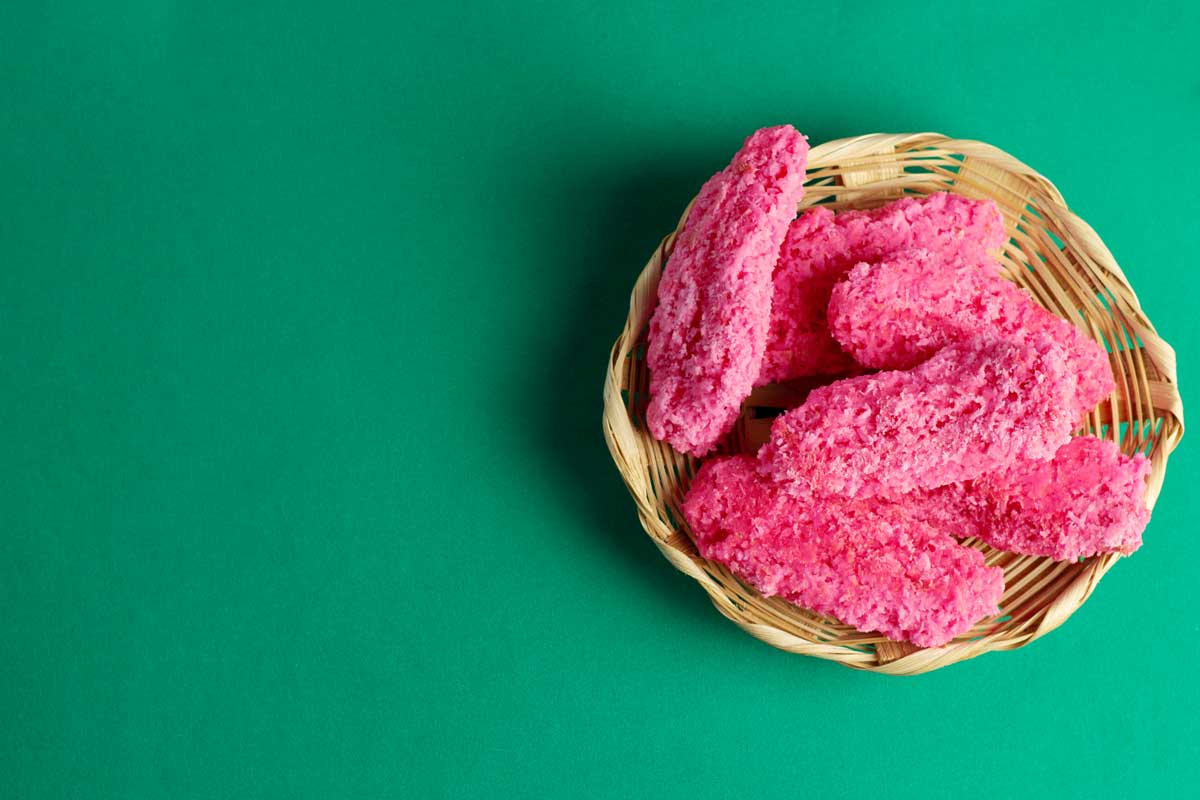
Grated coconut and sugar cooked into a chewy candy, sometimes with yuca, then shaped into balls or bars. The pink version, cajeta de coco rosada, is the one you will spot at markets and festivals.
What to drink in Nicaragua
20. Pinolillo

The national drink is toasted corn and cacao ground together, sweetened and shaken with water or milk, then served cold in a jícara gourd. It is a little gritty by nature. Toast and grind your own with our pinolillo recipe.
You will also see frescos, the local fruit drinks made with tamarind, papaya, melon or guava, plus cacao and corn drinks like chicha and atol. For adults, Flor de Caña rum and Toña or Victoria beer are the local names to know.
Pacific vs. Caribbean Nicaraguan food
| Pacific and central | Caribbean coast | |
|---|---|---|
| Base | Corn, red beans, rice | Coconut, seafood, root vegetables |
| Signature dishes | Gallo pinto, nacatamales, vigorón, indio viejo | Rondón, coconut rice, coconut bread |
| Flavors | Sour orange, achiote, pickled onion, mint | Coconut milk, thyme, hot pepper |
Nicaraguan food FAQ
What is typical Nicaraguan food?
Rice and red beans, corn dishes, fried plantains, yuca, fresh cheese, grilled meat and a tangy cabbage salad. Gallo pinto, nacatamales, vigorón and quesillos are the best-known.
What is Nicaragua’s national dish?
Gallo pinto, a mix of fried rice and small red beans, is generally treated as the national dish. Nacatamales and vigorón are close behind in popularity.
Is Nicaraguan food spicy?
Usually not. Dishes are savory and tangy, and heat comes from chile added to salads or a bottle of hot sauce at the table.
What is the difference between Nicaraguan and Costa Rican gallo pinto?
Nicaraguan gallo pinto traditionally uses small red beans and fried onion. Costa Rican gallo pinto usually uses black beans and is often seasoned with Salsa Lizano.
What do Nicaraguans eat for breakfast?
Gallo pinto with eggs, fried or fresh cheese, sweet plantains, tortillas and coffee.
Cook Nicaraguan food at home

Start with gallo pinto, since it uses leftover rice and a pot of beans. Then stock your kitchen with our guide to Nicaraguan ingredients and browse all our Nicaraguan recipes or the Nicaraguan food hub.
More Nicaraguan Foods
See all →
Jorge Garcia is the founder of AmigoFoods, where he has spent over 20 years helping readers discover authentic Latin American and Spanish cuisine. Raised in a Cuban-American household, Jorge learned to cook at the hands of his mother and grandmother, carrying forward generations of family recipes. That heritage, backed by his family’s four-generation history in the Latin food industry, inspired him to launch AmigoFoods in 2003. With more than 1,000 published articles on recipes, ingredients, and food culture, Jorge’s mission is simple: make authentic Latin cooking approachable for home cooks everywhere while honoring the traditions behind every dish.