

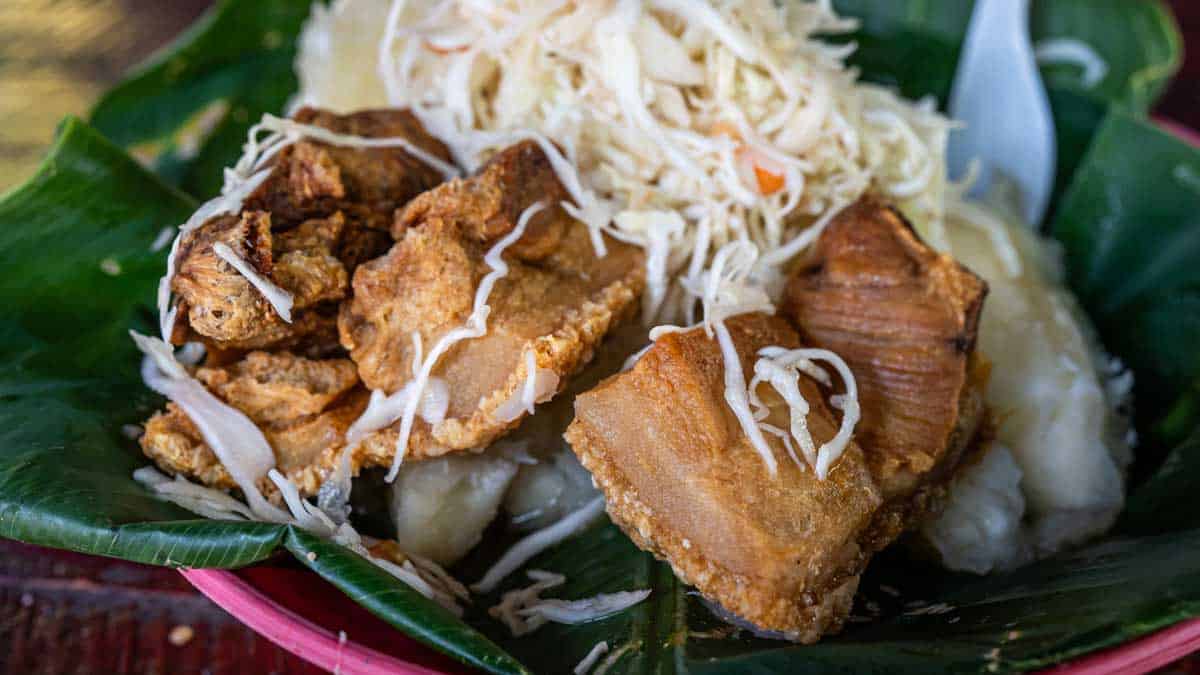
Vigorón is Nicaragua’s best-loved street-food plate: soft boiled yuca, crunchy chicharrón and a sharp, vinegary cabbage salad, piled on a banana leaf and eaten with your fingers. It was born in Granada in 1914, it still costs only a couple of dollars on the street, and at home it comes together in under an hour when you buy the chicharrón ready-made.
Vigorón at a Glance
AmigoFoods may earn a commission from qualifying Amazon purchases made through links on this page.
What Is Vigorón?
Vigorón (say it vee-goh-ROHN) is three simple things eaten together: boiled yuca, chicharrón, and an ensalada de repollo, the cabbage salad Nicaraguans also call curtido. The yuca is soft and mild, the chicharrón is salty and crisp, and the salad cuts through both with vinegar and chile. Every bite is meant to hit all three.
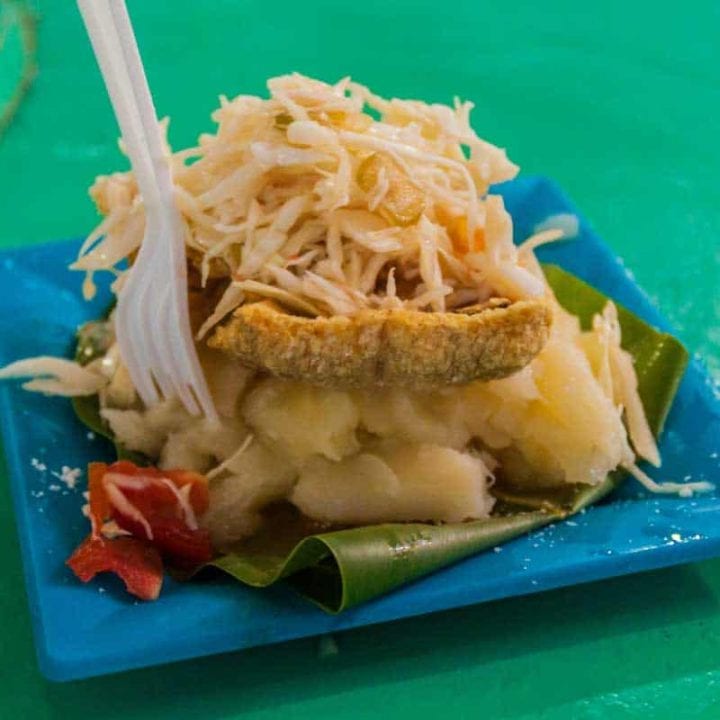
It is served on a square of banana leaf, traditionally without a fork, and it works as a snack, a quick lunch or a party plate. In Nicaragua you find it at park kiosks, market stalls and ballgames, and at the evening grills known as fritangas. It sits alongside gallo pinto and nacatamales as one of the dishes Nicaraguans miss most when they leave home.

Where Vigorón Comes From: Granada, 1914
Vigorón is one of the rare street foods with a birth year. The story Granada tells, recorded in a 1971 history of the city, is that a local vendor named María Luisa Cisneros Lacayo, nicknamed “La Loca,” created it in 1914. She sold food at the city’s baseball games and wanted something that stood out from the usual boiled corn and sweet tamales.
The name came from a poster. A health tonic called Vigorón was being advertised at the time, promising strength and energy, and she borrowed the word for her plate. A heap of yuca, pork and salad that keeps you going for hours lives up to it. Atlas Obscura’s write-up tells the same story and treats vigorón as Granada’s signature dish.
A century later it is sold all over Nicaragua, but Granada still owns it. The kiosks in the Parque Central, facing the cathedral, are the classic place to eat it, and one of them, El Gordito, was turning out around 300 plates a day when NPR visited in 2015. That report also made the point locals love to repeat: in a country split sharply by class, rich and poor line up for the same vigorón and eat it side by side on the park benches.

The Three Parts of a Great Vigorón
Because there are only three components, each one has to be right. Here is what Nicaraguan cooks look for in each, and what to buy if you are shopping in the US.
1. The yuca: soft, sweet and fully cooked
Use sweet yuca, the kind sold for cooking in Latin and Asian grocery stores and most large supermarkets. Fresh roots should be firm with clean, bright white flesh and no gray streaks. Frozen yuca, sold peeled and cut, is the easy route and works just as well.
Peel off the bark-like skin and the pink layer under it, then simmer the pieces in salted water until they are tender all the way through and start to split at the edges, usually 25 to 40 minutes. Pull out the woody string that runs down the center before serving. Yuca must always be cooked and the cooking water thrown away; never eat it raw (the Canadian Food Inspection Agency explains why). For more on buying and preparing the root, see our guide to yuca and our wider look at Latin American roots and tubers.
2. The chicharrón: with meat, or just the crunch
In Granada, the chicharrón on a vigorón is usually chicharrón con carne: pork belly fried until the skin puffs and crackles while a layer of meat stays attached underneath. It makes the plate rich and filling. The lighter option is cuero or pork rind, which is all crunch and no meat. Many cooks use some of each.
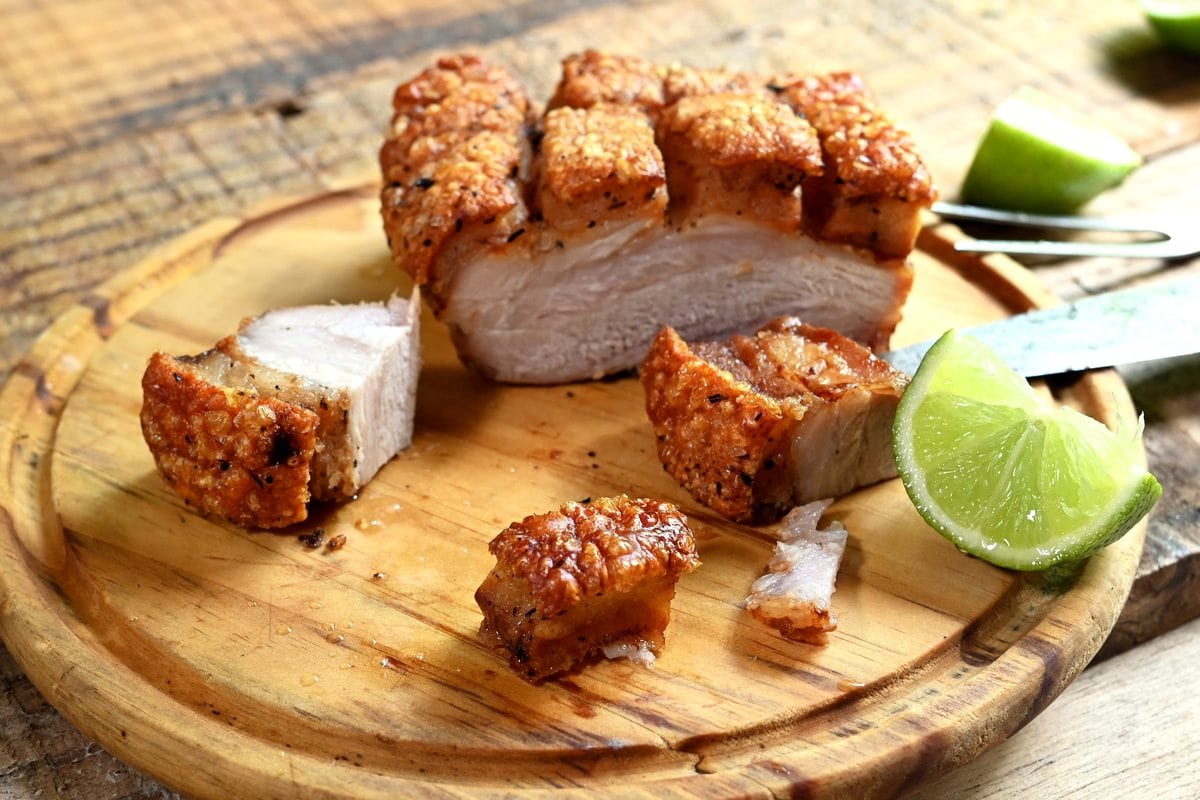
The best source is a Latin butcher or bakery that fries its own on weekends. If you want to make it from scratch, the slow simmer-then-fry method in our chicharrón recipe gives the same blistered skin. When you need a vigorón in 20 minutes, bagged pork rinds work, and they are closer to what some street stands use than you might think.
3. The salad: ensalada de repollo (curtido)
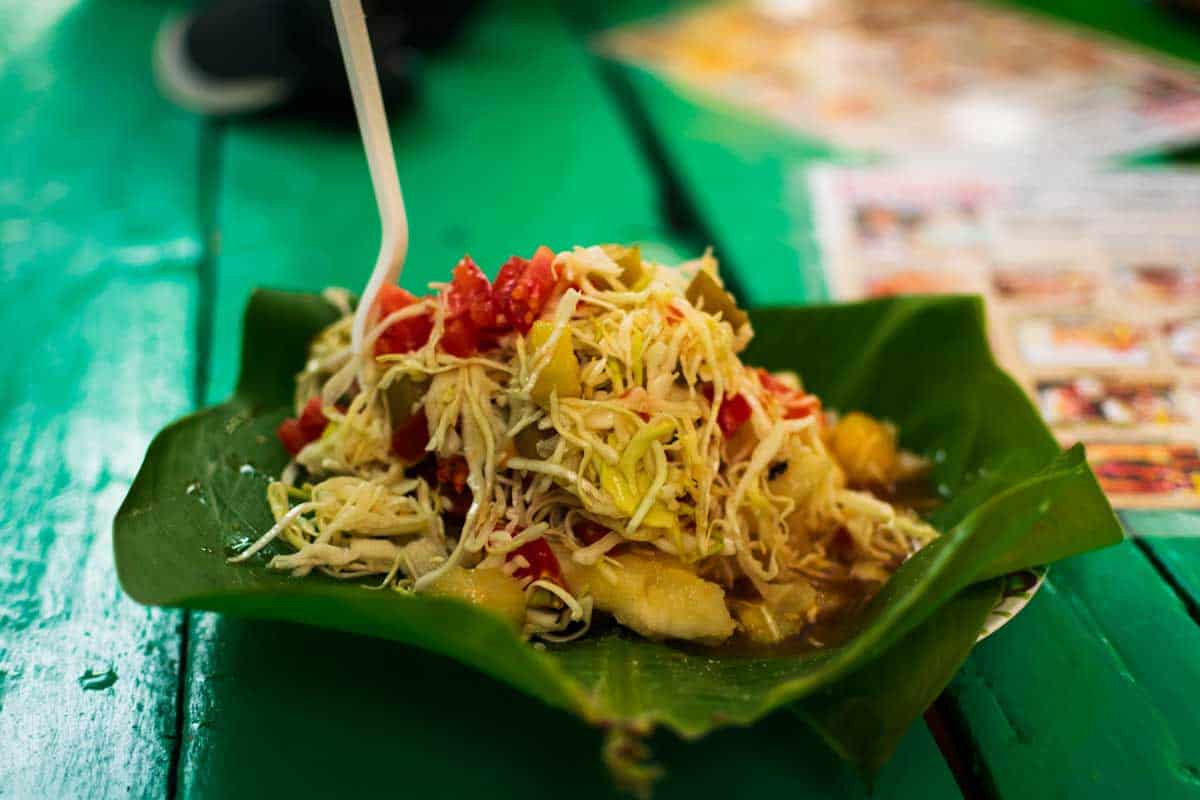
The salad is what makes vigorón taste like vigorón. Shred green cabbage as finely as you can, then toss it with diced tomato, thinly sliced onion, vinegar, salt and a little hot chile. Give it at least 15 minutes so the cabbage softens slightly and the vinegar mellows. In Granada some vendors add slices of mimbro, a very sour little fruit, for an extra sharp edge; a squeeze of lime gets you close.
Nicaraguans call this salad curtido too, but it is a fresh, quick salad, not the fermented, oregano-scented Salvadoran curtido served with pupusas. Plain white vinegar works. A milder Central American table vinegar tastes rounder.
How to Make Vigorón
The full ingredient list, amounts and printable steps are in the recipe card below. This is the order that keeps everything at its best:
- Start the yuca. Cover peeled yuca with plenty of cold salted water, bring it to a boil, then simmer until completely tender, 25 to 40 minutes.
- Make the salad while it cooks. Toss the shredded cabbage, tomato, onion and chile with vinegar and salt. Let it sit at least 15 minutes, then taste and adjust.
- Warm or crisp the chicharrón. A few minutes in a 400°F oven or air fryer revives store-bought chicharrón con carne. Skip this for bagged rinds.
- Drain and trim the yuca. Discard the cooking water, remove the woody center string and break the yuca into chunks.
- Build each plate at the last moment. Banana leaf, yuca, chicharrón, then a big handful of salad on top. Serve with lime and hot sauce or chilero on the side.
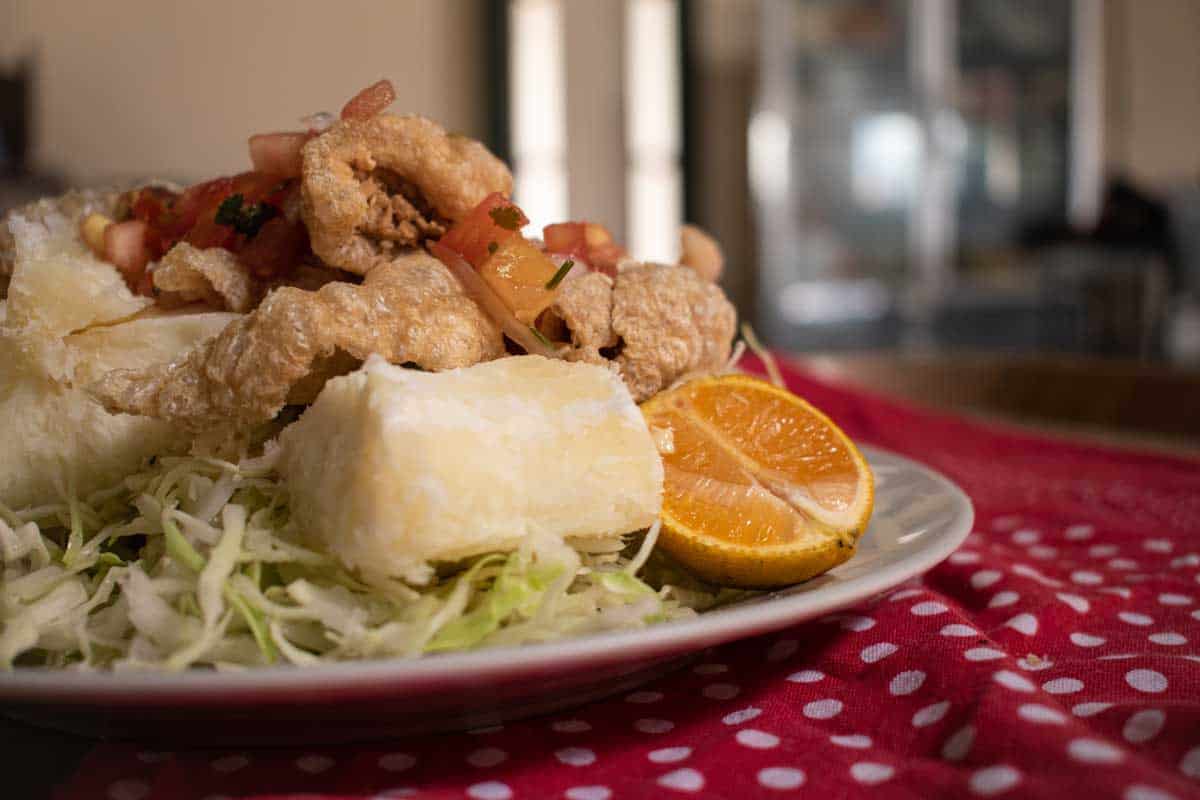
Vigorón (Nicaraguan Yuca and Chicharrón)
Vigorón is the classic street-food plate of Granada, Nicaragua: soft boiled yuca, crunchy chicharrón and a tangy cabbage, tomato and onion salad, served on a banana leaf and eaten by hand.
Ingredients
- 1 1/2 lb (680 g) peeled sweet yuca (cassava), fresh or commercially frozen
- Water to cover yuca generously
- 1 teaspoon salt for cooking water, plus more to taste
- 1 lb (450 g) fully cooked chicharrón, preferably crisp pieces with some meat attached
- 1/2 medium head cabbage, finely shredded (about 4 cups)
- 2 medium tomatoes, diced
- 1 small onion, thinly sliced
- 1/4 cup chopped cilantro (optional)
- 1/4 cup white vinegar, plus more to taste
- Black pepper, to taste
- Optional: 1 small hot pepper, finely sliced, and 1 lime cut into wedges
- Optional: 4 clean food-grade banana-leaf pieces for serving
Instructions
- If using fresh sweet yuca, remove the brown peel and the thick layer beneath it completely, cut into 2–3-inch pieces and rinse. Use yuca sold for cooking by a reputable food retailer; do not use bitter cassava or an unidentified root. If frozen, follow the package preparation directions.
- Put the yuca in a pot with plenty of fresh water and 1 teaspoon salt. Bring to a boil, then maintain a steady simmer, uncovered, for about 30–40 minutes, until completely tender and easily pierced. Allow longer if necessary. Drain and discard all cooking water. Remove any tough central fibers; keep the cooked yuca warm. Never eat cassava raw.
- While the yuca cooks, combine the shredded cabbage, tomatoes, onion and optional cilantro with the vinegar. Season lightly with salt and pepper, then toss. Let stand 15 minutes while you finish cooking; taste and add vinegar or salt if needed.
- Break the fully cooked chicharrón into bite-size pieces. Keep it separate from the wet salad until serving. For packaged chicharrón, follow its storage and reheating directions; this recipe does not cook raw pork.
- Divide the warm yuca among 4 plates, optionally lined with clean banana-leaf pieces. Add the chicharrón and cabbage salad just before eating. Offer hot pepper and lime separately. The banana leaf is a serving liner and is not eaten.
Notes
Chicharrón: Chicharrón con carne (fried pork belly with meat attached) is traditional. Bagged pork rinds work for a quick, all-crunch version. Re-crisp store-bought chicharrón in a 400°F oven or air fryer for a few minutes.
Yuca safety: Use sweet yuca sold for cooking, peel off the skin and the pink layer under it, cook until completely tender and discard the cooking water. Never eat yuca raw. Frozen yuca is not precooked; boil it the same way.
Costa Rican style: Add 2 cups boiled green plantain slices and top with tico chimichurri (diced tomato, onion and cilantro with lime) instead of the plain salad.
Storage: Refrigerate the yuca, salad and chicharrón separately within 2 hours and use within 3 to 4 days. Assemble only when serving so the chicharrón stays crisp.
Nicaraguan vs. Costa Rican Vigorón
Vigorón crossed the border long ago, and in Costa Rica it is a beach and street snack, especially in Guanacaste and the port city of Puntarenas. Ticos happily debate who it belongs to, but the origin is not really in question: it started in Granada. What changes in Costa Rica is the build.
| Nicaraguan vigorón | Costa Rican vigorón | |
|---|---|---|
| Base | Boiled yuca | Boiled yuca, often with boiled green plantain |
| Pork | Chicharrón con carne, pork rinds, or both | Chicharrones, often served cold |
| Salad | Cabbage, tomato, onion, vinegar, chile | Cabbage topped with chimichurri (a tomato, onion and cilantro salsa) |
| Finish | Chilero or hot sauce, lime | Plenty of lime, sometimes salsa rosada |
| Served | On a banana leaf, eaten by hand | In a bowl or a plastic bag with a fork at the beach |
If you want the Costa Rican version, add a cup of boiled green plantain slices and swap the plain salad for a spoonful of tico chimichurri. For more from the other side of the border, see our guides to traditional Costa Rican food and chifrijo, Costa Rica’s other great chicharrón dish.
Vigorón vs. Similar Dishes
Yuca, pork and cabbage show up together all over Central America, so vigorón has a few close relatives that are easy to confuse with it.
Vigorón Variations
The three-part formula is fixed, but there is room to play with each part. These are the versions you will actually see in Nicaragua and in Nicaraguan homes abroad:
- Vigorón mixto. Many stands sell a mixto, topped with both chicharrón and chunks of fried pork (often seasoned with achiote) for a meatier plate.
- All rind. Just crisp pork rinds instead of meaty chicharrón. Lighter, saltier and the fastest to make.
- Extra heat. A spoonful of chilero, the Nicaraguan jar of onions and hot peppers pickled in vinegar, poured over the top.
- Costa Rican style. Green plantain added to the yuca and chimichurri in place of the plain salad.
- Meatless. Not traditional, but fried queso (the salty Nicaraguan frying cheese) or crisp-fried tofu keeps the salty, crunchy contrast for anyone who skips pork.

How to Serve and Eat Vigorón
Serve vigorón on a piece of banana leaf if you can. It looks right, it holds the juices, and it is how every Nicaraguan will picture the dish. Frozen banana leaves keep for months; wipe them clean and pass them briefly over a flame or hot pan to make them flexible. The leaf is a plate, not something you eat.
Then eat it the Nicaraguan way, with your hands, scooping a bit of yuca, pork and salad into every bite. A fork is fine at a dinner table, but at a park bench in Granada nobody uses one.
To drink: a cold beer, a glass of iced pinolillo (the toasted corn and cacao drink), or a sweet, chilled refresco de cacao. On the side: fried plantain tajadas are the classic partner at fritangas.
Leftovers: refrigerate the yuca, chicharrón and salad separately within 2 hours and use within 3 to 4 days. Rewarm the yuca, re-crisp the chicharrón in the oven, and assemble fresh. The salad is crispest on day one but is still good on day two.

Where to Eat Vigorón (and What It Costs)
In Granada, head to the Parque Central. The kiosks under the trees in front of the cathedral have been selling vigorón for generations, El Gordito among the best known, and the stalls around the municipal market serve it too. Weekends are busiest, when families come in from Managua and Masaya just to eat it.
Elsewhere in Nicaragua, look for it at fritangas, market food courts and any stand with a stack of banana leaves and a bucket of cabbage salad. Many stands also sell a mixto with extra pork.
What it costs: vigorón has always been cheap. NPR put a plate at about $2 in 2015, and recent traveler reports from Granada and Managua put it at roughly 50 to 130 córdobas (about $1.50 to $3.50), depending on the size and whether you order a mixto.
In the US, Nicaraguan restaurants and fritangas in Miami-Dade, especially in and around Sweetwater, are the most reliable bet, and you can also find it in other cities with large Nicaraguan communities, such as Los Angeles, Houston and the San Francisco Bay Area. Many only make it on weekends, so it is worth calling ahead.
Vigorón FAQ
What does vigorón mean?
The name comes from a health tonic called Vigorón that was advertised in Nicaragua in the early 1900s. The dish’s creator borrowed it in 1914, and the idea of “vigor” stuck because the plate is so filling.
What is vigorón made of?
Three things: boiled yuca (cassava), chicharrón (fried pork belly or pork rinds) and a cabbage salad with tomato, onion, vinegar and chile. It is served on a banana leaf.
Is vigorón Nicaraguan or Costa Rican?
Nicaraguan. It was created in Granada, Nicaragua, in 1914. It is also very popular in Costa Rica, where it is often made with green plantain and chimichurri, but the dish started in Nicaragua.
What does vigorón taste like?
Salty, tangy and rich at the same time. The yuca is soft and neutral, a little like a dense, creamy potato; the chicharrón is salty and crunchy; and the vinegary salad makes the whole plate taste bright rather than heavy.
Is vigorón served hot or cold?
Usually warm or at room temperature. The yuca is often warm, the salad is cool and the chicharrón is at room temperature. In Costa Rica it is commonly eaten cold at the beach.
Can I make vigorón ahead of time?
Yes, in parts. Boil the yuca and make the salad up to a day ahead and keep them refrigerated separately. Rewarm the yuca, re-crisp the chicharrón, and assemble just before serving.
What is the difference between vigorón and vaho?
Both use yuca, but vaho (or baho) is a slow-steamed dish of salted beef and plantains cooked for hours in banana leaves, while vigorón is quick to assemble and built around chicharrón and a fresh cabbage salad.
Building a Nicaraguan spread? Pair vigorón with quesillo, nacatamales and gallo pinto, stock up with our guide to Nicaraguan ingredients, or browse every recipe on our Nicaraguan food page.
More Nicaraguan Foods
See all →
Jorge Garcia is the founder of AmigoFoods, where he has spent over 20 years helping readers discover authentic Latin American and Spanish cuisine. Raised in a Cuban-American household, Jorge learned to cook at the hands of his mother and grandmother, carrying forward generations of family recipes. That heritage, backed by his family’s four-generation history in the Latin food industry, inspired him to launch AmigoFoods in 2003. With more than 1,000 published articles on recipes, ingredients, and food culture, Jorge’s mission is simple: make authentic Latin cooking approachable for home cooks everywhere while honoring the traditions behind every dish.