

Explore South American cocktails, from Argentina’s bittersweet Fernet con Coca to Brazil’s caipirinha and Venezuela’s creamy ponche crema. The featured recipe is a quick Fernet-and-cola highball; the country sections below offer more drinks and regional variations.
Fernet con Coca at a Glance

Argentina: Fernet con Coca

Fernet is a type of bitters that Argentinians love. It is often mixed with Coca Cola, hence the name Con Coca.
This drink is a bit of an icon beverage for Argentinians, though neither coke or Fernet is originally from Argentina.
How to Make Fernet con Coca
Fernet Con Coca’s popularity in Argentina transcends social and economic status.
It’s a simple combination of Coke and Fernet, so it’s not hard at all to make but has a unique taste somewhere between licorice, bitters, and vanilla.
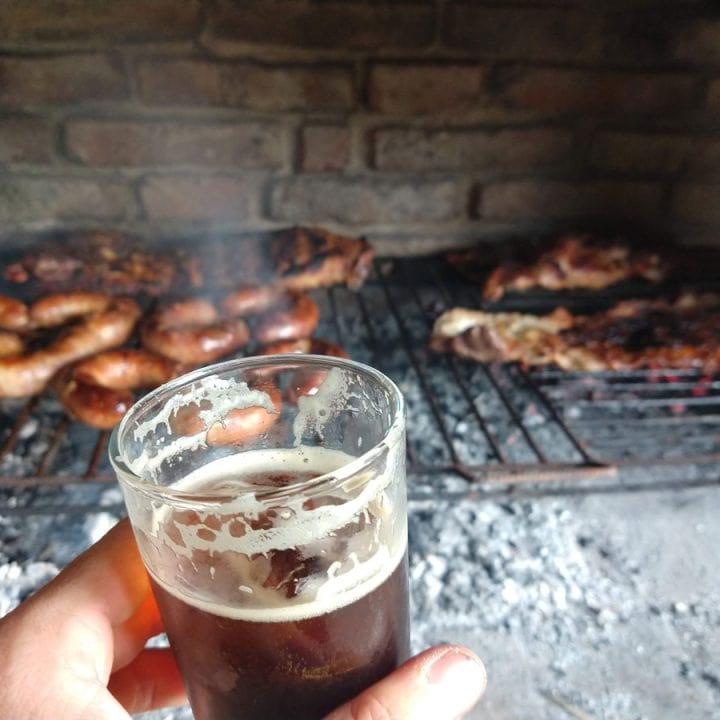
Fernet con Coca
Argentina’s bittersweet Fernet-and-cola highball, poured over plenty of ice.
Ingredients
- 1½ fl oz (45 mL) Fernet-Branca
- 3½ fl oz (105 mL) chilled cola
- Ice, to fill the glass
Instructions
- Fill a highball glass with ice.
- Pour in the Fernet, then slowly add the cola so the foam has room to settle.
- Stir gently once or twice and serve immediately.
Notes
Makes 1 cocktail in about 3 minutes. The 30:70 Fernet-to-cola ratio follows Branca’s serving guidance; adjust to taste. Use chilled cola and add it slowly to preserve the bubbles.
Bolivia: Chuflay
Singani is a wine brandy made of distilled wine. It is the liquor of Bolivia and is the alcohol used in Chuflay.
You really can’t get away with making a Chuflay with any other liquor.
Chuflay came about during the construction of Bolivia’s railway lines.
The English who were working on the lines liked to drink gin and ginger ale.
The gin was hard to come by in Bolivia, so they started using Singani instead.
How to Make Chuflay
This is another nice easy cocktail to make. Fill a large highball glass with ice. Pour in 2 oz. of Singani and 7 oz. of ginger ale.
Add a squeeze of lime juice and top with a lime slice, stir it up, serve, and enjoy.
Brazil: Caipirinha

Good luck getting out of Brazil without somebody making you a Caipirinha.
This is one of Brazil’s most popular drinks. It is a refreshing cocktail made with Brazil’s most famous spirit, cachaça.
Cachaca was first made in the 1500s from fermented cane sugar juice making it similar to light rum.
If you can’t get your hands on cachaça there is a variation of this drink that uses vodka, but it lacks the distinct taste of the cachaça.
How to Make Caipirinha
To make a caipirinha, gently muddle 2 teaspoons of sugar with 1 lime cut into wedges; add more sugar to taste (some classic recipes use 4 teaspoons).
Fill the glass with ice and pour in 2 oz. of cachaça. Garnish with extra lime and serve.
Chile and Peru: Pisco Sour

Though Chile is well known for its rich quality of wines, it also has an impressive array of traditional cocktails.
The pisco sour is a little bit of a conundrum as both Chile and Peru (vehemently) claim to have invented it.
So it’s fair to say that we could credit it to both countries.
According to most tales, the drink was invented in the 1920s by a man named Victor Morris.
Morris was a bartender and expatriate who apparently concocted the cocktail in his bar in Lima (which really does point towards this being originally from Peru).
Regardless, it’s a hugely popular drink in Peru as well as Chile.
How to Make Pisco Sour
The egg-white version below is Peruvian-style; Chilean versions often omit the egg and bitters. For one cocktail, use 2 oz. of Pisco, 1 oz. of fresh lime juice, a half oz. of simple syrup, 1 pasteurized egg white (or the carton equivalent suitable for whipping), and a few drops of Angostura bitters for the top.
To make, shake the pisco, lime juice, syrup and pasteurized egg white without ice first, then add ice and shake again until cold and frothy.
Pour into a chilled glass through a strainer and top with a few drops of the bitters.
Colombia: The Colombia Cocktail
What better cocktail to try in Colombia than a cocktail named after the country itself? This creative cocktail tastes as great as it looks.
When it’s made properly, it has the same red, blue and yellow layers of the Colombian flag.
How to Make Colombian Cocktail
For one large cocktail, combine 2 fl oz vodka, 6 fl oz orange juice and 1 fl oz lemon juice. In a large highball glass, layer ice and 1 fl oz grenadine, then more ice and 1 fl oz blue curaçao poured slowly over a spoon. Top with more ice and gently add the juice mixture. Serve promptly; separation depends on the brands and pouring technique. This colorful drink is inspired by the flag rather than a claim to a traditional national recipe.
Ecuador: Canelazo

This is a great warm cocktail for cold nights and is a popular choice in Ecuador.
The canelazo cocktail is also popular in Peru, Colombia, and Argentina.
The alcohol traditionally used in the canelazo is aguardiente.
Aguardiente isn’t actually a specific alcohol but a term that refers to alcohols that have 29% to 60% alcohol by volume rate.
This explains why it has the nickname “firewater”.
Different types of aguardientes are made by combining different fermented and distilled ingredients.
The popular aguardiente in South America is made from cane sugar, similar to rum, so rum can be used as a substitute.
The canelazo is spiced with cinnamon and sometimes other spices like clove. This is also a great option for a non-alcoholic cocktail as the aguardiente or rum can be left out altogether.
How to Make Canelazo
To make a canelazo you will need 3 cups of water, 1/2 cup brown sugar or grated panela, plus more to taste, 1 lime, a pinch of salt, 1 tsp of whole cloves, 4 cinnamon sticks, 1/2 a cup of orange juice, 4 oz. of aguardiente.
Making a canelazo is similar to a hot toddy. First, you need to bring the water to the boil with the sugar, lime juice, salt, and spices. Cover and simmer gently for 30 minutes to infuse the cinnamon.
Next, remove the mix from the heat and pour in the orange juice. Once the liquid has cooled a bit add in the aguardiente. Be careful not to cook away the alcohol when the liquid is too hot.
Strain into four heatproof mugs and serve warm. This is an orange-and-clove variation; omit the aguardiente for an alcohol-free version.
Guyana: Guyanese or Caribbean Rum Punch American Cocktails

El Dorado is the main rum of Guyana.
The rum was named after the lost city of gold that is apparently in the jungles of South America somewhere. The lost city was never found but the rum is spectacular.
The word punch actually means five when translated from the Sanskrit language.
These punch drinks used to be made by using five ingredients: lemon juice, water, tea, alcohol, and sugar.
You might be familiar with the recipe rhyme “one of sour, two of sweet, three of strong, four of weak”.
This little rhyme was made to represent the lime juice, sweetener, alcohol, and water that makes up a traditional punch.
A punch is a great cocktail to make for a group because it’s usually made in a large punch bowl and served up when desired.
How to Make Guyanese Rum Punch
Combine 4 oz. of El Dorado white rum, 2 oz. of Grenadine, 3 oz. of pineapple juice, 3 oz. of orange juice, a few drops of Angostura bitters, and the juice of a lime.
Stir the ingredients together and divide between two ice-filled glasses. This makes 2 cocktails.
Paraguay: Paraguay Passion

The name says it all with this one. This fruity rum cocktail features passionfruit, known as maracuya in Spanish.
How to Make Paraguay Passion
You will need ice, 2 oz. of passionfruit juice, 1 oz. of dark rum, and 1 oz. of triple sec to make the Paraguay Passion.
Pour the passionfruit juice, rum, and triple sec into a cocktail shaker filled with ice.
Shake until chilled and strain into a chilled cocktail glass. Makes 1 cocktail.
Peru: Chilcano de Pisco

Peru is known for a number of delicious dishes. But their cocktails are nothing to be ignored.
One in fact may remind you of the savory fish soup chilcano de pescado, but the Chilcano de Pisco is a refreshing and popular Peruvian cocktail.
Pisco is a type of brandy made from distilled grape juice in Peru and Chile.
It was created in the 16th century by Spanish settlers who wanted an alternative to Orujo, which was a brandy that had to be imported from Spain.
This is another simple yet tasty South American cocktail recipe for any occasion.
How to Make Chilcano de Pisco
Gather up 4 oz. of ginger ale, 2 oz. of pisco, and the juice of half a lime.
Fill a tumbler with ice and pour over the pisco and lime juice. Add the ginger ale, stir and serve.
Suriname: Borgoe Rum Cola

People in Suriname love their rum, Borgoe being the most popular.
This rum is made by Suriname Alcoholic Beverages which was founded in 1966.
In 1982 SAB introduced a new version of the rum called Borgoe 82.
This was to commemorate the 100th anniversary of the Marienburg sugar plantation which was originally used to make the rum in 1966.
Borgoe Rum Cola is the most popular cocktail in Suriname, so if you want to feel like you’ve experienced a bit of the Suriname culture without leaving the house, make yourself one of these.
How to Make Borgoe Rum Cola
You’ll need Borgoe rum, ice cubes, coke, and lemon juice to make a good Borgoe and coke.
Add one part Borgoe rum to about four parts of coke, poured over ice in a tall glass. Garnish with a slice of lemon and enjoy.
Uruguay: Clericó

In South America clericó is their version of Spain’s sangria.
It’s a great party drink when you are entertaining guests a bit like punch because you pre-make it in a jug and it’s ready to go.
Clericó is a combo of white wine and summer fruits and the fruit is just as yummy as the wine once it’s soaked up some of the flavors.
How to Make Clericó
To make clericó you will need two bottles of your favorite dry white wine, 1/4 cup of brandy, 1 tablespoon of lemon juice, 2 cups of peaches sliced, 1 cup of strawberries sliced, 1 cup of seedless grapes cut in half, 1 sliced banana, up to 1/4 cup sugar to taste, and ice.
Stir the wine, brandy and lemon juice together, adding sugar only as needed for the sweetness of the fruit. This pitcher serves about 10–12 small glasses.
Add all of the fruit except the banana and leave the clericó to chill for at least 2 hours in the refrigerator. Add the banana just before serving.
Make sure you get a bit of the fruit with each serve!
Venezuela: Ponche Crema

The ponche crema cocktail is a favorite at Christmas time in Venezuela, much like eggnog is in North America.
Ponche Crema is made with good quality Venezuelan rum, like Santa Teresa.
This cocktail can be made a day before a special event and stored in the fridge before serving.
How to Make Ponche Crema
You will need 1.7 oz. of Venezuelan rum, 1 cup of whole milk, 6 oz. by weight of sweetened condensed milk, 2 egg yolks, 1 teaspoon of ground cinnamon, and half a teaspoon of vanilla extract.
Warm the milk, condensed milk and cinnamon gently in a saucepan. Whisk the yolks in a bowl, then gradually whisk in a little of the hot milk to temper them. Return everything to the saucepan and stir over low heat until the mixture reaches 160°F (71°C); do not boil. Remove from the heat and stir in the vanilla and rum. Strain, cool promptly in an ice-water bath, then cover and refrigerate until cold, at least 2 hours. Makes about 4 small servings. Use within 2–4 days; rum does not make it shelf-stable.
More Great Latin Drink & Food Recipes Await!
Choose a cocktail to pair with a favorite South American dish.
Our blog is loaded with food recipes that are unique to Latin and South America, so you don’t need to leave your house to get a taste (literally) of these exciting places.
Don’t forget to bookmark us so you can get great foodie ideas for your next get together.
More Latin Favorites
See all →
Jorge Garcia is the founder of AmigoFoods, where he has spent over 20 years helping readers discover authentic Latin American and Spanish cuisine. Raised in a Cuban-American household, Jorge learned to cook at the hands of his mother and grandmother, carrying forward generations of family recipes. That heritage, backed by his family’s four-generation history in the Latin food industry, inspired him to launch AmigoFoods in 2003. With more than 1,000 published articles on recipes, ingredients, and food culture, Jorge’s mission is simple: make authentic Latin cooking approachable for home cooks everywhere while honoring the traditions behind every dish.