
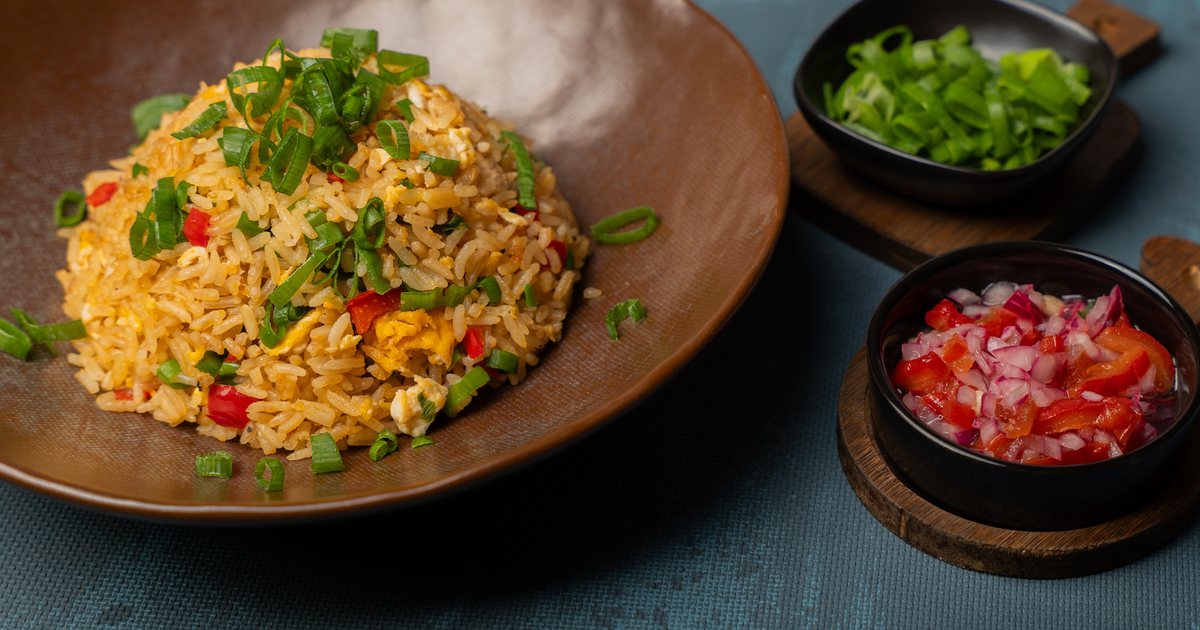
Arroz chaufa is Peru’s chifa-style fried rice: cold cooked rice tossed with chicken, egg, soy sauce, ginger and plenty of green onion. This recipe makes four generous servings in about 30 minutes once the rice is cooked and chilled. A hot wok or large skillet keeps the grains separate and lightly toasted.
Arroz Chaufa at a Glance
What Is Arroz Chaufa?
Arroz chaufa (often just called chaufa) is Peru’s take on Cantonese fried rice. Cold cooked rice is stir-fried over very high heat with soy sauce, ginger, garlic, scrambled egg and green onions, plus a protein such as chicken, pork, beef or seafood.
It belongs to chifa, the cuisine Chinese immigrants built in Peru from the 19th century onward. Today it is so ordinary that most Peruvians make it at home as a way to use up yesterday’s rice, and nobody thinks of it as “foreign” food. It sits on the same family table as lomo saltado and pollo a la brasa.
Chaufa vs. chifa: chifa is the cuisine (and the restaurant). Chaufa is one dish on the chifa menu. Both words come from Cantonese and were reshaped by Lima street Spanish.
How Chaufa Is Different From Regular Fried Rice
Same family, different personality. If you have only had Chinese-American takeout fried rice, here is what changes in Peru:
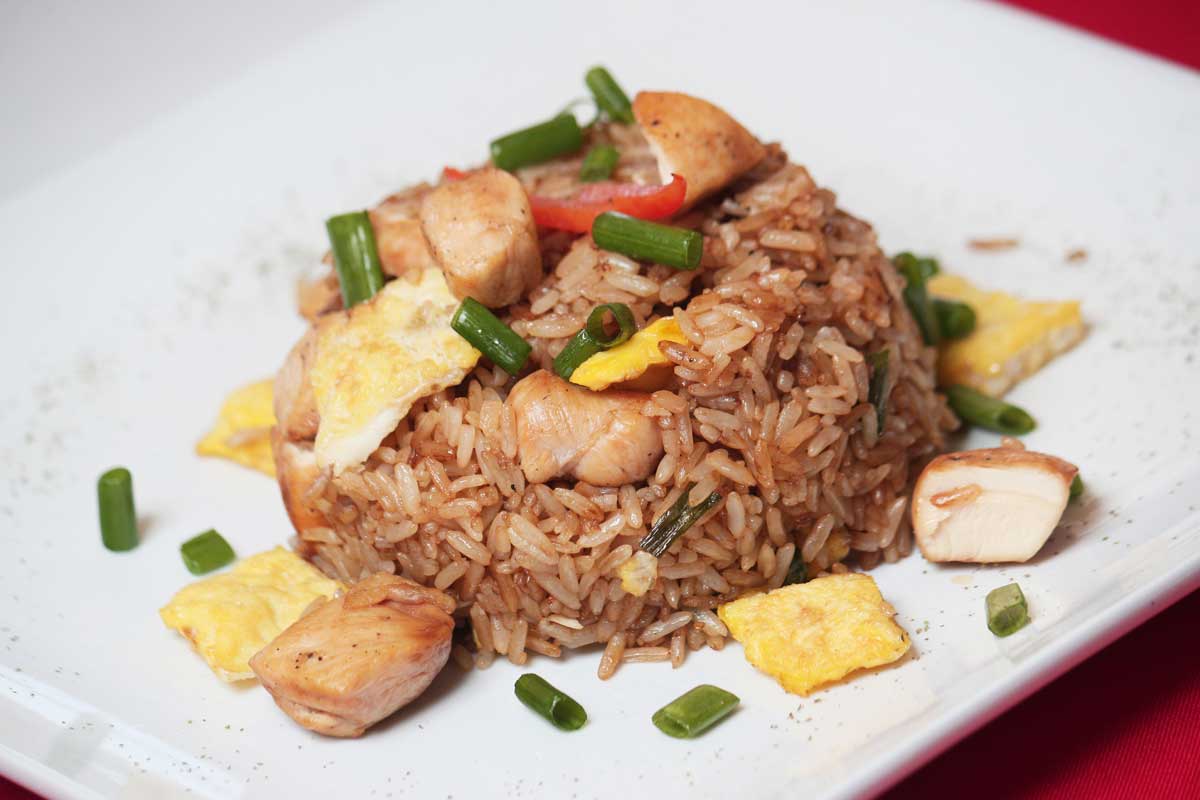
Arroz chaufa (Peru)
- Darker color from sillao, a rich, slightly sweet soy sauce
- More ginger (kion) and garlic up front
- Egg cooked as a thin “tortilla,” then cut in strips or squares
- Lots of cebollita china (green onion), whites and tops
- Plated as a tall dome, eaten with ají on the side
Typical takeout fried rice
- Lighter, often seasoned with salt and light soy
- Peas and carrots are standard
- Egg scrambled straight into the rice
- Green onion as a garnish, not a main ingredient
- Served as a side to other dishes
Arroz Chaufa Ingredients
The list is short, so each ingredient matters. These are the ones that make chaufa taste like chaufa:
- The baseDay-old long-grain riceCold rice has dried out and firmed up, so the grains fry and separate instead of turning to mush.
- The colorSillao (soy sauce)Peru’s word for soy sauce, from Cantonese. Chifas favor a dark, full-bodied style. Mixing regular and dark soy gets you close.
- The biteKion (fresh ginger)Another Cantonese loanword. Minced fine, it is what makes chaufa smell like a chifa.
- The greenCebollita chinaGreen onions. Use a whole bunch: whites go in early, tops go in at the end.
- The richnessEgg tortillaEggs cooked as a thin omelet, rolled and sliced, so you get distinct ribbons of egg.
- The proteinChicken thighsThighs stay juicy at high heat. Pork, beef, shrimp or a mix all work (see the variations below).
- The aromaToasted sesame oilJust a teaspoon at the very end. Cooked any longer, it loses its perfume.
- The color popRed bell pepperCommon in home and restaurant chaufa for sweetness and color. Optional but recommended.
How to Make Arroz Chaufa
Chaufa cooks in minutes, so have everything chopped and measured before the wok goes on. The full ingredient list and measurements are in the recipe card below; here is the method at a glance.
- Loosen the rice. Break up cold rice with damp fingers until every clump is gone. Mix the soy sauce, oyster sauce, sugar and white pepper.
- Marinate the chicken. Toss bite-size thigh pieces with a little soy sauce and cornstarch. The cornstarch keeps them tender and helps them brown.
- Make the egg tortilla. Cook beaten eggs as a thin omelet, roll it up and slice into ribbons. Set aside.
- Sear the chicken. Get the wok smoking hot, sear the chicken in a single layer, cook it through, then take it out.
- Fry the aromatics. Ginger, garlic and green onion whites for 30 seconds, then the red pepper for a minute.
- Fry the rice. Press the rice against the hot wok, toss, repeat. Three to four minutes until the grains are hot and starting to toast.
- Add the sauce at the edge. Pour it around the rim of the wok so it sizzles and caramelizes before it reaches the rice. This is where the smoky chifa flavor comes from.
- Finish and plate. Fold in the chicken, egg, green onion tops and sesame oil. Pack into a bowl and flip onto a plate for the classic dome.

Tips for Restaurant-Style Chaufa at Home
- No day-old rice?Cook rice with a little less water, spread it on a sheet pan and refrigerate it uncovered for an hour, or freeze it for 15 minutes.
- Don’t crowd the panHome burners are weaker than chifa burners. With a skillet, or when doubling the recipe, fry the rice in two batches.
- Use the right panA carbon-steel wok is ideal. A 12-inch cast-iron skillet is the next best thing. Nonstick works but won’t brown as well.
- Season by the edgeSoy sauce poured onto the rice steams it. Poured onto the hot metal, it caramelizes and smells like a chifa.
- Go easy on the soyYou want golden-brown rice, not wet brown rice. Taste at the end and add a splash more only if it needs it.
- Keep the onions greenAdd the green onion tops in the last minute so they stay bright and fresh against the smoky rice.
8 Types of Chaufa You’ll Find in Peru
Every chifa menu lists chaufa several ways. Once you know the base method, these are easy to make at home:
- The classicChaufa de polloChicken, egg and green onion. The version in this recipe and the most common order in Peru.
- PorkChaufa de chanchoUsually made with char siu-style roast pork (chancho asado), which adds a sweet, red edge.
- BeefChaufa de carneThin-sliced beef seared hard before the rice goes in, the way it is for lomo saltado.
- SeafoodChaufa de mariscosShrimp, squid and mussels, cooked fast at the end. A favorite at cevicherías as well as chifas.
- EverythingChaufa especial or mixtoChicken, pork, shrimp and sometimes ham in one plate. “Taypá” on a menu means an extra-loaded version.
- The comboAeropuertoChaufa and tallarín saltado (stir-fried noodles) on the same plate. Some chifas add egg and bean sprouts.
- From the jungleChaufa amazónicoFrom Peru’s Amazon region, made with smoky cecina (dried, cured pork) and sweet fried plantains.
- No riceQuinoa chaufaThe same method with cooked, cooled quinoa instead of rice, popular as a lighter, high-protein option.


What to Serve With Arroz Chaufa
In Peru, chaufa is rarely eaten alone. It comes with a sauce, a drink and, at a chifa, at least one more dish for the table.
- SauceAjí on the sideA spoonful of ají amarillo or rocoto sauce cuts through the richness. Soy sauce sits on every chifa table too.
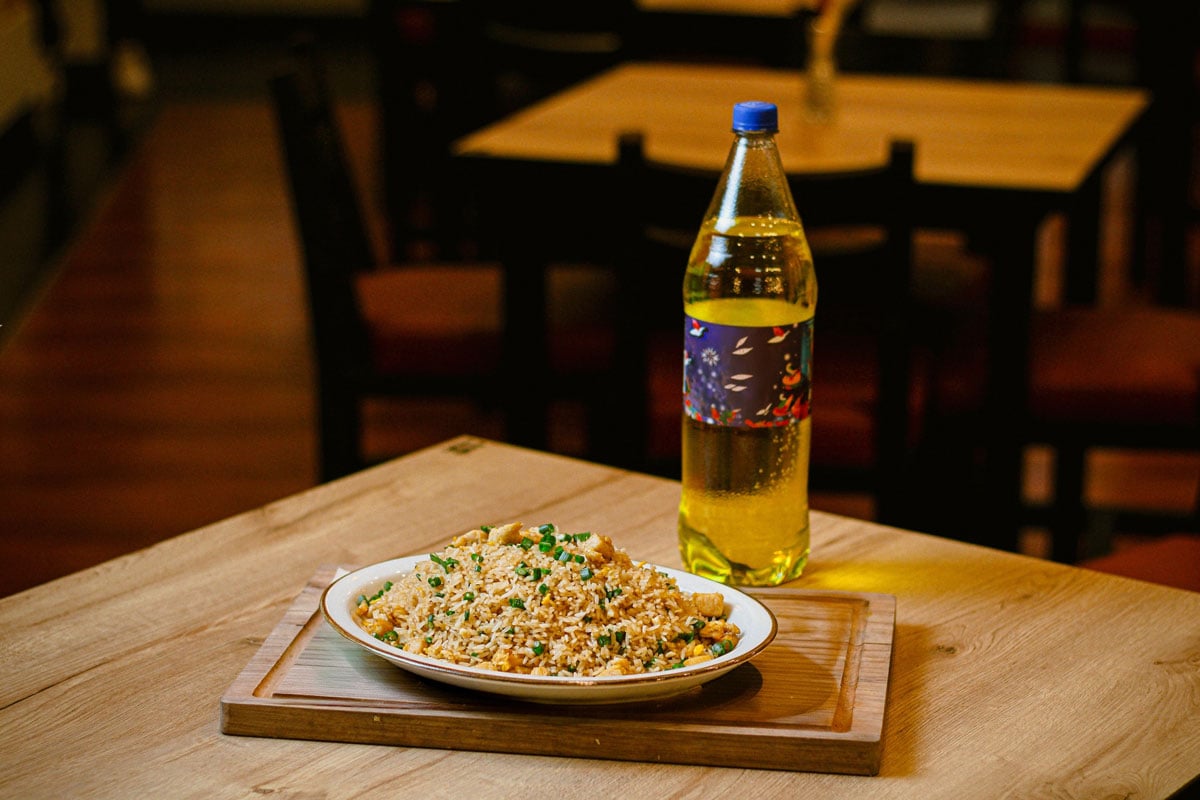
- DrinkInca Kola or chicha moradaThe golden soda is the classic chifa pairing. For something non-carbonated, try chicha morada.
- Chifa mainChijaukayCrispy fried chicken in a glossy soy-ginger sauce. Chaufa plus chijaukay is a chifa lunch staple.
- StarterWantanes fritosCrisp fried wontons with sweet-and-sour tamarind sauce, the usual way to start a chifa meal.
- Fresh sideSalsa criollaLime-cured red onion and tomato, like the bowl in our photo at the top. Here’s how to make it.
- On the same plateTallarín saltadoOrder (or cook) both and you have the “aeropuerto” combo.
Where to buy Peruvian sauces and chifa staples
- Aji Amarillo Peruvian hot sauce: bright yellow ají amarillo sauce, great spooned over chaufa.
- Aji Rojo rocoto hot sauce: smokier and hotter, for people who like real heat.
- Inca Kola: the classic drink with chifa.
- Dark soy sauce and toasted sesame oil: the two bottles that make chaufa taste like a chifa.
- Flat-bottom carbon-steel wok: works on any home stove, including electric.
- Our Peruvian pantry list on Amazon: ají pastes, Inca Kola, purple corn and more.
As an Amazon Associate, AmigoFoods earns from qualifying purchases.
A Short History of Chaufa: From Calle Capón to Every Kitchen in Peru
Between 1849 and 1874, more than 100,000 Chinese laborers, most of them from Guangdong in southern China, arrived in Peru on contracts to work on coastal plantations and guano islands. They brought Cantonese cooking with them, and they cooked with what Peru had.
As contracts ended, many settled in Lima around Calle Capón, near the Mercado Central. That neighborhood became Lima’s Barrio Chino, and its restaurants became known as chifas. The word “chaufa,” from the Cantonese for fried rice, moved into everyday Peruvian Spanish along with kion (ginger), sillao (soy sauce) and wantán (wonton).
Chaufa spread because it is cheap, fast and endlessly flexible. Today there are chifas in nearly every Peruvian town, and the dish has spread to neighboring Ecuador, where a similar fried rice is called chaulafán. It has even entered Lima slang: Peruvians sometimes say “¡chaufa!” as a playful way to say goodbye.
Want the bigger story? Read our guides to the global influences on Peruvian cuisine and Peru’s regional cuisines.
How to Store and Reheat Arroz Chaufa
Fridge: Cool leftovers quickly and refrigerate within 2 hours, in an airtight container, for up to 3 days.
Freezer: Freeze flat in zip-top bags for up to 2 months. Reheat straight from frozen.
Reheat: A hot skillet with a teaspoon of oil beats the microwave. Stir-fry 3 to 4 minutes until steaming hot and the grains crisp up again. In the microwave, sprinkle with a little water, cover and heat until hot all the way through.
Arroz Chaufa (Peruvian Chicken Fried Rice)
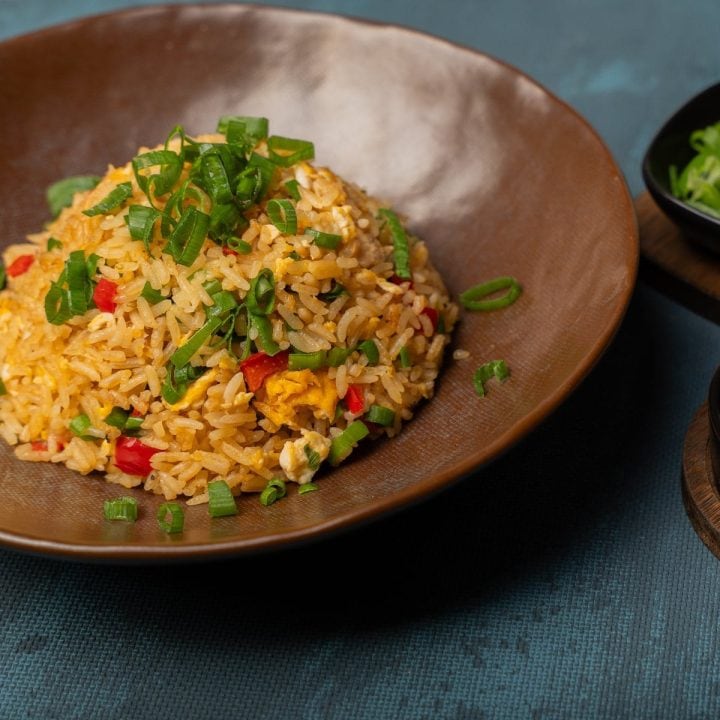
Arroz chaufa is the fried rice of Peru’s chifas: day-old rice tossed in a smoking-hot wok with sillao, ginger, egg, chicken and plenty of green onion. This version makes 4 generous plates in about 30 minutes.
Ingredients
For the chicken
- 1 pound boneless, skinless chicken thighs, cut into ½-inch pieces
- 1 tablespoon soy sauce
- 1 teaspoon cornstarch
For the egg tortilla
- 3 large eggs
- Pinch of salt
- 1 teaspoon vegetable oil
For the chaufa
- 4 cups cold cooked long-grain white rice (from about 1⅓ cups uncooked, cooked a day ahead)
- 3 tablespoons vegetable oil, divided
- 1 tablespoon finely minced fresh ginger (kion)
- 3 garlic cloves, minced
- 6 green onions (cebollita china), whites and greens sliced separately
- ½ red bell pepper, finely diced
- 1 teaspoon toasted sesame oil
For the sauce
- 3 tablespoons soy sauce (sillao), preferably 2 regular + 1 dark
- 1 teaspoon oyster sauce (optional)
- ½ teaspoon sugar
- ¼ teaspoon ground white pepper
Instructions
- Prep the rice and sauce. Break up the cold rice with damp fingers until no clumps remain. In a small bowl, stir together the soy sauce, oyster sauce, sugar and white pepper.
- Marinate the chicken. Toss the chicken with 1 tablespoon soy sauce and the cornstarch. Let it sit while you prep everything else, about 10 minutes.
- Make the egg tortilla. Beat the eggs with a pinch of salt. Heat a wok or 12-inch skillet over medium-high heat with 1 teaspoon oil, pour in the eggs and swirl into a thin omelet. Cook until just set, about 1 minute, slide onto a board, roll it up and slice into thin strips or small squares.
- Sear the chicken. Wipe the wok, set it over high heat until it smokes, then add 1 tablespoon oil. Spread the chicken in one layer and leave it alone for 1 minute, then stir-fry 3 to 4 minutes until browned and cooked through (165°F). Transfer to a plate.
- Bloom the aromatics. Add the remaining 2 tablespoons oil. Stir-fry the ginger, garlic and green onion whites for 30 seconds until fragrant, then add the red bell pepper and cook 1 minute.
- Fry the rice. Add the rice. Press it against the hot wok, then toss, and repeat for 3 to 4 minutes, until every grain is hot, separate and starting to toast.
- Season around the edge. Pour the sauce mixture around the hot rim of the wok, not onto the rice, so it sizzles and caramelizes before it hits the grains. Toss until the rice is evenly golden-brown.
- Bring it together. Return the chicken with its juices, add the egg strips, most of the green onion tops and the sesame oil. Toss 1 minute, taste, and add a splash more soy sauce if needed.
- Serve chifa-style. Pack each portion into a small bowl and invert it onto a plate to make a dome. Scatter the remaining green onion on top and serve right away with ají sauce on the side.
Notes
- The rice is the whole game. Use long-grain white rice cooked a day ahead and refrigerated. In a hurry, spread freshly cooked rice on a sheet pan and refrigerate uncovered for 1 hour, or freeze for 15 minutes.
- Small wok or skillet? Cook the rice in two batches. A crowded pan steams the rice instead of frying it.
- Soy sauce (sillao). Peruvian chifas use sillao, a dark, slightly sweet soy sauce. Use 2 tablespoons regular soy plus 1 tablespoon dark soy sauce to get the same color.
- Chicken breast works too. Cut it a little larger and take it off the heat as soon as it is cooked through.
- Make it mixto. Add diced ham, char siu pork or sliced hot dog with the chicken, or shrimp in the last 2 minutes of the rice.
- Storage. Refrigerate within 2 hours for up to 3 days. Reheat in a hot skillet with a teaspoon of oil.
Nutrition Information:
Yield: 4 Serving Size: 1/4 of recipe (about 1½ cups)Amount Per Serving: Calories: 580Total Fat: 25gSaturated Fat: 5gUnsaturated Fat: 19gCholesterol: 250mgSodium: 950mgCarbohydrates: 50gFiber: 2gSugar: 3gProtein: 30g
Arroz Chaufa FAQ
What does chaufa mean in English?
Chaufa means fried rice. It comes from the Cantonese chaau faan (炒飯), “stir-fried rice,” and “arroz chaufa” is simply “chaufa rice” in Spanish.
What is arroz chaufa made of?
Cooked rice stir-fried with soy sauce, fresh ginger, garlic, egg and green onions, plus a protein such as chicken, pork, beef or seafood. Red bell pepper and a little sesame oil are common additions.
What is the difference between chifa and chaufa?
Chifa is Chinese-Peruvian cuisine and the name for the restaurants that serve it. Chaufa is one dish within chifa: the fried rice.
Is arroz chaufa Chinese or Peruvian?
Both. It began with Cantonese immigrants in the 19th century, but it developed in Peru with Peruvian ingredients and tastes, and it is considered a Peruvian dish today.
Is arroz chaufa spicy?
No. The rice itself is savory, not spicy. The heat comes from the ají sauce served on the side, so everyone can add as much as they like.
Can I make chaufa with freshly cooked rice?
You can, but it will be softer and stickier. For better results, chill freshly cooked rice on a sheet pan for an hour (or 15 minutes in the freezer) before frying.
Is arroz chaufa gluten-free?
Not as written, because most soy sauce and oyster sauce contain wheat. Use tamari or a gluten-free soy sauce and a gluten-free oyster sauce, or leave the oyster sauce out.
More Chifa and Peruvian Recipes
More Peruvian Foods
See all →
Jorge Garcia is the founder of AmigoFoods, where he has spent over 20 years helping readers discover authentic Latin American and Spanish cuisine. Raised in a Cuban-American household, Jorge learned to cook at the hands of his mother and grandmother, carrying forward generations of family recipes. That heritage, backed by his family’s four-generation history in the Latin food industry, inspired him to launch AmigoFoods in 2003. With more than 1,000 published articles on recipes, ingredients, and food culture, Jorge’s mission is simple: make authentic Latin cooking approachable for home cooks everywhere while honoring the traditions behind every dish.