
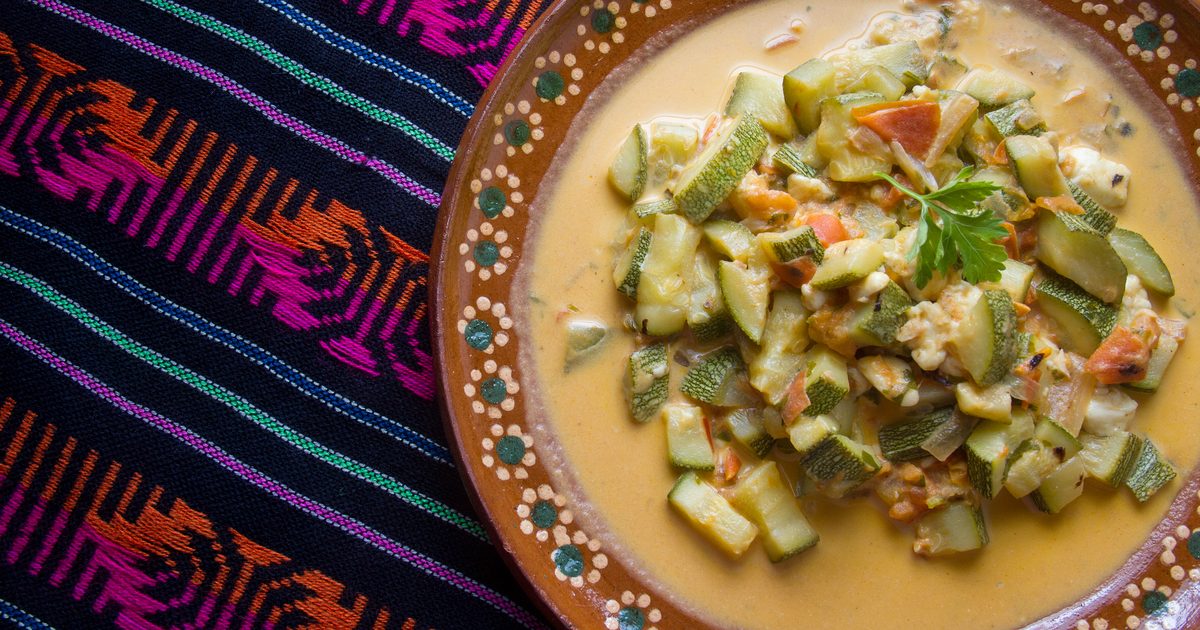
Calabacitas are tender Mexican squash cooked with onion, tomato, chile and corn, then finished with fresh cheese. Serve this colorful skillet dish alongside rice and beans or spoon it into warm tortillas.
Calabacitas at a Glance
What Is Calabacitas?
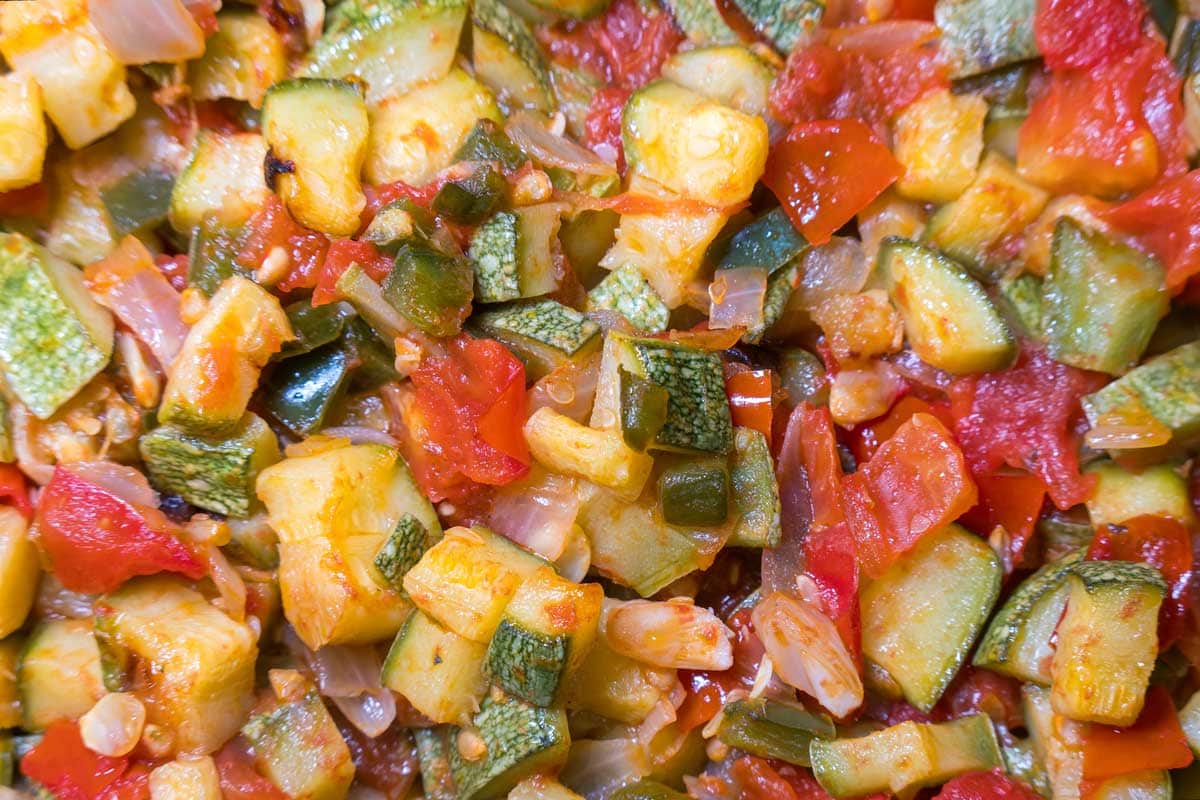
In Spanish, calabacita means “little squash,” and the word does double duty. At a Mexican market it is the vegetable itself: the small, pale green summer squash sold by the kilo. At the table it is the dish, squash cooked with whatever the kitchen has on hand, which almost always means onion, tomato and a green chile.
The combination is old. Squash was domesticated in Mexico roughly 10,000 years ago, before corn, and it grew alongside corn and beans in the milpa, the planting system often called the “three sisters.” Put squash, corn and chile in one pan and you are cooking with the three plants Mexican food was built on.
There is no single official recipe. A cook in Mexico City might simmer calabacitas with epazote and crumble queso fresco on top; a cook in Sonora might add pork and make it a main course; a cook in Albuquerque will reach for roasted Hatch green chile. What they share is the method: soften the aromatics, add the squash, cook it just until tender, and stop before it collapses.
Calabacita vs. Zucchini: Which Squash to Use
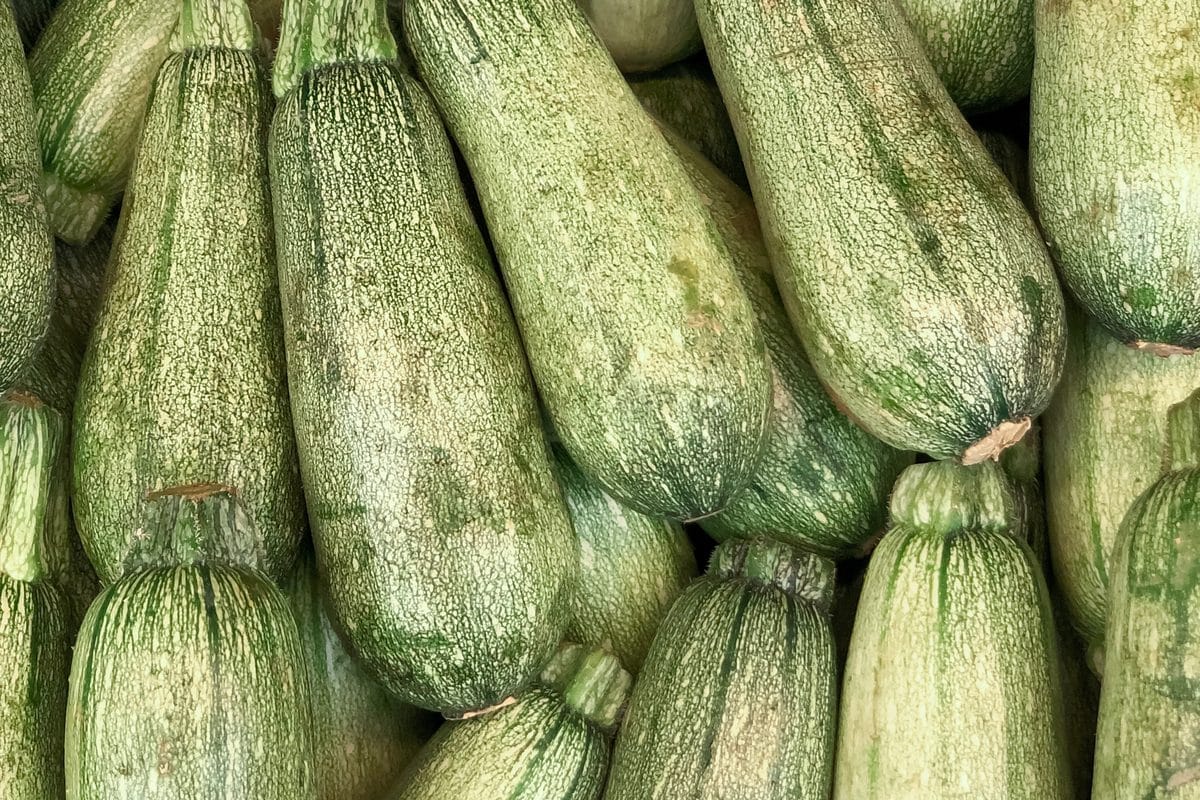
The squash most Mexican cooks use is Mexican grey squash, sold in Mexico as calabacita criolla or calabacita gris. It is pale, speckled and a little bulbous at the bottom, with thin skin, fewer seeds and a sweeter, nuttier taste than dark supermarket zucchini. It also holds less water, which is why it keeps its shape in the pan.
Dark green zucchini is called calabacita italiana in Mexico, since the modern zucchini was bred in Italy. It is a perfectly good substitute, and most U.S. recipes (including the card below) are written for it. Just cut it slightly larger and cook it over higher heat to deal with the extra moisture.
| Squash | Look | Flavor and texture | For calabacitas |
|---|---|---|---|
| Mexican grey squash | Pale green, speckled, tapered | Sweet, nutty, thin-skinned, firm | The traditional choice |
| Zucchini | Dark green, straight | Milder, more water and seeds | Great substitute; cut ¾-inch pieces |
| Round squash (calabacita bola, tatume) | Round or oval, light green | Dense and sweet | Excellent in stews like calabacitas con puerco |
| Yellow squash | Yellow, crookneck or straight | Soft, mild, buttery | Mix half-and-half with zucchini |
| Chayote | Pale green, pear-shaped | Crisp, very mild | Works, but add 5 to 8 minutes of cooking |
Look for Mexican grey squash at Latin grocery stores and farmers’ markets from late spring through fall. Choose small to medium squash (about 6 inches) that feel heavy, with glossy skin and no soft spots. The big ones are seedy and spongy.
Calabacitas Ingredients
Everything here is easy to find. The exact amounts are in the recipe card at the bottom of the page.
- Squash2 pounds of Mexican grey squash or zucchini, cut into ¾-inch cubes or thick half-moons.
- CornKernels from 2 ears of fresh corn, or 1½ cups frozen. In summer, fresh corn makes this calabacitas con elote.
- Onion and garlicWhite onion is the Mexican default: crisp, clean-tasting and sweet once softened.
- TomatoesTwo ripe Roma tomatoes, chopped. They melt into a light sauce that coats the squash.
- Green chileA roasted poblano for gentle heat, a jalapeño or serrano for more, or roasted Hatch or Anaheim chile for New Mexico style.
- CheeseCrumbled queso fresco on top, or a melting cheese such as Oaxaca or Monterey Jack if you want it gooey.
- HerbsDried Mexican oregano, and if you can find it, a sprig of epazote, the herb central Mexican cooks pair with squash. Cilantro to finish.
- Optional cremaA few spoonfuls of Mexican crema turn it into the creamy version served in many Mexican homes.
Can’t find the herbs locally? Dried Mexican oregano and dried epazote are both easy to order, and so are diced Hatch green chiles for the New Mexico version.
How to Make Calabacitas
This is the classic stovetop method. The full ingredient list, times and printable steps are in the recipe card below.
- Roast the chile. Char a poblano directly over a gas flame or under the broiler until blackened all over, about 8 minutes. Seal it in a bowl for 10 minutes, then rub off the skin, remove the seeds and dice it. (Using jalapeño or canned green chile? Skip this step.)
- Soften the aromatics. Heat 2 tablespoons of oil in a 12-inch skillet over medium-high heat. Cook the diced onion for 3 to 4 minutes, until soft and just golden at the edges, then stir in the garlic for 30 seconds.
- Brown the squash. Add the squash, spread it into one layer and leave it alone for 2 minutes. Stir and cook 3 to 4 minutes more, until some pieces have light golden spots. This is what keeps calabacitas from turning soupy.
- Add tomato, corn and chile. Stir in the tomatoes, corn, roasted chile, salt, pepper, oregano and the epazote sprig. Lower the heat to medium-low, cover and cook 6 to 8 minutes, until a knife slides into the squash but the pieces still hold their shape.
- Finish with cheese. Remove the epazote. For the creamy version, stir in the crema. Scatter the cheese over the top, cover the pan off the heat for 2 minutes, then sprinkle with cilantro and serve.
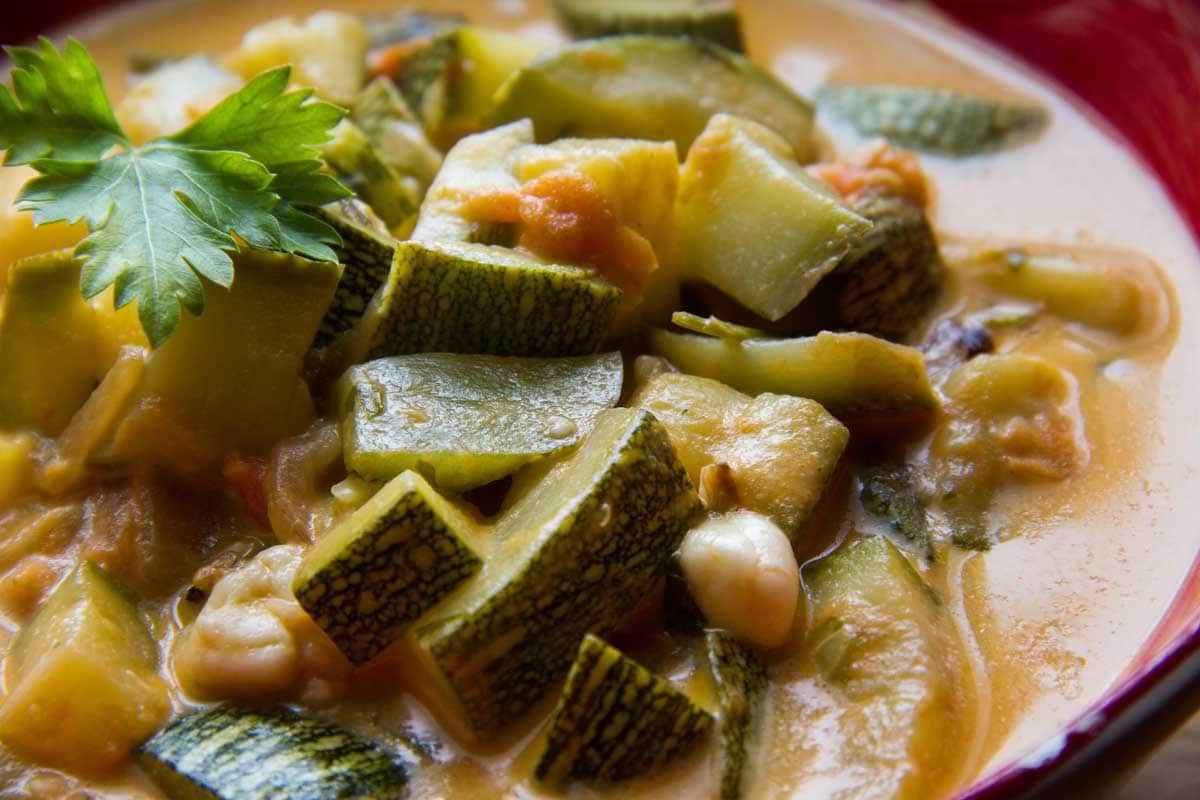
Squash is mostly water, and the most common complaint about calabacitas is a puddle at the bottom of the pan. Three habits fix it: use a wide skillet so the squash cooks in one layer, brown it uncovered before the tomatoes go in, and add the salt with the tomatoes rather than at the start, since salt draws water out of the squash.
If the pan still looks wet at the end, take the lid off and cook 2 minutes more over medium-high heat. Cutting the squash into generous ¾-inch pieces helps too: small dice goes to mush.

Calabacitas Variations
Once you know the base, calabacitas change with the region, the season and whatever is in the refrigerator. These are the versions you are most likely to meet.
Calabacitas a la Mexicana
The baseVegan
Squash cooked with tomato, onion and green chile and nothing else. “A la mexicana” means the red, white and green of the Mexican flag, the same trio used in huevos a la mexicana. Leave out the cheese and it is fully plant-based.
Calabacitas con Queso
Central MexicoCreamy
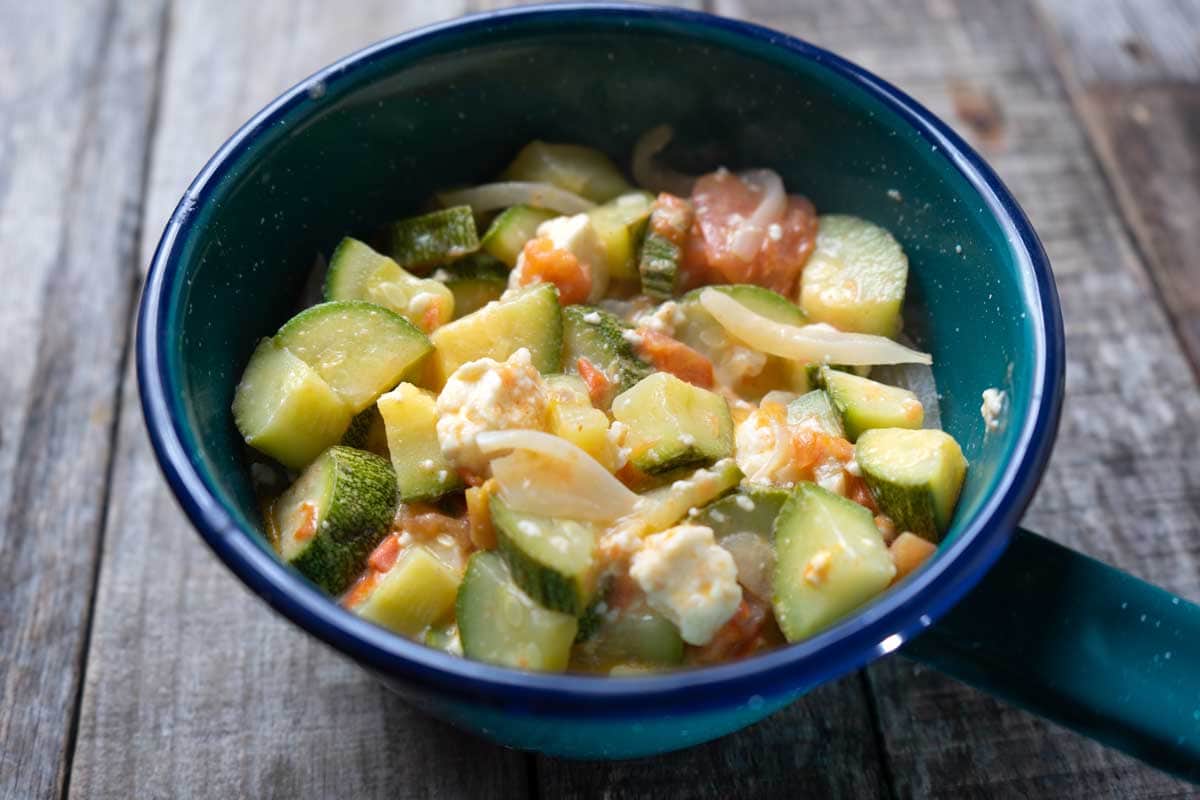
The version most Mexican families mean by calabacitas: squash, tomato and chile with a splash of milk or crema, simmered until lightly saucy, then finished with cubes of queso fresco or panela that soften without fully melting. It is the style in the photo at the top of this page.
Calabacitas con Elote
SummerSweet corn
With fresh corn at its peak, many cooks make the corn an equal partner. Cut the kernels straight off the cob and let them brown slightly with the squash. If you love corn this way, try esquites and elote next.
Calabacitas con Puerco
Main dishStew
A home-style Mexican stew: cubes of pork shoulder browned in their own fat, simmered with tomato, onion, garlic, chile and cumin until tender, with the squash and corn added for the last 10 minutes so they stay whole. Serve it with rice and beans. Chicken (calabacitas con pollo) and ground beef (calabacitas con carne molida) follow the same pattern and cook faster.
New Mexico Calabacitas
SouthwestHatch chile
North of the border, calabacitas is a New Mexico staple, and the defining ingredient is roasted Hatch green chile, stirred in generously. Many versions add butter and finish with Monterey Jack or cheddar. It is served next to enchiladas, tamales and carne adovada, and it is a regular on New Mexican tables.
Calabacitas con Flor de Calabaza
SeasonalRainy season
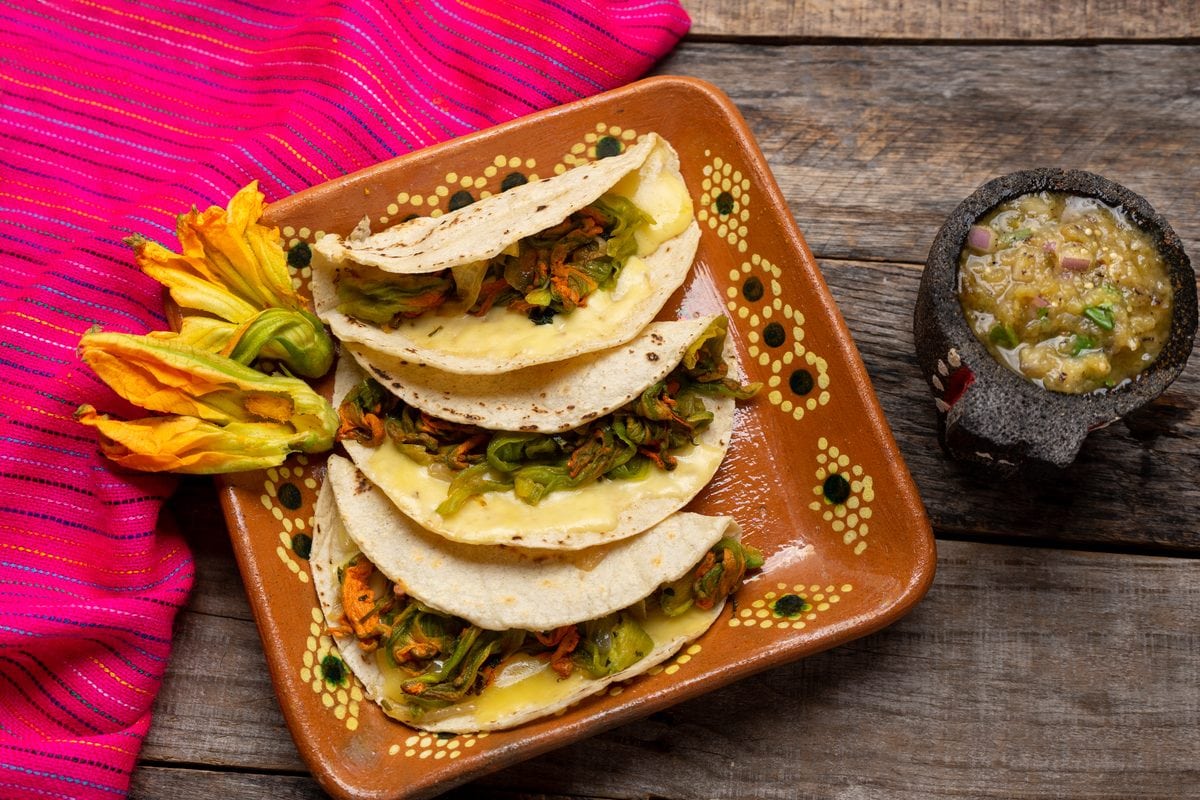
The same plant gives Mexico its squash blossoms. During the rainy season, cooks tear a handful of blossoms into the pan in the last minute of cooking, or sauté them with onion and chile and fold them into quesadillas.
What to Serve with Calabacitas
Calabacitas is a side dish first, but it is flexible enough to anchor a meatless meal. Some favorite pairings:
- With grilled meatCarne asada, grilled chicken or pork chops, with the squash as the vegetable.
- With enchiladasNext to enchiladas, tamales or chiles rellenos, New Mexico style.
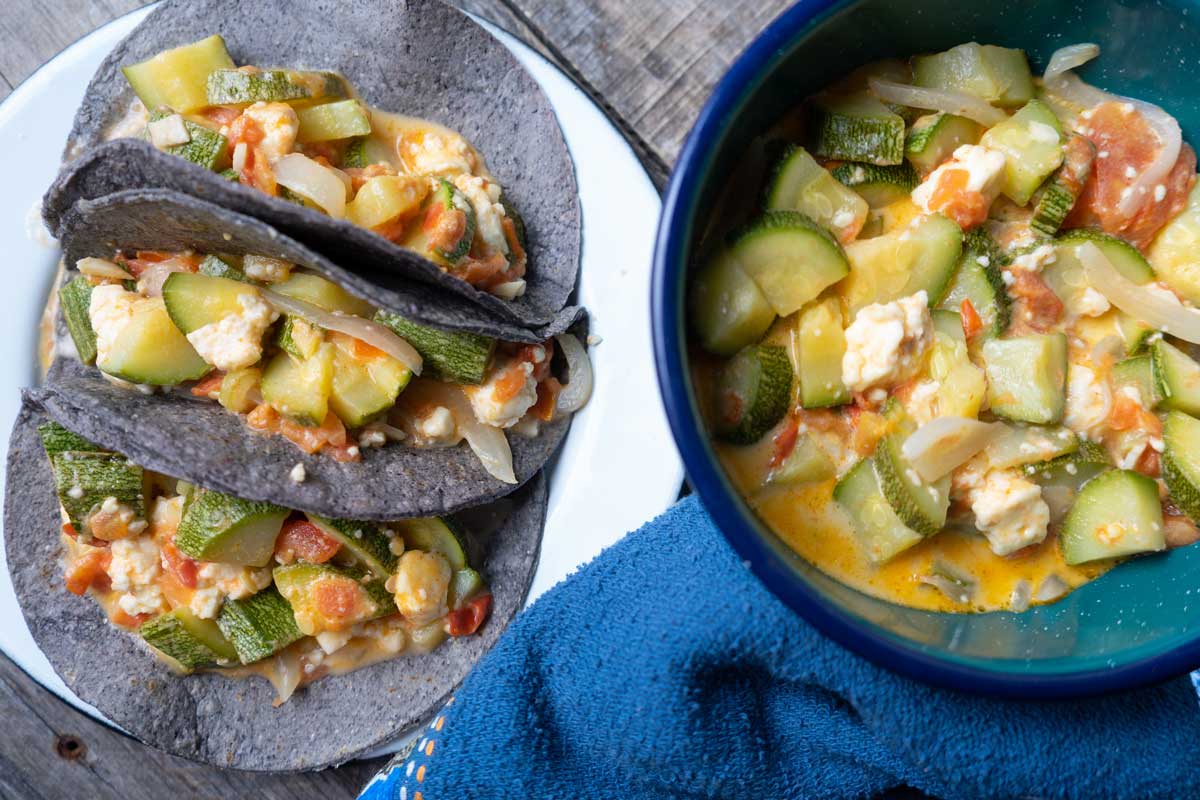
- As a taco fillingSpooned into warm corn tortillas with salsa verde and extra cheese.
- With rice and beansWith Mexican rice and frijoles charros for a filling plate; choose meat-free beans if serving a vegetarian meal.
- For breakfastUnder a fried egg, or folded into scrambled eggs alongside huevos rancheros.
- In quesadillasTucked into a tortilla with melting cheese and crisped on a comal.
Looking for more vegetables and sides to round out the table? Browse our guide to Mexican side dishes, the Mexican breads and sides collection, or the chiles in our Mexican peppers guide.
How to Store and Reheat Calabacitas
Refrigerator: Keep leftovers in an airtight container for up to 3 days. The squash will release a little liquid; that is normal.
Reheating: Warm in a skillet over medium heat for 3 to 4 minutes, uncovered, so any extra liquid cooks off. Add fresh cheese after reheating rather than before.
Freezing: Plain calabacitas can be frozen for up to 2 months, but the squash turns soft once thawed. Frozen leftovers are best stirred into soup, a stew such as olla de carne, or an enchilada filling. Freeze them before adding cheese or crema.
Make ahead: Roast and dice the chile, cut the squash and chop the onion and tomato up to a day ahead. Cooking takes about 20 minutes once everything is prepped.
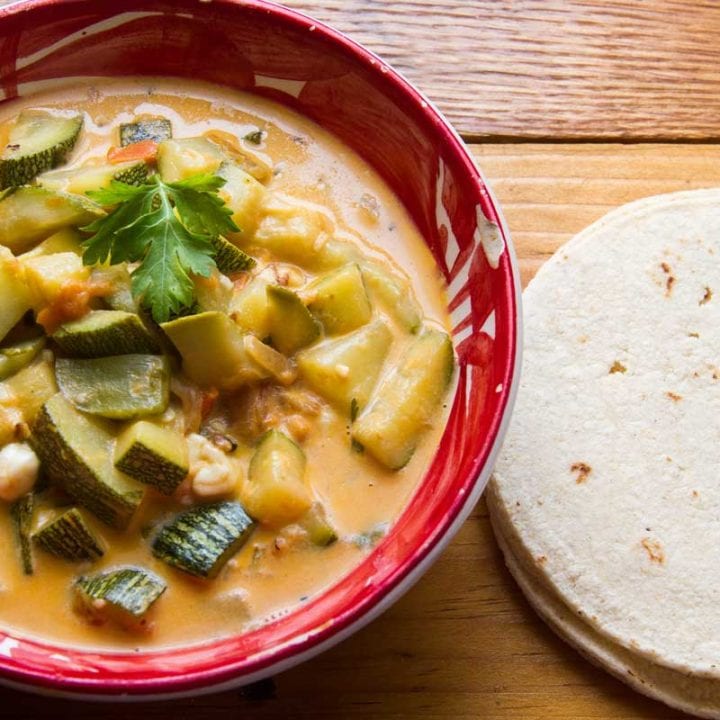
Calabacitas (Mexican Squash with Corn, Chile and Cheese)
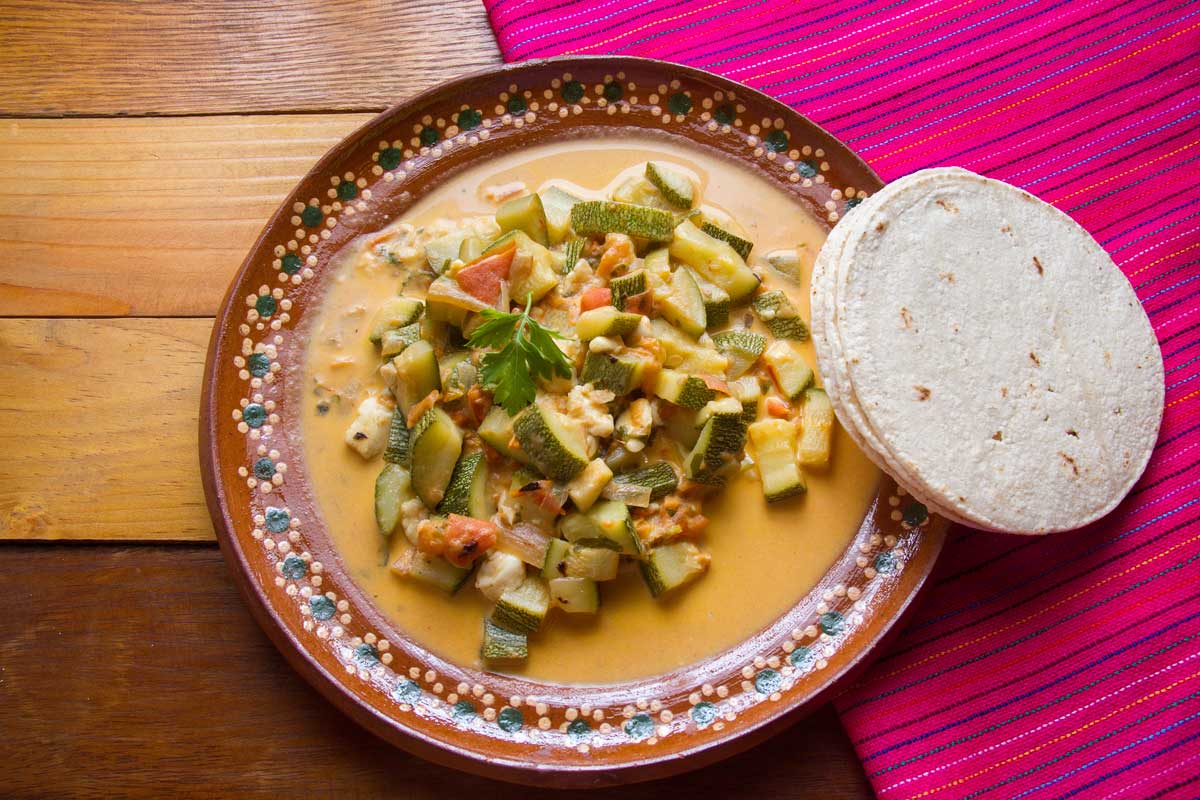
Calabacitas is Mexico’s classic squash dish: tender squash browned with onion, then simmered with tomato, sweet corn and roasted poblano and finished with queso fresco. Serve it as a side with rice and beans, or spoon it into warm corn tortillas.
Ingredients
- 2 pounds Mexican grey squash or zucchini (about 4 medium), cut into ¾-inch pieces
- 1 poblano pepper (or 1 jalapeño, or ½ cup diced Hatch green chile)
- 2 tablespoons vegetable or avocado oil
- ½ medium white onion, diced
- 2 garlic cloves, minced
- 2 Roma tomatoes, chopped
- 1½ cups corn kernels (from 2 ears, or frozen)
- 1 teaspoon kosher salt, plus more to taste
- ¼ teaspoon black pepper
- ½ teaspoon dried Mexican oregano
- 1 sprig fresh epazote (optional)
- ¼ cup Mexican crema (optional, for creamy calabacitas)
- 1 cup crumbled queso fresco (about 4 ounces)
- 2 tablespoons chopped cilantro
Instructions
- Roast the poblano over a gas flame or under the broiler, turning, until blackened all over, about 8 minutes. Seal it in a covered bowl for 10 minutes, then peel, seed and dice it. (Using a jalapeño instead? Dice it and add it with the onion. Using canned green chile? Skip this step.)
- Heat the oil in a 12-inch skillet over medium-high heat. Add the onion and cook 3 to 4 minutes, until soft and lightly golden. Stir in the garlic and cook 30 seconds.
- Add the squash in a single layer and cook without stirring for 2 minutes. Stir and cook 3 to 4 minutes more, until some pieces have light golden spots.
- Add the tomatoes, corn, roasted chile, salt, pepper, oregano and epazote. Stir, reduce the heat to medium-low, cover and cook 6 to 8 minutes, until the squash is just tender but still holds its shape. If liquid pools in the pan, uncover and cook 2 minutes more over medium-high heat.
- Remove the epazote. Stir in the crema, if using. Scatter the queso fresco over the top, cover the pan off the heat for 2 minutes, then sprinkle with cilantro. Taste for salt and serve warm.
Notes
Timing: Allow about 55 minutes when roasting, resting and peeling a fresh poblano. Using jalapeño or ready-roasted canned chile reduces the total to about 35 minutes; some prep can overlap the poblano rest.
Squash: Mexican grey squash (calabacita criolla) is traditional; zucchini, yellow squash or a mix all work. Cut pieces at least ¾ inch so they stay firm.
New Mexico style: use ½ to ¾ cup roasted, diced Hatch green chile instead of the poblano and finish with shredded Monterey Jack.
Make it a main dish: brown 1 pound of ground beef or diced chicken in the skillet before the onion, or see calabacitas con puerco in the post.
Vegan: skip the crema and cheese.
Storage: refrigerate up to 3 days and reheat uncovered in a skillet so extra liquid cooks off.
Calabacitas FAQ
What is calabacitas made of?
Calabacitas is made of Mexican squash (or zucchini) cooked with onion, garlic, tomato and green chile. Most versions add corn, and many finish with queso fresco or crema. Pork, chicken or ground beef turn it into a main dish.
What is the difference between calabacitas and zucchini?
Calabacita is the Mexican grey squash: paler, speckled, thinner-skinned and sweeter than dark green zucchini, with fewer seeds and less water. “Calabacitas” is also the name of the dish. You can make the dish with either squash.
How do you pronounce calabacitas?
Say kah-lah-bah-SEE-tahs, with the stress on “see.” In Latin American Spanish the c before i sounds like an s. The singular, one squash, is calabacita.
Is calabacitas healthy?
Yes. It is mostly vegetables, naturally gluten-free and low in calories, with fiber from the squash and corn. The cheese and crema add richness; use less of them, or skip them entirely, for a lighter or vegan version.
Why are my calabacitas watery?
The squash was crowded, covered too early or salted too soon. Brown it uncovered in a wide skillet before adding the tomatoes and salt, and cook uncovered for the last couple of minutes if liquid remains.
Can I use canned or frozen corn?
Yes. Frozen corn goes in straight from the freezer. Drain canned corn well and add it in the last 3 minutes, since it is already cooked.
Is calabacitas a main dish or a side?
Usually a side, served with rice, beans and meat. With pork, chicken or ground beef (calabacitas con puerco, con pollo or con carne molida), or as a taco filling, it is a full meal.
Is calabacitas Mexican or New Mexican?
Both. Calabacitas is a traditional Mexican dish cooked all over the country. New Mexico has its own well-known version built around roasted Hatch green chile, and it is a staple of New Mexican cooking.
For more of the country’s cooking, from pozole to pan dulce, start with our list of the best Mexican foods and the essential Mexican ingredients to keep in your pantry.
More Mexican Foods
See all →
Jorge Garcia is the founder of AmigoFoods, where he has spent over 20 years helping readers discover authentic Latin American and Spanish cuisine. Raised in a Cuban-American household, Jorge learned to cook at the hands of his mother and grandmother, carrying forward generations of family recipes. That heritage, backed by his family’s four-generation history in the Latin food industry, inspired him to launch AmigoFoods in 2003. With more than 1,000 published articles on recipes, ingredients, and food culture, Jorge’s mission is simple: make authentic Latin cooking approachable for home cooks everywhere while honoring the traditions behind every dish.