

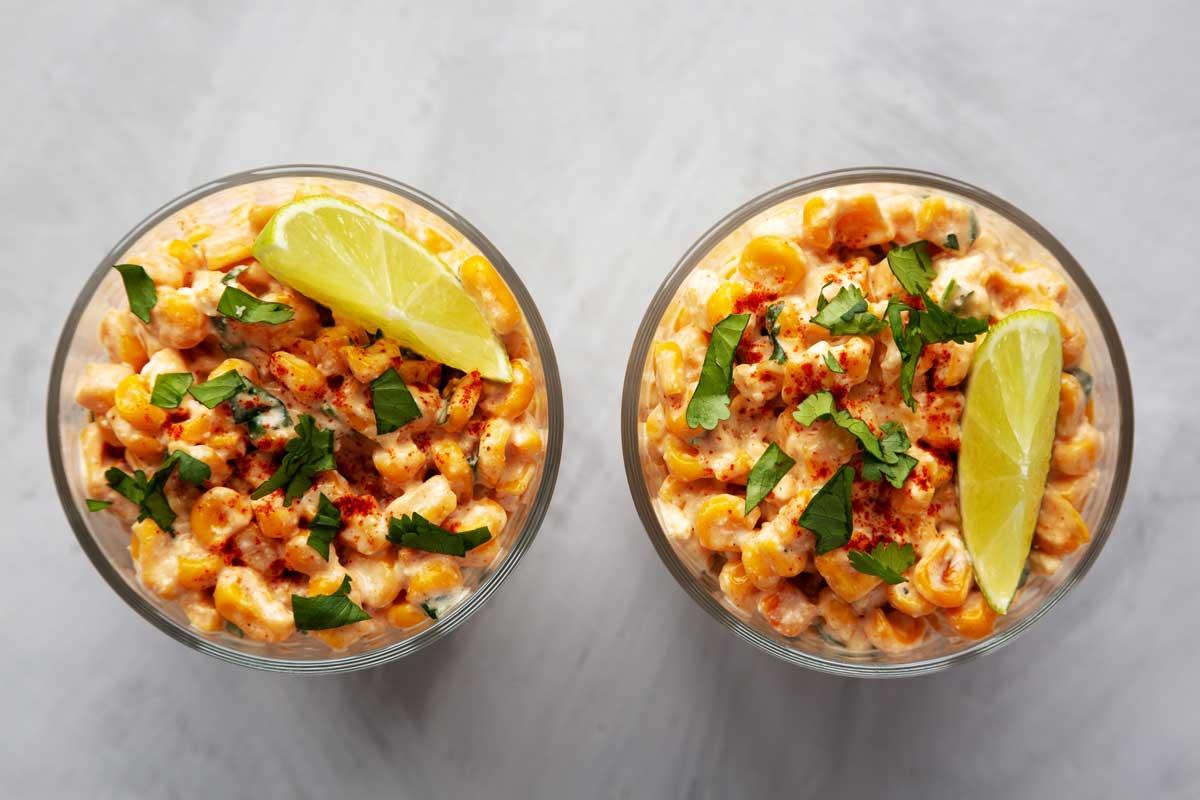
Esquites are Mexican street corn served in a cup: tender kernels simmered with butter, onion and epazote, then topped with mayonnaise, cotija, lime and chile. They offer the familiar flavors of elote in a warm, spoonable snack.
Esquites at a Glance
What Are Esquites?
Esquites are an antojito, one of the small “little cravings” Mexicans buy on the street between meals. A vendor keeps a big pot of corn simmering in salted, epazote-scented broth, scoops a portion into a foam cup, and asks how you want it: con todo (with everything), with or without mayo, spicy or not.
The name comes from the Nahuatl word ízquitl, which means toasted corn. Corn and epazote were already cooked together long before the Spanish arrived; lime and cheese came after the conquest, and mayonnaise and crema are the modern street-cart additions everyone now considers essential.
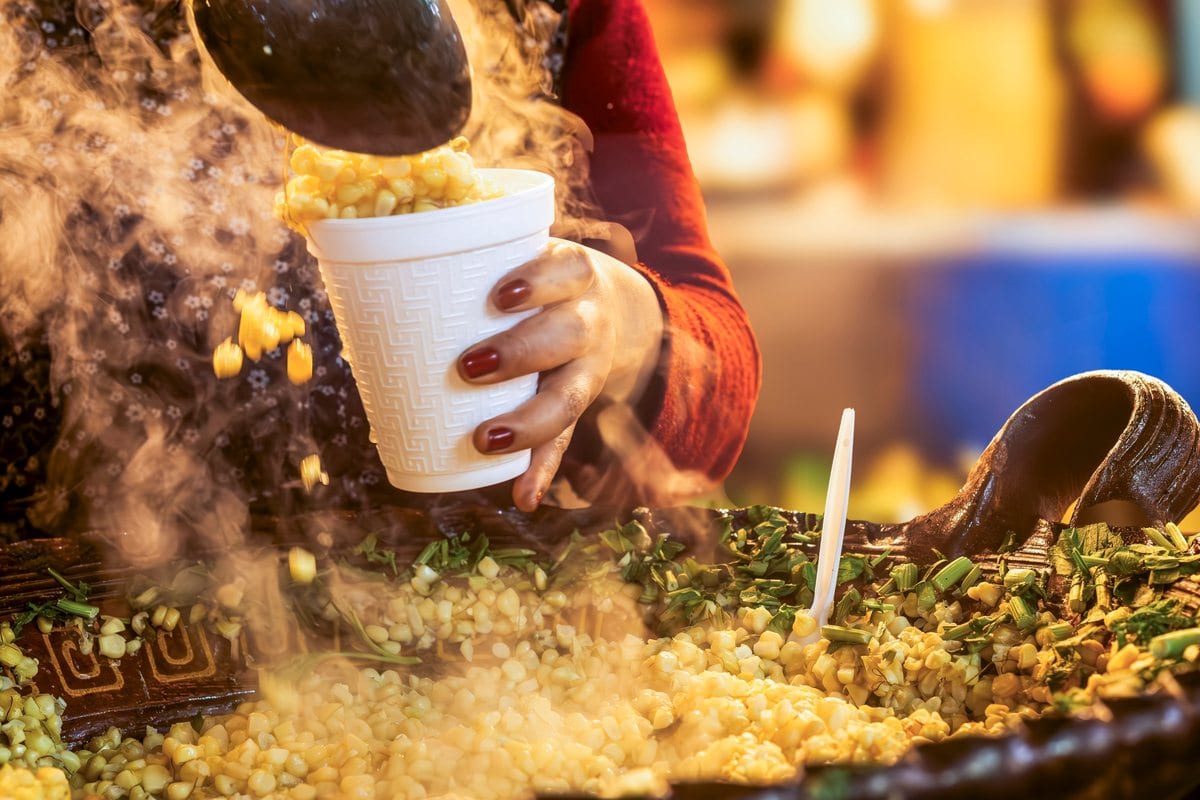
Two things separate real esquites from a corn salad. First, they are served hot, with a little of the cooking broth in the cup. Second, the corn is usually starchy white corn, which is chewier and less sweet than American sweet corn. You can absolutely use sweet corn at home; just expect a sweeter cup.
Esquites vs. Elotes: What’s the Difference?
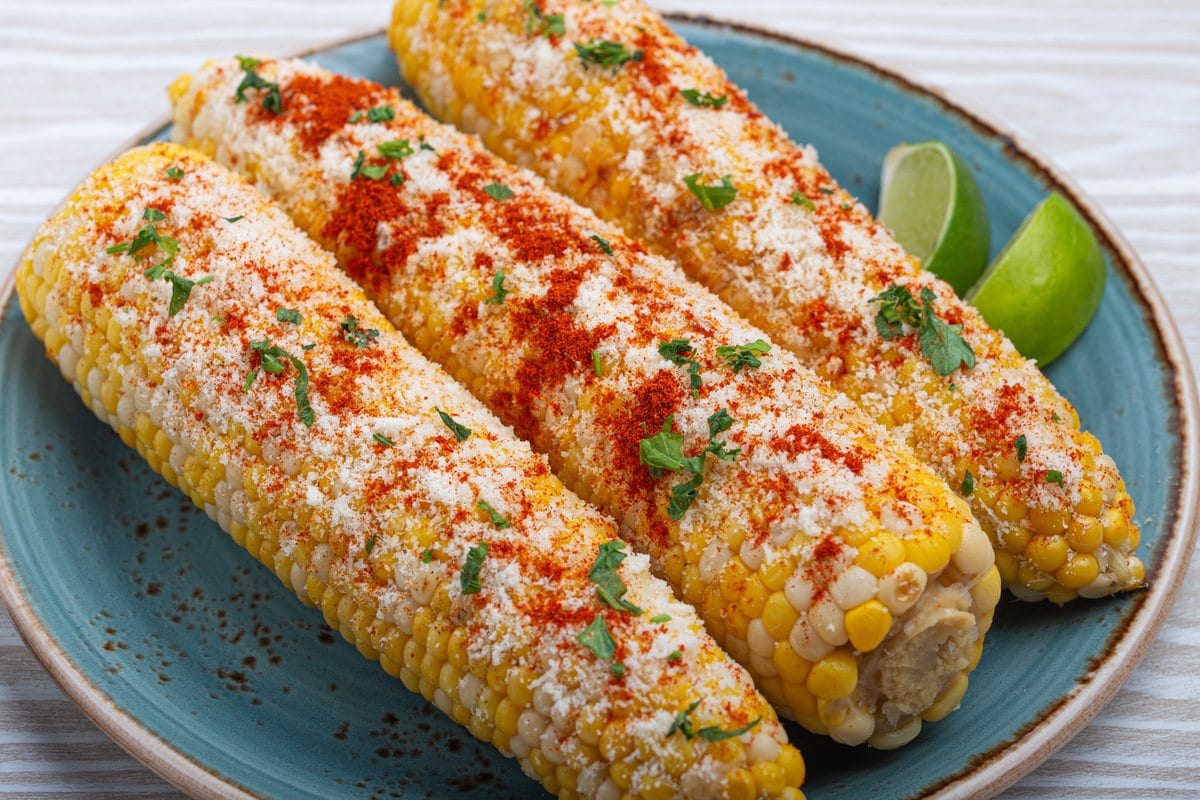
Same corn, same toppings, different way of eating it. Elotes are whole ears of corn, boiled or grilled and coated in mayo, cheese and chile on a stick. Esquites take the kernels off the cob and serve them in a cup with a spoon.

| Esquites | Elotes | |
|---|---|---|
| Form | Kernels in a cup | Whole ear on a stick |
| How it’s cooked | Simmered or sautéed with butter, onion and epazote | Boiled in the husk or grilled over charcoal |
| Temperature | Hot, with a little broth | Hot off the grill or pot |
| Toppings | Stirred in: mayo, crema, cotija, lime, chile | Brushed on: mayo, rolled in cheese, dusted with chile |
| Eaten with | A spoon | Your hands |
| Best for | Kids, walking around, parties, make-ahead | Cookouts and smoky grill flavor |
Want the cob version? My elote recipe covers grilling and boiling, and the Latin American street corn roundup shows how Peru, Colombia and other countries eat corn on the street.
Esquites Ingredients (and What Each One Does)
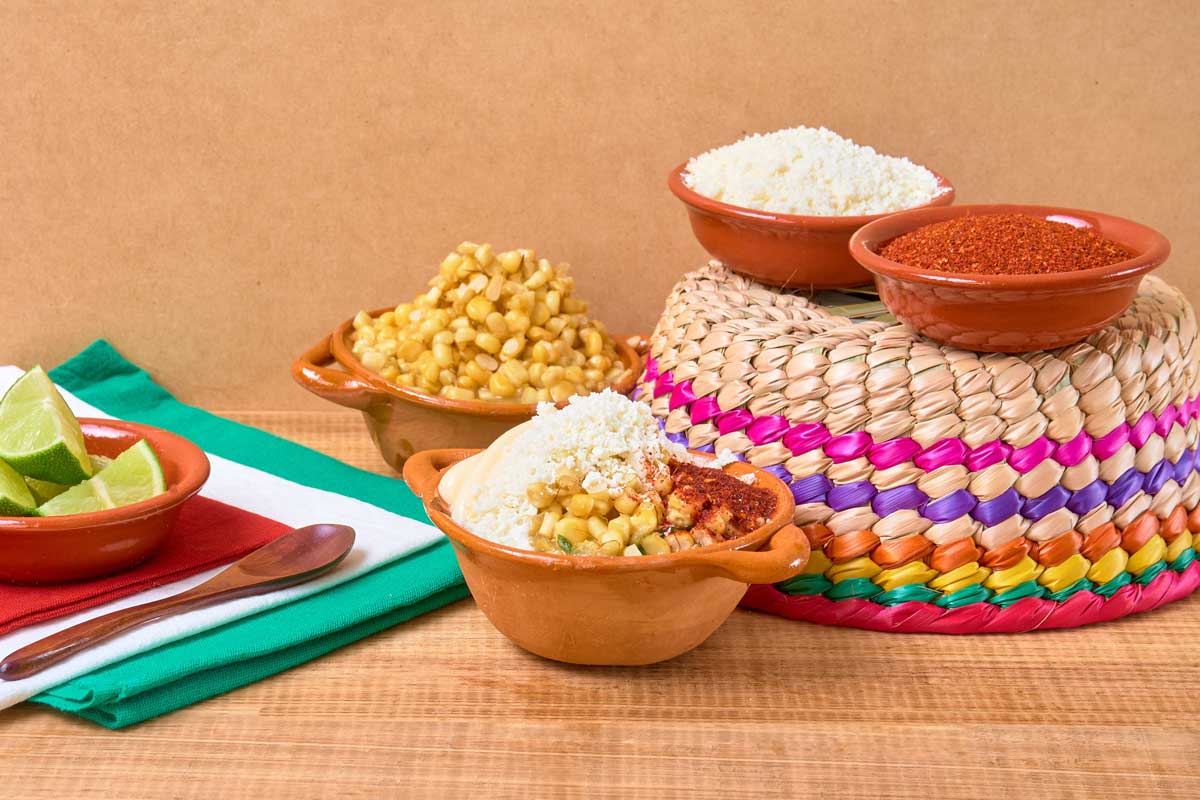
Esquites use a short list, but every item has a job. Here is what to buy and what to swap.
Corn
White field corn is traditional: starchy, chewy and not very sweet. Sweet corn works and is what most US cooks use. Fresh, frozen or canned are all fine (see the table below).
Epazote
The herb that makes esquites taste like the street. Epazote is pungent and a little like oregano, mint and anise at once. Fresh is best; dried works.
Butter, onion & chile
Butter enriches the broth, white onion sweetens it, and a serrano or jalapeño adds gentle heat.
Mayo & crema
Mayonnaise is the street standard. Mexican crema is thinner and tangier; many vendors use both.
Cheese
Cotija is salty and dry and won’t melt into the corn. Queso fresco is milder. Feta is the best supermarket stand-in.
Chile & lime
Ground chile piquín is the classic dusting; Tajín adds lime and salt. Finish with fresh lime and a hot sauce like Valentina.
Pantry shortcuts I keep on hand for esquites:
- Tajín Clásico chile-lime seasoning, for dusting the top of each cup
- Valentina salsa picante, the hot sauce street carts actually use
- Dried chiltepín peppers, the tiny wild cousin of chile piquín; crush a few over the cup for real heat
- Tajín Fruity Chamoy sauce, for sweet-sour esquites con chamoy
- Takis Fuego minis, crushed on top for esquites locos
- Dried epazote, if fresh is impossible to find
As an Amazon Associate, AmigoFoods earns from qualifying purchases.
Which cheese is best for esquites?
Cotija, crumbled fine. It’s salty enough to season the whole cup and dry enough to stay in little crumbles instead of melting. If your store doesn’t carry it, use feta (rinse it if it’s very salty), then queso fresco, then finely grated Parmesan as a last resort. Avoid melting cheeses like Monterey Jack; they turn stringy in hot corn. The guide to Mexican cheeses has more options.
Fresh, frozen or canned corn?
| Corn | How much for 6 cups | Simmer time | Notes |
|---|---|---|---|
| Fresh ears | 6 ears (about 5 cups kernels) | 10 min sweet, 20–25 min white | Best flavor and texture. Scrape the cobs with the back of your knife for the milky juice. |
| Frozen | 5 cups (about 1½ lb) | 8–10 min | The best year-round option. No need to thaw; frozen fire-roasted corn adds a smoky edge. |
| Canned | Three 15-oz cans, drained | 5 min | Fastest. Rinse well, cut the liquid to 1½ cups and go easy on salt. |
How to Make Esquites
This is the street-cart method: the corn cooks in a small amount of seasoned broth, so every cup gets kernels plus a spoonful of buttery, epazote-flavored liquid to soak up the mayo and cheese. The full measurements are in the recipe card below.
- Cut the kernels off the cob. Stand each ear in a wide bowl and slice down the sides so the kernels don’t fly across the kitchen.
- Soften onion and chile in butter. Three or four minutes over medium heat, until the onion is translucent.
- Toast the corn. Stir in the kernels and let them cook for 5 minutes, until bright and lightly colored in spots. This is the “toasted corn” the name promises.
- Simmer with epazote and salt. Add water or broth and the epazote, cover and simmer until tender. Taste the broth; it should be well salted.
- Dress each cup to order. Corn and a splash of broth, then mayo, cheese, lime and chile. Stir, then add more cheese and chile on top.

The secret to street-cart flavor: salt the broth until it tastes like a good soup, and don’t drain the corn. That broth is where the epazote, butter and onion live, and it’s what makes a cup of esquites taste different from corn with mayo on it.
Ready to cook? Here’s the full recipe with measurements, times and notes.
Esquites (Mexican Street Corn in a Cup)
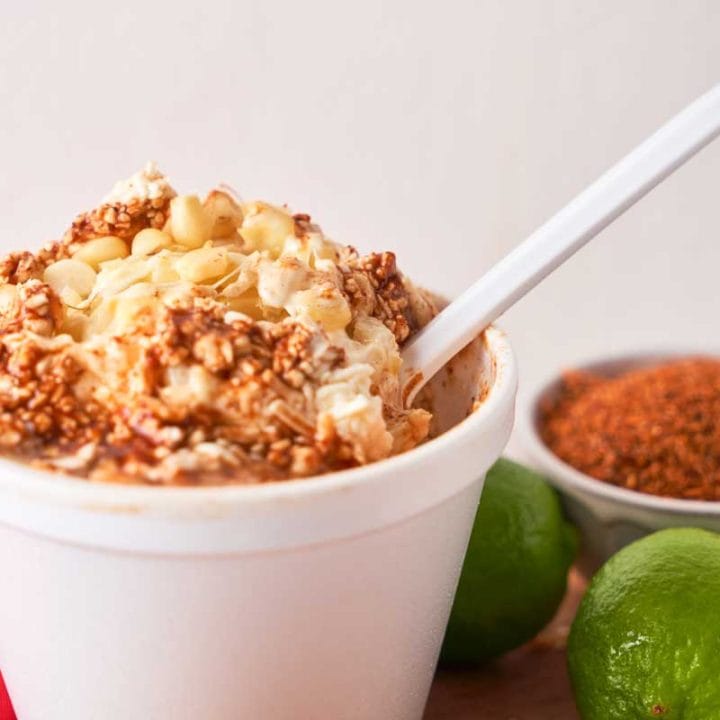
Street-cart esquites the way Mexico City sells them: corn kernels simmered with butter, onion, serrano and epazote until tender and brothy, then spooned into cups with mayonnaise, cotija, lime and ground chile.
Ingredients
For the corn
- 6 ears white or yellow corn (about 5 cups kernels)
- 3 tablespoons unsalted butter
- ½ white onion, finely chopped
- 1 serrano chile, finely chopped (seeded for less heat)
- 3 cups water or low-sodium chicken broth
- 1½ teaspoons kosher salt, plus more to taste
- 3 to 4 sprigs fresh epazote (or 1 tablespoon dried)
To finish each cup
- ½ cup mayonnaise
- ¼ cup Mexican crema (optional)
- ¾ cup crumbled cotija cheese
- 2 limes, cut into wedges
- Ground chile piquín, chile powder or Tajín, to taste
- Valentina hot sauce, to serve (optional)
Instructions
- Cut the corn. Stand each ear upright in a wide bowl and slice straight down to remove the kernels. You should have about 5 cups. (Using frozen or canned corn? See the notes.)
- Soften the aromatics. Melt the butter in a large pot or deep skillet over medium heat. Add the onion and serrano and cook, stirring, for 3 to 4 minutes until the onion is soft and translucent.
- Toast the kernels. Add the corn and cook for 5 minutes, stirring now and then, until the kernels turn bright and a few start to stick and color lightly on the bottom of the pot.
- Simmer with epazote. Pour in the water or broth, add the salt and the epazote sprigs, and bring to a boil. Lower the heat, cover, and simmer until the kernels are tender: about 10 minutes for sweet corn, 20 to 25 minutes for starchy white corn. Fish out the epazote stems, taste the broth and add salt until it tastes well seasoned.
- Build each cup. Spoon about 1 cup of corn into each cup with a splash of the hot broth. Add a heaping tablespoon of mayonnaise (and crema, if using), a big pinch of cotija, a squeeze of lime and a shake of ground chile. Stir everything together, then finish with more cheese and chile on top.
- Serve hot. Pass Valentina or another Mexican hot sauce and extra lime wedges at the table. Keep the pot over the lowest heat so seconds stay warm.
Notes
Corn swaps: Use 5 cups frozen kernels (no need to thaw; simmer 8 to 10 minutes) or three 15-ounce cans, drained and rinsed (simmer just 5 minutes, with 1½ cups liquid).
No epazote? Use 1 tablespoon dried epazote in a tea infuser, or leave it out and finish with chopped cilantro. The flavor will be different but still good.
Cheese: Cotija is classic. Queso fresco is milder and softer; crumbled feta is the closest supermarket substitute.
Make ahead: Refrigerate the cooked corn in its broth for up to 4 days. Reheat with a splash of water and add the toppings only when serving.
Charred Skillet Esquites (Mexican Street Corn Salad)
The version most American food sites call “esquites” or “Mexican street corn salad” skips the broth and chars the kernels in a very hot pan instead. It’s not what you’ll get from a cart in Mexico City, but it’s excellent, and it’s the one to make for a cookout because it’s just as good at room temperature.

- Get the pan very hot. Heat 1 tablespoon of oil in a cast-iron skillet over high heat until it shimmers.
- Char without stirring. Add 4 cups of kernels in a single layer and leave them alone for 2 to 3 minutes, until the bottoms blacken in spots. Toss and repeat once or twice. Work in batches; a crowded pan steams instead of chars.
- Add aromatics at the end. Stir in sliced scallions, a minced jalapeño and a garlic clove for the last 30 seconds.
- Dress it. Let it cool for a few minutes, then toss with 3 tablespoons each of mayo and crema, ½ cup cotija, a handful of cilantro, lime juice and chile powder.
Toppings, Preparados and Esquites Locos
The classic cup is mayo, cotija, lime and chile, but street vendors offer much more. A toppings bar is the easiest way to serve esquites at a party.
The classic
Mayo, cotija, lime, ground chile piquín. Add crema if you like it creamier.
Con salsa
A zigzag of Valentina, Cholula or another of the best Mexican hot sauces.
Esquites locos
Topped or mixed with crushed Flamin’ Hot Cheetos or Takis Fuego, the same spirit as Dorilocos.
Con tuétano
A Mexico City favorite: esquites simmered with beef bone marrow for a richer, meatier broth.
Con chapulines
Toasted grasshoppers for crunch, a pairing you’ll see in Mexico City and Oaxaca.
Chamoy & Tajín
A sweet-sour-spicy finish with chamoy (I use Tajín’s chamoy sauce) and chile-lime salt, the way mangonadas are dressed.
What Esquites Are Called Across Mexico
Ask for “esquites” in Monterrey or Tijuana and you might get a blank look. The dish has a different name almost everywhere:
| Name | Where you’ll hear it |
|---|---|
| Esquites | Mexico City, State of Mexico, Querétaro, Colima, Nayarit and most of southern Mexico |
| Elote en vaso | Chihuahua, Durango, Coahuila, Nuevo León, Jalisco, Guanajuato, and across the US Southwest |
| Coctel de elote | Baja California, Baja California Sur and Sonora |
| Trolelote | Tamaulipas, San Luis Potosí and Guerrero |
| Vasolote | Michoacán |
| Chasca | Aguascalientes |
| Elote feliz | Veracruz |
| Elote desgranado | Durango |
The recipe changes a little with the name. Central Mexico’s esquites are brothy and flavored with epazote; northern “elote en vaso” is usually sweet corn with butter, mayo and cheese and little or no herb. Esquites sit alongside pambazos, tlacoyos and the rest of the Mexican street food you’ll find in the same evening markets.
Serving, Storing and Making Esquites Ahead
- Hot or cold? Traditional esquites are served hot. The charred-skillet salad is good warm or at room temperature.
- For a party: keep the corn in its broth in a slow cooker on “warm” and set out the toppings so everyone builds their own cup.
- Storage: refrigerate the plain cooked corn and broth for up to 4 days. Store toppings separately; dressed esquites get soggy.
- Reheating: warm the corn on the stove with a splash of water, or microwave a single cup for about a minute, then add the toppings.
- Freezing: the plain cooked corn freezes well for up to 3 months. Don’t freeze it with mayo or cheese.
Esquites make a great side for tacos al pastor or carne asada, and they belong on any table of Mexican appetizers or Mexican side dishes.
Are Esquites Healthy?
A cup of esquites made with this recipe comes to roughly 300 to 350 calories (my estimate from the ingredients), most of it from the mayonnaise, butter and cheese rather than the corn. Corn itself is a whole grain with fiber and is naturally gluten-free.
To lighten a cup, use half the mayo and swap the rest for Greek yogurt or crema, cut the butter to 1 tablespoon, and lean on lime, chile and salsa for flavor. You’ll lose surprisingly little.
Esquites FAQ
How do you pronounce esquites?
es-KEE-tes. The singular, esquite, is es-KEE-teh.
What is elote in a cup called?
Esquites in central Mexico, elote en vaso in the north and in most of the US, and vasolote, trolelote, chasca or coctel de elote depending on the state.
Are esquites served hot or cold?
Hot. Street-cart esquites come straight from a simmering pot. Cold or room-temperature versions are the charred “street corn salad” style.
What chili powder is used for esquites?
Ground chile piquín is the most traditional. Plain chile powder, cayenne for extra heat, or Tajín for a chile-lime-salt kick all work.
Can I make esquites without epazote?
Yes. Use dried epazote if you can find it; otherwise skip it and finish with cilantro. The flavor will be less like the street, but still very good.
Can I make esquites with canned corn?
Yes. Drain and rinse three 15-ounce cans, use only 1½ cups of liquid and simmer for 5 minutes, just long enough to flavor the corn.
What does esquites mean in English?
It comes from the Nahuatl ízquitl, toasted corn. In English it’s usually called Mexican street corn in a cup.
More Mexican Corn and Street Food
- Elote (Mexican Street Corn)
- Latin American Street Corn Recipes
- Calabacitas (Squash and Corn)
- Atole de Elote
- Maize in Mexican Cuisine
- Mexican Street Food Recipes
- Traditional Mexican Food: 64 Dishes
- Mexican Cooking Hub
More Mexican Foods
See all →
Jorge Garcia is the founder of AmigoFoods, where he has spent over 20 years helping readers discover authentic Latin American and Spanish cuisine. Raised in a Cuban-American household, Jorge learned to cook at the hands of his mother and grandmother, carrying forward generations of family recipes. That heritage, backed by his family’s four-generation history in the Latin food industry, inspired him to launch AmigoFoods in 2003. With more than 1,000 published articles on recipes, ingredients, and food culture, Jorge’s mission is simple: make authentic Latin cooking approachable for home cooks everywhere while honoring the traditions behind every dish.