

Peruvian causa (causa limeña) is a chilled layered potato dish from Lima: mashed yellow potatoes seasoned with ají amarillo, lime and oil, pressed around a creamy filling of chicken and avocado. This causa de pollo recipe makes six servings in about two hours, most of it chilling time, and needs no oven.
Causa at a Glance
What Is Peruvian Causa?

Causa is one of the defining cold dishes of Peruvian food. At its core it is a seasoned mashed potato, made with Peru’s yellow potato (papa amarilla) and kneaded with ají amarillo chili paste, lime juice, oil and salt until it is smooth, tangy and bright gold. That potato is then layered or “stuffed” with a filling, chilled until firm and sliced like a terrine.
The flavor is what surprises people who think of it as “potato salad”. The potato is assertively seasoned: sour from lime, fruity and gently hot from ají amarillo, rich from oil. The filling is cool and creamy, usually chicken or tuna bound with mayonnaise, and there is almost always a layer of avocado. On top go hard-boiled egg, a black olive and herbs.
In Peru causa is an entrada, a starter, and you will find it in homes, set-menu restaurants (menús) and party spreads. It also appears on almost every list of traditional Peruvian foods, next to ceviche and lomo saltado.
Causa Limeña, Causa Rellena or Causa de Pollo?
You will see the same dish under several names. They overlap more than they differ:
So the recipe below is, all at once, a causa limeña, a causa rellena and a causa de pollo. In English there is no real equivalent name. Menus usually call it a “Peruvian layered potato terrine” or “chilled potato casserole”.

Where Causa Comes From
Causa is built on two ingredients Peru had long before the Spanish arrived: the potato, which was domesticated in the Andes thousands of years ago, and ají peppers. The most common explanation of the name links it to the Quechua word kausay, usually translated as “life” or “sustenance”, which some historians say referred to boiled potatoes eaten with ají.
The rest of the dish arrived later. Limes, olive oil, olives and eggs came with the Spanish, and mayonnaise much later still. That mix is typical of Lima’s criollo cooking, which grew out of Andean, Spanish, African and later Asian influences (more in our guide to Peru’s culinary influences).
Two popular stories explain the Spanish word causa (“cause”). One says that during the War of the Pacific (1879–1883), women in Lima made and sold the dish to raise money for soldiers, “for the cause”. Another places a similar story at the time of Peru’s independence. Neither can be confirmed, and food historians treat both as legend, but they are told so often that they have become part of the dish.
Ingredients for Causa Limeña
Causa has short ingredient lists, so each one matters. Exact amounts are in the recipe card below; this is what each ingredient does and what to use if you can’t find it.
Yellow potatoes (papa amarilla)

Peru’s papa amarilla is dry, floury and naturally yellow, so it mashes into a dense, smooth dough that holds a clean slice. Outside Peru, look for it frozen (peeled and cooked) in Latin markets. Yukon Gold is the best fresh substitute and the one most home cooks in the US use. Avoid waxy red potatoes, which turn gluey.
Ají amarillo paste
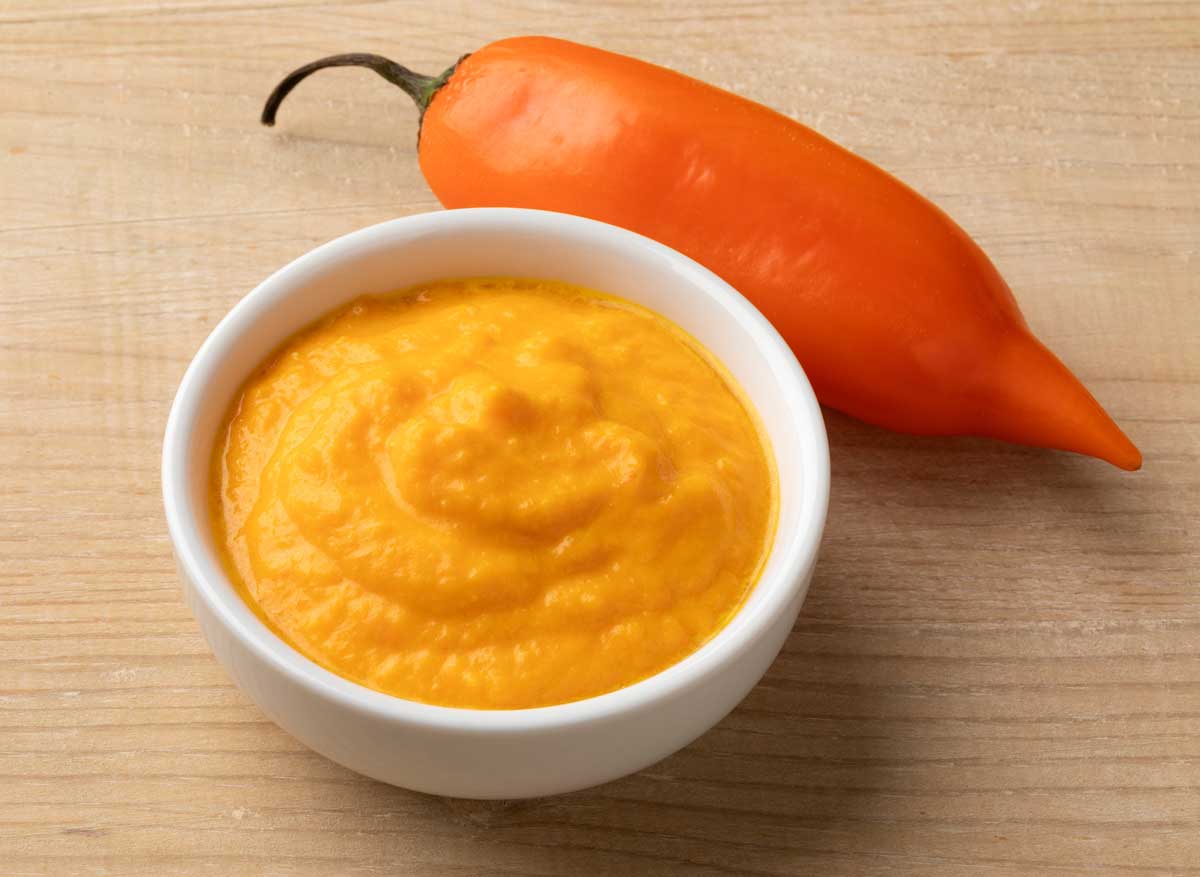
Ají amarillo is Peru’s yellow-orange chili. It is fruity, a little floral and moderately hot, and it gives causa both its flavor and its color. Jarred paste is the easy route. Heat varies a lot between brands, so start with less, taste, and add more.
Lime, oil and salt
Peruvian limes (limón) are small and very sour. Regular limes work fine. Use a neutral vegetable oil or a light olive oil; a strong extra-virgin oil can taste bitter against the chili. Salt generously, because cold food tastes less seasoned than warm food.
The filling and the layers
For causa de pollo, poach a chicken breast and shred it finely, then bind it with mayonnaise and a squeeze of lime. A ripe Hass avocado, sliced thin, is the classic second layer. Hard-boiled egg (or quail eggs), black olives (botija olives in Peru, Kalamata elsewhere) and parsley finish the top.
| Ingredient | Best choice | Good substitute |
|---|---|---|
| Potato | Papa amarilla (fresh or frozen) | Yukon Gold; baked russets in a pinch |
| Chili | Ají amarillo paste | Ají amarillo powder, or a mild yellow chili plus a pinch of turmeric for color |
| Citrus | Peruvian limón | Regular limes (not bottled juice) |
| Oil | Vegetable or light olive oil | Avocado oil |
| Filling | Poached chicken breast | Rotisserie chicken (skin removed), canned tuna, cooked shrimp or crab |
| Olives | Botija olives | Kalamata olives |
What to buy for causa
AmigoFoods earns from qualifying Amazon purchases. Prices and availability change.
- Sanniti ají amarillo paste: imported from Peru, a balanced paste that is a good all-round starting point for causa.Check price
- Inca’s Food ají amarillo paste: one of the most widely sold brands in the US. Taste it first, as it can run hot.Check price
- PriorityChef potato ricer: a ricer gives causa its smooth, lump-free texture without overworking the potato.Check price
- COTEY 3.5-inch ring molds: sold as egg rings, they are a good size for individual causas.Check price
How to Make Causa, Step by Step
Here is the method at a glance. Full amounts and timings are in the recipe card.
- Cook the potatoes gently. Start peeled, halved potatoes in cold salted water and simmer, don’t boil hard, for 20 to 25 minutes, until a knife slides in. Hard boiling breaks up the outside before the middle is done.
- Poach the chicken. While the potatoes cook, poach a chicken breast in barely simmering salted water until it reaches 165°F (74°C), about 15 to 18 minutes. Cool it, then shred finely.
- Rice the potatoes while hot. Push them through a ricer or mash them thoroughly while they are still steaming. Cold potato turns lumpy and gluey.
- Season and knead. Once warm, not hot, add the ají amarillo paste, lime juice, oil and salt. Knead with a spatula or clean hands until smooth, golden and pliable, like soft play dough. Taste: it should be boldly salty and tangy.
- Cool completely. Spread the potato in a bowl, cover and chill about 20 minutes. Warm potato will melt the mayonnaise and brown the avocado.
- Make the filling. Mix the chicken with mayonnaise, a little minced red onion, lime juice, salt and pepper.
- Layer. Press half the potato into a plastic-lined loaf pan (or into ring molds), then a layer of avocado seasoned with salt and lime, then the chicken, then the rest of the potato. Smooth the top.
- Chill, unmold and garnish. Refrigerate at least 1 hour. Lift out using the plastic wrap, slice with a hot, wet knife and top with egg, olives and parsley.

Tips for Perfect Causa (and How to Fix Problems)
Causa Variations to Try
Once you can make the potato base, the filling and the shape are up to you. These are the versions you will see most in Peru.

Causa de atún (tuna causa)
The most common everyday causa in Peruvian homes uses canned tuna mixed with mayonnaise, finely chopped onion and lime. It is quick and cheap, and it is a little sharper than the chicken version. We have a full, dedicated recipe: causa de atún, Peruvian tuna causa.

Causa de langostinos and causa de mariscos
Shrimp, crab or mixed seafood bound in mayonnaise or golf sauce (mayo with ketchup) make the restaurant version. A whole fried or poached shrimp on top is the signature finish. See more Peruvian seafood dishes.
Causa acevichada
“Ceviche-style” causa is topped with raw fish ceviche, or with a mayonnaise spiked with leche de tigre, the lime-and-chili ceviche marinade. It is one of the most popular modern causas in Lima.

Causa roll (Nikkei causa)
Peru’s Japanese-Peruvian Nikkei cuisine rolls the potato around the filling like a maki, then slices it and tops each piece with sauce. It is the version you see in sushi bars across Lima.

Causa frita (fried causa)
Portions of firm causa are breaded and fried until crisp, then topped with a cold filling or sauce. Leftover causa works well for this.
Vegetarian causa
Swap the meat for a layer of avocado plus diced tomato, corn, peas and carrot bound with mayonnaise. Cooked beets or a spinach-tinted potato layer add color.
Causitas (mini causas)
Bite-sized causas piped or molded onto spoons or small plates are a classic party food. See our Peruvian party appetizers for more ideas.
Make-Ahead and Storage
- Make ahead: the seasoned potato keeps, covered, for 1 day in the fridge. The assembled causa is best within 24 hours. Garnish just before serving.
- Leftovers: keep tightly covered in the fridge for up to 2 days. The avocado will darken, but the flavor holds.
- Freezing: not recommended. The potato turns watery and grainy, and the mayonnaise separates.
- Serving temperature: serve cold, straight from the fridge. Don’t leave mayonnaise-based causa out for more than 2 hours.
What to Serve with Causa

Causa is usually the first course, followed by a hot main such as lomo saltado or ají de gallina. A few other ways to serve it:
- With sauces: a spoonful of huancaína sauce, ají verde or a sharp salsa criolla on the side.
- With drinks: a pisco sour, Inca Kola, or chicha morada (see what they drink in Peru).
- As part of a spread: next to choros a la chalaca and papa a la huancaína for a cold Peruvian buffet, or for Fiestas Patrias in July.
Causa FAQ
What is causa in English?
Causa means “cause” in Spanish, but the dish has no English name. It is usually described as a Peruvian layered potato terrine or chilled potato casserole: seasoned yellow mashed potato layered with a filling such as chicken, tuna or seafood.
Is causa spicy?
Only mildly. Ají amarillo has a fruity, moderate heat, and the potato softens it a lot. Store-bought pastes vary, so add the paste a spoonful at a time and taste.
Is causa served hot or cold?
Cold. Causa is chilled until firm and served straight from the fridge, which is why it is a favorite summer starter in Lima.
What is the difference between causa and papa a la huancaína?
Both are cold Peruvian potato dishes flavored with ají amarillo. Causa is mashed, seasoned and layered with a filling. Papa a la huancaína is sliced boiled potato covered in a creamy cheese-and-chili sauce.
How is causa different from papa rellena and pastel de papa?
Papa rellena is mashed potato shaped around seasoned beef and deep-fried. Pastel de papa is a baked, hot potato casserole. Causa is the only one that is never cooked after assembly.
Can I make causa with Yukon Gold potatoes?
Yes. Yukon Gold is the closest fresh substitute for Peruvian yellow potatoes. If the mash feels slightly wet, let the cooked potatoes steam-dry for a few minutes before ricing.
Is causa gluten-free?
Yes, causa is naturally gluten-free. Check the labels on your mayonnaise and ají amarillo paste to be sure.
How long does causa last in the fridge?
Up to 2 days, tightly covered. It is at its best within the first 24 hours, before the avocado darkens.
Love Peruvian cold starters? Try the tuna version next with our causa de atún recipe, or explore more Peruvian side dishes and Peruvian ingredients.

Peruvian Causa (Causa Limeña de Pollo)
Classic Peruvian causa from Lima: chilled layers of yellow potato seasoned with ají amarillo and lime, filled with creamy chicken and avocado. Serve it cold as a starter or light lunch.
Ingredients
- 2 lb (900 g) Peruvian yellow potatoes (papa amarilla) or Yukon Gold potatoes, peeled and halved
- 3 to 5 tablespoons ají amarillo paste, to taste
- 3 tablespoons fresh lime juice (about 2 limes)
- 3 tablespoons vegetable oil or light olive oil
- 1½ teaspoons fine salt, plus more to taste and for the cooking water
- 1 large boneless, skinless chicken breast (about 12 oz / 340 g), or 2 cups finely shredded cooked chicken
- ⅓ cup (75 g) mayonnaise, plus more for garnish (optional)
- 2 tablespoons very finely minced red onion
- 1 teaspoon fresh lime juice, plus more for the avocado
- Black pepper, to taste
- 1 large ripe Hass avocado
- 2 hard-boiled eggs (or 6 hard-boiled quail eggs), sliced
- 6 black olives (botija or Kalamata), halved
- Fresh parsley leaves, for garnish
Instructions
Cook the potatoes and chicken
- Put the peeled, halved potatoes in a pot, cover with cold water by 1 inch and add 1 tablespoon salt. Bring to a gentle simmer and cook 20 to 25 minutes, until a knife slides in easily. Don't let them boil hard. Drain and let steam-dry in the colander for 2 minutes.
- Meanwhile, put the chicken breast in a small pot, cover with cold salted water and bring to a bare simmer. Cook 15 to 18 minutes, until it reaches 165°F (74°C) in the center. Let cool, then shred very finely.
Season the potato
- While the potatoes are still hot, push them through a potato ricer into a large bowl (or mash very thoroughly). Let cool for about 10 minutes, until warm but not hot.
- Add 3 tablespoons ají amarillo paste, the lime juice, oil and 1½ teaspoons salt. Knead with a spatula or clean hands until smooth, evenly golden and pliable. Taste and add more ají paste, lime or salt: it should taste boldly seasoned, because chilling mutes it. Don't use a blender or food processor.
- Cover and refrigerate about 20 minutes, until completely cool.
Make the filling
- Mix the shredded chicken with the mayonnaise, red onion, 1 teaspoon lime juice, salt and pepper. Halve, pit and thinly slice the avocado, then season the slices with a pinch of salt and a squeeze of lime.
Assemble
- Line an 8x4-inch loaf pan with plastic wrap, leaving it overhanging the sides (or set six 3-inch ring molds on a tray or individual plates).
- Press half the potato into the pan in an even layer. Lay the avocado slices over it, then spread the chicken filling on top and press gently. Cover with the remaining potato and smooth the top.
- Cover and refrigerate at least 1 hour, or up to 24 hours.
- To serve, lift the causa out with the plastic wrap (or slide off the rings). Slice with a sharp knife dipped in hot water and wiped between cuts. Top each portion with egg slices, an olive half and parsley, plus dots of mayonnaise if you like.
Notes
- Potatoes: Peruvian papa amarilla is ideal (look for it frozen in Latin markets). Yukon Gold is the best fresh substitute. Avoid waxy red potatoes.
- Ají amarillo paste: heat varies a lot by brand. Start with 3 tablespoons and add up to 2 more for a deeper color and flavor.
- Tuna version: for causa de atún, see the full recipe at blog.amigofoods.com/causa-de-atun/.
- Make ahead: the seasoned potato keeps 1 day, covered, in the fridge. Assembled causa is best within 24 hours. Don't freeze.
More Peruvian Foods
See all →
Jorge Garcia is the founder of AmigoFoods, where he has spent over 20 years helping readers discover authentic Latin American and Spanish cuisine. Raised in a Cuban-American household, Jorge learned to cook at the hands of his mother and grandmother, carrying forward generations of family recipes. That heritage, backed by his family’s four-generation history in the Latin food industry, inspired him to launch AmigoFoods in 2003. With more than 1,000 published articles on recipes, ingredients, and food culture, Jorge’s mission is simple: make authentic Latin cooking approachable for home cooks everywhere while honoring the traditions behind every dish.