

Tres leches cake is a light sponge soaked in evaporated milk, condensed milk and cream, then chilled and topped with whipped cream and cinnamon. This make-ahead favorite is one of the most loved desserts in Latin America.
Tres Leches Cake at a Glance
What Is Tres Leches Cake?
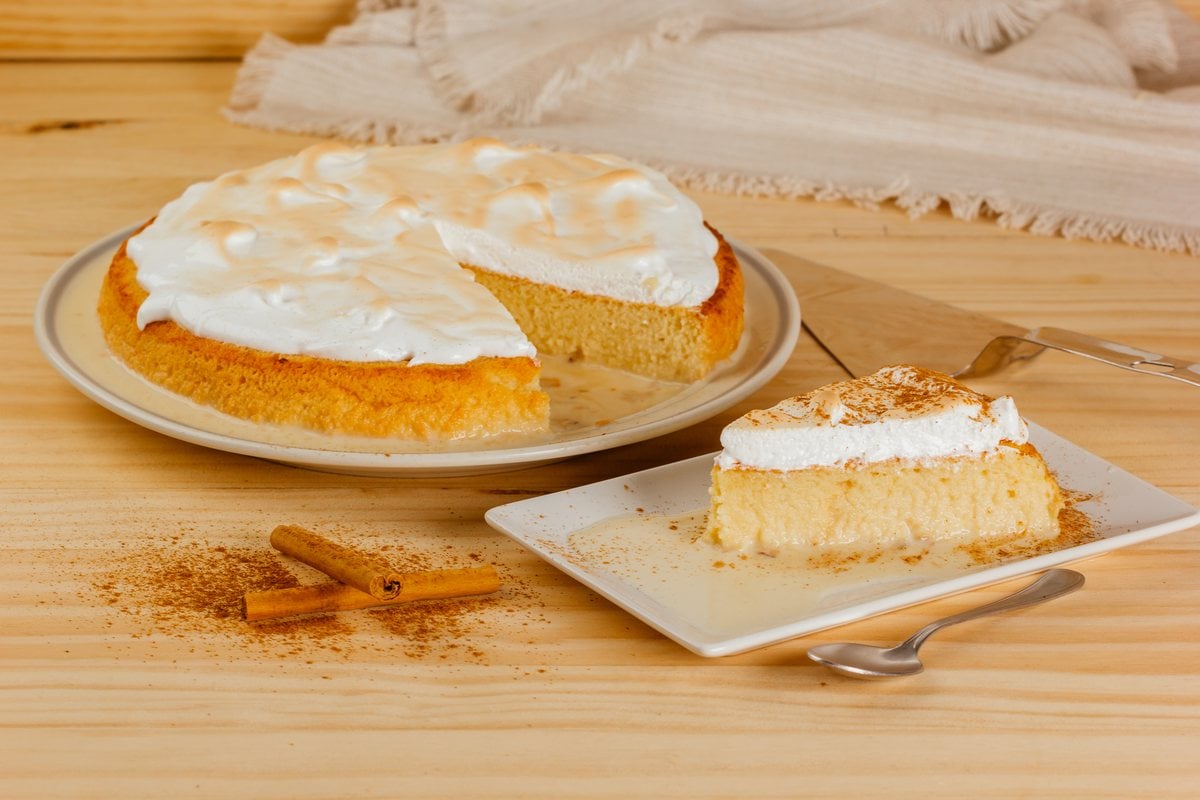
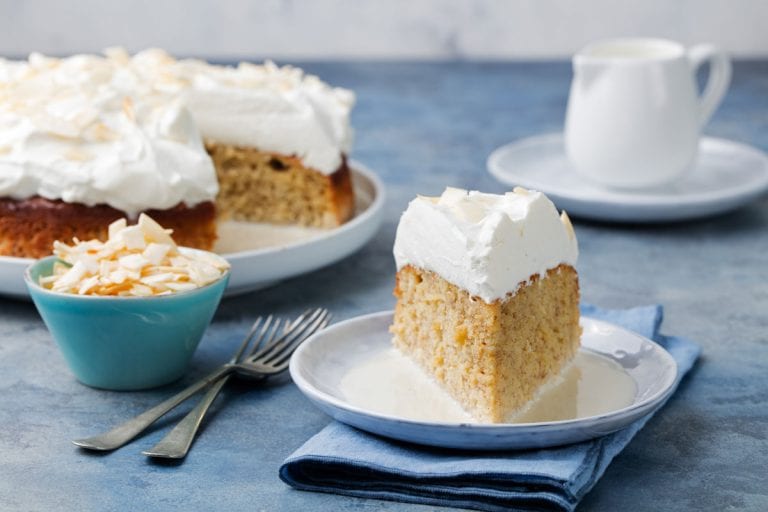
The first bite surprises people. The cake is cold, sweet and so wet that milk pools on the plate, yet the crumb stays light and springy instead of collapsing into mush. The flavor is pure dairy: sweet caramel notes from the condensed milk, a rich, almost nutty depth from the evaporated milk, and a clean creaminess from the cream, all cut by the whipped topping and a pinch of cinnamon.
That texture is the whole point, and it comes from the cake itself. Tres leches is built on a sponge leavened with whipped egg whites and very little fat. This version uses whipped egg whites for an open, airy crumb that absorbs the milk; other traditional recipes use butter successfully with a different batter balance.
Tres Leches Ingredients (and What Each One Does)
The ingredient list is short and all pantry staples. Here’s what each one does, so you know what you can and can’t change. Exact amounts and the full method are in the recipe card below.
For the sponge · one 9×13-inch cake
For the three-milk soak
For the topping
Equipment: a 9×13-inch metal baking pan (metal bakes more evenly than glass and gives a better rise), a stand or hand mixer, a fork or thin skewer for poking, and a spouted measuring cup for the soak. Look for La Lechera sweetened condensed milk, evaporated milk and Nestlé Media Crema in the Latin aisle or online.
How to Make Tres Leches Cake, Step by Step
Here’s the method in brief. The full recipe with exact amounts and times is in the recipe card below.
- Beat the yolks. Whip the egg yolks with most of the sugar for 3 to 4 minutes, until pale, thick and ribbony. Beat in the milk and vanilla, then stir in the flour, baking powder and salt just until no dry streaks remain.
- Whip the whites. In a clean bowl with clean beaters, whip the whites to soft peaks, then add the remaining sugar a spoonful at a time and keep going until the peaks are stiff and glossy.
- Fold gently. Fold the whites into the yolk batter in three additions with a big spatula, cutting down the middle and turning the bowl. Stop as soon as the batter is even. Every bubble you keep is a pocket for milk later.
- Bake. Spread the batter in a greased 9×13-inch metal pan and bake at 350°F (175°C) for 25 to 30 minutes, until golden and springy and a toothpick comes out clean.
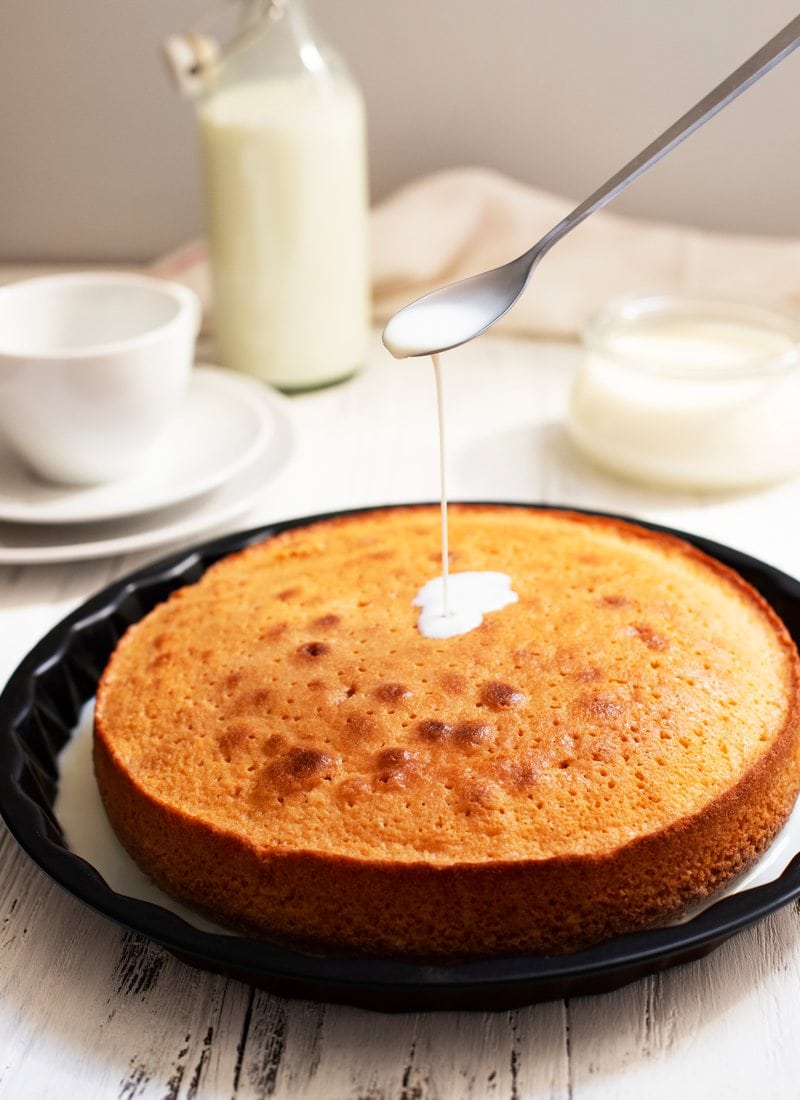
- Poke and soak. Let the cake cool for about 30 minutes, then poke holes all over it with a fork or skewer. Whisk the three milks together and pour them slowly over the cake in three rounds, waiting a minute between each and aiming for the edges and corners.
- Chill, then top. Cover and refrigerate for at least 4 hours, ideally overnight. Spread with sweetened whipped cream, dust with cinnamon and slice straight from the pan.
Tres Leches Cake Recipe
This is the classic Mexican-style tres leches: a light sponge, a sweet three-milk soak and a cinnamon-dusted whipped cream top. Make it the day before you want to serve it.

Tres Leches Cake
A light, airy sponge cake soaked overnight in evaporated milk, sweetened condensed milk and cream, then topped with cinnamon-dusted whipped cream. Classic Mexican-style tres leches that stays soaked to the center without turning soggy.
Ingredients
Sponge cake
- 1 cup (125 g) all-purpose flour
- 1½ teaspoons baking powder
- ¼ teaspoon fine salt
- 5 large eggs, at room temperature, separated
- 1 cup (200 g) granulated sugar, divided
- ⅓ cup (80 ml) whole milk
- 1 teaspoon vanilla extract
Three-milk soak
- 1 can (12 oz / 354 ml) evaporated milk
- 1 can (14 oz / 397 g) sweetened condensed milk
- ½ cup (120 ml) heavy cream or whole milk
- 1 teaspoon vanilla extract
- 1 to 2 tablespoons dark rum or rompope, optional
Topping
- 1½ cups (360 ml) cold heavy cream
- 3 tablespoons powdered sugar
- ½ teaspoon vanilla extract
- Ground cinnamon, for dusting
- Fresh strawberries, optional
Instructions
- Get set up. Heat the oven to 350°F (175°C) with a rack in the middle. Grease a 9x13-inch metal baking pan with butter or baking spray and dust it lightly with flour.
- Mix the dry ingredients. Whisk the flour, baking powder and salt together in a small bowl.
- Beat the yolks. In a large bowl, beat the egg yolks with ¾ cup of the sugar on high speed for 3 to 4 minutes, until pale yellow, thick and falling from the beaters in ribbons. Beat in the milk and vanilla on low. Add the flour mixture and stir gently just until no dry streaks remain. The batter will be thick.
- Whip the whites. In a clean bowl with clean beaters, whip the egg whites on medium-high to soft peaks. With the mixer running, add the remaining ¼ cup sugar a spoonful at a time and beat until the peaks are stiff and glossy, about 2 minutes more.
- Fold. Stir about a quarter of the whites into the yolk batter to loosen it, then gently fold in the rest in two additions, just until no white streaks remain. Do not stir or beat.
- Bake. Spread the batter evenly in the pan and bake for 25 to 30 minutes, until golden, the top springs back when pressed and a toothpick in the center comes out clean.
- Cool and poke. Let the cake cool in the pan on a rack for about 30 minutes, until just warm. Poke holes all over the top every half inch or so with a fork or skewer, going almost to the bottom.
- Soak. Whisk the evaporated milk, condensed milk, cream, vanilla and rum (if using) in a spouted cup. Pour about a third slowly over the cake, concentrating on the edges and corners, and wait a minute for it to sink in. Repeat twice more. Hold back ½ cup if you like extra milk to spoon over each slice.
- Chill. Cover the pan and refrigerate for at least 4 hours, and ideally overnight, so the milk spreads evenly through the cake.
- Top and serve. Whip the cold cream with the powdered sugar and vanilla to firm peaks. Spread it over the cake, dust with cinnamon and add strawberries if you like. Cut into squares and serve cold, straight from the pan.
Notes
Pan: A metal pan gives the best rise. In a glass dish, add about 5 minutes to the bake time. You can also bake the batter in two 9-inch round pans (18 to 22 minutes) for a round, layered tres leches.
Soaked, not soggy: The cake will look like it can't hold all the milk. Pour slowly and let it chill overnight; by morning the milk is inside the cake. A dense cake is what makes tres leches soggy, so whip the whites to stiff peaks and fold gently.
Third milk: Heavy cream makes the richest cake. Whole milk is lighter and very traditional in Mexico. Mexican media crema works too.
Make-ahead topping: To hold the whipped cream for 2 to 3 days, beat 2 tablespoons instant vanilla pudding mix or 2 ounces mascarpone into the cream with the sugar.
Storage: Keep covered in the refrigerator for up to 3 to 4 days. Do not leave at room temperature for more than 2 hours. The plain baked sponge (unsoaked) can be wrapped and frozen for up to 3 months.
Why Is My Tres Leches Soggy? Problems and Fixes
Almost every tres leches problem traces back to the cake, not the milk. Here’s what went wrong and how to fix it next time.
| Problem | Why it happens | How to fix it |
|---|---|---|
| Soggy, mushy bottom | The cake was too dense to absorb the milk, so it pooled underneath | Whip the whites to stiff peaks, fold gently, and don’t add extra flour |
| Dry patches on top | The milk was poured too fast or only in the middle | Poke more holes, pour in three rounds, and spoon the pooled milk back over the dry spots after an hour |
| Dense, rubbery cake | The batter was overmixed and the air knocked out | Fold the whites in just until even, and get the pan in the oven right away |
| Cake sank in the middle | Underbaked, or the oven door was opened too early | Bake until a toothpick comes out clean and the top springs back |
| Milk won’t soak in | The cake is cold and tight, or there are too few holes | Soak while the cake is still slightly warm, and poke every half inch |
| Whipped cream melting or weeping | The cream was underwhipped or the cake sat out | Whip to firm peaks, top just before serving, or stabilize the cream (see the recipe notes) |
| Too sweet | Condensed milk is very sweet on its own | Use whole milk as the third milk, add a pinch of salt to the soak, and go light on the topping sugar |
Tres Leches Around Latin America
Tres leches is baked across the Spanish-speaking Americas, and each country puts its own stamp on it. Here’s how the main versions differ.


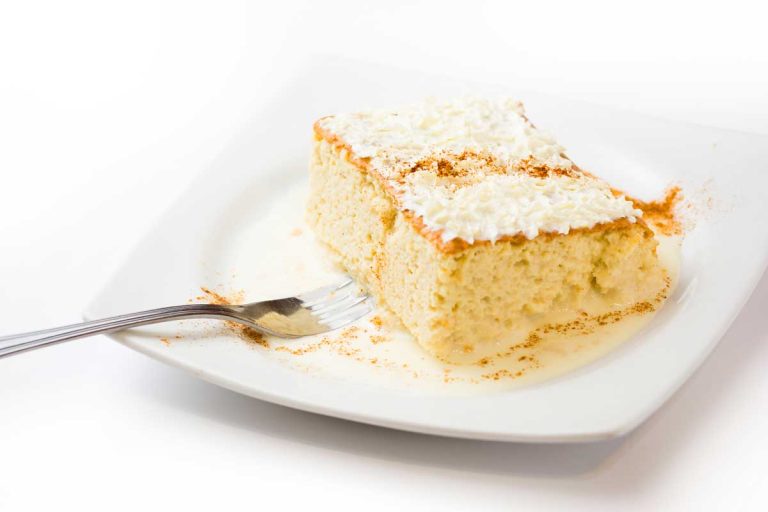

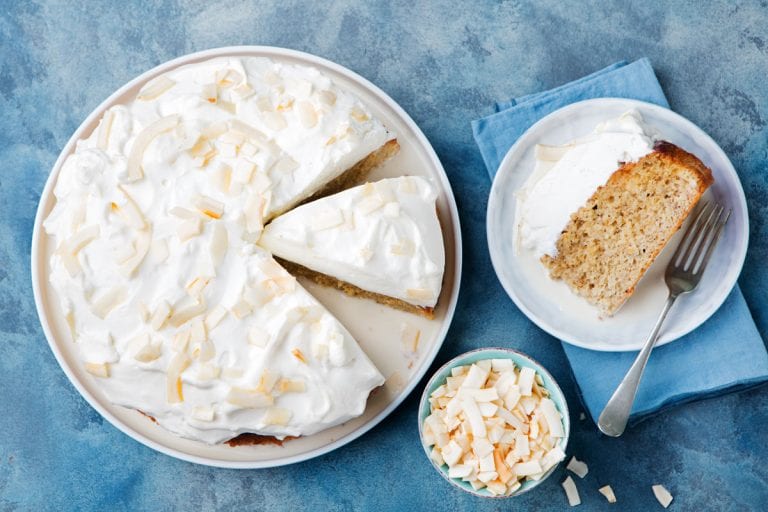


The idea even crossed the Atlantic in reverse. In recent decades a caramel-glazed version called trileçe has become a bakery staple in Albania, the Balkans and Turkey. For more of Latin America’s birthday and bakery cakes, see our guide to Mexican pastries and the cakes and pastries pillar.
Tres Leches Variations to Try
Once you’ve made the classic, the base recipe takes new flavors easily. Change one thing at a time.
Swap ¼ cup of the flour for unsweetened cocoa and whisk 2 tablespoons cocoa or 2 ounces melted chocolate into the soak. Top with chocolate shavings.
Dissolve 2 tablespoons instant espresso in the milk mixture. A natural partner for a café con leche.
Replace the ½ cup cream in the soak with ½ cup coconut milk or cream of coconut, and top with toasted shredded coconut.
Blend ½ cup strawberries into the soak and cover the top with sliced berries. The classic Mexican bakery look.
Add a fourth “milk”: spread dulce de leche or cajeta over the soaked cake before the cream. Make your own from condensed milk.
Stir 2 to 3 tablespoons dark rum or rompope into the soak. A holiday favorite in Mexico and the Caribbean.
Skip the whipped cream and top with Italian meringue, then toast it with a torch. Holds up better in hot weather.
Short on time? Bake a white or yellow cake mix in a 9×13 pan, then poke and soak as usual. The crumb is tighter, so use a little less milk.

Want the same three milks in a caramel custard instead? Try our tres leches flan.
How to Serve and Store Tres Leches
Serving: Tres leches is always served cold, cut into squares straight from the pan with a spatula. Spoon a little of the milk from the bottom of the pan over each slice. Fresh berries, a cup of Latin coffee or a small cortadito are perfect alongside.
Make ahead: This is a cake that gets better overnight. Bake and soak it the day before, then add the whipped cream topping a few hours before serving so it stays fluffy.
Storing: Keep tres leches covered in the refrigerator for up to 3 to 4 days. The cream topping is best in the first two days. Because it is soaked in dairy, don’t leave it at room temperature for more than 2 hours, and less than that on a hot day or at an outdoor party.
Freezing: Freeze the baked, cooled sponge (unsoaked and untopped), tightly wrapped, for up to 3 months. Thaw it in the fridge, then poke, soak and top as usual. A fully soaked cake can be frozen without its topping for about a month, but the texture is never quite as good.
Where Does Tres Leches Come From?
Nobody can say for certain, and both Mexico and Nicaragua claim it. What is clear is that the idea of soaking cake in liquid is old. Medieval European cooks soaked bread and sponge in wine or syrup, and Spain brought that habit to the Americas in desserts like sopa borracha (“drunken soup”), a sponge soaked in syrup and liquor that is still made in Mexico and Central America today.
What turned drunken cake into milk cake was the can. Sweetened condensed and evaporated milk spread across Latin America in the late 1800s and early 1900s, because they kept without refrigeration. By the 1930s and 1940s canned milk was everywhere, and the tres leches we know most likely took shape around then. A story repeated in Mexico holds that Nestlé printed a tres leches recipe on its milk cans to sell more of them; nobody has produced that label, but the timing fits. In Nicaragua, older generations remember tres leches as an established party cake by the 1940s and 1950s, and the country considers it a national dessert.

The cake reached the United States through Miami. After Nicaraguan families settled there in the 1980s, restaurants like Los Ranchos made tres leches famous, Cuban bakeries adopted it, and by the late 1990s it was in American cookbooks and on restaurant menus far beyond Florida. Today it is simply one of the great Latin desserts, and a fixture on Latin Christmas dessert tables as much as at birthday parties.
Tres Leches Cake FAQs
What are the three milks in tres leches?
Evaporated milk, sweetened condensed milk and either heavy cream or whole milk. Some bakeries use Mexican media crema as the third milk. The whipped cream on top is sometimes counted as a fourth.
Is tres leches Mexican or Nicaraguan?
Both countries claim it, and no one has settled the argument. It is the most popular cake in Mexico and a national dessert in Nicaragua, and it is baked all over Central and South America and the Caribbean.
How long should tres leches soak?
At least 4 hours in the refrigerator, and overnight is best. The long chill lets the milk spread evenly through the cake so there’s no puddle at the bottom and no dry spots on top.
Why is my tres leches soggy?
Usually because the cake was too dense to absorb the milk. Whip the egg whites to stiff peaks, fold gently and don’t overbake or add extra flour. A light sponge soaks up the milk; a heavy cake lets it pool.
Does tres leches cake need to be refrigerated?
Yes. It is soaked in dairy, so it must be kept in the refrigerator and shouldn’t sit out for more than 2 hours. It also tastes best cold.
How long does tres leches last?
Up to 3 to 4 days, covered, in the refrigerator. The cake keeps well; the whipped cream topping is freshest in the first two days.
Can you freeze tres leches cake?
Freeze the plain baked sponge for up to 3 months, then thaw, soak and top it. A soaked cake can be frozen without the topping for about a month, though it loses some of its lightness.
Can I make tres leches the day before?
Yes, and you should. Tres leches is at its best after an overnight soak. Add the whipped cream on the day you serve it.
Can I use a glass baking dish?
You can. Glass heats more slowly, so the cake may need 5 minutes longer and won’t brown as much. Metal gives the best rise.
Can I make tres leches with a box cake mix?
Yes. Bake a white or yellow mix in a 9×13 pan, poke it and soak it as usual. Box-mix cakes are denser, so use about three quarters of the milk mixture.
What’s the difference between tres leches and trileçe?
Trileçe is the Albanian and Turkish version of tres leches. The milk-soaked sponge is the same, but it is topped with a thin layer of caramel instead of whipped cream.
More Milk-Soaked and Creamy Latin Desserts
Tres leches proves that a plain sponge and three cans from the pantry can make one of the best cakes in the world. Whip the whites well, pour the milk slowly, give it a night in the fridge, and you’ll have a cake that’s soaked to the center and still light as a cloud. For more ideas, browse all of our Latin American and Spanish desserts.
More Latin Favorites
See all →
Jorge Garcia is the founder of AmigoFoods, where he has spent over 20 years helping readers discover authentic Latin American and Spanish cuisine. Raised in a Cuban-American household, Jorge learned to cook at the hands of his mother and grandmother, carrying forward generations of family recipes. That heritage, backed by his family’s four-generation history in the Latin food industry, inspired him to launch AmigoFoods in 2003. With more than 1,000 published articles on recipes, ingredients, and food culture, Jorge’s mission is simple: make authentic Latin cooking approachable for home cooks everywhere while honoring the traditions behind every dish.