
On this page
Mexican cookies, or galletas mexicanas, are the crumbly, cinnamon-scented, piloncillo-sweetened treats sold by the tray in every panadería and baked by the dozen at home for Christmas, weddings and quinceañeras. They lean on lard or butter, canela, anise, pecans and brown piloncillo sugar, and many are rolled in powdered sugar or cinnamon sugar while still warm.
Below are 18 traditional Mexican cookies, from powdered-sugar polvorones and pig-shaped marranitos to the pink cookies in every bakery case, plus the store-bought cookies Mexican kids grow up on and a full recipe for galletas de grageas, the sprinkle-coated butter cookies.
Mexican Cookies at a Glance
What Makes a Cookie Mexican?
Most Mexican cookies descend from the shortbreads and polvorones that Spanish convents brought to New Spain, made with lard, wheat flour and sugar. Mexico then made them its own with ingredients from the Americas and the spice trade:
- Lard (manteca)
- Canela
- Anise
- Piloncillo
- Pecans
- Peanuts
- Coconut
- Mexican vanilla
- Grageas
The texture is the other giveaway. Many Mexican cookies are meant to be crumbly rather than chewy, which is where the name polvorón comes from: polvo means dust or powder, and a good one dissolves into crumbs as you bite it. If you want to compare them with the cakes, conchas and empanadas on the same bakery tray, see our guide to Mexican pastries.
1. Polvorones de Nuez (Mexican Wedding Cookies)
The most famous Mexican cookie: tender balls of butter, flour and finely ground pecans, baked pale and rolled twice in powdered sugar. They are served at weddings, baptisms and every Christmas party, and they go by galletas de nuez, polvorones and bolitas de nuez depending on the family. Get the full method in our Mexican wedding cookies recipe.

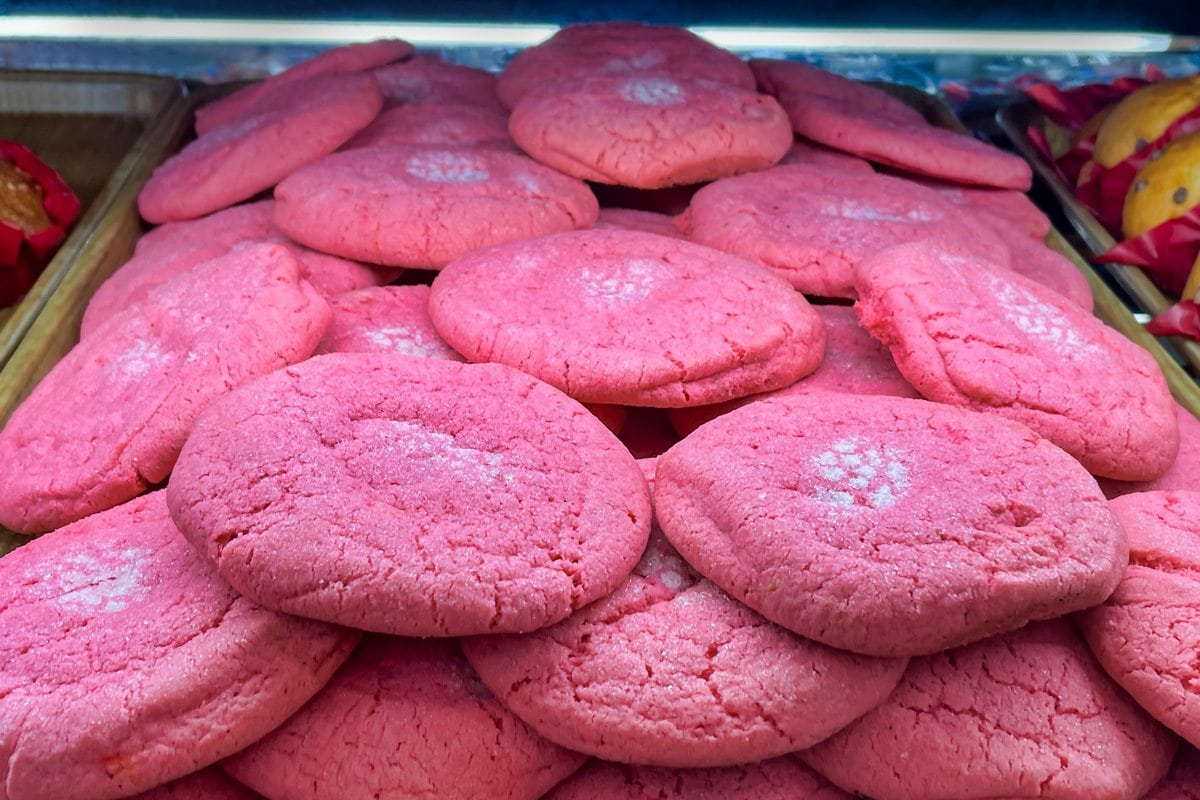
2. Polvorones de Colores (Pink and Tricolor Polvorones)
These are the big, flat, crumbly cookies in every Mexican bakery case: pale pink, sometimes striped pink, white and chocolate, and dusted with sugar. They are made with vegetable shortening or lard, which makes them sandy and short rather than chewy, and the pink ones are often called galletas rosas or simply “the pink cookies.” The tricolor version is pressed together from three colored doughs before slicing.
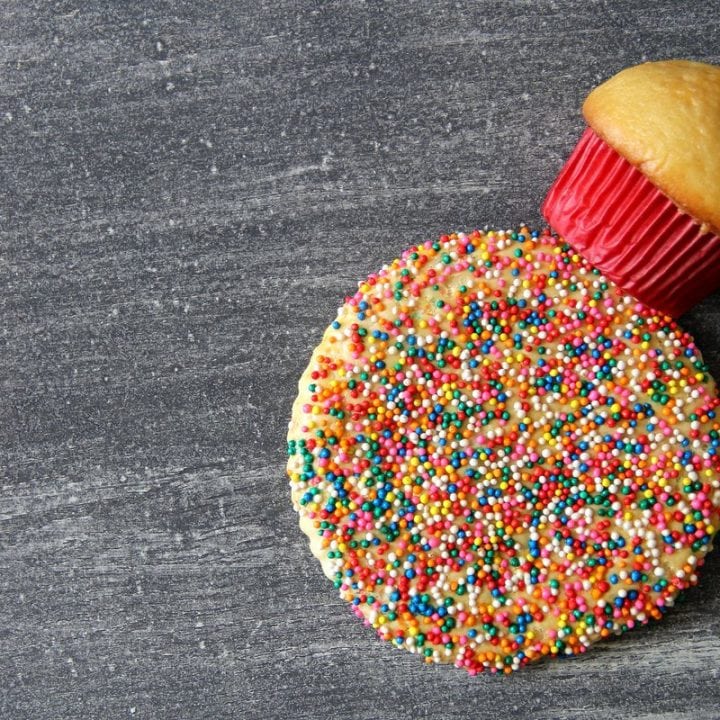
3. Galletas de Grageas (Mexican Sprinkle Cookies)
Round butter cookies with the top pressed into grageas, the tiny rainbow nonpareils that crunch when you bite them. They are a panadería staple and the cookie kids pick first. They are also the easiest cookie on this list to bake at home, so the full recipe is below.
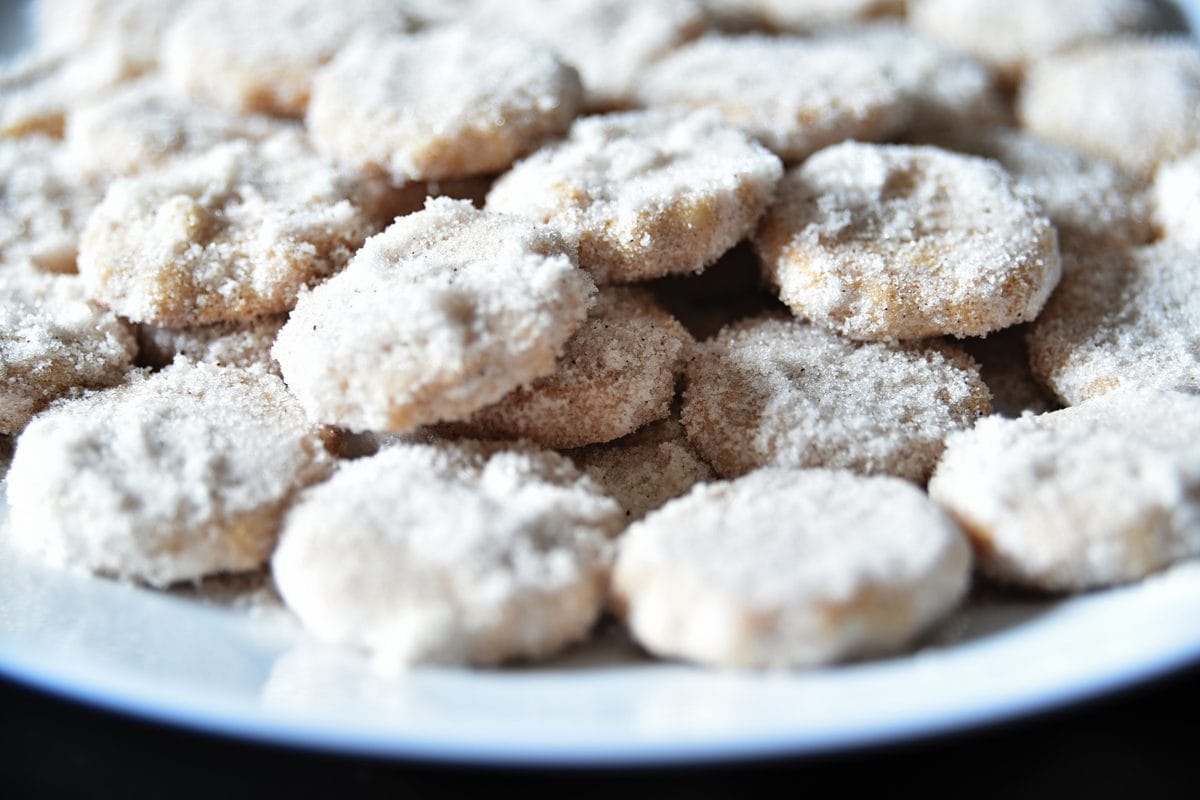
4. Hojarascas
Hojarascas are crisp, crumbly shortbread cookies made with lard, flavored with cinnamon and often a little orange zest, then rolled in cinnamon sugar. They come from northern Mexico and are a wedding and Christmas cookie there. Our hojarascas recipe walks through the lard-versus-butter question.

5. Pan de Polvo
Pan de polvo is the hojarasca’s close cousin from Nuevo León, Coahuila and South Texas. The dough is mixed with a strong cinnamon tea instead of water, and the small cookies are tossed in cinnamon sugar. Families bake them by the hundreds in December, and they are a standard Christmas gift in the borderlands.
6. Marranitos (Piloncillo Pig Cookies)
Soft, cakey, pig-shaped cookies sweetened with piloncillo and spiced with cinnamon, a little like gingerbread but softer and less spicy. They also go by puerquitos and cochinitos, and they are the cookie most people picture when they think of a Mexican bakery. See our marranitos recipe, and read what piloncillo is if you have never used it.

7. Biscochitos
Biscochitos are crisp anise and cinnamon cookies made with lard, cut into fleur-de-lis or star shapes and dipped in cinnamon sugar. They grew out of the colonial Spanish and Mexican baking of the upper Rio Grande, and in 1989 New Mexico made the biscochito its official state cookie. Here is our biscochitos recipe.
8. Coyotas
Coyotas are large, flat cookie-pastries from Hermosillo, Sonora: two thin rounds of lard dough sealed around a layer of melted piloncillo, then baked until crisp. They sit somewhere between a cookie and an empanada, and they are eaten with coffee. Read more about coyotas.

9. Polvorones de Cacahuate (Peanut Polvorones)
Crumbly polvorones made with ground roasted peanuts instead of pecans. They taste a lot like the peanut candy de la Rosa mazapán, and they melt in the mouth the same way. Peanuts are native to the Americas and show up all over Mexican sweets, from these cookies to Mexican mazapán.
10. Polvorones de Naranja (Orange Polvorones)
Orange zest and a splash of fresh orange juice make these polvorones bright instead of nutty. They are a common homemade cookie and also one of the best-selling packaged cookies in Mexico, sold in an orange box under the plain name “Polvorones.”
11. Galletas de Canela (Mexican Cinnamon Cookies)
Simple butter or shortening cookies flavored with plenty of canela, the soft, flaky Ceylon cinnamon Mexican cooks prefer, and coated in cinnamon sugar. They are milder than a snickerdoodle and crisper, and they are made for dunking in Mexican hot chocolate or champurrado.
12. Galletas de Nata
A home-baking classic across central Mexico, made with nata, the thick layer of cream that forms on top of whole milk after it is boiled and cooled. The cream replaces most of the butter and gives the cookies a soft, tender crumb and a faint dairy sweetness. Families save the nata for days until there is enough for a batch.
13. Orejas
Orejas (“ears”) are the panadería’s version of French palmiers: puff pastry rolled in sugar, folded into a heart shape, sliced and baked until the sugar caramelizes into a glassy crust. They are crisp, flaky and huge, often bigger than a hand.

14. Cocadas
Mexican cocadas are chewy coconut cookies made with shredded coconut, sugar, eggs or sweetened condensed milk, and baked until the tops turn golden brown. In Jalisco and along the coasts you will also find them as soft coconut candies sold from street carts. If you know the Colombian kind, see our Colombian cocadas to compare.
15. Galletas de Malvavisco (Marshmallow Cookies)
A plain vanilla cookie topped with a cushion of pink or white marshmallow, then dipped in shredded coconut or sprinkles. They are a childhood favorite in Mexico, best known from packaged versions, and they are easy to recreate at home with homemade marshmallow piped onto shortbread rounds.
16. Galletas de Animalitos
Small animal-shaped crackers sold by the kilo in Mexican markets and candy shops, sometimes plain and sometimes iced pink and white and covered in sprinkles. They are a party favor and a lunchbox staple, and they go into bags of colación at Christmas posadas.
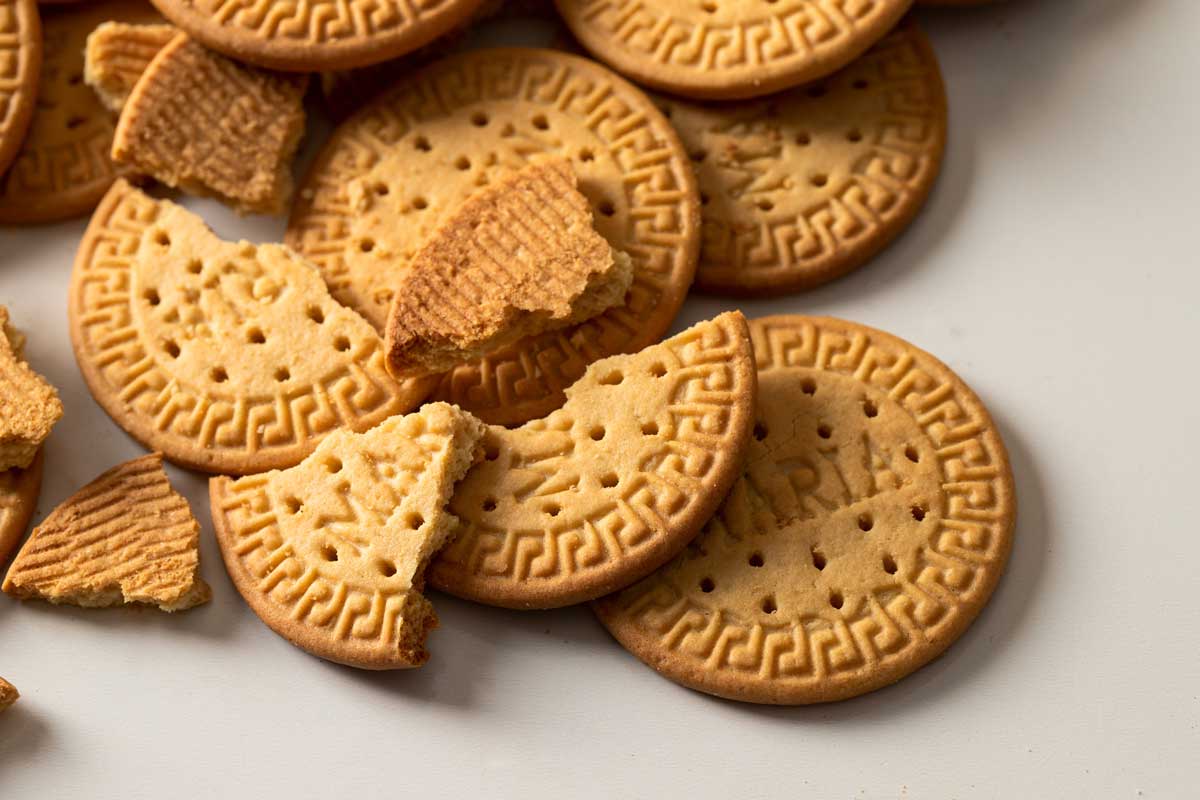
17. Galletas Marías
The plain, round, lightly sweet María cookie, originally created in London in 1874, became one of Mexico’s best-selling cookies. Marías are dunked in coffee and hot chocolate, crushed into pay de limón crusts and layered with sweetened lime cream to make carlota de limón, a no-bake dessert served at nearly every birthday.
18. Mexican Hot Chocolate Cookies
A newer, Mexican-American cookie that borrows its flavor from tablets of Mexican drinking chocolate: dark chocolate dough spiced with cinnamon and a pinch of cayenne or ancho chile, often rolled in powdered sugar so it cracks like a crinkle cookie. They are a favorite on holiday cookie trays in the United States.
Store-Bought Mexican Cookies Everyone Grew Up With
Mexico’s two big cookie brands, Gamesa and Marinela, make the packaged cookies that fill lunchboxes and corner-store shelves. These are the names you will see in Mexican grocery aisles in the United States too.
| Cookie | Brand | What it is |
|---|---|---|
| Marías | Gamesa | Plain round biscuits for dunking and for carlota de limón |
| Emperador | Gamesa | Sandwich cookies with chocolate, vanilla or other cream fillings |
| Arcoíris | Gamesa | Cookies topped with marshmallow and rainbow sprinkles |
| Chokis | Gamesa | Chocolate chip cookies |
| Sponch | Marinela | Cookies topped with marshmallow and shredded coconut |
| Canelitas | Marinela | Cinnamon cookies |
| Polvorones | Marinela | Orange-flavored crumbly round cookies |
Mexican-style cookies to order
- Siete Grain Free Mexican Wedding Cookies: an almond-flour take on polvorones de nuez for gluten-free guests.
- Siete Grain Free Mexican Shortbread Cookies: cinnamon shortbread in the style of hojarascas.
- Siete Fresas con Crema Cookies: inspired by the strawberries-and-cream cups sold all over Mexico.
As an Amazon Associate I earn from qualifying purchases.
How to Make Galletas de Grageas (Mexican Sprinkle Cookies)
These are tender, buttery vanilla cookies with a crunchy rainbow top. The dough comes together in 10 minutes and needs no rolling or cutters.
1Cream the butter and sugar
Beat 1 cup of softened butter (or half butter, half vegetable shortening for the classic panadería texture) with ¾ cup of sugar until pale and fluffy, about 3 minutes. Beat in 1 egg and 2 teaspoons of Mexican vanilla.
2Mix in the dry ingredients
Whisk 2½ cups of flour, ½ teaspoon of baking powder and ¼ teaspoon of salt. Add to the butter on low speed just until no dry flour remains. The dough should be soft but not sticky.
3Shape and press into grageas
Scoop the dough into 1½-tablespoon balls and flatten each into a disk about ½ inch thick. Press the top of each disk firmly into a bowl of grageas (rainbow nonpareils) so the sprinkles stick, and set the cookies sprinkle side up on parchment-lined sheets, 2 inches apart.
Use nonpareils, not jimmies. Grageas are the tiny round sprinkles. Long jimmies melt and smear in the oven, while nonpareils keep their color and crunch.
4Chill, then bake
Chill the shaped cookies for 20 minutes so they hold their shape. Bake at 350°F for 12 to 14 minutes, until the tops are set and the bottoms are just golden. The tops should stay pale.
5Cool on the sheet
Let them firm up on the sheet for 5 minutes before moving them to a rack. They are fragile while hot and crisp up as they cool.
Equipment for Mexican Cookies
The gear I would use
- OXO Good Grips medium cookie scoop: every cookie the same size, so they bake evenly.
- Suchiate pure Mexican vanilla extract: the vanilla for polvorones and sprinkle cookies.
- Badia cinnamon sticks: grind your own canela for hojarascas and pan de polvo.
As an Amazon Associate I earn from qualifying purchases.
Galletas de Grageas (Mexican Sprinkle Cookies)
Galletas de grageas are tender Mexican butter cookies with the tops pressed into rainbow nonpareils, the sprinkle cookies sold in every panadería. No rolling or cutters needed.
Ingredients
- 1 cup (226 g) unsalted butter, softened (or ½ cup butter and ½ cup vegetable shortening)
- ¾ cup (150 g) granulated sugar
- 1 large egg, room temperature
- 2 teaspoons Mexican vanilla extract
- 2½ cups (315 g) all-purpose flour
- ½ teaspoon baking powder
- ¼ teaspoon salt
- ½ cup rainbow nonpareils (grageas)
Instructions
- Cream. Beat the butter (or butter and shortening) and sugar until pale and fluffy, about 3 minutes. Beat in the egg and vanilla.
- Add the dry ingredients. Whisk the flour, baking powder and salt, then mix into the butter on low speed just until no dry flour remains.
- Shape. Scoop 1½-tablespoon balls and flatten each to a ½-inch-thick disk. Press the top of each firmly into the grageas and place sprinkle side up on parchment-lined baking sheets, 2 inches apart.
- Chill. Refrigerate the shaped cookies for 20 minutes. Heat the oven to 350°F.
- Bake. Bake 12 to 14 minutes, until the tops are set and the bottoms are just golden; the tops should stay pale.
- Cool. Cool on the sheet 5 minutes, then transfer to a rack to cool completely.
Notes
Use round nonpareils (grageas); long sprinkles melt and bleed in the oven. For a sandier panadería texture, use ½ cup butter and ½ cup vegetable shortening. Store airtight up to 2 weeks, or freeze up to 3 months.
How to Store Mexican Cookies
- Room temperature: most crumbly cookies (polvorones, hojarascas, pan de polvo, biscochitos, sprinkle cookies) keep 1 to 2 weeks in an airtight tin. Soft cookies like marranitos are best within 4 to 5 days.
- Freezer: freeze baked cookies for up to 3 months. Re-roll powdered-sugar cookies after thawing.
- Dough: freeze shaped balls of dough on a sheet, then bag them. Bake from frozen, adding 1 to 2 minutes.
Mexican Cookies FAQ
What are the most popular Mexican cookies?
Polvorones de nuez (Mexican wedding cookies), pink polvorones, marranitos, hojarascas and galletas de grageas are the most common homemade and bakery cookies. Galletas Marías are the best-known packaged cookie.
What are the pink Mexican cookies called?
They are polvorones, often called galletas rosas or pink polvorones. They are crumbly shortbread-style cookies made with shortening and tinted pink, sold in nearly every Mexican bakery.
What are Mexican pig cookies called?
Marranitos, also called puerquitos or cochinitos. They are soft piloncillo and cinnamon cookies cut into pig shapes.
What is the difference between polvorones and Mexican wedding cookies?
Mexican wedding cookies are one kind of polvorón: the nut version rolled in powdered sugar. Polvorón is the broader name for crumbly shortbread cookies, which can be plain, pink, orange-flavored or made with peanuts.
What Mexican cookies are made for Christmas?
Polvorones de nuez, hojarascas, pan de polvo and biscochitos are the classic Christmas cookies, along with buñuelos, which are fried rather than baked. See Mexican Christmas foods for the full holiday table.
Why are Mexican cookies made with lard?
Lard was the everyday baking fat of colonial Mexico, and it gives cookies a crumbly, sandy texture that butter alone can’t match. Many bakers now use vegetable shortening or a mix of shortening and butter for the same effect.
More Mexican Sweets
- Mexican Desserts40 classics from flan to tres leches
- Mexican PastriesThe pan dulce on every bakery tray
- ConchasThe shell-topped sweet bread
- BuñuelosCrisp fried Christmas fritters
- Latin American Cookies & SweetsCookies from every country
- Mexican Dessert RecipesEvery dessert recipe on the site
More Mexican Foods
See all →
Jorge Garcia is the founder of AmigoFoods, where he has spent over 20 years helping readers discover authentic Latin American and Spanish cuisine. Raised in a Cuban-American household, Jorge learned to cook at the hands of his mother and grandmother, carrying forward generations of family recipes. That heritage, backed by his family’s four-generation history in the Latin food industry, inspired him to launch AmigoFoods in 2003. With more than 1,000 published articles on recipes, ingredients, and food culture, Jorge’s mission is simple: make authentic Latin cooking approachable for home cooks everywhere while honoring the traditions behind every dish.