

Pachamanca is a Peruvian feast of herb-marinated meats, tubers, corn and beans, traditionally cooked with heated stones in an earth oven. The recipe below adapts those flavors for a home oven and includes an overnight marinade.
Pachamanca at a Glance
What is Pachamanca?

Pachamanca is a traditional Peruvian dish and cooking technique that dates back thousands of years to the Inca and pre-Inca civilizations.
The word comes from Quechua: pacha meaning “earth” and manca meaning “pot” or “cooking vessel.”
In essence, pachamanca is an earth oven feast.
Hot stones are heated in a dug-out pit, then layered with marinated meats (such as lamb, pork, chicken, or guinea pig), Andean tubers (potatoes, oca, mashua, olluco), corn, beans, and aromatic herbs like huacatay and chincho.
Everything is carefully covered with leaves and earth, trapping heat and steam, and slowly cooked until tender.
But pachamanca is more than just food—it’s a cultural ritual that honors Pachamama (Mother Earth).
It is prepared communally for celebrations, festivals, weddings, and family gatherings, making it as much about togetherness and tradition as it is about taste.
Today, pachamanca remains one of Peru’s most iconic dishes, often enjoyed on special occasions and celebrated every year on National Pachamanca Day, the first Sunday of February.
The History and Origins of Pachamanca
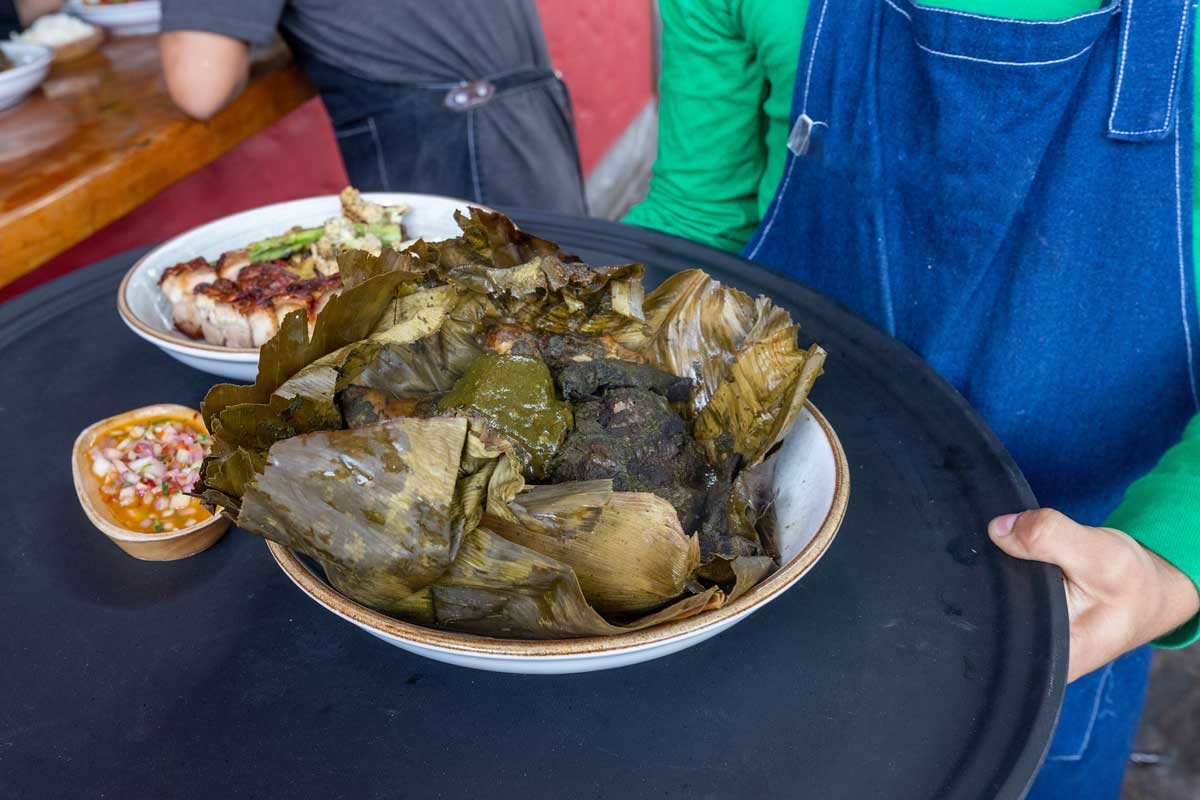
Pachamanca traces its roots to the Andes, where communities have cooked with hot stones for over 7,000 years.
Pre-Inca civilizations used earth ovens, or huatias, for communal feasts during ceremonies, a tradition that evolved into one of Peru’s most popular dishes.
Its name comes from Quechua—pacha (earth) and manca (pot)—reflecting both the earth-oven method and its sacred link to Pachamama (Mother Earth).
Preparing pachamanca was an act of gratitude, honoring nature while feeding the community.
The Inca Empire tied pachamanca to harvest festivals and celebrations of unity and abundance.
After the Spanish conquest, new ingredients like pork, chicken, and herbs were added, but the ancestral ritual and stone-oven technique endured.
Today, pachamanca remains a living symbol of Peru’s cultural heritage, bridging ancient traditions with modern celebrations.
Traditional Pachamanca Ingredients
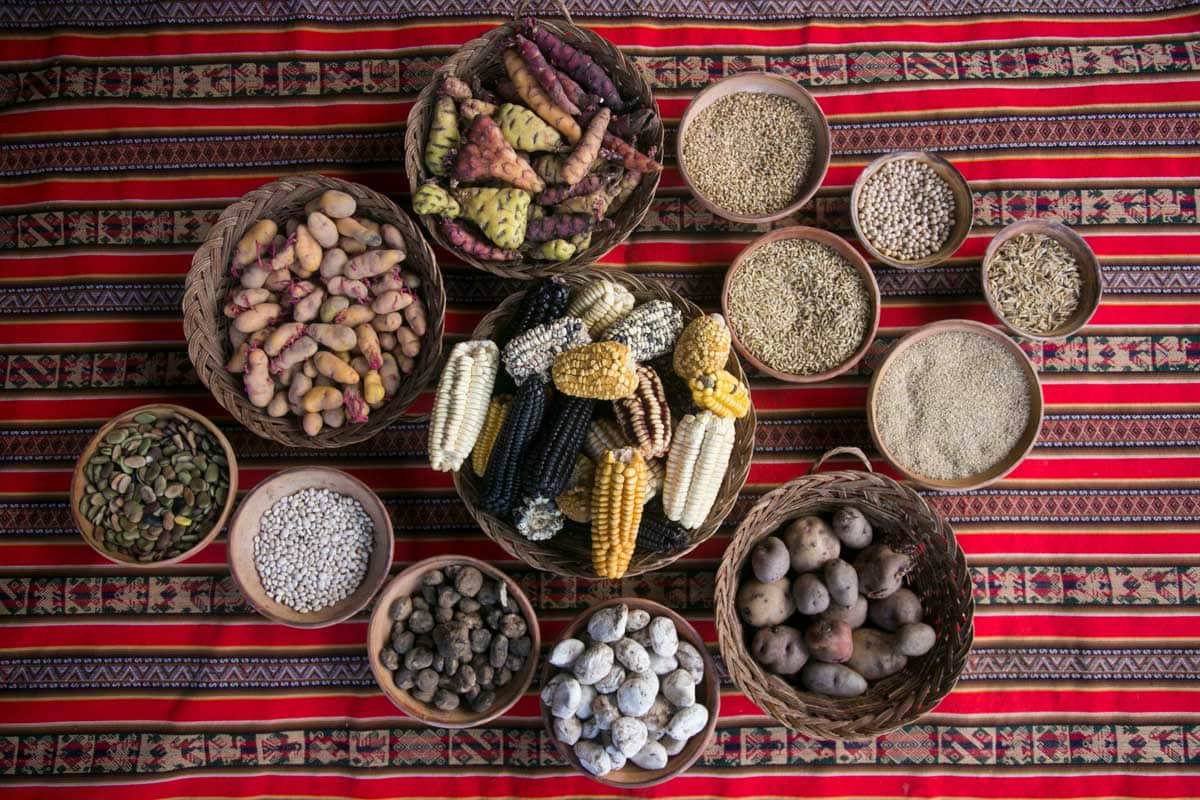
What makes pachamanca so special is its rich variety of ingredients, all sourced from the Andean highlands and seasoned with native herbs.
Each layer of food reflects Peru’s biodiversity and cultural heritage:
-
Meats
-
Traditionally includes a mix of lamb, pork, chicken, and guinea pig (cuy)
-
Sometimes goat or alpaca in certain regions
-
All marinated with Andean herbs, garlic, cumin, ají peppers, and chicha (corn beer)
-
-
Andean Tubers
-
Potatoes in countless varieties
-
Oca (sweet, tangy tuber)
-
Mashua (peppery and slightly spicy root)
-
Olluco (waxy-textured tuber with earthy flavor)
-
-
Corn & Legumes
-
Fresh corn cobs (choclo) roasted whole
-
Broad beans (habas) cooked in their pods
-
Sometimes peas or local beans added for variety
-
-
Herbs & Seasonings
-
Huacatay (Peruvian black mint)
-
Chincho (a lemony Andean herb)
-
Muña (mint-like herb with medicinal qualities)
-
Salt, garlic, cumin, and ají peppers for flavor
-
-
Leaves for Wrapping
-
Traditionally, maize husks or banana leaves are used
-
Protects food during the slow cooking and adds subtle aroma
-
Together, these ingredients are layered inside the earth oven, allowing the flavors to meld into a smoky, herbaceous, and deeply satisfying feast.
Pachamanca is not just a meal—it’s a celebration of the Andes’ agricultural wealth.
The Pachamanca Cooking Method
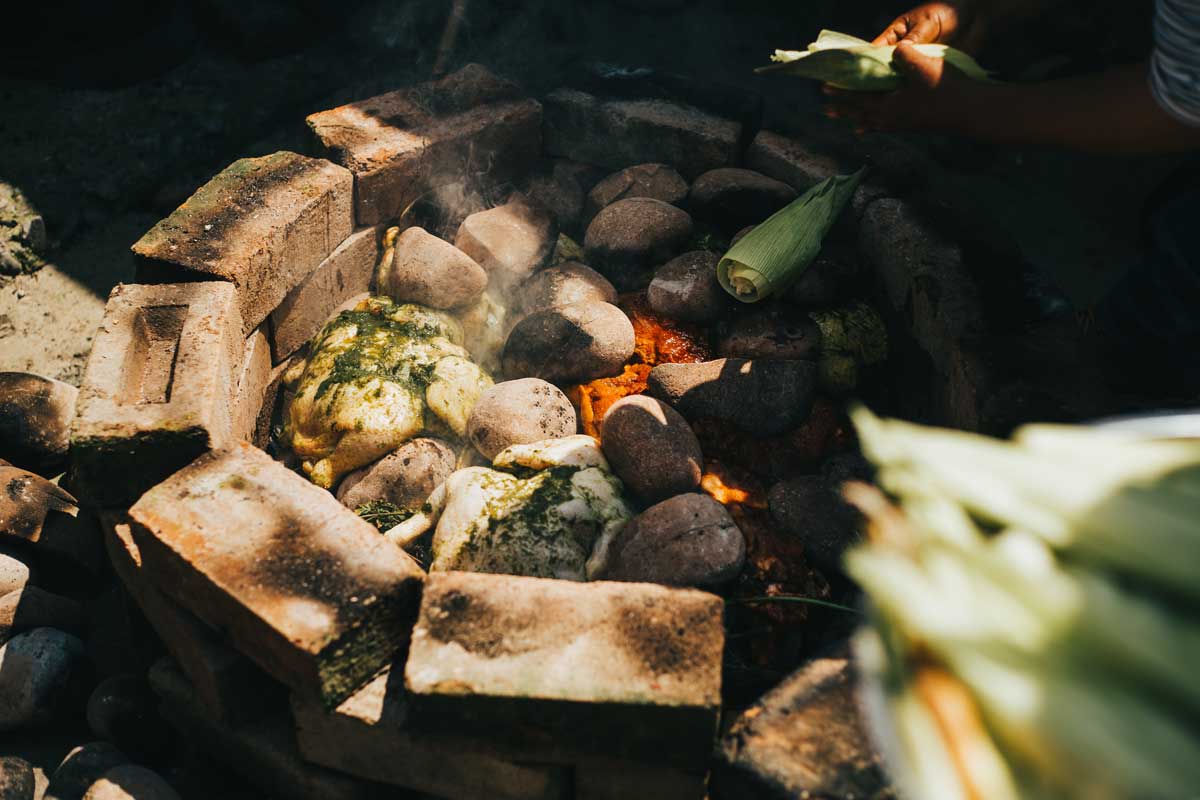
The magic of pachamanca lies in its ancient earth-oven technique, a ritual that transforms simple ingredients into a feast full of smoky, earthy flavors.
The process is as much about community and ceremony as it is about cooking.
Here’s how it works:
-
Preparing the Earth Oven
-
A pit is dug into the ground, often lined with stones.
-
Experienced cooks select suitable cooking stones and heat them thoroughly to store the heat for the feast. Stone selection and oven construction require local knowledge; the home recipe below uses roasting pans instead.
-
-
Layering the Food
-
Marinated meats (lamb, pork, chicken, guinea pig) are placed first, closest to the hot stones.
-
Andean tubers like potatoes, oca, olluco, and mashua are added next.
-
Corn cobs, broad beans, and other vegetables are placed on top.
-
Each layer is separated and covered with banana leaves or maize husks, which protect the food and infuse it with aroma.
-
-
Sealing the Oven
-
Once all ingredients are layered, the entire pit is sealed with more leaves, cloth, and finally, earth or soil.
-
This natural insulation locks in heat and steam, allowing the food to cook slowly.
-

-
Cooking Time
-
The cooking process usually takes 2 to 3 hours, depending on the size of the pit and the amount of food.
-
During this time, the community gathers, socializes, and often drinks chicha (fermented corn beer).
-
-
The Unveiling
-
When it’s time, the earth is carefully removed, revealing tender, smoky, and herb-infused meats and vegetables.
-
The food is served family-style, reinforcing the dish’s role as a communal celebration.
-
The pachamanca method is more than a cooking process—it’s a ritual that honors Pachamama (Mother Earth) while bringing people together in gratitude and abundance.
Regional Variations of Pachamanca in Peru

While pachamanca is prepared throughout the Andes, each region of Peru has its own unique twist on this ancestral dish.
The essentials—earth oven, hot stones, and communal spirit—remain the same, but ingredients and flavors shift depending on local traditions and agriculture.
-
Central Andes (Junín & Huancayo)
-
Considered the heartland of pachamanca.
-
Known for using all three primary meats: lamb, pork, and chicken.
-
Heavy use of Andean herbs like chincho and huacatay, giving the dish its signature aroma.
-
-
Ayacucho & Huancavelica
-
Meats are often marinated with stronger spices, resulting in a bolder, more intense flavor.
-
Guinea pig (cuy) is a common addition.
-
Tubers such as oca and mashua take center stage alongside potatoes.
-
-
Ancash & Pasco
-
Known for simpler preparations with fewer meats.
-
More emphasis on local potatoes and corn varieties, showcasing the region’s agricultural diversity.
-
-
Cusco & Southern Highlands
-
Sometimes prepared with alpaca meat, a traditional Andean staple.
-
Corn beer (chicha de jora) is frequently used in marinades.
-
Often linked to festivals celebrating harvest cycles.
-
-
Coastal Adaptations
-
In areas closer to Lima and the coast, pachamanca may incorporate urban twists, such as modern ovens or grills.
-
Banana leaves are used more frequently as wraps, reflecting tropical influence.
-
Despite these regional differences, pachamanca always symbolizes unity, tradition, and respect for Pachamama.
Wherever you try it in Peru, you’ll experience both the familiar smoky-earthy essence and the distinctive flavors of the local region.
Pachamanca in Modern Peruvian Culture

Today, pachamanca continues to hold a special place in Peruvian identity—not only as an ancient cooking method but also as a living tradition that adapts to modern life.
It bridges the gap between ancestral rituals and contemporary gastronomy.
-
National Pachamanca Day
-
Celebrated on the first Sunday of February, this holiday honors the dish’s heritage.
-
Communities across the Andes gather to prepare pachamanca as a way of preserving cultural identity and passing traditions to new generations.
-
-
Cultural Symbolism
-
Pachamanca is more than food; it represents gratitude to Pachamama (Mother Earth) and the spirit of sharing.
-
It remains central to weddings, festivals, and family gatherings, reinforcing its role as a communal feast.
-
-
Tourism & Gastronomy
-
Many visitors to Peru seek out authentic pachamanca experiences in the Central Highlands, particularly in Junín, Huancayo, and Ayacucho.
-
Some restaurants in Lima and Cusco now offer adapted pachamanca, prepared with ovens or grills, so travelers can enjoy the flavors without a pit oven.
-
-
Modern Adaptations
-
Urban chefs experiment with pachamanca by using stainless steel ovens, clay pots, or grills, but still incorporate traditional marinades and herbs.
-
These adaptations make pachamanca more accessible while honoring its original essence.
-
In modern Peru, pachamanca is both a culinary attraction and a cultural emblem.
It’s a dish that unites past and present, reminding Peruvians—and visitors—that food can be history, ritual, and celebration all in one.
How to Experience Pachamanca Today

If you’re visiting Peru—or simply curious about trying it yourself—there are many ways to experience pachamanca beyond the traditional Andean setting.
From cultural tourism to at-home adaptations, this dish continues to bring people closer to Peruvian heritage.
-
Travel to the Highlands
-
The most authentic pachamanca experiences are found in Junín, Huancayo, Ayacucho, and Huancavelica, where families and communities still prepare it with earth ovens.
-
Many rural festivals and harvest celebrations feature pachamanca as the centerpiece.
-
-
Tourist Experiences & Demonstrations
-
Eco-lodges, cultural tours, and agrotourism experiences often include a pachamanca demonstration, allowing visitors to see the hot stone cooking process up close.
-
These events often include music, dance, and storytelling, making it a full cultural immersion.
-
-
Restaurants & Urban Adaptations
-
In cities like Lima and Cusco, certain restaurants serve oven-baked or grilled versions of pachamanca.
-
While not buried underground, these adaptations still feature the same marinades, herbs, and mix of meats and tubers.
-
-
Cooking Pachamanca at Home
-
Home cooks can recreate the flavors by marinating meats with Andean herbs (huacatay, chincho, muña) and slow-roasting in the oven.
-
Banana leaves add aroma; a tightly covered roasting pan retains steam, though it cannot reproduce the traditional earth oven exactly.
-
Pair with Peruvian drinks like chicha morada (purple corn drink) or pisco sour for the full experience.
-
Whether you enjoy pachamanca in the Andes, a restaurant, or your own kitchen, each bite connects you to a tradition that has nourished communities for centuries.
It’s not just a meal—it’s an invitation to taste Peru’s living history.
Pachamanca vs. Other Traditional Peruvian Dishes
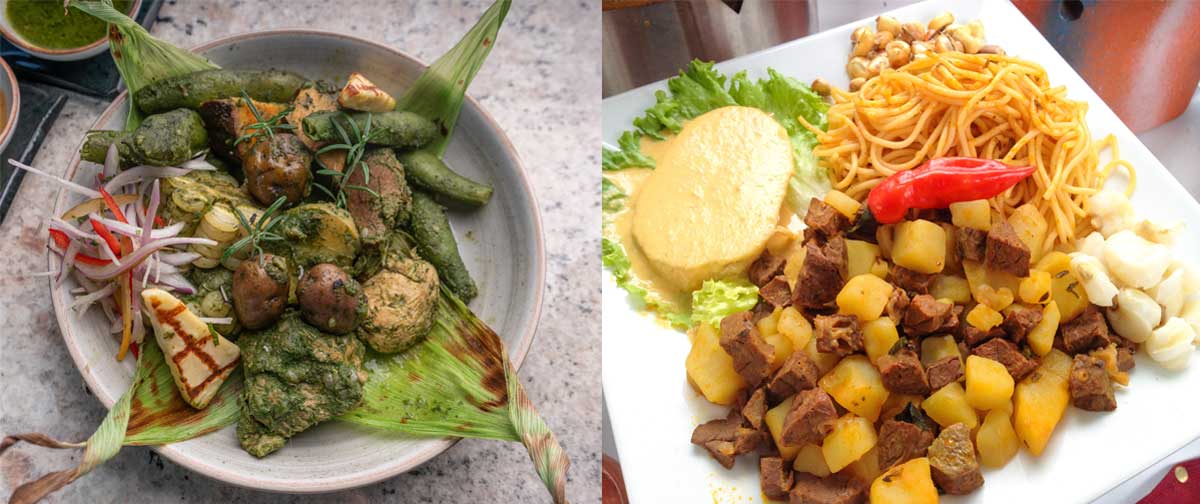
Peru is famous for its diverse gastronomy, and pachamanca holds a unique place among the country’s most celebrated dishes.
Unlike everyday meals, pachamanca is deeply tied to ritual, tradition, and communal gathering.
Here’s how it compares to other iconic Peruvian foods:
-
Pachamanca vs. Ceviche
-
Ceviche is Peru’s most internationally known dish, made with raw fish marinated in lime juice.
-
While ceviche represents the coastal culinary identity, pachamanca reflects the Andean highlands.
-
Ceviche is fresh, zesty, and quick to prepare, while pachamanca is slow-cooked, smoky, and ceremonial.
-
-
Pachamanca vs. Pollo a la Brasa
-
Pollo a la brasa (Peruvian rotisserie chicken) is a popular, everyday comfort food found in cities and towns across Peru.
-
Pachamanca, on the other hand, is reserved for special occasions like weddings, festivals, and harvest celebrations.
-
Both dishes highlight marinated meats, but pachamanca uses an ancestral earth oven method instead of modern rotisseries.
-
-
Pachamanca vs. Lomo Saltado
-
Lomo saltado is a Chinese-Peruvian stir fry of beef, onions, and tomatoes, cooked quickly in a wok.
-
It showcases Peru’s fusion cuisine and immigrant influence, while pachamanca embodies ancient Inca traditions.
-
-
Pachamanca vs. Huatia
-
Huatia is another Andean earth-oven dish, but it is simpler, usually made with only potatoes and sometimes cheese.
-
Pachamanca is more elaborate, combining meats, tubers, herbs, and corn in a multi-layered feast.
-
In short, while ceviche, pollo a la brasa, and lomo saltado dominate Peru’s modern dining tables and restaurants, pachamanca remains a ceremonial dish, connecting Peruvians to their ancestral roots and Pachamama (Mother Earth).
Conclusion: Pachamanca—A Timeless Peruvian Feast Honoring Tradition and Flavor

Pachamanca is more than a dish—it’s a living link to Peru’s ancient past.
From its Inca roots and symbolic connection to Pachamama to its role in modern celebrations and gastronomy tourism, pachamanca continues to unite communities through food, ritual, and heritage.
Unlike everyday Peruvian favorites such as ceviche or pollo a la brasa, pachamanca is a ceremonial feast that showcases the richness of the Andes, both in flavor and culture.
If you’re planning a trip to Peru, don’t miss the chance to taste an authentic pachamanca prepared in the traditional earth oven.
And if you can’t travel yet, try a home-style pachamanca recipe to bring the Andes into your kitchen.
Either way, this dish offers an unforgettable journey into the soul of Peruvian cuisine.
Home-Oven Pachamanca: Method
- Combine the chicha de jora or beer, garlic, cumin, ají pastes, chopped herbs, salt and pepper. Coat the lamb, pork and chicken, cover, and refrigerate for at least 8 hours or overnight.
- Preheat the oven to 350°F (175°C). Line two large deep roasting pans with clean, pliable banana leaves or soaked maize husks. Wash the tubers; halve large ones so the pieces cook evenly.
- Divide the marinated meats and marinade between the pans. Add the potatoes, other tubers, corn and broad beans, with extra herbs between layers. Cover with leaves and seal each pan tightly with foil. Do not pack the pans excessively deep.
- Roast for about 2½–3 hours, checking from 2 hours onward. The tubers should be tender, and the chicken and foods sharing its juices should reach 165°F (74°C) in their centers. Check several spots with a thermometer, avoiding bones. Add a little hot water if a pan is drying out, reseal, and continue cooking as needed.
- Open the foil carefully to release steam. Serve family-style with salsa criolla and ají sauce. Discard the leaves, corn husks and broad-bean pods before eating.
This recipe card describes a home-oven adaptation; it does not use hot stones. Allow about 12 hours in total: 1 hour of preparation, 8 hours of refrigerated marinating and up to 3 hours of roasting. A longer overnight marinade adds time. The large batch serves 8–10 generously and needs two roasting pans. Potatoes and sweet potatoes can replace the Andean tubers by weight. Oregano and mint are accessible alternatives to some herbs, but do not reproduce the exact flavor of chincho or muña. Traditional cuy, goat and alpaca variations are discussed in the article; adding them changes the quantity and cooking requirements.
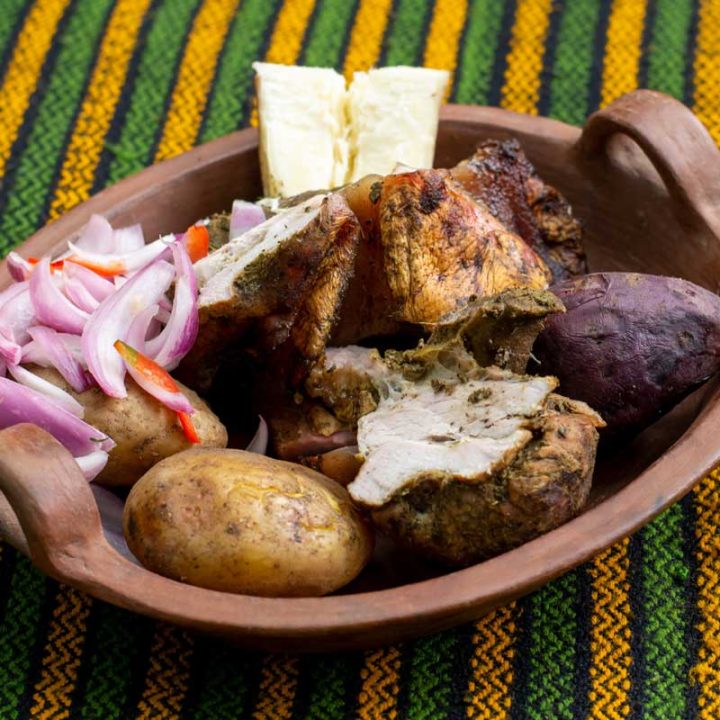
Pachamanca Recipe
This home-oven adaptation of Peruvian pachamanca combines herb-marinated lamb, pork and chicken with potatoes, Andean tubers, corn and broad beans. Marinate overnight, then roast in tightly covered pans; the traditional earth-oven method is described in the article.
Ingredients
Meats for the home oven version
- 2 lbs lamb, cut into 2-inch chunks
- 2 lbs pork, cut into 2-inch chunks
- 2 lbs chicken, bone-in pieces
Marinade
- 1 cup chicha de jora (corn beer) or substitute light beer
- 6 garlic cloves, minced
- 2 tbsp ground cumin
- 2 tbsp ají panca or mild chili paste
- 1 tbsp ají amarillo paste
- 2 tbsp huacatay (black mint), finely chopped
- 2 tbsp chincho or fresh oregano
- 2 tbsp muña (or fresh mint)
- Salt and black pepper to taste
Andean Tubers & Vegetables
- 3 lbs mixed potatoes (yellow, purple, or native varieties)
- 1 lb oca (sweet, tangy tuber)
- 1 lb mashua (peppery root)
- 1 lb olluco (waxy Andean tuber)
- 3 fresh corn cobs (choclo), cut into halves
- 2 cups broad beans (habas) in pods
For Wrapping & Cooking
- Banana leaves or maize husks for wrapping
- Additional herbs for layering (huacatay, chincho, muña)
Instructions
- Combine the chicha de jora or beer, garlic, cumin, ají pastes, chopped herbs, salt and pepper. Coat the lamb, pork and chicken, cover, and refrigerate for at least 8 hours or overnight.
- Preheat the oven to 350°F (175°C). Line two large deep roasting pans with clean, pliable banana leaves or soaked maize husks. Wash the tubers; halve large ones so the pieces cook evenly.
- Divide the marinated meats and marinade between the pans. Add the potatoes, other tubers, corn and broad beans, with extra herbs between layers. Cover with leaves and seal each pan tightly with foil. Do not pack the pans excessively deep.
- Roast for about 2½–3 hours, checking from 2 hours onward. The tubers should be tender, and the chicken and foods sharing its juices should reach 165°F (74°C) in their centers. Check several spots with a thermometer, avoiding bones. Add a little hot water if a pan is drying out, reseal, and continue cooking as needed.
- Open the foil carefully to release steam. Serve family-style with salsa criolla and ají sauce. Discard the leaves, corn husks and broad-bean pods before eating.
Notes
This recipe card describes a home-oven adaptation; it does not use hot stones. Allow about 12 hours in total: 1 hour of preparation, 8 hours of refrigerated marinating and up to 3 hours of roasting. A longer overnight marinade adds time. The large batch serves 8–10 generously and needs two roasting pans. Potatoes and sweet potatoes can replace the Andean tubers by weight. Oregano and mint are accessible alternatives to some herbs, but do not reproduce the exact flavor of chincho or muña. Traditional cuy, goat and alpaca variations are discussed in the article; adding them changes the quantity and cooking requirements.
More Peruvian Foods
See all →
Jorge Garcia is the founder of AmigoFoods, where he has spent over 20 years helping readers discover authentic Latin American and Spanish cuisine. Raised in a Cuban-American household, Jorge learned to cook at the hands of his mother and grandmother, carrying forward generations of family recipes. That heritage, backed by his family’s four-generation history in the Latin food industry, inspired him to launch AmigoFoods in 2003. With more than 1,000 published articles on recipes, ingredients, and food culture, Jorge’s mission is simple: make authentic Latin cooking approachable for home cooks everywhere while honoring the traditions behind every dish.