

Pandebono is Colombia’s golden cheese bread, with a thin crisp shell and a chewy, salty-cheesy center. Made with cassava starch, a little corn flour and fresh cheese, these small rolls are best eaten warm with coffee or hot chocolate.
Pandebono at a Glance
What Is Pandebono?
Pandebono (pronounced pahn-deh-BOH-noh) is a baked cheese roll from Colombia’s Valle del Cauca, the region around Cali. It’s sold warm from bakery counters all over the country and eaten for breakfast or as an afternoon snack. It has also ranked at or near the top of TasteAtlas’s lists of the world’s best breads.
What makes it special is the starch. Instead of wheat flour, pandebono uses cassava (yuca) starch, which bakes into a chewy, slightly stretchy crumb under a crisp shell. A little corn flour adds flavor and a fresh, salty white cheese makes up most of the dough.

Where the name comes from
The best-documented story ties pandebono to Hacienda El Bono, a farm on the old road between Cali and Buenaventura, where travelers stopped for corn and cheese breads baked in a wood oven. “Pan del Bono” eventually became pandebono. Two other stories are often repeated but unproven: an Italian baker in Cali calling out pane del buono (“good bread”), and farm workers receiving the bread as part of a bono, or voucher.
Pandebono Ingredients and US Substitutes
- Cassava starchSour (agrio) for the most authentic rise and tang, or regular tapioca starch for an easier swap.
- Fresh salty cheeseColombian queso costeño, or a mix of feta and queso fresco in the US.
- Precooked corn flourA few spoonfuls of Harina P.A.N. or a similar white corn flour.
- Egg, butter, milkTo bind the dough. Add the milk a spoon at a time.
Sour cassava starch vs. tapioca starch
In Colombia, pandebono is traditionally made with almidón de yuca agrio, cassava starch that’s fermented for a couple of weeks before it’s dried. Fermentation gives the rolls more puff, a crisper shell and a faint tang. Most US recipes use plain tapioca starch (the same as tapioca flour), which works well but bakes a little denser and milder. You can also use half and half. One thing that does not work: cassava flour, which is the whole ground root and makes a heavy, gummy roll.

- Item Package Weight: 1.15 lb
- Item Package Length: 15.24cm
Queso costeño and the feta + queso fresco swap
Colombian bakers use queso costeño, a fresh, firm, salty white cheese from the Caribbean coast. It’s hard to find in the US, so the best stand-in is two parts feta to one part queso fresco: feta brings the salt, queso fresco brings the melt. Grind them fine so the dough comes together smoothly.
Precooked corn flour
Just ¼ cup of precooked white corn flour gives pandebono its subtle corn flavor and helps it hold its shape. Harina P.A.N. is the brand most Colombian kitchens use. Don’t substitute cornmeal, which stays gritty.
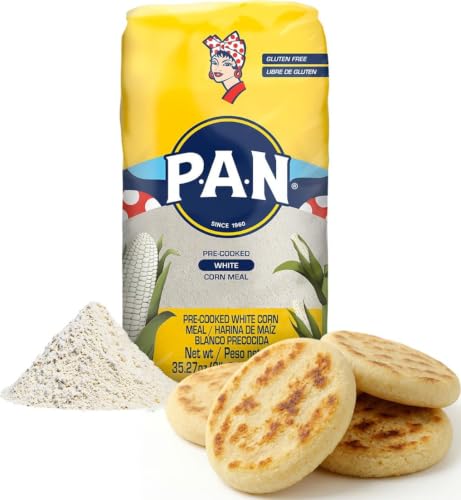
- Pre-cooked white corn flour meal
- Single pack 1Kg (35 oz/ 2 lbs 3.3 oz)

How to Make Pandebono (Step by Step)
- Grind the cheese in a food processor until it looks like fine, damp sand.
- Pulse in the dry ingredients: starch, corn flour, sugar and baking powder.
- Add the egg and butter and process until the dough clumps.
- Knead by hand, adding milk a spoonful at a time, until the dough feels like play dough and a ball rolls without cracking.
- Rest 15 minutes, then shape 12 balls (or rings) and press the tops slightly flat.
- Bake at 400°F for 18 to 22 minutes without opening the oven for the first 12. Cool for 5 minutes, then eat them warm.
The recipe card below has exact amounts, freezing instructions and a troubleshooting guide.

Pandebono (Colombian Cheese Bread)
Crisp-shelled, chewy, cheesy Colombian cheese rolls from Valle del Cauca, made with cassava starch, fresh salty cheese and a little corn flour. Naturally wheat-free and ready in under an hour.
Ingredients
For the dough
- 1 cup (130 g) sour cassava starch (almidón agrio), tapioca starch, or half of each
- ¼ cup (35 g) precooked white corn flour, such as Harina P.A.N.
- 1 tablespoon granulated sugar
- ½ teaspoon baking powder
For the cheese
- 8 ounces (225 g) feta, crumbled
- 4 ounces (115 g) queso fresco, crumbled (or 12 ounces total queso costeño, if you can find it)
To bind
- 1 large egg, at room temperature
- 1 tablespoon unsalted butter, softened
- 2 to 4 tablespoons whole milk, as needed
Instructions
- Heat the oven. Heat the oven to 400°F with a rack in the center. Line a baking sheet with parchment paper.
- Grind the cheese. Pulse the feta and queso fresco in a food processor until they look like fine, damp sand, about 30 seconds.
- Add the dry ingredients. Add the cassava starch, corn flour, sugar and baking powder and pulse until evenly mixed.
- Bind the dough. Add the egg and butter and process until the mixture clumps into a crumbly dough, 20 to 30 seconds.
- Adjust with milk. Tip the dough out and knead briefly by hand, adding milk 1 tablespoon at a time until it is smooth and soft like play dough and a ball rolls without cracking.
- Rest the dough. Cover and let it rest 15 minutes so the starch hydrates. (You can also refrigerate it up to 24 hours.)
- Shape. Divide into 12 portions of about 1¾ ounces (50 g). Roll into smooth balls with lightly oiled hands and press the tops slightly flat, or roll into ropes and join the ends into rings. Space 2 inches apart.
- Bake. Bake 18 to 22 minutes, until puffed, golden on the bottom and lightly golden on top. Do not open the oven for the first 12 minutes.
- Serve warm. Cool 5 minutes. Pandebono is best within the first hour, while the crust is crisp and the center is chewy.
Notes
Starch: Sour cassava starch (almidón agrio) gives more rise, a crisper shell and a gentle tang. Tapioca starch gives a denser, chewier, milder roll. Do not use cassava flour, which is the whole ground root. Sour starch may need an extra spoonful of milk.
Cheese: You want about 12 ounces of fresh, salty, crumbly cheese. Feta brings the salt and queso fresco the melt. Farmer's cheese can replace the queso fresco. Avoid pre-shredded or aged hard cheeses. No added salt is needed.
Corn flour: Use precooked white corn flour (such as Harina P.A.N.), not cornmeal. 2 tablespoons of cornstarch also works.
Freeze ahead: Freeze shaped, unbaked balls on a tray, then bag them for up to 3 months. Bake from frozen at 400°F for 22 to 26 minutes.
Reheat: 5 to 6 minutes in a 300°F oven or 3 minutes in an air fryer at 330°F. Avoid the microwave, which makes them gummy.
Troubleshooting: If they spread flat, the dough was too wet (add a tablespoon of starch). If the surface cracks, it was too dry (add milk). A gummy center means underbaked or rolls that are too large. They deflate slightly as they cool; that is normal.
Gluten-free: Pandebono contains no wheat. Check that your corn flour and baking powder are labeled gluten-free.
Tips for Puffy, Chewy Pandebono
Judge the dough by feel, not by the cup. Cheeses vary in moisture, so the milk is always “as needed.” The dough is right when it’s soft and smooth and a rolled ball shows no cracks around the edges.
- Grind the cheese fine. Big crumbles make a lumpy dough that cracks.
- Keep the rolls small and even (about 1¾ ounces) so they bake through before the outside darkens.
- Don’t open the oven early. The steam inside is what puffs them.
- Freeze them unbaked, not baked, for pandebono that tastes fresh any morning.
Troubleshooting
- Spread flatThe dough was too wet. Add a tablespoon of starch.
- Cracked topsThe dough was too dry. Knead in a little more milk.
- Gummy centerUnderbaked or too large. Bake a few minutes longer or shape smaller.
- Too saltySwap some of the feta for queso fresco or farmer’s cheese.
Variations
- Rings: roll the dough into ropes and pinch the ends together, the classic bakery shape.
- Bocadillo-filled: press a small cube of guava paste into each ball before baking.
- Pandebono waffles: press spoonfuls of dough in a hot waffle iron until golden.
Pandebono vs. Almojábana, Pan de Yuca and Pão de Queijo
| Bread | Starch | Cheese | Shape and texture |
|---|---|---|---|
| Pandebono (Colombia) | Cassava starch + a little corn flour | Salty fresh cheese | Golden round or ring; crisp shell, chewy inside |
| Almojábana (Colombia) | Corn flour | Fresh curd (cuajada) and soft cheese | Paler, softer, spongier and more buttery |
| Pan de yuca (Colombia, Ecuador) | Cassava starch | Fresh cheese | Often crescent-shaped; chewy |
| Pandequeso (Colombia) | Cassava starch | Two cheeses | Ring (corona); chewy |
| Pão de queijo (Brazil) | Cassava starch, scalded with hot milk and oil | Aged Minas cheese | Small balls; airier and more elastic |
Colombian buñuelos use a similar cheese dough but are fried, not baked. See more of the country’s breads in our guide to Colombian bread.
How to Serve and Store Pandebono

Pandebono is best warm, within an hour of baking. Serve it with Colombian hot chocolate, café con leche or a strong cup of Colombian coffee, or alongside fruit and guava paste.

- Full-Bodied Colombian Roast – Bold and intense with rich aroma, chocolatey notes, and a smooth...
- Ground Format – Ready for brewing with ease using drip, pour-over, or French press
To store: keep baked rolls in an airtight container for a day, and reheat them in a 300°F oven for 5 to 6 minutes. For longer storage, freeze the unbaked balls and bake straight from the freezer.
Pandebono FAQ
What is pandebono, and what does it taste like?
Pandebono is a Colombian cheese roll made with cassava starch, cheese, corn flour and egg. It tastes salty and cheesy, with a crisp outside and a chewy, slightly stretchy inside.
Is pandebono the same as pan de bono?
Yes. Both spellings are used for the same bread; pandebono as one word is the most common in Colombia.
Is pandebono gluten-free?
It contains no wheat, so it is naturally gluten-free. Check that your corn flour and baking powder are labeled gluten-free if you’re cooking for someone with celiac disease.
Is pandebono healthy?
It’s a treat: mostly starch and cheese, so it’s rich in fat and salt. One roll is a modest serving, and it’s a good wheat-free option.
What’s the difference between pandebono and almojábana?
Pandebono is made mainly with cassava starch and salty cheese and is chewy with a crisp shell. Almojábana is made with corn flour and fresh curd and is softer and spongier.
What’s the difference between pandebono and pão de queijo?
Both use cassava starch, but Brazilian pão de queijo is made by scalding the starch with hot milk and oil and uses aged cheese, so it’s airier and more elastic. Pandebono isn’t scalded, uses fresh salty cheese and includes corn flour.
More Colombian Breads and Breakfasts
More Colombian Foods
See all →
Jorge Garcia is the founder of AmigoFoods, where he has spent over 20 years helping readers discover authentic Latin American and Spanish cuisine. Raised in a Cuban-American household, Jorge learned to cook at the hands of his mother and grandmother, carrying forward generations of family recipes. That heritage, backed by his family’s four-generation history in the Latin food industry, inspired him to launch AmigoFoods in 2003. With more than 1,000 published articles on recipes, ingredients, and food culture, Jorge’s mission is simple: make authentic Latin cooking approachable for home cooks everywhere while honoring the traditions behind every dish.