
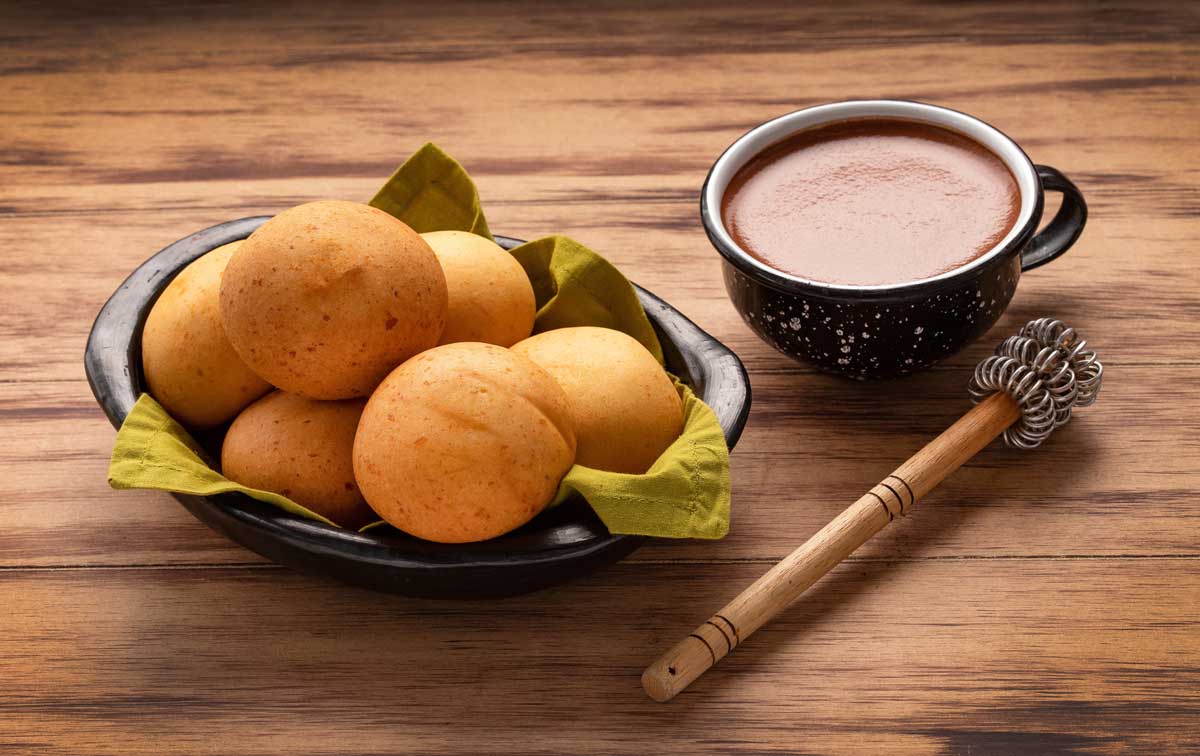
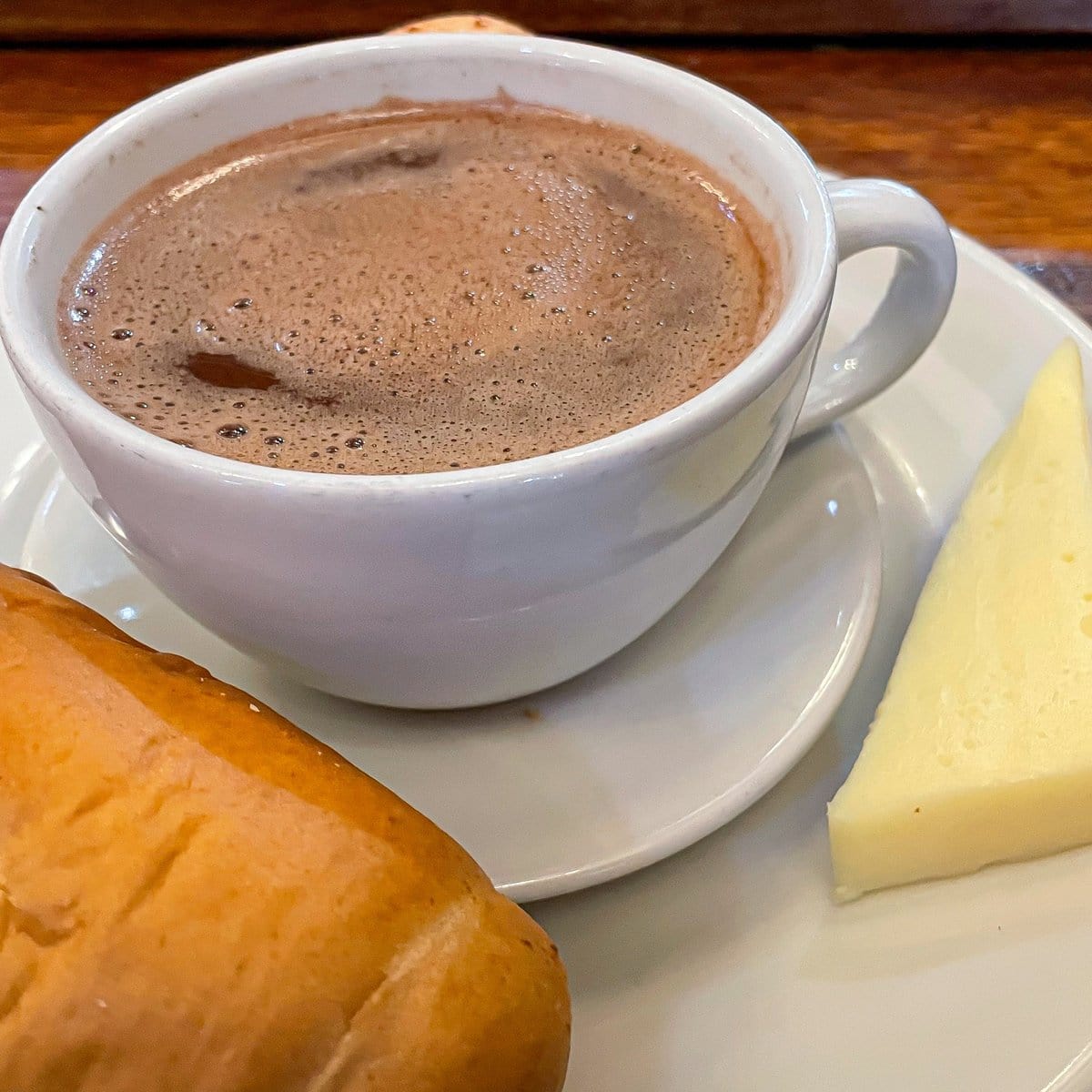
Colombian hot chocolate, or chocolate santafereño, is table chocolate melted in water or milk, beaten to a thick foam with a wooden molinillo and served with a slice of fresh white cheese that you drop right into the cup. The cheese softens, turns stretchy, and you fish it out with a spoon between sips. It takes 15 minutes.
In Bogotá it is breakfast and the afternoon snack called onces, usually with almojábanas or buttered bread on the side. Here is how to make it, which cheese and chocolate to buy in the US, and why the combination works.
Colombian Hot Chocolate at a Glance
This post contains Amazon affiliate links. As an Amazon Associate I earn from qualifying purchases, at no extra cost to you.
What Is Chocolate Santafereño?
Chocolate santafereño is hot chocolate the Bogotá way. The name means “from Santa Fe,” the colonial name of the city, which was long known as Santa Fe de Bogotá.
It is not cocoa powder stirred into milk. It starts with chocolate de mesa, bars of ground cacao pressed into tablets, which are melted in a pot, cooked for a few minutes and beaten until foamy. The result is lighter and less sweet than American hot cocoa, with a stronger cacao taste.
You will hear a few names for it:
- Chocolate santafereño: the Bogotá name for the cup, the cheese and the bread together.
- Chocolate con queso: hot chocolate with cheese, the name used across Colombia.
- Chocolate completo: the “complete” version on bakery menus, hot chocolate with cheese, bread and often an almojábana.
Why Do Colombians Put Cheese in Hot Chocolate?
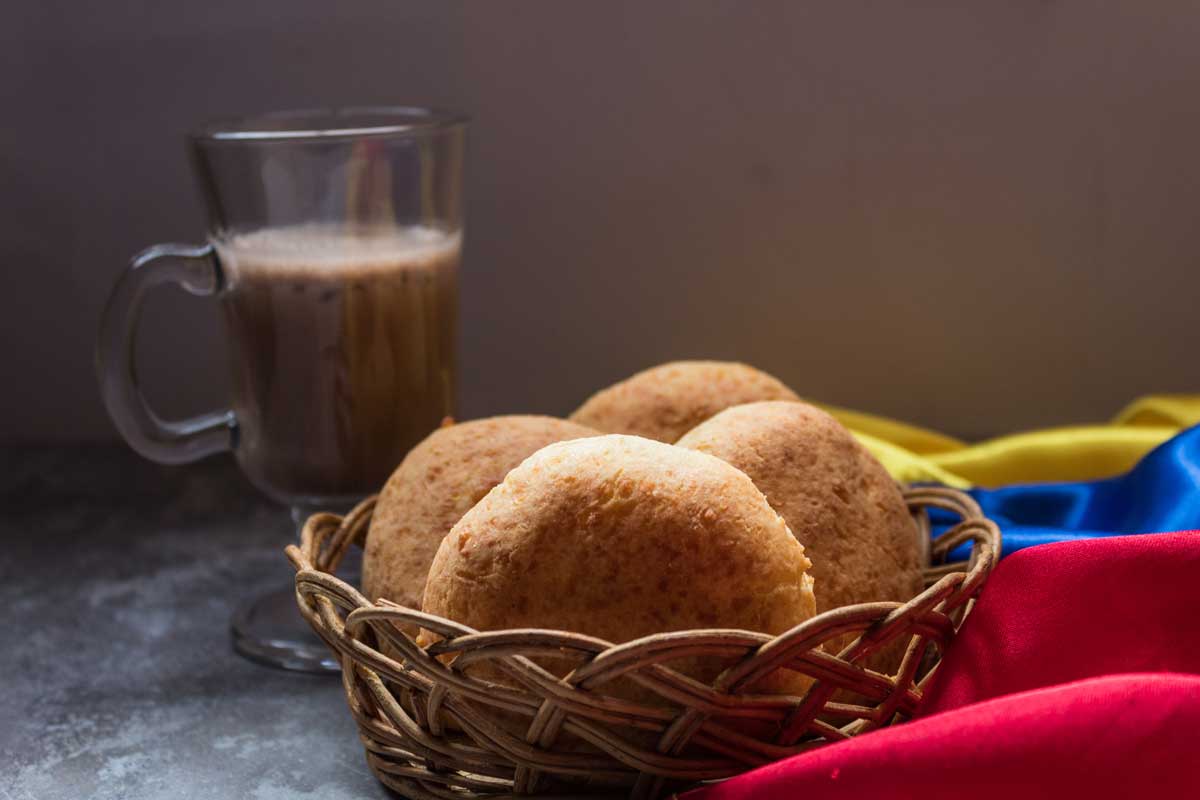
For the same reason salted caramel works. A mild, slightly salty cheese balances the sweet, bitter chocolate. The hot cup also changes the cheese: it goes soft and stretchy at the edges, so every spoonful tastes like a chocolate-dipped cheese curd.
It is also practical. In the cold, high-altitude capital, chocolate with cheese and bread is a filling, warming meal that costs very little, and bakeries all over the city sell it as a set.

How to eat it:
- Cut the cheese into ½-inch cubes or a thin slice, about 1½ oz (40 g) per cup.
- Drop it into the hot chocolate at the table.
- Wait about a minute, until the cheese is soft and stretchy but still in one piece.
- Scoop it out with a spoon and eat it between sips. Some people tear in bread and eat that with a spoon too.
Which Cheese to Use in Colombian Hot Chocolate
You want a fresh, mild, slightly salty cheese that softens in hot liquid without melting into strings or oil. These are the best options, from most traditional to easiest to find in the US:
| Cheese | How it behaves in the cup | Verdict |
|---|---|---|
| Queso campesino | Fresh farmer’s cheese from the Colombian countryside. Softens and turns a little stretchy. | The classic |
| Queso doble crema | Richer stretched-curd cheese. Gets gooey and pulls like mozzarella. | Traditional, extra melty |
| Queso Paipa | Semi-aged cheese from Boyacá. Firmer and saltier. | For a stronger flavor |
| Queso fresco | Easy to find in US supermarkets. Softens but stays crumbly. | Best easy swap |
| Low-moisture mozzarella | Melts and stretches well. Mild. Use the block, not fresh mozzarella in water. | Best for stretch |
| Oaxaca cheese | Stringy and mild, close to doble crema. | Good swap |
| Feta, cheddar, aged cheeses | Too salty or sharp, and they turn oily. | Skip |
If you find a Colombian brand like queso campesino or doble crema at a Latin grocery, use it. Otherwise queso fresco and low-moisture mozzarella are the two most reliable choices.
Colombian Table Chocolate: Corona, Luker and What to Buy
Colombian hot chocolate starts with tablets of chocolate de mesa. They are made to be melted in a pot, not eaten as candy, and they are scored into portions so you can snap off one per cup.
Two companies dominate the shelf. Luker made its first chocolate tablet in January 1906 at Hacienda La Enea in Manizales, and its name blends two of the founders’ surnames. Corona comes from the Compañía Nacional de Chocolates, founded in Medellín in 1920. Both sell sweetened, unsweetened and spiced versions.
| Chocolate | What it’s like |
|---|---|
| Corona Tradicional | The most widely sold bar. Sweetened, smooth and mild; no extra sugar needed. Look for Corona Traditional tablets. |
| Corona Clavos y Canela | Sweetened, with the cloves and cinnamon already in the bar, so you can skip the whole spices. Sold as Corona Cinnamon & Cloves. |
| Luker Tradicional | Darker and less sweet, with more cacao flavor. The Luker Traditional bitter bar needs panela or sugar to taste. |
| Luker con azúcar morena | Sweetened with brown sugar for a rounder, caramel note. Luker with brown sugar. |
| Instant mixes | Powders like Luker Choco Express dissolve in seconds but taste flatter and don’t foam as well. Fine for a quick cup. |

- TRADITIONAL CHOCOLATE CORONA: Classic, rich flavor that brings the joy of authentic table chocolate...
- PREMIUM QUALITY: Made with 100% real cocoa, free from trans fats and cholesterol.
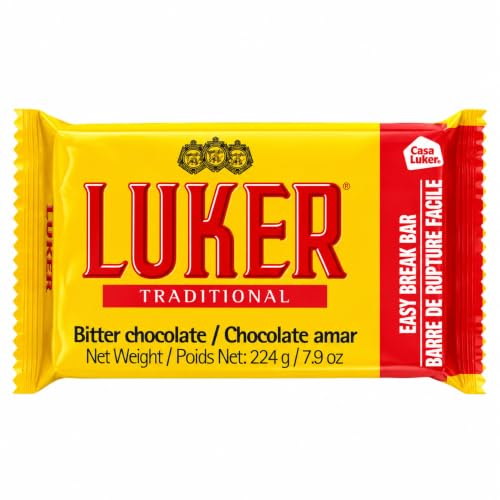
- Traditional bitter chocolate: Classic Luker chocolate with a rich cocoa-forward taste for a variety...
- Easy-break bar: Convenient format makes it simple to portion the chocolate for melting, baking or...
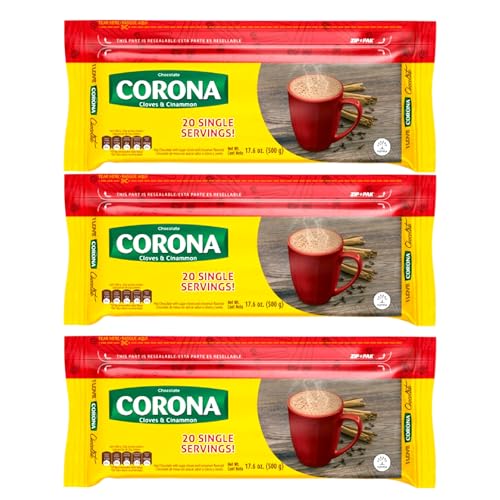
- ✅ Multiple Servings – Provides approximately 20 single servings per pack for regular use.
- ✅ Versatile Enjoyment – Suitable for cozy moments at home, work breaks, or sharing with others.

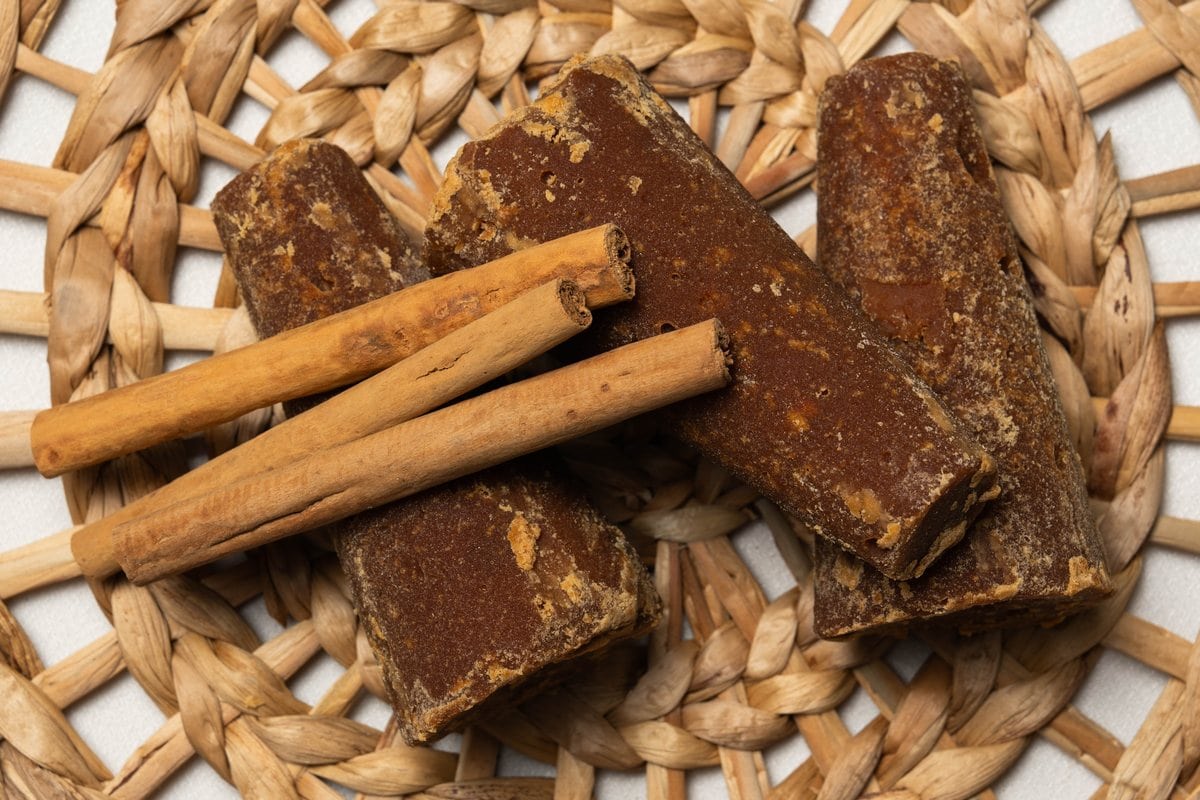
Sweetened or unsweetened? Sweetened bars (con azúcar) are the default and need nothing added. Unsweetened bars (sin azúcar or amargo) let you control the sugar; Colombians usually sweeten them with grated panela, the unrefined cane sugar sold in blocks. Goya panela is easy to find in the US.
No Colombian chocolate? For 4 cups, use 3 oz (85 g) chopped 70% dark chocolate, 2 tablespoons grated panela or dark brown sugar and a pinch of cinnamon. Mexican tablets like Abuelita work in a pinch, but they are sweeter and grainier.
Water or Milk?
Both are traditional. Chocolate santafereño was originally made with water, and many Bogotá families still make it that way or use half water and half milk.
| Base | Result | Best for |
|---|---|---|
| All water | Lighter, more cacao-forward, the most traditional | Dark chocolate lovers; dairy-free cups |
| Half water, half milk | Balanced and still foamy | The everyday Colombian cup |
| All milk | Creamy and rich, closest to US hot chocolate | Kids and first-timers |
Made with water and served without cheese, Colombian hot chocolate is dairy-free. Check the label, since a few bars contain milk solids.
The Chocolatera and the Molinillo
In Colombia, chocolate is made in a chocolatera, also called an olleta: a tall, narrow aluminum pot with a long handle that keeps the foam from boiling over. The molinillo is a carved wooden beater with loose rings at the head. You stand it in the pot and roll the handle quickly between your palms.

You don’t need either one. A small saucepan and a whisk work fine, and a handheld frother gives the thickest foam with the least effort. If you want the real thing, a handmade wooden molinillo and an aluminum chocolatera are inexpensive, and an electric milk frother is the easy shortcut.
How to Make Colombian Hot Chocolate
The full recipe with amounts is in the card below. These are the steps that make it taste Colombian:
- Simmer the liquid with spices. Heat water, milk or a mix with a cinnamon stick and two cloves.
- Melt and cook the chocolate. Add about 1 oz (30 g) of table chocolate per cup and stir until dissolved, then simmer 2 minutes more. Table chocolate tastes chalky if it is only melted.
- Let it rise. When the chocolate foams up toward the rim, pull it off the heat, beat it until it settles and put it back. Many Bogotá cooks let it rise three times; it thickens the cup and builds the foam.
- Froth it hard. Spin the molinillo between your palms for 30 to 60 seconds, until a thick cap of foam forms.
- Serve with cheese and bread. Pour with plenty of foam and drop the cheese in at the table.
Chocolate Completo: What to Serve With Colombian Hot Chocolate
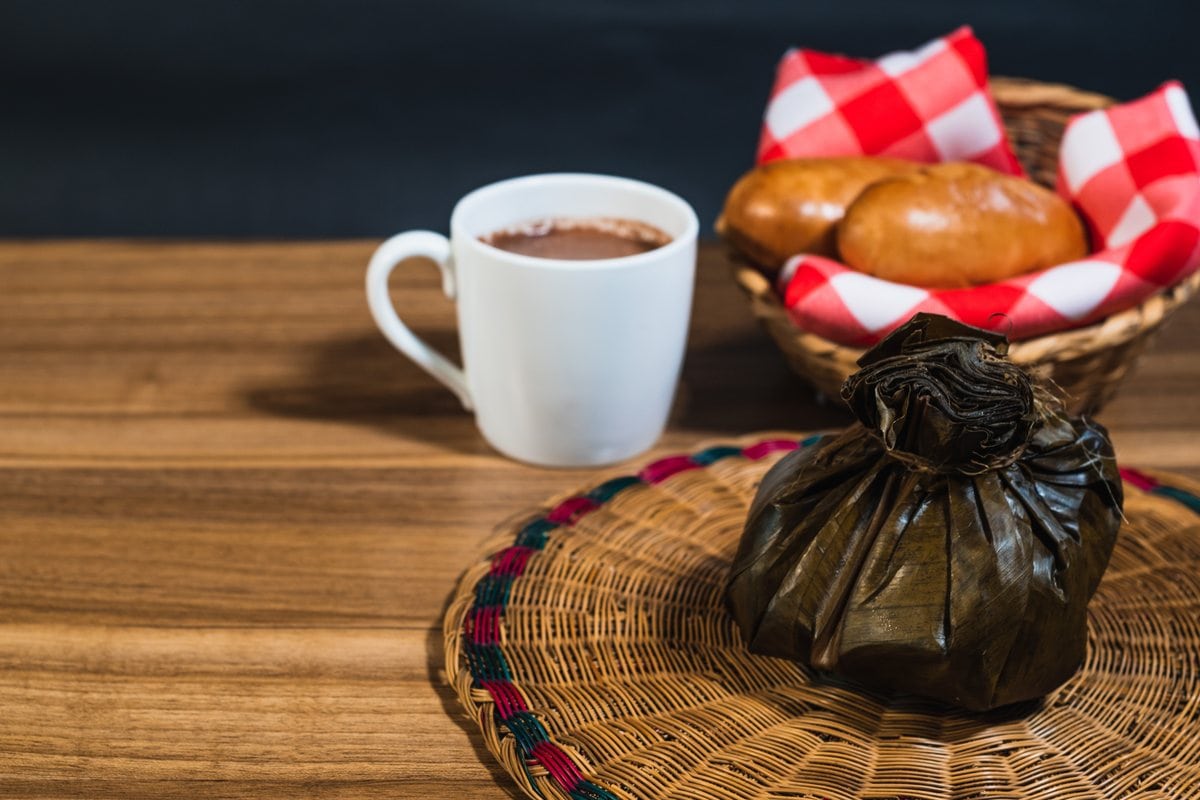
In Bogotá bakeries, a chocolate completo is the full set: a cup of hot chocolate, a slice of cheese and bread. It is a breakfast or an afternoon onces, and the bread is meant for dunking.

- Cheese breads: almojábanas, pandebono and pan de yuca.
- Buttered bread: a soft roll or pan blandito with butter, the most common bakery pairing. See more Colombian breads.
- Arepas: a white arepa with butter and cheese. Ready-made La Mejor Colombian arepas just need a few minutes on the griddle.
- A Sunday tamal: the weekend breakfast in Bogotá and Tolima. Try our Colombian tamales.
- Eggs: huevos pericos for a full breakfast.
- At Christmas: buñuelos and natilla.
Colombian Hot Chocolate vs. Mexican and Spanish Hot Chocolate
All three start with chocolate rather than cocoa powder, and two of them use a wooden molinillo. Here is how they differ:
| Colombian | Mexican | Spanish | |
|---|---|---|---|
| Chocolate | Smooth table chocolate (Corona, Luker) | Grainy stone-ground tablets (Abuelita, Ibarra) | Dark chocolate thickened with cornstarch |
| Base | Water, milk or both | Milk or water | Milk |
| Spices | Cinnamon and cloves, optional | Cinnamon, sometimes chile | Usually none |
| Texture | Light body, thick foam | Light body, foamy | Thick enough to coat a churro |
| Served with | Cheese and bread | Pan dulce, churros, tamales | Churros |
For the other two, see our Mexican hot chocolate and Spanish chocolate a la taza. Mexico’s thick, corn-based version is champurrado.
A Short History of Hot Chocolate in Bogotá
Cacao grows in Colombia’s warm lowlands, and drinking chocolate arrived in Bogotá with the colonial era. For a long time it was a drink of the well-off, served in the city’s homes and later its chocolaterías and tea rooms. La Puerta Falsa, a tiny restaurant beside the cathedral that is said to date from 1816, still serves chocolate santafereño with cheese and bread.
Industrial table chocolate made it an everyday drink. After Luker’s first tablets in 1906 and the founding of the Compañía Nacional de Chocolates in 1920, bars like Corona spread across the country, and by the mid-1950s chocolate had become the main hot drink of working families in both cities and the countryside.

Today it is still on the table at breakfast, at onces and during the Christmas novena de aguinaldos, when families gather for nine nights before Christmas Eve with buñuelos, natilla and hot chocolate. More in our Colombian Christmas food guide.
Variations
- Chocolate de agua: made with water only. Lighter, darker in flavor and dairy-free without the cheese.
- Clavos y canela: use a spiced bar, or simmer extra cinnamon and cloves in the liquid.
- Chocolate with bocadillo: add a thin slice of guava paste alongside the cheese for a sweet, fruity bite, the same pairing as Brazil’s romeu e julieta.
- Aguapanela con queso: the same cheese-in-the-cup idea with hot aguapanela instead of chocolate.
- Richer cup: use 1½ oz (45 g) of chocolate per cup and all milk.
How to Store and Reheat
Colombian hot chocolate is best fresh, because the foam fades within minutes. Leftovers keep in a covered jar in the fridge for up to 3 days. Reheat gently on the stove, stirring, froth again before serving and add fresh cheese to each cup. Don’t reheat a cup that already has cheese in it.
Colombian Hot Chocolate FAQs
What do Colombians call hot chocolate with cheese?
Chocolate con queso, or chocolate santafereño in Bogotá. When it comes with bread as well, bakeries call it a chocolate completo.
Why do Colombians put cheese in their hot chocolate?
The mild, salty cheese balances the sweet chocolate, and it turns soft and stretchy in the hot cup. With bread on the side, it makes a cheap, filling meal for cold Bogotá mornings and afternoons.
What cheese goes in Colombian hot chocolate?
Queso campesino or queso doble crema in Colombia. In the US, queso fresco or low-moisture mozzarella are the closest matches. Avoid aged or very salty cheeses.
How much cheese do you put in a cup?
About 1½ oz (40 g) per cup, cut into a few cubes or one thin slice.
Is Colombian hot chocolate made with water or milk?
Both. The traditional Bogotá version uses water, and many families use milk or half water and half milk.
What chocolate do Colombians use for hot chocolate?
Tablets of table chocolate, mostly Corona and Luker, in sweetened, unsweetened or cinnamon-and-clove versions.
Can I make it with regular chocolate?
Yes. Use 3 oz (85 g) of chopped 70% dark chocolate, 2 tablespoons of panela or dark brown sugar and a pinch of cinnamon for 4 cups.
What is a molinillo?
A carved wooden beater with loose rings at the head. You spin the handle between your palms to whip the chocolate into foam.
Is Colombian hot chocolate the same as Mexican hot chocolate?
No. Colombian chocolate is smoother and usually less sweet, is often made partly with water and is served with cheese. Mexican chocolate is grainier, more cinnamon-forward and usually served with sweet bread.
What does santafereño mean?
“From Santa Fe,” the colonial name of Bogotá. Ajiaco santafereño, the city’s famous chicken soup, carries the same name.
Colombian Hot Chocolate with Cheese (Chocolate Santafereño)
Bogotá-style hot chocolate made with Colombian table chocolate, frothed with a wooden molinillo and served with fresh cheese to drop into the cup.
Ingredients
- 4 cups (950 ml) water, whole milk, or 2 cups of each
- 4 oz (115 g) Colombian table chocolate, such as Corona or Luker, broken into pieces
- 1 cinnamon stick (optional)
- 2 whole cloves (optional)
- 1 to 2 tablespoons grated panela or brown sugar, only if your chocolate is unsweetened
- 1 pinch salt
- 6 oz (170 g) queso campesino, queso fresco or low-moisture mozzarella, cut into ½-inch cubes or thin slices, for serving
- Almojábanas, pandebono or buttered bread, for serving
Instructions
- Heat the liquid and spices. Put the water (or milk, or a mix), cinnamon stick and cloves in a chocolatera or small saucepan over medium heat and bring to a simmer. If you are using all milk, stop when it steams and small bubbles form at the edge.
- Melt the chocolate. Break the chocolate into pieces along the scored lines, add it to the pot and stir until it dissolves completely, about 3 minutes. Let it simmer 2 minutes more so the chocolate cooks and loses its raw, chalky taste.
- Let it rise. Raise the heat slightly. When the chocolate foams up toward the rim, lift the pot off the heat and beat it with the molinillo until it settles. Return it to the heat and repeat twice more. Many Bogotá cooks let it rise three times; it thickens the body and builds the foam.
- Froth it. Off the heat, put the molinillo in the pot and roll the handle quickly between your palms for 30 to 60 seconds, until a thick layer of foam covers the top. A whisk or handheld milk frother also works.
- Season. Fish out the cinnamon and cloves. Taste, and add panela or sugar only if you used unsweetened chocolate, plus a pinch of salt.
- Serve with cheese. Pour into cups with plenty of foam. Put the cheese and bread on the side. At the table, drop the cheese into the cup, wait about a minute until it softens and turns stretchy, then eat it with a spoon between sips.
Notes
How much chocolate: about 1 oz (30 g) of table chocolate per cup of liquid. Colombian bars are scored into portions; one portion per cup is the usual rule. Use 1½ oz (45 g) per cup for a richer cup.
Water, milk or both: water is the old Bogotá way and tastes more of cacao; milk is creamier. Half and half is the most common compromise. Water also makes the recipe dairy-free if you skip the cheese.
No Colombian chocolate? Use 3 oz (85 g) chopped 70% dark chocolate, 2 tablespoons grated panela or dark brown sugar and a pinch of ground cinnamon for 4 cups of liquid.
Make ahead: refrigerate leftover chocolate (without cheese) up to 3 days. Reheat gently and froth again just before serving; add fresh cheese to each cup.
More Colombian Drinks and Breakfasts
See our list of 14 Colombian drinks, including aguapanela and Colombian coffee, or browse our Colombian drink recipes. For the rest of the table, see Colombian breakfast foods, ajiaco santafereño and all Colombian cooking.
More Colombian Foods
See all →
Jorge Garcia is the founder of AmigoFoods, where he has spent over 20 years helping readers discover authentic Latin American and Spanish cuisine. Raised in a Cuban-American household, Jorge learned to cook at the hands of his mother and grandmother, carrying forward generations of family recipes. That heritage, backed by his family’s four-generation history in the Latin food industry, inspired him to launch AmigoFoods in 2003. With more than 1,000 published articles on recipes, ingredients, and food culture, Jorge’s mission is simple: make authentic Latin cooking approachable for home cooks everywhere while honoring the traditions behind every dish.